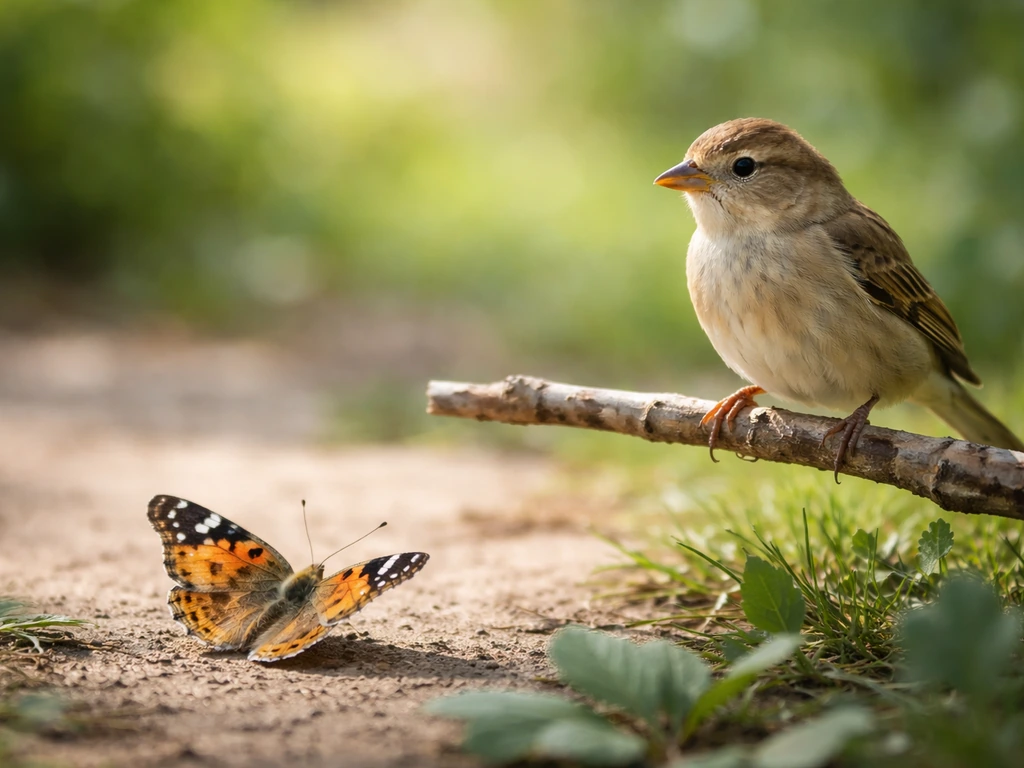
Yes, a sparrow is absolutely a bird. It checks every box on the biological definition: feathers, blank" rel="noopener noreferrer">a toothless beak, hollow bones, a hard-shelled egg, warm-blooded metabolism, and forelimbs built as wings. There is no ambiguity here in taxonomy or everyday biology. If you're standing in a backyard or park watching a small, seed-eating brown bird hopping around and pecking at crumbs, there's a very good chance you're watching a sparrow, and it is 100% a bird.
Is Sparrow a Bird? Traits, Taxonomy, and Easy ID Checks

Marcus Hendricks
27 Jun 2026
What actually makes an animal a bird
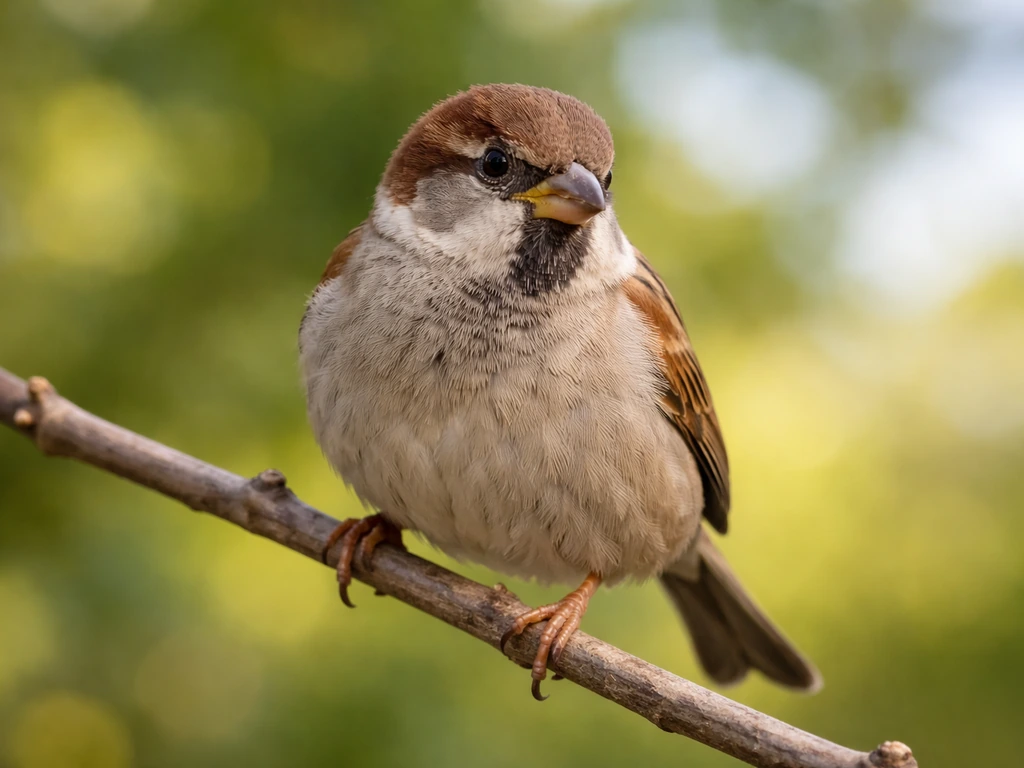
Before diving into sparrow specifics, it helps to know what biologists actually require for something to qualify as a bird. The traits below are what separate birds from every other animal class on Earth. Smithsonian National Museum of Natural History notes that birds are distinguished from other living vertebrates by feathers, hollow bones, and hard-shelled eggs. Sparrows have all of them.
- Feathers: the single most distinctive feature. Only birds have feathers. They provide insulation, waterproofing (via feather oils), and in most species, powered flight.
- A toothless beak: birds lost their teeth over evolutionary time and replaced them with a lightweight, horny beak structure used to process food.
- Hard-shelled eggs: birds lay eggs with a rigid, calcified shell, unlike the leathery soft-shelled eggs of most reptiles.
- Warm-blooded (endothermic) metabolism: birds regulate their own body temperature internally, which is why a sparrow is active on a cold morning when a lizard is still sluggish.
- Forelimbs modified into wings: even flightless birds have wing-like forelimbs. In sparrows, these are fully functional flight wings.
- A four-chambered heart: birds share this cardiovascular setup with mammals, supporting their high-energy, warm-blooded lifestyle.
- Hollow, pneumatized bones: bird skeletons are fused and riddled with air cavities connected to the respiratory system, keeping them light enough for flight.
- A unique lung-air sac system: bird lungs connect to a network of air sacs that occupy roughly 90% of the total respiratory system volume, enabling extremely efficient oxygen extraction.
Every single one of those traits applies to sparrows. There's no edge case or asterisk here.
Where sparrows actually fit in the bird family tree
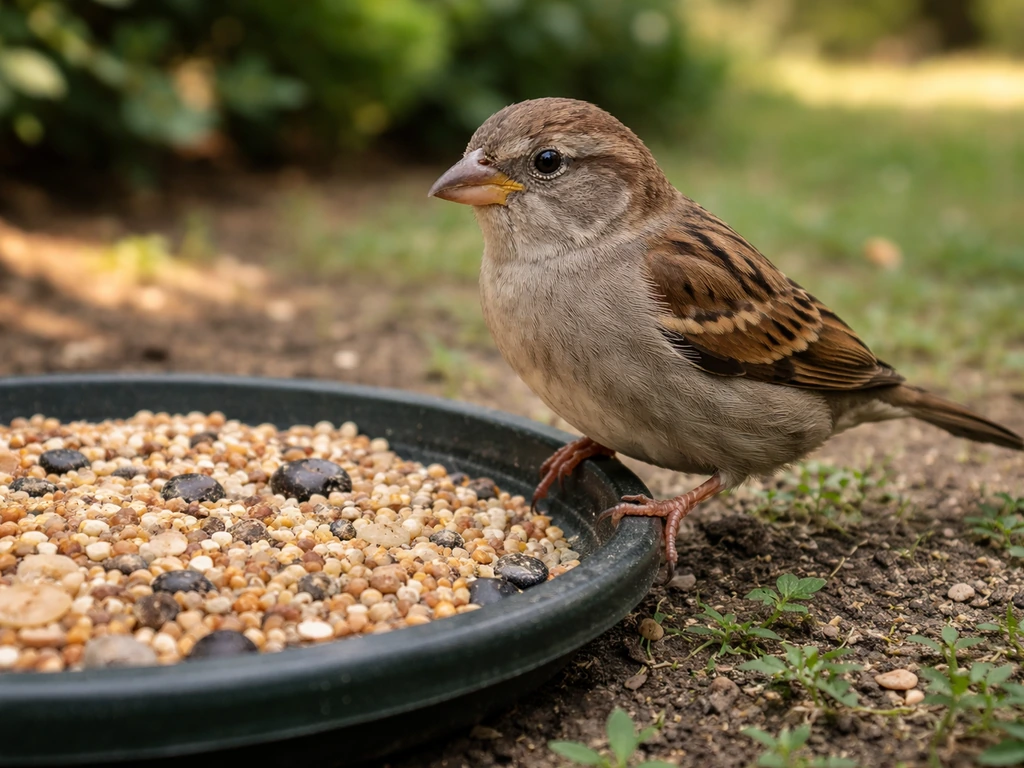
The word "sparrow" is a common name, not a strict scientific category, which is part of why people sometimes get confused. In the broadest sense, "sparrow" gets applied to dozens of small, seed-eating birds across several families. But the core meaning points to members of the family Passeridae, specifically the genus Passer. The name Passer is simply Latin for "sparrow."
The most familiar example is the house sparrow, Passer domesticus. It belongs to the order Passeriformes (the passerines, or perching birds), family Passeridae. The Eurasian tree sparrow (Passer montanus) is another close relative in the same genus. These are the "true sparrows" in the strictest taxonomic sense. Passeriformes is the largest order of birds on the planet, containing more than half of all living bird species, so sparrows are not some obscure outlier. They sit squarely in the mainstream of bird diversity.
In North America, the picture gets a little messier because many birds called "sparrows" (like the chipping sparrow, song sparrow, and white-throated sparrow) belong to a different family entirely, Passerellidae. They're still birds, still passerines, and still clearly sparrow-shaped, but they're not in genus Passer. It's a naming convention more than a strict biological grouping. If you're curious whether a specific bird like the maya bird qualifies as a sparrow, or whether sparrows and swallows are the same thing, those are genuinely separate questions worth exploring on their own.
Look-alikes people confuse with sparrows
Sparrows are small, brown, and often seen hopping around on the ground or in shrubs. That description fits a surprising number of other birds, which leads to regular misidentification. Here are the most common mix-ups:
Finches
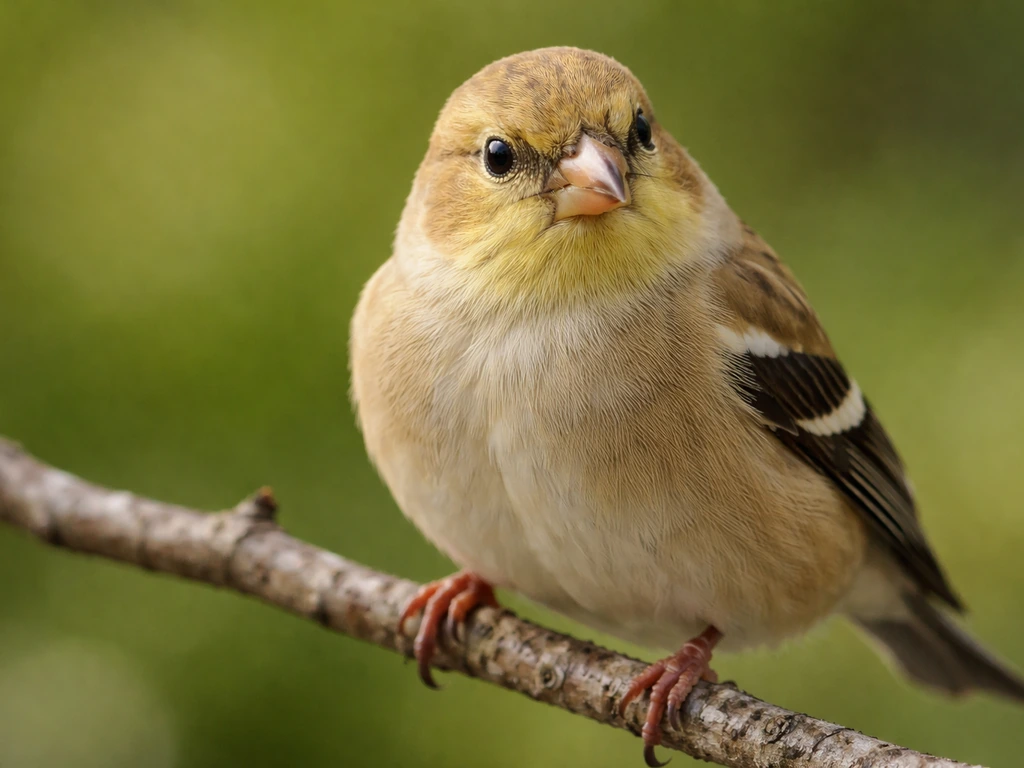
Finches and sparrows overlap heavily in size and habitat. The key difference is usually the bill: finches tend to have a shorter, rounder, more conical beak built for cracking hard seeds, while sparrows generally have a slightly longer, more slender bill. House finches also show red or orange coloring on males, which house sparrows do not.
Dark-eyed juncos
Juncos are closely related to sparrows and behave very similarly at feeders and on the ground. The dark-eyed junco is actually one of the easier look-alikes to eliminate: it has a dark gray-to-black hood and bright white outer tail feathers that flash when it flies. No sparrow has that combination. The National Park Service specifically calls out the junco as a useful comparison point when trying to sort out sparrow species.
Juvenile birds of other species
Young birds of many species go through a streaky brown phase before their adult plumage comes in. A juvenile robin, towhee, or even a young blackbird can look remarkably sparrow-like for a few weeks. Behavior is your best clue here: watch how it moves and what it eats.
Wrens and warblers
Small, brown, and secretive, wrens are often called sparrows by beginners. Wrens tend to cock their tail upright and creep through dense cover rather than hopping openly on the ground. Warblers in their dull fall plumage also confuse people, but they're typically slimmer with thinner, more pointed bills.
Within sparrows: telling species apart
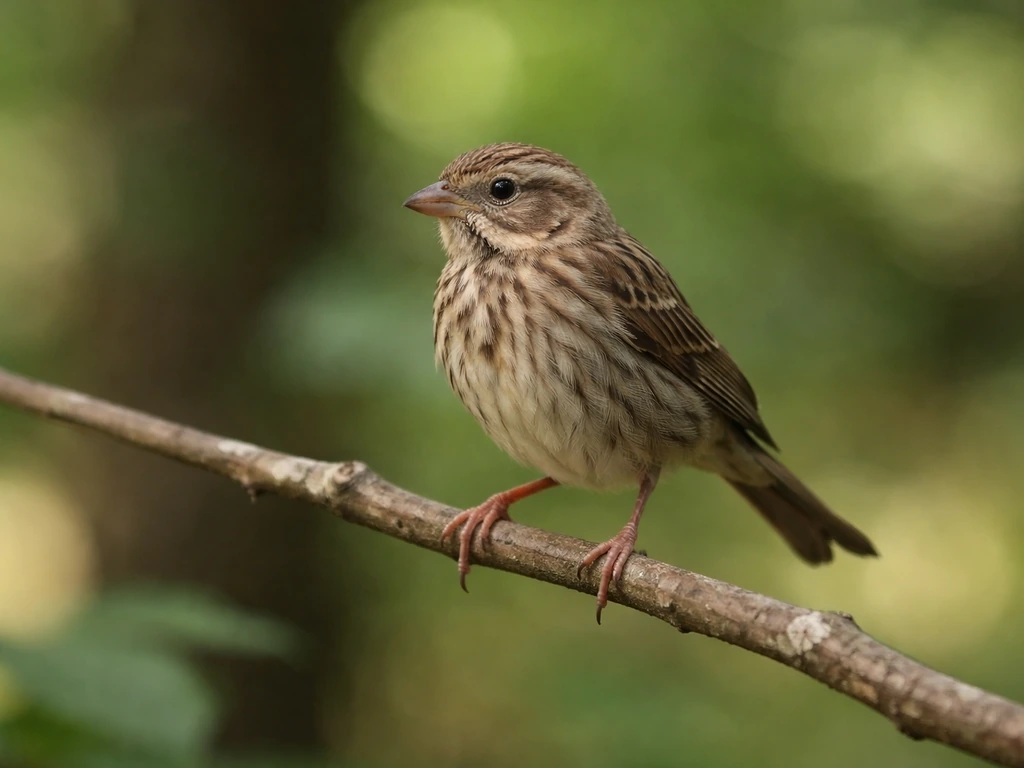
Even among sparrows themselves, species ID can be tricky. House sparrows (Passer domesticus) are stocky, about the size of a song sparrow or dark-eyed junco. Males show a gray crown, white cheeks, a black bib, and rufous neck coloring (though city birds often look dingier). Chipping sparrows have a bright chestnut cap, a white eyebrow stripe, and a clean black eyeline in breeding plumage. White-throated sparrows have bold facial stripes and a distinctive white throat patch. Knowing these specific field marks turns a confusing brown blur into a confident identification.
Why sparrows definitely aren't mammals, reptiles, or insects
This might seem obvious, but the classification confusion that drives searches like "is sparrow a bird or animal" is worth addressing directly. Sparrows are animals in the broad sense (everything from insects to elephants is an animal), but they belong to the class Aves, not to any other vertebrate class.
| Animal Class | Key Traits | How Sparrows Differ |
|---|---|---|
| Mammals | Fur or hair, live birth (mostly), nurse young with milk | Sparrows have feathers, not fur; they lay hard-shelled eggs and do not produce milk |
| Reptiles | Scales, mostly cold-blooded (ectothermic), leathery or soft eggs in most species | Sparrows are warm-blooded, have feathers, and lay hard-shelled eggs |
| Amphibians | Moist, scaleless skin; typically require water to reproduce; cold-blooded | Sparrows have dry, feathered skin; fully terrestrial reproduction; warm-blooded |
| Insects | Six legs, exoskeleton, tracheal breathing system with spiracles, no backbone | Sparrows have an internal skeleton, four limbs, lungs connected to air sacs, and vertebrae |
| Birds (Aves) | Feathers, beak, hollow bones, hard-shelled eggs, warm-blooded, wings | Sparrows match every trait in this column perfectly |
The respiratory comparison is particularly striking. Insects breathe through a network of tubes called tracheae that open to the outside via spiracles, delivering oxygen directly to tissues without a blood-based transport system. Birds, including sparrows, use a lung and air sac system where air sacs account for about 90% of total respiratory volume. These are fundamentally different biological architectures. A sparrow and a grasshopper are about as physiologically different as two animals can be.
How to confirm what you're actually looking at right now
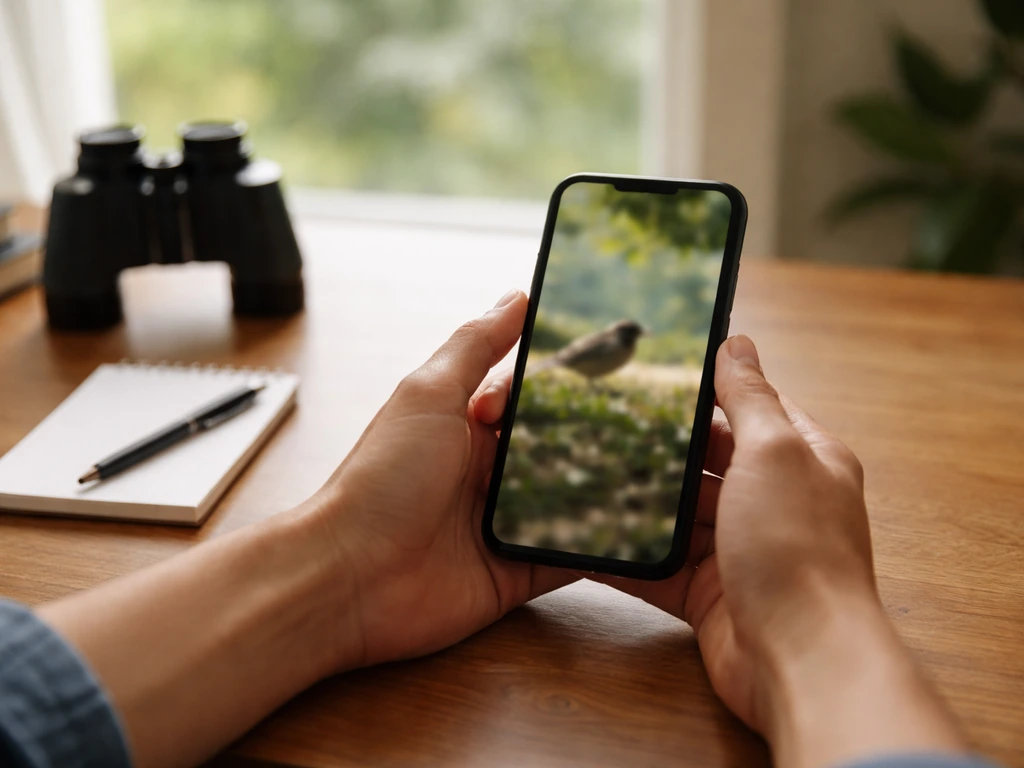
If you're looking at a bird and want to know whether it's a sparrow (and which sparrow), here's a practical process you can run through on the spot or from a photo.
- Check size and shape first. Sparrows are small birds, roughly 5 to 7 inches long. They're stocky with a rounded head, a short conical bill, and a medium-length tail. If the bird is robin-sized or larger, it's not a sparrow.
- Look at the bill. Sparrows have a short, seed-cracker bill. A very fine, pointed bill means warbler or wren. A thick, rounded bill means finch. A hooked bill means a raptor.
- Watch the behavior. Sparrows hop (both feet move together) rather than walk (alternating feet). They forage on the ground or in low vegetation, peck at seeds, and are generally noisy and social. House sparrows in particular flutter down to hop and peck at crumbs.
- Note the habitat. Are you in a backyard, park, or urban area? That points toward house sparrow. Open fields with scattered conifers suggest chipping sparrow. Brushy edges and thickets suggest song sparrow or field sparrow.
- Use the Cornell Lab's four keys framework: size and shape, color pattern, behavior, and habitat together narrow possibilities dramatically. Don't rely on color alone.
- Take a photo and run it through Merlin (free app from Cornell Lab). Merlin's Photo ID draws a box around the bird in your image, assigns a species, and gives a confidence score. It also uses range maps so it knows what's realistically expected in your location.
- Cross-check on All About Birds (allaboutbirds.org). Type in the species Merlin suggests and compare the field marks, range map, and habitat description against what you observed.
- If you're still unsure, log the sighting in eBird with your photo. eBird's volunteer reviewers can flag and verify uncertain IDs, especially for uncommon or out-of-range birds.
Nesting behavior is also a useful confirmation tool. If you see a small bird repeatedly carrying dry grass, feathers, or plant fibers into a dense shrub, eave gap, or birdhouse, there's a strong chance you're watching a sparrow building or maintaining a nest. House sparrows in particular make notoriously messy nests stuffed into any available crevice. Once you spot nest-building activity, back off and let the bird settle before trying for a closer look.
Your next steps for a confident ID
The big-picture answer is settled: sparrows are birds, full stop. If you're wondering, “is Maya bird a sparrow,” the traits above and a quick look at the bill and nest-building behavior can help you confirm it. If you want to go deeper and pin down the exact species, download Merlin on your phone today. It's free, works offline for photo ID, and pulls from range data so it filters results to what's actually expected near you. Pair it with All About Birds for detailed species accounts. If you're in North America, an Audubon field guide (print or app) gives you range maps and breeding plumage descriptions for every sparrow species on the continent.
For broader context, it's also worth knowing that "sparrow" is used loosely as a common name across multiple bird families, so whether a specific bird called a sparrow is a "true" sparrow in the genus Passer or a New World sparrow in a different family is a separate (and genuinely interesting) question. The same goes for related debates like whether sparrows and swallows are the same bird (they're not, not even close) or whether a specific cultural bird like Zenitsu's companion from Demon Slayer counts as a real sparrow. That question comes down to what species it most closely resembles and how it fits the real traits of sparrows Zenitsu's companion from Demon Slayer counts as a real sparrow. Either way, the underlying animal in every case is unambiguously a bird.
FAQ
How can I tell whether a “sparrow” I saw is a true sparrow, not just another bird with sparrow in the name?
If the bird has feathers and lays hard-shelled eggs, it is a bird. The “sparrow” part is trickier because many unrelated species use sparrow in their common name. To check whether you truly have a true sparrow (family Passeridae), focus on features like the seed-cracking bill shape, overall body stockiness, and especially the specific patterning on the head (for example, house sparrows have a gray crown and clear cheek pattern on breeding males).
Can a juvenile bird look like a sparrow even if it isn’t?
Yes, but not because sparrows change into other kinds of birds. Juvenile birds of many species can look “brown and streaky,” which makes them resemble sparrows. If you cannot see clear adult-like face patterning, use behavior (hopping on the ground versus creeping, typical feeder posture) and timing (juveniles look rougher for weeks) rather than relying only on color.
Do sparrows move around (migrate), and can that affect ID?
Sometimes, but location and season matter. House sparrows are year-round residents in many developed areas, while some other sparrow-labeled species migrate or shift ranges. If you use an ID app, confirm the species list is filtered to your current date and local area, not a different season or nearby region.
Is a sparrow an animal too, or is it a separate category?
Many people use “bird” and “animal” interchangeably, so the short answer is that a sparrow is both. Biologically, sparrows are in the class Aves. They are not in the mammal, reptile, amphibian, or insect groups, so if the creature has a beak, feathers, and bird egg traits, it is not an insect or other non-bird animal.
What’s the fastest way to avoid confusing sparrows with similar small brown birds?
Yes, and it’s a common mistake: finches, wrens, juncos, and even some warblers can look sparrow-like in dull plumage. A quick decision aid is to compare bill shape first (finches tend to have shorter, more conical bills, sparrows often look slimmer in the bill), then check for diagnostic face markings (sparrows often show bold crown or eyebrow patterns depending on species).
What should I do if my photo is too blurry to identify which sparrow it is?
A safe next step is to do two passes: first identify whether it is a sparrow-shaped passerine versus another group, then refine to the species. If you only have a blurry photo, prioritize one sharp angle, like a side view of the bill and face. Apps work better when they can read those features, and when you note habitat (ground feeding versus shrub hopping, open field versus dense cover).
What’s the safest way to observe sparrows if I find one building a nest nearby?
If you find a “sparrow” nest, distance yourself and avoid handling the bird or nest. Spooking the parent can cause abandonment, and incorrect handling can also transfer oils or scent. Wait for a calm window to observe from farther away, and if the nest is in a high-risk spot (driveway, construction area), consider contacting local wildlife rehab or a birding group for guidance.
Why do some birds called “sparrows” look similar but aren’t the same type of sparrow?
Not in the strict biological sense. “Sparrow” is a common name used for multiple bird families, so some “sparrows” are close relatives within the broader passerines, but not all are in the same genus. If your goal is accuracy, always treat “sparrow” as a starting label, then confirm the genus or family using field marks plus range.
Next Articles
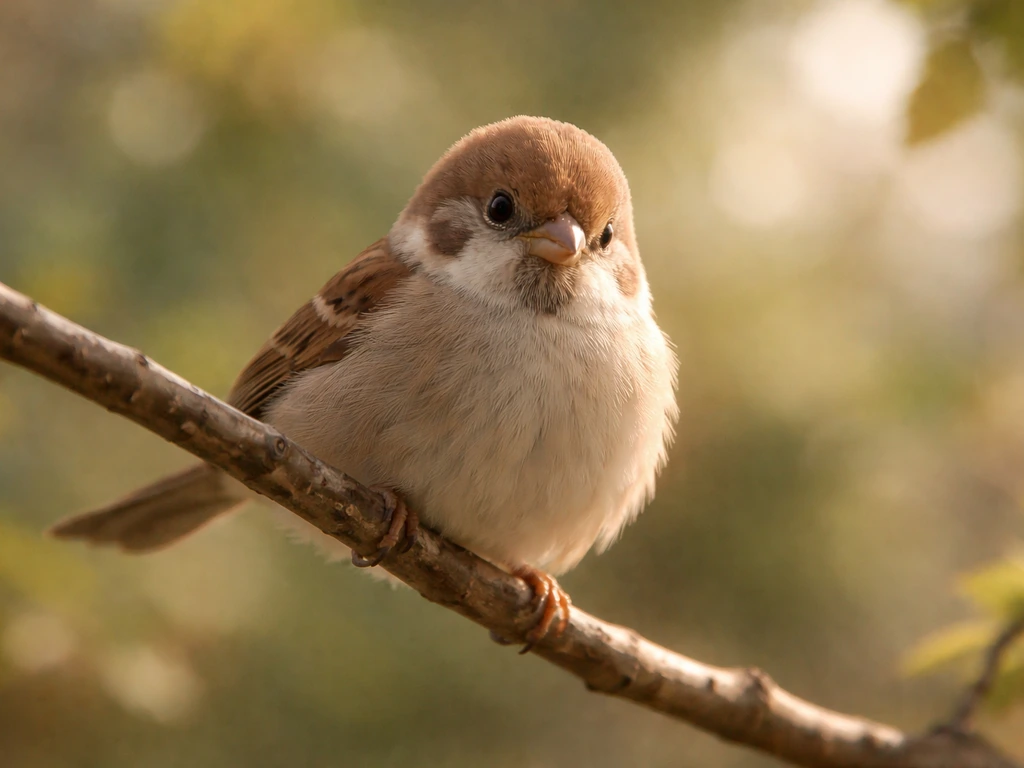
Why Is Zenitsu’s Bird a Sparrow? Real ID Guide
Learn why Zenitsu’s bird looks like a sparrow: real ID traits, how it differs from similar small birds, and how to verif
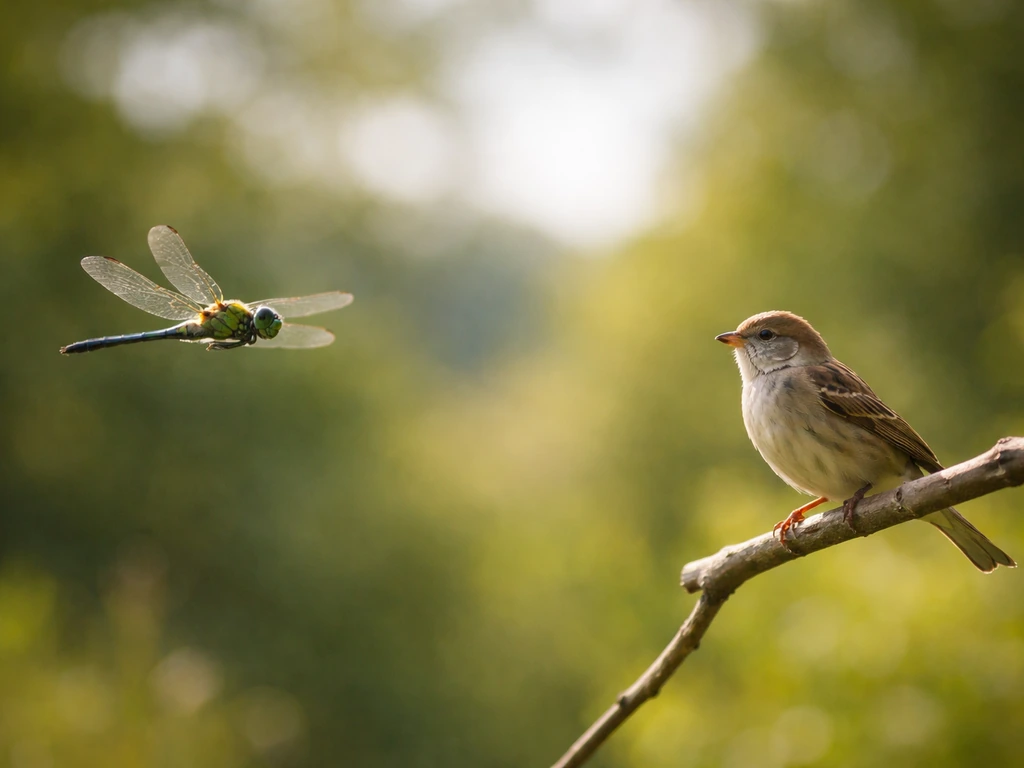
Is a Dragonfly a Bird? How to Tell the Difference
Dragonflies are insects, not birds. Learn key bird traits vs dragonfly anatomy to tell them apart fast.
Is a Flyer a Bird? How to Tell Flyers From Real Birds
No. Flyers aren’t automatically birds; true birds have feathers, beaks, bird anatomy, and breeding traits, not just flig