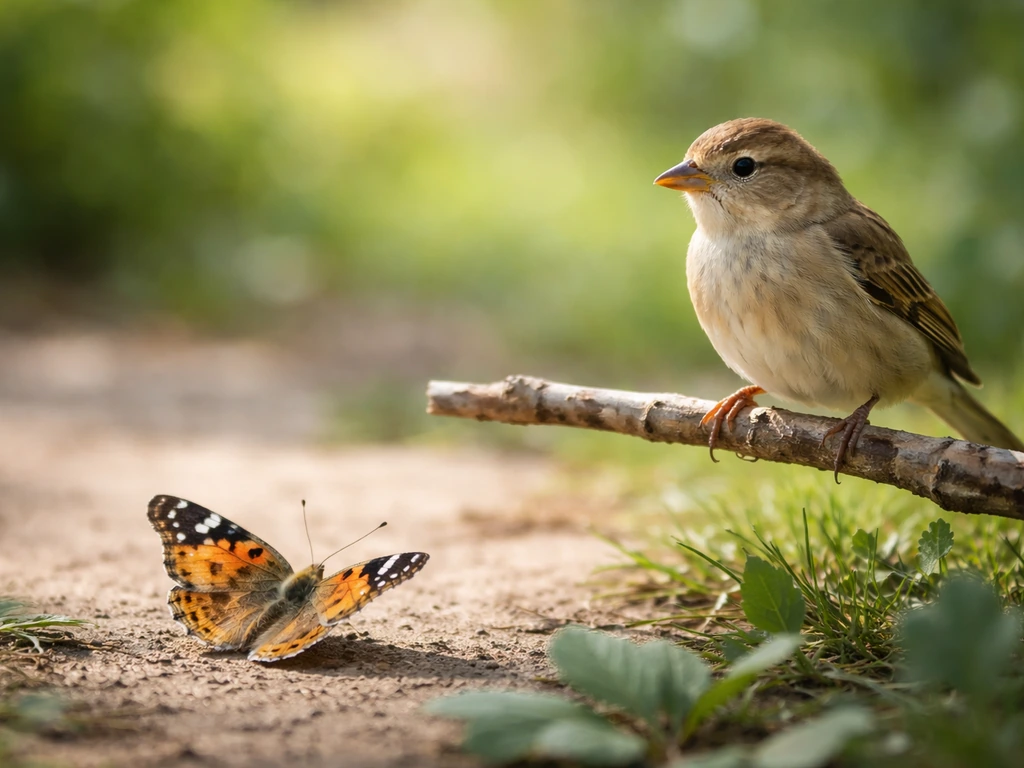
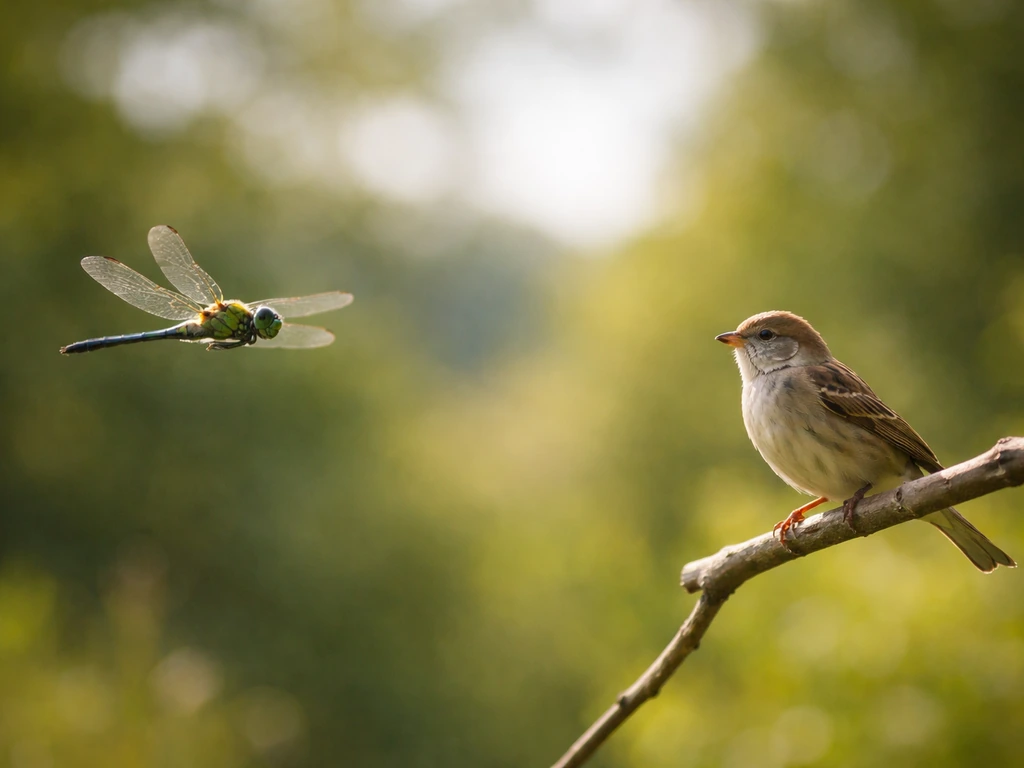
No, a dragonfly is not a bird. It is an insect, full stop. Dragonflies belong to the order Odonata, class Insecta, and they share more in common with a housefly or a beetle than they ever will with a robin or a hawk. They have six legs, a hard exoskeleton, compound eyes, and no feathers whatsoever. The fact that they zip through the air and occasionally hover does not make them birds any more than a paper airplane is a sparrow.
Is a Dragonfly a Bird? How to Tell the Difference

Marcus Hendricks
26 Jun 2026
What actually makes an animal a bird
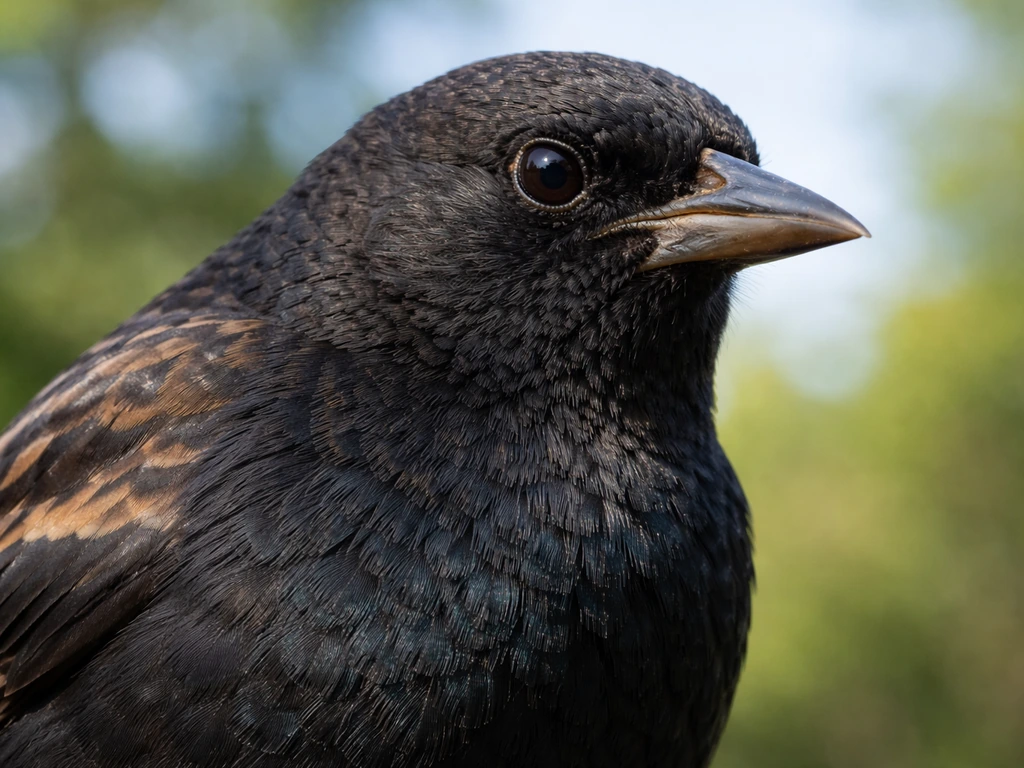
Birds belong to the class Aves, and that group has a very specific checklist. Wikipedia defines birds (class Aves) as warm-blooded vertebrates characterized by feathers, toothless beaked jaws, hard-shelled eggs, a high metabolic rate, a four-chambered heart, and a strong lightweight skeleton. Every single bird on earth, from a penguin to an ostrich to a hummingbird, shares these core traits. If an animal is missing even a few of them, it is not a bird.
- Feathers: the single most defining trait, unique to birds and found in no other living animal group
- A beak or bill made of keratin, with no teeth
- Warm-blooded (endothermic) metabolism with a high metabolic rate
- A four-chambered heart
- Hollow, lightweight bones connected to air sacs that support an extremely efficient respiratory system
- Hard-shelled eggs
- A backbone (birds are vertebrates, meaning they have an internal skeleton with a spine)
That last point matters a lot. Birds are vertebrates, meaning they have an internal skeleton with a spine. That places them in a completely different branch of the animal kingdom from insects, which are invertebrates with no backbone at all. When you are trying to figure out whether something is a bird, feathers are the fastest shortcut. If it has feathers, it is a bird. If it does not, it is not.
What a dragonfly actually is
Dragonflies are insects in the order Odonata, specifically the infraorder Anisoptera. They are one of the oldest flying insects on the planet, with fossil ancestors going back roughly 300 million years. The adults you see skimming over ponds are the end stage of a life cycle that starts in the water, not in a nest.
A dragonfly's body plan is unmistakably insect. Adults have a large head dominated by two enormous compound eyes that can cover almost the entire head in species like the darners (family Aeshnidae). They have two pairs of long, transparent, independently beating wings with complex vein patterns, an elongated segmented abdomen, and six legs arranged on the thorax. There are no feathers, no beak, and no internal skeleton anywhere in that description.
Before becoming the aerial hunters you see in summer, dragonflies spend months to years as aquatic nymphs. Those nymphs breathe dissolved oxygen through gills located inside the abdomen, using a rectal gill mechanism. That aquatic larval stage, with gills, is about as far from bird biology as you can get. Birds do not have a gill stage. They do not have gills at any point in their life.
Why people sometimes think dragonflies look like birds
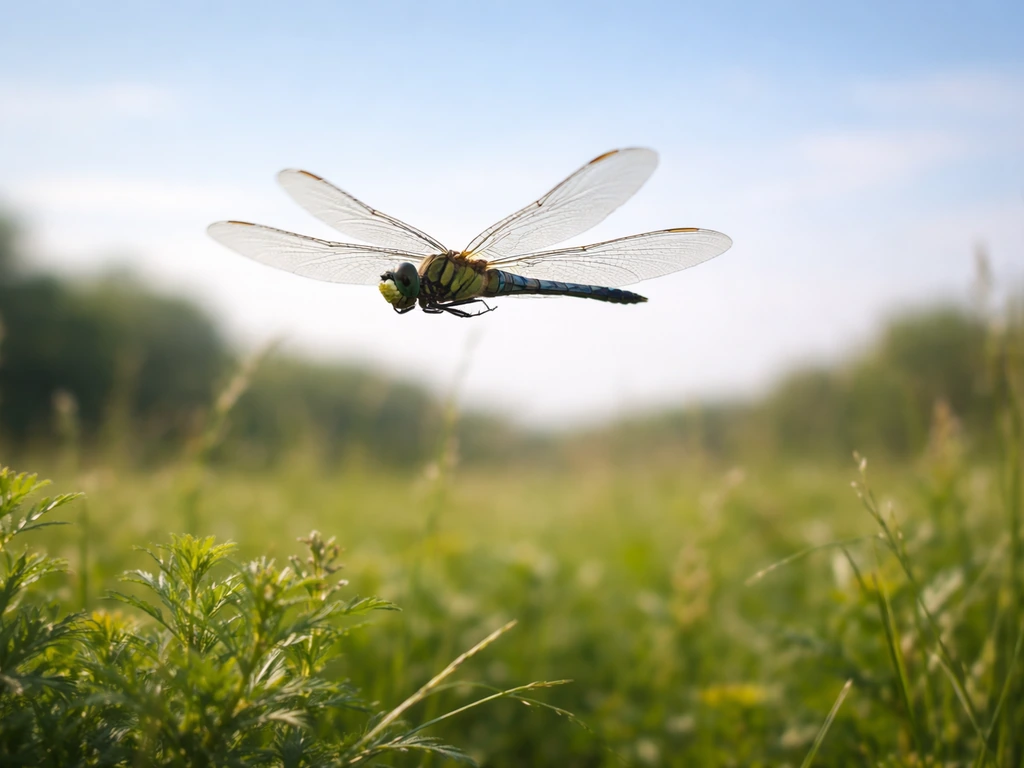
This is actually a fair question, because dragonflies can genuinely look bird-like from a distance. A large dragonfly species hovering over a field, with its elongated body silhouetted against the sky, can briefly fool your brain into thinking you are watching something with feathers. A few specific things cause this confusion.
- Size: some dragonfly species have wingspans reaching up to 4 or 5 inches, putting them in the same visual size range as small songbirds at a glance
- Hovering flight: dragonflies hover with remarkable precision, and hovering is something most people associate with birds like hummingbirds
- Active predatory behavior: dragonflies hunt in flight and dart around aggressively, which feels more like bird behavior than 'typical' insect behavior
- Wing shape: the long, outstretched transparent wings can create a silhouette that reads as 'flying creature' before your brain processes the details
- Speed and agility: dragonflies are among the fastest and most maneuverable fliers in the animal kingdom, which adds to the impression of watching something 'bigger'
Get closer, though, and the confusion evaporates instantly. The compound eyes are huge and wrap around the head in a way no bird's eyes ever do. The wings are clear and veined, not feathered. The body is segmented and covered in a hard exoskeleton, not skin and plumage. And if you watch one land, you will see all six legs, which settles it immediately.
How birds and dragonflies differ at a deeper level
Beyond the obvious visual differences, birds and dragonflies are separated by one of the most fundamental dividing lines in all of biology: vertebrate versus invertebrate. That is not a minor distinction. It means their body plans, evolutionary histories, and internal physiology are built on completely different blueprints.
| Feature | Bird (Class Aves) | Dragonfly (Order Odonata) |
|---|---|---|
| Body covering | Feathers | Hard exoskeleton (chitin) |
| Skeleton | Internal (endoskeleton with spine) | None (invertebrate) |
| Limbs | Two wings, two legs | Two pairs of wings, six legs |
| Eyes | Two forward/side-facing eyes with eyelids | Two enormous compound eyes covering most of the head |
| Respiration (adult) | Lungs plus air sacs for continuous airflow | Tracheal tubes with spiracles on the exoskeleton |
| Respiration (juvenile) | Lungs from hatching onward | Gills (internal rectal gills in dragonfly nymphs) |
| Heart | Four-chambered heart | Simple tubular heart, open circulatory system |
| Development | Egg hatches into a chick (direct development) | Egg hatches into aquatic nymph, then molts to adult (incomplete metamorphosis) |
| Body temperature | Warm-blooded (endothermic) | Cold-blooded (ectothermic) |
| Beak or bill | Yes, always | No (mouthparts are mandibles) |
The respiratory difference is especially striking. Birds breathe using lungs connected to air sacs that allow air to flow in one direction continuously, making their gas exchange extraordinarily efficient. Dragonflies breathe through spiracles, which are tiny holes on the surface of their exoskeleton that connect to a network of internal tubes called tracheae. Air diffuses directly to the tissues without passing through a lung at all. When they are nymphs underwater, they are using rectal gills. Nothing about that overlaps with bird biology.
From an evolutionary standpoint, birds and dragonflies last shared a common ancestor hundreds of millions of years ago, and even that ancestor was nothing like either of them. Dragonflies are more closely related to beetles and butterflies than they are to any vertebrate. Birds are more closely related to lizards and crocodiles than they are to any insect.
Settling other 'is it a bird?' debates
Dragonflies are not the only animals that trigger this kind of confusion. The internet is full of similar questions, and the same checklist works every time. The internet is full of similar questions, and the same checklist works every time is a drake a bird. The dragonfly question fits into a broader pattern of winged, flying, or visually impressive creatures that people wonder about. A few quick comparison checks handle almost all of them.
The fast checklist for anything that might be a bird
- Does it have feathers? If yes, it is a bird. If no, it is not.
- Does it have a beak made of keratin with no teeth? Helpful confirmation, but feathers alone are enough.
- Does it have a backbone and internal skeleton? Birds are vertebrates. Insects, spiders, and crustaceans are not.
- How many legs does it have? Birds have exactly two. Six legs means insect. Eight means arachnid.
- Is it warm-blooded? Birds are endothermic. Most non-bird flying animals are not.
- Did it hatch from a hard-shelled egg and develop directly into a recognizable young animal? Bird development does not include an aquatic nymph or larval stage with gills.
Damselflies, which are close relatives of dragonflies and also in the order Odonata, sometimes cause similar confusion. They look even more delicate and slow-moving than dragonflies, but they are insects too. Damselflies fold their wings along their body when resting, while dragonflies hold theirs flat and out to the side, but both groups are firmly in the insect column.
If you are working through related questions, the same logic applies to things like drakes (male ducks, which are actual birds) or fictional flyers like dragons. A drake absolutely is a bird. A dragon, depending on how it is depicted, still fails the feathers test unless the story specifically gives it plumage. A dragon is not a bird, and the key is checking whether it matches the birds' class Aves and the other core traits is a dragon a bird. The classification checklist does not care about wings alone. Plenty of non-birds fly, and some birds do not fly at all.
For any animal you are unsure about, the fastest verification move is to look up its taxonomic classification. If it falls under class Aves, it is a bird. If it falls under class Insecta (as dragonflies do, under order Odonata), it is an insect. Databases like GBIF and NCBI's taxonomy browser give you the authoritative answer in seconds and remove any guesswork from the process.
FAQ
If a dragonfly can fly and hover like a bird, why isn’t it considered a bird?
No. Dragonflies have six legs and a segmented exoskeleton, and even the biggest species lack the internal backbone birds have (vertebrate vs invertebrate). Their adult form is an insect body plan, not a feathered bird plan.
How can I tell a dragonfly from a damselfly when I am unsure?
Look for how the wings behave at rest. Dragonflies typically hold their wings out to the sides or slightly forward, while damselflies (also insects) usually fold them along the body. Either way, neither one has feathers or an internal spine, so both are not birds.
What about baby dragonflies, are dragonfly nymphs birds?
Be careful with larvae. Dragonfly nymphs are aquatic and breathe through gills using a rectal gill mechanism, so they are definitely not birds, even if the adult later looks flashy or “birdlike.” Birds have no gill stage.
What is the quickest method to verify if something is a bird or an insect?
Use the “two-groups” check. Birds have feathers and belong to class Aves, while dragonflies belong to class Insecta (order Odonata). If you can confirm either feathers or class Aves, you can stop guessing.
Can a dragonfly really look like it has feathers from far away? What should I check up close?
Distance can be misleading, especially with large dragonflies against the sky. The giveaway is the insect anatomy close up: compound eyes wrapping around the head, clear veined wings, and visible six legs. Birds also do not have independently beating wing pairs like dragonflies.
Does the fact that some birds cannot fly mean that flying creatures might not be insects or birds?
Yes, many birds do not fly, for example penguins and ostriches, but they are still birds because they have feathers and are vertebrates. Flying is not the deciding factor, class and body traits are.
What about animals with bird-like names, like drakes or “dragon” creatures, are they automatically birds?
Some animals are “named like birds” without being birds, for example dragon, drake, and certain “bird” common names in fantasy or marketing. The real test is taxonomy: class Aves means bird, class Insecta means insect.
Which information should I trust most when I look up a species online?
When you are looking up taxonomy, rely on classification terms (class and order) rather than just images. If the entry says class Aves, it is a bird; if it says class Insecta under Odonata, it is a dragonfly or a close odonate relative.
Next Article
Is a Flyer a Bird? How to Tell Flyers From Real Birds
No. Flyers aren’t automatically birds; true birds have feathers, beaks, bird anatomy, and breeding traits, not just flig