No, a dragon is not a bird. Dragons are mythological creatures that exist only in folklore, fiction, and cultural tradition. They have no place in biological taxonomy because they are not real animals at all. Even if you tried to classify a fictional dragon based on its described traits, it still would not qualify as a bird, because it lacks every single defining biological criterion that separates birds from other animals.
Is a Dragon a Bird? Clear Science Verdict and Criteria

Marcus Hendricks
11 May 2026
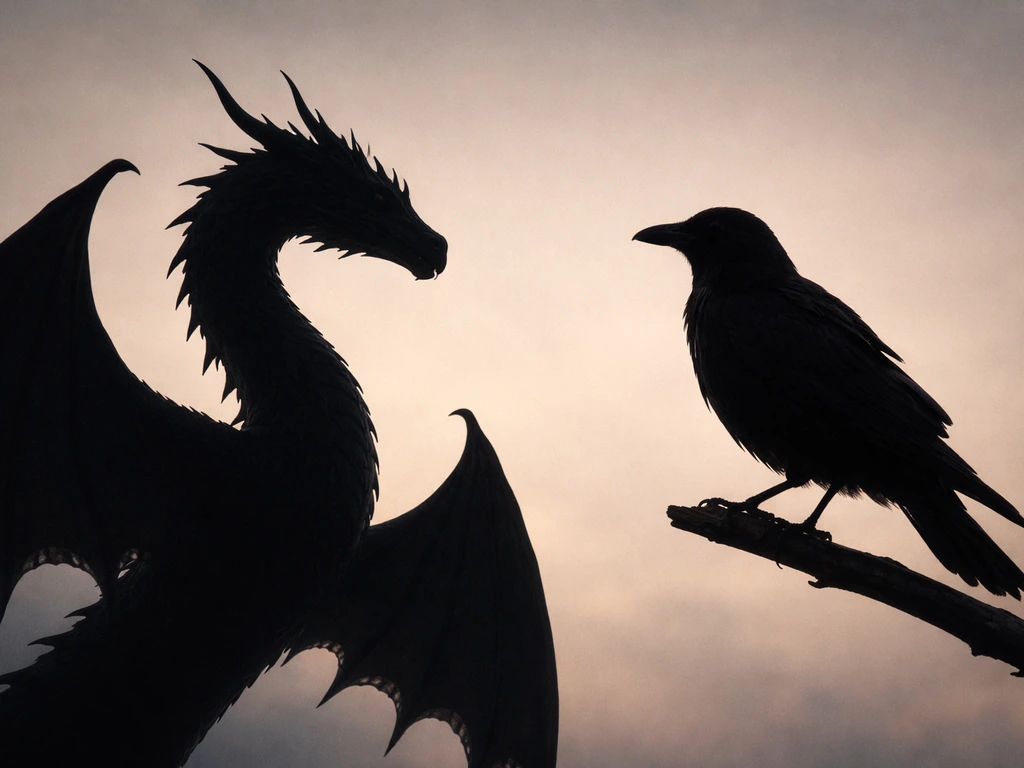
Dragon vs. bird: the quick verdict
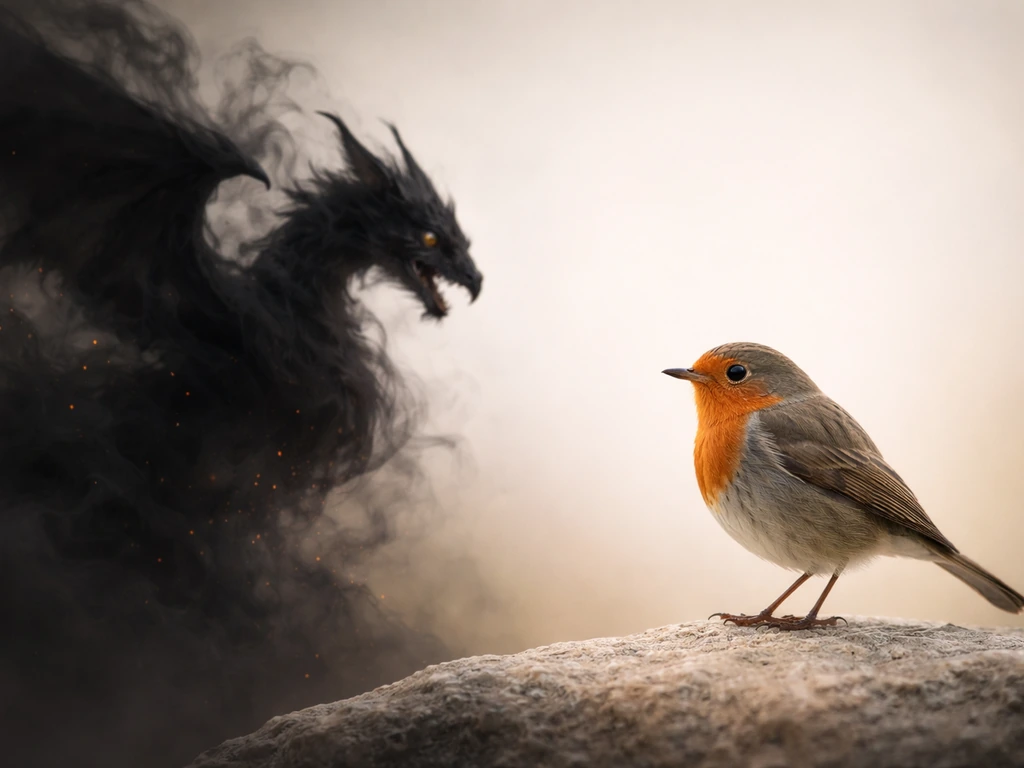
The confusion usually starts because dragons in mythology and fiction often have wings, fly through the air, and sometimes have a vaguely bird-like silhouette. That is where the resemblance ends. Wings alone do not make a bird, any more than fins make a mammal. Classification in biology is not about what an animal looks like at a glance. It is about a specific set of inherited biological traits, evolutionary relationships, and anatomical features. Dragons fail every meaningful test.
The most important point: dragons are not real. They appear in Greek myth, Norse legend, Chinese folklore, and modern fantasy fiction, but there is no specimen, no fossil record, and no genetic sequence. Science classifies animals based on type specimens and published descriptions tied to real organisms. You cannot classify a dragon any more than you can classify a unicorn or a flying spaghetti monster. The question is settled before it even gets biological.
What actually makes something a bird
Birds belong to the class Aves, which contains approximately 11,200 living species. Britannica identifies feathers as the single most important diagnostic trait: every bird has them, and no other living animal does. Feathers are made of keratin, the same fibrous protein found in hair and fingernails, but their structure is unique to birds. If an animal does not have feathers, it is not a bird. Full stop.
But the full biological definition goes further than feathers. To be classified as a bird, an animal needs a specific suite of traits that evolved together over millions of years.
- Feathers made of keratin covering the body
- Forelimbs modified into wings (even flightless birds like penguins and ostriches have wing-structure forelimbs)
- A toothless beak or bill (modern birds have no teeth)
- Hard-shelled eggs for reproduction
- Warm-blooded (endothermic) physiology with a four-chambered heart
- Keen vision and a highly developed visual system
- A lightweight, air-sac-enhanced respiratory system connected to hollow bones
- Vertebrate anatomy with a specific skeletal arrangement including a furcula (wishbone)
Notice that 'has wings' and 'can fly' are not the defining criteria. Bats have wings and fly. Dragonflies have wings and fly. Neither is a bird. Classification comes down to the full biological package, not a single surface feature. This is why the debate around dragons falls apart quickly when you apply real criteria.
Birds are technically dinosaurs (yes, really)
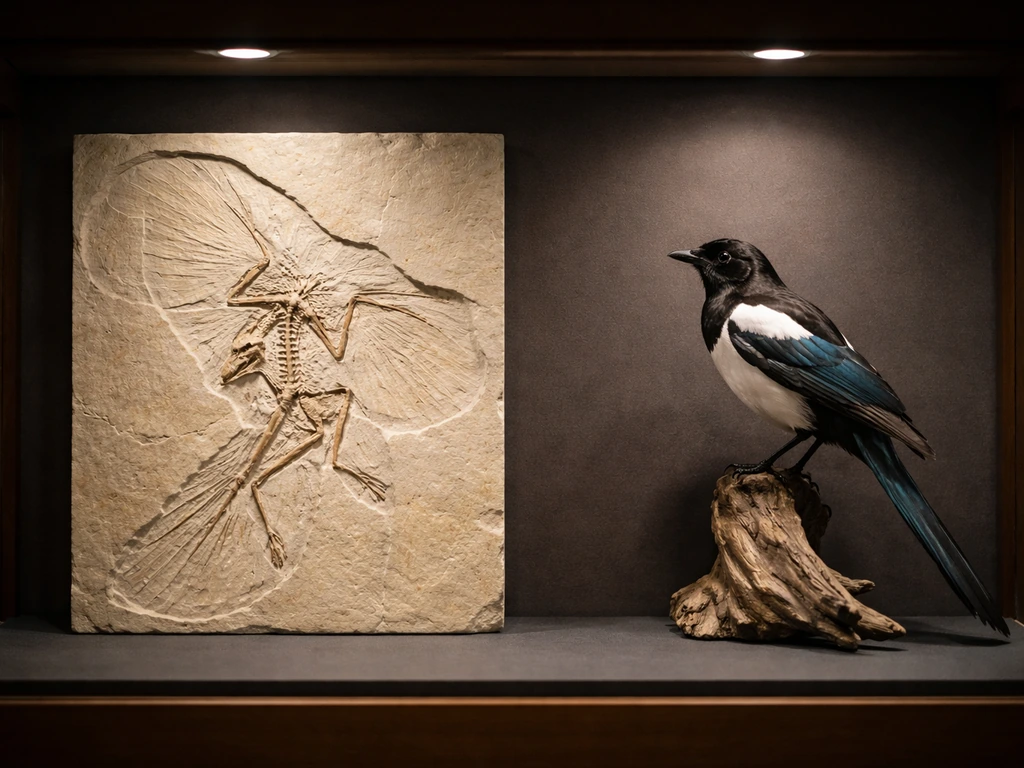
Here is the part of bird biology that surprises most people. In modern evolutionary taxonomy, birds are not just related to dinosaurs. They are dinosaurs, specifically a lineage of theropod dinosaurs that survived the mass extinction event about 66 million years ago. Theropod feet commonly resembled those of birds because birds inherited key foot structure from these dinosaurs Theropod dinosaurs. The American Museum of Natural History puts it plainly: modern birds are one kind of dinosaur because they share a common ancestor with non-avian dinosaurs.
The earliest known bird in the fossil record is Archaeopteryx, which lived around 150 million years ago and already had fully developed feathers. Birds' closest non-avian relatives were dromaeosaurid theropods like Deinonychus. This is not a fringe theory. It is supported by shared anatomical features, developmental biology, and genetic analysis. Modern DNA sequencing has confirmed that crown birds radiated rapidly after the end-Cretaceous mass extinction, and the family tree is well mapped.
Why does this matter for the dragon question? Because biological classification is about evolutionary lineage, not just appearance. Even if you imagined a fictional dragon that somehow had feathers, you would still need to trace its evolutionary ancestry through the theropod lineage to place it anywhere near birds. Dragons in mythology are typically described as serpent-like or reptilian, with the word 'dragon' itself coming from the Greek 'drakōn,' meaning serpent. That puts fictional dragons closer in description to reptiles than to birds, but since they are not real, the taxonomy question is entirely moot.
Why people keep asking if dragons are birds
The confusion is understandable when you think about how dragons are depicted in popular culture. In Game of Thrones, How to Train Your Dragon, and countless fantasy universes, dragons have large wings, fly with apparent grace, and move in ways that look vaguely bird-like. Some fictional dragons are even shown nesting, laying eggs, and caring for young, which mirrors bird behavior closely enough to plant the question in people's minds.
There is also a historical angle. Ancient cultures that created dragon myths were sometimes working from incomplete knowledge of real animals. Giant snake skeletons, fossilized dinosaur bones, and large crocodilians may have inspired early dragon legends. Some of those real animals share surface features with birds, like scales being distantly related to feathers at the molecular level, which blurs the lines further in casual thinking.
The Environmental Literacy Council makes a useful point here: superficial similarities like wings do not define a taxon. Birds and bats both have wings, but their wings evolved independently and from entirely different ancestral structures. A dragon's wings in fiction are usually depicted as separate limbs added to a four-limbed body, which is anatomically unlike any real bird (whose wings are modified forelimbs, not extra appendages). That fictional detail alone puts dragons outside the biological bird body plan.
How to classify other look-alikes: a practical method
Dragons are not the only creatures that prompt 'is X a bird?' debates. Dragonflies, flying foxes, and mythical creatures like the Phoenix or Griffin come up regularly. The same framework applies to all of them. Here is how to think through any 'is this a bird?' question quickly and confidently.
- Ask if it is a real, documented animal first. If there is no type specimen, no fossil record, and no verifiable biology, it cannot be classified at all. Mythical creatures, fictional animals, and cultural symbols exist outside taxonomy entirely.
- Check for feathers. Feathers are the single most reliable diagnostic marker. No feathers means no bird, regardless of whether it flies or has wings.
- Look at the forelimb structure. Birds have forelimbs modified into wings. If an animal has four legs plus wings as separate limbs (like most fantasy dragons), that body plan does not match any real bird.
- Consider reproduction. Birds lay hard-shelled eggs and are warm-blooded. If the animal is described as cold-blooded or gives live birth, it is not a bird.
- Check the evolutionary lineage when possible. Real animals can be traced through a family tree. Birds sit firmly within theropod dinosaurs. An animal with no connection to that lineage is not a bird, no matter how much it resembles one superficially.
- Do not let flight or wing shape fool you. Bats, insects, and many fictional creatures fly, but flight is not a bird-defining trait. Focus on the biological checklist, not the silhouette.
This same logic applies to related debates you might encounter. A dragonfly, for example, is an insect, not a bird, despite the name and the ability to fly. A drake is actually a male duck, so it is absolutely a bird. The word 'dragon' in 'dragonfly' is purely cosmetic, just as the wings on a fictional dragon are not enough to earn it a spot in class Aves.
Mythical creatures vs. real animals: a quick comparison
| Creature | Real or Mythical | Has Feathers | Warm-Blooded | Lays Hard-Shelled Eggs | Bird Classification |
|---|---|---|---|---|---|
| Dragon | Mythical | No (scales in most depictions) | Not defined (fictional) | Sometimes in fiction | Not a bird (not real) |
| Phoenix | Mythical | Yes (in most depictions) | Not defined (fictional) | Yes (in some myths) | Not a bird (not real) |
| Eagle | Real | Yes | Yes | Yes | Bird (class Aves) |
| Bat | Real | No | Yes | No (live birth) | Not a bird (mammal) |
| Dragonfly | Real | No | No (cold-blooded) | No | Not a bird (insect) |
Where this leaves you
The answer to 'is a dragon a bird' is a clean no, for two reasons that stack on top of each other. First, dragons are not real animals and cannot be taxonomically classified at all. Second, even fictional dragons as described in mythology and popular culture lack feathers, have a non-avian body plan with separate wing limbs, are typically depicted as cold-blooded or reptilian, and have no evolutionary connection to the theropod dinosaur lineage that produced real birds. Britannica notes that birds evolved from theropod dinosaurs, a group that includes many bipedal carnivorous dinosaurs.
The practical takeaway is that bird classification is about a specific biological package, not about flying or having wings. Any time you run into a similar debate, run through the checklist: Is it real? Does it have feathers? Are its forelimbs modified into wings? Is it warm-blooded with a four-chambered heart? Does it lay hard-shelled eggs? That five-question test will settle most 'is X a bird?' arguments faster than any internet debate ever could.
FAQ
If a fictional dragon in a story had feathers, would that make it a bird in real biological terms?
Not automatically. In biology, being a bird requires more than feathers, you would also need a matching bird-like body plan and evidence of a theropod (avian) ancestry. A made-up backstory about feathers cannot replace the evolutionary and anatomical criteria used for real classification.
Can dragons be classified at all, even if they are fictional?
You can only do a descriptive, speculative classification within the story, for example “birdlike fantasy reptile,” but it would not be part of real taxonomy. Real taxonomy depends on real organisms, type specimens, and testable evolutionary relationships.
Why do wings not settle the question, since birds fly?
Flight has multiple evolutionary solutions. Bats and dragonflies can fly using entirely different wing structures, and similar logic applies to fictional dragons, where “wing-like” appendages may be separate limbs rather than modified forelimbs like true bird wings.
Could a dragon be a bird if it laid eggs, like some depictions claim?
Egg-laying alone is not enough. Many non-birds lay eggs, including reptiles and insects. A bird classification requires a full suite of coordinated traits, not just one shared behavior.
What if a dragon is described as warm-blooded and has a four-chambered heart in a fantasy setting?
Those traits would still not guarantee it is a bird in the scientific sense. The key missing piece is evolutionary lineage plus bird-specific anatomy, such as feather development and forelimb structure. Fantasy descriptions can reduce confusion, but they cannot establish real ancestry.
Are the names “dragon” and “drake” evidence that dragons are birds?
No. “Drake” is a term used for a male duck, which is a real bird. “Dragon” is a label used in folklore and fantasy and is not a taxonomic clue about whether the creature belongs to class Aves.
Do dragon myths always come from real animals that were mistaken?
Sometimes myths were inspired by real findings, such as fossils or large reptiles, but that does not mean the mythic “dragon” is a real animal that can be placed in taxonomy. Legends can combine multiple sources and still represent an entirely fictional organism.
How can I apply the checklist to other “is it a bird” questions quickly?
Use a decision order: first confirm whether it is real, then check for feathers, then verify bird-like forelimb wings rather than extra appendages, then evaluate endothermy and typical bird physiology, and finally consider egg type and evolutionary relationship. If any major step fails, the answer is effectively no.
What about edge cases like flying foxes or other winged mammals and insects?
They are common sources of confusion, but they fail the bird-specific criteria. Flying foxes lack feathers and have mammalian anatomy, and insects like dragonflies have wings but are arthropods. Similar performance (flying) does not imply shared classification.
Next Articles

Is Taph a Bird? How to Verify What It Is and Decide
Find out if Taph is a bird by checking feathers, anatomy, lineage, and egg traits, plus key lookalike differences.
Is a Bird a Land Animal? Clear Classification Rules
Clear rules for whether a bird is a land animal, separating biology class Aves from habitat and locomotion.

Is a Bird a Tetrapod? Yes, Here’s What It Means
Yes, birds are tetrapods in the evolutionary clade sense, even without four visible legs; learn the definition and trait