Quick answer: yes, birds are vertebrates
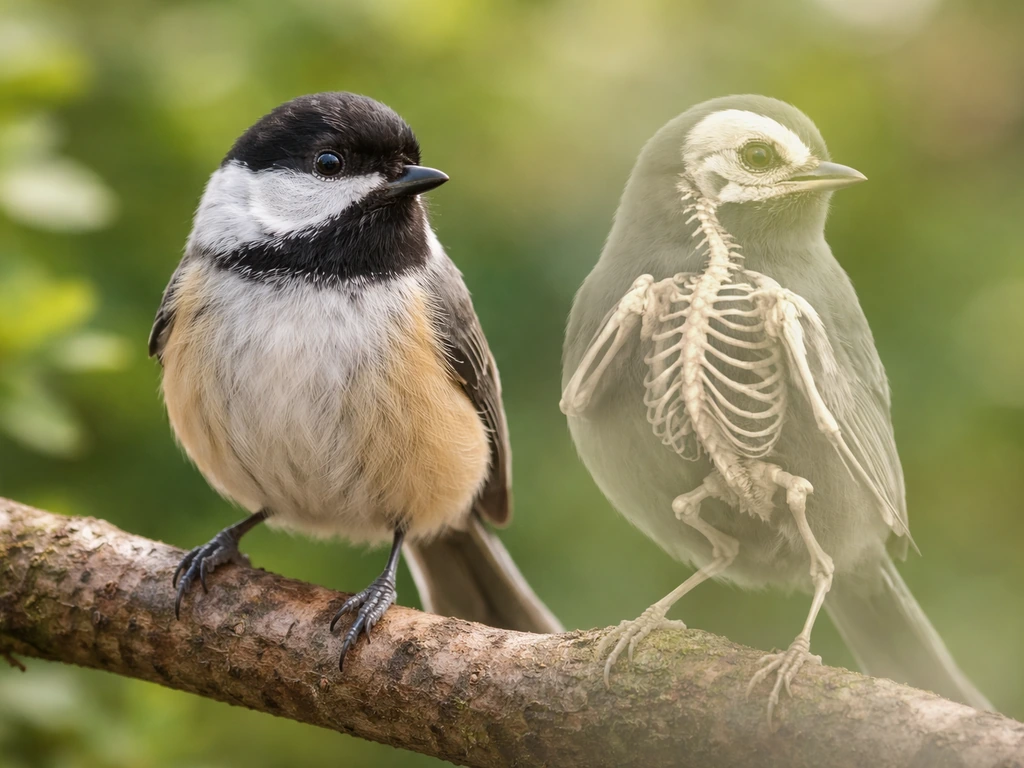
Birds are absolutely vertebrates. Every single species of bird, from a hummingbird to an ostrich, belongs to the subphylum Vertebrata. If you are also wondering whether birds count as land animals, see is a bird a land animal for a related classification angle. That is not a close call or a matter of debate. Birds have a backbone (vertebral column), an internal skeleton made of bone, and a central nervous system partly enclosed within that backbone. All of those are the defining criteria for being a vertebrate. Birds are not invertebrates, and there is no legitimate classification framework in which they would be placed in that category.
Taxonomically, birds (Class Aves) sit inside the hierarchy Chordata → Vertebrata → Aves. That lineage is confirmed by the Animal Diversity Web, NCBI Taxonomy, and every major biology reference used in education today. If you searched 'is a bird a vertebrate or invertebrate,' you can stop wondering: it is a vertebrate, full stop.
What 'vertebrate' actually means
The word 'vertebrate' comes from 'vertebra,' the individual bones that stack together to form the spinal column. An animal is a vertebrate if it has a vertebral column (backbone) and an endoskeleton, meaning the skeleton is on the inside of the body rather than the outside. That internal skeleton can be made of bone, cartilage, or a combination of both. Vertebrates also have a central nervous system (brain and spinal cord) that is at least partly shielded by that bony column.
Invertebrates, by contrast, have no backbone at all. Think insects, spiders, worms, jellyfish, and crabs. They may have hard outer shells (exoskeletons) or soft bodies, but nothing running down their center that you could call a spine. The line between the two groups is pretty clear once you know what to look for.
The bird traits that make it unmistakably a vertebrate
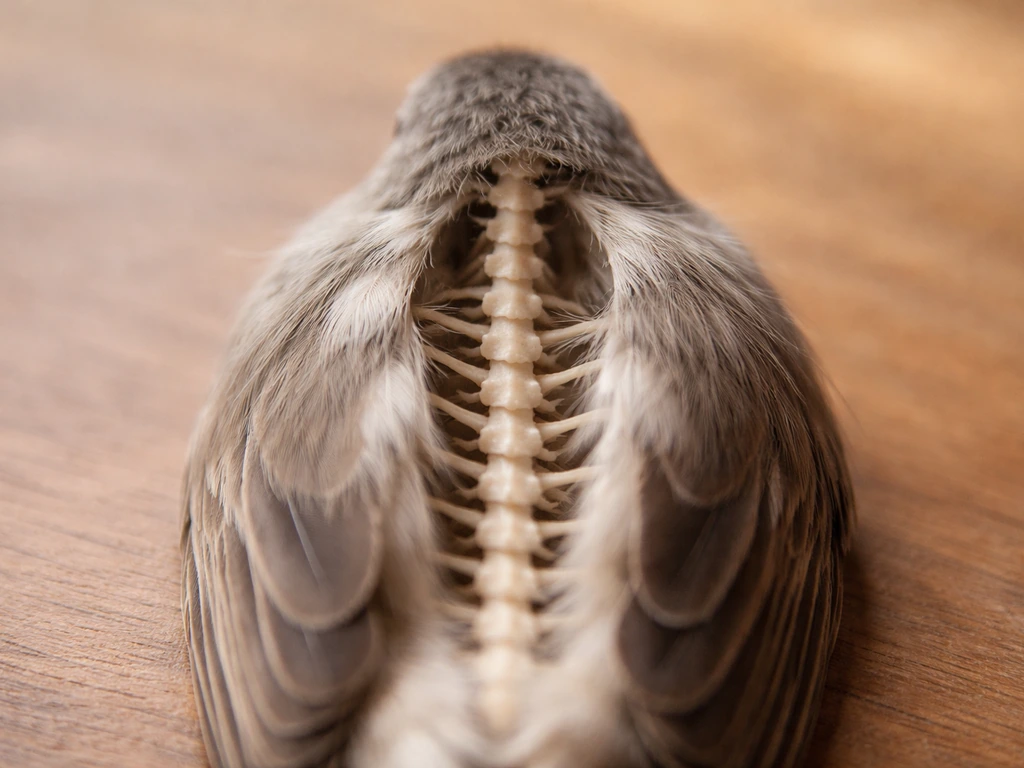
Birds tick every box on the vertebrate checklist, plus they have some traits that are exclusive to them within the vertebrate family. Here is what the anatomy actually looks like:
- Vertebral column: Birds have a bony spine. In fact, most of the vertebrae in a bird's trunk region are fused together, making the column especially rigid to support flight. The cervical (neck) vertebrae remain flexible, which is why owls can rotate their heads so dramatically.
- Internal endoskeleton: The entire skeletal framework, including limb bones, ribs, skull, and sternum (keel bone), is internal and made of bone. Many of these bones are hollow, which reduces weight for flight without sacrificing structural strength.
- Feathers: Feathers are complex keratin structures that grow from follicles in the skin. They are uniquely vertebrate integumentary structures. Feathers do not indicate a non-vertebrate animal any more than hair does on a mammal.
- Endothermy (warm-bloodedness): Birds generate their own body heat internally. This is a trait shared with mammals and is one of the features that separates birds from most reptiles, which rely on external heat sources.
- Hard-shelled amniotic eggs: Birds lay eggs protected by a hard shell and internal membranes (amnion, chorion, allantois). This amniotic egg is a hallmark of the amniote group, which includes birds, mammals, and reptiles, all of which are vertebrates.
- Central nervous system enclosed by the spine: Like all vertebrates, a bird's spinal cord runs through and is protected by the vertebral column.
The Smithsonian National Museum of Natural History describes birds as living vertebrates and specifically calls out feathers, hollow bones, and hard-shelled eggs as the traits that distinguish them from other vertebrate groups. Those traits do not push birds out of the vertebrate category; they simply mark birds as a distinct class within it.
How birds compare to other animal groups
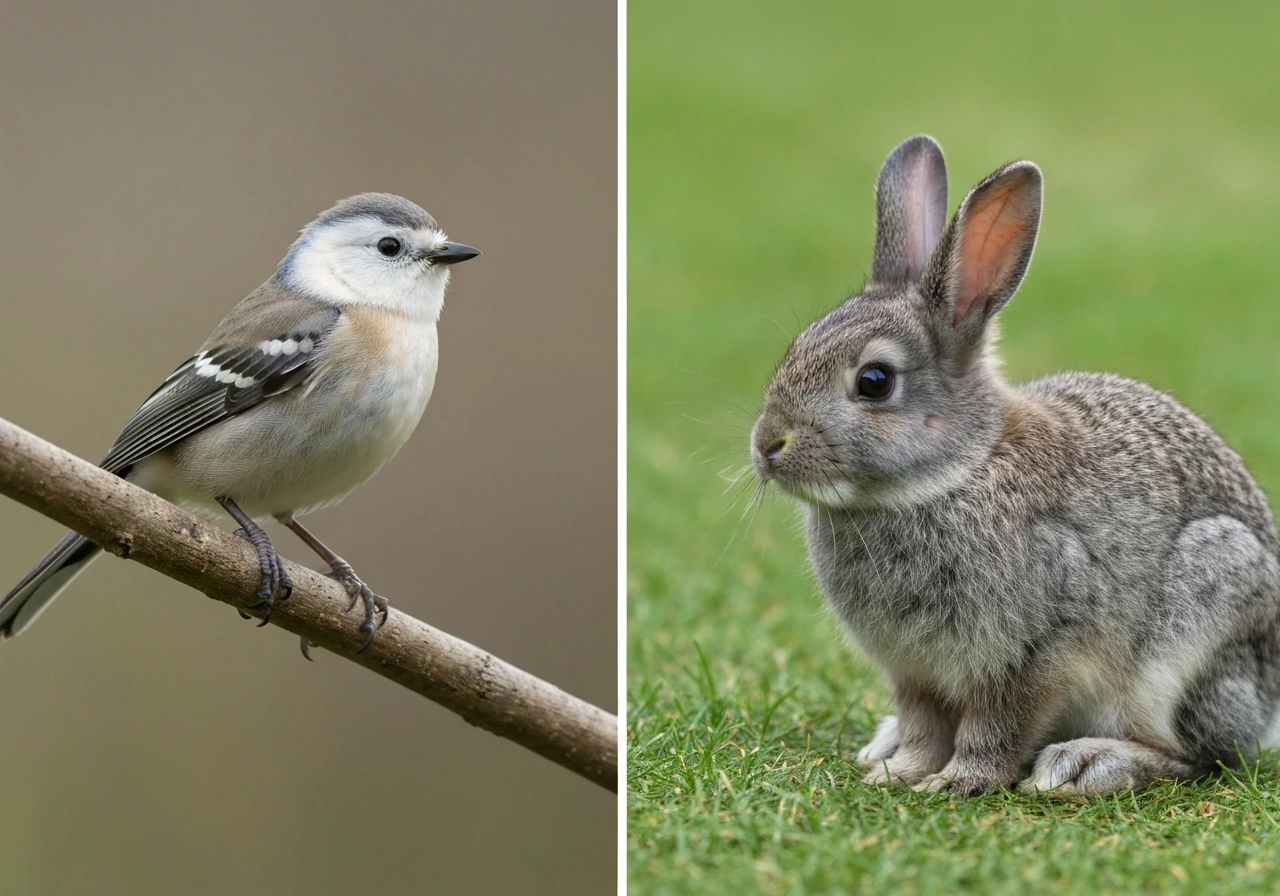
The most useful way to see why birds are clearly vertebrates is to line them up against other groups directly. This comparison also helps with the related questions of whether a bird is a reptile or a mammal (it is neither, though it is more closely related to reptiles than mammals). For the related question is a bird an animal or a mammal, the answer is that birds are animals, but they are not mammals.
| Trait | Birds | Mammals | Reptiles | Insects (Invertebrates) |
|---|
| Vertebral column (backbone) | Yes | Yes | Yes | No |
| Internal endoskeleton | Yes | Yes | Yes | No (exoskeleton) |
| Warm-blooded (endothermic) | Yes | Yes | Generally no | No |
| Feathers | Yes | No | No | No |
| Hair / fur | No | Yes | No | No |
| Hard-shelled amniotic egg | Yes | Most do not lay eggs | Yes (leathery shell) | No amniotic membranes |
| Classified as Vertebrata | Yes | Yes | Yes | No |
As you can see, birds, mammals, and reptiles all share the vertebrate column (pun intended). Insects and other invertebrates fall completely outside that column in every meaningful trait. Birds and mammals are both endothermic, which sets them apart from most reptiles, but all three groups are solidly vertebrate. Whether a bird is an amniote follows from its place in the amniote clade, where birds sit alongside reptiles and mammals is a bird an amniote. Birds sit within the amniote clade alongside reptiles and mammals, and they are also classified as tetrapods, a broader vertebrate grouping that includes all four-limbed vertebrates (a bird's wings count as modified forelimbs).
Why people get confused about this
The confusion around bird classification usually comes from a few common mix-ups, and they are all understandable once you see them spelled out.
Feathers look exotic, so people assume birds are in a different category
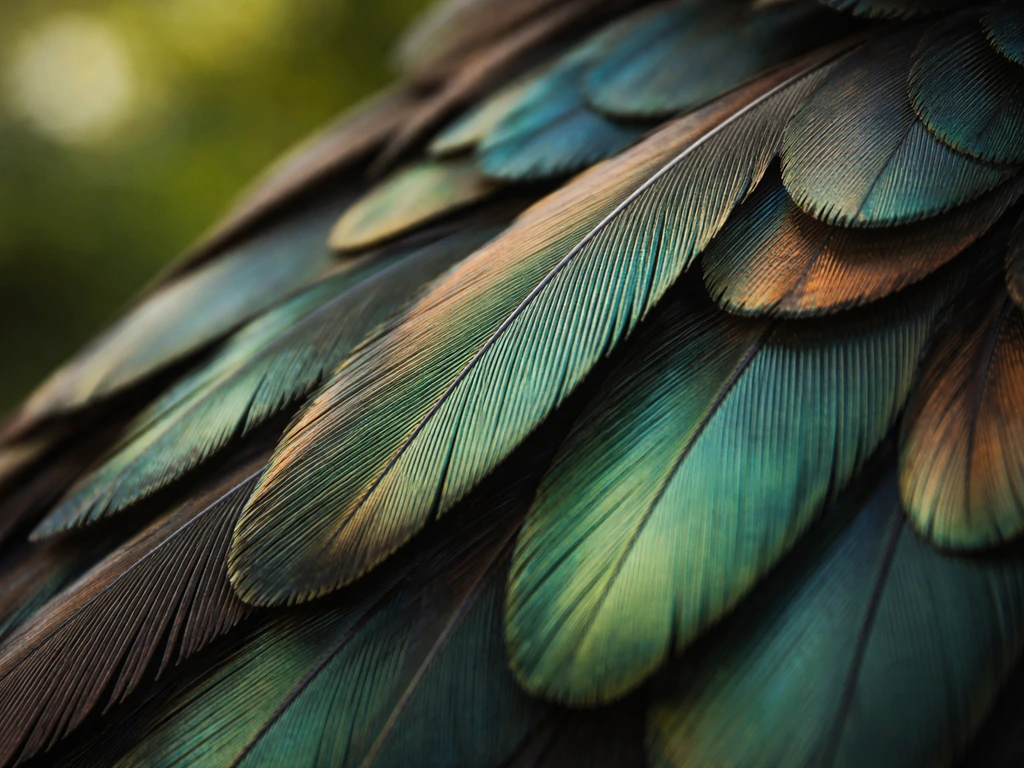
Feathers are so distinctive that some people unconsciously file birds in a separate mental category from 'normal' animals with fur or scales. But feathers are just another type of keratin-based integumentary structure, the same basic protein family as mammal hair and reptile scales. They grew from follicles in vertebrate skin. Having feathers is no more 'non-vertebrate' than having hair is for a dog.
Hollow bones sound fragile and non-skeletal
People sometimes hear 'hollow bones' and imagine something flimsy that barely qualifies as a skeleton. In reality, bird bones are genuine bone tissue, structurally reinforced with internal struts. They are part of a full internal skeleton. The hollowness is an adaptation for reducing weight during flight, not an absence of real skeletal structure.
Birds get lumped with insects or butterflies in casual language
In everyday language, anything that flies sometimes gets grouped together. Kids (and occasionally adults) lump butterflies, bats, and birds into the same 'flying things' mental category. But flying is a behavior, not a classification trait. That is why the question “is a bird a vertebrate or invertebrate?” has such a clear answer: birds are vertebrates, not invertebrates. Butterflies are insects and true invertebrates. Bats are mammals. Birds are birds. A bird that is a mammal is a common misunderstanding, since birds are vertebrates but not mammals. Flight evolved independently in all three groups, and it tells you nothing about vertebrate status.
Confusion with reptiles and mammals
A related source of confusion is the question of whether birds are reptiles or mammals. This helps explain why people ask, “is a bird a reptile or a mammal,” and the consistent answer is that birds are neither. They are neither, though scientifically speaking, birds evolved from theropod dinosaurs and are more closely related to reptiles (specifically crocodilians) than to mammals. Some modern cladistic frameworks actually place birds within the reptile clade, which scrambles people's intuitions. Either way, all of those groups, birds, reptiles, and mammals, are vertebrates. The question of which group they belong to within vertebrates is a different discussion.
How to check any animal's classification yourself
If you want to figure out whether any animal is a vertebrate or invertebrate, you really only need to ask a couple of questions. You do not need a biology degree; you just need to know what to look for.
- Does it have a backbone? If you can identify a bony or cartilaginous spine running along the animal's back, it is a vertebrate. This rules out insects, worms, mollusks, and most creatures without an obvious internal skeleton.
- Does it have an internal skeleton? Vertebrates carry their skeleton inside. If the animal's hard structures are on the outside (shell, exoskeleton), it is an invertebrate.
- Does it have a brain and spinal cord enclosed in bone or cartilage? The vertebral column evolved partly as protection for the nervous system. If that structure is present, you are looking at a vertebrate.
- For birds specifically: look for feathers, a beak, two wings (even if flightless), two legs, and hard-shelled eggs. Any animal with all of those traits is a bird and therefore a vertebrate.
- When in doubt, look up the animal on NCBI Taxonomy or Animal Diversity Web. Both databases list the full taxonomic hierarchy. If 'Vertebrata' appears in the lineage, there is your answer.
Birds pass every one of those checks with ease. They have a fused, bony vertebral column, a complete internal skeleton with hollow bones, a brain and spinal cord protected by that column, and the classic bird-specific markers: feathers, beak, wings, and hard-shelled eggs. There is no ambiguity here. A bird is a vertebrate, it has always been a vertebrate, and no amount of internet debate is going to change that.