There is no bird that is a mammal. Full stop. Birds and mammals are two completely separate classes of animals, and no real creature alive today belongs to both. If someone told you there's a bird that counts as a mammal, or you've been chasing down a search trying to figure out which bird is the mammal exception, the answer is that no such exception exists. What does exist is a lot of confusion, some fascinating lookalikes, and a few genuinely weird animals that blur the lines enough to make you question your own biology knowledge. Let's sort all of that out.
Bird That Is a Mammal: Why None Exist and How to Tell

Marcus Hendricks
16 Apr 2026
Bird vs. mammal basics: how classification actually works
Every animal on Earth gets slotted into a classification system built on shared traits and evolutionary history. Birds belong to the class Aves. Mammals belong to the class Mammalia. These are two distinct branches on the tree of life, and membership in one automatically excludes membership in the other. Think of it like citizenship in two different countries that don't allow dual passports.
That said, birds and mammals do share a common ancestor if you go far enough back, and both are warm-blooded vertebrates, which is probably why the question comes up at all. But sharing a great-great-great-grandparent in evolutionary history doesn't make two animals the same class, any more than your distant cousin is the same person as you. If you've ever wondered how deep the relationship actually goes, the question of whether a bird is a reptile or a mammal gets into the evolutionary tree in more detail, and it's a genuinely interesting rabbit hole.
The practical takeaway here is that classification is based on a specific checklist of biological traits, not appearance or behavior. An animal that flies isn't automatically a bird. An animal that swims isn't automatically a fish. The traits that define birds are precise, and none of them overlap with the defining traits of mammals.
Birds that are mammals: the direct answer
Zero. There are no birds that are mammals. This isn't a technicality or a matter of scientific debate. It's a fundamental fact of taxonomy. Every animal classified as a bird (class Aves) has feathers, a beak, hollow bones, and hatches from a hard-shelled egg. Every animal classified as a mammal (class Mammalia) has hair or fur, feeds its young with milk from mammary glands, and has a specific arrangement of three bones in the middle ear (the malleus, incus, and stapes). These trait lists don't overlap. No living animal carries both sets of defining features.
The confusion usually comes from two places: animals that look like birds but aren't (bats being the classic example), and animals that seem to straddle the line because they do something unexpected, like laying eggs. If you're thinking about egg-laying, you're probably thinking about monotremes, and we'll get to why those aren't birds in a moment.
What actually makes something a mammal
Before diving into the lookalikes and common mix-ups, it helps to have a solid mental checklist of what makes a mammal a mammal. According to Britannica, the defining mammalian traits are:
- Hair or fur at some point in the animal's life cycle
- Mammary glands that produce milk to nourish young
- A diaphragm used for breathing
- Three middle ear bones: the malleus, incus, and stapes
- Warm-blooded metabolism (endothermy)
Most mammals also give birth to live young, but this is where things get genuinely interesting: monotremes, specifically the platypus and echidnas, are mammals that lay eggs. They still have mammary glands and hair, so they're unambiguously mammals. They just skipped the live-birth memo. This egg-laying trait is probably the single biggest reason people start wondering if a mammal could somehow be a bird, but laying eggs doesn't make you a bird. If it did, snakes and turtles would need name tags that said "honorary bird," and that's not how biology works.
Animals people commonly mistake for birds (and why they're neither birds nor mammals in the way you'd expect)
Bats: the flying mammal that isn't a bird
Bats are probably the most common source of bird-mammal confusion. They fly, they're active at dusk, they roost in trees, and if you catch a quick glimpse of one at twilight you might reasonably mistake it for a swift or a swallow. But bats are mammals, full stop. They have fur, give birth to live young, nurse those young with milk, and have the mammalian middle ear structure. They have no feathers and no beak. Their wings are modified forelimbs with a membrane of skin stretched between elongated fingers, which is completely different from a bird's feathered wing structure.
Platypus: the mammal that lays eggs
The platypus confuses everyone. It has a bill (not a beak, an important distinction), it lays eggs, it lives in and around water, and it looks like something a committee assembled from leftover animal parts. But the platypus is a mammal. It has fur, it produces milk from mammary glands (even if they're more primitive than those of most mammals), and it has the defining mammalian ear bones. It is the most famous member of the monotremes, and while monotremes are extraordinary, they are not birds.
Flying squirrels and sugar gliders: gliding isn't flying
These animals don't really fool people into thinking they're birds, but they come up in conversations about flying animals. Flying squirrels and sugar gliders glide rather than fly, using a membrane called a patagium stretched between their limbs. Both are mammals. Neither has feathers. Neither is a bird.
Penguins: birds that can't fly
On the flip side, some people are surprised to learn that penguins are birds at all because they can't fly and spend most of their lives in the water. But penguins have feathers (dense, waterproofed ones), beaks, hollow bones, and they hatch from hard-shelled eggs. The U.S. National Park Service notes that birds hatch from protective, hard-shelled eggs and that birdwatching identification connects to traits like beak, feet, and feathers. They're birds. Flightless ones, sure, but birds. Whether a specific animal counts as a bird often trips people up when the animal defies the "birds fly" assumption, but flight has never been the defining trait of Aves.
Mascots, fictional creatures, and internet debates
Brand mascots and fictional birds also generate surprising amounts of search traffic around classification questions. If you've ever seen a debate about whether a specific mascot or fantasy creature counts as a bird, the classification rules above apply just as cleanly to those discussions. One example that generates real debate is whether Taph is a bird, which shows just how far these classification questions can travel outside the natural world.
The defining traits of birds: a practical checklist
The Smithsonian National Museum of Natural History identifies three traits that distinguish birds from all other living vertebrates: feathers, hollow bones, and hard-shelled eggs. The Animal Diversity Web adds a toothless horny beak as another defining feature. Animal Diversity Web (Aves) also describes birds as having a toothless horny (beak), along with feathers and hard-shelled eggs a toothless horny beak. Put those together and you get a reliable checklist:
- Feathers (not fur, not scales, not a skin membrane)
- A beak or bill made of keratin with no teeth
- Hollow, lightweight bones
- Hard-shelled eggs (even flightless birds lay them)
- Warm-blooded metabolism
- Two legs and two wings (even if the wings are vestigial)
If an animal checks all or most of those boxes, it's a bird. If it's missing feathers and a beak, it doesn't matter how it flies or where it lives. It's something else. Birds are also vertebrates, which is worth noting since whether a bird is a vertebrate is another question that comes up more than you'd expect, and the answer is yes, always.
How to tell a bird from a mammal on the spot
When you encounter an unfamiliar animal or run into a "is it a bird or a mammal?" debate online, here's a practical decision process you can run through in about thirty seconds.
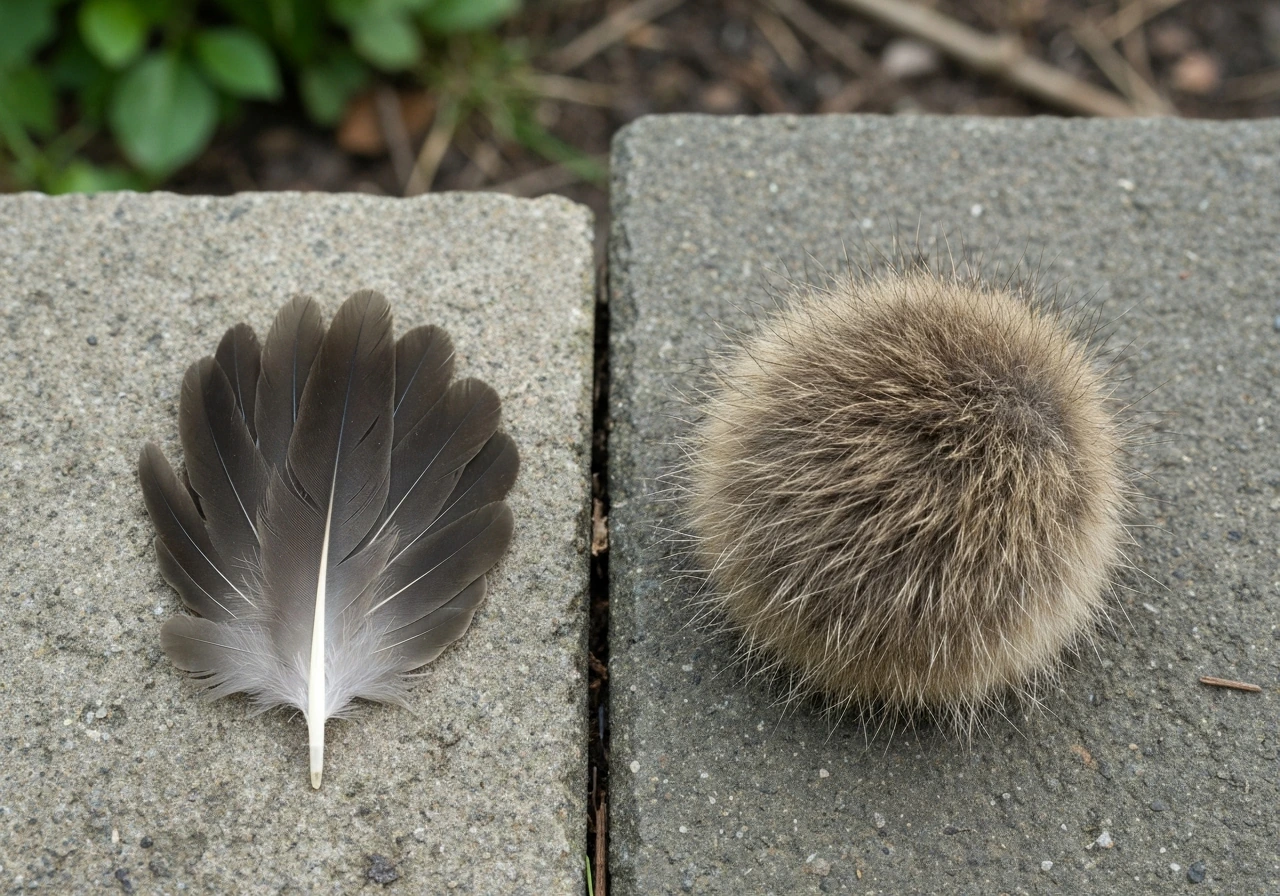
- Look for feathers. If it has feathers, it's a bird. No other living animal has feathers.
- Look for a beak. A true bird beak is made of keratin and has no teeth. A bill-like structure on a mammal (like the platypus) is softer and structurally different.
- Check for hair or fur. If it has fur or hair at any life stage, it's a mammal.
- Ask how the young are fed. If the mother nurses with milk, it's a mammal, regardless of whether it lays eggs.
- Check the eggs if applicable. Bird eggs have hard, calcified shells. Most mammal eggs (where they exist) are leathery and soft.
- When in doubt, look up the class. Any reliable biology reference will list the class (Aves or Mammalia) in the first line of an animal's taxonomy.
That first check, feathers, is almost always enough. Feathers are so uniquely avian that finding them on an animal is effectively proof of bird classification on its own. No mammal, living or extinct, has ever had feathers. Some dinosaurs had feather-like structures, which is a fascinating evolutionary story, but that's a different conversation.
Bird vs. mammal traits at a glance
| Trait | Birds (Aves) | Mammals (Mammalia) |
|---|---|---|
| Body covering | Feathers | Hair or fur |
| Mouth structure | Beak or bill, no teeth | Jaw with teeth (usually) |
| Bone structure | Hollow, lightweight bones | Dense bones |
| Reproduction | Hard-shelled eggs | Live birth (usually) or leathery eggs (monotremes) |
| Feeding young | Regurgitation or foraging | Milk from mammary glands |
| Middle ear bones | Single bone (columella) | Three bones (malleus, incus, stapes) |
| Warm-blooded | Yes | Yes |
| Examples | Eagles, penguins, sparrows | Dogs, bats, platypus |
Where birds fit in the broader animal picture
One reason the bird-versus-mammal question persists is that birds genuinely do share a lot of traits with other animal groups, and it can feel like the lines are blurry. Birds are animals (a point worth stating directly, since whether a bird is an animal or a mammal is a surprisingly common search). They're vertebrates. They're amniotes, meaning they produce eggs with a protective membrane that allows reproduction on land, which is a trait they share with reptiles and mammals. In fact, if you want to understand whether a bird is an amniote, the answer is yes, and that shared characteristic is part of why the evolutionary relationships feel complicated.
Birds are also tetrapods in the evolutionary sense: four-limbed vertebrates whose forelimbs evolved into wings. If the question of whether a bird is a tetrapod has ever crossed your mind, it's a yes, even if two of those four limbs are now wings. And while they're primarily associated with the sky, birds are technically land animals in classification terms, which is another nuance covered in discussions about whether a bird is a land animal.
All of these overlapping traits are what make taxonomy feel messy to people who didn't spend years in a biology classroom. But the class-level distinction between Aves and Mammalia is one of the clearest and most stable in all of zoology. There's no gray zone. No exceptions. No bird-mammals hiding in the wild.
The definitive answer, and how to use it
No bird is a mammal. If you see a claim to the contrary, the animal in question is either being misidentified (it might be a bat, a flying squirrel, or another winged mammal), mislabeled (a fictional or mascot creature being assigned a real-world class), or misunderstood (like the platypus, which lays eggs but is definitively a mammal, not a bird). The checklist above gives you everything you need to settle these debates yourself: look for feathers first, then check for a true keratin beak, then ask how the young are fed. Three questions, and you'll have your answer nearly every time.
FAQ
If both birds and mammals are warm-blooded, why can’t a bird be a mammal?
No. “Warm-blooded” just means the animal maintains its own body temperature. Birds and mammals are both endothermic, but class membership depends on other structural traits, especially feathers and egg-based reproduction for birds, and fur plus milk feeding for mammals.
What if an animal looks featherless, could it be a bird anyway?
A featherless bird is still a bird. Some birds lose most feathers during molt, or certain species have sparse plumage, but they still have bird traits like a beak (keratin-based) and hard-shelled eggs. If you truly cannot find feathers at all, focus on the beak and egg and ignore “bird-looking” behavior like flying.
How can I tell using the diet or baby-feeding clues, not just appearance?
Young feeding is a strong tie-breaker. Mammals nurse with milk from mammary glands, including monotremes (they lay eggs, but still produce milk). Birds feed their chicks with whatever their species uses, but it is not mammary-gland milk, and they hatch from hard-shelled eggs.
Do any mammals have feather-like hair or structures?
No. Feathers are not “hair but different.” Feathers are a distinct, uniquely avian skin structure, and no mammal, alive or extinct, has true feathers. “Feather-like” structures in some extinct animals are a separate evolutionary topic and do not mean any living animal is both a bird and a mammal.
Are “bills” on mammals ever the same as a bird beak?
It depends on what you mean by “beak.” Birds have a horny, keratin beak, while mammals typically have different mouth structures. If the claim is about a platypus-like “bill,” that is still not a bird beak, and the presence of mammalian ear bones and milk production points to mammal classification.
How do I avoid confusing bats and other winged mammals with birds?
Yes, it is possible to be misled by “wing” language. A bat’s wings are skin membranes stretched between elongated fingers, mammals with fur and live birth. Birds have wings made of feathered forelimbs. When in doubt, treat “winged” as an ambiguous description, then verify feathers or the beak plus egg traits.
If an animal lays eggs, does that automatically mean it is a bird?
No. “Lays eggs” is not sufficient to make an animal a bird. Birds lay hard-shelled eggs and have other defining avian traits. Monotremes, like platypus and echidnas, lay eggs but remain mammals because they also have fur and mammary glands (milk feeding).
How should I handle bird-versus-mammal arguments about fictional mascots and brand characters?
The “bird” vs “mammal” rule applies the same way to fictional creatures, mascots, and brand characters when you are labeling them as real biological categories. If the creature is described as laying hard-shelled eggs with a beak and hollow bones, it matches bird criteria. If it is described as having fur and feeding young with milk, it matches mammals.
Can a flightless animal still be classified as a bird?
Partial traits can mislead. For example, “flightless” does not remove bird status, because flight is not the defining criterion for birds. If the checklist items for birds are present, like feathers and beak plus egg characteristics, it is still a bird even if it swims, walks, or cannot fly.
What is the fastest checklist I can use when I’m unsure about an animal’s class?
If you find feathers anywhere on the animal at all, that is usually enough to conclude it is a bird. If not, look for a true keratin beak and then for egg-based reproduction. If you are instead seeing fur plus milk feeding, it is a mammal. This “feathers, beak, milk” style shortcut catches most mistakes quickly.