Birds are not strictly land animals, but they are not strictly anything else either. Biologically, a bird belongs to class Aves, a group of warm-blooded, feathered vertebrates that is completely separate from the "land animal" category. "Land animal" is a habitat description, not a biological class. Most birds do spend time on land, many also fly, and some spend the majority of their lives on or in water. So the honest answer is: birds are animals that live across land, air, and sometimes water, and calling any specific bird a "land animal" depends entirely on where that particular species actually spends its time.
Is a Bird a Land Animal? Clear Classification Rules

Marcus Hendricks
29 May 2026
What people usually mean by "land animal"
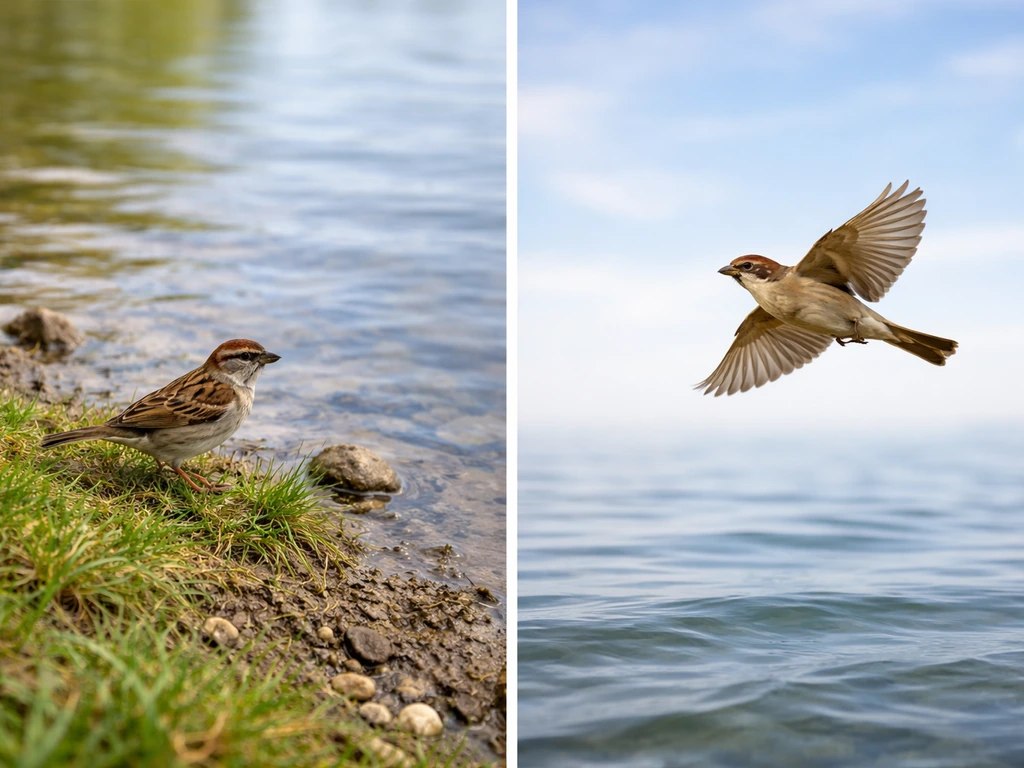
When most people say "land animal," they mean something that lives primarily on dry ground, as opposed to water (aquatic) or air (aerial). Merriam-Webster ties the word "land" to dry earth rather than water, which is the intuitive baseline. In everyday conversation, a cow is a land animal, a dolphin is a water animal, and a hawk is... well, that is where it gets complicated.
The important thing to understand is that "land animal" is a habitat or lifestyle description, not a formal biological classification. Biology does not have an official class called "land animals." Instead, biology organizes animals into classes based on shared physical traits and evolutionary relationships: mammals, reptiles, birds, amphibians, fish, and so on. A dog is a mammal that lives on land. A whale is a mammal that lives in water. "Land" does not define either one scientifically. The same logic applies to birds.
What makes a bird a bird (class Aves)
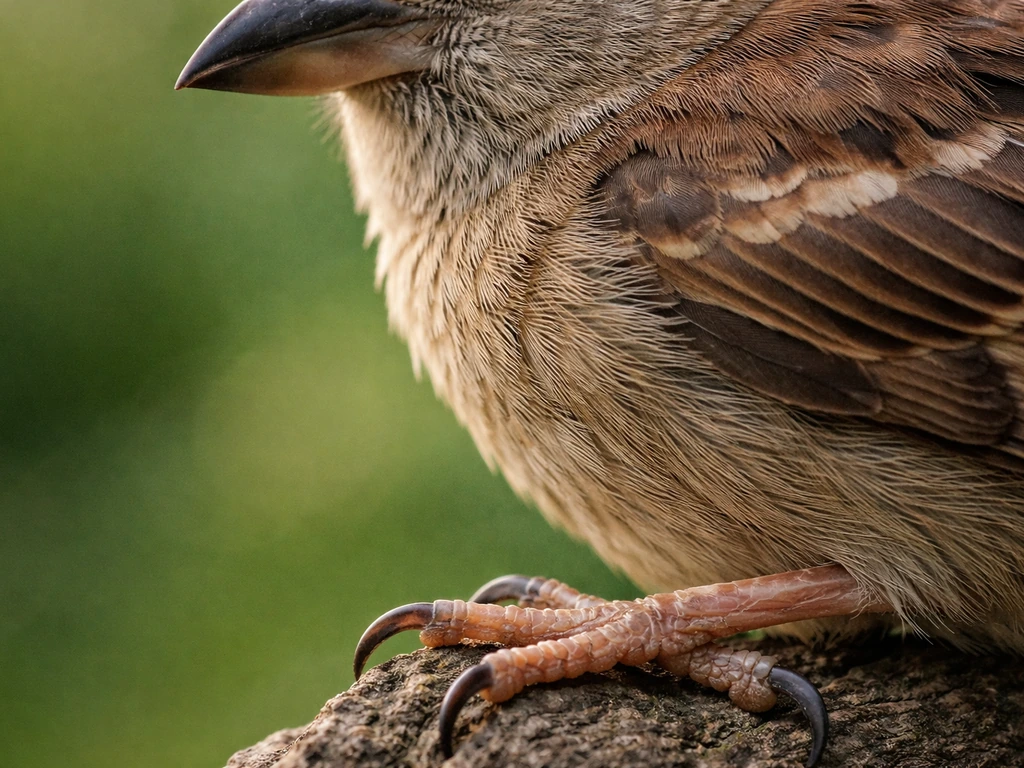
Biologically, birds are defined by a specific set of traits that place them in class Aves. These traits have nothing to do with where they live. Feathers are the single biggest diagnostic feature: every animal with feathers is a bird, and no other living animal has feathers. Beyond feathers, birds are warm-blooded (endothermic) vertebrates with a four-chambered heart, a beak instead of teeth, forelimbs modified into wings, and hard-shelled eggs. That combination is what makes a bird a bird.
It is worth noting that feathers likely appeared even earlier in bird-related dinosaur lineages, which is part of why classification is built on biological evidence rather than on where an animal happens to live or how it gets around. A penguin that waddles on ice and swims through the ocean is still unmistakably a bird because it has feathers, a beak, warm blood, and lays hard-shelled eggs. Its zip code does not change its class.
Where birds live: land, air, and water (why it is not one category)
This is the part that trips most people up. Birds are incredibly diverse in habitat, which is exactly why you cannot pin them to a single environment. Some birds are primarily terrestrial, spending nearly all of their time on the ground. Others are primarily aerial, barely touching land except to nest. And a significant number are primarily aquatic, spending most of their waking hours on or under water.
Wetlands alone support an enormous variety of bird species, with water availability and food in aquatic vegetation being key drivers of where birds spend their time. Ducks and geese (family Anatidae) are formally classified as waterfowl and spend large portions of their lives swimming, dabbling, and diving. The common loon is so adapted to water that it is genuinely awkward on land, built for swimming and diving after fish rather than walking around. An American wigeon will nest on dry ground near water but feeds in ponds and lakes. That is one bird using both land and water in the same season.
At the other end of the spectrum, ostriches and emus are large, flightless ratites with entirely terrestrial ecologies. They walk, run, and forage on dry ground. Gallinaceous birds like chickens, turkeys, and guinea fowl are heavy-bodied with strong feet specifically adapted for life on the ground. These birds fit the everyday definition of "land animal" quite well. But even they are still members of class Aves, not a separate "land animal" class.
How birds differ from mammals, reptiles, and other animals
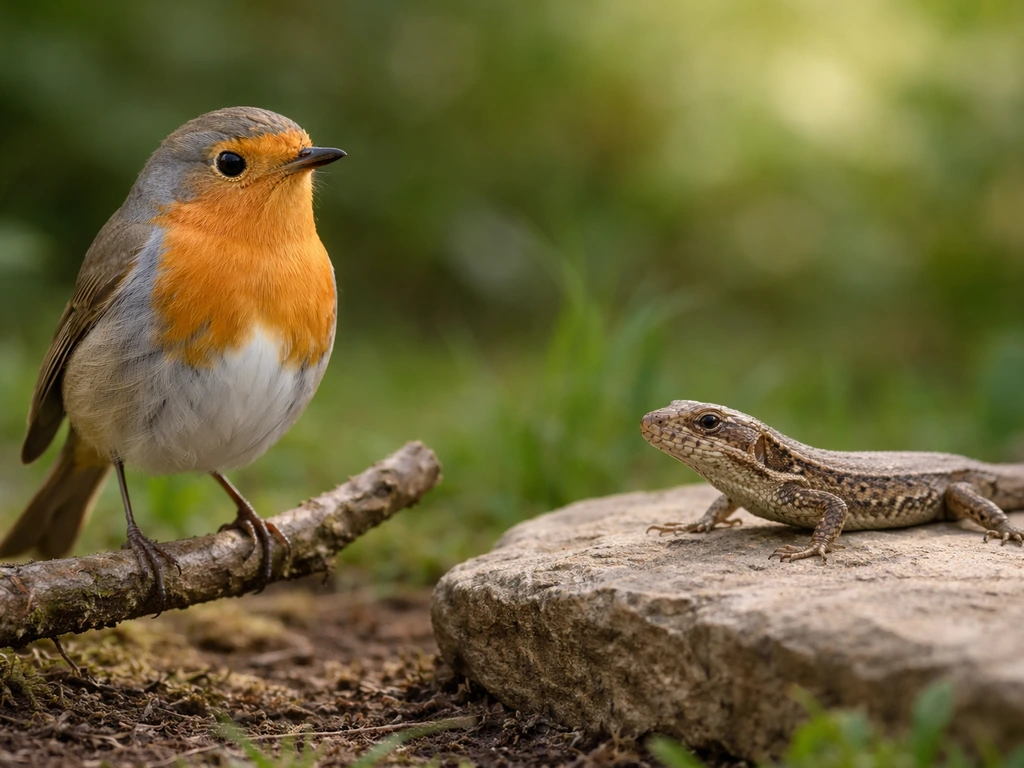
A lot of the confusion around birds and "land animals" comes from mixing up animal classes. Here is how birds sit relative to the groups they get confused with most often.
| Animal Class | Key Defining Traits | Warm or Cold Blooded | How Young Are Fed |
|---|---|---|---|
| Birds (Aves) | Feathers, beak, wings, hard-shelled eggs | Warm-blooded | Parents bring food; no milk |
| Mammals | Hair/fur, mammary glands, most give live birth | Warm-blooded | Milk from mammary glands |
| Reptiles (Reptilia) | Scales, air-breathing, amniotic development, internal fertilization | Cold-blooded (ectothermic) | No milk; hatchlings independent |
| Amphibians | Moist skin, aquatic larval stage, no amniotic egg | Cold-blooded | No milk; larvae often aquatic |
| Fish | Gills, fins, aquatic, scales (usually) | Cold-blooded (most) | No milk; most lay eggs in water |
Mammals are defined by hair or fur and the fact that females produce milk from mammary glands to feed their young. Birds do neither. Reptiles are defined by scales (overlapping skin folds), ectothermy (they rely on external heat), and air-breathing with internal fertilization. Birds are warm-blooded and have feathers, not scales, even though they are evolutionarily more closely related to reptiles than to mammals. That relationship is the source of the popular claim that "birds are reptiles," which is partly true under phylogenetic classification systems but not under the traditional Linnaean system most people learn in school. The short version: birds are their own distinct class with clear, observable traits that set them apart from every other group.
When you can call a specific bird a "land animal"
Here is a practical rule of thumb: if a bird forages, nests, and spends the bulk of its time on dry ground rather than on or in water, calling it a land animal is a reasonable informal description. It is never a formal classification, but it is a useful shorthand.
Use these quick checks to decide:
- Where does the bird spend most of its active time? Ground and dry habitat = terrestrial. Water surface or underwater = aquatic.
- How does it forage? Scratching in soil or pecking at vegetation on land = terrestrial. Diving, dabbling, or wading in water = aquatic.
- Can it fly? Flight alone does not make a bird "not a land animal." Many terrestrial birds fly. Flightless birds (ostriches, emus, kiwis) are the clearest land birds of all.
- Does it nest on dry ground? Nesting on land while feeding in water (like many ducks) makes a bird both, not strictly one or the other.
Examples by habitat category:
| Bird | Informal Habitat Category | Notes |
|---|---|---|
| Ostrich | Terrestrial (land) | Flightless, runs on dry ground, entirely terrestrial ecology |
| Emu | Terrestrial (land) | Large flightless ratite, ground-dwelling |
| Chicken / Turkey | Terrestrial (land) | Gallinaceous, strong ground-adapted feet, roosts but forages on land |
| Mallard duck | Aquatic / semi-terrestrial | Swims, dabbles, nests near water; uses both land and water |
| Common loon | Primarily aquatic | Awkward on land, built for diving; rarely uses dry ground |
| Northern shoveler | Aquatic / semi-terrestrial | Forages by dabbling at water surface; nests on dry ground |
| Bald eagle | Aerial / semi-terrestrial | Nests in trees, hunts over water, perches on land; uses all three environments |
Common mix-ups and myth-busting
"Birds lay eggs, so they must be reptiles"
Laying eggs does not make something a reptile. Fish lay eggs. Amphibians lay eggs. Reptiles lay eggs. Birds lay eggs. Egg-laying is spread across many vertebrate groups and does not determine which class an animal belongs to. What matters is the full package of traits: feathers, warm blood, beak, hard-shelled eggs together point to class Aves, not Reptilia.
"Birds fly, so they are not land animals"
Flying is a mode of locomotion, not a habitat classification. A bat flies and is unambiguously a mammal. Many insects fly and are not vertebrates at all. Flight tells you how an animal moves, not where it fundamentally lives or what class it belongs to. An ostrich cannot fly and is still a bird. A chicken barely flies and is still a bird. A swift spends almost its entire life airborne and is still a bird.
"Swimming birds must be fish or aquatic animals, not birds"
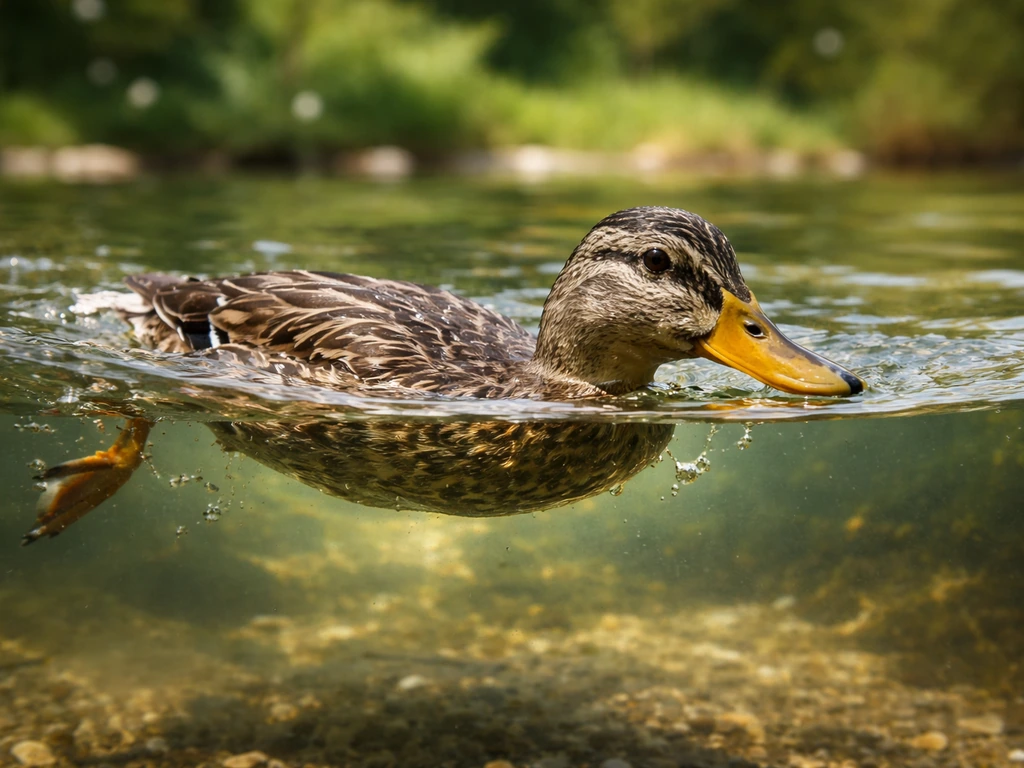
Penguins, loons, and diving ducks swim extremely well, but they are birds. They have feathers, beaks, warm blood, and hard-shelled eggs. A loon being awkward on land does not reclassify it any more than a whale being awkward on land makes it a fish. Habitat adaptation does not override biological classification.
"Feathers mean it's a bird, so it must live on land like other birds"
Feathers are the definitive trait for identifying class Aves, but they say nothing about habitat. Feathers provide insulation (down feathers trap air to reduce heat loss), waterproofing, and aerodynamics, depending on the species. A bird can have feathers and live primarily in wetlands, open ocean, arctic tundra, or dense forest. The feather confirms "bird," but you still need to look at the specific species to know where it lives.
The "birds are reptiles" debate
You may have seen the claim that birds are technically reptiles. This comes from cladistic (phylogenetic) classification, which groups animals by shared evolutionary ancestry. Under that system, birds evolved from a branch of theropod dinosaurs and sit within the reptile family tree, making them, technically, avian reptiles. Under the traditional Linnaean system taught in most schools, birds are their own separate class (Aves) distinct from class Reptilia. Both frameworks have their uses. For everyday classification purposes, calling birds their own class is cleaner and more practical.
The bottom line on birds and land
Birds are vertebrate animals in class Aves. "Land animal" is a habitat description, not a biological class. A bird that is a mammal is not actually a bird, since mammals are identified by traits like hair or fur and milk production Land animal. Many birds are primarily terrestrial and fit the everyday idea of a land animal perfectly well. Others are primarily aquatic. Most are somewhere in between, using land, air, and water at different points in their lives. If you need a clean classification answer, birds are class Aves, a subgroup of tetrapod vertebrates and amniotes, warm-blooded and feathered, distinct from mammals (no milk, no fur) and from reptiles (feathers, not scales; warm-blooded, not ectothermic). Where any particular bird lives is a separate question you answer by looking at that species specifically. If you are also wondering where birds fit in the broader tetrapod story, the classification follows from their skeletal and evolutionary traits is a bird a tetrapod.
FAQ
So when can I legitimately call a specific bird a “land animal”?
If you mean “does it mainly live on dry ground,” then some birds (like ostriches, emus, and many chickens) fit the everyday meaning. If you mean “is it a biological land-animal group,” then no. “Land animal” is a habitat description, while birds are classified by traits that stay the same no matter where they spend their time.
Are birds ever both land animals and water animals at the same time?
An animal can be both, depending on its life pattern. Many birds spend most of their feeding time in water but nest on land, or they move between dry ground and wetlands within the same day. That is why the most accurate phrasing is “land-and-water user,” not a single fixed category.
Does laying eggs mean the animal is a bird or a land animal?
No. Egg-laying is common across several vertebrate groups, and the key differentiator for birds is the combination of feathers, warm-blooded physiology, beak, and hard-shelled eggs (not eggs alone). So finding eggs does not tell you whether the parent is a bird or a different class.
If a bird spends almost all its time in the air, does that change whether it is a land animal?
Probably not. Flight is a way of moving, not a category that determines where an animal “belongs.” A bird that flies most of its life is still a bird even if it rarely, or only briefly, touches land.
What should I check first, where it rests or where it feeds?
Look at nesting and foraging patterns. Some species spend nights and long rests on land but feed in ponds, or they nest near water while foraging farther away. A simple “where it rests” rule can mislead, so the better quick check is where it does the most feeding and breeding activities.
If birds are related to reptiles, does that affect whether they are land animals?
Be careful with “bird vs reptile” claims. Birds can be considered “avian reptiles” in evolutionary, cladistic framing, but they are still a distinct class (Aves) in the traditional classification people usually use. Habitat wording like “land animal” does not override either viewpoint.
Are common terms like “waterfowl” and “land bird” scientifically accurate?
Yes, in the informal sense. For example, a duck might be called a “waterfowl” because of swimming and diving, while a chicken might be called a “land bird” because of walking and ground foraging. Those labels describe typical behavior, but they do not change the bird’s biological classification.
What is the cleanest way to phrase it, habitat-based or classification-based?
A “bird” is an animal in class Aves, but you can still describe its habitat. For clarity, say “a bird that lives primarily on land” if you care about habitat, or “a bird (Aves)” if you care about taxonomy.
Next Articles

Is a Bird a Tetrapod? Yes, Here’s What It Means
Yes, birds are tetrapods in the evolutionary clade sense, even without four visible legs; learn the definition and trait
Is a Bird an Animal or a Mammal? Quick Yes or No
Birds are animals, not mammals. Learn the traits that define birds vs mammals and how to classify quickly.
Is a Bird a Vertebrate? Clear Classification Answer
Yes. Birds are vertebrates with backbone and internal endoskeleton, not invertebrates; simple traits to classify animals