Yes, birds are tetrapods. Every single species of bird, from a hummingbird to an ostrich, belongs to the clade Tetrapoda, the same major group that includes mammals, reptiles, and amphibians. The confusion usually comes from the literal meaning of the word: 'tetrapod' means 'four-footed,' and birds obviously don't walk around on four legs. But in modern biology, tetrapod is a clade defined by evolutionary ancestry, not a count of visible limbs. Birds evolved from four-limbed ancestors, and that's what puts them firmly inside Tetrapoda.
Is a Bird a Tetrapod? Yes, Here’s What It Means

Marcus Hendricks
24 May 2026

Quick yes/no: bird vs tetrapod definition
Birds are tetrapods. Full stop. The clade Tetrapoda includes all limbed vertebrates and their descendants, a group that first appeared roughly 397 million years ago during the Devonian period. Britannica defines tetrapods as 'a superclass of animals that includes all limbed vertebrates,' and its list of members explicitly includes Amphibia, Reptilia, Aves (birds), and Mammalia. Birds are in that list by ancestry, not by coincidence.
The folk definition of 'tetrapod' trips people up because Merriam-Webster gives the etymology as simply 'four-footed.' If you go by that alone, you might look at a bird with two legs and two wings and say it doesn't qualify. But biology uses 'tetrapod' in a cladistic sense: it means you descended from the ancestral group that had four limbs, regardless of what those limbs look like today or how many are still obvious.
Bird classification within tetrapods vs other groups
To see exactly where birds sit, follow the taxonomic hierarchy. Starting from Tetrapoda, you move into the sub-clade Amniota, which includes all tetrapods that reproduce using an amniotic egg (with specialized membranes: the amnion, chorion, and allantois). Amniotes then split into two major lineages: Synapsida (which gave rise to mammals) and Sauropsida (which gave rise to reptiles, including birds). The NCBI Taxonomy Browser shows this nesting explicitly: Tetrapoda, then Amniota, then Sauropsida, then Archosauria, then Dinosauria, and finally Aves.
That path through Sauropsida is worth pausing on. Birds are nested inside the reptile lineage in a cladistic sense, which is why calling a bird 'a reptile' is actually defensible in strict evolutionary terms, even though it sounds strange. If you are wondering where a bird fits compared to reptiles and mammals, the bird's evolutionary relationships point to the answer is a bird a reptile or a mammal. A related question worth knowing about: whether a bird is an amniote (yes, absolutely), and whether a bird is a vertebrate (also yes, with a full bony skeleton and a spinal column). These aren't separate debates; they're all connected rungs on the same ladder of classification.
Key traits: what makes a tetrapod (and how birds fit)
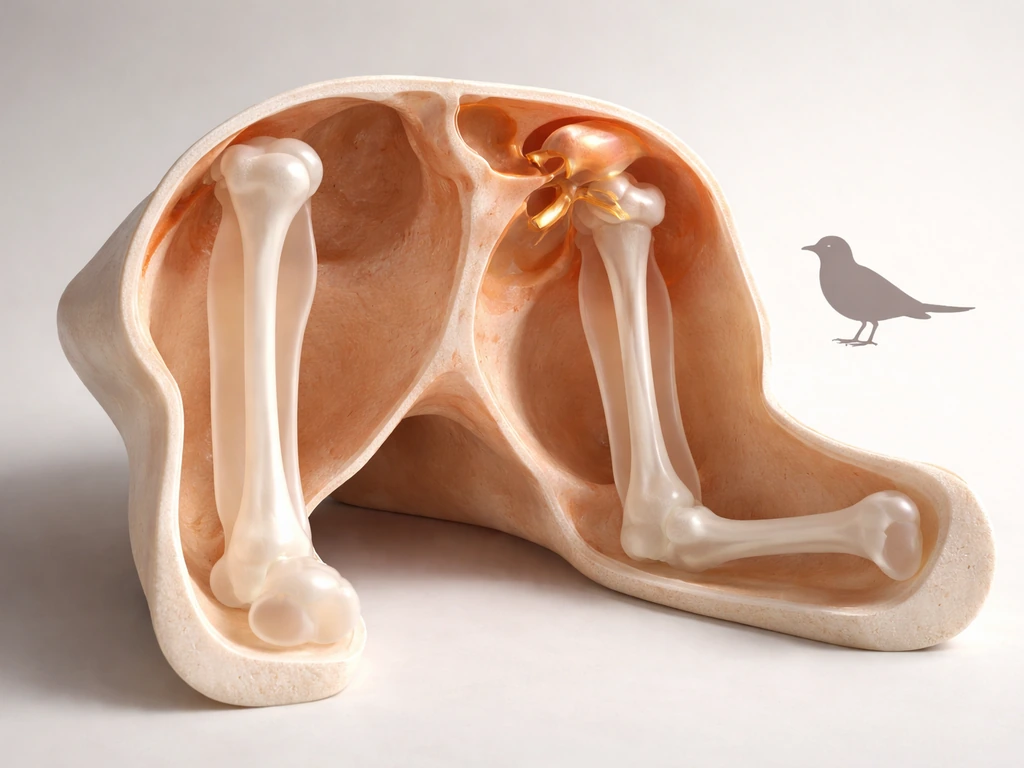
The defining anatomical hallmarks of tetrapods are internal, not the outward shape of the limbs. Britannica flags paired limb bones as the core structural feature: specifically, bones like the ulna and radius in the forelimb, and the tibia and fibula in the hindlimb. Birds have both sets. A bird's wing contains a humerus, a radius, and an ulna, all recognizable homologs of the same bones in your own arm. The hindlimbs contain a tibia and fibula too, just scaled and shaped for bipedal walking.
The inner ear is another shared tetrapod trait: a stapes bone and the oval window (fenestra ovalis) are characteristic features found across tetrapod groups, and birds have them. These shared structures aren't coincidences; they reflect shared ancestry going back to the fish-to-land transition that happened hundreds of millions of years ago. PBS and OpenStax both describe this as 'limb homology': the common developmental pattern laid down in the ancestor of modern tetrapods, adapted across different lineages for flying, swimming, running, or grasping.
How birds differ from typical tetrapods (mammals, reptiles, amphibians)
Being a tetrapod doesn't make a bird identical to a frog, a lizard, or a dog. Birds have a very distinct set of traits that separate them from other tetrapod groups, even while they share that deep evolutionary membership.
| Trait | Birds (Aves) | Mammals | Reptiles | Amphibians |
|---|---|---|---|---|
| Body covering | Feathers | Hair/fur | Scales or scutes | Moist, bare skin |
| Forelimbs | Wings (modified) | Arms, flippers, or legs | Legs or vestigial | Legs or vestigial |
| Visible limb pairs | 1 obvious pair (legs) + wings | Typically 4 | Typically 4 (snakes: 0) | Typically 4 |
| Endothermy (warm-blooded) | Yes | Yes | No (ectothermic) | No (ectothermic) |
| Amniotic egg | Yes (hard or leathery shell) | Yes (placental or marsupial) | Yes | No |
| Beak/bill | Yes (no teeth in modern birds) | No | Rarely | No |
| Hollow bones | Yes (pneumatized) | No | Rarely | No |
The key point is that none of these differences disqualify birds from Tetrapoda. Feathers, beaks, and hollow bones are derived traits that evolved within the bird lineage; they don't erase the shared ancestry with other tetrapods. Think of it like a family: you might look very different from your cousins, but you're still in the same family. Birds share their deepest evolutionary roots with every other animal in Tetrapoda.
One comparison worth noting: birds and mammals are both endothermic (warm-blooded) tetrapods, and both are amniotes, but they belong to completely separate branches of the amniote tree. Birds are sauropsids; mammals are synapsids. They evolved endothermy independently, which is a great example of convergent evolution inside Tetrapoda. A bird is definitely not a mammal, even though they share some superficial traits like being warm-blooded.
Common confusion check: 'vertebrate,' 'amniote,' '4 legs,' and the snake exception
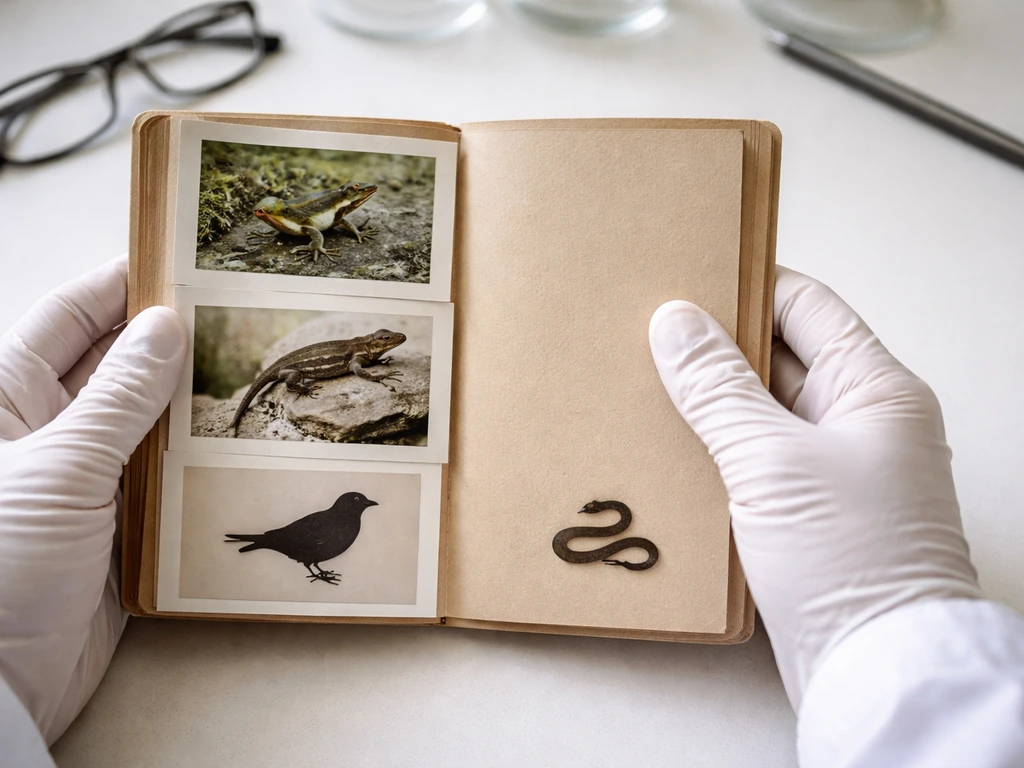
A few specific misunderstandings come up over and over when people search 'is a bird a tetrapod.' Here's a quick reality check on each one.
- 'Birds can't be tetrapods because they only have two legs.' This is the most common one. Tetrapod refers to evolutionary ancestry, not a current leg count. Birds have two legs and two wings; the wings are modified forelimbs homologous to the front legs of other tetrapods. The forelimb bones are all still there, just reshaped for flight.
- 'Snakes aren't tetrapods either, then.' Wrong. OpenStax explicitly uses snakes as the textbook example: snakes are classified as tetrapods because they descended from four-limbed ancestors, even though they have no external legs at all today. If snakes are in, birds definitely are.
- 'Tetrapod just means vertebrate.' Close but not quite. All tetrapods are vertebrates, but not all vertebrates are tetrapods. Fish are vertebrates but not tetrapods. Tetrapoda is a sub-group within vertebrates that specifically covers the limbed lineage.
- 'Birds are amniotes, not tetrapods.' Amniota is a clade nested inside Tetrapoda, not separate from it. Being an amniote means you are automatically also a tetrapod. These aren't competing labels; they're nested categories like Russian dolls.
- 'Birds are reptiles, not tetrapods.' This is mixing up two different questions. Whether or not you call birds reptiles (which cladistics supports), birds are still tetrapods. Reptiles are themselves tetrapods, so this objection doesn't go anywhere.
- 'Birds evolved from dinosaurs, so they're in a different category.' Dinosaurs were archosaurs, archosaurs were sauropsids, sauropsids are amniotes, and amniotes are tetrapods. The dinosaur ancestry puts birds deeper inside Tetrapoda, not outside it.
How to verify this yourself using taxonomy tools
If you want to check this beyond taking anyone's word for it, the tools are free and easy to use. You can use the blank" rel="noopener noreferrer">Open Tree of Life as a phylogenetic framework to aggregate relationships and then check where birds fall in tree-based tools. Here's a practical method for tracing the classification yourself.
- Go to the NCBI Taxonomy Browser (ncbi.nlm.nih.gov/taxonomy) and search for 'Aves.' Click through the taxonomy hierarchy shown on the page. You'll see Aves nested inside Tetrapoda through the path: Amniota, then Sauropsida, then Archosauria, then Dinosauria, then Aves. This is a primary scientific database, not Wikipedia.
- Try GBIF (gbif.org) and look up any bird species. The GBIF Backbone Taxonomy will show the full classification ladder from kingdom down to species, and Tetrapoda will appear in that chain.
- Check the Open Tree of Life (tree.opentreeoflife.org) for a visual phylogenetic tree. Search for 'Aves' and zoom out to see where birds sit relative to mammals, reptiles, and amphibians. You'll see all four groups branching from within Tetrapoda.
- If you want anatomical confirmation rather than taxonomy databases, look up homologous limb structures. Compare a bird wing skeleton to a human arm skeleton in any anatomy diagram. You'll see the humerus, radius, and ulna in both. That shared bone layout is the physical evidence that birds carry tetrapod anatomy.
- For the evolutionary context, OpenStax Biology (freely available online) has a chapter on chordates (Chapter 29 in Biology 2e) that explicitly states birds are tetrapods and explains the phylogenetic definition. It's a peer-reviewed textbook, free to read.
The bottom line: 'tetrapod' is an ancestry-based category, and birds have the right ancestry. Their wings are modified forelimbs, their leg bones match the tetrapod blueprint, and every mainstream taxonomy database places them squarely inside Tetrapoda. The word might say 'four-footed,' but biology says what counts is where you came from, not how many feet you're standing on today. If you mean the animal commonly referred to as TAPH, it is a bird in terms of how it is classified within Tetrapoda is taph a bird.
FAQ
If a bird only walks on two legs, does that still make it a tetrapod?
Yes, birds are tetrapods even though most species are bipedal. “Tetrapod” is defined by shared ancestry (descending from early four-limbed vertebrates), not by having four outwardly used limbs today.
What anatomical features actually prove birds fit the tetrapod definition?
The key criterion is homologous skeletal elements from the ancestral tetrapod limb plan. For birds, wings correspond to forelimbs (humerus, radius, ulna) and legs correspond to hindlimbs (tibia, fibula), even though the functions and shapes have changed.
Why do some people say a bird is a reptile, and others say it is not?
It can be, depending on what you mean by “reptile.” In strict cladistics, birds are nested within the reptile lineage, but many people use “reptile” in a looser, everyday way that excludes birds.
Does the word “tetrapod” literally mean birds should have four feet?
Birds are tetrapods, but they are not “four-footed” in the literal sense. Their two-leg locomotion and two-wing flapping are limb specializations, not evidence against tetrapod ancestry.
If birds are tetrapods, why don’t they look like other tetrapods?
No, being a tetrapod does not mean a bird must resemble typical amphibians, reptiles, or mammals. The classification reflects deep evolutionary relationships, while traits like feathers and beaks are later adaptations unique to the bird lineage.
How can I check this in a taxonomy database without getting misled by common names?
If you are using a taxonomy database, confirm you are reading “clade membership” rather than “common names.” Birds usually appear as Aves under the tetrapod lineage, even when their limb usage differs.
Do birds share tetrapod traits besides limb bones, like in the ear?
Yes. Birds share tetrapod inner-ear structures with other tetrapods, including the stapes and the oval window region. These are internal features that do not depend on having four visible feet.
If birds and mammals are both warm-blooded, does that affect whether a bird is a tetrapod?
Warm-bloodedness alone can confuse people. Birds and mammals are both endothermic tetrapods, but they evolved that trait on separate branches (sauropsids for birds, synapsids for mammals), so the similarity is convergent.
Is a bird being a vertebrate the same thing as being a tetrapod?
Only indirectly. “Vertebrate” is about having a vertebral column and bony endoskeleton, while “tetrapod” is about tetrapod evolutionary ancestry. Birds satisfy both, but the categories are not interchangeable.
Do derived bird traits like feathers and hollow bones conflict with being a tetrapod?
Feathers and beaks are derived adaptations, they do not erase the older tetrapod limb blueprint. Classification is based on ancestry, so modified or reduced limbs can still retain the underlying tetrapod homologs.
Next Article
Is a Bird an Animal or a Mammal? Quick Yes or No
Birds are animals, not mammals. Learn the traits that define birds vs mammals and how to classify quickly.