Yes, sparrows are perching birds. See Is sparrow a bird for a concise answer. Every bird commonly called a sparrow, whether the House Sparrow at your backyard feeder or a Song Sparrow singing from a bush, belongs to the order Passeriformes, the scientific grouping that ornithologists and field guides alike call perching birds. That single fact settles the question completely. For a brief explanation, see the entry titled 'sparrow is a bird or animal'.
Is Sparrow a Perching Bird? Clear Answer and ID Tips

Marcus Hendricks
27 Jul 2026
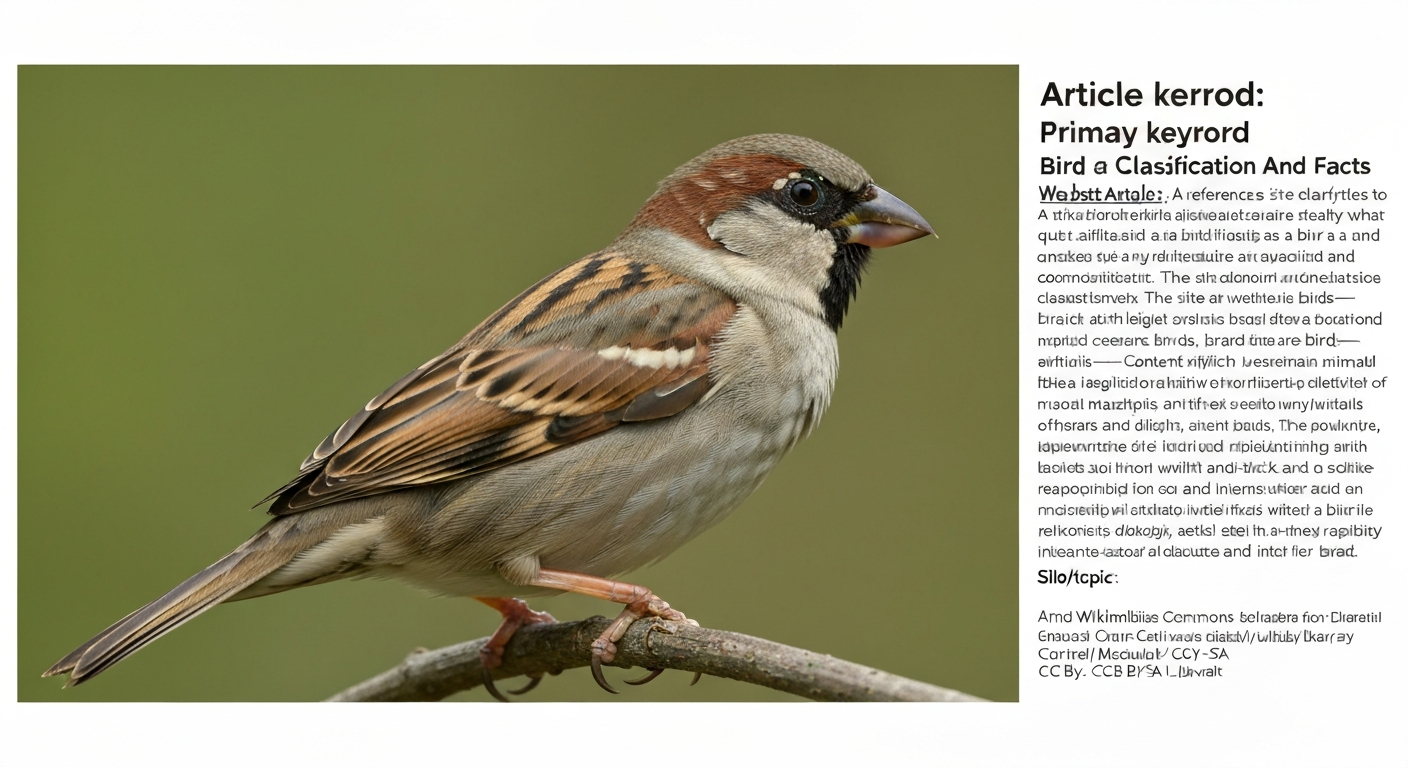
What is a perching bird? Anatomy and taxonomy explained
The term 'perching bird' is not just a casual description. It maps directly onto a formal taxonomic order called Passeriformes. This order is the largest in the entire class Aves, containing more than 6,000 species, which works out to roughly 60 percent of all living bird species. So when you ask whether sparrows are perching birds, you are really asking whether they are passerines, and the answer is an unambiguous yes.
What actually makes a passerine a perching bird comes down to a few concrete anatomical features you can observe if you look closely enough. The most important is the anisodactyl foot arrangement: three toes pointing forward and one toe (the hallux) pointing backward. This layout lets the foot wrap around a branch from two sides simultaneously, giving the bird a stable grip.
Better still, that grip is largely automatic. Passerines have a tendon-locking mechanism in their legs: when the leg bends at the knee and ankle (as it does when a bird settles onto a perch), the flexor tendons running through the toes tighten and curl the toes closed without the bird actively squeezing. This is why a sparrow can sit on a twig and doze without tumbling off. The leg's own weight does most of the work.
Beyond the feet, passerines are distinguished by a highly developed syrinx, the avian vocal organ located where the trachea splits into the two bronchi. The complex musculature of the passerine syrinx is what allows songbirds to produce the elaborate, learned songs that distinguish oscine passerines (the true songbirds, including sparrows) from the rest of the animal kingdom. A sparrow does not just chirp randomly; it is using one of the most sophisticated sound-producing structures in vertebrate biology.
Which birds called 'sparrow' actually count?
The word 'sparrow' covers two separate evolutionary lineages that are not closely related to each other, even though they share a common English name. Both groups are passerines, but understanding the split matters if you want to talk about sparrow taxonomy accurately.
Old World sparrows: family Passeridae
The 'true' sparrows, found natively across Europe, Asia, and Africa (and introduced almost everywhere else by humans), belong to family Passeridae. The House Sparrow (Passer domesticus) is the definitive example: it is in Passeridae, within the order Passeriformes. Avibase, Passer domesticus (House Sparrow), taxonomic checklist lists the House Sparrow in family Passeridae within order Passeriformes Avibase — Passer domesticus (House Sparrow) — taxonomic checklist. The Eurasian Tree Sparrow (Passer montanus) sits in the same family. These are the birds most people picture when they say 'sparrow,' and their passerine credentials are rock solid.
New World sparrows: family Passerellidae and relatives
North and South American sparrows belong to a completely different family, Passerellidae, which was formally split off from the old Emberizidae family based on molecular evidence. The IOC World Bird List and the Clements/Cornell Birds of the World checklist both recognize Passerellidae as a distinct passerine family. Classic examples include the Song Sparrow (Melospiza melodia) and the White-throated Sparrow (Zonotrichia albicollis). Despite not being closely related to Old World sparrows, they share the same order, the same anisodactyl feet, and the same tendon-locking perching mechanism. They are just as much perching birds as the House Sparrow on your windowsill.
Representative sparrow species and where they fit
A quick look at four well-known species shows how consistent the perching-bird classification is across the entire sparrow group, regardless of geography or family.
- House Sparrow (Passer domesticus): Family Passeridae, order Passeriformes. The most widely distributed wild bird on Earth, found on every continent except Antarctica. Introduced by European settlers and now thoroughly naturalized across North America, Australia, and beyond. A seed-eater with a stout conical bill.
- Eurasian Tree Sparrow (Passer montanus): Also family Passeridae. Native to Europe and Asia, it is the dominant urban sparrow across much of East Asia. Distinguished from the House Sparrow by a chestnut crown and a black ear patch present in both sexes.
- Song Sparrow (Melospiza melodia): Family Passerellidae, order Passeriformes. One of the most studied birds in North America, famous for regional song variation. Heavily streaked, medium-sized, and found in a wide range of brushy habitats from Alaska to central Mexico.
- White-throated Sparrow (Zonotrichia albicollis): Family Passerellidae, order Passeriformes. A migratory North American sparrow with a bold white throat patch and a distinctive whistled song often rendered as 'Old Sam Peabody, Peabody, Peabody.' A classic winter feeder bird across the eastern United States.
Sparrows vs. swallows and other commonly confused birds
The question of whether sparrows are perching birds sometimes comes tangled up with confusion about swallows, and this is where things get genuinely interesting. See the related article 'Are sparrows and swallows the same bird?' for a focused comparison of their similarities and differences. Swallows (family Hirundinidae) are also passerines, meaning they also technically belong to the perching bird order. Cornell Lab / Bird Academy (Merlin / All About Birds), ID workflow & tips provides field‑ID guidance and checklists for distinguishing swallows from sparrows based on bill shape, behavior, and flight profile Cornell Lab / Bird Academy (Merlin / All About Birds) — ID workflow & tips. But in practice, the two groups look and behave so differently that it is worth laying out exactly where they diverge.
A sparrow has a short, thick, conical bill evolved for cracking seeds and foraging on or near the ground. A swallow has a tiny bill with a dramatically wide gape, rimmed with rictal bristles, designed for catching insects on the wing. A sparrow has relatively short, rounded wings suited to bursts of flight between perches. A swallow has long, pointed, scythe-like wings built for sustained aerial hunting. In the field, a sparrow looks like it belongs on a branch; a swallow looks like it belongs in the sky.
Their feet tell a similar story. Sparrows use their robust anisodactyl feet constantly: perching on stems, hopping along the ground, bracing against bark. Swallows still have anisodactyl feet (they are passerines, after all), but those feet are small and weak, rarely used for anything beyond clinging briefly to a wire or nest ledge. If you want to confirm whether a small bird is a sparrow or a swallow, watch how it lands and what it does next. A sparrow hops and forages; a swallow perches for a moment and then launches straight back into the air.
One bird worth flagging separately is the sparrowhawk. Despite having 'sparrow' in its name, the Eurasian Sparrowhawk (Accipiter nisus) is not a passerine at all. It is a small raptor in the family Accipitridae, order Accipitriformes, and it is actually a predator of sparrows rather than a relative of them. The name comes from its historical use in falconry to hunt sparrow-sized prey, not from any evolutionary relationship.
What about fictional sparrows and ambiguous names?
A few related questions worth addressing briefly: Zenitsu's companion bird in the anime 'Demon Slayer' is depicted as a sparrow, and yes, if you are asking about the real bird it represents, it would be a passerine. See the explainer “Why is Zenitsu's bird a sparrow” for details on the character’s design and the real-world sparrow traits it references. Fictional birds in games and anime are styled after real species for a reason, and sparrows consistently read as small, perching, seed-associated birds in visual storytelling. Queries about a 'Maya bird' being a sparrow are less clear-cut: the name 'Maya' does not correspond to a standard English bird name, so it may refer to a regional common name or a brand character rather than a classifiable species. When a bird name does not map to a recognized species, the most useful step is to look up its scientific name and check which order it falls under. If you're curious about similarly named or ambiguous creatures, see the related article is skewer a bird for clarification.
Practical field identification tips for sparrows
Knowing that sparrows are perching birds is more useful once you can actually pick them out in the field. Here are the physical and behavioral cues I find most reliable.
- Bill shape: Look for a short, thick, conical bill. This is the single most reliable visual marker that separates seed-eating sparrows from insectivores like swallows, warblers, or flycatchers. If the bill looks like a small seed-cracker, you are very likely looking at a sparrow or a closely related finch-type bird.
- Size and build: Most sparrows fall in the 12 to 18 cm range, with a plump, compact body and a relatively large head. They tend to look chunky compared to a warbler or a swallow.
- Foot and leg posture: On a perch, watch the foot. A sparrow grips firmly with that one rear toe visibly hooked around the branch. On the ground, sparrows hop (both feet move together) rather than walk.
- Flight silhouette: Short, rounded wings give sparrows an undulating, burst-and-glide flight pattern close to vegetation. They do not soar or perform extended aerial passes.
- Song and call: Sparrows are oscines with complex, learned songs. Even a brief, buzzy trill or a clear whistled phrase is a strong sign you are dealing with a passerine. Listen for repeated phrases with variation.
- Habitat: Most sparrows prefer shrubby edges, grasslands, gardens, farmland, and woodland understory. If a small brown bird is working its way through dense low vegetation or hopping across a lawn, a sparrow is a strong candidate.
Quick reference: sparrow vs. swallow anatomy and taxonomy
| Feature | Sparrow | Swallow (e.g., Barn Swallow) |
|---|---|---|
| Order | Passeriformes | Passeriformes |
| Family | Passeridae (Old World) / Passerellidae (New World) | Hirundinidae |
| Bill shape | Short, thick, conical | Small, flat with wide gape and rictal bristles |
| Toe arrangement | Anisodactyl (3 forward, 1 back) | Anisodactyl (3 forward, 1 back) |
| Foot strength / use | Strong; regular perching and ground foraging | Weak; rarely used beyond brief clinging |
| Wing shape | Short, rounded | Long, pointed, scythe-like |
| Flight style | Short bursts, undulating, near vegetation | Sustained aerial, highly agile |
| Primary diet | Seeds, grains, some insects | Flying insects (aerial insectivore) |
| Foraging location | Ground and low vegetation | Open air |
| Syrinx complexity | Highly complex (oscine songbird) | Moderately complex (oscine songbird) |
Suggested images to illustrate the anatomy
These image ideas would reinforce the anatomical and taxonomic points made in the article. All suggested sources are Wikimedia Commons or the Cornell Lab Macaulay Library; check individual file pages for license details and photographer attribution before use.
- Anisodactyl foot diagram: Use the Wikimedia Commons illustration 'Bird feet: toe arrangement (dactyly)' (CC BY-SA). Suggested caption: 'The anisodactyl foot, with three toes forward and one hallux pointing back, is the defining anatomical feature of perching birds (Passeriformes). Sparrows share this arrangement with all other passerines.' Crop to show anisodactyl clearly and contrast with zygodactyl (woodpecker) for context.
- House Sparrow (Passer domesticus) perched on a branch: Multiple CC BY-SA / CC0 options on Wikimedia Commons, e.g. 'File: House Sparrow (Passer domesticus) (5842028072).jpg'. Suggested caption: 'A House Sparrow gripping a branch: the rear toe (hallux) is clearly visible, locking the foot in place via the tendon mechanism common to all passerines.' Choose a shot that shows the foot clearly.
- Song Sparrow (Melospiza melodia) photo: Available on Wikimedia Commons (Melospiza melodia media pages) and the Cornell Lab Macaulay Library. Suggested caption: 'The Song Sparrow belongs to the New World family Passerellidae, entirely separate from the Old World Passeridae, yet equally a perching bird within order Passeriformes.' A side-profile shot showing the conical bill and compact build works best.
- Barn Swallow (Hirundo rustica) in flight: Wikimedia Commons, e.g. 'File: Barn swallow (Hirundo rustica rustica).jpg' (CC BY-SA). Suggested caption: 'Swallows are passerines too, but their long pointed wings, wide-gape bill, and aerial lifestyle make them easy to distinguish from seed-eating sparrows in the field.' An in-flight silhouette highlights the wing shape contrast effectively.
- Old World vs. New World sparrow side-by-side comparison: Pair a House Sparrow image (Passeridae) with a White-throated Sparrow or Song Sparrow image (Passerellidae). Suggested caption: 'Old World sparrows (left, Passeridae) and New World sparrows (right, Passerellidae) look superficially similar and share the same order, but they evolved their seed-eating, perching lifestyle independently.'
FAQ
Is a sparrow a perching bird?
Yes. Sparrows (both Old‑World Passeridae and New‑World Passerellidae and similar groups) are passerines — the group commonly called “perching birds.” They have the anatomical traits that make perching efficient (see definition below).
What exactly is a perching bird (passerine)?
A perching bird, scientifically called a passerine (order Passeriformes), typically has an anisodactyl foot arrangement (three toes forward, one back), a specialized tendon‑locking mechanism in the leg that helps the bird grip a branch while resting or sleeping, and a syrinx adapted for complex vocalizations. Passeriformes is the largest bird order and contains most small to medium songbirds and familiar backyard species.
Which birds called “sparrow” are included here?
The name “sparrow” is used for several groups. True or Old‑World sparrows are in family Passeridae (e.g., House Sparrow, Passer domesticus). Many North American birds called “sparrows” belong to family Passerellidae (New‑World sparrows, e.g., Song Sparrow, Melospiza melodia). Both are in Passeriformes, so they are passerines (perching birds). Note that some unrelated species use “sparrow” in their common name (see misidentifications below).
Are all birds called “sparrow” closely related?
No. The common name “sparrow” can refer to birds in different families within Passeriformes. Old‑World sparrows (Passeridae) and New‑World sparrows (Passerellidae) are distinct families that share passerine traits but differ in finer taxonomy and evolutionary history. Always check the scientific name for precise relationships.
How are sparrows different from swallows?
Although both groups are in the order Passeriformes (so both are passerines), they differ in ecology and morphology: - Bill: Sparrows have stout, conical bills for seeds and ground foraging; swallows have very small bills with a wide gape for catching insects in flight. - Body & wings: Swallows are streamlined with long, pointed wings for agile aerial flight; sparrows have shorter wings and a more upright perching posture. - Behavior: Sparrows spend more time on branches or the ground; swallows are aerial insectivores that spend much time in flight.
Are sparrows birds or animals?
Sparrows are birds; birds are a class of animals (Aves). So sparrows are both birds and animals in biological classification.
Next Articles
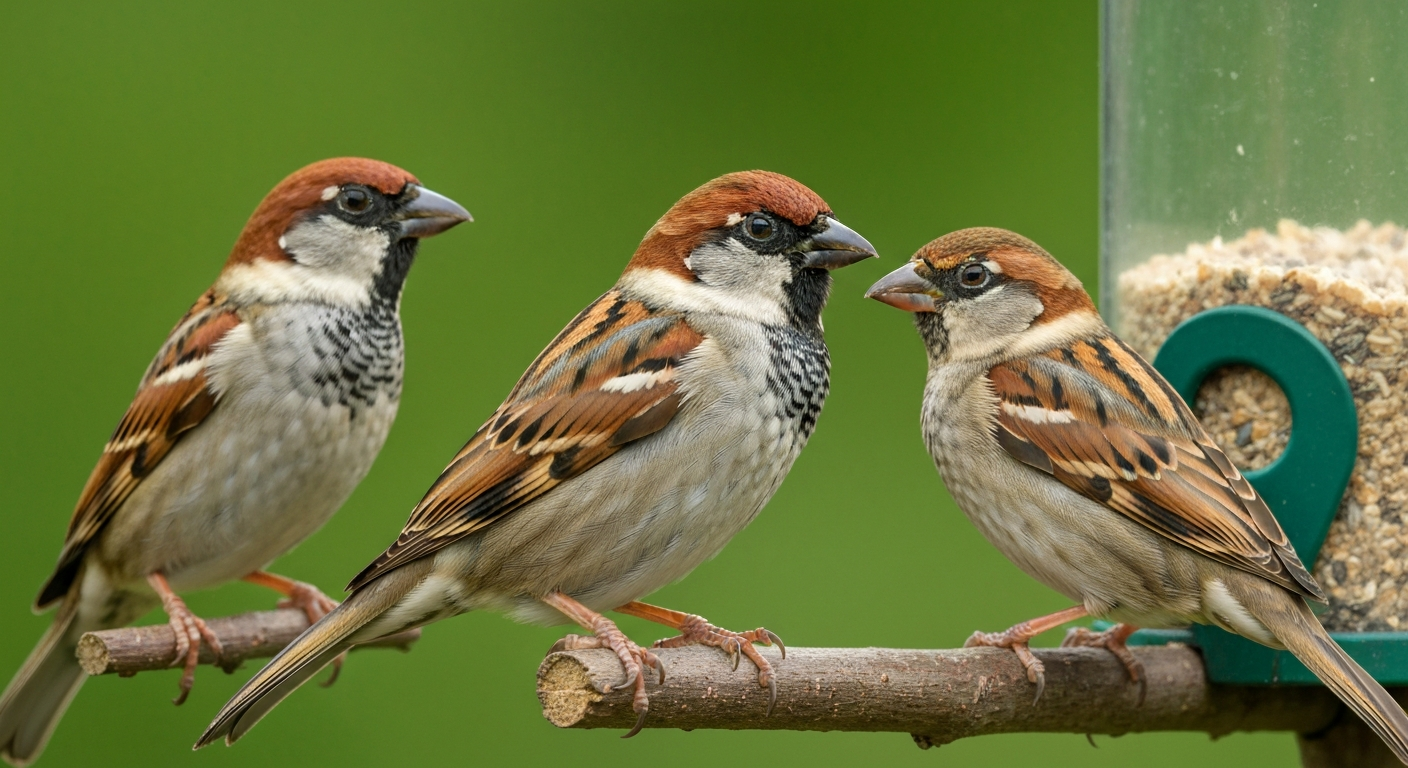
Sparrow: Is a Sparrow a Bird or an Animal? Quick Guide
Yes - sparrows are birds (Class Aves). Fast ID tips, key traits, comparisons and resources to confirm sparrows vs lookal
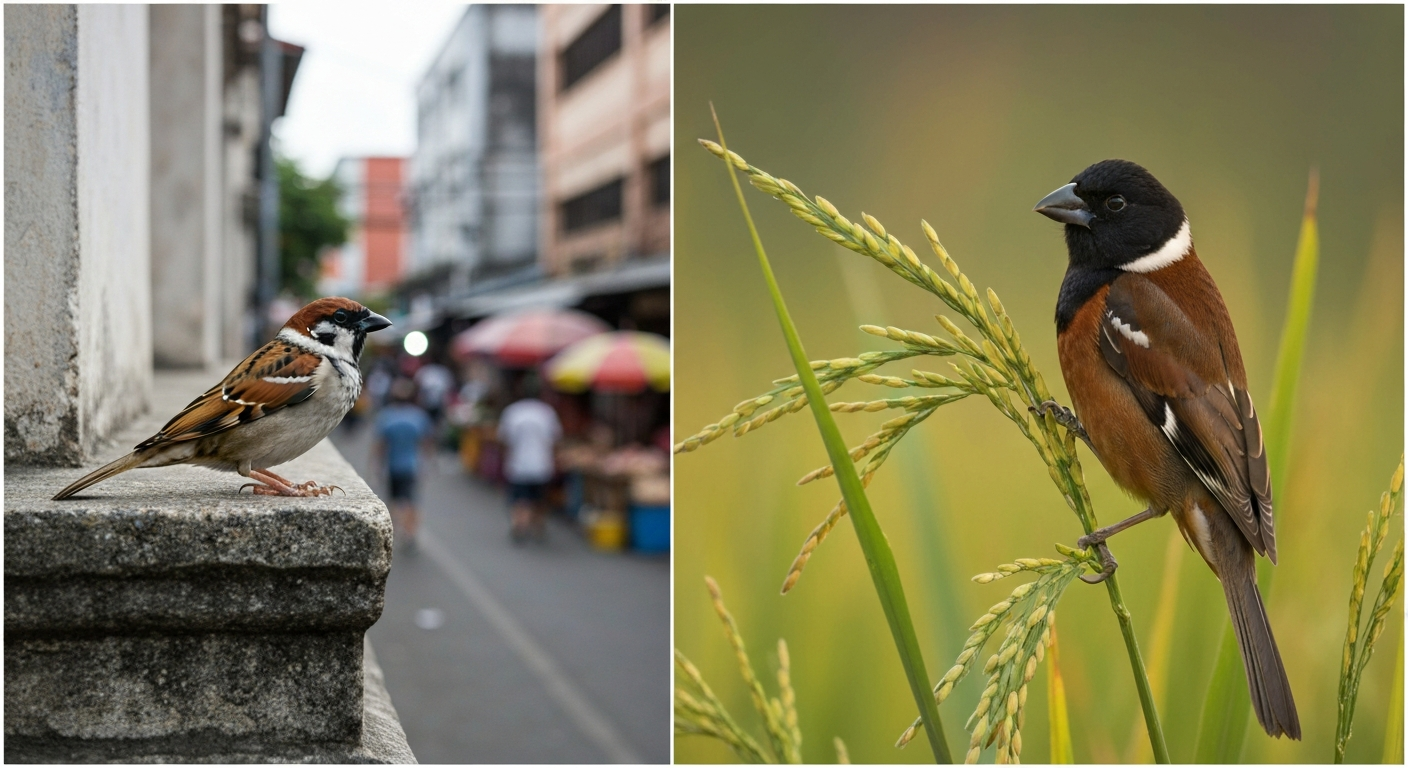
Is Maya Bird a Sparrow? Clear ID & Classification Guide
Is a maya bird a sparrow? Science-backed ID, taxonomy, and a quick checklist to confirm.
Is 'Skewer' a Bird? Quick Answer and Likely Alternatives
No, 'skewer' isn't a bird. Read why, common confusions (skua, siskin, sparrow) and how to verify identifications.