No, "skewer" is not a bird. There is no species in class Aves, not in the IOC World Bird List, Avibase, BirdLife International, or any other major ornithological checklist, that carries the English common name "skewer." The word exists in biology only as a verb: shrikes, for example, are famously described as birds that skewer their prey on thorns, but that is a behavior, not a bird name. If you saw or heard "skewer" in a bird context, the most likely explanation is a misspelling or mishearing of "skua," a real seabird family, or a mix-up with a similarly spelled name like siskin, sparrow, or swallow.
Is 'Skewer' a Bird? Quick Answer and Likely Alternatives

Marcus Hendricks
13 Jul 2026
What "skewer" actually means
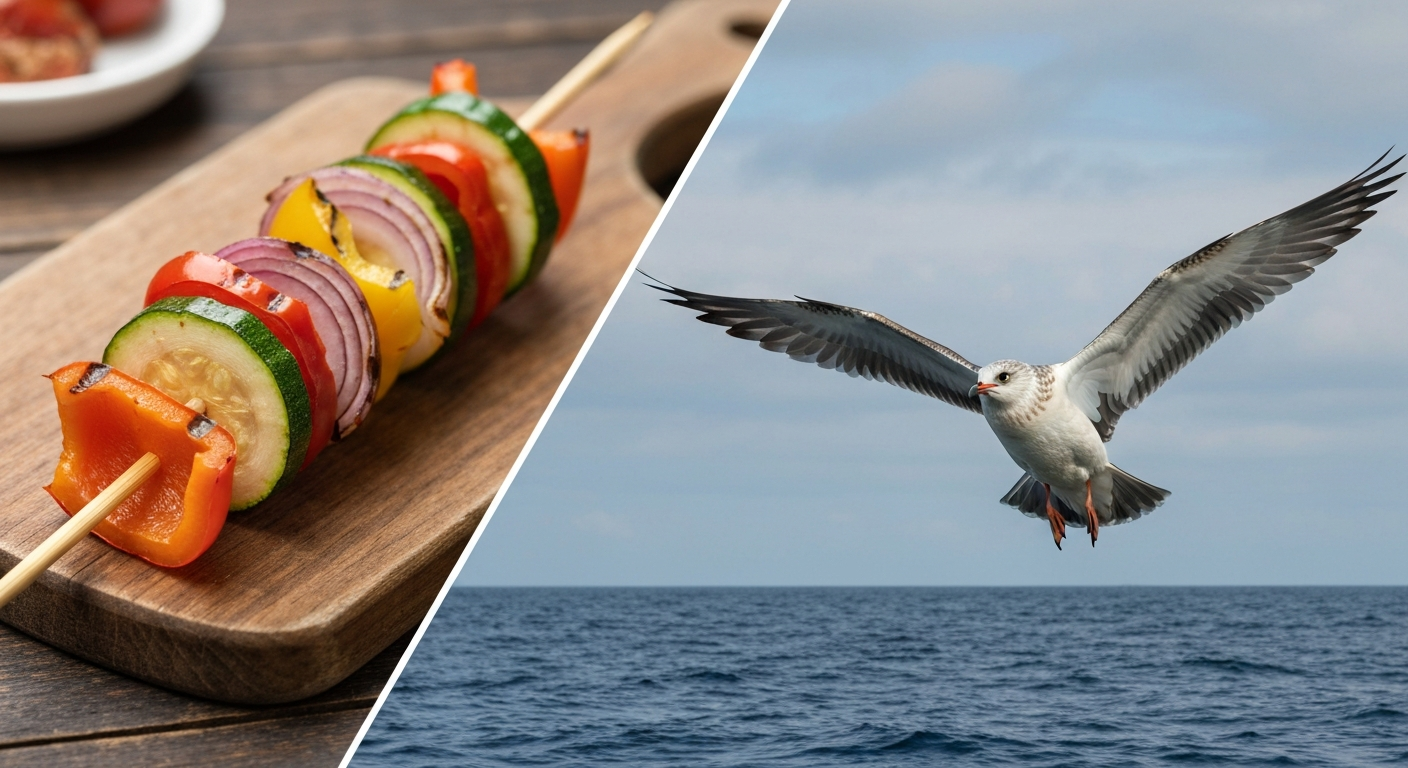
Before going further, it is worth being clear about what dictionaries say. Merriam-Webster defines a skewer as a long pin used to hold food together during cooking, or the verb form meaning to pierce or impale something. Neither definition has anything to do with birds or taxonomy. The word has no secondary meaning in zoology, ornithology, or any branch of biology where it refers to a living creature. It is a kitchen tool and a verb, full stop.
The one place "skewer" does crop up in birding writing is in behavioral descriptions. The loggerhead shrike (Lanius ludovicianus) is a well-known North American bird that impales insects, lizards, and small rodents on thorny branches or barbed wire to store food. Nature photographers and museum captions regularly note that the shrike "skewers its kills." This is almost certainly where some people encounter the word in a wildlife context and wonder if it names a bird. It does not. It is describing what the bird does, not what it is.
What makes something a bird in the first place
To settle any "is X a bird?" question, it helps to know the checklist scientists actually use. Class Aves, the formal grouping for all birds, is defined by a tight cluster of diagnostic traits. If an animal (or a name) is being evaluated as a potential bird, these are the things to look for.
- Feathers: the single most reliable diagnostic trait; no other living animal has true feathers
- Endothermy: birds regulate their own body temperature internally (warm-blooded)
- Beaks or bills: no teeth in living birds; jaw structure is a beak made of keratin
- Hard-shelled eggs: birds reproduce by laying amniotic eggs with a calcified shell
- Hollow, lightweight bones adapted for weight reduction (most species)
- A four-chambered heart and high metabolic rate
- Forelimbs modified as wings (even in flightless species like ostriches and penguins)
In taxonomy, a name becomes an official bird name only when it appears in a recognized checklist tied to a described species. The IOC World Bird List is the standard reference most ornithologists use today. If a name like "skewer" is not there, it is simply not an established bird name, no matter how bird-like it sounds or how often it appears near bird photos online.
Why bird names get scrambled: typos, homophones, and translation
It might seem strange that anyone would mix up a cooking implement with a bird name, but language does some genuinely weird things to animal names. There are four main routes that lead people to type or say "skewer" when they mean a real bird.
- Homophones and accent variation: In non-rhotic English accents (think many British, Australian, and New Zealand speakers), the word "skua" is pronounced almost identically to "skewer." The bird name and the kitchen tool sound the same out loud, so when someone writes down what they heard, "skewer" is a completely logical spelling.
- Typos and autocorrect: "Skua" is a short, unfamiliar word that spell-checkers love to flag and "correct" to "skewer," which is a real dictionary word. A quick tap of autocorrect and the seabird disappears.
- Translation errors: Birders translating field notes from another language into English sometimes settle on approximate phonetic spellings, and "skewer" is close enough to skua that it ends up in notes and online posts.
- Nicknames and mishearing: Casual birdwatcher conversation, podcast audio, or a half-heard nature documentary can all produce "skewer" in someone's notes when the speaker said "skua" or even "siskin."
This same type of confusion shows up across many bird names. Names that are short, phonetically unusual, or borrowed from other languages are especially vulnerable to being respelled, misheard, or autocorrected into unrelated English words. It is a reminder that when you encounter an unfamiliar bird name, cross-checking it against a database like Avibase or eBird is always worth the thirty seconds it takes.
Birds you probably meant when you typed "skewer"
Based on spelling similarity, sound, and the types of contexts where "skewer" appears in birding discussions, here are the most likely candidates for what the intended bird name actually was.
| Likely intended name | Family | Quick description | Why confused with "skewer" |
|---|---|---|---|
| Skua | Stercorariidae | Large, aggressive seabird; parasitizes other birds for food | Sounds nearly identical to "skewer" in non-rhotic accents; primary confusion source |
| Siskin | Fringillidae | Small finch; Pine Siskin (Spinus pinus) is a common North American example | Shares the 's' and 'k' opening; short unfamiliar name prone to respelling |
| Sparrow | Passeridae / Passerellidae | Small brown passerine; House Sparrow (Passer domesticus) is the most widespread example | Casual or hurried typing; same general size and habitat bracket as misidentified birds |
| Swallow | Hirundinidae | Aerial insectivore with long pointed wings and forked tail; Tree Swallow is a North American example | Confusion with similarly short bird names starting with 'sw' or 's' |
| Skimmer | Laridae (Rynchopinae) | Long-winged waterbird that skims the water surface to catch fish | Visually and phonetically close to "skewer"; shares the 'sk' opening and similar letter length |
Of these, skua is overwhelmingly the most likely intended bird. The pronunciation overlap in non-rhotic accents is well-documented, and it is the only candidate that sounds, in speech, essentially the same as "skewer." The others are more likely to arise from typing errors or very loose phonetic association.
Skua: the real seabird behind the confusion
Skuas are legitimate, fascinating birds in the family Stercorariidae. They are large, powerfully built seabirds found across the world's oceans, with species ranging from the Arctic Skua (Stercorarius parasiticus, also called the Parasitic Jaeger in North America) to the South Polar Skua (Stercorarius maccormicki) and the Great Skua (Stercorarius skua). See the South Polar Skua, BirdLife Data Zone species factsheet for species details and conservation status South Polar Skua — BirdLife Data Zone species factsheet. Avibase and BirdLife International both carry detailed species pages for all of them, consistently using the spelling "skua" (or "jaeger" for the smaller North American species), never "skewer."
Skuas are best known for kleptoparasitism: they chase other seabirds, particularly terns and gulls, and harass them into dropping or regurgitating their catch. They are built for this, with broad wings, strong hooked bills, and a noticeably aggressive flight style that sets them apart from the gulls they pursue. Their plumage runs from dark brown to mottled buff and white depending on species and age. If you spotted a large, dark, bull-shouldered seabird aggressively harassing other birds over open water and someone called it a "skewer," they were talking about a skua.
Key skua identification points
- Size: noticeably larger and heavier than most gulls, with a wingspan up to 140 cm in Great Skua
- Build: broad, powerful wings with a distinctive white flash at the base of the primary feathers
- Bill: strongly hooked at the tip, more raptor-like than a typical gull
- Behavior: aggressive pursuit and piracy of other seabirds; will also take eggs, carrion, and small mammals
- Habitat: open ocean and coastal areas; nests on remote northern or southern tundra
- Range note: "Jaeger" (from German for hunter) is the North American term for the smaller Stercorarius species; in British English all species are typically called skuas
Sparrows and other passerines: what they are and why the name matters
Sparrows are among the most commonly identified birds on the planet, and they sit at the heart of several related questions this site covers. See the related page "Is a sparrow a bird or an animal?" for a brief explanation. For a focused answer on whether sparrows are birds and how they are classified, see the internal piece Is sparrow a bird. For a pop-culture angle, see why is Zenitsu's bird a sparrow. They belong to order Passeriformes, the perching birds, which is the largest order in class Aves with over 6,000 species. If you want to confirm that a sparrow is a perching bird, see is sparrow a perching bird. True sparrows (family Passeridae) include the House Sparrow (Passer domesticus), one of the most widespread birds in the world. See the species account for the House Sparrow, All About Birds (Cornell Lab of Ornithology) for authoritative ID and biology notes blank" rel="noopener noreferrer">House Sparrow — All About Birds (Cornell Lab of Ornithology). New World sparrows belong to a separate family (Passerellidae) that includes species like the Song Sparrow and White-throated Sparrow. Both groups are small, typically brown-streaked birds with stout conical bills suited for cracking seeds.
Sparrows share almost nothing with skuas except that both are birds and both have a name starting with "s." Sparrows are small, terrestrial or shrub-dwelling, seed-eating passerines. Skuas are large, ocean-going, kleptoparasitic seabirds. The fact that someone might use "skewer" in a context involving small brown garden birds versus large aggressive ocean birds actually helps narrow down what they were trying to say. If you're specifically asking "Is Maya bird a sparrow?" see the related page that explains whether Maya is classified as a sparrow. If the setting was a backyard or park, sparrow (or possibly siskin) is a more plausible target than skua.
Swallows: aerial acrobats that are nothing like skuas or sparrows
Swallows (family Hirundinidae) are worth covering here because they appear among the sibling topics this site addresses and because they represent a third very different bird type that could be behind a vague "skewer" sighting report. Swallows are aerial insectivores: they catch flying insects entirely on the wing, and their body shape is built around that lifestyle. Long, pointed wings, a streamlined body, a wide gape for snatching insects mid-flight, and in many species a deeply forked tail are the hallmarks. The Tree Swallow (Tachycineta bicolor) and Barn Swallow (Hirundo rustica) are among the most recognized species in North America and Europe respectively.
How do you tell a swallow from a sparrow at a glance? For a short side-by-side comparison, see the FAQ Are sparrows and swallows the same bird. A sparrow typically lands on branches, fences, or the ground and hops around; it has a compact, chunky body and a short, stubby bill. A swallow almost never lands except to nest or roost; it is constantly in flight, cutting sharp arcs through the air with stiff, swept-back wings. The tail shape is the other giveaway: many swallows have that distinctive forked or notched tail that no sparrow shares. If you are trying to figure out which bird you actually saw or heard described as a "skewer," the behavior and silhouette alone can usually resolve sparrow versus swallow within seconds.
Sparrow vs. swallow vs. skua: a quick comparison
| Feature | Sparrow | Swallow | Skua |
|---|---|---|---|
| Size | Small (12–18 cm) | Small to medium (12–23 cm) | Large (41–66 cm) |
| Habitat | Gardens, fields, shrubland | Open sky, near water or fields | Open ocean, coastal tundra |
| Diet | Seeds, some insects | Flying insects exclusively | Fish, eggs, carrion, stolen food |
| Bill shape | Short, conical (seed-cracker) | Short, wide gape | Hooked, strong |
| Flight style | Short bursts, hops and perches | Continuous, acrobatic gliding | Powerful, direct, aggressive |
| Tail | Short, square or slightly notched | Often deeply forked | Rounded or wedge-shaped |
| Family | Passeridae / Passerellidae | Hirundinidae | Stercorariidae |
How to verify a bird name you are unsure about
If you come across a bird name that you cannot find in a field guide and suspect might be a misspelling or mishearing, here is a practical process that takes only a few minutes.
- Search Avibase (avibase.bsc-eoc.org) by the name you have. Avibase indexes all recognized species by common and scientific name, including many regional and alternate names. If the name returns no results, it is not a current valid common name.
- Check the IOC World Bird List spreadsheet or search tool for the exact English name. The IOC list is the reference used by most professional ornithologists worldwide.
- Try eBird's species search (ebird.org) — it accepts common names and will suggest close matches if you misspell something, which is genuinely useful for catching typos like "skewer" and redirecting you to "skua."
- Run a phonetic search: if you heard the name rather than read it, type what it sounds like and add the word "bird" to your search. "Skewer bird" will quickly surface results discussing skua and the confusion between the two words.
- Use image search with the suspected correct name alongside your location and habitat description. Comparing what you saw to photographs of skua, siskin, sparrow, or swallow will usually settle the matter immediately.
The bottom line
"Skewer" is not a bird. It has no entry in any ornithological checklist, no recognized species bears that English name, and no major bird database (Avibase, IOC World Bird List, BirdLife International) treats it as a valid taxon name. When you see it used near bird content, it is almost always one of two things: a homophone misspelling of "skua" driven by how the seabird's name sounds in non-rhotic accents, or the ordinary English word being used to describe a shrike skewering its prey. Either way, the bird you are actually after is skua, sparrow, swallow, siskin, or skimmer, depending on context. The comparison table above and the quick verification steps should help you nail down exactly which one within a few minutes.
FAQ
Is the word "skewer" a recognized bird name (does it refer to any species in class Aves)?
No. No authoritative global bird checklist or major ornithological database uses the English common name “skewer” for any bird. Major sources (IOC World Bird List, Avibase, BirdLife) list seabirds called “skua” (or “jaeger”), not “skewer.” Dictionaries list “skewer” only as a cooking implement or the verb to impale, not as a bird name.
Why do people sometimes think "skewer" might be a bird name?
There are two common causes of confusion: (1) pronunciation/orthography: in some accents “skua” sounds like “skewer,” so people hear and spell it that way; (2) language/typing errors and homophones: casual typing, translation, or autocorrect can turn skua, siskin, sparrow, or swallow into “skewer.” Also the English verb “to skewer” appears in bird-related descriptions (e.g., shrikes 'skewer' prey), which can mislead readers.
How do scientists define and recognize birds (class Aves)? What should I check to see if a name refers to a bird?
Birds (Aves) are feathered, endothermic vertebrates with beaks (no teeth), lay hard‑shelled eggs, and typically have a wing/flight skeleton. Taxonomically, a bird name appears in standard checklists and databases maintained by ornithologists (e.g., IOC World Bird List, Avibase, BirdLife, eBird). If a common name does not appear in those references, it is not an established bird name.
What authoritative resources can I check to verify whether a name is an accepted bird name?
Check major taxonomic databases and field guides: IOC World Bird List (worldbirdnames.org), Avibase (avibase.bsc-eoc.org), BirdLife Data Zone (datazone.birdlife.org), eBird species pages (ebird.org), and museum or university collections. For quick lexical checks, use trusted dictionaries (Merriam‑Webster) and Wiktionary for pronunciation notes.
Which bird names are most likely intended when someone writes or says "skewer" by mistake?
Likely intended names include: skua (Stercorariidae — seabirds also called jaegers), siskin (small finches), sparrow (various passerines like House Sparrow), and swallow (aerial insectivores). Typing, hearing, or accent differences commonly cause these substitutions.
Short profile: skua (why people confuse it with "skewer")
Skua (also called jaeger in North America) are robust seabirds in family Stercorariidae (examples: Great Skua, Arctic Skua). The word “skua” is the correct English name; in some accents it is pronounced like “skewer,” causing the common spelling error. Authoritative sources (Avibase, BirdLife, IOC) list skua species under that spelling.
Next Articles
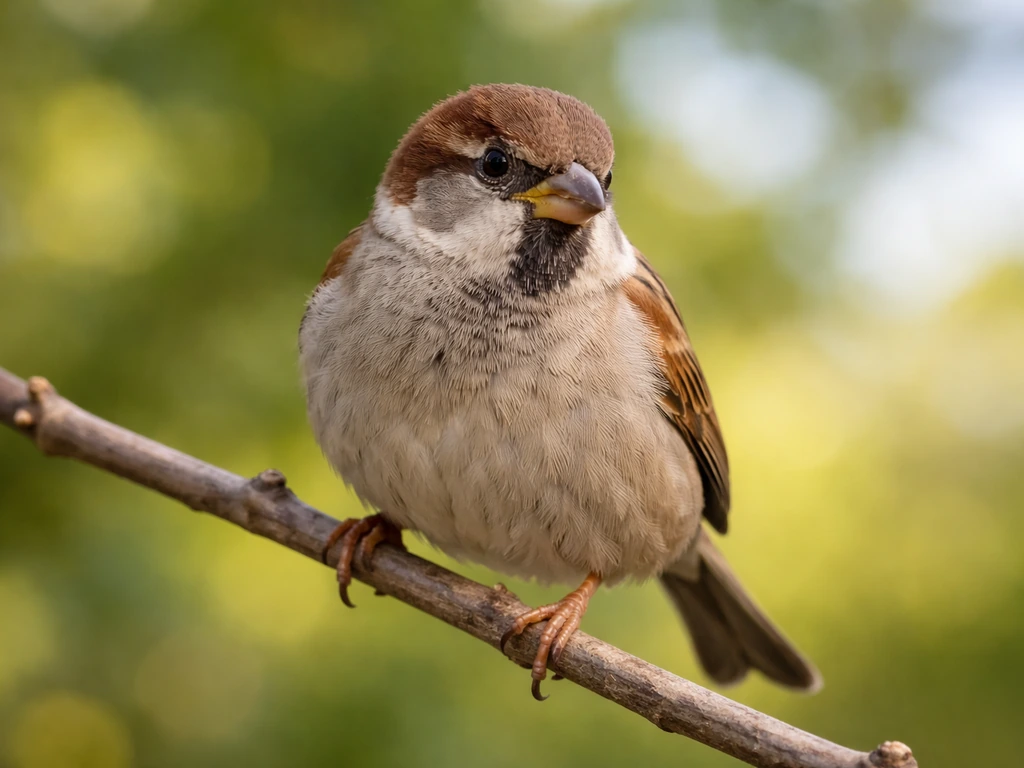
Is Sparrow a Bird? Traits, Taxonomy, and Easy ID Checks
Learn if sparrows are birds, their taxonomy, key traits, and quick ID checks plus common look-alikes.
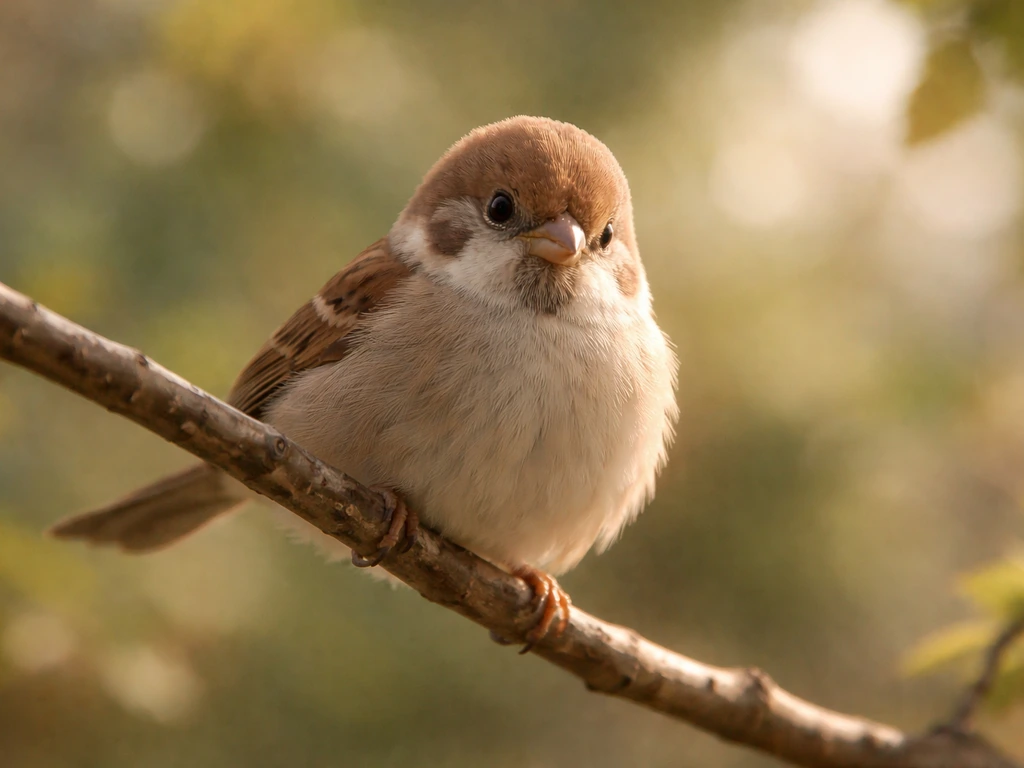
Why Is Zenitsu’s Bird a Sparrow? Real ID Guide
Learn why Zenitsu’s bird looks like a sparrow: real ID traits, how it differs from similar small birds, and how to verif
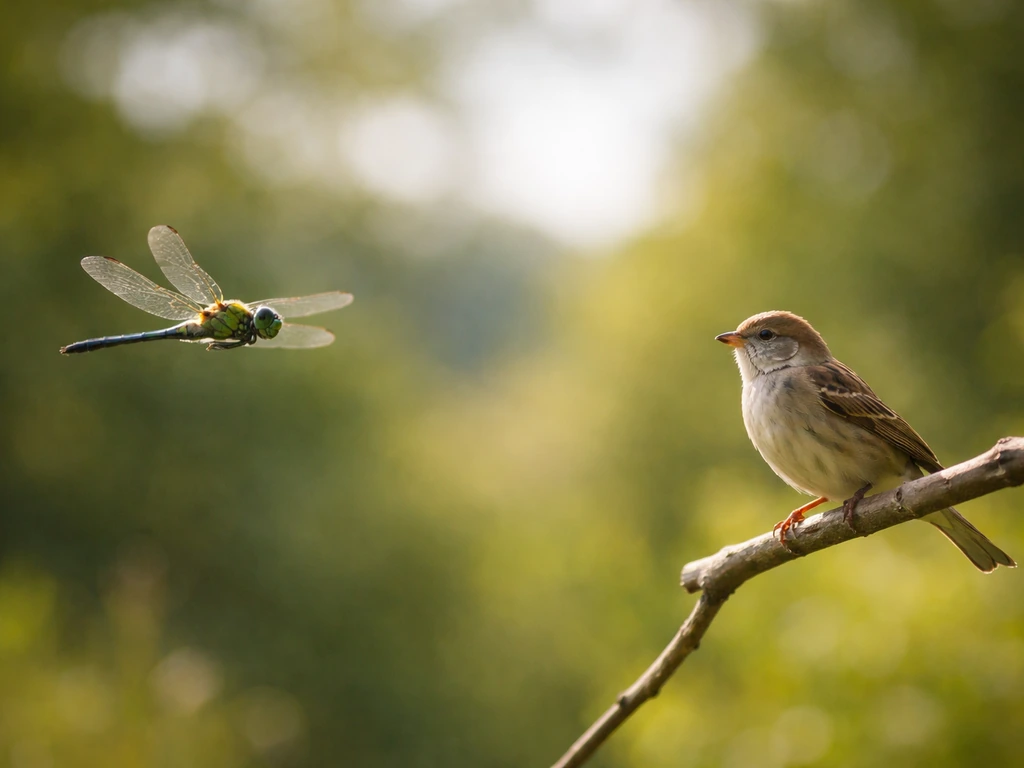
Is a Dragonfly a Bird? How to Tell the Difference
Dragonflies are insects, not birds. Learn key bird traits vs dragonfly anatomy to tell them apart fast.