Quick answer: is an ostrich a bird?
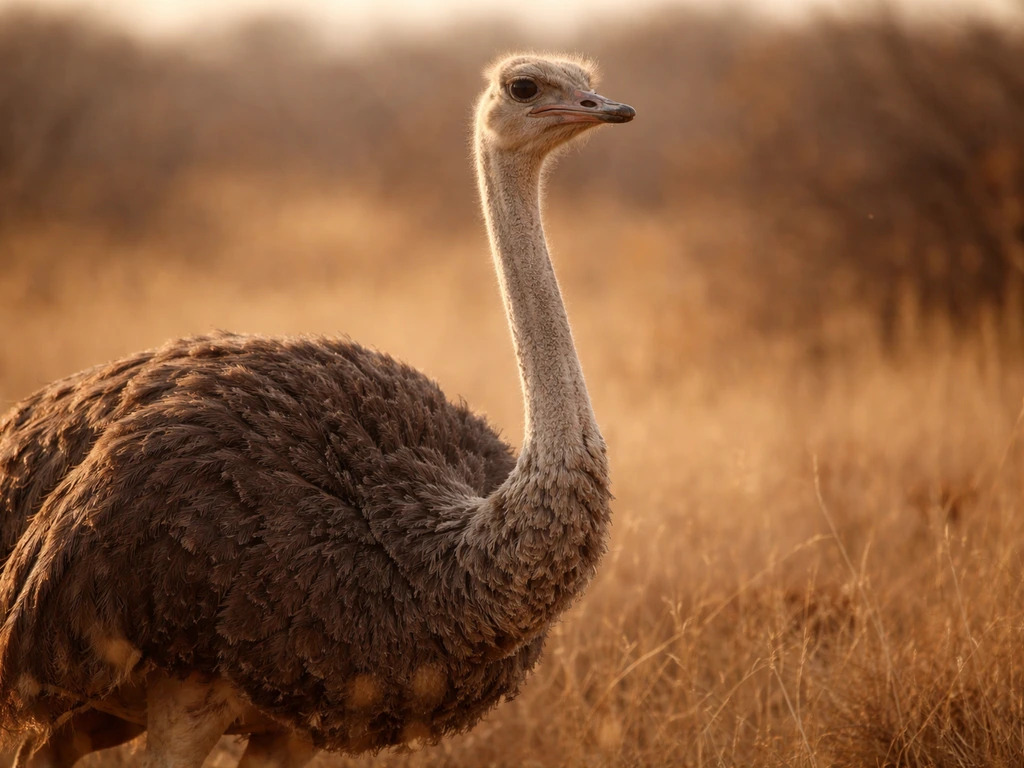
Yes, an ostrich is absolutely a bird. No asterisks, no caveats. The common ostrich (Struthio camelus) is classified in the class Aves, which is the formal biological group that contains every species we call a bird. It has feathers, lays hard-shelled eggs, is warm-blooded, and has a four-chambered heart. Every major scientific authority, from the Smithsonian National Zoo to the U.S. Fish and Wildlife Service, lists it as a bird species. The fact that it cannot fly does not change that classification one bit, and we will get into exactly why in a moment.
Bird vs. animal: how classification works
One reason people get tangled up here is the phrasing 'bird or animal,' as if those two categories are mutually exclusive. They are not. Think of it like asking whether a golden retriever is a dog or a mammal. It is both, because 'dog' sits inside the larger category 'mammal.' The same logic applies to birds and animals. 'Animal' refers to the kingdom Animalia, which is one of the broadest divisions in biology. It includes insects, fish, mammals, reptiles, and yes, birds. Being a bird automatically makes you an animal, because Aves is a subgroup nested within Animalia.
Classification works by grouping organisms based on shared evolutionary traits at each level of the hierarchy. At the kingdom level, ostriches are animals. At the class level, they are birds (Aves). So if someone asks 'is an ostrich a bird or an animal,' the scientifically accurate answer is: it is a bird, and because it is a bird, it is also an animal. Both statements are true simultaneously.
Why ostriches count as birds (key bird traits)
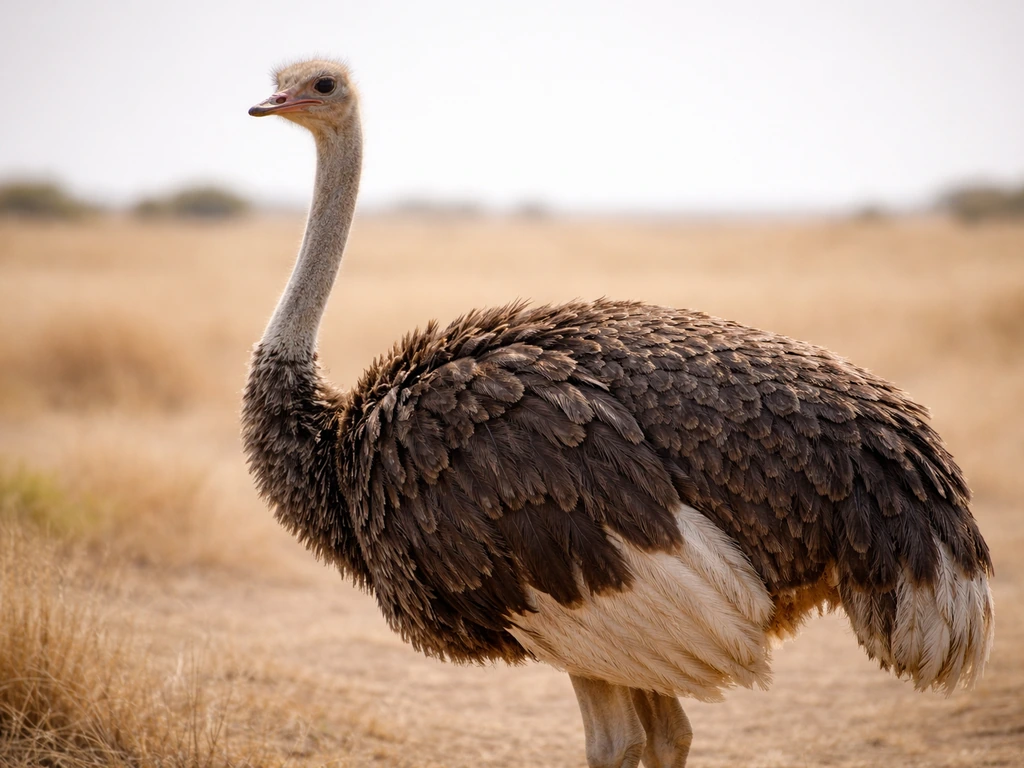
The traits that define a bird are biological, not behavioral. Flight is not on the checklist. Here is what actually qualifies an animal as a bird, and how ostriches tick every box.
- Feathers: Ostriches have feathers covering their bodies, the single most distinctive trait of birds. Feathers serve insulation, display, and other functions beyond flight.
- Warm-blooded (endothermic): Birds regulate their own body temperature internally, and ostriches do exactly that. They maintain a high metabolic rate like all birds.
- Four-chambered heart: Every bird has a four-chambered heart, and ostriches are no exception. This is a defining physiological trait shared across all Aves.
- Hard-shelled eggs: Ostriches lay eggs with hard, calcified shells, which is a hallmark trait of birds. Ostrich eggs are actually the largest eggs of any living bird species.
- Beak (bill): Ostriches have a beak, not teeth, which is standard bird anatomy.
- Two legs, two wings: Even though ostrich wings are vestigial and cannot generate lift, they still have wings. That anatomy is part of the avian body plan.
When you look at whether an ostrich is considered a bird through the lens of these traits rather than through the lens of flight, the answer is obvious. Every defining characteristic of Aves is present. The Smithsonian's education materials specifically call out endothermy and hard-shelled eggs as defining bird traits, and ostriches have both.
Flight myth: 'flying bird' vs. being a bird
The misconception that birds must fly to be birds is extremely common, and it is easy to understand why. Most of the birds people encounter every day, pigeons, sparrows, eagles, can fly. Flight feels like the defining thing birds do. But biologically, it is not what makes them birds. Flight is one ability that many birds happen to have, not a prerequisite for membership in the class Aves.
Think of it this way: humans can walk upright, but a person who uses a wheelchair is still a human. The ability to perform a characteristic behavior does not define what kind of animal you are. What defines your classification is your anatomy, physiology, and evolutionary lineage. An ostrich has all the anatomical markers of a bird. It just happens to run at up to 45 miles per hour on two powerful legs instead of flying. Britannica likewise describes the common ostrich (Struthio camelus) as a large flightless bird found only in open country in Africa. That is a lifestyle adaptation, not a reclassification.
Ostriches are far from the only example. Penguins cannot fly either, and no one seriously argues they are not birds. The same applies to emus, kiwis, and rheas. Cornell Lab's ornithology materials make this explicit: what makes a bird a bird is a set of biological traits, with endothermy and feathers at the core, not the ability to get airborne.
Where ostriches fit in bird taxonomy (ratites and relatives)
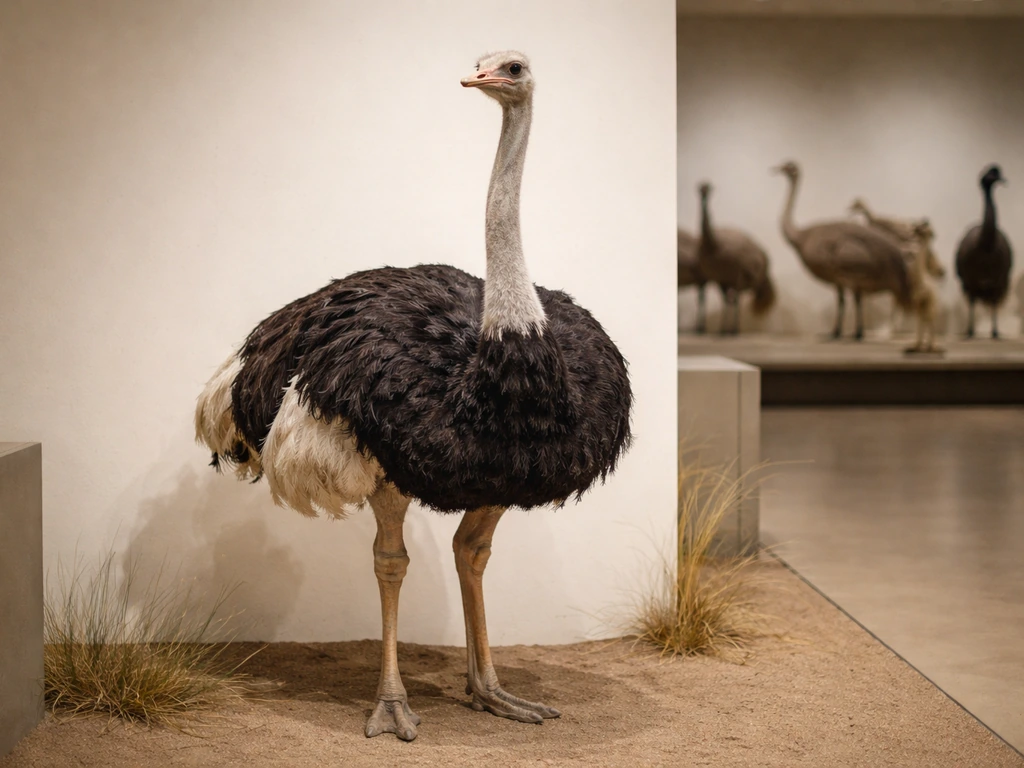
Within the class Aves, ostriches belong to a group called ratites (sometimes grouped within Palaeognathae). Ratites are birds whose sternum is flat and smooth, lacking the central ridge called a keel. In flying birds, that keel is essential because it is where the large flight muscles attach. Without it, you cannot anchor the muscles needed to power flight. The name 'ratite' actually comes from the Latin word 'ratis,' meaning raft, referring to that flat, raft-like breastbone.
The ostrich is placed in the family Struthionidae and the species Struthio camelus. CITES and the U.S. Fish and Wildlife Service both use this formal taxonomic placement. Ratites also include emus, rheas, kiwis, and cassowaries. There has been interesting scientific debate about exactly how ratites relate to each other phylogenetically: newer molecular data suggest tinamous may actually be nested within ratites rather than being a separate sister group, which would make traditional 'Ratitae' groupings paraphyletic. But regardless of how that internal family tree gets resolved, ostriches remain firmly in the bird class.
It is also worth noting where birds fit in the even bigger picture of evolutionary history. Birds evolved from theropod dinosaurs, a lineage that includes Velociraptor and T. rex. Fossils of feathered dinosaurs have provided overwhelming evidence for this transition. So in a very real sense, when you look at an ostrich, you are looking at a living dinosaur descendant. That lineage is part of what places them squarely within the biological history that eventually became the class Aves.
Ratites at a glance
| Bird | Family | Can Fly? | Region |
|---|
| Ostrich | Struthionidae | No | Africa |
| Emu | Casuariidae | No | Australia |
| Rhea | Rheidae | No | South America |
| Kiwi | Apterygidae | No | New Zealand |
| Cassowary | Casuariidae | No | Australia / New Guinea |
How to check whether other animals are birds
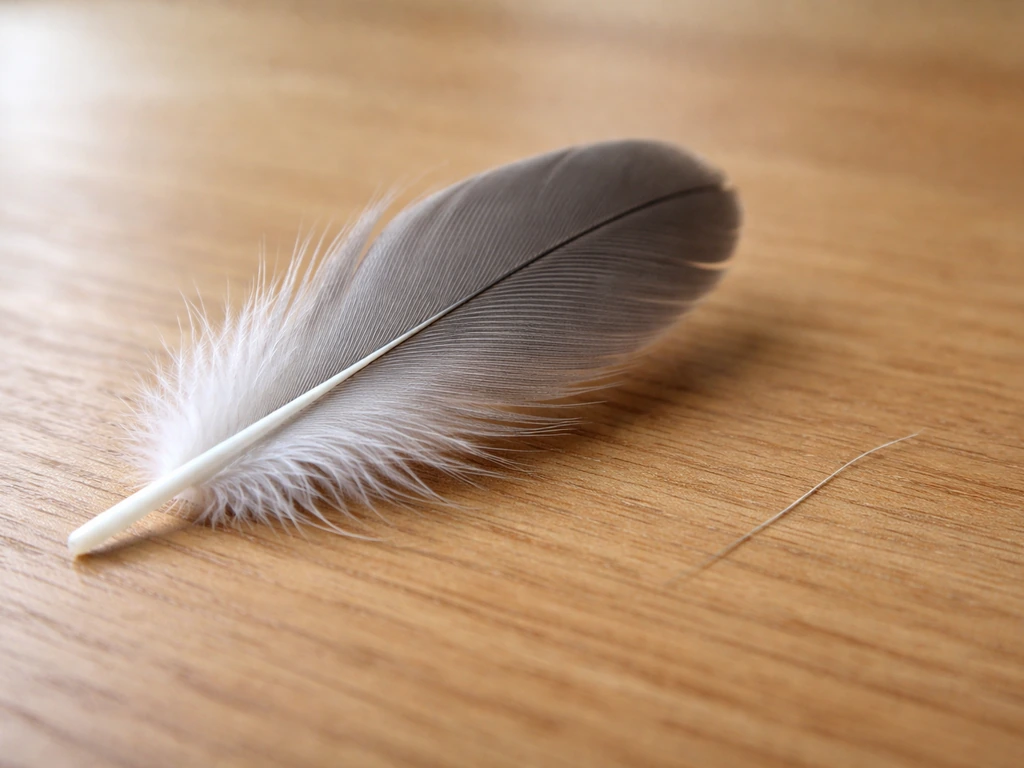
Once you understand that bird classification is based on biological traits rather than abilities or looks, you can apply the same logic to any animal you are unsure about. Here is a straightforward checklist to work through.
- Check for feathers: Feathers are unique to birds. No other living animal group has them. If an animal has feathers, it is a bird.
- Check for a beak: Birds have beaks instead of teeth-filled jaws. This is a strong indicator, though not every beak-shaped structure belongs to a bird (platypuses have bill-like snouts).
- Check whether it is warm-blooded with a four-chambered heart: Birds are endothermic and have a four-chambered heart. This rules out reptiles and fish.
- Check whether it lays hard-shelled eggs: Birds lay hard, calcified eggs. Reptiles lay leathery eggs, and mammals (mostly) do not lay eggs at all.
- Look up its taxonomic class: The definitive answer is always the class. If it is in class Aves, it is a bird. Databases like the IUCN Red List, Animal Diversity Web, or FWS taxonomy pages will tell you this quickly.
- Ignore flight ability: Whether an animal can fly tells you nothing definitive about whether it is a bird. Bats fly and are not birds. Ostriches cannot fly and are birds.
This same trait-based approach works for animals that spark debate beyond ostriches. For example, people sometimes wonder whether owls belong in the bird category. You can apply exactly the same checklist: an owl is a bird because it has feathers, lays hard-shelled eggs, is warm-blooded, and is classified in Aves. Done.
Some animals require a bit more nuance. Whether an owl is considered a bird sometimes confuses people because owls are nocturnal hunters that look and behave differently from the birds most people picture. But the classification criteria do not change based on behavior or time of day. Similarly, questions like whether an owl is a bird of prey are about sub-classification within birds, not about whether the owl is a bird at all.
For more unusual cases, the trait checklist is especially useful. Consider what type of bird an owl is versus something far more ambiguous: whether oculudentavis is a bird. That one requires looking at fossil evidence and anatomical synapomorphies rather than observable living traits, which is exactly what paleontologists do when applying the same classification logic to ancient organisms. The framework is always the same, whether the animal is living in front of you or preserved in amber.
The bottom line is straightforward: classification is about biology, not assumptions. An ostrich is a bird for the same reason a penguin is a bird: the anatomy, physiology, and evolutionary lineage all say so. Flight is a cool trick that many birds can do, but it has nothing to do with what puts them in the class Aves in the first place.