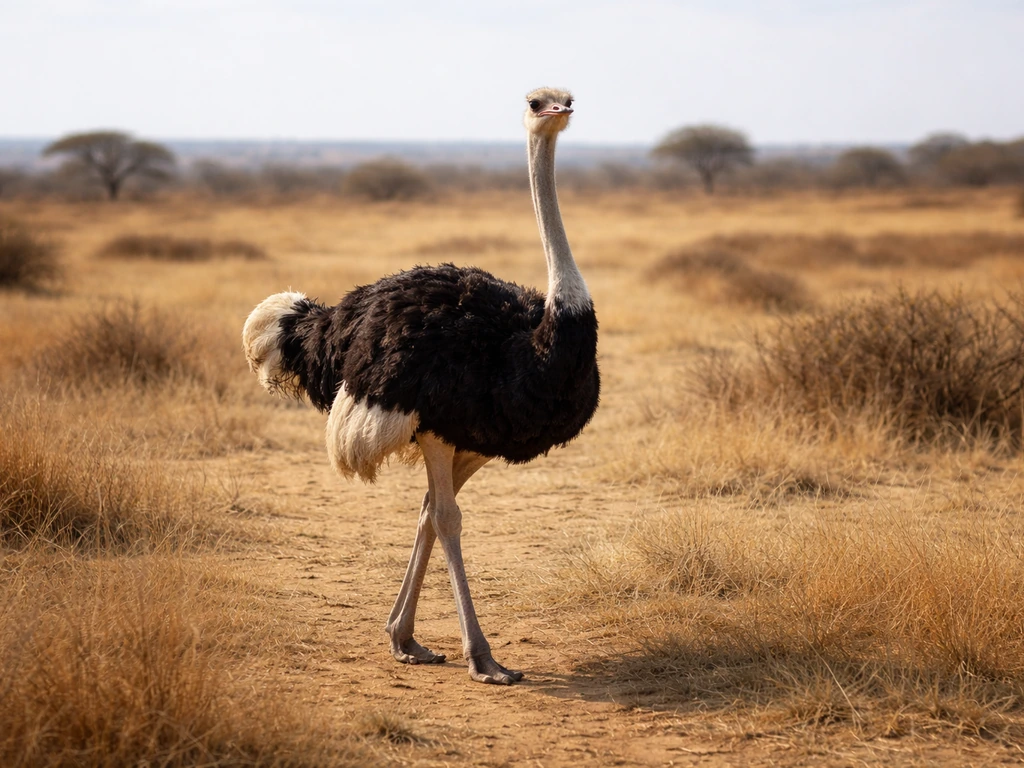
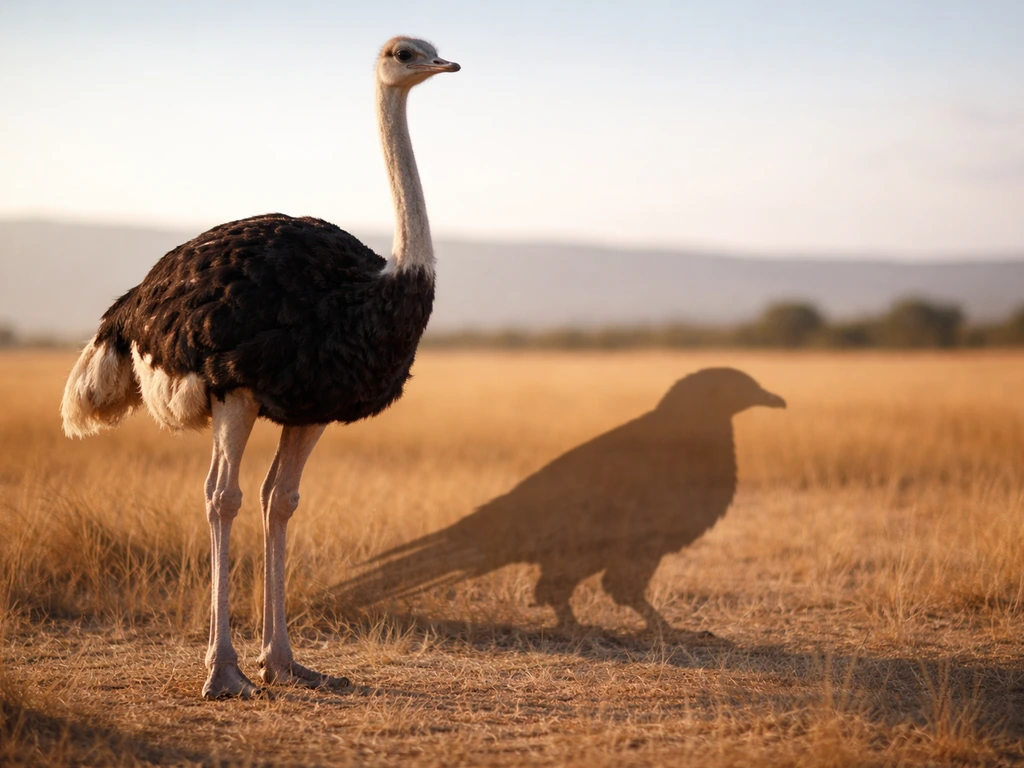
Yes, an ostrich is absolutely a bird. It is classified in Class Aves, the same taxonomic class as every other bird on the planet, from hummingbirds to penguins. Specifically, it belongs to Order Struthioniformes, Family Struthionidae, and its scientific name is Struthio camelus. Not only is it a bird, it is the largest living bird on Earth. The fact that it cannot fly, stands over 9 feet tall, and could kick a lion does not change that classification one bit.
Is an Ostrich Considered a Bird? Facts, Classification

Marcus Hendricks
14 May 2026
How ostriches are classified in the animal kingdom

Taxonomy is the system scientists use to sort all living things into groups based on shared evolutionary history. Here is where the ostrich sits in that system, from the broadest level down to species:
| Taxonomic Rank | Ostrich Classification |
|---|---|
| Kingdom | Animalia |
| Phylum | Chordata |
| Class | Aves |
| Order | Struthioniformes |
| Family | Struthionidae |
| Genus | Struthio |
| Species | Struthio camelus |
That Class Aves placement is the key detail. Every animal in Class Aves is a bird, by definition. The Smithsonian's National Zoo, the Animal Diversity Web, and the NCBI Taxonomy Browser all place Struthio camelus squarely in Aves, with no ambiguity.
Within Class Aves, ostriches belong to a group called ratites, which falls under the broader clade Palaeognathae. Ratites are defined by a flat, smooth sternum that lacks the central ridge (the keel) that flying birds use to anchor their flight muscles. All ratites are flightless as a result. The group includes emus, rheas, kiwis, and cassowaries. Being a ratite just means the ostrich is a particular kind of bird. It does not make it less of a bird any more than being a penguin makes something less of a bird.
Bird, bird of prey, or poultry: why the label changes depending on who you ask
A lot of the confusion around ostriches comes from people mixing up the broad scientific term 'bird' with narrower categories like 'bird of prey' or 'poultry.' These are not equivalent, and sorting them out makes everything clearer.
Is an ostrich a bird of prey?
No. A bird of prey, also called a raptor, is a specific type of bird defined by a set of predatory adaptations: a hooked beak for tearing flesh, sharp curved talons for gripping and killing prey, and keen binocular vision for hunting. In common usage, the phrase “bird of prey” refers to predatory birds, as reflected by Merriam-Webster’s dictionary-style definition [a bird of prey, also called a raptor](https://www. merriam-webster.
com/dictionary/bird%20of%20prey). Hawks, eagles, falcons, and owls are classic examples. Owls are also birds, but they are categorized as birds of prey because of their hunting adaptations. In older taxonomy, raptors were grouped primarily under the order Falconiformes, though modern classification has since reorganized some of those groups.
The point is, 'bird of prey' describes a particular set of hunting-adapted birds, not all birds generally. Ostriches do not have hooked beaks or grasping talons. They have flat beaks for grazing and two-toed feet built for running at speeds up to 45 mph. They will defend themselves with a powerful forward kick if threatened, but that is defense, not predation.
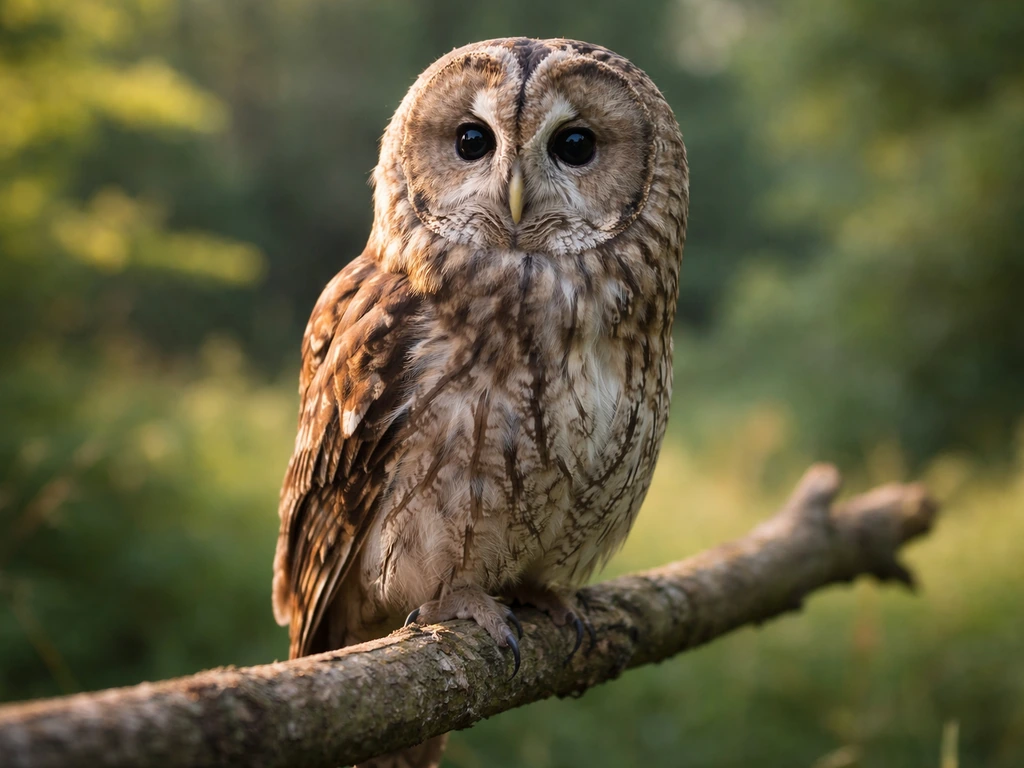
An ostrich is a bird, but it is not a bird of prey. If you are curious how these distinctions apply to other species, the same framework explains why owls sit in a genuinely different category from ostriches despite both being birds. Owls are a bird as well, which is why they fall under Class Aves just like other birds.
Is an ostrich considered poultry?
This one is more complicated, because the answer depends on which definition of 'poultry' you are using. In everyday language, most people think of poultry as chickens, ducks, and turkeys, meaning domesticated birds raised for meat or eggs. By that casual definition, ostriches would seem out of place. But in formal regulatory and agricultural contexts, ostriches are explicitly included as poultry.
The FAO (Food and Agriculture Organization of the United Nations) lists ostriches among poultry species alongside chickens and geese. The USDA's Food Safety and Inspection Service also categorizes ratites, including ostriches, under its poultry-related product guidelines. [USDA FSIS import guidance](https://www. fsis.
usda. gov/inspection/import-export/import-export-library/antigua-and-barbuda) for ratite products also lists ratites such as ostrich and rhea under its “Raw ratite Products” context, including an explicit “Poultry includes…” list that covers ostrich and rhea. California's regulatory code even defines poultry to include ostriches by name. So in an agricultural and food-safety context, yes, ostriches are classified as poultry because they are domesticated birds raised commercially.
In a casual dinner-table conversation, most people would raise an eyebrow at calling an ostrich poultry, but the formal definition supports it.
What actually makes an animal a bird
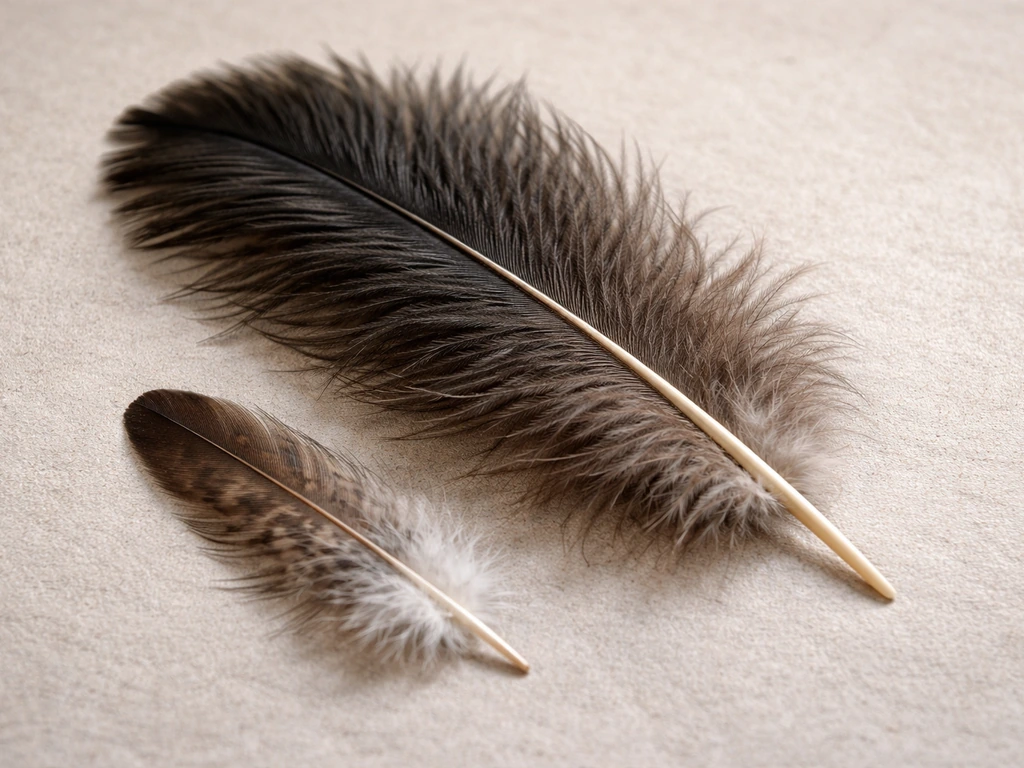
The internet is full of 'is X a bird?' debates, and they usually go sideways because people apply the wrong criteria. Diet, flight ability, size, and where an animal lives are not what determine whether something is a bird. Classification comes down to evolutionary lineage and a cluster of shared biological traits. Here is what scientists actually look for:
- Feathers: The single most reliable marker. No other living animal group has feathers. Birds evolved from theropod dinosaurs, and feathers were a central part of that evolutionary transition.
- Warm-bloodedness (endothermy): Birds regulate their own body temperature internally, as mammals do, but independently evolved this trait.
- Hard-shelled eggs: Birds reproduce by laying eggs with a hard, calcified shell, a trait distinct from reptile eggs and mammalian live birth.
- A beak with no teeth: All modern birds lack teeth. They grind food using a gizzard, sometimes aided by swallowed pebbles or grit.
- Lightweight, often hollow bones: Bird skeletons are built for weight efficiency, with fused and hollow bones that reduce mass.
- Air sac respiratory system: Birds have a unique system of air sacs connected to their lungs that allows for continuous airflow, much more efficient than mammalian lungs.
- Two legs and two wings: Even in birds where wings are vestigial, the basic body plan is there.
Flight is not on that list, because it is not a defining trait of birds. Penguins do not fly. Kiwis do not fly. Ostriches do not fly. They are all still birds. When you see a 'is X a bird?' question, run through the traits above rather than asking 'can it fly?' or 'does it look like a pigeon?' That approach works for ostriches, and it works just as well for debating whether something like Oculudentavis qualifies as a bird. That same logic applies when asking, “is Oculudentavis a bird,” because classification depends on evolutionary traits, not just appearance or flight.
The ostrich traits that confirm it belongs in Class Aves
You do not have to take anyone's word for it. The ostrich checks every box on the bird trait list, and most of those traits are things you can verify directly or find documented in plain scientific literature.
- Feathers: Ostriches are covered in feathers, including the distinctive fluffy plumes that have made them a target for the fashion industry for centuries. The feathers are less tightly structured than flight feathers in flying birds, but they are feathers.
- Hard-shelled eggs: Ostrich eggs are the largest eggs of any living bird, and they are famously difficult to crack. The shell is hard and calcified, exactly as expected for a bird egg.
- No teeth: Ostriches have a flat beak and no teeth. They swallow sand and pebbles to help grind food in their gizzard, a classic bird digestive strategy documented by the Smithsonian's National Zoo.
- Air sacs: Studies of ostrich anatomy confirm they have the same air-sac respiratory system found in all birds, conforming to the general avian pattern.
- Bird-type skeleton: The ostrich tarsometatarsus (the fused foot/ankle bone) follows the same fused, hollow-tube construction seen in bird skeletons generally. Fused bones and lightweight structures are a hallmark of avian skeletal design.
- Two legs, two wings: Ostriches have two legs and two vestigial wings. The wings are too small for flight but are used for balance, courtship displays, and shading chicks.
- Warm-blooded: Like all birds, ostriches are endothermic.
- Unique to birds only: The two-toed foot arrangement of the ostrich is unusual even among birds (most have three or four toes), making it the only known two-toed bird. That is a bird distinction, not a mammal or reptile one.
How to think about similar classification questions going forward
The ostrich question is a good template for any 'is X a bird?' debate. The answer almost never comes down to whether something can fly, whether it looks like a typical bird, or what it eats. It comes down to whether the animal belongs to Class Aves based on evolutionary lineage and shared biological traits. An ostrich does. A bat does not (it is a mammal). A flying fish does not. A flying squirrel does not. Feathers, hard-shelled eggs, a toothless beak, an avian respiratory system, and the right skeletal structure are the actual criteria. When in doubt, check the taxonomy: if the scientific classification puts an animal in Class Aves, it is a bird. Full stop.
The deeper reason this matters is that 'bird' is not just a casual label based on looks or behavior. It describes a shared evolutionary history going back to theropod dinosaurs. Ostriches, owls, hummingbirds, and penguins all share that ancestry, which is exactly why they all carry the same class designation despite looking and behaving wildly differently. Once you understand that, questions like 'but how can it be a bird if it cannot fly?' answer themselves.
FAQ
So if an ostrich cannot fly, does that ever make it not a bird?
Yes. When you see “bird” used as a taxonomic label, ostriches qualify because they are placed in Class Aves (same class as all other birds). The fact that they are ratites and flightless does not change that definition.
Could an ostrich be considered a bird of prey (raptor)?
No. “Bird of prey” is a functional category based on hunting adaptations like hooked beaks and grasping talons. Ostriches lack those predatory traits, so they do not fit the raptor/bird-of-prey definition even though they are birds.
Do ostriches have feathers in the same way other birds do?
If you mean feathers, yes, ostriches are covered in feathers, but the feather structure is adapted for display and insulation rather than powered flight. Their feathers are still the defining bird feature, even without flight muscles being anchored to a keel.
Does living mostly on the ground mean an ostrich is not a bird?
From an evolutionary and taxonomic standpoint, the reason they are birds is their shared ancestry and anatomical traits, not their behavior or habitat. Ostriches can live on land their whole lives, but being terrestrial does not remove them from Class Aves.
Is the ostrich’s size or its ability to fight relevant to whether it is a bird?
Not for “is it a bird” questions. Being large, fast, or able to kick hard affects common perception, but those are not the criteria biologists use for the Class Aves definition.
Why do some people say ostriches are poultry, while others say they are not?
It depends on what you are calling “poultry.” In casual speech it often means common farm birds like chickens, ducks, and turkeys, but in formal food and agriculture regulations, ostriches are explicitly treated as poultry species. So you can get different answers depending on context.
Is an ostrich still a bird if it is a ratite?
Yes. Ostriches are part of a smaller group within birds, the ratites. Ratite status is a way of organizing birds with a shared body plan (like a sternum without a flight-related keel), not a reason to exclude them from being birds.
What is the quickest way to verify whether something is a bird during an online debate?
For most “is X a bird” debates, yes. The most reliable decision rule is checking whether the organism is classified in Class Aves. If it is not in Aves, it is not a bird, regardless of appearance, diet, or whether it has wings.
Can the answer change depending on whether you mean scientific or everyday “bird”?
If you are asking about “bird” as a scientific category, the answer is the taxonomy. For “bird” in everyday language, you may see edge cases because people use informal groupings like poultry, songbirds, or raptors. Those are subcategories of birds, not substitutes for the Class Aves definition.
Next Article
Is an Owl Considered a Bird Yes or No and Why
Yes, an owl is a bird because owls are in class Aves; learn the traits and how to verify taxonomy.