Yes, owls are birds of prey, and yes, that includes barn owls. The short version: owls hunt and kill animals for food, they have hooked beaks and sharp talons, and they sit in their own taxonomic order (Strigiformes) that is formally recognized alongside hawks and falcons as part of the broader birds-of-prey grouping. The U.S. National Park Service describes raptors as an artificial grouping of two bird orders, Falconiformes (diurnal predatory birds) and Strigiformes (owls) blank" rel="noopener noreferrer">falcons as part of the broader birds-of-prey grouping. The longer version involves a real definition debate that trips people up online, and it is worth walking through so you actually understand what you are classifying and why.
Is an Owl a Bird of Prey? Yes and Here’s Why

Marcus Hendricks
18 Apr 2026
What "bird of prey" actually means (and why there are two answers)
The phrase "bird of prey" sounds simple, but it has two genuinely different meanings depending on who is using it, and that is the root of most online confusion.
In everyday language, a bird of prey is any bird that hunts and kills other animals for food. Merriam-Webster's definition explicitly lists owls alongside eagles and hawks as examples. If you are comparing definitions, Merriam-Webster includes owls alongside other birds of prey, and that also supports the question is an owl a type of bird. Britannica describes birds of prey as birds that pursue other animals as apex predators. By this definition, if a bird hunts living prey, it is a bird of prey, full stop. A great horned owl dismembering a rabbit at 2 a.m. qualifies without any argument.
In a more technical, taxonomic sense, "bird of prey" sometimes gets used to describe a specific grouping of orders, historically Falconiformes (falcons) and the broader diurnal raptor order Accipitriformes (hawks, eagles, kites, vultures). Some people use "raptor" to mean only those daytime hunters and exclude owls on the grounds that owls are in a separate order, Strigiformes. The Wolf Center notes directly that "raptor" and "bird of prey" are sometimes used interchangeably and sometimes not, which is exactly why the internet argues about this.
Here is the honest answer on the taxonomy side: even formal sources include owls. Britannica Kids states that "bird of prey" is used precisely for two orders, Falconiformes and Strigiformes. U.S. federal law (16 USC § 460iii-1) defines raptors as including "eagles, falcons, owls, hawks, and other birds of prey. California defines “raptor” as a group that includes hawks, falcons, kites, eagles, vultures, and owls (Strigiformes included) raptors as including "eagles, falcons, owls, hawks, and other birds of prey.. " The U.S. Fish and Wildlife Service places owls under Strigiformes and treats them as raptors in a management and regulatory context. A Journal of Raptor Research commentary acknowledges there is no single standard definition for "raptor," but the working consensus across wildlife management, conservation, and most scientific contexts includes owls.
Quick answer: is an owl a bird of prey?
Yes. By both the everyday definition and the formal taxonomic one used by wildlife agencies, owls are birds of prey. If someone tells you owls do not count because they are in a different order than hawks, remind them that Strigiformes is explicitly included in the birds-of-prey grouping across Britannica, U.S. federal law, California Fish and Wildlife regulations, and virtually every raptor education and conservation framework in use today. The "different order" fact is real and worth knowing, but it does not exclude owls from the category. Owls are birds, including the close-up practical details in owls are birds, so the terminology stays consistent.
Is a barn owl a bird of prey? Absolutely yes. The barn owl is a member of the family Tytonidae within Strigiformes. It hunts living prey, kills with its talons, and has a hooked bill for tearing flesh. It meets every criterion for the category under any reasonable definition.
Where owls fit in avian taxonomy (and why the debate happens)
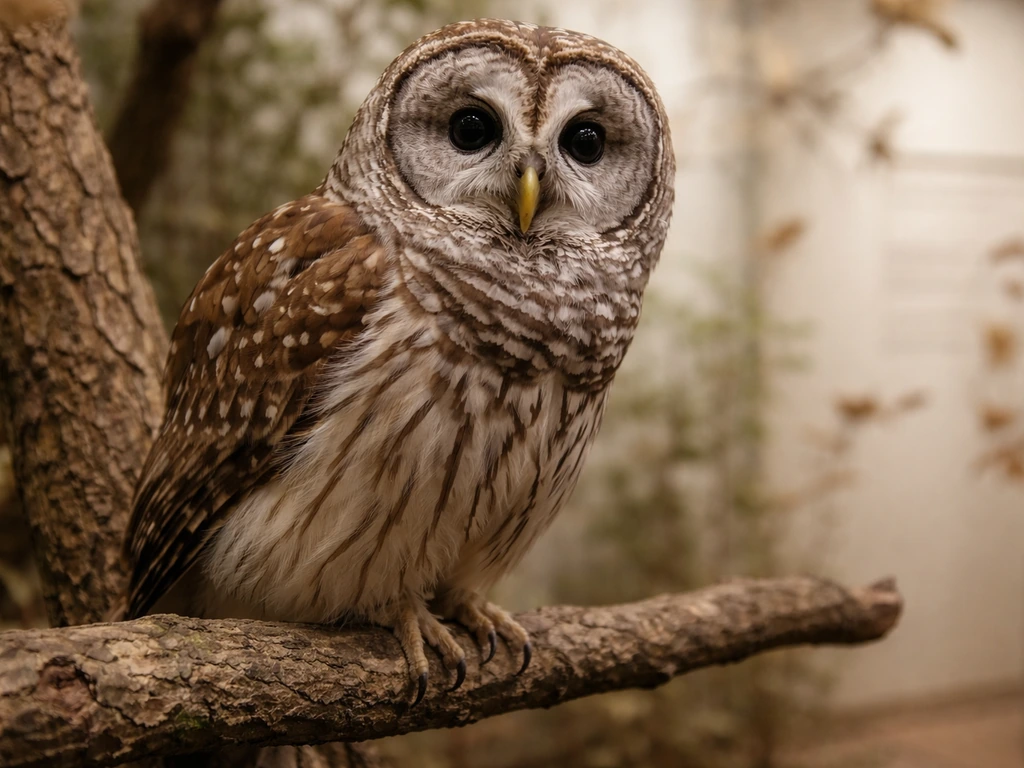
Owls sit in the order Strigiformes, which is separate from Accipitriformes (hawks, eagles, kites, and Old World vultures) and Falconiformes (falcons and caracaras). This separation is real and reflects genuine evolutionary differences. Owls are not the closest relatives of hawks. Their shared traits, hooked beaks, talons, predatory behavior, evolved along separate lines.
That evolutionary separation is what fuels the debate. Someone learns that owls are in a different order than hawks and concludes they must not "really" be birds of prey. But that logic does not hold. Taxonomy tells you how animals are related to each other, not whether they belong to a functional or ecological category. Birds of prey is a category defined by ecology and physical traits, not a single monophyletic order. The IOC World Bird List and other classification authorities update higher-level taxonomy regularly, and the groupings have shifted over time, which is another reason you cannot pin the "birds of prey" label to one fixed order and call it settled.
The practical takeaway is this: owls are birds (that question has its own answer), and within birds they are predatory hunters with the defining physical equipment of a raptor. Whether you come at it from the ecological side or the regulatory side, they land in the same place.
The barn owl up close: hunting, diet, and raptor traits
The barn owl is one of the best examples for demonstrating why owls belong in the birds-of-prey category, because its adaptations are so specifically built around hunting.
Diet and hunting behavior
Barn owls eat mostly small mammals, primarily rats, mice, voles, lemmings, and other rodents. They also take shrews, bats, and occasionally young rabbits. This is not scavenging; they hunt live prey. They typically hunt for about one hour after sunset through to about one hour before sunrise. What makes their hunting genuinely remarkable is that barn owls can locate and capture prey by sound alone in complete darkness, using their asymmetrically placed ears and their heart-shaped facial disk to funnel sound. Research has shown that removing the facial ruff impairs sound localization, which tells you just how specifically that structure evolved for hunting. After eating, they regurgitate indigestible material, fur, bones, and tough insect parts, as pellets. This pellet behavior is a well-known raptor characteristic.
Physical traits
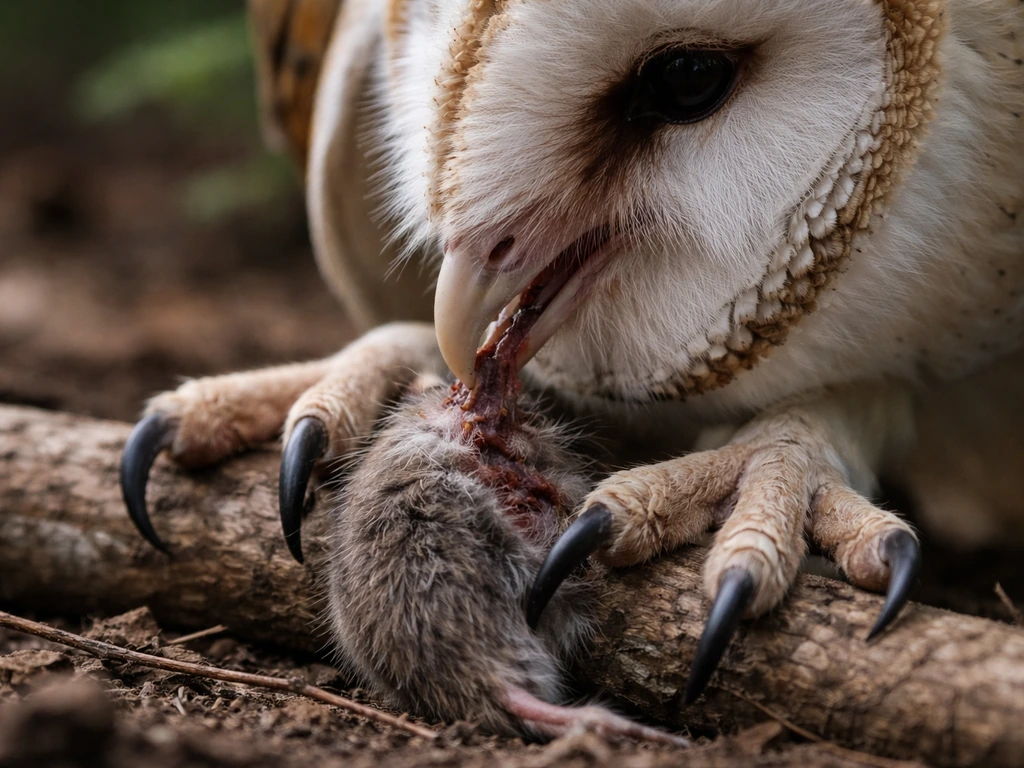
Barn owls have sharp, curved talons used to seize and kill prey, and a hooked bill used for tearing. These are the two physical markers most consistently used across wildlife agencies, conservation groups, and field guides to identify a bird as a raptor. IFAW, the British Columbia raptor conservation guidelines, the Raptor Center at the University of Minnesota, and IFAW all describe sharp talons and a hooked beak as the defining physical features of birds of prey. The barn owl has both. It also has forward-facing eyes for depth perception during the final strike, which is another common raptor adaptation.
How to tell raptors apart from other predatory birds
Not every bird that eats meat is classified as a bird of prey. Is oculudentavis a bird? It is widely discussed in paleontology as a tiny extinct animal with bird-like traits, but the exact classification has been debated. This matters because it gives you a way to draw the line accurately rather than just calling anything carnivorous a raptor.
| Feature | Raptors / Birds of Prey | Other Predatory Birds (e.g., herons, kingfishers) |
|---|---|---|
| Primary weapon for catching prey | Sharp, curved talons | Bill (spearing, snatching) |
| Bill shape | Hooked, curved at tip | Varies: spear-shaped, dagger-shaped, straight |
| Prey handling | Gripped and killed with feet | Typically swallowed whole or held in bill |
| Regulatory inclusion as raptor | Yes (Falconiformes, Accipitriformes, Strigiformes) | No |
| Examples | Hawks, eagles, falcons, owls | Herons, kingfishers, pelicans |
A heron eats fish and frogs, but it spears them with its bill and lacks talons designed to grip and kill. A kingfisher dives for fish using its bill as the primary tool. Neither is classified as a raptor. The defining combination for a bird of prey is the use of talons to capture and kill, combined with a hooked bill, acute vision, and the predatory lifestyle. Owls check every one of those boxes. Herons do not.
It is also worth noting that vultures present a slightly different puzzle: many are grouped with raptors taxonomically or in management contexts, but their feet are less specialized for killing because they mostly scavenge. The working definition of raptor is broad enough to include them in most frameworks, but they illustrate that the category has edges that people debate. Owls are not at the edge. They are squarely inside it.
Use this framework to classify other confusing animals
The owl question is a good template for thinking through any classification problem where common names and scientific categories do not perfectly align. Here is a practical approach you can apply to any bird you are trying to categorize.
- Start with the formal order. Look up the bird's taxonomic order. For raptors, the relevant orders are Accipitriformes, Falconiformes, and Strigiformes. If a bird sits in one of those, it is formally a bird of prey under most scientific and regulatory definitions.
- Check the physical markers. Does the bird have sharp, curved talons used to capture prey? Does it have a hooked bill? If yes to both, it almost certainly belongs in the raptor category regardless of what the common name suggests.
- Ask whether it is a predator or a scavenger or an opportunist. Diet alone is not enough (herons eat prey too), but the combination of hunting behavior plus raptor anatomy is decisive.
- Separate the ecological label from the evolutionary relationship. Two birds can both be "birds of prey" without being closely related, just as bats and birds both fly without being relatives. Classification by function and classification by ancestry are different questions.
- Check regulatory and conservation definitions in your jurisdiction. In the U.S., federal and state wildlife frameworks explicitly include owls in their raptor definitions, which has practical consequences for permits, falconry, and conservation protections.
This same framework applies when people ask about other classification edge cases across the bird world. Is something a bird at all? That is the same question behind whether an ostrich is considered a bird Is something a bird at all?. That is a different question with its own criteria around feathers, warm blood, egg-laying, and skeletal features. Once you have confirmed something is a bird, layering on a category like "bird of prey" is a matter of checking the physical and behavioral criteria above and cross-referencing with the accepted taxonomic orders. Owls pass that test cleanly, and the barn owl is one of the clearest examples you can point to.
If you are working through related classification questions, the same logic that answers the owl question also applies when thinking about whether any bird that hunts or looks unusual truly belongs in its assumed category. The methodology is consistent: look at the anatomy, check the taxonomy, and do not let an ambiguous common name do all the work for you.
FAQ
If the term “bird of prey” sometimes means a specific raptor order, does that change whether owls count in every context?
Yes, the wording can shift, but in practice owls are still included. When “bird of prey” is used in the everyday sense (hunts and kills living prey), owls clearly fit. When it is used as a narrower historical grouping, wildlife management and regulatory language still treats owls as raptors under Strigiformes, so you will not get a different answer in the contexts that matter for identification and rules.
How can I tell the difference between an owl and a non-raptor bird that also eats meat?
Use the combination test from the article: raptors typically have both grasping, killing talons and a hooked bill built for tearing. Many meat-eaters lack one of those features. Herons and kingfishers, for example, catch with a spear-like bill and lack raptor-grade feet designed to seize and kill with talons.
Are all owls “birds of prey,” or are there exceptions within owls?
In general, yes. Owls as a group are predatory hunters and have the core anatomy associated with raptors (talons and a hooked bill). Even if a species has a different main diet (more insects versus more rodents), it is still hunting living prey and using raptor-style tools to capture and kill.
Do owls have to be active at night to qualify as birds of prey?
No. Many owls hunt at night, but the defining criteria are hunting living prey and using raptor adaptations (not the time of day). A daytime owl species would still qualify as a bird of prey under the ecological and physical criteria.
Are vultures considered birds of prey, and if not, why are they grouped with raptors sometimes?
It depends on the working definition being used. Vultures are sometimes grouped with raptors for management or classification convenience, but many species are primarily scavengers and do not rely on the same killing foot anatomy. That is why they expose the edge cases of the category, while owls fit the core “hunt and kill with talons and a hooked bill” criteria.
If I’m using this for legal or wildlife rules, should I rely on the common phrase “bird of prey” or the term “raptor”?
If you are dealing with regulations or permits, rely on the wording used in the specific jurisdiction, often “raptor.” “Raptor” definitions commonly include owls explicitly, so it is safer than assuming that only hawks and falcons are covered. When in doubt, match your question to the category name used in the rule text.
What about owls that eat carrion, does that ever disqualify them?
Occasional carrion eating does not usually remove a species from the bird-of-prey category. The practical classification is based on typical behavior and anatomy, and owls are fundamentally adapted to hunt and kill with talons and a hooked bill. If a particular individual or rare event involves carrion, it is usually an edge case rather than a change in classification.
What is the best quick checklist to decide if an unfamiliar bird is actually a raptor?
Look for a hooked bill for tearing and capture-capable talons for gripping and killing. Then check behavior, whether it hunts living prey rather than only spearing, filtering, or scavenging. If you get a “yes” on anatomy and a “yes” on predatory lifestyle, it is likely a raptor, and owls will match that checklist even though they are in a different order than hawks.