A flyer is not automatically a bird. The word 'flyer' just means something that flies, and plenty of things fly without being birds: insects, bats, the occasional flying squirrel, and every paper advertisement stuffed under your windshield wiper. Flight is a behavior and a physical capability, not a biological category. If you want to know whether a specific flying creature is a bird, you need to look at its biology, not its ability to get airborne.
Is a Flyer a Bird? How to Tell Flyers From Real Birds

Marcus Hendricks
23 May 2026
What 'flyer' actually means in everyday language
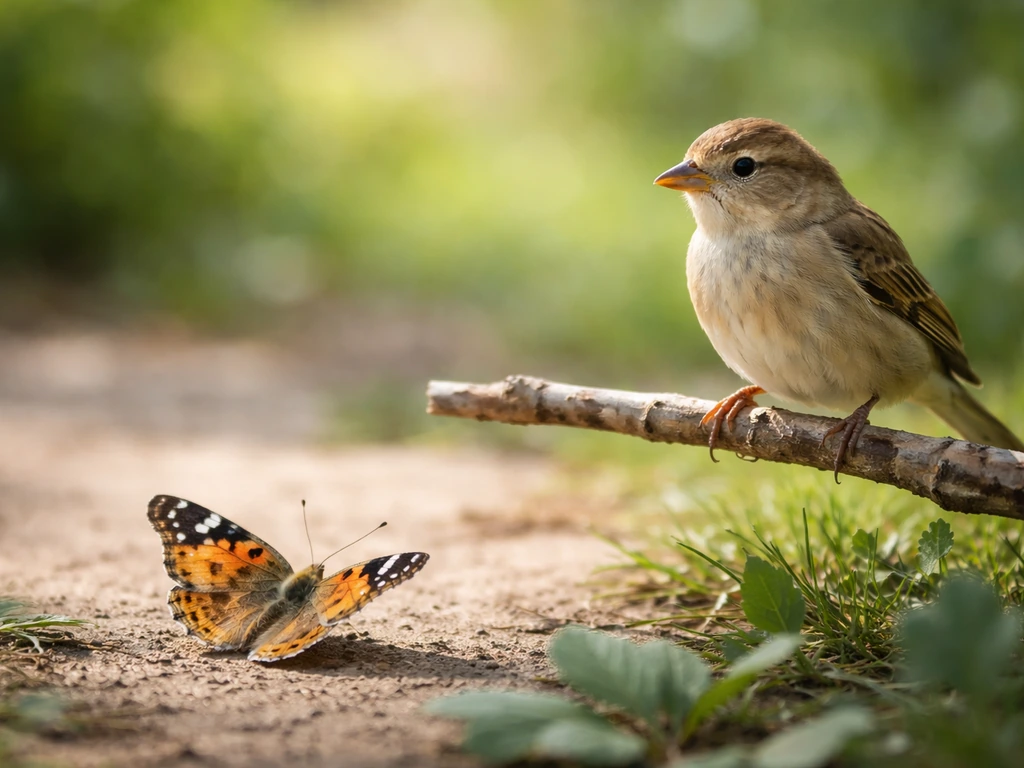
The word 'flyer' does a lot of heavy lifting in English. Merriam-Webster defines it as 'one that flies,' which covers everything from airline pilots to kite hobbyists to actual animals. The Oxford Learner's Dictionary gets more specific, noting that a flyer can be 'a thing, especially a bird or an insect, that flies in a particular way.' Notice that phrasing: especially a bird or an insect. That single dictionary sentence already tells you that insects count as flyers too, and insects are most definitely not birds. Then there's the completely unrelated meaning: a flyer is also a printed advertising leaflet. Context matters enormously when this word shows up.
The reason this matters practically is that 'flyer' carries no biological weight. It's a descriptive label, not a taxonomic one. Using 'flyer' to mean 'bird' is like using 'swimmer' to mean 'fish.' Dolphins swim. Penguins swim. Sea turtles swim. None of that makes them fish. The same logic applies here: the ability to fly tells you almost nothing about an animal's true classification.
What actually makes something a bird
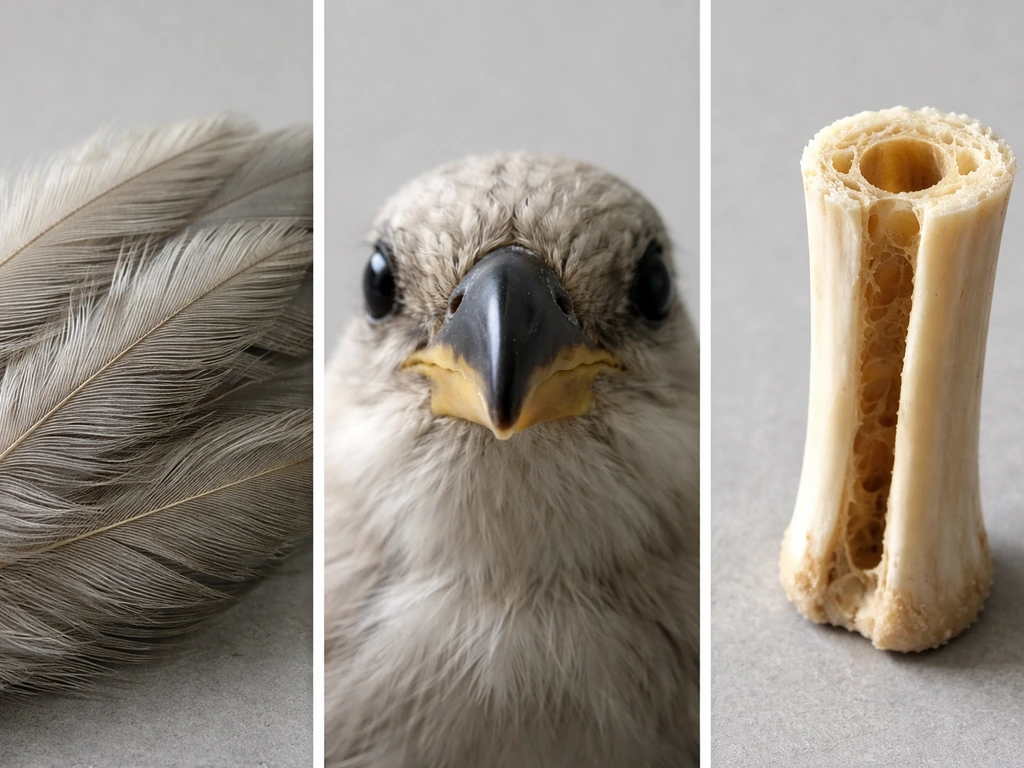
Birds belong to the class Aves, and what separates them from every other animal on Earth is a specific set of biological traits. Feathers are the single most important one. According to Britannica, feathers are the major distinguishing characteristic of birds compared to all other animals. No other living creature grows true feathers. The Smithsonian narrows it down to three core identifiers: feathers, hollow bones, and hard-shelled eggs. Those three things together are your reliable checklist.
- Feathers: the definitive bird trait, found in no other living animal group
- Hollow bones: a skeletal adaptation that reduces weight for flight (and is present even in flightless birds)
- Hard-shelled eggs: birds reproduce by laying eggs with a rigid, calcified shell
- Warm-blooded physiology: birds maintain a body temperature around 40°C (104°F), higher than mammals
- Beak or bill: birds have no teeth; a keratinous beak handles all feeding tasks
- Forelimbs modified into wings: even in flightless birds like ostriches, the forelimbs are structurally wings
Importantly, flight is not on that list as a requirement. Ostriches, penguins, emus, and kiwis are all true birds and none of them fly. They have feathers, hollow bones, and lay hard-shelled eggs. They're birds. A bat flies brilliantly and is not a bird. The deciding factor is always anatomy and biology, never the flying itself.
Birds versus everything else that flies
Three major groups of flyers get confused with birds regularly: insects, bats, and pterosaurs (the last one mostly in fiction and paleontology discussions). Here's how each one breaks down.
Insects
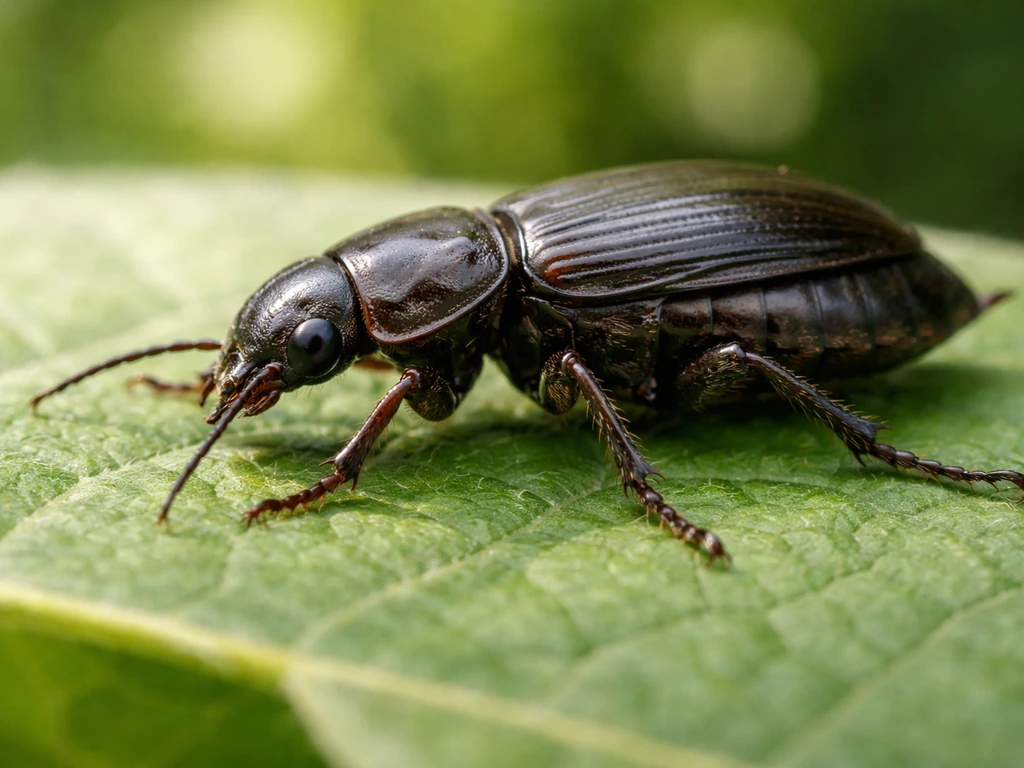
Insects are arthropods. They have six legs, three body segments (head, thorax, abdomen), and a hard external skeleton called an exoskeleton. Many have two pairs of wings. They are cold-blooded, they don't have a vertebral column, and they are about as biologically distant from birds as an animal can get. A dragonfly buzzing past your face is a flyer. Dragonflies may look like they belong with birds because they fly well, but they are not birds. It is emphatically not a bird.
Bats
Bats are mammals, order Chiroptera. The Smithsonian is direct about it: bats are the only mammals capable of true flight. They have hair, they're warm-blooded, and they give birth to live young that they nurse with milk. Their wings are membranes of skin stretched between elongated finger bones, not feathers. They lay no eggs. By every biological measure, a bat is a mammal that happens to fly, not a bird of any kind.
Pterosaurs
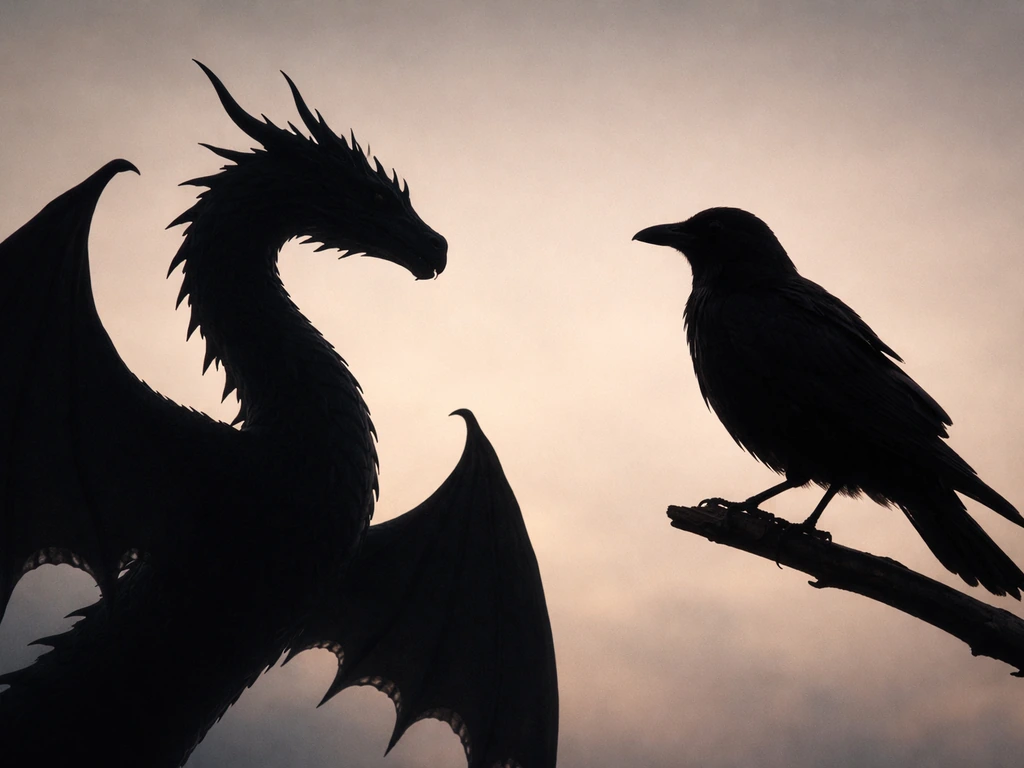
Pterosaurs are the extinct flying reptiles that show up in every dinosaur documentary and are constantly mislabeled as dinosaurs (they're actually archosaurs, not dinosaurs). The American Museum of Natural History is explicit: pterosaurs are not birds. Their wings were supported by an enormously elongated fourth finger and were made of a skin membrane, very similar to a bat's wing structure. No feathers, no beak in the bird sense, no avian skeletal features. They flew for about 160 million years during the Mesozoic era and then went extinct. If you're wondering whether a fictional or mythical flying creature like a dragon counts as a bird, the pterosaur comparison is useful: wing membranes instead of feathers are a firm 'not a bird' signal.
Testing the idea: flyers that are and aren't birds
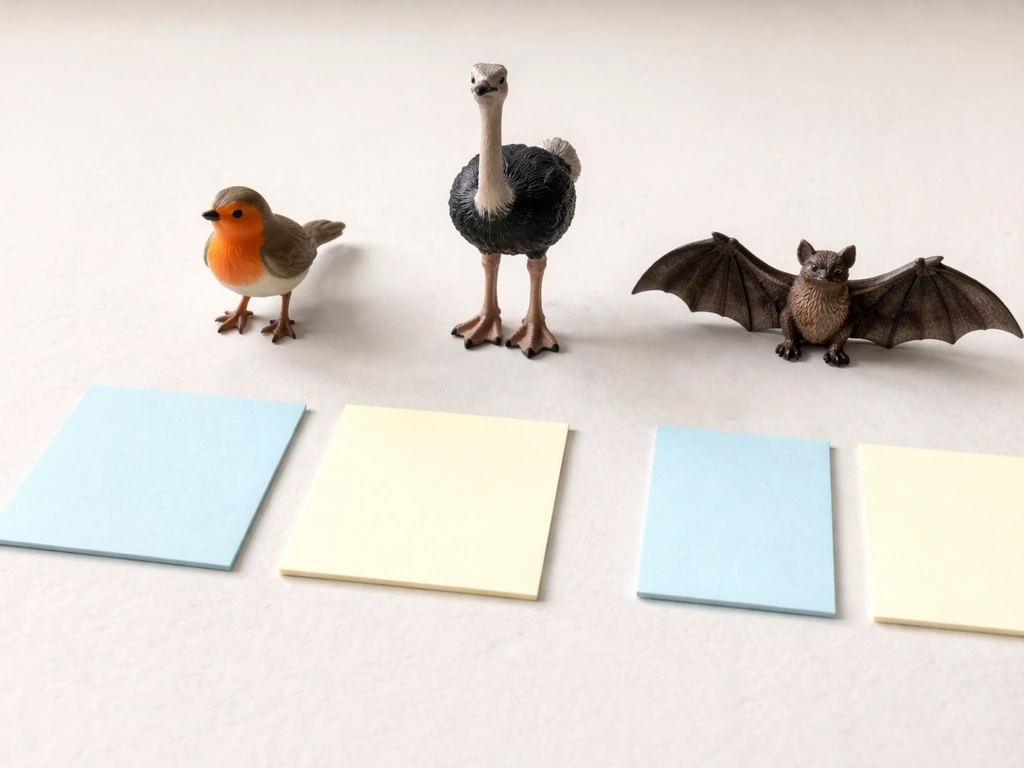
| Creature | Can it fly? | Is it a bird? | Why or why not |
|---|---|---|---|
| Robin | Yes | Yes | Feathers, hollow bones, hard-shelled eggs, beak — all bird traits confirmed |
| Ostrich | No | Yes | Flightless but has feathers, hollow bones, and lays hard-shelled eggs |
| Bat | Yes | No | Mammal with hair, live birth, skin-membrane wings — no feathers or bird eggs |
| Dragonfly | Yes | No | Insect with exoskeleton, six legs, two pairs of wings — arthropod, not a vertebrate |
| Pterosaur | Yes (extinct) | No | Flying reptile with membrane wings supported by the fourth finger — no feathers |
| Flying squirrel | No (glides) | No | Mammal that glides using a skin membrane — doesn't even truly fly |
| Penguin | No | Yes | Flightless bird — has feathers, hollow bones, lays hard-shelled eggs |
| Dragon (fictional) | Yes (fictional) | No | Typically depicted with membrane wings like a pterosaur — no avian traits |
The pattern is clear: flight status and bird status are completely independent variables. You can be a bird without flying (penguin, ostrich), and you can fly without being a bird (bat, dragonfly, pterosaur). The only reliable route to classification is checking biological traits, not watching something move through the air.
How to tell if a flying animal is actually a bird
If you're looking at a real animal and trying to figure out whether it's a bird, start with the Smithsonian's three-part checklist: feathers, hollow bones, hard-shelled eggs. In practice, you can't examine bones in the field, and you won't always see eggs, but feathers are usually visible. If it has feathers, it's a bird. If it's flying and has a furry body, it's likely a bat (mammal). If it has six legs and a segmented body, it's an insect.
For more detailed identification of a specific bird species, Audubon and the Cornell Lab's All About Birds both recommend starting with field marks: size and shape, bill structure, plumage color and pattern, and behavior. Bill shape is especially useful because different bird groups have very distinct beak forms built for their diet. A hooked beak points to a raptor; a long, thin beak often indicates a nectar feeder or shorebird. These features won't help you decide if something is a bird at all, but they're the right tools once you've already confirmed the feathers.
- Look for feathers first — if feathers are present, it's a bird, full stop
- Check the body covering: fur or hair means mammal, exoskeleton means insect or other arthropod
- Count the legs: six legs is always an insect; four limbs (including wings) points to a vertebrate
- Look at wing structure: feathered wings are avian; skin-membrane wings are bats or pterosaurs
- If still unsure, note the size, shape, beak, and behavior, then check a field guide or a resource like All About Birds or Audubon
- For extinct or fictional creatures, apply the same feather rule — no feathers means not a bird
Where the confusion really comes from: mascots, labels, and mythical 'birds'
A lot of the 'is X a bird?' confusion comes not from biology but from language and branding. Sports teams name themselves after birds constantly: Falcons, Eagles, Cardinals, Blue Jays, Osprey. That doesn't make their logos taxonomically meaningful. 'Bird' in that context is a cultural nickname chosen for its associations with speed, power, or regional identity, not a classification claim. The same goes for brand mascots, cartoon characters, and mythical creatures that get called birds informally.
The word 'drake' is a good example of naming confusion working in the opposite direction. It sounds like it could be something mythic or dragon-adjacent, but Merriam-Webster simply defines a drake as 'a male duck.' A drake is a real bird. So even if you hear the word "drake" in casual speech, it does not mean it is something other than a bird a drake is a real bird. It's just a common-name label for the male of a duck species. Compare that to a dragon, which is fictional and typically depicted with reptilian membrane wings rather than feathers, making it decidedly not a bird by any biological standard. These topics come up in similar questions about how to classify flying creatures, and the answer is always the same: go back to the biology.
The broader lesson is that informal labels, mythological names, and brand nicknames don't carry taxonomic meaning. When you see something called a 'flyer,' a 'winged beast,' or even just a 'bird' in casual conversation, those labels are starting points for a question, not answers. The actual answer always comes from the biological traits: feathers, hollow bones, hard-shelled eggs, beak, warm-blooded. Check those, and the classification takes care of itself.
FAQ
If something is called a flyer, does that automatically mean it is a bird?
Not by itself. A “bird” should be identified by biological traits, especially feathers, hollow bones, and hard-shelled eggs, not by whether the creature is in the air. Many non-birds fly well, so you need at least a quick visual check for feathers (or other clear mammal or insect traits).
How can I tell a bat from a bird when both are flying at night?
If you can see a furry body and wings that look like skin membranes stretched over finger-like supports, it is likely a bat. In that case, flying does not equal bird status, and you should look for mammal signs such as hair and live birth behavior (you usually cannot confirm live birth in the moment, but the body type gives the clue).
What should I look for to quickly rule out an insect when I think I’m seeing a bird?
Usually by looking for legs and body plan. A typical insect shows six legs, a segmented body, and an outer skeleton (exoskeleton). Even if the wings are large, the segmented arthropod body and leg count are the fast “not a bird” indicators.
If a bird can’t fly, does it still count as a bird?
Penguins, ostriches, emus, and kiwis are birds even though they do not fly. The reliable check is feathers plus the broader bird anatomy, meaning you should not use flight as a requirement when you are trying to classify an animal that can be grounded.
I saw the word “flyer” in a news post, does it always refer to an animal?
It can, because “flyer” is also a printed advertising leaflet. If you’re reading the word “flyer” in text, signage, or a flyer on someone’s windshield, it is almost certainly the advertising meaning rather than a description of an animal.
Does a sports team or mascot called an “Eagle” tell me anything biological about the animal?
No, because “bird” in team names, mascots, cartoons, or nicknames is branding, not taxonomy. Those labels are cultural, chosen for symbolism, and do not tell you anything about feathers, bone structure, or eggs.
How should I classify a fictional flying creature that has membrane-like wings?
If the wings look like membranes rather than feathers, it is a strong “not a bird” signal. That is why pterosaurs are not classified as birds, and it is also the same logic you can apply to fictional creatures described with membrane wings.
What if I can’t see feathers clearly from where I’m standing?
In real sightings, “feathers first” is the best practical rule. If you cannot see feathers clearly, look for other strong clues you can observe, like a furry mammal body for bats or six legs plus segmentation for insects, rather than relying on motion or distance.
Is a “drake” a bird or something fictional?
Yes, because “drake” is a common name for a male duck, it is still a bird. Naming confusion happens because some words sound mythic or reptilian, but classification should follow biology, not how the word feels.
What’s a good decision process when I’m unsure whether “winged” things are birds?
Use names as prompts, not evidence. If you are unsure whether “flyer,” “winged beast,” or “bird” is literal, switch to a trait checklist (feathers, hollow bones, hard-shelled eggs for birds; hair and membrane wings for bats; six legs and exoskeleton for insects) before deciding what you saw.
Citations
In everyday/common English, **flyer** can mean “one that flies” (e.g., a person/airman or vehicle/thing that flies), but it is **also commonly used** for a paper advertisement: “an advertising circular” (a flyer/leaflet/handbill).
https://www.merriam-webster.com/dictionary/flyer
The Oxford Learner’s Dictionary defines **flyer** to include (1) a person who operates a small aircraft or models/kites and (2) “a thing, especially a bird or an insect, that flies in a particular way,” plus (3) “a small sheet of paper that advertises…”
https://www.oxfordlearnersdictionaries.com/us/definition/english/flyer
A **bird** (class **Aves**) is defined as having **unique feathers** as the major characteristic that distinguishes birds from all other animals; birds also have warm-blooded physiology and other traits.
https://www.britannica.com/animal/bird-animal
The Smithsonian (NMNH) states birds are distinguished from other living vertebrates by **three things: feathers, hollow bones, and hard-shelled eggs**.
https://naturalhistory.si.edu/research/vertebrate-zoology/birds
Britannica describes pterosaurs as **flying reptiles** (an extinct order) that flourished during the Mesozoic (Triassic, Jurassic, and Cretaceous) and notes they are not dinosaurs (but are archosaurs).
https://www.britannica.com/animal/pterosaur
The American Museum of Natural History (AMNH) explains a key classification/identity point: pterosaurs are not birds and highlights their reptilian wing anatomy—e.g., wings supported by an elongated **fourth finger** and a membrane.
https://www.amnh.org/explore/news-blogs/what-is-a-pterosaur
A **bat** is classified as a **mammal** (order **Chiroptera**) and is described by Smithsonian as being **the only mammals capable of true flight**; bats share mammal traits like hair and regulated body temperature and do **not** have the avian feather/egg traits.
https://www.si.edu/spotlight/bats/batfacts
The National Park Service (NPS) states: **bats are the only mammals capable of true flight** and contrasts typical bat vs moth capture behavior to illustrate flight ecology.
https://www.nps.gov/subjects/bats/how-bats-fly.htm
Smithsonian states insects have a typical arthropod body plan with **six legs**, **three body parts (head, thorax, abdomen)**, a **hard exoskeleton**, and notes that many insects have **two pairs of wings** (though some insects may lack wings).
https://www.fs.usda.gov/wildflowers/pollinators/animals/insectbasics.shtml
Dictionary-type definition + example: Oxford Learner’s Dictionary includes “a thing, especially a bird or an insect, that flies in a particular way,” showing that “flyer” is often used for **many non-birds** in casual language (not a biology classification).
https://www.oxfordlearnersdictionaries.com/us/definition/english/flyer
Britannica describes birds as **warm-blooded vertebrates** (class Aves) and lists feathering as the major distinguishing trait; it also notes features like forelimbs modified into wings, hard-shelled eggs, and other anatomy.
https://www.britannica.com/animal/bird-animal
Britannica lists warm-bloodedness/endothermy as the ability to maintain a relatively constant internal temperature, and notes bird body temperature is about **40°C (104°F)** (contrasted in their discussion with mammals’ ~37°C).
https://www.britannica.com/science/warm-bloodedness
AMNH describes pterosaurs’ physical supports for flight: wings were supported by an elongated **fourth finger**, and their wings were membranes rather than feathers (wing surface formed by membrane of skin).
https://www.amnh.org/explore/ology/ology-cards/266-pterosaurs
Britannica notes pterosaurs’ wings were not feather-based; instead of feathers, pterosaurs developed a wing surface formed by a **membrane of skin** similar to bats.
https://www.britannica.com/animal/pterosaur
For “definitely not birds” examples: Merriam-Webster defines **drake** as “a male duck,” illustrating common-name ambiguity (“drake” can sound mythic/dragon-like but is a real bird-group common noun).
https://www.merriam-webster.com/dictionary/drake
Britannica Dictionary also defines **drake** as “a male duck,” reinforcing that this “drake” meaning is zoological common-name usage rather than a different flying animal group.
https://www.britannica.com/dictionary/drake
Audubon’s bird ID guidance: when identifying a bird in the field, use **key distinguishing features (“field marks”)** including overall **size & shape**, **bill structure**, **plumage**, and **actions/behavior**.
https://www.audubon.org/content/how-identify-birds
All About Birds (Cornell Lab/All About Birds site) instructs that bird ID should start broadly (e.g., Size & Shape, Color Pattern, Behavior, Habitat), then move to **field marks** such as beak shape and head features for certainty.
https://www.allaboutbirds.org/news/bird-id-skills-field-marks/
Smithsonian states birds are distinguished by **feathers, hollow bones, and hard-shelled eggs**, which gives non-experts a concrete observation-based checklist when possible (especially feathers + eggs).
https://naturalhistory.si.edu/research/vertebrate-zoology/birds
Mascots/brands: All About Birds notes many professional sports teams are named for birds (e.g., Falcons, Eagles, Osprey, Blue Jays, Cardinals, etc.), showing that “bird” labels in brands/teams are **cultural nicknames**, not literal classification claims.
https://www.allaboutbirds.org/news/sports-teams-named-for-birds/
Audubon also covers the common sports-name theme, e.g., “What Birds Are NFL Teams Named After?” framing bird names in sports as naming/nickname usage rather than zoology.
https://www.audubon.org/news/what-birds-are-nfl-teams-named-after
Next Article
Is a Dragon a Bird? Clear Science Verdict and Criteria
No: dragons are not birds. Learn bird criteria like feathers and reproduction and why real birds are theropod dinosaurs.