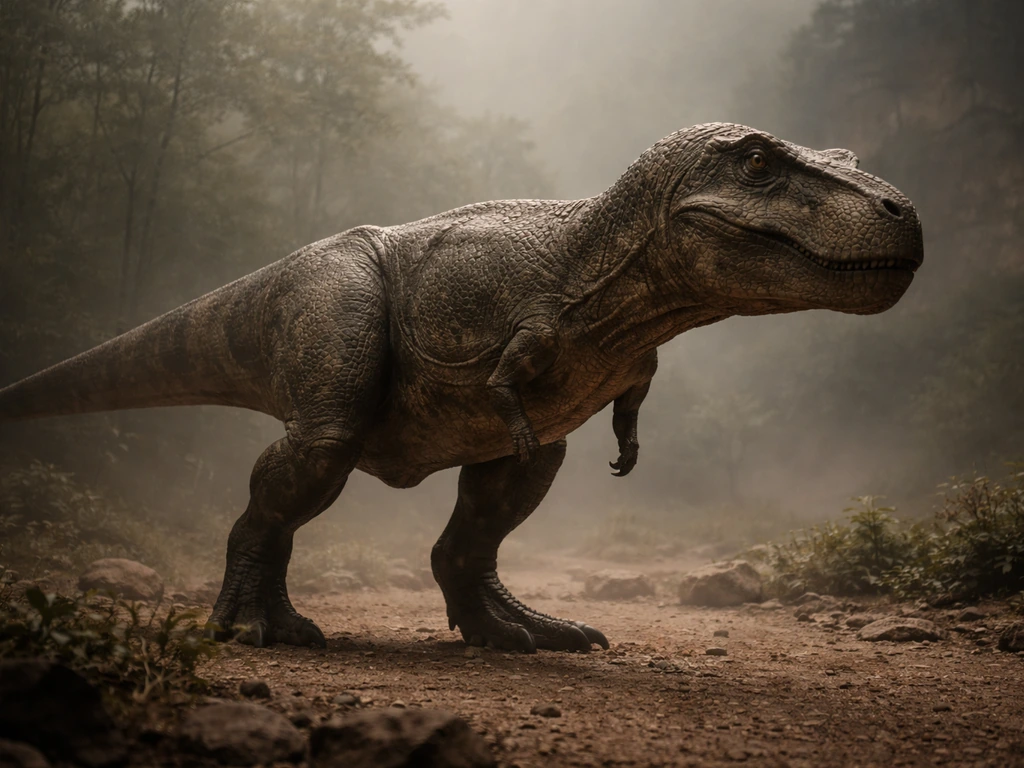
Terror birds are not dinosaurs. They are an extinct family of birds, full stop. Scientifically classified as Phorusrhacidae, they were large flightless predators that lived during the Cenozoic era, tens of millions of years after the non-avian dinosaurs went extinct. They had feathers, beaks, wishbones, and all the anatomy that defines a bird. Calling them dinosaurs is like calling an ostrich a dinosaur: technically they share a deep evolutionary ancestor, but in any practical or scientific sense, they are birds.
Is the Terror Bird a Dinosaur? The Science-Backed Answer

Marcus Hendricks
30 Jun 2026
Where terror birds fit on the bird family tree
Phorusrhacidae sits firmly within Aves, the crown group of birds. More specifically, paleontologists place them within the order Cariamiformes, making their closest living relatives the seriemas of South America. They are part of the same broad lineage as every living bird today, from pigeons to penguins. They are not a transitional form between dinosaurs and birds, and they are not an offshoot of any dinosaur lineage. By the time the first terror birds appeared in the fossil record (around the Eocene, roughly 50 million years ago), true birds had already been evolving for tens of millions of years.
What terror birds actually were
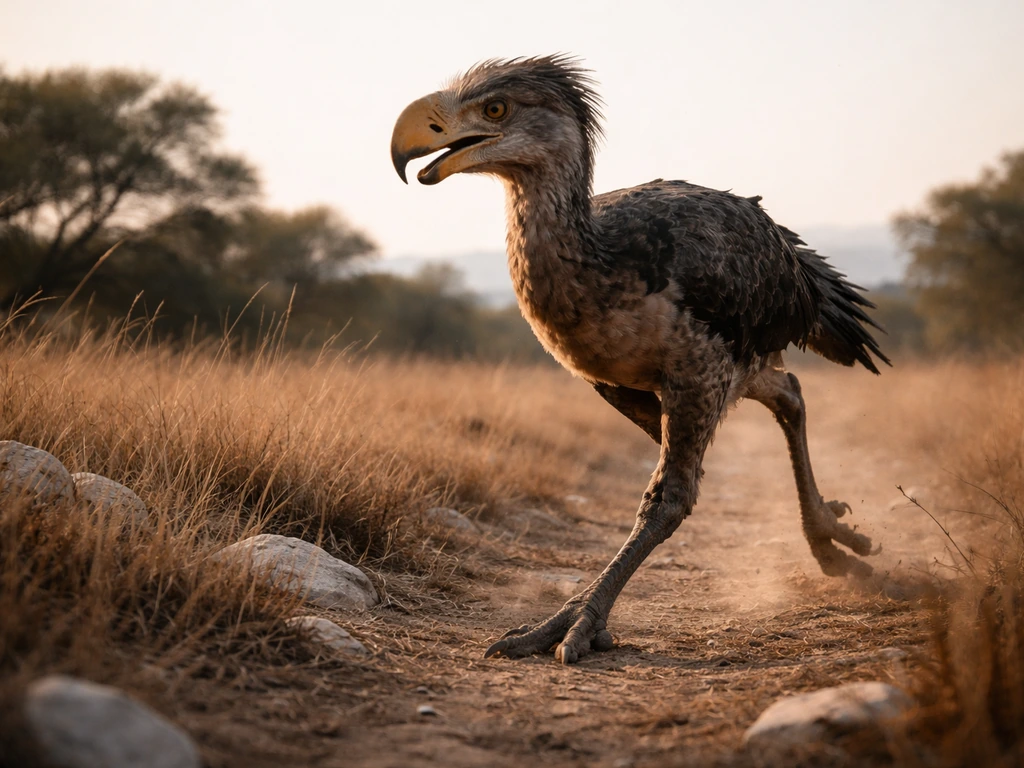
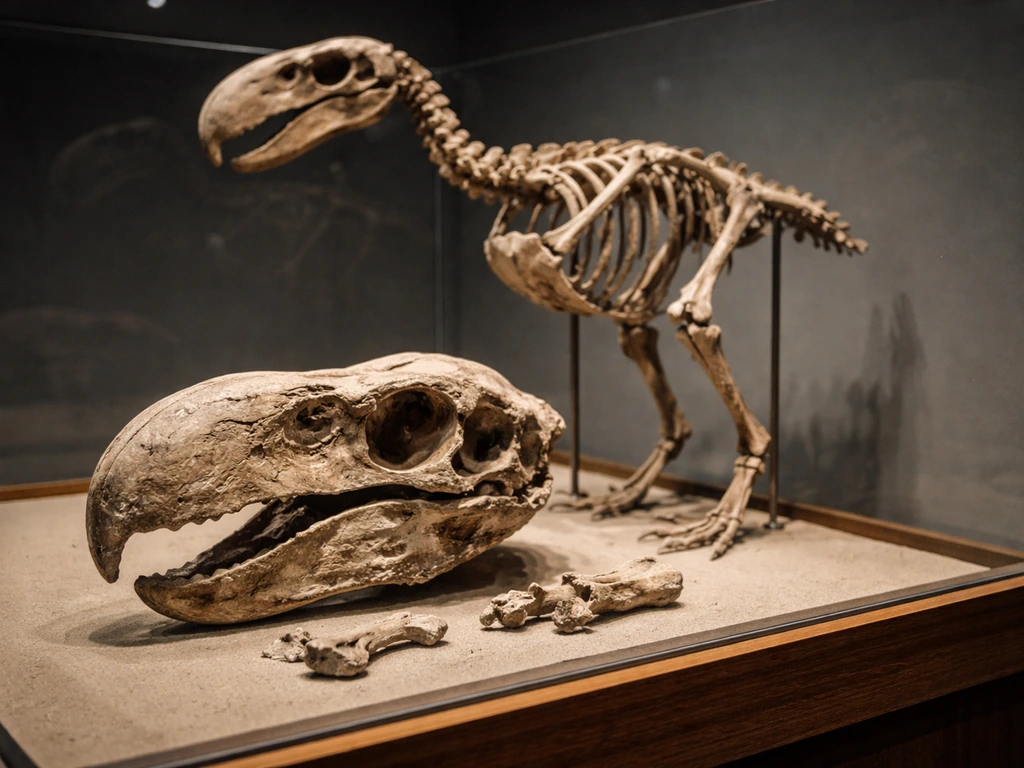
Phorusrhacids were the apex predators of South America for a huge chunk of the Cenozoic. They ranged from about 90 centimeters to over 2 meters tall, and some estimates for the largest species push close to 3 meters (roughly 10 feet). They were flightless, with small vestigial wings, but built for running. Their skulls were enormous relative to body size, with rigid, hatchet-like beaks adapted for delivering powerful downward strikes to stun or kill prey. Research on their skull anatomy confirms that their cranial structure was functionally immobile, essentially a solid battering ram of bone designed for impact.
Most terror bird diversity was centered in South America, with early records extending to Europe (France and Switzerland) near the end of the Middle Eocene, suggesting they dispersed more widely than once thought. One genus, Titanis walleri, made it into North America. Revised dating places Titanis in Texas around 5 million years ago and in Florida as recently as 2 million years ago, likely crossing via the Panamanian land bridge. Well-known genera include Phorusrhacos from the Miocene, Kelenken from Argentina around 15 million years ago, and Llallawavis scagliai from the Pliocene of Argentina, dated to roughly 3. Kelenken lived in Argentina in the Miocene and is often discussed alongside other terror bird genera. 5 million years ago.
Why people connect them to dinosaurs (and what a dinosaur actually is)
The confusion usually comes from two places. First, terror birds look intimidating and prehistoric, so the brain files them under "scary ancient animal" alongside T. rex and Velociraptor. Second, there's a real evolutionary connection between birds and dinosaurs, which makes the relationship genuinely confusing when you haven't seen it spelled out clearly.
In scientific terms, "dinosaur" in everyday use almost always means non-avian dinosaurs: the animals that went extinct 66 million years ago at the end of the Cretaceous. That event wiped out every non-avian dinosaur lineage. The animals that survived and eventually gave rise to all living birds were a group of small feathered theropods. So the word "dinosaur" carries two possible meanings depending on context: the common one (T. rex, Triceratops, gone at 66 million years ago) and the technical one (which includes all birds as living theropod descendants). Terror birds came after the extinction of the non-avian dinosaurs, so they don't qualify under either definition in a meaningful sense.
The bird-dinosaur evolutionary link, explained simply
Birds evolved from theropod dinosaurs. A Biological Reviews review paper on bird origins likewise places birds phylogenetically within the theropod dinosaurs, with the closest non-avian relatives including dromaeosaurid theropods such as Deinonychus birds are phylogenetically within the theropod dinosaurs. That is not a hypothesis anymore; it is one of the most thoroughly supported conclusions in all of vertebrate paleontology. The closest known non-avian relatives of birds include dromaeosaurids like Deinonychus, and the anatomical overlap is striking: shared skeletal features, wishbones, hollow bones, and evidence of feathers in multiple non-avian theropod lineages. Paleontologists confirm that living birds are the direct descendants of a dinosaur lineage called Maniraptorans.
What this means in practice: all living birds, including terror birds before they went extinct, are technically theropod dinosaurs in the broadest phylogenetic sense. Traits like teeth, clawed unfused fingers, and an elongated bony tail connect early birds to their non-avian theropod ancestors, and those features were gradually lost or modified over millions of years of bird evolution. By the time terror birds existed, that evolutionary transition was ancient history. They were already fully modern birds in their basic body plan.
Terror birds vs. non-avian dinosaurs vs. modern birds: how they compare
| Trait | Terror Bird (Phorusrhacidae) | Non-Avian Dinosaur (e.g., T. rex) | Modern Bird (e.g., Ostrich) |
|---|---|---|---|
| Time period | Eocene to Pleistocene (roughly 50–2 million years ago) | Triassic to end-Cretaceous (252–66 million years ago) | Cretaceous to present (roughly 66 million years ago–now) |
| Feathers | Yes (as all birds) | Present in some lineages (e.g., feathered theropods) | Yes |
| Beak | Yes, large hatchet-like beak | No (most had teeth) | Yes |
| Wings | Vestigial, non-functional for flight | No true wings (forelimbs only) | Yes (functional or vestigial) |
| Flight | Flightless | No flight capability | Many fly; some flightless (ostriches, emus) |
| Wishbone (furcula) | Yes | Present in theropods | Yes |
| Classification | Aves (Phorusrhacidae, Cariamiformes) | Non-avian Dinosauria | Aves |
| Geographic range | South America, North America, Europe | Global | Global |
| Size | 0.9–3 m tall | Varied widely (0.5 m to 12+ m) | Varied widely (5 cm to 2.7 m) |
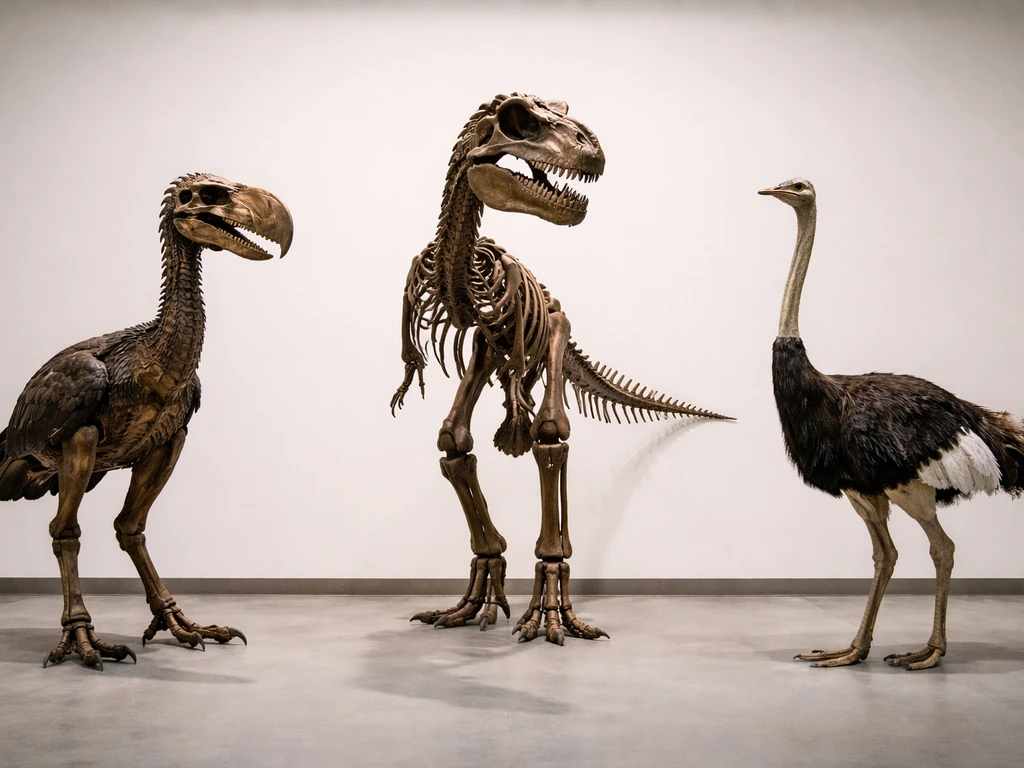
The takeaway from that comparison: terror birds share far more with modern flightless birds like ostriches than they do with any non-avian dinosaur. To make the comparison easier, it helps to ask, "is dromornis a terror bird," because that name is often used loosely online. The defining bird features are all there. What makes terror birds unusual is not their taxonomy but their ecological role as large apex predators, a niche modern birds rarely fill.
So are they birds? Classification summary and common misconceptions
Yes, terror birds are birds. They are extinct birds, but birds. Here is where the nuance matters: birds as a group evolved from theropod dinosaurs, so in one technical sense every bird, living or extinct, carries that dinosaurian ancestry. But calling a terror bird a dinosaur in the everyday sense of the word is incorrect. Non-avian dinosaurs were gone 66 million years ago. Terror birds appeared after that, lived as true birds, and are classified within Aves exactly as modern birds are.
A few misconceptions worth clearing up directly. Terror birds are not a missing link between dinosaurs and birds: that transition happened much earlier, in the Jurassic and early Cretaceous, long before phorusrhacids existed. They are also not reptiles. And despite their ferocious appearance, they are more closely related to seriemas (small, crane-like birds alive today in South America) than to any dinosaur you would recognize by name. The first phorusrhacid specimen was actually misidentified as a mammal jaw when it was first discovered, which tells you something about how unexpected this animal was, but subsequent work firmly placed them within birds.
The broader bird-versus-dinosaur question is genuinely interesting and comes up a lot. Whether birds themselves count as dinosaurs in a technical phylogenetic sense is a related debate worth exploring, as is whether large theropods like T. rex share more with birds than with traditional reptiles. Terror birds make a great entry point into all of that, but the classification answer for them specifically is clean: they are extinct birds.
How to verify this yourself and spot bad sources
If you want to confirm any of this, these are the exact search terms that will take you to reliable scientific sources rather than listicles with bad information.
- "Phorusrhacidae" on Google Scholar or any academic database will pull up peer-reviewed papers on the family, including studies on their skull anatomy, hind limb mechanics, and geographic distribution.
- "Phorusrhacidae Aves Cariamiformes" confirms their placement within the bird family tree directly.
- "Terror bird extinct bird" filters out the dinosaur conflation and returns museum and natural history content.
- "Are birds dinosaurs" and "birds theropod dinosaurs" will give you the evolutionary background on the bird-dinosaur link from sources like the Smithsonian and American Museum of Natural History.
- "Titanis walleri" is the North American terror bird species; the Florida Museum of Natural History has detailed, science-backed write-ups on it.
- "Kelenken" and "Llallawavis" are searchable genera with solid Wikipedia entries that cite peer-reviewed sources and accurately place them as birds.
When evaluating a source, watch for a few red flags. If an article calls terror birds dinosaurs without immediately clarifying that they are actually birds descended from dinosaurs, the author has muddled the classification. If a source says terror birds "lived alongside dinosaurs," that is simply wrong chronologically: non-avian dinosaurs were extinct for millions of years before terror birds appeared. Good sources will use terms like "non-avian dinosaurs" to distinguish the extinct forms from living birds, and they will place terror birds clearly within Aves. Museum sites (Smithsonian, Florida Museum of Natural History, AMNH) and peer-reviewed databases are your most reliable starting points. If a flashy website just calls them "giant prehistoric dinosaurs," move on.
FAQ
Are terror birds ever described as “dinosaurs” in scientific writing, or is that always wrong?
In peer-reviewed and museum contexts, the safest phrasing is “extinct birds” or “terror birds (Aves),” because calling them “dinosaurs” without a qualifier is ambiguous. You might see “theropod dinosaur ancestry” discussed to explain bird evolution, but that is different from classifying phorusrhacids as non-avian dinosaurs.
If birds are technically theropod dinosaurs, does that mean a terror bird is a dinosaur in every sense of the word?
Only in the strict phylogenetic sense, where “dinosaur” can mean any bird’s dinosaurian ancestors. In everyday use, “dinosaur” usually means the non-avian dinosaurs that vanished 66 million years ago, and in that common sense a terror bird is not a dinosaur.
Why did terror birds show up so long after non-avian dinosaurs went extinct?
Because they are part of later bird evolution. After the non-avian dinosaurs died out, birds and other lineages diversified through the Cenozoic, and phorusrhacids emerged roughly in the Eocene, meaning they were long after the extinction event.
Did terror birds evolve from a dinosaur-like predator, or were they just another kind of bird from the start?
They were already birds by the time they appear in the fossil record. Their “dinosaur-like” look comes from convergent ecology, they evolved a powerful running body plan and a heavy impact beak, rather than being a transitional stage between non-avian dinosaurs and birds.
Were terror birds related to owls, eagles, or other familiar modern birds?
Their closest living relatives are seriemas (order Cariamiformes), which are crane-like ground birds from South America. That means terror birds are not particularly close to raptors like eagles or to typical owl lineages.
Did terror birds have teeth, and how does their feeding compare to dinosaurs like T. rex?
Terror bird skulls and beaks were built for impact, not a tooth-based bite like many predatory theropods. Their downward strikes with a rigid beak are a key adaptation, so their predation style is more “beak and battering-ram” than “dentition and jaw strength.”
How can I spot bad explanations online that mix up terror birds and dinosaurs?
Watch for claims that terror birds “lived alongside dinosaurs,” or statements implying they are a missing link between non-avian dinosaurs and birds. Good explanations will explicitly distinguish non-avian dinosaurs (extinct at the end of the Cretaceous) from birds (including extinct bird lineages) and place terror birds within Aves.
Is there any single example that helps clarify the confusion with similar-looking names?
Yes, names like “dromornis” get used loosely online. If a source lists it as a “terror bird,” the safest approach is to check whether it is actually being treated as phorusrhacids within Aves, because superficial resemblance is not the same as taxonomic relationship.
Were terror birds reptiles, or did they have bird traits like feathers?
They are birds, not reptiles. Their anatomy includes bird-defining features such as feathers and a bird-style skeletal plan, which is why paleontologists place them in Aves rather than in any reptile group.
What is the most correct one-sentence way to describe terror birds to avoid misunderstandings?
“Terror birds (Phorusrhacidae) were extinct flightless predatory birds (Aves) that evolved after the non-avian dinosaurs went extinct.”
Next Article
Is T. rex a Reptile or Bird? The Science Answer
Is T. rex a reptile or bird? Learn why it is a theropod dinosaur closely related to birds, with a simple classification