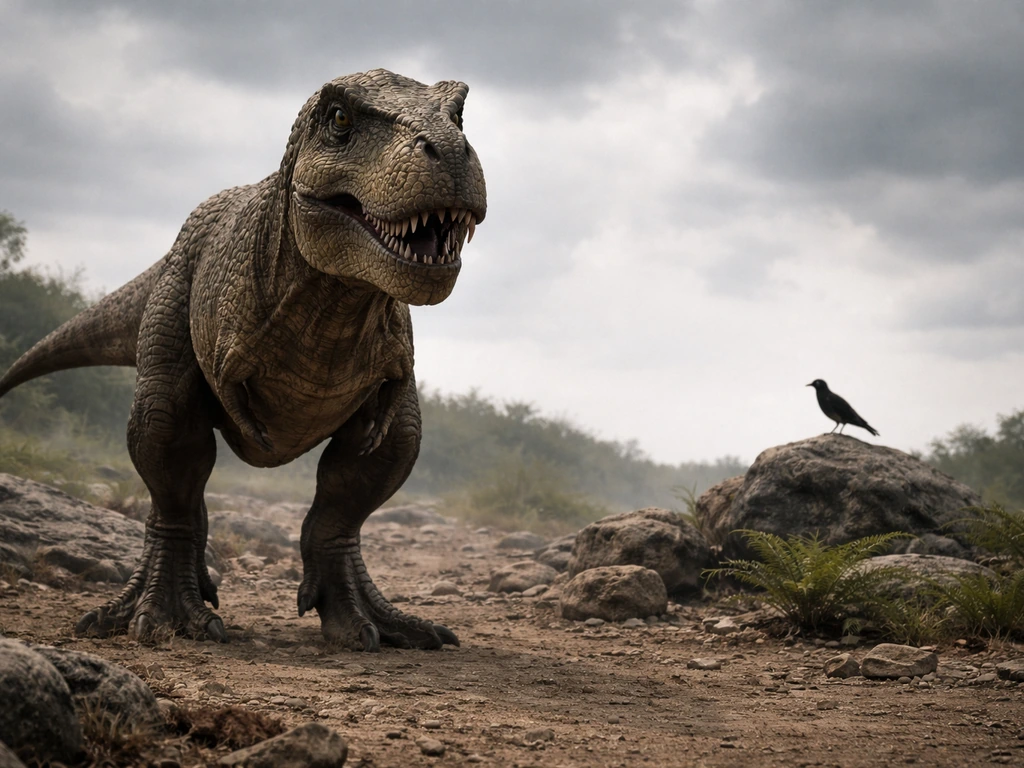
No, the T-Rex was not a bird. It was a non-avian dinosaur, specifically a theropod in the family Tyrannosauridae, and every major scientific classification from the Smithsonian to the Paleobiology Database places it firmly in Dinosauria, not in class Aves. That said, T-Rex is more closely related to modern birds than it is to crocodiles or lizards, which is exactly the fact that makes this question so fun to argue about online.
Was the T-Rex a bird? The science behind bird status

Marcus Hendricks
17 May 2026
What actually makes an animal a bird

Britannica defines birds as members of class Aves, and the single trait that separates birds from every other animal on Earth is feathers. Not wings, not a beak, not the ability to fly. Feathers. That definition covers roughly 11,200 living species. Beyond feathers, birds share a cluster of traits: they are warm-blooded (endothermic), they lay hard-shelled eggs, they have lightweight hollow bones, and they have a wishbone (furcula). Crucially, the definition applies to living lineages. When scientists want to be technically precise, the clade Aves or Avialae refers to the lineage that includes modern birds and their closest extinct relatives going back to animals like Archaeopteryx.
The key word there is lineage. Modern taxonomy groups animals by evolutionary descent, not just by how they look. That is why a penguin, which cannot fly and looks a bit like a tuxedoed seal, is absolutely a bird, while a bat, which has wings and flies, is absolutely not. Membership in Aves is about where you sit on the tree of life, not what your body plan looks like from a distance.
Where T-Rex actually fits on the evolutionary tree
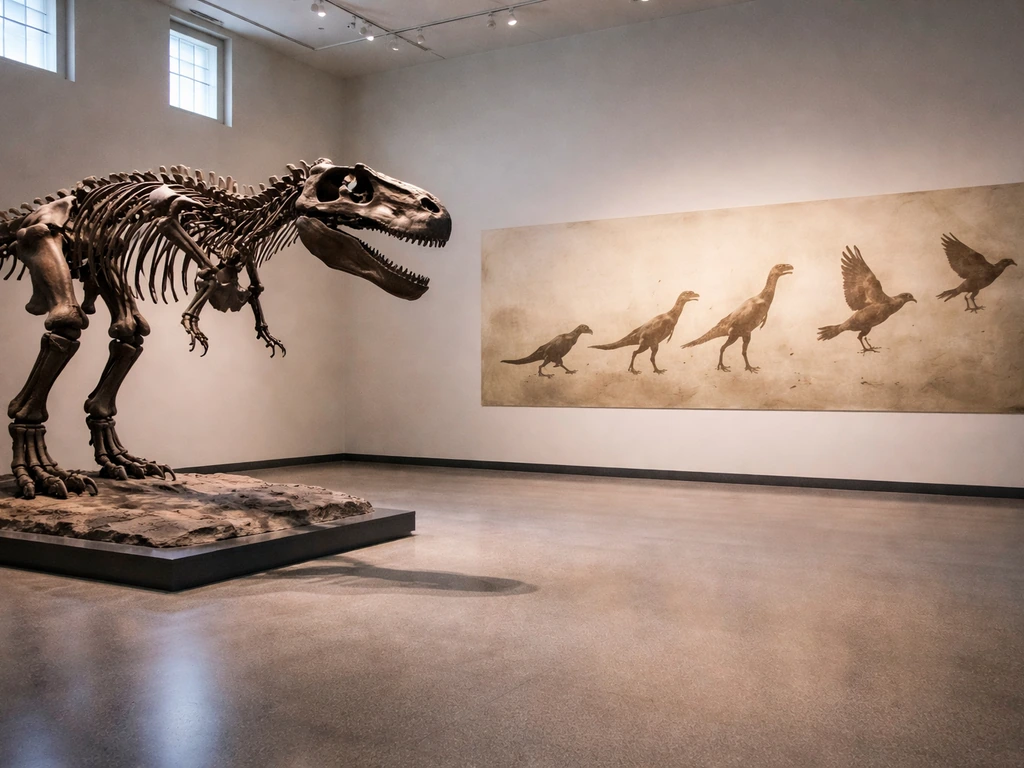
Here is the nested structure that trips most people up. Birds did not evolve from dinosaurs in the same way that, say, mammals evolved from synapsids and left them behind. Birds ARE dinosaurs, specifically a subgroup of theropod dinosaurs that survived the end-Cretaceous extinction. If you are specifically wondering whether T-Rex is a bird, the answer depends on the definition and where it sits on the evolutionary tree. Tyrannosaurus rex was also a theropod dinosaur. So both T-Rex and a modern crow belong inside Theropoda. The difference is that birds sit in a specific sub-branch called Paraves, then more narrowly in Avialae, and T-Rex does not.
| Clade / Group | Includes T-Rex? | Includes Modern Birds? |
|---|---|---|
| Dinosauria | Yes | Yes |
| Theropoda | Yes | Yes |
| Coelurosauria | Yes | Yes |
| Maniraptora | No | Yes |
| Paraves | No | Yes |
| Avialae / Aves (Birds) | No | Yes |
Think of it like a family tree. T-Rex and birds are cousins who share a common ancestor, not parent and child. T-Rex split off from the theropod lineage much earlier, before the branch that eventually became Maniraptora and then Paraves, which is the group that produced birds. The Natural History Museum in London describes it plainly: dinosaurs were the direct ancestors of birds, but that ancestor-descendant relationship runs through a specific lineage, not through all dinosaurs equally. T-Rex is on a different branch of the same family.
The feather debate and what it actually tells us
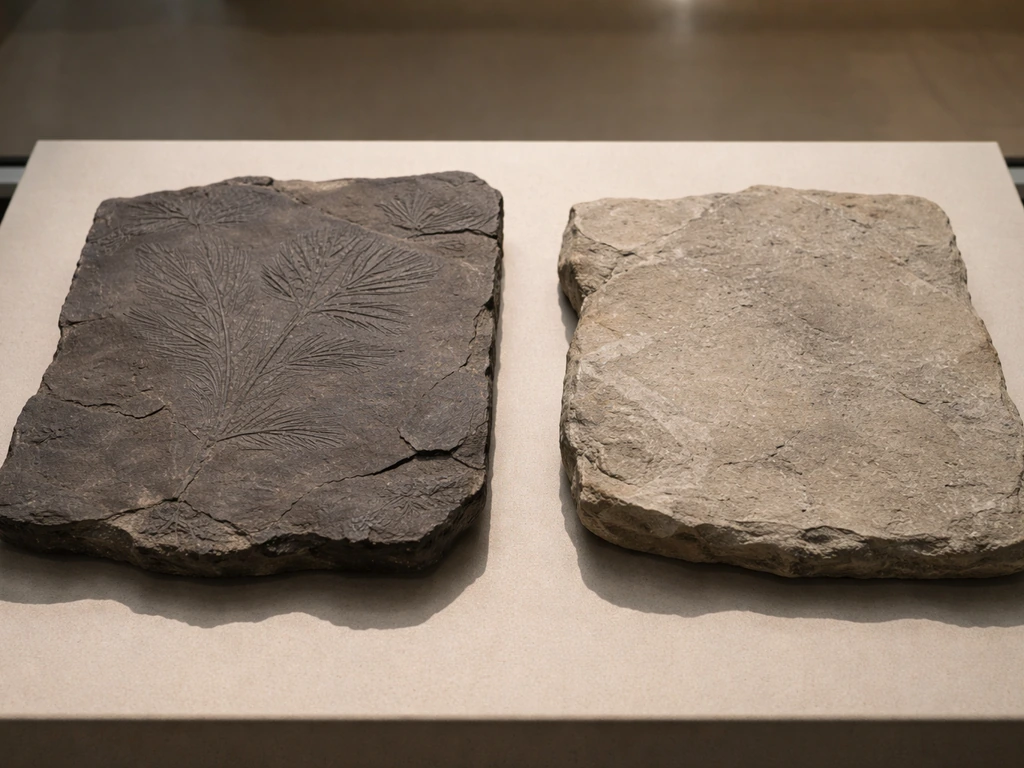
One of the biggest reasons people get confused is the feather evidence coming out of paleontology over the last few decades. Many non-avian dinosaurs have been found with feathers or feather-like filaments preserved in fossils. A peer-reviewed review on the early origin of feathers argues that protofeathers and feather-like structures have been reported in close dinosaur relatives of birds and across multiple non-avian dinosaur groups blank" rel="noopener noreferrer">feathers or feather-like filaments preserved in fossils. A close relative of T-Rex, Yutyrannus, had filamentous feathers, which is legitimately fascinating. But Smithsonian reporting is careful to note that direct skin impression evidence for T-Rex itself suggests scaly skin rather than a feather covering, at least for adults. Smithsonian’s National Museum of Natural History also describes T. rex anatomy and biology in a dinosaur context and notes scaly skin impressions rather than feathers for adults blank" rel="noopener noreferrer">scaly skin rather than a feather covering. So even the feather argument does not push T-Rex into bird territory.
Then there is endothermy, or warm-bloodedness. Birds are endothermic, and there is strong evidence that many theropod dinosaurs, including T-Rex, were at least partially endothermic too. Does that make T-Rex a bird? No. Endothermy evolved independently in mammals as well, and nobody is calling a dog a bird. Being warm-blooded is a shared trait that evolved across multiple lineages; it is not a membership card for Aves. The same logic applies to having a wishbone: T-Rex had one, but so did many other non-avian theropods. Individual traits do not assign taxonomy. The whole package, and specifically the clade membership in Avialae, is what makes a bird a bird.
Why people keep asking this (and where the confusion comes from)
There are a few different roads that lead someone to search "was the T-Rex a bird" and they are worth unpacking because they are all reasonable starting points.
- The "birds are dinosaurs" fact goes viral periodically, and once people absorb that, they naturally wonder whether it runs in reverse: if birds are dinosaurs, are all dinosaurs birds? They are not, but the confusion is logical.
- Memes and social media posts frame T-Rex as "basically a big bird" because of shared theropod anatomy, the feather discoveries in related species, and the visual similarity between a T-Rex's hind legs and a chicken's legs. It is a genuinely funny comparison that also contains a kernel of evolutionary truth.
- Some pop-science headlines about T-Rex feathers or T-Rex's bird-like behavior (brooding eggs, for example) blur the line in a way that makes casual readers think the classification question is unsettled.
- The "is T-Rex a reptile or bird" framing comes from a real taxonomic debate: under cladistic classification, birds ARE reptiles (because Reptilia in the strict sense includes birds). So people see "T-Rex is not a reptile" or "birds are not reptiles" written in different places and get contradictory signals.
- Legitimate scientific discussion about the dinosaur-to-bird transition (a topic closely related to whether birds are dinosaurs) bleeds into questions about specific dinosaurs like T-Rex.
None of these are dumb questions. The science here actually is counterintuitive. The answer just happens to be clear once you know where the lines are drawn.
T-Rex vs. birds vs. reptiles: the comparison in plain terms
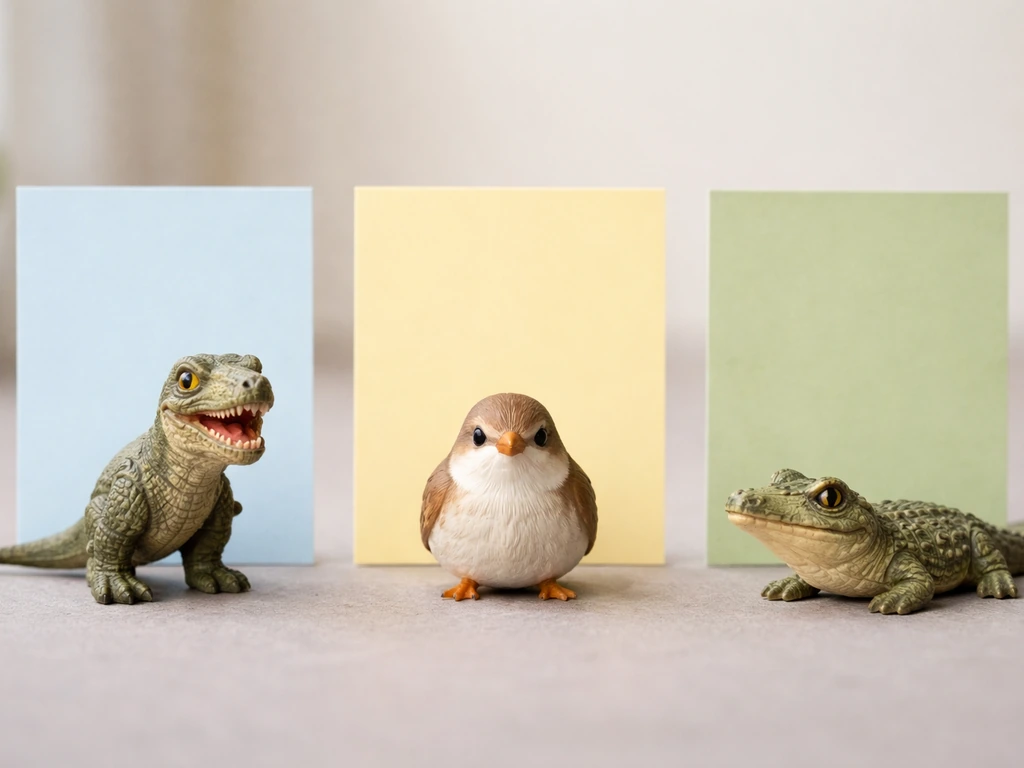
| Trait | T-Rex | Modern Bird | Modern Reptile (e.g., crocodile) |
|---|---|---|---|
| Formal classification | Non-avian dinosaur (Theropoda) | Aves / Avialae | Reptilia (non-avian, non-dinosaur) |
| Feathers confirmed | Probably scaly (adults) | Yes, defining trait | No |
| Endothermic (warm-blooded) | Likely yes (evidence supports it) | Yes | No (ectothermic) |
| Wishbone (furcula) | Yes | Yes | No |
| Hollow lightweight bones | Partially | Yes | No |
| Ancestor of modern birds? | No (cousin lineage) | Yes (direct lineage) | No |
How to check a classification yourself
If you want to settle a similar debate about any animal, the vocabulary and the sources are both pretty accessible. Here is what actually works.
- Start with the clade, not the common name. Look up whether the animal is in Aves or Avialae. Those are the formal names for the bird lineage. If it is not in one of those groups, it is not a bird by scientific definition, no matter how bird-like it looks.
- Use GBIF (Global Biodiversity Information Facility) for living species. You can search any organism and see its full taxonomic hierarchy instantly. T-Rex is listed under Dinosauria on GBIF, not Aves.
- Use the Paleobiology Database (PBDB) for extinct animals. Search the taxon name and check the higher classification. T-Rex comes up under Theropoda in a dinosaur framework, not a bird framework.
- Check Britannica's taxonomy sections for accessible, authoritative definitions. Their bird entry defines Aves clearly and is written for general readers.
- Learn the key terms: Theropoda (the larger group containing both T-Rex and birds), Maniraptora (the sub-group that eventually led to birds, which T-Rex is not part of), Paraves (even closer to birds, still not T-Rex), and Avialae (the bird lineage itself). Knowing this ladder makes any dinosaur-bird debate much easier to navigate.
- Be skeptical of headlines that say a dinosaur "had feathers" and assume that means it was a bird or that T-Rex was a bird. Feathers evolved in many non-avian theropods. The presence of feathers alone does not equal bird.
The broader question of whether birds ARE dinosaurs (yes, they are) is genuinely one of the most interesting stories in all of paleontology, and if that question is pulling at you, it connects directly to related puzzles like whether terror birds were dinosaurs, how the theropod-to-bird transition actually worked, and where animals like Kelenken and Dromornis fit into the bird family tree. Those are all real, interesting classification questions, and the same toolkit above will help you work through any of them.
The bottom line
T-Rex was a spectacular, possibly feather-free, almost certainly warm-blooded, definitely terrifying non-avian dinosaur. It shares a common ancestor with birds, it belongs to the same larger clade (Theropoda), and it has a wishbone just like your Thanksgiving turkey. But it is not a bird. Kelenken is an extinct terror bird, a member of the phorusrhacid family that was a fearsome South American predator. The same kind of lineage question comes up when people ask, is the terror bird a dinosaur? It never made it into the Avialae branch of the family tree. Calling T-Rex a bird because it is related to birds is like calling a wolf a dog because they share a common ancestor. The relationship is real and fascinating. The classification is still clear. Is Dromornis a terror bird?
FAQ
If T-Rex wasn’t a bird, why do scientists say it is related to birds?
Because relationship is about shared ancestry, not about the specific taxonomic rank. T-Rex is a theropod dinosaur, and birds are a later surviving theropod lineage within Avialae. So it shares a common ancestor with birds, but it is not part of the branch that leads to modern birds.
Do all non-avian dinosaurs with feathers count as birds?
Not automatically. Feather-like structures can appear in multiple dinosaur lineages. What matters is whether the fossil evidence places the animal within the avian lineage (Avialae/Avialae-related clades) rather than just having feather features.
What evidence would be considered decisive for calling an extinct dinosaur a bird?
The strongest cases come from a combination of anatomy and phylogenetic placement, such as traits that align with the avian clade in the skeleton. Single traits, like a wishbone or endothermy signals, are usually not enough without the animal’s position on the evolutionary tree.
Could T-Rex have had feathers and still not be a bird?
Yes. Even if skin or filament structures were discovered, T-Rex could remain outside Avialae. Feathers would support relatedness or shared traits among theropods, but bird status still depends on clade membership, not on having feathers alone.
Does being warm-blooded mean T-Rex should be classified as a bird?
No. Endothermy evolved more than once in different mammal and reptile lineages, so it is not a unique marker for Aves. Taxonomists rely on evolutionary lineage, not one physiological trait.
Why do some sources talk about T-Rex with the word “birdlike”?
“Birdlike” is often a descriptive phrase for similarities in posture, locomotion, or general appearance. It is not the same as formal classification. A birdlike dinosaur can still be outside Aves.
If birds are dinosaurs, is T-Rex a dinosaur that evolved into a bird?
Birds did not come from T-Rex directly. T-Rex and birds share a common theropod ancestor, then lineages diverged. Birds are one surviving branch, while the T-Rex branch went extinct.
How can I tell the difference between “class Aves” and the evolutionary group Avialae?
Class Aves is a rank used for living birds, while Avialae is a clade name used for evolutionary lineages including modern birds and their closest extinct relatives. Different authors can label the same idea differently, so it helps to focus on where a specimen sits in the phylogenetic tree.
What is the most common mistake people make in this debate?
Using a single visible trait or general similarity to assign taxonomy. A wishbone, endothermy, or feather-like structures can occur in multiple related lineages, so classification requires the broader set of traits and the animal’s placement in the avian clade.
If I wanted to settle other “was it a dinosaur or a bird” questions, what should I check first?
Start by asking which definition the question uses, rank-based definitions (like Aves) versus clade-based ones (like Avialae). Then look for whether the animal is placed in the avian branch by phylogenetic analyses, not just whether it has one bird-associated feature.
Next Article
T Rex Is a Bird: Taxonomy, Evidence, and What It Means
Clear answer to whether T. rex is a bird, with taxonomy, evolution evidence, and trait comparison to birds