Yes, birds are dinosaurs, here's the short version
Birds are dinosaurs. Not metaphorically, not loosely, not "kind of." Every robin, pigeon, penguin, and chicken on the planet is a living dinosaur, full stop. Scientists have confirmed this for decades, and institutions like the American Museum of Natural History, the Natural History Museum in London, and the U.S. National Park Service all say the same thing: birds are the only group of dinosaurs still alive today. If you came here looking for a yes or no, that's your answer. The rest of this article explains exactly why that's true and how to think about it clearly.
What actually counts as a dinosaur
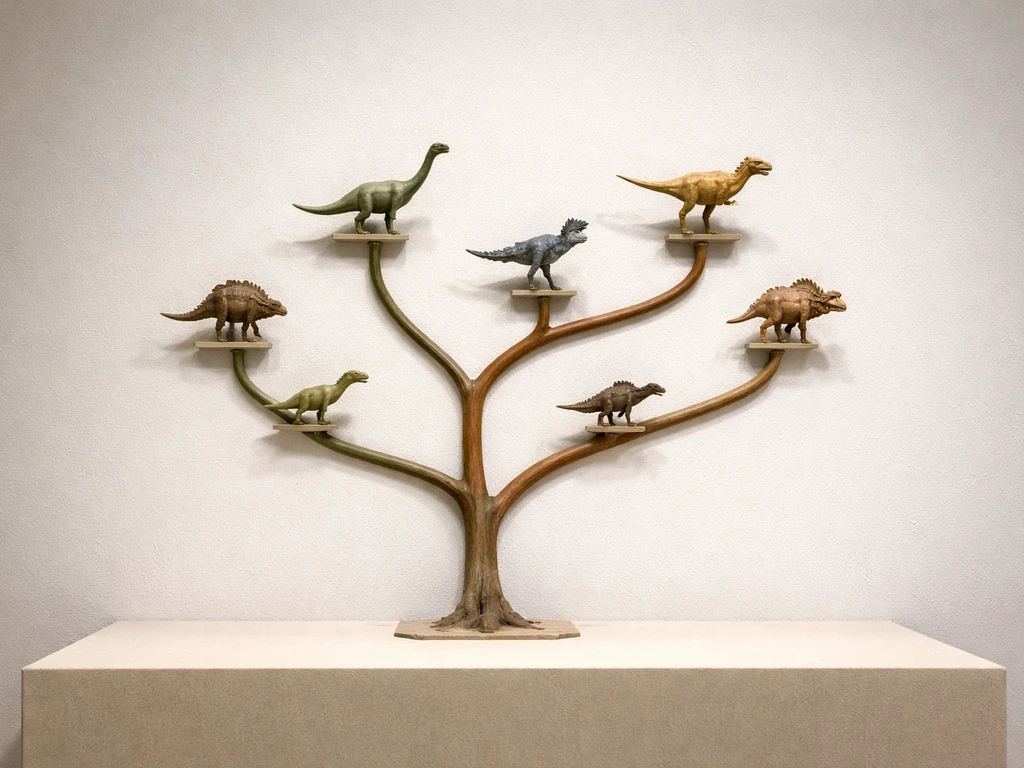
The word "dinosaur" gets thrown around loosely, but scientifically it has a precise definition. Dinosauria is a clade, which means it's defined by common ancestry rather than by a list of physical features like "big," "scaly," or "looks scary." A dinosaur is any animal that descends from the founding ancestors of Dinosauria, a group that first appeared roughly 230 to 240 million years ago during the Triassic period. Because the definition is ancestry-based, it doesn't matter how different the descendants look from each other. If you're in the family tree, you're in the group.
Dinosauria itself splits into two major branches. Ornithischia ("bird-hipped" dinosaurs) includes the famous horned and armored dinosaurs like Triceratops and Stegosaurus. Saurischia ("lizard-hipped" dinosaurs) includes the giant long-necked sauropods and the theropods, which are the meat-eaters and, importantly, the branch that leads directly to birds. The National Park Service is clear on this: birds trace their ancestry through the saurischian branch, not the ornithischian one. That's an important detail because "bird-hipped" dinosaurs, despite the name, are actually not the ones that gave rise to birds.
One more thing worth saying plainly: dinosaurs are reptiles. This surprises some people, but the Natural History Museum in London confirms it directly. Reptilia is another clade defined by ancestry, and since dinosaurs fall within that lineage, they are, technically, reptiles too. So birds are reptiles, dinosaurs are reptiles, and a sparrow is more closely related to a T. rex than a T. rex is to a modern lizard. Taxonomy is weird, and it's also correct.
What makes something a bird
Birds (class Aves) are defined by a specific cluster of traits, most of which you can actually observe. The key ones are feathers, a beak without teeth, wings (even if vestigial, as in some flightless birds), a wishbone (furcula), hollow bones, warm-bloodedness, and hard-shelled eggs. No other living animal group has all of these at once. Feathers are especially diagnostic: if you see feathers, you are looking at a bird, and if you're looking at a bird, you are looking at a dinosaur.
Technically, Aves is defined as the clade containing all modern birds and their most recent common ancestor. That matters because it draws a line between true birds and their close extinct relatives. Archaeopteryx, for example, had feathers and wings but also had sharp teeth and a long bony tail, two features that modern birds have lost entirely. The Natural History Museum notes this contrast specifically: Archaeopteryx is a fascinating transitional fossil, but it sits outside the strict definition of modern birds. Being bird-like is not the same as being a bird.
How birds and dinosaurs connect through evolution
Birds evolved from a group of two-legged theropod dinosaurs called maniraptorans. This branch includes animals like Velociraptor, Deinonychus, and a long chain of feathered dinosaurs discovered mostly in China over the last 30 years.
The AMNH describes the maniraptoran line as the branch of dinosaurs whose evolutionary path extends directly to birds, calling birds "the only group of dinosaurs alive today. A scholarly review on the ScienceDirect platform similarly describes birds as theropod descendants, explaining how key bird traits were inherited and diversified within theropod evolution evolutionary path extends directly to birds.
" The Cambridge University Museum of Zoology puts it even more bluntly: "The idea that birds are living dinosaurs has been proven" thanks to the accumulating fossil record of feathered dinosaurs.
What happened to all the other dinosaurs? Non-avian dinosaurs (everything outside the bird lineage) were wiped out in the mass extinction event roughly 66 million years ago. The bird lineage survived, diversified, and eventually became the roughly 10,000 species we have today. So when you ask whether birds are dinosaurs, the clean answer is: birds are the branch of dinosaurs that made it through. The dinosaur family tree didn't end 66 million years ago. It's still going.
A useful way to think about this: imagine a family tree where one branch of the family moved abroad centuries ago and now speaks a different language, dresses differently, and looks quite distinct from the relatives who stayed. They're still the same family. Birds are that branch. The question of whether T. rex is a reptile or a bird comes up a lot in this context, and the honest answer is that it's technically both: a reptile by the broader clade, and a non-avian dinosaur that sits close to the bird lineage but outside of it.
Common mix-ups: bird-like dinosaurs vs. actual birds
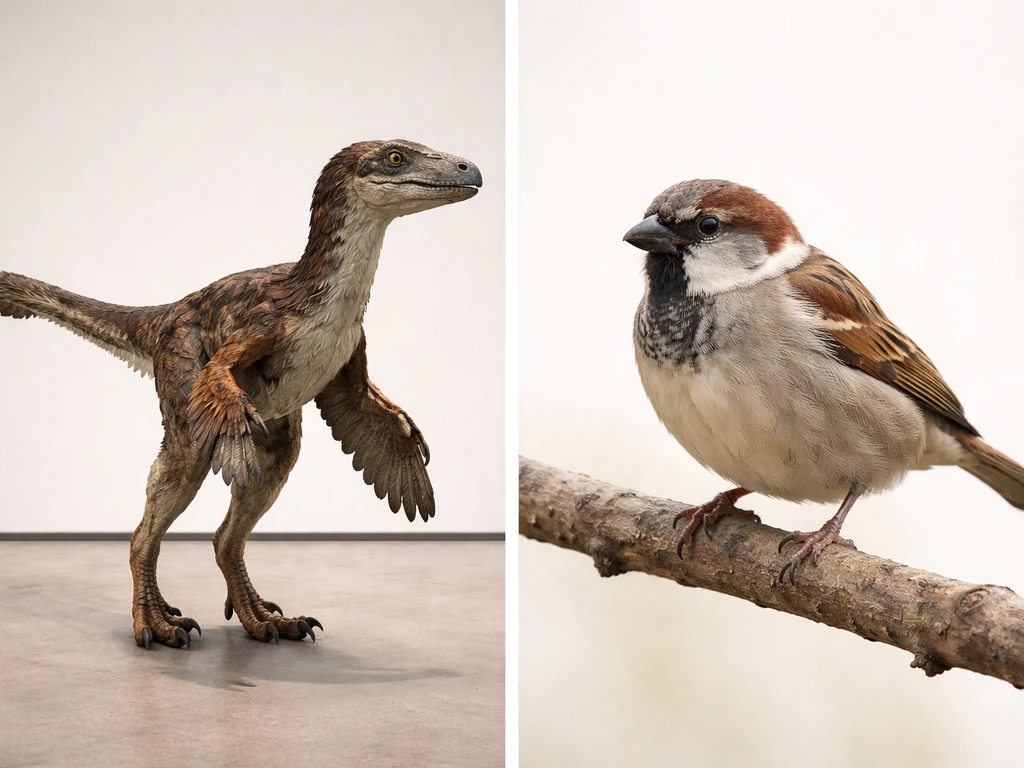
Here's where most confusion happens. People hear "birds are dinosaurs" and then wonder whether every feathered or bird-looking fossil is a bird, or whether every big flightless bird is somehow a dinosaur in a different sense. Let's untangle the most common mix-ups.
Theropods that look like birds but aren't birds
Velociraptors, Deinonychus, and similar maniraptorans had feathers, walked on two legs, and had a body plan that looks almost bird-like in diagrams. But they're not birds. They're non-avian dinosaurs that lived alongside and before the ancestors of modern birds. The critical factor is whether the animal falls within the avian clade, and these theropods do not. They're cousins of birds, not birds themselves. The NPS puts it well: ancestry matters more than appearance when you're doing this kind of classification.
Terror birds and other giant extinct birds
Then there's the opposite confusion: massive, flightless, scary-looking extinct animals that were definitely birds but get mentally filed under "dinosaur" by a lot of people because they look prehistoric and predatory. The phorusrhacids, or "terror birds," are a perfect example. They could reach 3 meters tall and had beaks like hatchets, but they were true birds that evolved after the dinosaur extinction.
If you're wondering whether the terror bird is a dinosaur, the answer depends on how you use the word: if birds are dinosaurs (which they are), then yes; but terror birds are not non-avian dinosaurs, and they didn't live alongside Triceratops. They came much later. Species like Kelenken, one of the largest terror birds ever found, and Dromornis, the giant Australian mihirung, show how wildly birds diversified after the extinction event.
T. rex specifically
T. rex is the mascot of this whole debate. It was a theropod, it was massive, it may have had some feathers on parts of its body, and it was closely related to the ancestors of birds. But it was not a bird. It falls outside the avian clade. People searching for whether T. rex is a bird or asking whether the T. rex was a bird are usually genuinely confused by the "birds are dinosaurs" statement, and that confusion is reasonable. The phrasing suggests a two-way equivalence that doesn't quite exist: birds are dinosaurs, but not all dinosaurs are birds. T. rex is a dinosaur. T. rex is not a bird.
Birds, dinosaurs, and reptiles: a quick comparison
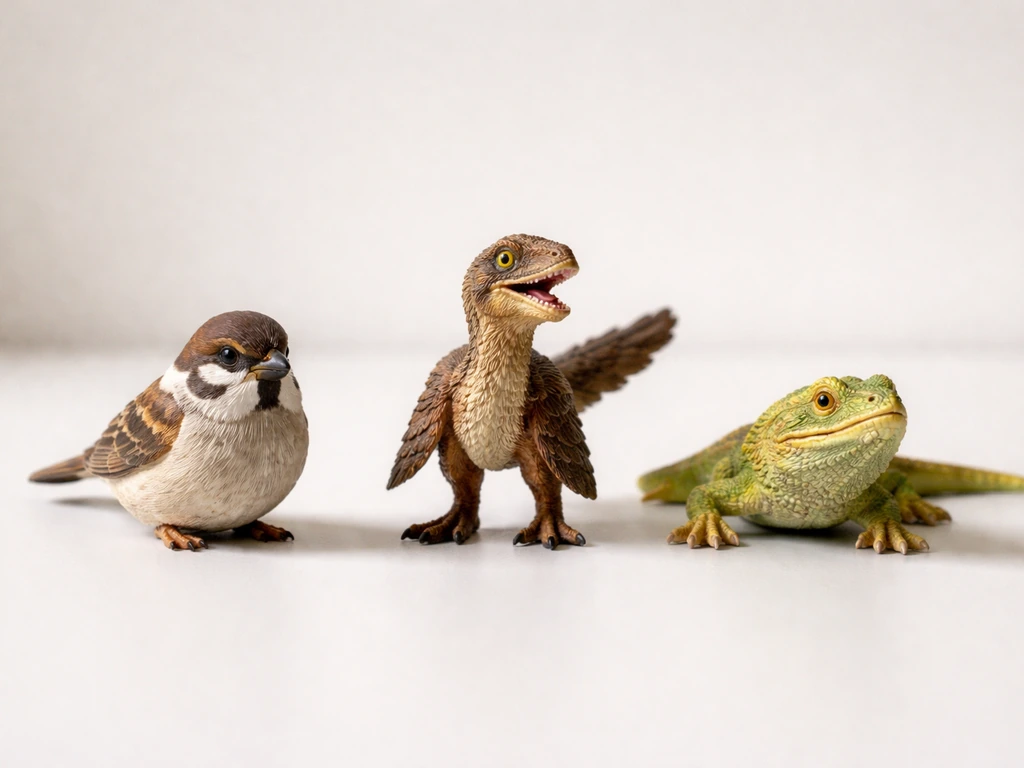
| Animal group | Is it a dinosaur? | Is it a bird? | Is it a reptile? | Still alive today? |
|---|
| Modern birds (sparrow, eagle, etc.) | Yes (avian dinosaur) | Yes | Yes (by clade) | Yes |
| Theropods (T. rex, Velociraptor) | Yes (non-avian dinosaur) | No | Yes (by clade) | No |
| Sauropods (Brachiosaurus, etc.) | Yes (non-avian dinosaur) | No | Yes (by clade) | No |
| Terror birds (Kelenken, etc.) | Yes (avian dinosaur) | Yes | Yes (by clade) | No |
| Modern lizards / crocodilians | No | No | Yes | Yes |
| Archaeopteryx | Yes (non-avian by strict def.) | Debated / transitional | Yes (by clade) | No |
Practical rules for classifying animals correctly
You don't need a paleontology degree to reason through these questions. The topic of whether a dinosaur is a reptile or a bird sounds complicated, but a few mental rules will get you most of the way there in everyday conversations or online debates.
- Ask "what clade does it belong to?" not "what does it look like?" Appearance is unreliable. A dolphin looks like a fish but is a mammal. A bat looks like a bird but is also a mammal. Classification is about lineage, not shape.
- If it has feathers, it's a bird, and therefore a dinosaur. No living non-bird animal has feathers. This is the single most reliable visual test you can apply right now.
- "Bird-like" does not mean "bird." Ostriches are birds. Velociraptors were bird-like theropods. These are different categories.
- "Dinosaur" does not mean "big, extinct, and scaly." It means a member of the clade Dinosauria, which includes every living bird species.
- When someone says "birds evolved from dinosaurs," that's a less precise version of the truth. The more accurate statement is "birds ARE dinosaurs" because birds didn't leave the group; they're a subgroup within it.
- When in doubt, look for peer-reviewed or institutional sources (natural history museums, national park service pages, university zoology departments) rather than pop-science summaries, which sometimes oversimplify the relationship.
The bottom line
Birds are dinosaurs. The NPS states it directly: "All modern-day birds are considered avian dinosaurs." The AMNH describes birds as "the only group of dinosaurs alive today." Cambridge's Museum of Zoology says the idea has been proven. These aren't fringe positions; they're the scientific consensus backed by 150-plus years of fossil evidence and decades of cladistic analysis. The next time someone insists that birds and dinosaurs are completely separate things, you can confidently say they're wrong, and now you know exactly why.