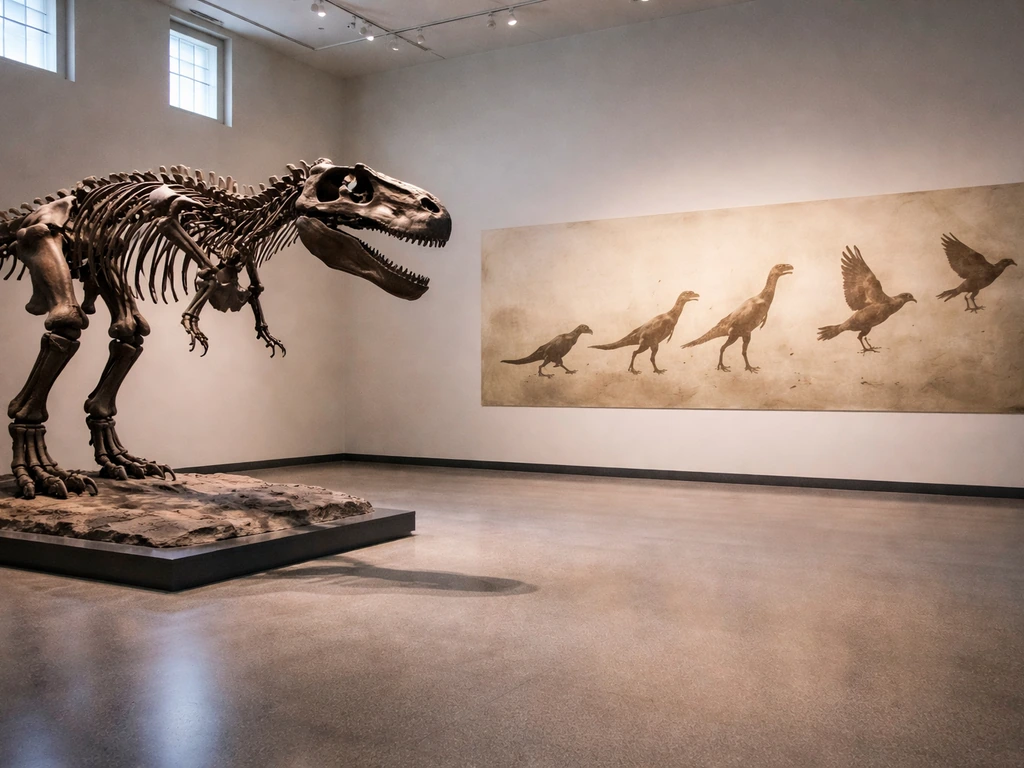
T. rex is neither a reptile nor a bird in the strict modern sense. It was a non-avian dinosaur, specifically a theropod, and it sits on the evolutionary branch that eventually gave rise to modern birds. So if you had to pick the closer relative, birds win by a landslide over lizards, snakes, or crocodiles. But T. rex itself never crossed the finish line into true birdhood. It went extinct about 66 million years ago, leaving birds as the only living dinosaurs on the planet today. The Smithsonian Institution explains that around blank" rel="noopener noreferrer">66 million years ago many dinosaurs went extinct, but birds are the only group that survived to the present.
Is T. rex a Reptile or Bird? The Science Answer

Marcus Hendricks
24 Jun 2026
Why this question trips people up
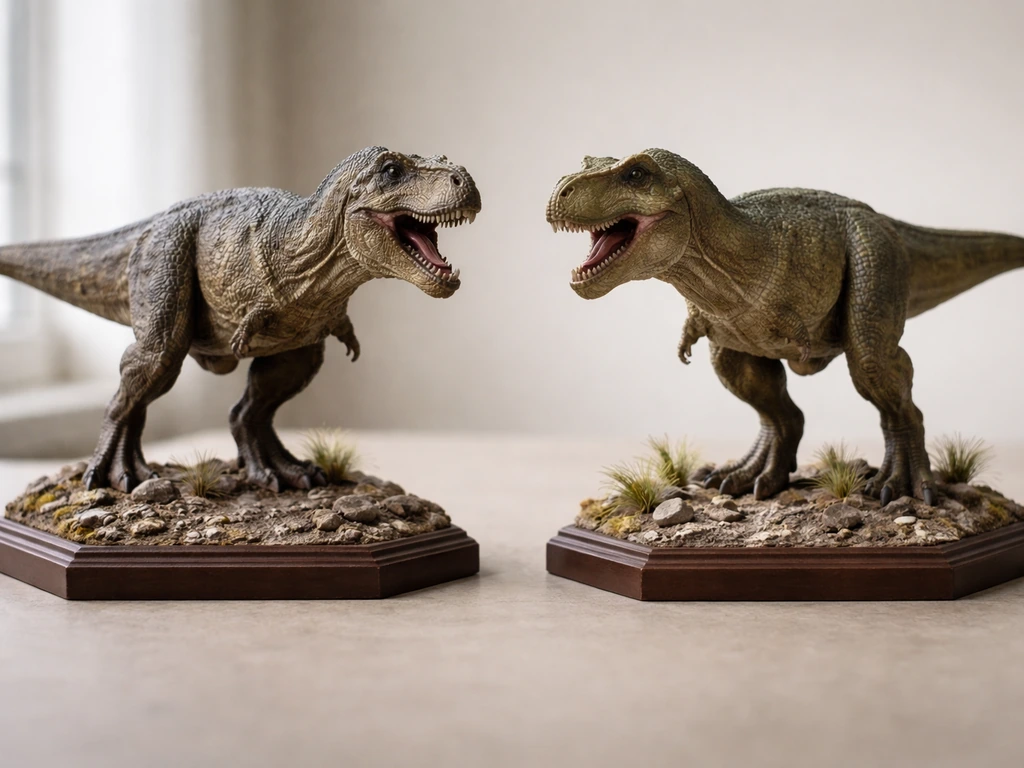
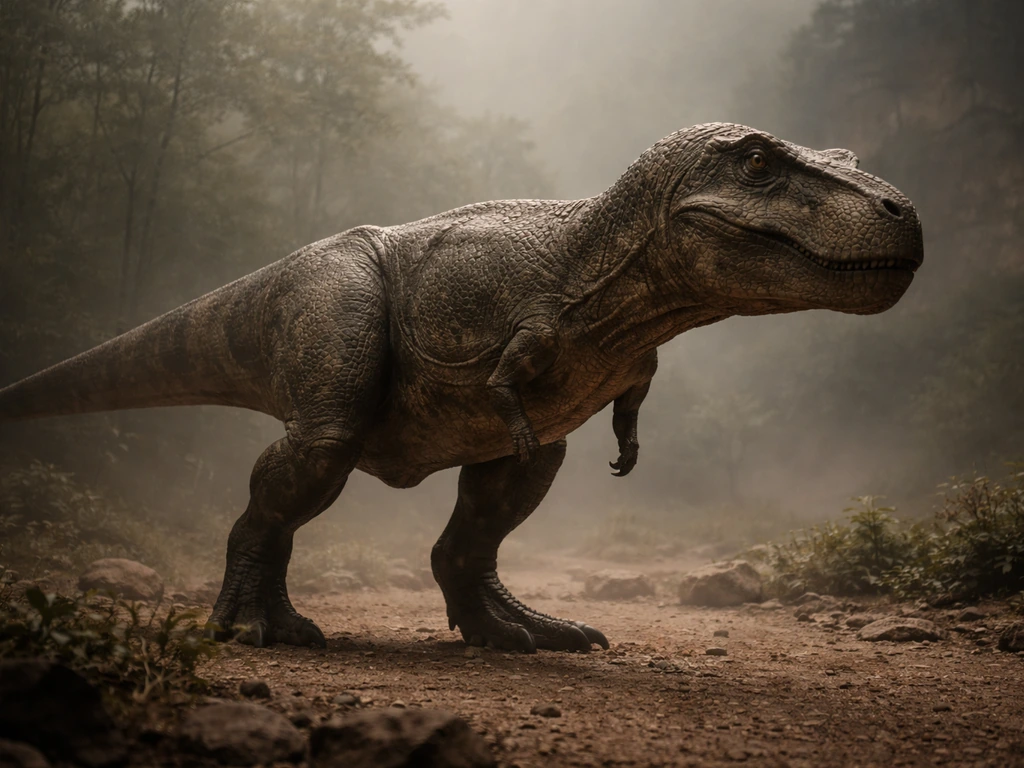
The confusion is completely understandable. T. rex looks like a reptile. It has scaly skin in many reconstructions, it lived alongside other cold-blooded-looking prehistoric creatures, and for most of the 20th century, textbooks just called everything big and extinct a 'reptile.' On top of that, you have the modern science crowd telling you that birds are literally dinosaurs, which makes people wonder: if birds are dinosaurs, and T. rex is a dinosaur, then is T. rex basically a bird? The logic seems to follow, but the taxonomy is a bit more nuanced than that.
Part of the issue is that the word 'reptile' means different things to different people. In everyday language it means 'scaly, cold-blooded animal.' In strict cladistic (family-tree-based) biology, 'Reptilia' is a group defined by ancestry, and under that framework, birds technically fall inside it too. So ironically, calling T. rex a reptile is not entirely wrong in that older sense, but it is not useful or precise. That said, it is also not a bird, because birds evolved from a specific dinosaur branch called theropods. Modern paleontologists just call it what it was: a dinosaur, and more specifically, a theropod dinosaur.
What actually qualifies something as a bird
Birds belong to the group Aves, and in the strictest scientific definition, Aves covers the last common ancestor of all living bird species and all of its descendants. That means the defining features go beyond just having feathers. True birds have feathers (including flight feathers), a wishbone (furcula), a keeled sternum for flight muscles in most species, scales on their feet, hollow bones, and a unique air-sac respiratory system that pumps air through the lungs in one continuous direction. They also lay hard-shelled eggs and are warm-blooded. Transitional fossils like Archaeopteryx blur the line a little, but modern birds represent a very specific branch of the theropod family tree.
The key point: having some bird-like features does not make an animal a bird. T. rex shared hollow bones and air sacs with birds, and some of its tyrannosaur relatives even had feathers earlier in their evolutionary history. But T. rex did not have wings, a keeled sternum, or flight feathers. It was a powerful, bipedal predator that happened to share a common ancestor with the animals that eventually became birds, not a bird itself. So if you were wondering, was the T. rex a bird, the answer is no, even though it shared a common ancestor with birds.
Where T. rex actually sits on the family tree
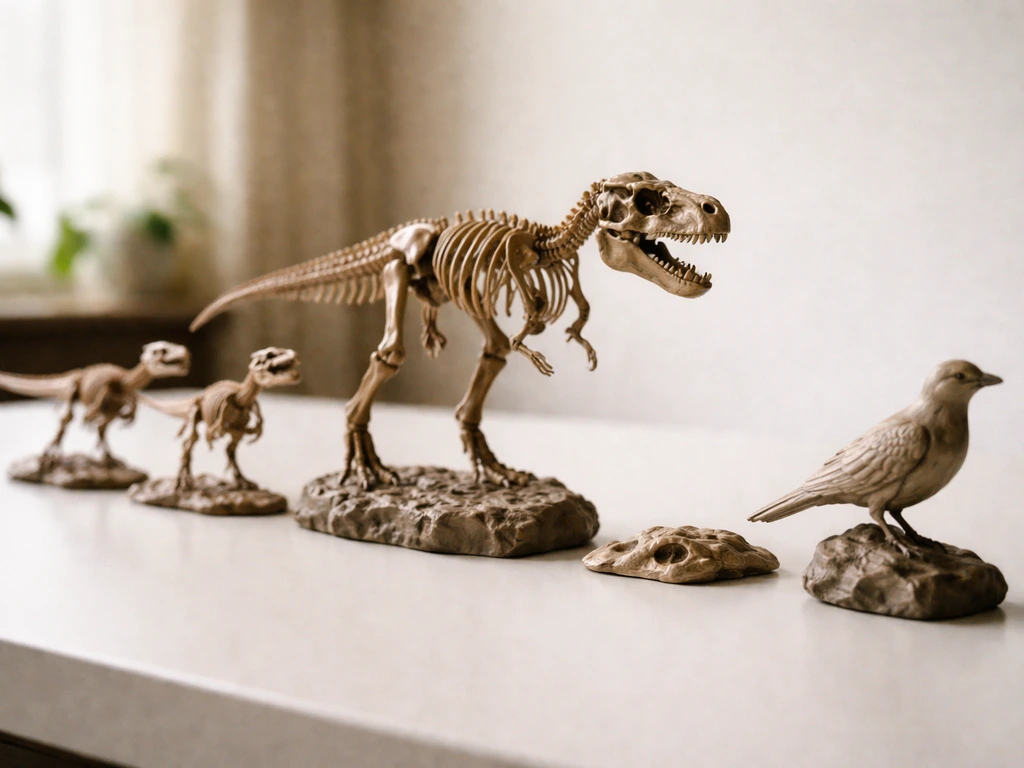
Here is the big picture. All life on Earth shares common ancestors, and if you trace dinosaur lineages, you get to a group called Dinosauria. Within Dinosauria, there are two main branches: the Ornithischia (like Triceratops and Stegosaurus) and the Saurischia. T. rex belongs to Saurischia, and specifically to a sub-group within it called Theropoda. Theropods were bipedal, mostly carnivorous dinosaurs, and this is the exact lineage that birds evolved from.
Within theropods, cladistic analysis places tyrannosaurs like T. rex within a group called Coelurosauria, which also includes the maniraptoran theropods that gave rise to birds. T. rex is not directly ancestral to birds, but it shares a coelurosaur common ancestor with them. Think of it like cousins: T. rex and the ancestors of modern birds were on separate branches that split from the same trunk. The bird branch kept evolving, got smaller, developed flight, and survived the mass extinction 66 million years ago. T. rex did not make it.
| Group | Where it sits | Living today? | Relation to T. rex |
|---|---|---|---|
| T. rex (Tyrannosauridae) | Coelurosauria > Theropoda > Dinosauria | No (extinct 66 mya) | The animal itself |
| Modern birds (Aves) | Avialae > Maniraptora > Coelurosauria > Theropoda | Yes | Evolutionary cousins via shared coelurosaur ancestor |
| Crocodilians | Archosauria (non-dinosaur branch) | Yes | More distant relative, same archosaur root |
| Lizards and snakes | Lepidosauria (a different reptile group) | Yes | Very distant relative |
| Archaeopteryx | Avialae (early bird lineage) | No (extinct) | Closer to birds than T. rex, but shares theropod ancestry |
How dinosaurs differ from true reptiles and from modern birds
Dinosaurs are defined by a specific set of skeletal features, most notably the position of their hind limbs. Dinosaurs hold their legs directly beneath their body in an upright posture, unlike typical reptiles like lizards and crocodilians, whose legs sprawl out to the sides (or in the case of crocodilians, a semi-upright posture). Dinosaurs also have specific features in the skull, hip socket, and ankle that set them apart. The National Park Service is pretty firm on this: not every big, scaly, extinct animal is a dinosaur. Mosasaurs, plesiosaurs, and pterosaurs are not dinosaurs. They just look scary and prehistoric. Dromornis is sometimes called a terror bird because it was a large, fearsome ratite that likely hunted or scavenged.
Modern birds differ from non-avian dinosaurs like T. rex in a bundle of ways. Birds lost the long bony tail (it became the pygostyle, that little stub that supports tail feathers), their hands fused into a wing structure, they developed a massive keel on their breastbone to anchor flight muscles, and their brains enlarged dramatically relative to body size. T. rex had none of those features. It had a massive skull, tiny arms, a long counterbalancing tail, and (based on preserved skin impressions from 2017 fossil evidence) mostly scaly skin on at least parts of its body, even if some earlier relatives had feather-like structures. Smithsonian National Museum of Natural History materials discuss feather-like structures in early tyrannosaurs, such as Dilong paradoxus, as part of the broader evidence for feather evolution along the tyrannosaur lineage.
Classify T. rex yourself with this quick checklist
You do not need a paleontology degree to work through this. Run T. rex through these questions and the answer lands itself.
- Did it have feathers with flight capability? No. T. rex had no wings and no flight feathers. Some early tyrannosaur relatives had feather-like structures, but adult T. rex appears to have been mostly scaly based on skin impression fossils.
- Did it have hollow bones and air sacs? Yes. T. rex shared this bird-like respiratory feature with modern birds. But this alone does not make it a bird.
- Did it walk upright on two legs with legs under the body (not sprawling)? Yes. This is a dinosaur trait, not a typical reptile trait.
- Does it belong to Theropoda? Yes. T. rex is a theropod, specifically a coelurosaur, the same broad group that produced modern birds.
- Did it have a wishbone (furcula), keeled sternum, or wings? No. These are bird-specific features T. rex never developed.
- Did it survive the end-Cretaceous extinction? No. T. rex went extinct 66 million years ago. Birds are the only dinosaurs that made it through.
- Verdict: T. rex is a non-avian dinosaur. Not a bird. Not a reptile in the everyday sense. A dinosaur that is more closely related to modern birds than to any lizard or snake, but never became one.
Where to take your curiosity next
Once you have T. rex sorted, the natural next question is whether all dinosaurs have the same bird relationship, or whether some were closer to reptiles. The short version: the dinosaur-to-bird connection runs specifically through theropods, so Triceratops and Stegosaurus are much more distant from birds than T. rex is. If you want to dig deeper into whether birds should be classified as dinosaurs outright (spoiler: most scientists say yes), or if you are curious about the terror birds like Kelenken and Dromornis that were actual birds behaving like theropod predators, those are great rabbit holes to explore. The terror bird is generally classified as an actual bird, part of the lineage that became modern birds terror birds. The classification rules stay the same: ancestry, skeletal structure, and shared derived traits are what matter, not how scary or reptile-like something looks.
The broader takeaway is that everyday language and scientific classification do not always match up. 'Reptile' in common speech means something different from Reptilia in a cladogram. 'Bird' to most people means something with wings that flies, but scientifically it means a specific evolutionary lineage. T. rex lands squarely in 'non-avian dinosaur,' and that label is both accurate and genuinely fascinating because it tells you exactly where it sits: on the dinosaur branch, just one big step away from the group that became every bird you have ever seen. Kelenken is often described as a terror bird, which can make it sound like a “bird of prey” even though it belongs to its own extinct lineage is kelenken a terror bird.
FAQ
If birds are dinosaurs, does that mean T. rex is a dinosaur-bird hybrid?
In everyday speech, “reptile” often means scaly and cold-blooded, but in science “bird” is based on ancestry and shared derived traits. T. rex is a non-avian theropod dinosaur, so it does not qualify as a true bird, even though it shares a common theropod ancestry with birds.
Was T. rex directly ancestral to modern birds?
T. rex was not on the line that directly produced living birds. It shared a common ancestor with bird ancestors, but its own branch ended at extinction. That is why it is described as a cousin rather than an ancestor of modern birds.
Why are some T. rex traits “bird-like,” yet it still isn’t a bird?
Having some overlapping traits can be misleading. For example, hollow-bone and air-sac features are shared within the broader dinosaur theropod lineage, but T. rex lacked key bird-specific structures like a keeled sternum, wings, and true flight feathers.
Do scientists agree that birds should be classified as dinosaurs, and does that change the answer for T. rex?
Most modern scientists treat birds as dinosaurs because birds fit within the dinosaur family tree (specifically the theropod lineage), using ancestry and skeletal traits rather than appearance. That said, T. rex still isn’t a bird because it sits outside the specific branch that evolved into living birds.
What is the closest relative evidence that connects tyrannosaurs like T. rex to birds?
The most “bird-like” things you can point to in the broader tyrannosaur and theropod story are feathers in relatives, shared respiratory adaptations, and shared ancestry. But feathers are not universal within tyrannosaurs, and T. rex itself is not reconstructed as having a full bird wing or the flight toolkit that defines Aves.
How can I tell if a “scaly prehistoric creature” is actually a dinosaur, like the article says for T. rex?
If you are trying to classify another animal you saw described as “reptile-like” or “prehistoric,” use the lineage and skeletal criteria rather than looks. Examples include where the hind legs attach, skull and ankle traits, and whether it fits within Dinosauria, instead of relying on fearsome appearance or scale imagery.
Why do some people call dinosaurs “reptiles,” and does that make T. rex a reptile in the modern sense?
“Reptilia” can be used in an older, looser sense in everyday contexts, but modern cladistic classification focuses on evolutionary groups defined by common ancestry. Birds fall in a complex way inside certain ancestry-based groupings, which is why the word “reptile” can confuse the question. The practical answer remains: T. rex is a non-avian dinosaur.
If T. rex had feathers in some reconstructions, would that automatically make it a bird?
If your comparison is specifically “does it have wings,” then you can’t call it a bird without wings and other core flight anatomy. Birds are defined by a suite of traits and ancestry in Aves, and T. rex lacks the full set, so it does not meet the scientific bar.
What checklist should I use to answer this question for any dinosaur I’m unsure about?
For quick self-checks: ask (1) Is it in the theropod lineage, (2) Is it in the bird branch defined by Aves, and (3) does it have the key bird skeletal and respiratory features. T. rex passes the ancestry test for sharing a theropod trunk, but it fails the Aves-specific anatomy and branching.
Are “terror birds” like Kelenken related to T. rex in any way?
If you are wondering about “terror birds” like Kelenken, those are different animals. They were birds (ratite lineage), not dinosaurs, so they are not relevant to whether T. rex is a bird or reptile.
Next Article
Was the T-Rex a bird? The science behind bird status
Get a science-backed answer to was the T-Rex a bird, plus how birds evolved from theropod dinosaurs and how to verify cl