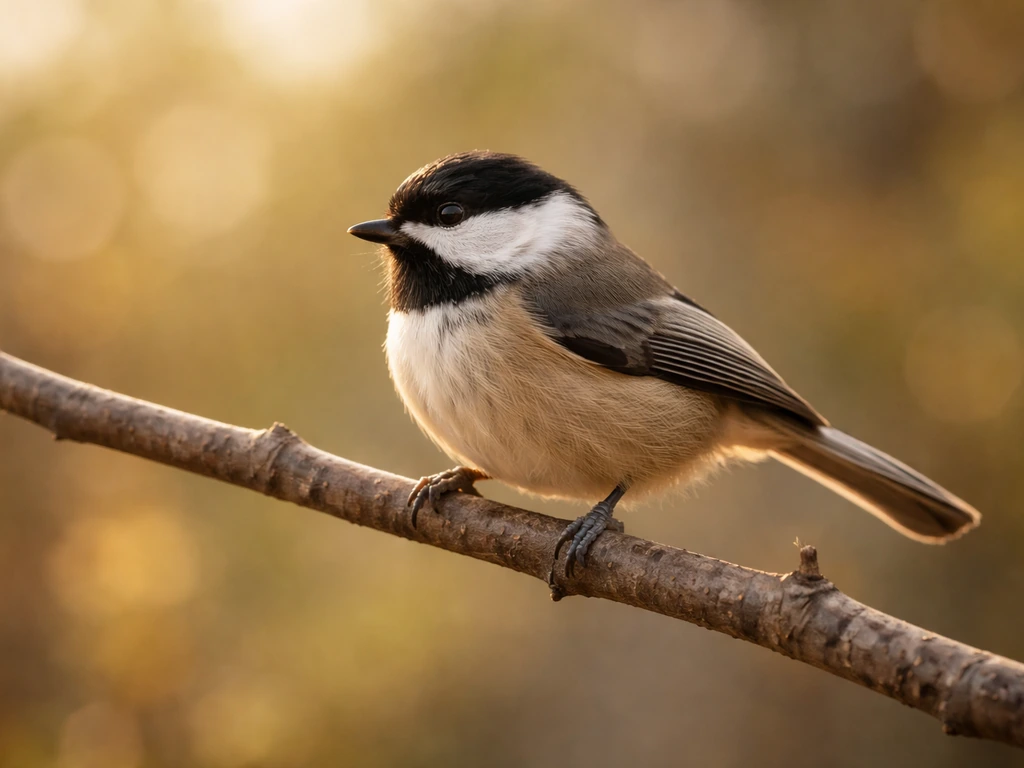
"Bird" is neither a species nor a genus. It sits several levels higher in the classification hierarchy, at the rank of Class. In scientific taxonomy, all birds belong to Class Aves, which means the word "bird" is essentially shorthand for an entire class of animals containing roughly 10,000 living species. Calling "bird" a species would be like calling "mammal" a species. It's a whole group, not a single organism.
Is Bird a Species or Genus? Where Birds Fit in Taxonomy

Marcus Hendricks
18 Jun 2026

Where "bird" actually sits in the taxonomy ladder
The Linnaean classification system organizes all life into a strict hierarchy of ranks, from the broadest (Kingdom) down to the most specific (Species). "Bird" maps to Class, which is a mid-level rank. Here's the full hierarchy with birds plugged in as a concrete example:
| Rank | What it means | Bird example |
|---|---|---|
| Kingdom | Broadest group of all life | Animalia (animals) |
| Phylum | Major body-plan grouping | Chordata (animals with a spinal cord) |
| Class | Where "bird" lives | Aves (all birds) |
| Order | Large family clusters within a class | Passeriformes (perching birds / songbirds) |
| Family | Closely related genera | Passeridae (sparrows and allies) |
| Genus | Tightly related species | Passer (true sparrows) |
| Species | A single reproductively distinct organism | domesticus (house sparrow) |
So when you say "bird," you're referring to the Class Aves, which is four full ranks above Genus and five above Species. Both NCBI Taxonomy and Britannica explicitly list Aves with the rank label "class," not genus or species. That's about as settled as taxonomy gets.
Species vs genus vs higher ranks: what each one actually means

People often conflate these three terms because they all sound like "the thing you call an animal." But they do very different jobs in classification.
A species is the most specific rank. It describes a group of organisms that can interbreed and produce fertile offspring. A genus groups several closely related species together under one label. Think of genus as a surname shared by cousins, and species as each cousin's first name. The combination of genus plus species is the scientific name of an organism, following binomial nomenclature. The genus is always capitalized, the species epithet is always lowercase, and both are italicized in print, for example: Passer domesticus for the house sparrow.
Higher ranks like Class, Order, and Family are groupings of groupings. They don't name individual organisms at all. Class Aves doesn't tell you anything about one specific bird, any more than saying "mammal" tells you whether someone is talking about a dog or a whale.
What Aves actually is (and why it matters)
Aves is the formal scientific name for the class containing all living birds. Every organism we call a bird, from a house sparrow to an ostrich to a penguin, belongs to Class Aves. The class is itself nested inside Phylum Chordata (animals with a notochord or backbone) and Kingdom Animalia. So yes, birds are animals, and they share their phylum with reptiles, fish, and mammals. If you want a quick confirmation, see whether is a bird classed as an animal for how Aves fits into Animalia.
What unites all members of Aves is a specific set of biological traits: feathers, a beak with no teeth (in modern birds), hollow bones adapted for flight (even in flightless birds, the skeletal adaptations are still present), endothermy (warm-bloodedness), and a four-chambered heart. These traits are what make something a bird, not just the presence of wings. Bats have wings; they're Class Mammalia. That distinction is worth keeping in mind when asking what counts as a bird at all. A similar shortcut like “if an animal has wings then it is a bird” is not reliable because bats have wings too what counts as a bird.
How genera and species actually work within birds

Inside Class Aves there are around 40 recognized orders, over 240 families, thousands of genera, and roughly 10,000 species. Each species gets a unique two-part scientific name using binomial nomenclature. Take the house sparrow: its full scientific name is Passer domesticus. Passer is the genus (a group of true sparrows), and domesticus is the species epithet (meaning "of the household" in Latin, a nod to its love of living near humans). NCBI Taxonomy classifies Passer domesticus explicitly as a species-level record within birds.
Another quick example: the American robin is Turdus migratorius. The genus Turdus contains about 85 thrush species worldwide. Migratorius is the specific epithet for the American robin alone. Two different species, same genus, different epithets. That's the system at work.
For comparison, human beings are Homo sapiens. Homo is the genus; sapiens is the species. We don't say humans are a "genus" any more than we'd say birds are a species. The logic is identical.
Why everyday language makes this confusing
Common names like "bird," "fish," and "bug" exist to make communication easy in daily life. They don't map to taxonomic ranks. When someone says "I saw a bird," they're not giving you taxonomic information, they're using a colloquial shorthand for a feathered flying creature. The problem starts when people assume that a common name must correspond to a specific rank in the scientific hierarchy.
The confusion is also driven by the fact that some common names do closely track scientific names. "Gorilla" is both a common name and a genus (Gorilla). "Puma" is a common name, and the genus is Puma. So some animals have common names that feel genus-like, which makes people think other common names, like "bird," must work the same way. They don't. "Bird" covers an entire class with thousands of genera inside it. If you are wondering when is a bird a birb in everyday terms, the key idea is that common speech uses “bird” more loosely than the formal ranks.
This same confusion comes up with related questions about what counts as a bird and how birds are classified as animals. For example, a bird is an animal because it belongs to the class Aves, even though the word can sound like a single species in everyday speech what counts as a bird. The key thing to remember is that scientific classification follows strict rules, while everyday language is flexible and often imprecise.
How to find the correct genus and species for any specific bird

If you want to go from "I saw a bird" to a proper scientific name, here's a practical workflow that actually works. For a quick overview, check the “is a bird an animal wiki” question to see how it fits into the wider animal classification.
- Narrow down what type of bird it is using physical features: size, beak shape, plumage, habitat, and behavior. Audubon's identification guidance is built around this stepwise narrowing approach, and it's genuinely useful for beginners.
- Once you have a common name (e.g., house sparrow, barn owl, northern cardinal), go to a taxonomic database to get the scientific name.
- Use ITIS (Integrated Taxonomic Information System) at itis.gov. Their Advanced Search lets you search by common name or scientific name and returns the full taxonomic hierarchy, including Taxonomic Serial Number (TSN), rank, and accepted name.
- Use GBIF (Global Biodiversity Information Facility) at gbif.org. Their species name-matching tool resolves common names and misspellings to accepted scientific names and tells you the rank and match confidence.
- Use Cornell Lab's All About Birds (allaboutbirds.org) for North American species. Each species page lists the full scientific name (genus + species) and higher classification.
- Cross-check against NCBI Taxonomy (ncbi.nlm.nih.gov/taxonomy) for the most detailed hierarchical breakdown, especially if you're researching evolutionary relationships.
Quick checklist: is what you're looking at a species, genus, or higher group?
- Does the name refer to a single type of organism that can interbreed? It's probably a species.
- Does the name group several closely related species under one label? It's probably a genus.
- Does the name cover thousands of species with shared body-plan traits (feathers, beaks, etc.)? It's a class or higher rank.
- Is the name written in two italicized parts (e.g., Passer domesticus)? That's a full species name (genus + species epithet).
- Is the name a single word that refers to a broad group in common language (bird, fish, insect)? That's a common name, not a taxonomic rank, and you'll need a database to find where it fits.
- When in doubt, look it up in ITIS or NCBI Taxonomy. Both give you the rank explicitly.
The bottom line: "bird" is a Class, not a species or genus. It's one of the higher rungs on the taxonomy ladder, covering every feathered, beaked, egg-laying endotherm on earth. When you need to get specific about a particular bird, you need its genus and species, written in binomial nomenclature, and any of the databases above will get you there in under a minute.
FAQ
If bird is a class, does it still refer to a single interbreeding population?
No. “Bird” is the common label for the class Aves, and it does not point to one interbreeding group. To name an actual species, you need the two-part binomial name (genus plus species epithet), such as Passer domesticus for the house sparrow.
Can I use statements like “birds have X” without worrying about genus or species?
You can be imprecise but you cannot be taxonomically precise without the species. “Birds lay eggs” and “birds have feathers” describe the class-level traits, not a particular genus or species, so two “birds” could still be very different in behavior, habitat, or anatomy.
Does a flightless animal count as a bird if it cannot fly?
Yes, “bird” can still include flightless species because the defining trait set is about shared evolutionary adaptations, not current behavior. Flightless birds still have the skeletal and physiological features associated with Aves, even if they do not use them for flight.
If an animal has wings, is it automatically a bird?
Not reliably. Birds do have wings, but wing shape alone does not distinguish birds from bats, which are mammals. A more useful shortcut is to check for the full combination of bird traits (feathers and the beak-feeding system), rather than wings only.
What happens when someone says “bird” like “songbird” or “waterfowl”?
Sometimes people use “bird” to mean different things depending on context, for example “songbird” or “waterfowl.” Those are common groupings, not formal ranks, so they may include multiple genera and sometimes multiple families. They are not the same as a taxonomic genus or species.
How can I tell whether a term refers to a genus versus the class level?
“Bird” will not equal a genus because the class contains many genera, and “genus” is always a smaller nested level. If you see a one-word scientific name, that is likely genus-level (example: Turdus), but the common word “bird” is broader and not a scientific rank.
Is Aves just another word for a bird species name?
When you see “Aves” written, that is the formal class name, and it is not interchangeable with binomial species names. Aves labels the whole group, while a species name will look like two words (for example, Turdus migratorius), usually with genus capitalized and species epithet lowercase.
What is the fastest practical way to move from “I saw a bird” to a correct scientific name?
If your goal is identification, start from observation, then narrow down to the scientific name. Common-name “bird” observations are too broad, so use field guides or taxonomy databases to determine the genus and species, then use the binomial format to avoid ambiguity.
Can the genus or species labeling for a bird change over time, even if Aves stays the same?
Yes, taxonomic ranks can shift over time when classifications are revised. However, the higher-level statement that birds belong to Class Aves is stable, while the exact genus or species assignment for a specific bird can change as genetics and research improve.
Next Article
Why Is a Bird a Bird? Traits, Evolution, and Confusions
Learn what makes a bird a bird: key traits, evolutionary roots, and a checklist to spot look-alikes.