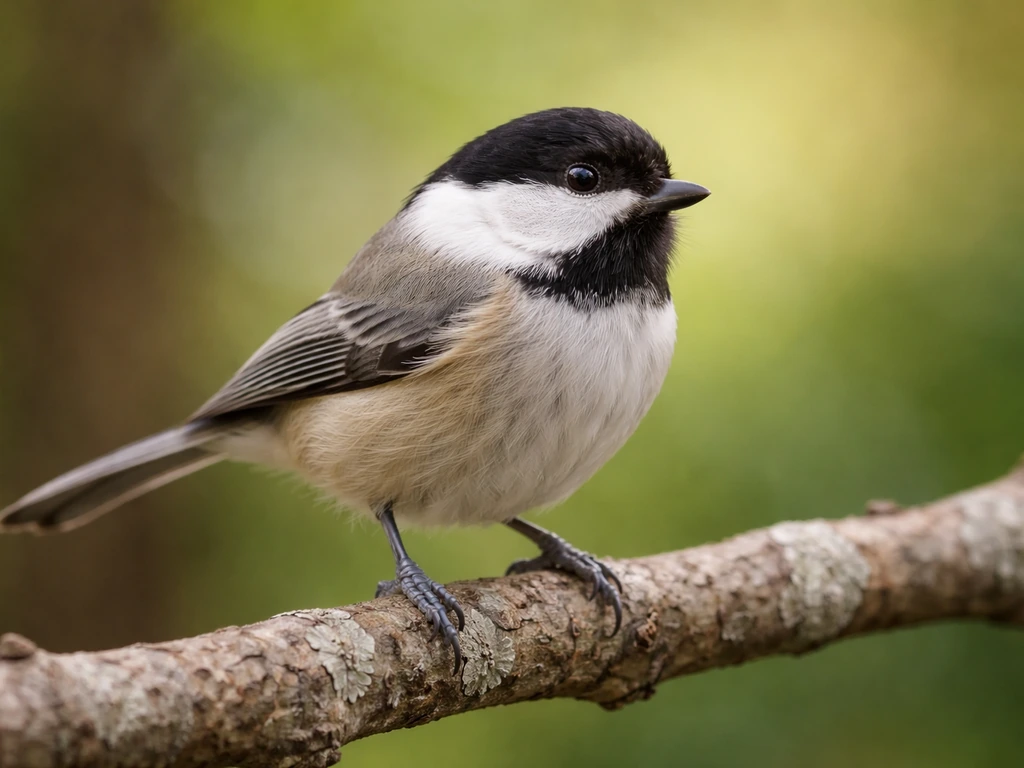
Yes, birds are wild animals by default. The roughly 10,000 to 11,000 living species that make up Class Aves evolved without human involvement, and the vast majority still live, feed, breed, and migrate entirely on their own. Some species have been domesticated (chickens, geese, ducks) and some individuals are kept as pets or in zoos, but those are exceptions to the rule. The biological category 'bird' refers to a naturally occurring lineage of warm-blooded, feathered vertebrates, and wild is simply what that lineage is. A chicken is still a bird even though it grew up in a barn, just as a wolf is still a wild animal even though some of its descendants became pet dogs.
Is Bird a Wild Animal? Clear Guide for Bird ID & Law

Marcus Hendricks
19 Jul 2026
What is a bird? Class Aves and where birds come from
Biologically, a bird is any member of the taxonomic class Aves. That class sits inside Kingdom Animalia, which means every bird is, by definition, an animal. For a concise explanation, see the article 'Is a bird classed as an animal'. The IOC World Bird List and ITIS (Integrated Taxonomic Information System) both treat Aves as a formal class within that kingdom, and ornithologists worldwide use those frameworks as their working classification. So when someone asks 'is a bird an animal?', the answer is an unqualified yes: birds are animals, specifically vertebrate animals in their own class.
Evolutionarily, birds are the living descendants of theropod dinosaurs, specifically the maniraptoran branch. Paleontologists Kevin Padian, Luis Chiappe, and Steve Brusatte and their colleagues have produced extensive phylogenetic work showing that Aves are nested inside theropod dinosaurs rather than being a separate lineage. Padian & Chiappe (1997) review fossil and phylogenetic evidence supporting that modern birds evolved from theropod (maniraptoran) dinosaurs. The Late Jurassic fossil Archaeopteryx is the most famous transitional form, showing a mosaic of dinosaur and bird traits (teeth, clawed wings, long bony tail, but also flight feathers). Cretaceous feathered paravians like Microraptor add further resolution to that family tree. In short: birds are technically living dinosaurs, which is a fun fact that also happens to be rigorous taxonomy.
The diagnostic traits that make a bird a bird
Ornithologists use a specific set of shared anatomical features (called synapomorphies) to identify an animal as a bird. None of these traits is quirky or arbitrary; each reflects deep evolutionary history. Feathers are the single most diagnostic feature and the one no other living animal group has independently evolved. But feathers alone are not the whole picture.
| Trait | What it is | Why it matters for ID |
|---|---|---|
| Feathers | Keratinous integumentary structures unique to birds among living animals | No other living animal has true feathers; presence confirms a bird |
| Toothless beak | Keratin-sheathed jaws with no teeth in all modern species | Distinguishes modern birds from reptiles and fossil transitional forms |
| Hard-shelled eggs | Calcified amniotic eggs laid externally | All birds reproduce this way; no bird gives live birth |
| Furcula (wishbone) | Fused clavicles forming a V-shaped bone | A skeletal synapomorphy shared across Aves |
| Pygostyle | Fused terminal tail vertebrae supporting tail feathers | Absent in non-avian dinosaurs; present in all modern birds |
| Keeled sternum | Breastbone with a central ridge for flight muscle attachment | Present in most flying birds; reduced in ratites like ostriches |
| Endothermy (warm blood) | Self-regulated, consistently high body temperature | Supports high metabolic rate and sustained flight |
| Avian air sac system | Unidirectional airflow through interconnected air sacs | Unique respiratory system enabling sustained aerobic output |
Frank Gill's ornithology textbook is a standard academic reference on feather structure and avian trait descriptions, and it emphasizes that feathers and the skeletal specializations listed above work together as a diagnostic package. If an animal checks all of these boxes, it is a bird. If it is missing feathers, it is not a bird, no matter how many other similarities it may share.
Taxonomy: 'bird' is a class, not a single species or genus
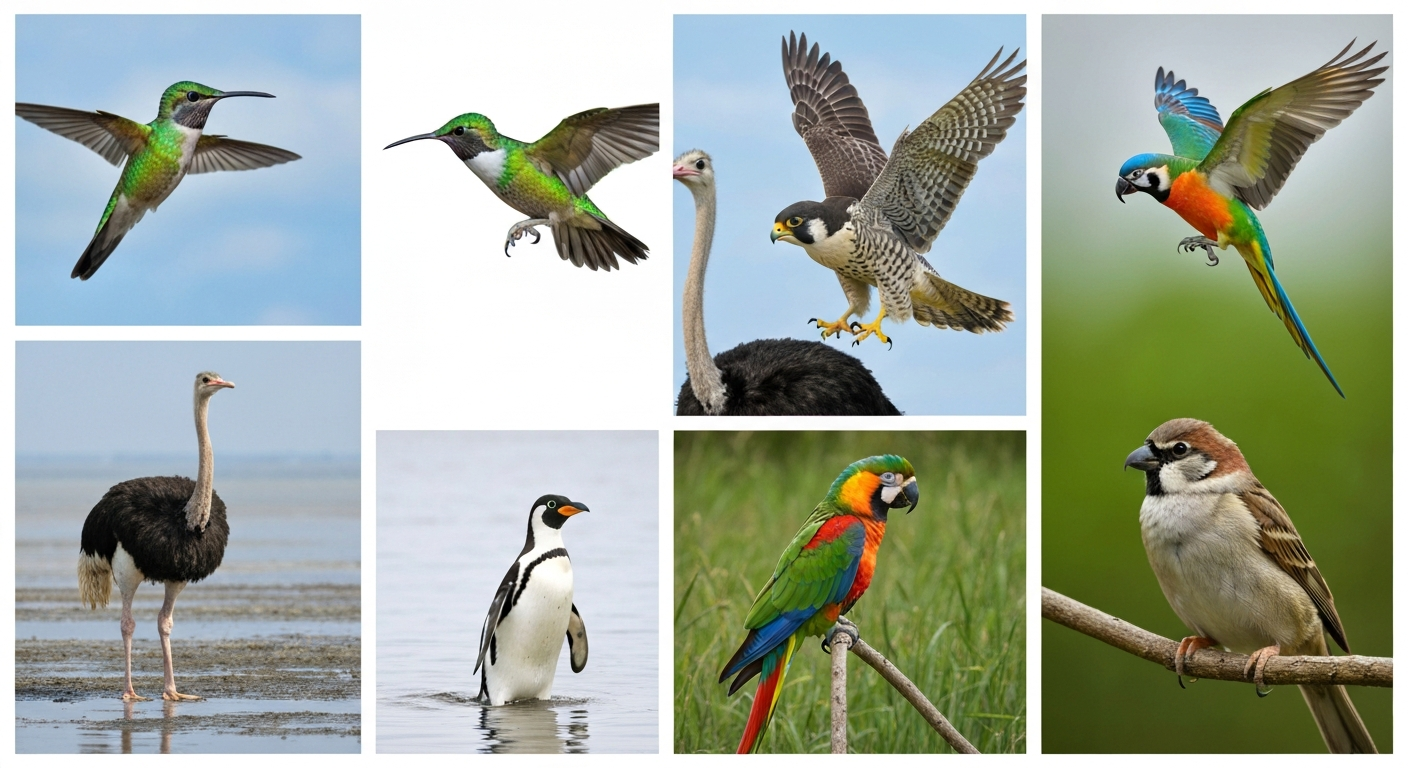
One of the most common classification errors is treating 'bird' as if it were a species name or a genus, similar to 'robin' or 'hawk.' It is neither. 'Bird' refers to an entire taxonomic class, Aves, which contains around 40 orders, roughly 250 families, and somewhere between 10,000 and 11,000 recognized species depending on which checklist you use. The eBird/Clements Checklist maintained by the Cornell Lab of Ornithology is one widely used global standard, and the IOC World Bird List is another; they differ slightly in species counts because taxonomic splits and lumps are ongoing, but both treat Aves as the class-level grouping. That scope matters because it means 'bird' covers everything from the Bee Hummingbird (weighing under 2 grams) to the Ostrich (weighing up to 145 kg), from the 60-second diver (penguin) to the 11-day non-stop migrant (Bar-tailed Godwit). No single species represents all birds, and the genus 'Aves' does not exist because Aves is ranked above genus. If you want to dig into why 'bird' is a class rather than a species or genus, that scope question deserves its own fuller treatment. If you want to dig into why 'bird' is a class rather than a species or genus, see our short guide titled 'is a bird a species or genus' for a focused explanation. Is 'bird' a species or a class? Read more about that distinction to understand why 'bird' refers to the class Aves rather than a single species.
Wild, domestic, and captive: the three statuses a bird can have
The confusion around 'is a bird a wild animal' often comes from conflating the biological category with the living situation of individual birds. These are separate questions. A bird is always biologically a bird (it has feathers, a beak, lays eggs, etc.). But whether a particular bird is wild, domestic, or captive depends on how it lives and how it was bred.
- Wild birds: self-sustaining populations that live, reproduce, and die without direct human management. This covers nearly all of the world's roughly 10,000+ bird species. Wild American Robins, Red-tailed Hawks, and Bar-tailed Godwits are straightforward examples.
- Domestic birds: species or breeds that have been selectively bred under human control across many generations, resulting in populations that depend on humans and differ genetically from their wild ancestors. Domestic chickens (Gallus gallus domesticus) descend from the Red Junglefowl (Gallus gallus) via domestication several thousand years ago, confirmed by genomic work including Lawal et al. (2021). Domestic pigeons derive from the wild Rock Dove (Columba livia).
- Captive birds: wild-species individuals that are kept by humans (in zoos, rehabilitation centers, or as pets) but have not been selectively bred into a domestic lineage. A rescued Great Horned Owl living at a wildlife center is captive but belongs to a wild species.
- Feral birds: formerly domestic individuals or their descendants that now live independently of humans. Feral pigeons in cities are a textbook case: they are Columba livia, descended from domestic stock, but they find their own food and breed without human management. Research on the synanthropic status of Columba livia populations documents exactly this sliding scale.
The practical upshot is this: when people ask 'is a bird a wild animal?', the honest answer is 'yes, by default, but individual birds can also be domestic or captive.' The biological answer and the husbandry answer point in the same direction: wildness is the baseline for the class, and domestication is the exception.
Legal protections: what the law says about wild birds
In the United States, the Migratory Bird Treaty Act of 1918 (MBTA), enforced by the U.S. Fish and Wildlife Service, protects hundreds of native migratory bird species. Under the MBTA it is illegal to pursue, hunt, take, capture, kill, or sell birds listed under the Act without a federal permit. The USFWS maintains the official list of covered species. This is not an obscure technicality: criminal provisions apply, and even collecting feathers found on the ground can be a violation for listed species.
Beyond the MBTA, the Endangered Species Act covers species listed as threatened or endangered, and BirdLife International's partnership with the IUCN Red List provides global conservation status assessments for wild bird populations worldwide. The Red Junglefowl and Mallard, for example, both have BirdLife/IUCN assessments documenting their wild status, distribution, and threat level, separate from any assessment of their domestic descendants.
Practically speaking: if you find a wild bird in the U.S., you generally cannot keep it, rehabilitate it yourself without a permit, or disturb its nest during nesting season. If you want to keep a bird as a pet, that is legal for certain species (budgerigars, cockatiels, domestically bred parrots, and poultry, for example) but illegal for most native wild species without specific federal and state permits. If you find an injured wild bird, the correct step is to contact a licensed wildlife rehabilitator, not to take the bird home.
Winged but not a bird: animals people commonly confuse with birds
Wings do not make a bird. This is probably the single most useful thing to understand when trying to classify flying animals, and it trips up a lot of people. The question of whether having wings automatically makes something a bird is worth addressing head-on, because the answer is a firm no. See the common misconception summarized as "if an animal has wings then it is a bird.".
| Animal | Has Wings? | Has Feathers? | Is a Bird? | What it actually is |
|---|---|---|---|---|
| Bat | Yes (membrane wings) | No | No | Mammal (Order Chiroptera) |
| Butterfly / Moth | Yes (scaled wings) | No | No | Insect (Class Insecta) |
| Dragonfly | Yes (membranous) | No | No | Insect (Class Insecta) |
| Flying Squirrel | No (gliding membrane, not wings) | No | No | Mammal (Order Rodentia) |
| Pterosaur (extinct) | Yes (membrane wings) | No (had pycnofibres) | No | Extinct reptile (Order Pterosauria) |
| Archaeopteryx (extinct) | Yes (feathered wings) | Yes | Transitional / debated | Avialae; sometimes placed within early Aves |
| Pigeon | Yes (feathered wings) | Yes | Yes | Bird (Class Aves, Columbidae) |
Bats are the most common source of confusion. They are warm-blooded, intelligent, fast-flying, and often spotted at dusk alongside swallows and swifts. But bats are mammals: they have fur, give birth to live young, and nurse their pups with milk. Their wings are formed from a stretched skin membrane supported by elongated finger bones, not from feathers and a modified forelimb in the avian sense. Pterosaurs are another frequent source of debate, especially among dinosaur enthusiasts. They were flying reptiles that shared the Mesozoic skies with early birds, but they were not birds and did not evolve into birds. They went extinct at the end of the Cretaceous. Flying squirrels and colugos (gliding mammals) don't even have true wings; they have a patagium, a flap of skin that lets them glide between trees. None of these animals have feathers, which is the quickest way to rule them out.
Mascots, memes, and mythical creatures: not birds (but let's talk about it)
The internet has a cheerful habit of calling things birds that are not birds. The Twitter/X bird logo is a graphic, not a species. The Mockingjay from The Hunger Games is a fictional hybrid that does not correspond to any real taxonomic group (no real bird hybridizes across families the way Mockingjays supposedly do). The Phoenix is a mythological fire bird from multiple ancient traditions with no biological reality. Tweety Bird is a cartoon canary, which at least means the underlying animal is real, but Tweety himself is not a specimen. The Road Runner cartoon character is loosely based on a real bird (Geococcyx californianus, the Greater Roadrunner, a real cuckoo species) but is obviously not a field guide entry.
On the internet slang front: 'birb' is an affectionate, deliberately misspelled variant of 'bird' that became popular in meme culture around 2015 and is now widely used in birding communities and on social media to describe small, fluffy, or endearing birds (think a puffed-up sparrow in winter). It is not a taxonomic term, it carries no scientific meaning, and ornithologists use it informally and warmly rather than officially. If you've wondered when a bird becomes a 'birb', the answer is: whenever it looks particularly round and soft and you feel compelled to use baby talk about it.
Practical ID checklist: is the animal in front of you a bird?
If you're in the field or looking at an unfamiliar animal and want a fast, reliable way to confirm whether it's a bird, work through these questions in order. The first question is the decisive one.
- Does it have feathers? If yes, it is a bird. No other living animal has feathers. You can stop here.
- Does it have a beak or bill (a keratin-sheathed jaw with no teeth)? This confirms a modern bird rather than a transitional fossil.
- Does it have two legs and two wings (even if the wings are reduced, as in penguins or ostriches)? All birds have this four-limbed body plan with the forelimbs modified into wings.
- Is it warm-blooded and does it lay hard-shelled eggs? This rules out reptiles and most other egg-layers.
- Does the skeleton show a furcula (wishbone), pygostyle, and (in flying species) a keeled sternum? These are the structural clinchers for Aves.
- If the animal flies but you cannot check feathers closely: does it have fur or bare skin instead of plumage? If fur: mammal (probably a bat). If bare skin membrane: insect or other arthropod. If scales: reptile.
- Is it flightless? Flightlessness does not disqualify an animal from being a bird. Penguins, ostriches, emus, kiwis, and cassowaries are all birds. Check for feathers and beak, not flight.
Lookalike case studies: real examples to anchor the rules
Sparrow vs. bat at dusk
At twilight, small House Sparrows and small bats can look superficially similar in silhouette. The practical difference: bats have an erratic, fluttery flight path caused by echolocation-guided insect pursuit, and their wingbeats are faster and more irregular. Sparrows and other small passerines have a bounding flight (flap-flap-glide) and are typically done flying by full dark. If you can see the animal perched, feathers versus fur settles it instantly.
Pigeon vs. dove vs. domesticated fowl
Pigeons and doves are the same bird family (Columbidae) and the distinction between them is largely informal and size-based rather than taxonomic. Rock Pigeons (Columba livia) in their wild form nest on sea cliffs; feral city pigeons are their domestic descendants gone independent. Research on Columba livia documents synanthropic and feral statuses and shows wild rock doves can give rise to urban feral pigeon populations (see The synanthropic status of wild rock doves (Columba livia) and their contribution to feral pigeon populations, Rivista Italiana di Ornitologia (RIO)) The synanthropic status of wild rock doves (Columba livia) and their contribution to feral pigeon populations — Rivista Italiana di Ornitologia (RIO). Ringneck Doves are domesticated birds commonly kept as pets; Mourning Doves are a separate wild North American species. All of them are birds. Domesticated fowl like chickens and domestic ducks are also birds: birds that humans have selectively bred but that retain all the diagnostic avian traits (feathers, beak, hard-shelled eggs, wishbone, etc.).
Flying squirrel vs. swallow
A Northern Flying Squirrel gliding between trees at dusk can briefly look like a large swallow or swift. But even a quick look resolves this: the squirrel has a fluffy tail, rounded rodent head, large dark eyes, and a skin membrane stretched between front and back legs. A Barn Swallow has a deeply forked tail, a pointed beak, and aerobatic precision that no gliding mammal can match. Feathers versus fur is the instant answer.
Flightless birds: penguins, ostriches, and kiwis
Flightless birds are a common sticking point because people unconsciously use 'flies' as a synonym for 'is a bird.' Penguins have wings modified into flippers and use them to fly through water at up to 25 mph. Ostriches have reduced wings used for balance and display. Kiwis have vestigial wings barely visible under their shaggy plumage. All three have feathers, beaks, lay hard-shelled eggs, have a furcula, and are warm-blooded. They are birds in every meaningful sense; they have simply evolved away from aerial flight. The keeled sternum is reduced or absent in ratites like ostriches (the ratite group includes ostriches, emus, rheas, kiwis, and cassowaries), which reflects their flightless lifestyle rather than any departure from the avian class.
If you find a wild or injured bird: what to do (and what not to do)
Finding an injured or grounded wild bird is stressful, and the instinct to help is good. But a few important points prevent well-meaning actions from making things worse.
- Do not attempt to keep or rehabilitate a wild bird yourself. In the U.S., handling most native wild birds without a permit violates the Migratory Bird Treaty Act, and untrained care can cause additional injury or stress.
- Do not offer food or water to an injured bird unless specifically advised by a rehabilitator, as the wrong food can harm birds and force-feeding stresses them further.
- For a stunned bird (window strike), place it gently in a cardboard box with air holes in a quiet, dark, warm space. Check after 30 to 60 minutes; if it has recovered, release it outdoors.
- For an injured bird that cannot fly or has visible wounds, contact a licensed wildlife rehabilitator. In the U.S., the USFWS website and the National Wildlife Rehabilitators Association (NWRA) directory can help you find your nearest licensed facility.
- Keep pets and children away from the bird while you make contact.
- Fledglings (young birds with some feathers, hopping on the ground) often do not need rescue. Their parents are usually nearby and will continue feeding them on the ground. Only intervene if a fledgling is in immediate danger from predators or traffic.
- Truly unfeathered nestlings that have fallen from a nest can be gently returned to the nest if you can reach it; the 'birds can smell humans and reject touched chicks' idea is a myth.
Where to learn more
For taxonomy and global species counts, the IOC World Bird List and the Cornell Lab's eBird/Clements Checklist are the most accessible and frequently updated public references. The ITIS database provides formal taxonomic records including the class Aves listing. The IUCN Red List and BirdLife International's species factsheets give conservation status and range data for wild bird populations. For field identification, the Sibley Guide to Birds, Peterson field guides, and the National Geographic Field Guide to Birds are all reliable starting points with the plumage, range map, and behavioral cues that let you identify birds in the field.
On this site, several related questions build on the foundation covered here. If you want to understand why the word 'bird' describes a class rather than a species or a genus, that distinction is worth exploring further. See why is a bird a bird for a focused explanation of why the word 'bird' describes a class rather than a species or genus. Questions like what core traits make something a bird in the first place, or whether all winged animals qualify as birds, connect directly to the ID framework above. And if you have come across the term 'birb' and want the full cultural context in birding communities, there is more to say about how internet bird culture intersects with serious ornithology.
The bottom line
Birds are wild animals. That is the default, scientific, evolutionary, and legal answer. The class Aves originated in the wild, contains approximately 10,000 to 11,000 living species that primarily live wild, and is recognized by every major taxonomic authority as a natural animal class. Some individual birds are domestic (chickens, domestic pigeons, domesticated waterfowl) and some are captive (zoo birds, pet parrots, rehabilitated raptors), but these are modifications of living situation, not modifications of what a bird biologically is. If it has feathers, a beak, lays hard-shelled eggs, and matches the skeletal profile of Aves, it is a bird, and it comes from a wild lineage. Use the ID checklist above when you are in doubt, refer to the field guides and databases listed here for species-level questions, and contact a licensed rehabilitator any time you encounter a wild bird that needs help.
FAQ
Core question: Is a bird a wild animal?
Short answer: Yes — birds (taxonomic class Aves) are animals and, in the broad biological sense, members of the animal kingdom. Whether any particular bird is 'wild' depends on its status: many bird species exist as wild, free‑living populations, while some individuals are domesticated, captive, or feral. (See IOC World Bird List and ITIS for Aves as a taxonomic class: https://www.worldbirdnames.org/new/classification/; https://itis.gov/servlet/SingleRpt/SingleRpt?search_value=174371)
What exactly is a bird (scientific definition)?
Birds are members of the taxonomic class Aves. Modern definitions and checklists used by ornithologists (IOC, eBird/Clements, ITIS) treat Aves as a distinct class of animals characterized by features such as feathers, a toothless beak, hard‑shelled eggs, endothermy (high metabolic rate), and skeletal specializations (furcula, pygostyle, keeled sternum in flying forms). (Reference overview: Wikipedia and ornithology texts summarizing these diagnostic traits.)
What diagnostic traits distinguish birds (Aves)?
Key diagnostic traits used by scientists and field guides: feathers (unique integument), beak without teeth, hard‑shelled eggs, lightweight/fused skeleton (e.g., furcula, pygostyle), keeled sternum in many volant species, and an avian respiratory system with air sacs. Field identification additionally uses plumage patterns, bill/leg shape, proportions, behavior, voice, and habitat.
Are all winged animals birds?
No. Not all winged animals are birds. Bats are mammals (Order Chiroptera), insects (e.g., butterflies, flies) are invertebrates, and extinct non‑avian flying reptiles (pterosaurs) were reptiles. Some mammals glide (flying squirrels) but are not birds. Identification depends on anatomical and taxonomic traits (feathers, beak, avian skeleton) rather than just the presence of wings.
Are mythical, brand, or meme “birds” (e.g., logos, cartoon characters) actual birds?
No. Logos, mascots, or meme characters that look like birds are cultural or fictional representations, not biological organisms. Internet slang like “birb” is a playful term for birds or birdlike images and does not change biological classification.
What does 'wild' mean for a bird versus 'domestic', 'captive', or 'feral'?
Wild: self‑sustaining populations living and reproducing without direct human control. Domestic: breeds or populations developed and maintained under human control (e.g., Gallus gallus domesticus, domestic chicken). Captive: individual birds held by humans (zoos, pets, rehabilitation). Feral: formerly domestic birds that live independently in the wild (e.g., feral pigeons from Columba livia). Legal protections and management can differ by status.
Next Article
Is a Bird Classified as an Animal? A Simple Guide
Yes, birds are animals. Learn taxonomy basics, key bird traits, and how to confirm birds versus lookalikes.