"Bird" is not a species. It's a class, specifically Class Aves, which contains roughly 11,000 individual species. Calling a bird a species would be like calling a mammal a species: it doesn't name one animal, it names an enormous group of animals that share a core set of biological traits. The house sparrow (Passer domesticus) is a species. Wild animals are animals that live in the wild rather than being domesticated, and most birds you see outdoors are wild animals is bird a wild animal. The bald eagle (Haliaeetus leucocephalus) is a species. "Bird" is the umbrella they both live under.
Is Bird a Species? Bird Classification Explained Simply

Marcus Hendricks
30 Apr 2026

What "species" actually means in taxonomy
Taxonomy is the science of naming and organizing living things, and it works as a hierarchy of ranks. From broadest to narrowest, the main ones are: Kingdom, Phylum, Class, Order, Family, Genus, and Species. A species sits at the very bottom of that ladder. It's the most specific level, the unit that refers to a group of organisms that can interbreed and produce fertile offspring (the classic biological species concept, associated with Ernst Mayr). More modern approaches, like the phylogenetic species concept, define a species as the smallest group that shares a unique combination of inherited traits tracing back to a common ancestor. Either way, a species is a tight, precise category.
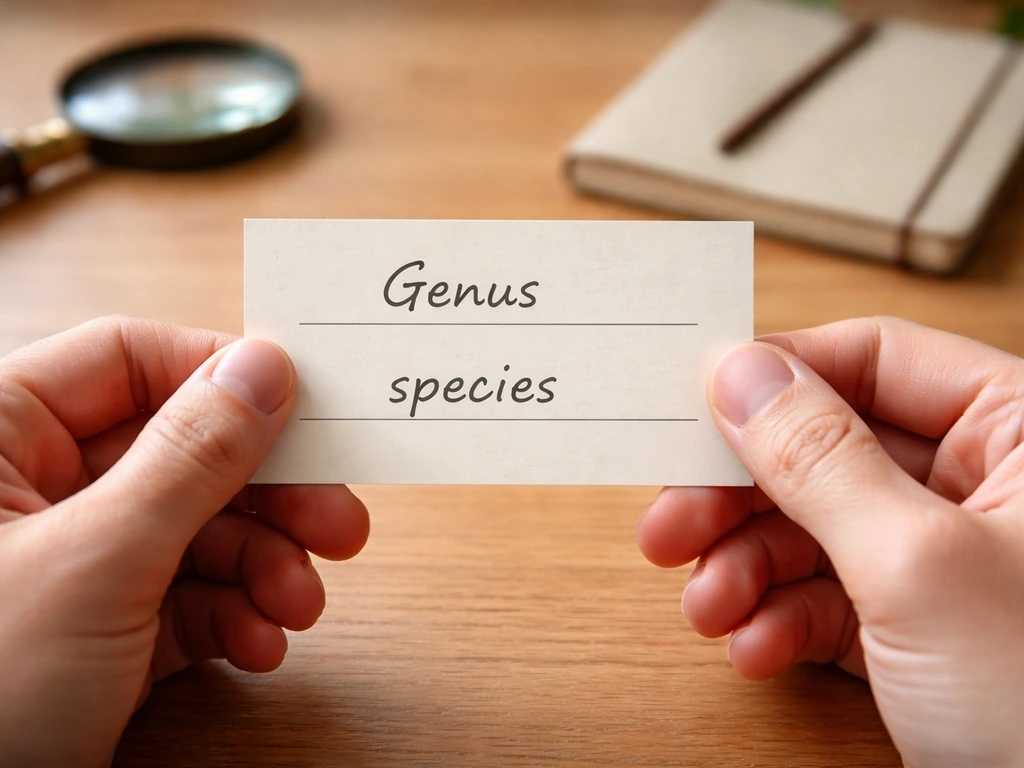
Every species gets a two-part scientific name called a binomial: a genus name plus a specific epithet. That's Passer domesticus for the house sparrow, Haliaeetus leucocephalus for the bald eagle, Aptenodytes forsteri for the emperor penguin. The genus groups closely related species together, and the species epithet distinguishes one from another. "Bird" doesn't fit this system at all, because it isn't a genus or a species name. It's a common-language word pointing to a class.
Where "bird" actually fits: Class Aves
In formal biological classification, birds occupy Class Aves. The full hierarchy for any bird runs like this: Kingdom Animalia (animals) → Phylum Chordata (animals with a spinal cord) → Class Aves (birds) → and then further down through orders, families, genera, and finally individual species. In that formal sense, a bird is classed as an animal because it belongs to Kingdom Animalia. Class is several ranks above species, which means saying "a bird is a species" is taxonomically about as accurate as saying "a vertebrate is a species."
Within Class Aves, biologists recognize two major clades: Palaeognathae (the ratites and tinamous, including ostriches, emus, and kiwis) and Neognathae (essentially everything else, from sparrows to eagles to parrots). These subdivisions show just how internally diverse the class is. "Bird" contains multitudes.
How many bird species are there?
The number shifts slightly every year as taxonomy is updated and new species are described or lumped. blank" rel="noopener noreferrer">As of the 2025 eBird/Clements taxonomy update, there are 11,167 recognized bird species worldwide (a net gain of 22 species over the previous version, with 40 added and 18 removed). The IOC World Bird List 15.1 puts the number at 11,250 species, including 164 extinct ones. Cornell Lab’s Clements Checklist also summarizes the blank" rel="noopener noreferrer">eBird/Clements 2025 update as adding 40 species and removing 18, for a net gain of 22 and a worldwide total of 11,167 species. The difference comes down to which taxonomic authority you follow and how they handle species splits and lumps. Either way, you're looking at well over ten thousand distinct species all sitting inside that single class.
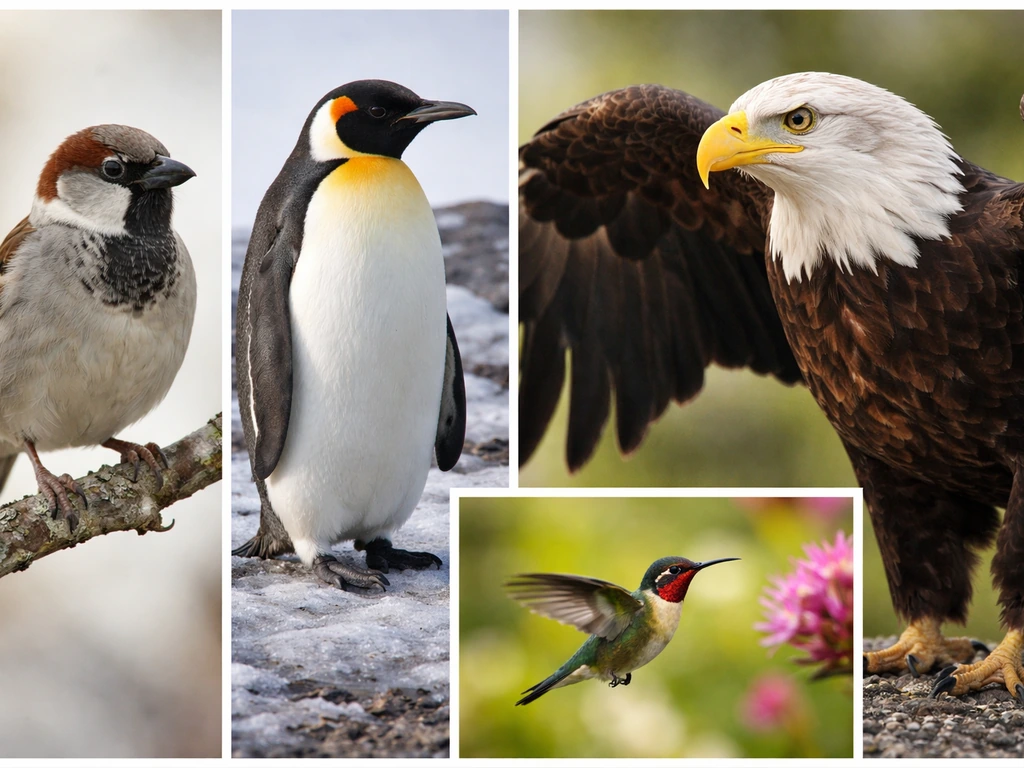
To make this concrete: a house sparrow, an emperor penguin, a bald eagle, and a ruby-throated hummingbird are each a species. They're wildly different in size, behavior, and habitat. What they share is the class-level traits that make them all birds.
What makes something a bird and not something else
This is where things get genuinely useful. Class Aves has a defined set of traits that every member shares. If you're trying to figure out whether an animal is a bird, check for these:
- Feathers: the single most reliable trait. No other living animal group has feathers.
- A beak (bill) with no teeth: all modern birds have beaked jaws, with no teeth.
- Hard-shelled eggs: birds lay eggs with hard, calcified shells.
- Endothermy (warm-blooded) with a high metabolic rate: birds regulate their own body temperature.
- A four-chambered heart: birds share this with mammals but not with most reptiles.
- A lightweight skeleton, including hollow bones in most species, which supports flight.
Mammals are also warm-blooded and have four-chambered hearts, but they have fur instead of feathers, give birth to live young (with rare exceptions like platypuses), and nurse offspring with milk. Reptiles lay eggs and share evolutionary ancestry with birds (birds technically evolved from theropod dinosaurs and are nested within the reptile family tree), but living reptiles are generally ectothermic (cold-blooded), have scales rather than feathers, and lack the bird-specific beak structure. The question of what separates birds from other animals is worth a full exploration of its own.
Borderline cases and things people argue about online
A lot of the "is X a bird?" confusion online comes from animals that don't match the popular mental image of a bird: something small, feathered, and flying. Here's how the actual taxonomy handles the most common cases: If you're also asking about the playful question "when is a bird a birb," that depends on what traits you are using as your personal definition.
| Animal | Is it a bird? | Why people get confused | The actual answer |
|---|---|---|---|
| Penguin | Yes | Can't fly, lives in the water | Order Sphenisciformes, Class Aves. Full bird. |
| Ostrich | Yes | Enormous, flightless, runs fast | Order Struthioniformes (ratites), Class Aves. Full bird. |
| Chicken | Yes | Farm animal, people forget it has wild relatives | Species Gallus gallus domesticus, Class Aves. Full bird. |
| Bat | No | Has wings and flies | Class Mammalia. Fur, live birth, nurses young. Not a bird. |
| Pterosaur | No | Flew, looked reptilian/bird-like | Extinct flying reptiles. Different wing structure. Not birds. |
| Platypus | No | Lays eggs like a bird | Class Mammalia. Has fur and nurses young. Not a bird. |
Penguins and ostriches are probably the two animals most often questioned, but both check every class-level box: feathers, beaked jaws, hard-shelled eggs, warm-blooded, hollow bones. Flight is not a requirement for Class Aves. Bats trip people up because wings feel like a bird trait, but wings evolved independently in bats (mammals) and birds, and bats have fur, not feathers. Pterosaurs are a perennial internet argument: they were flying reptiles that went extinct around 66 million years ago, and while birds share a distant evolutionary ancestor with them, pterosaurs are classified as reptiles, not birds.
How to check the taxonomic status of any animal name
If you come across an animal name and want to know exactly where it sits in taxonomy, whether it's a species, a genus, a class, or something else entirely, here's a practical workflow:
- Look up the scientific (Latin) binomial name. If it has two parts (like Passer domesticus), it's a species-level name.
- Check the rank. Taxonomy databases like the Integrated Taxonomic Information System (ITIS) or Animal Diversity Web will tell you whether a name refers to a species, genus, family, order, or class.
- For birds specifically, the IOC World Bird List and the eBird/Clements Checklist (updated annually) are the two main authorities. Both are free to access online and searchable.
- If the name is a common English word like "bird," "mammal," or "reptile," it almost certainly refers to a class or higher rank, not a species.
- For borderline cases (is this flying thing actually a bird?), run through the class-level traits: feathers, beak, hard-shelled eggs, warm-blooded, four-chambered heart.
The short version: whenever you're wondering whether a word names a species or a broader group, ask whether it can be followed by a two-part Latin name. "Bird" can't. "House sparrow" maps to Passer domesticus. That distinction is the whole answer to whether bird is a species.
FAQ
If “bird” is a class, why do people say “species of bird” in everyday language?
In casual speech, “species of bird” usually means a particular bird species within Class Aves, like “house sparrow” or “bald eagle.” Biologists would generally avoid saying “bird is a species,” but they will use “species” when referring to the specific two-part Latin name level.
How can I tell quickly whether an animal name is a species or just a broader category?
Use the binomial test. If the name consistently has a genus plus a specific epithet (for example, Passer domesticus), you are looking at a species. Single common words like “bird” or “reptile” generally indicate a higher rank such as class or general group, not a species.
Are there animals that look like birds but are not in Class Aves?
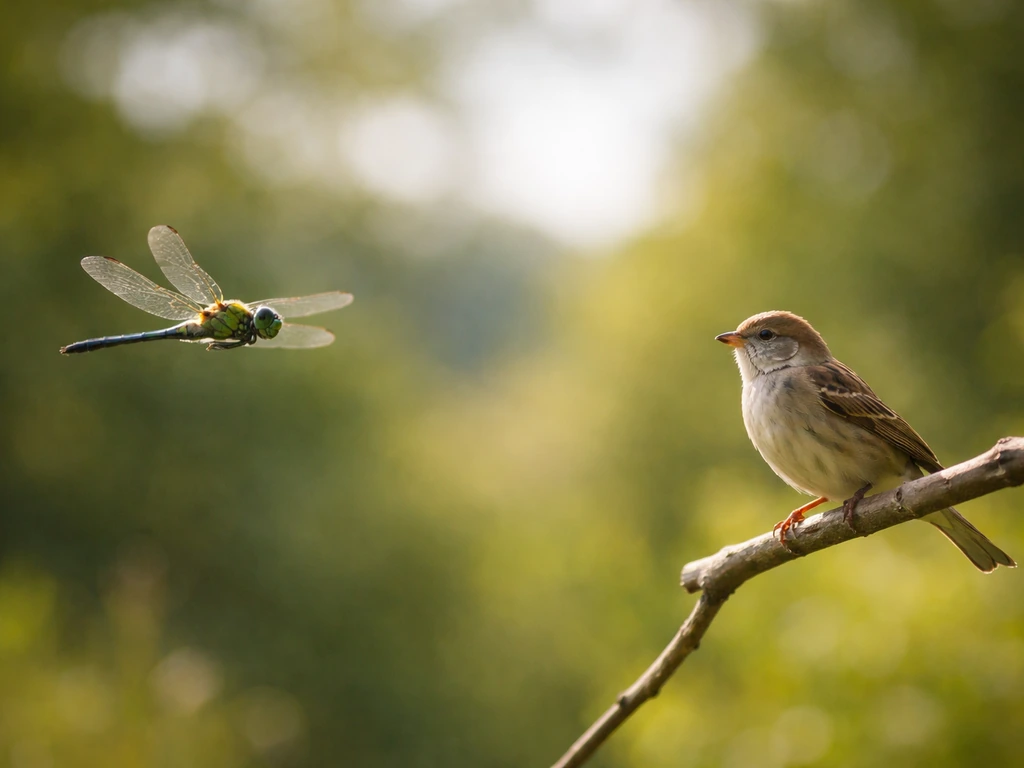
Yes. Bats have wings, but they have fur and are mammals, not birds. Pterosaurs also have wings, and even though they share a distant evolutionary relationship with birds, they are classified as reptiles. Those are common “visual misfires” that lead people to assume “looks like a bird” means “is a bird.”
Do all birds have to fly to count as birds?
No. Flight is not required for membership in Class Aves. Penguins, ostriches, and many other birds are classified as birds because they share core bird traits like feathers, beaked jaws, warm-blooded physiology, and egg characteristics, even when they cannot fly.
What about animals that have feathers but are not birds, are there any?
Feathers are strongly associated with birds, and modern classification treats birds as the living branch of that feathered lineage. However, some non-bird animals may have feather-like structures or superficial similarities, so the reliable approach is to check the overall suite of traits and the taxonomy rank, not appearance alone.
Can the number of bird species change from one year to the next?
Yes. Different taxonomic authorities can split one group into multiple species or lump multiple populations into one species. That is why totals can vary across lists and why updates sometimes add, remove, or reclassify species even when the animals in the real world have not “changed,” just how scientists define the boundaries.
What if two birds can interbreed, does that always mean they are the same species?
Not always. The classic biological species idea focuses on interbreeding and fertile offspring, but real populations can have partial barriers, rare hybrids, or geographic limits. Modern species concepts also rely on shared inherited traits and evolutionary history, so interbreeding results do not automatically settle the classification in every case.
Why do scientific names sometimes change, does that affect “is bird a species” questions?
Scientific names can change when classification is updated, for example when a genus is revised or when populations are re-split. The key point for your question is rank: “bird” remains the class term, while the species level is identified by the current binomial. If you are tracking a specific bird, use the latest binomial for that species.
Are extinct birds still “species” even if they are gone?
Yes. Extinct organisms can still be classified at the species level when there is enough morphological evidence to assign them to a binomial. They would be included in species counts by some authorities, which is part of why different lists may show different totals.
Is “bird” a species in any sense at all, like in cooking or art or school assignments?
Only in a non-scientific sense. For purposes like a worksheet or a casual label, “bird” can mean an individual bird you are looking at (which is a member of Class Aves). But scientifically, the class name is not the same as the species name, and the distinction matters if you want to identify a specific organism.
Next Article
Is a Dragonfly a Bird? How to Tell the Difference
Dragonflies are insects, not birds. Learn key bird traits vs dragonfly anatomy to tell them apart fast.