Microraptor is not a bird. It was a small, four-winged, feathered dinosaur that lived about 120 million years ago during the Early Cretaceous, and while it had genuine feathers and could probably glide between trees, it sits firmly outside the group scientists call Aves (crown birds). It's a dromaeosaurid theropod dinosaur, closely related to Velociraptor, not to robins or ravens.
Is Microraptor a Bird? Definition, Evidence, and Verdict

Marcus Hendricks
21 Jun 2026
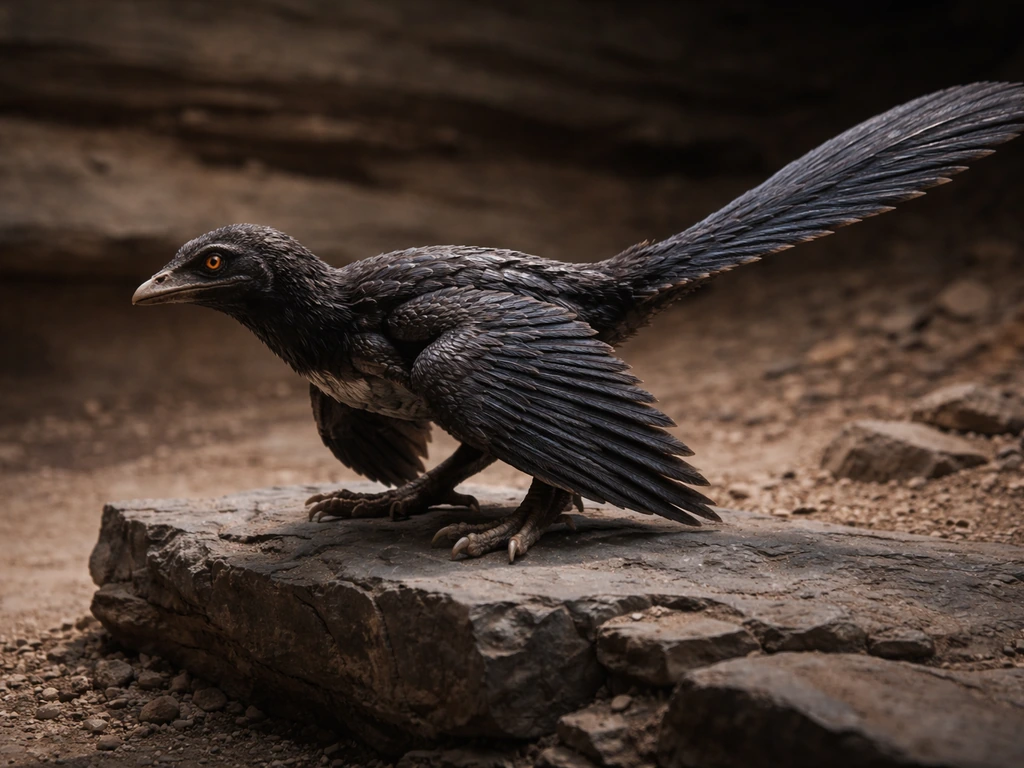
What Microraptor actually was
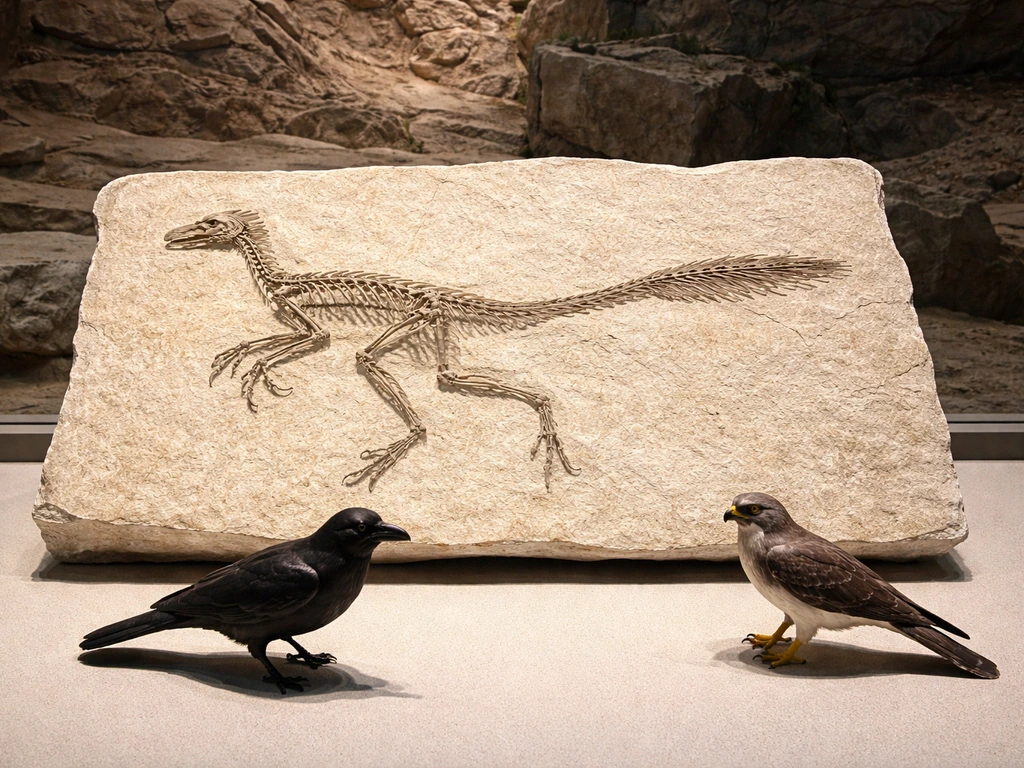
Microraptor was a tiny dinosaur, roughly the size of a crow or small hawk, that lived in what is now northeastern China (the Liaoning fossil beds). Its most striking feature is that it had feathers on all four limbs, giving it what researchers describe as a "four-wing" body plan. The best-known species, Microraptor gui, is documented from the holotype specimen IVPP V13352, which has been studied under UV light to confirm that the feathers are genuinely attached to the bones rather than random surface impressions. Those UV studies showed feather quills articulating with the skeleton in a way consistent with real feathered integument, not compression artifacts.
Most paleontologists classify Microraptor within Dromaeosauridae, the same family as Velociraptor. There is some debate (Britannica notes ongoing uncertainty about whether it belongs with dromaeosaurs or troodontids), but either way, both groups sit clearly outside Aves in every mainstream phylogenetic framework. The Natural History Museum in London, for example, lists Microraptor as a feathered dinosaur related to Velociraptor, explicitly not as a crown bird.
Quick definition: what makes something a bird
This is where most of the internet confusion lives. People assume "feathers = bird," but modern science doesn't work that way. That same idea is why asking 'is a velociraptor a bird' gets a clear, scientific answer too feathers = bird. "Aves" in current phylogenetic usage is a crown group, meaning it includes only the last common ancestor of all living birds and all of that ancestor's descendants. A crown group is defined by its living members, not by any single trait like feathers or wings. Archaeopteryx, for instance, falls outside the crown-bird definition under some frameworks even though it's the classic "first bird" people learn about in school.
So the checklist for deciding whether something is a bird isn't just about feathers. It's about where the animal sits on the evolutionary tree relative to the common ancestor of all living birds. Authoritative taxonomy databases like NCBI treat Aves this way explicitly, using phylogenetic crown-group membership rather than feathers alone to assign animals. The [Paleobiology Database scope describes it as compiling extensive fossil collections and taxonomic occurrences](https://serc.
carleton. edu/resources/23019. html) tied to published references, which is why it is commonly used in catalog-form reporting such as whether a taxon is treated as Aves or non-avian theropod. Feathers are a shared trait across a much wider group of theropod dinosaurs, and Microraptor is a great example of why "feathered" and "bird" are not synonyms.
A secretary bird is also a bird, and it is not closely related to the Microraptor lineage.
Microraptor's feather evidence and what it means
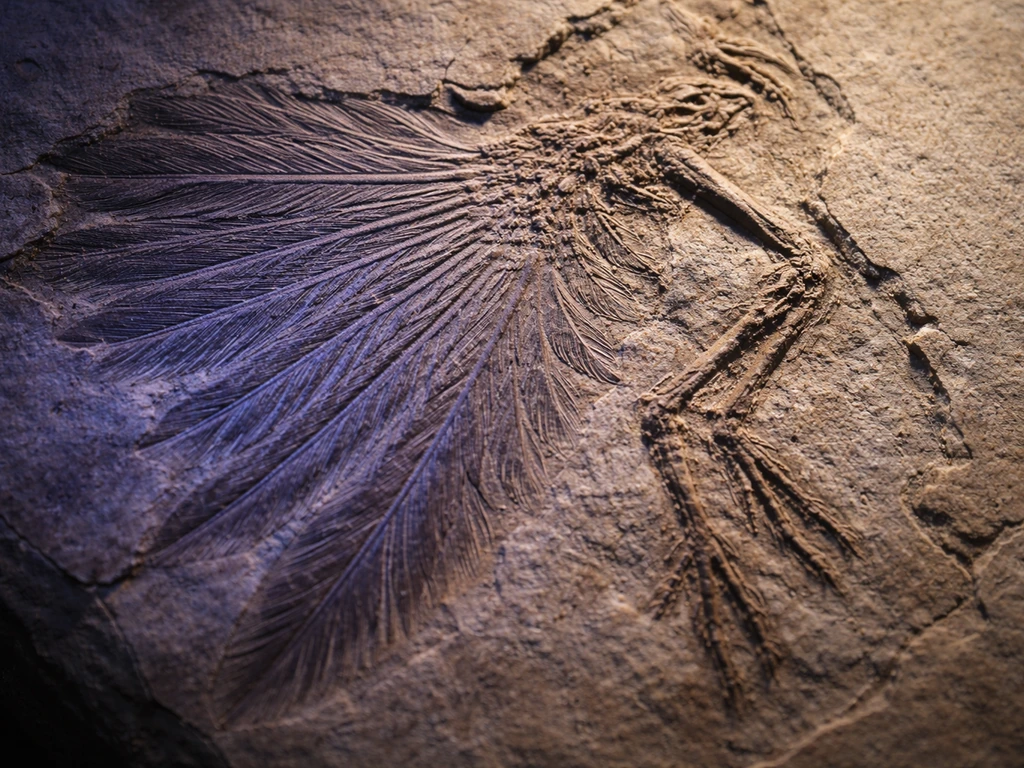
The feather evidence for Microraptor is genuinely impressive and worth understanding, because it's part of why people ask the question in the first place. UV light analysis of the holotype confirms real feather attachment. Detailed studies of additional Microraptor specimens describe a sophisticated forelimb feathering layout: multiple layers including marginal coverts, sets of primary remiges forming a V-shaped wingtip from the hand, and fan-shaped secondary remiges projecting from the ulna. Detailed studies describe the forelimb feathering as an open forewing with a V-shaped wingtip formed by primary feathers, plus a fan-shaped arm-wing formed by secondary feathers projecting from the ulna. That's a structurally complex wing, not just some fuzz.
The hindlimbs carried large feathers too, and at least one related specimen from the Liaoning beds had exceptionally long hind-wing feathers interpreted as aerodynamic surfaces that reduced descent speed during landing. Aerodynamic modeling of the four-wing configuration estimates Microraptor could glide at speeds up to around 15 meters per second, covering tens of meters per glide, with a wing planform optimized for efficient high-lift gliding at relatively low drag. A 2013 wind-tunnel study reached similar conclusions.
Here's the key point though: sophisticated feathers and gliding ability tell us about Microraptor's ecology and evolutionary position near the origin of flight. They do not move it into Aves. Plenty of non-avian dinosaurs had feathers. The question is always about the phylogenetic tree, not the feathers themselves.
How Microraptor compares to birds (and how it doesn't)
It helps to lay out the similarities and differences side by side, because Microraptor genuinely does share several traits with birds while missing others.
| Trait | Microraptor | Crown Birds (Aves) |
|---|---|---|
| Feathers | Yes, confirmed by UV analysis, complex layering | Yes, defining feature of the lineage |
| Flight or gliding | Gliding confirmed, powered flight debated | Most species capable of powered flight |
| Number of wings | Four (fore and hind limbs feathered as airfoils) | Two (forelimbs only form wings) |
| Wishbone (furcula) | Present in dromaeosaurids | Present |
| Teeth | Yes, toothed jaws | No teeth in living birds |
| Long bony tail | Yes, long tail with vertebrae | Short, fused tail (pygostyle) in birds |
| Hand claws | Large, prominent clawed hands | Wings largely fused, reduced claws |
| Crown-group Aves membership | No | Yes, by definition |
| Closest living relatives | Modern birds (distantly) | Other crown birds |
The four-wing body plan is probably the most visually striking difference. No living bird uses its legs as a second pair of wings the way Microraptor did. The toothed jaws and long bony tail are also classic non-avian features. Modern birds replaced teeth with beaks and consolidated their tail vertebrae into a pygostyle (the "parson's nose") tens of millions of years ago. Microraptor had neither of those derived bird features.
Where Microraptor sits on the theropod-to-bird evolutionary tree
Birds evolved from theropod dinosaurs, specifically from a lineage within Paraves (the broader group that includes dromaeosaurids, troodontids, and birds). Microraptor sits within that paravian group, closer to birds than, say, a T. rex, but not inside the bird crown group. Think of it like this: Microraptor is on a side branch that split off before the lineage leading to modern birds got going. It's a cousin of birds, not an ancestor or a member.
Phylogenetic analyses place several Liaoning dromaeosaurids, including Microraptor, within a basal polytomy relative to other dromaeosaur subclades, meaning the exact internal branching is still being worked out. That uncertainty doesn't change the big picture: dromaeosaurids, wherever they branch internally, consistently fall outside Aves in every mainstream analysis. The American Museum of Natural History categorizes Microraptor explicitly as a non-avian dinosaur placed among dromaeosaurs.
It's worth noting that the theropod-to-bird transition is a gradual continuum, which is exactly why these questions come up. Animals like Microraptor show us what that transition looked like in practice: feathers appearing across the body, flight-capable anatomy evolving in stages, and aerodynamic specializations developing before the crown-bird body plan was locked in. Microraptor is evidence of that transition, not a participant in the final group.
Final verdict: is Microraptor a bird, and how to think about similar cases
Microraptor is not a bird by the scientific definition of Aves (crown birds). It is a non-avian theropod dinosaur, most likely a dromaeosaurid, that happened to have complex flight-related feathers and a sophisticated gliding ability. The AMNH, the Natural History Museum in London, and phylogenetic databases all agree on this.
When you run into similar debates about other animals (and this site covers plenty of them, including questions about Velociraptor and what technically makes something a raptor in the bird sense), the same framework applies every time. A raptor is a bird of prey, but the term is often used loosely and definition depends on context what technically makes something a raptor in the bird sense.
Ask two questions: first, does it fall within the crown group Aves, meaning is it descended from the last common ancestor of all living birds? Second, if someone is using a broader definition of "bird," are they being clear about which definition they mean? A lot of internet arguments about feathered dinosaurs being "technically birds" are just definition disagreements, not actual scientific disputes.
For Microraptor specifically, even the most expansive reasonable definitions don't bring it into Aves. It predates the bird crown group, sits on a separate dromaeosaurid branch, and lacks the derived anatomical features (toothless beak, pygostyle, two-wing body plan) that characterize crown birds. The feathers are real, the gliding was real, and the evolutionary closeness to birds is real. But it's still not a bird.
How to check this for any fossil animal
- Look up the taxon in the Paleobiology Database or NCBI taxonomy and check whether it's listed under Aves or as a non-avian theropod.
- Find a cladogram from a peer-reviewed source and check whether the animal falls inside or outside the crown-bird node.
- Check whether the source using the word 'bird' is using the crown-group definition or a looser informal one. If it's informal, it's not a scientific claim about Aves membership.
- Look for the key derived bird features: toothless beak, pygostyle (fused tail vertebrae), and a two-wing body plan. Missing all three is a strong sign you're outside Aves.
- If the animal is a dromaeosaurid or troodontid, it's almost certainly not a crown bird, regardless of how many feathers it had.
Microraptor is genuinely one of the most fascinating animals in the fossil record, and it tells us an enormous amount about how bird flight evolved. But fascinating and bird are two different things. Once you have the crown-group framework in your head, cases like this become much easier to sort out. If you want to reason from first principles, see what makes a bird a raptor and how modern classification separates birds from their close non-avian relatives.
FAQ
If Microraptor had feathers and could glide, why doesn’t that automatically make it a bird?
In modern taxonomy, “bird” usually means membership in the crown group Aves, not just having feathers or any form of aerial ability. A gliding, flying-capable animal can still be outside Aves if its lineage split off before the last common ancestor of all living birds.
What bird-specific features does Microraptor lack compared with crown birds?
Microraptor lacks key derived traits associated with the bird body plan, such as a toothless beak and the pygostyle (a short, fused tail structure). It also did not have the two-wing arrangement that characterizes modern birds.
Is Microraptor closer to modern birds than Velociraptor is?
Microraptor is a paravian dromaeosaurid, so it is on the same broad branch as other dromaeosaurids like Velociraptor. Whether it is “closer” depends on the specific phylogenetic analysis, but either way both remain outside Aves under standard frameworks.
Does the presence of feathers on all four limbs mean it is a “transitional” case in bird evolution?
It is often treated as a transitional or comparative case for how feathering and aerodynamics evolved in non-avian theropods. However, “transitional” here means it helps illustrate evolutionary steps, not that it is an ancestor within the crown-bird lineage.
Could Microraptor have been able to flap like a bird, or was it only a glider?
The strongest inference from current evidence is gliding, supported by aerodynamic interpretations of the four-wing layout and related experiments. Flapping flight is much harder to establish from fossils because you would need clear, repeated adaptations tied to powered flight beyond feather coverage.
Why is there sometimes confusion with other animals like Archaeopteryx or “feathered dinosaurs” in general?
Some people use a broad, non-phylogenetic sense of “bird,” while others use the strict crown-group definition. Archaeopteryx is a classic example where feathers are undeniable, yet its placement can still fall outside the crown group depending on the framework used.
How do scientists check whether feather impressions on fossils are real feathers or something like compression?
Researchers look for internal consistency between the feather-bearing tissue and the surrounding skeleton, including whether quills and structures connect in expected anatomical positions. In Microraptor, UV light studies of the holotype were used specifically to support genuine feather attachment rather than surface artifacts.
What is the practical way to decide “is it a bird” during an online debate?
Ask two questions: (1) which definition is being used, the crown-group Aves definition or a looser “feathers make it a bird” definition? (2) if using the scientific definition, does the animal fall within the lineage descending from the last common ancestor of all living birds. Microraptor fails the first-principles test either way it is classified in mainstream analyses.