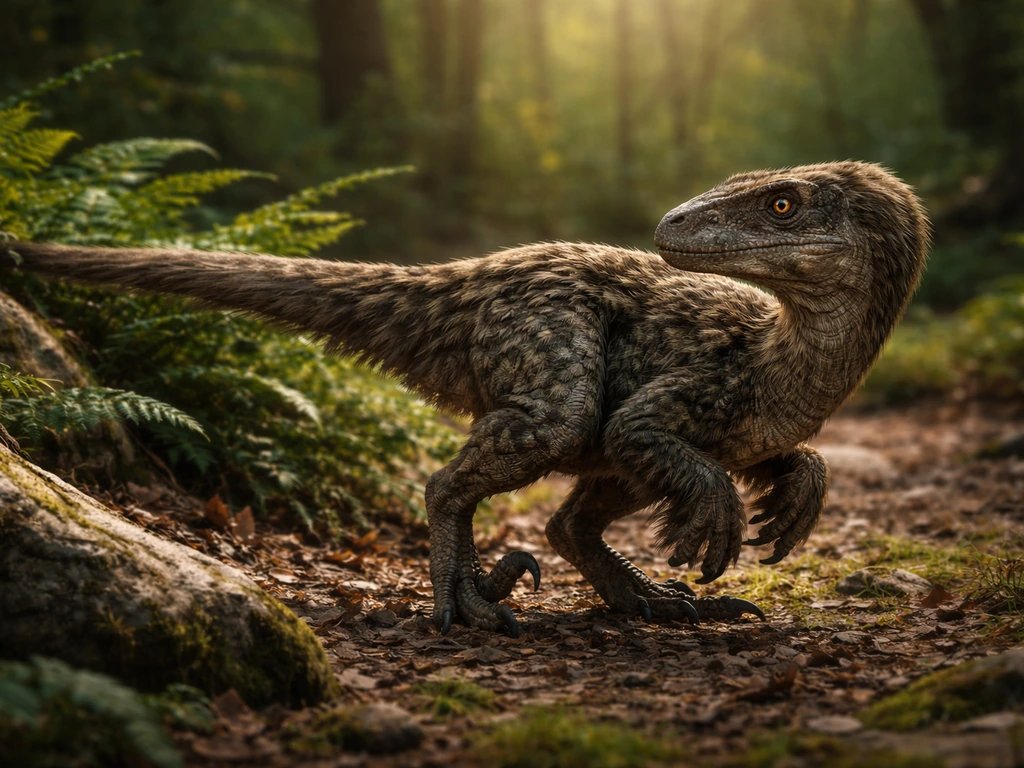
Velociraptor is not a bird. It's a non-avian dromaeosaurid dinosaur, which means it sits on the same broad evolutionary branch as birds but branched off before the lineage that produced modern Aves. It had feathers, it was probably warm-blooded, and it was more closely related to a sparrow than to a crocodile, but none of that makes it a bird by the modern scientific definition. Think of it this way: your cousin shares most of your DNA, but they're not you.
Is a Velociraptor a Bird? The Science-Backed Answer

Marcus Hendricks
12 May 2026
What actually counts as a bird today
Modern biology defines birds using evolutionary taxonomy, not just a checklist of physical traits. "Bird" in the scientific sense means a member of the clade Aves, which includes all living birds and their most recent common ancestor. The key requirement is descent: you have to be on the right branch of the dinosaur family tree, the one that led specifically through the origin of flight and the survival of the Cretaceous-Paleogene extinction event about 66 million years ago.
Appearance-based definitions fall apart quickly. Penguins can't fly. Ostriches look more like reptiles than robins do. Feathers alone don't qualify something as a bird, because we now know feathers evolved in non-avian dinosaurs too. What matters is the actual ancestry. If you're inside the Aves clade, you're a bird. If you branched off before that clade's origin, you're not, regardless of how bird-like you look or behave.
Where Velociraptor actually fits in the family tree
Velociraptor belongs to the family Dromaeosauridae, within the larger group Theropoda. A 2020 paper in Scientific Reports places it within Velociraptorinae, a subclade inside Eudromaeosauria. Dromaeosaurids are part of the broader group Paraves, which is the same group that contains birds, but Dromaeosauridae is a sister group to Avialae (the bird lineage), not a subset of it. That's the critical distinction. Velociraptor and birds share a common ancestor within Paraves, but Velociraptor's lineage diverged before the branch that eventually produced Archaeopteryx and modern birds.
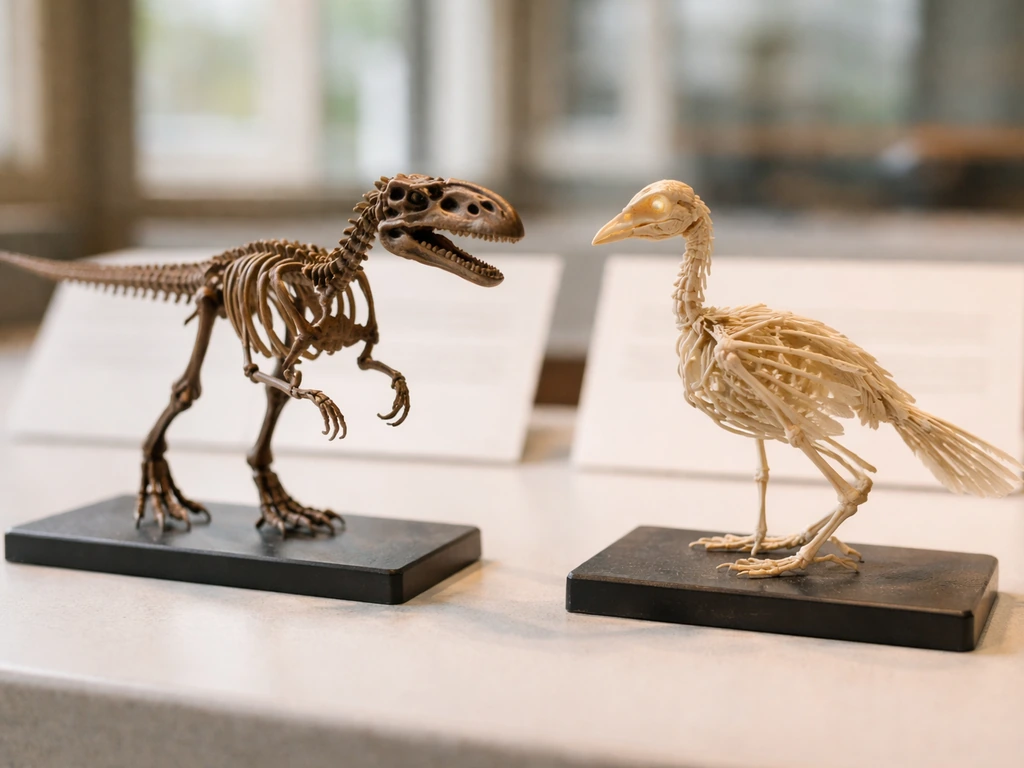
To put it in plain terms: birds evolved from theropod dinosaurs, and Velociraptor is also a theropod dinosaur. That makes them close relatives, not the same thing. Dinosaurs didn't "become" birds, a specific lineage of dinosaurs evolved into birds while other lineages, including dromaeosaurids, continued on their own path until extinction.
The bird-like traits Velociraptor actually had
Velociraptor was genuinely bird-like in several measurable ways, and that's part of what makes this question interesting rather than silly. Here's where the science gets specific:
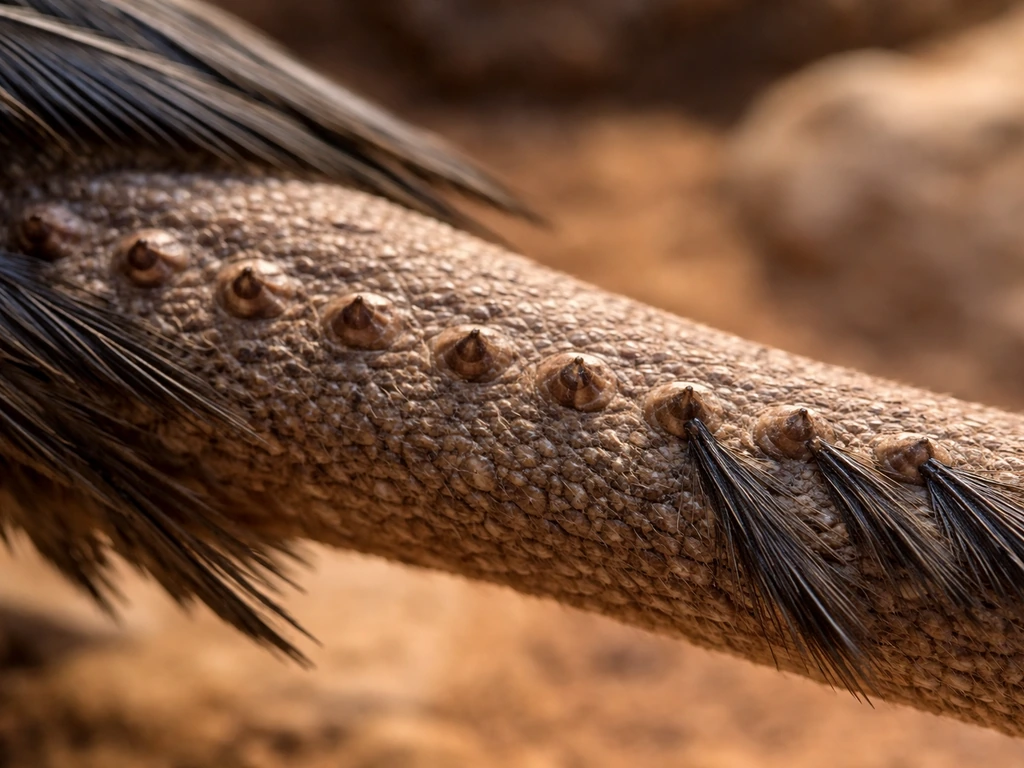
- Feathers: A 2007 study published in Science (Turner et al.) identified six "quill knobs" on the forearm of a Velociraptor fossil. These are the same bony anchor points found on modern birds where large flight feathers attach. The American Museum of Natural History confirmed this finding, describing it as direct evidence that Velociraptor had feathers.
- Hollow bones: Like birds, Velociraptor had lightweight, pneumatized bones, a trait linked to the theropod-to-bird transition.
- Wishbone (furcula): Velociraptor possessed a fused clavicle, the same structure that forms the wishbone in living birds.
- Upright posture and bipedalism: It walked on two legs, held its body horizontally, and likely moved with agility similar to ground-dwelling birds.
- Possible warm-bloodedness: Most paleontologists now believe dromaeosaurids were endothermic (warm-blooded), which aligns with bird physiology.
What Velociraptor lacked, or at least what there's no evidence for, is the capacity for powered flight and the anatomical specializations that come with it, including the keeled sternum that anchors flight muscles in modern birds. Its feathers were almost certainly not used for flight. They were likely used for insulation, display, or balance, which is actually consistent with how researchers think feathers first evolved before flight co-opted them.
Why Jurassic Park made this so confusing
The Jurassic Park franchise deserves a significant portion of the blame here, but ironically in the wrong direction. The films portrayed Velociraptors as large, scaly, reptilian predators, basically upright lizards with attitude. Real Velociraptors were about the size of a turkey, feathered, and much less terrifying-looking than their Hollywood versions. So the pop-culture image actually made Velociraptor look less bird-like than it really was.
On the flip side, once the general public started learning that "dinosaurs evolved into birds," many people swung to the opposite conclusion and assumed that dinosaurs like Velociraptor must therefore be birds. The logic is understandable but imprecise. Evolution is a branching process, not a linear upgrade path. Not every dinosaur became a bird, just as not every ape became a human.
The confusion also gets fueled by the word "raptor" itself, which in everyday English refers to birds of prey like hawks and eagles. Velociraptor shares the name but not the classification. If you're sorting out whether "raptor" automatically means bird, that's a separate but related question worth exploring. That said, the phrase is often used loosely, so whether an animal is actually a bird depends on its scientific classification rather than the label raptor.
If you mean “is a raider a bird” in the same casual way people ask about raptors, the same ancestry-based rules apply. In everyday language, people often ask, “is a raptor a bird,” but scientific classification depends on ancestry rather than the name.
A quick comparison: Velociraptor vs. modern birds
| Trait | Velociraptor | Modern Birds (Aves) |
|---|---|---|
| Feathers | Yes (quill knobs confirmed) | Yes |
| Flight capability | No evidence | Most species (not all) |
| Keeled sternum (flight muscle anchor) | No | Yes |
| Wishbone (furcula) | Yes | Yes |
| Hollow bones | Yes | Yes |
| Warm-blooded | Likely yes | Yes |
| Member of clade Aves | No | Yes |
| Survived K-Pg extinction | No (extinct ~75 Ma) | Avian lineage survived |
| Classification | Non-avian dromaeosaurid dinosaur | Avian dinosaur |
How to settle this debate yourself for any animal
This same framework works whether you're evaluating Velociraptor, Microraptor, or anything else that gets called a "bird" on the internet. The same reasoning also applies to Microraptor, so it helps to ask whether it falls inside the Aves clade. Run through this checklist and you'll have a defensible answer:
- Is it a member of clade Aves? This is the core question. Aves = birds, full stop. Everything else is a qualifier.
- If it's extinct, where does it fall on the theropod family tree? Is it within Avialae, or a sister group like Dromaeosauridae?
- Don't use feathers as your deciding factor. Feathers evolved in non-avian dinosaurs and are now understood to predate birds as a clade.
- Don't use flight either. Some birds don't fly (penguins, ostriches, kiwis), so flight is neither necessary nor sufficient.
- Check a peer-reviewed source or a reputable museum database. The American Museum of Natural History, the Smithsonian, and academic journals like Scientific Reports are solid starting points.
- Be skeptical of the name. "Raptor" in common speech means a bird of prey, but in paleontology it often refers to dromaeosaurids, which are not birds.
The AMNH explicitly places Velociraptor in its Hall of Saurischian Dinosaurs, not in any bird classification, which is a useful sanity check. AMNH also published a study confirming Velociraptor feather evidence, describing quill knobs as direct evidence of feathers AMNH published feather evidence for Velociraptor. If the world's premier natural history museum doesn't classify it as a bird, that's a strong signal.
The honest bottom line
Velociraptor is one of the most bird-like non-birds we know of. It had feathers, hollow bones, a wishbone, and was probably warm-blooded. It was more closely related to a modern crow than to a Tyrannosaurus. But it is not a bird. is a raptor a bird But it is not a bird..
It sits just outside the Aves clade on the evolutionary tree, classified as a non-avian dromaeosaurid dinosaur. The science is settled on this one. What makes the question genuinely fascinating is how blurry the line between "dinosaur" and "bird" turns out to be when you look at it closely, which is exactly the point. Birds are avian dinosaurs.
Velociraptor is a non-avian dinosaur. Both statements are true, and together they tell a more interesting story than a simple yes or no ever could.
FAQ
If Velociraptor had feathers, why isn’t it automatically considered a bird?
Feathers evolved more than once in the broader dinosaur family, and many non-bird dinosaurs had feathers. What makes something a bird in science is not feather presence, but whether it belongs to the Aves clade by ancestry, specifically the lineage that produced modern birds and their most recent common ancestor.
Could Velociraptor have been a flight-capable bird in some way?
There is no strong evidence that Velociraptor had the key body plan for powered flight, such as a flight muscle attachment structure like a keeled sternum. Its feather coverage is more consistent with insulation, display, or aerodynamic control for movement on the ground or during short glides, not full flapping flight.
Why do some sources say Velociraptor is “a kind of bird” anyway?
This usually comes from casual language or from focusing on bird-like traits such as feathers, hollow bones, and relative anatomy. In strict taxonomy, “bird” means membership in Aves, and Velociraptor sits outside that clade as a non-avian dromaeosaurid dinosaur, so it is accurate to call it close relative rather than a bird.
How can I tell quickly whether a dinosaur gets classified inside Aves or outside it?
Use a clade check, not a trait check. Ask whether the animal’s lineage falls within Aves (the living birds and their most recent common ancestor). If it branched off before the avian lineage arose, it is not a bird even if it looks or behaves bird-like.
Does “raptor” mean the same thing scientifically as “bird of prey”?
No. “Raptor” in everyday English often refers to birds like hawks and eagles, but the dinosaur group name raptor is unrelated to that hunting bird category. Classification depends on ancestry and clade membership, not on whether a common name includes the word raptor.
Are there other dinosaurs that are truly birds, not just bird-like?
Yes, birds are real lineages that persisted past the non-avian dinosaur extinctions and survived as living birds. The confusion happens because many non-avian dinosaurs are feathered and bird-shaped, so “bird-like” is common, while “a true bird” means Aves membership.
What about Microraptor, is it considered a bird like Velociraptor?
It depends on where its lineage falls on the tree. The same rule applies: if it is inside the Aves clade, it is a bird; if it branched off before Aves, it is not. You can’t decide this reliably from pictures alone, so classification placement is the deciding factor.
Do museums or textbooks always agree on whether Velociraptor is a bird?
Most modern references align because the taxonomic placement is based on phylogenetic analysis, not popularity. If a reputable classification system places it with non-avian dromaeosaurids rather than inside Aves, that is the best signal to use when you want the scientific answer.
What’s the simplest way to phrase the correct answer without sounding contradictory?
Say “Velociraptor is a non-avian dinosaur closely related to birds.” That captures both truths at once, it shares a common ancestry with birds, but it did not belong to the specific lineage that became modern birds.
Next Articles
What Makes a Bird a Raptor: Traits and ID Checklist
Learn raptor defining traits and use a field checklist to ID birds of prey vs common look-alikes fast and accurately.
Is a Raptor a Bird? Birds of Prey vs Dinosaur Raptors
Clear verdict: raptors are birds of prey, not dinosaur names, and how real dinosaur raptor lineage connects to birds.

Is a Dragonfly a Bird? How to Tell the Difference
Dragonflies are insects, not birds. Learn key bird traits vs dragonfly anatomy to tell them apart fast.