Yes, a raptor is a bird. When most people say 'raptor' today, they mean a bird of prey: an eagle, hawk, falcon, owl, or similar predatory bird that hunts with sharp talons and a hooked beak. In other words, the term raptor is about specific hunting traits that distinguish birds of prey from other birds what makes a bird a raptor. These animals all belong to Class Aves, the same biological class as robins and pigeons, just with a much more intense hunting lifestyle. The confusion usually comes from one place: movies like Jurassic Park used 'raptor' as a nickname for certain extinct dinosaurs, and that pop-culture usage muddied a word that had belonged to birds for centuries.
Is a Raptor a Bird? Birds of Prey vs Dinosaur Raptors

Marcus Hendricks
27 Apr 2026
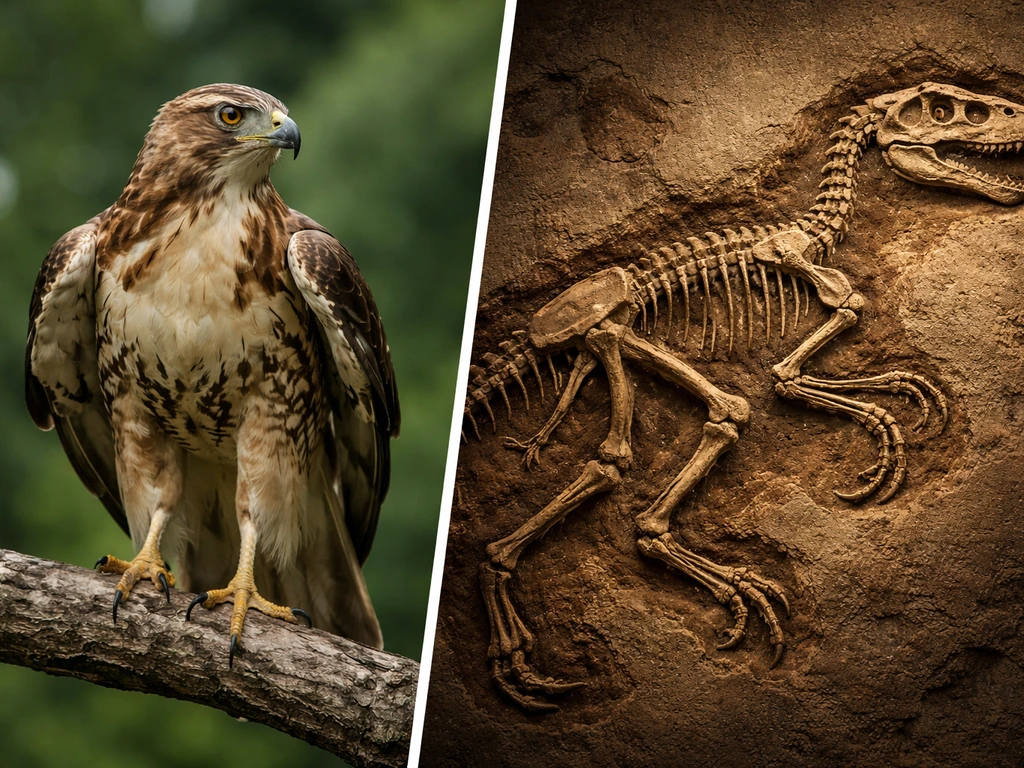
What 'raptor' usually means in everyday language
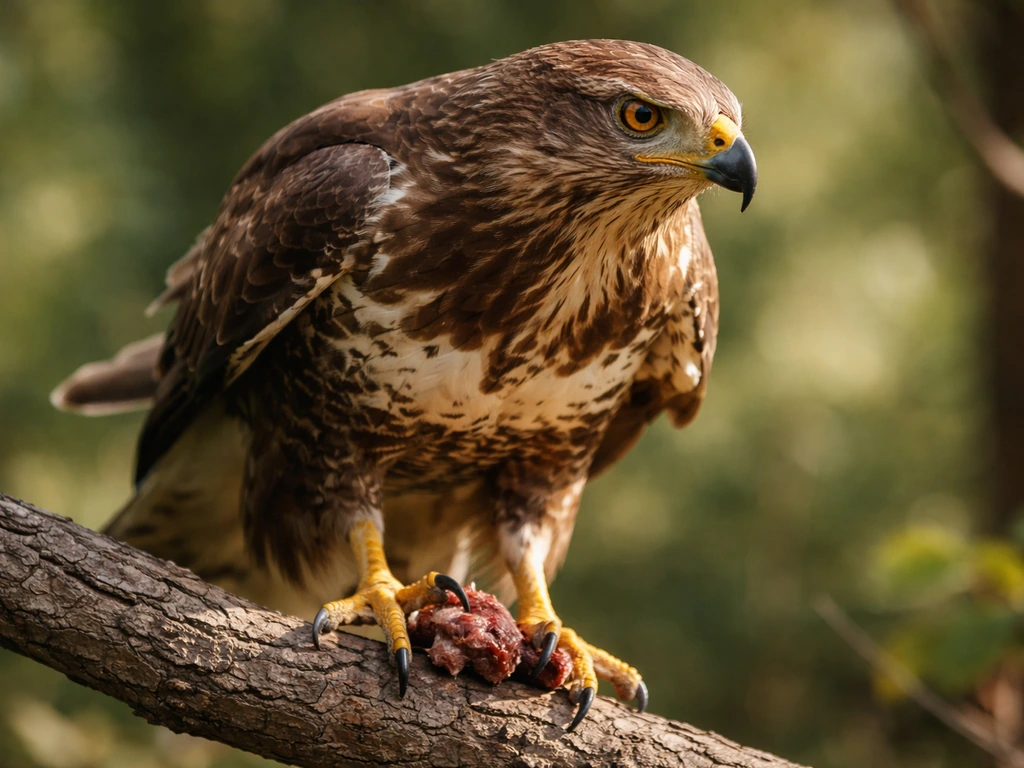
The word 'raptor' comes from Latin, meaning plunderer or seizer, and it has been used in English to mean 'bird of prey' for a very long time. Merriam-Webster defines it as 'a beast or bird of prey,' and the Britannica Dictionary is even more direct: 'a bird (such as an eagle or hawk) that kills and eats other animals for food.' In the U.S. legal code, the definition of 'raptors' is spelled out as 'eagles, falcons, owls, hawks, and other birds of prey.' That is the mainstream usage everywhere from wildlife conservation documents to field guides to school science lessons.
Collins English Dictionary treats 'raptor' as simply synonymous with 'bird of prey,' and the U.S. Fish and Wildlife Service uses the phrase 'raptors, also known as birds of prey' in its educational materials. So if someone mentions a raptor in a nature documentary, a wildlife rehabilitation center, or a conversation about backyard birds, they almost certainly mean a living, feathered bird, not a fossil.
Are birds of prey (raptors) classified as birds
Absolutely. Every raptor in the bird-of-prey sense belongs to Class Aves and fits squarely within modern bird taxonomy. Owls are classified under Order Strigiformes, placed within Class Aves by both the U.S. Fish and Wildlife Service and the Animal Diversity Web. Falcons sit in Order Falconiformes. Hawks and eagles are in Order Accipitriformes. PBS Nature states plainly: 'Owls are birds of prey in the order Strigiformes.' Britannica describes falconiforms as predatory birds known for their raptorial hunting skill. These are not edge cases or informal groupings: they are firmly established birds in the scientific classification system.
The shared traits that earn these animals the 'raptor' label are also what mark them as specialized birds: a hooked beak for tearing flesh, powerful talons for seizing prey, sharp eyesight, and strong flight muscles. None of that places them outside of Aves. It just puts them at the predatory end of it. If you're curious about exactly which traits officially earn a bird that 'raptor' label, that gets explored in more detail when looking at what makes a bird a raptor.
Why people mix up raptors with dinosaurs
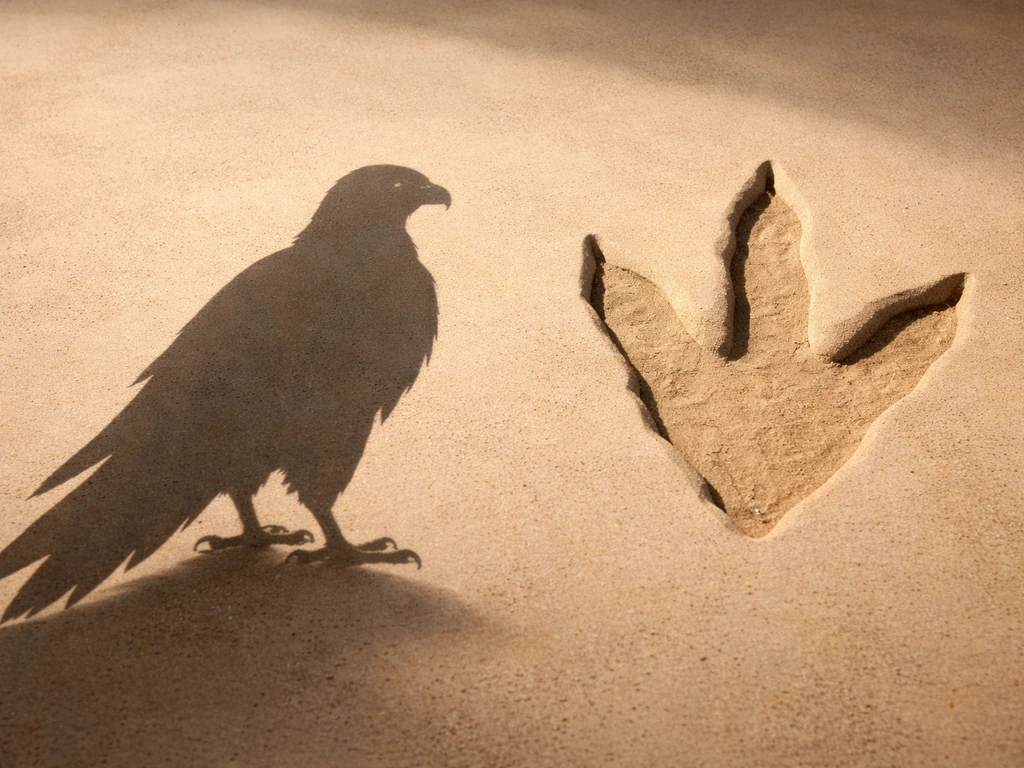
The confusion has a very specific origin: Jurassic Park. The 1993 film popularized 'raptor' as a nickname for Velociraptor and similar dinosaurs, and it gave them a terrifying, intelligent, human-sized depiction that lodged in cultural memory. Before that film's popularity, 'raptor' was essentially synonymous with 'bird of prey' in everyday speech. The Smithsonian has noted this directly, pointing out that media use of 'raptor' as a blanket term for certain dinosaur types is a prominent source of confusion.
The naming element '-raptor' also appears in several dinosaur genus names (Velociraptor, Microraptor, Deinonychus-related groups), which reinforces the association. Because these names are so recognizable, and because the word 'raptor' appears in both contexts, people understandably wonder whether the two groups are connected, or whether 'raptor' means something different depending on who's talking.
Dinosaurs called 'raptors' vs modern birds: what's the difference
The Royal Tyrrell Museum puts it cleanly: 'the term raptor describes behaviour, not a type of dinosaur.' Dromaeosaurs (the group that includes Velociraptor) are classified under Dinosauria, Saurischia, Theropoda, Dromaeosauridae. That is a dinosaur lineage, not Class Aves. They are not birds in the lay sense, and they are not birds in the taxonomic sense either, even though the Natural History Museum confirms that Velociraptor fossils show quill knobs, meaning it did have feathers. AMNH discusses fossil evidence for Velociraptor feathers, including the quill-knob/feather attachment evidence connected to the 2007 study blank" rel="noopener noreferrer">quill knobs. A velociraptor is classified as a dromaeosaur dinosaur, not a modern bird in Class Aves Velociraptor fossils show quill knobs. No, a Velociraptor is a dinosaur, and the related question is whether a raptor is a bird too, or whether “raptor” can be used for dinosaurs is a raider a bird. Feathers alone don't make something a bird.
Modern raptors (birds of prey) are living animals with beaks, hollow bones, and all the biological machinery of birds. Dinosaur 'raptors' were extinct theropods with teeth, clawed forelimbs, and long bony tails. The two groups share an evolutionary ancestor, but they are not the same thing and should not be placed in the same category just because the word 'raptor' appears in both contexts. The question of whether something like a Velociraptor counts as a bird at all is a genuinely interesting debate worth exploring on its own.
| Feature | Modern raptor (bird of prey) | Dinosaur 'raptor' (e.g., Velociraptor) |
|---|---|---|
| Classification | Class Aves (bird) | Dinosauria, Theropoda (dinosaur) |
| Beak | Yes, hooked | No, had teeth |
| Forelimbs | Wings with feathers | Arms with clawed hands |
| Tail | Short, fused tail bone (pygostyle) | Long, bony tail |
| Feathers | Yes | Yes (but not a bird) |
| Status | Living animal | Extinct |
| Origin of 'raptor' label | Behavioral/ecological: bird of prey | Genus names and pop culture nickname |
How to tell which raptor someone means: quick identification checklist
Context usually gives it away immediately, but here's a fast way to figure out which 'raptor' is on the table.
- Is the conversation about a living animal? If yes, it's a bird of prey. Modern raptors are alive, can be spotted in the wild, and include eagles, hawks, falcons, and owls.
- Is the context paleontology, a museum, or a dinosaur documentary? Then 'raptor' is almost certainly shorthand for dromaeosaurs or similar extinct theropods.
- Is it a movie or fiction reference? Jurassic Park and its sequels use 'raptor' for Velociraptor-like dinosaurs. That's a pop-culture usage, not a biological one.
- Does the description include a beak and wings? That's a bird. Does it include a toothy snout and clawed arms? That's a dinosaur.
- Is it labeled with a genus name ending in '-raptor' (Velociraptor, Microraptor)? That's a dinosaur genus. Names like 'red-tailed hawk' or 'peregrine falcon' refer to birds.
- Is someone asking about conservation, rehabilitation, or bird-watching? Definitely birds of prey. Bird-of-prey raptor is the meaning used by wildlife agencies, field guides, and birding organizations.
Evolution basics: how some dinosaurs are related to birds
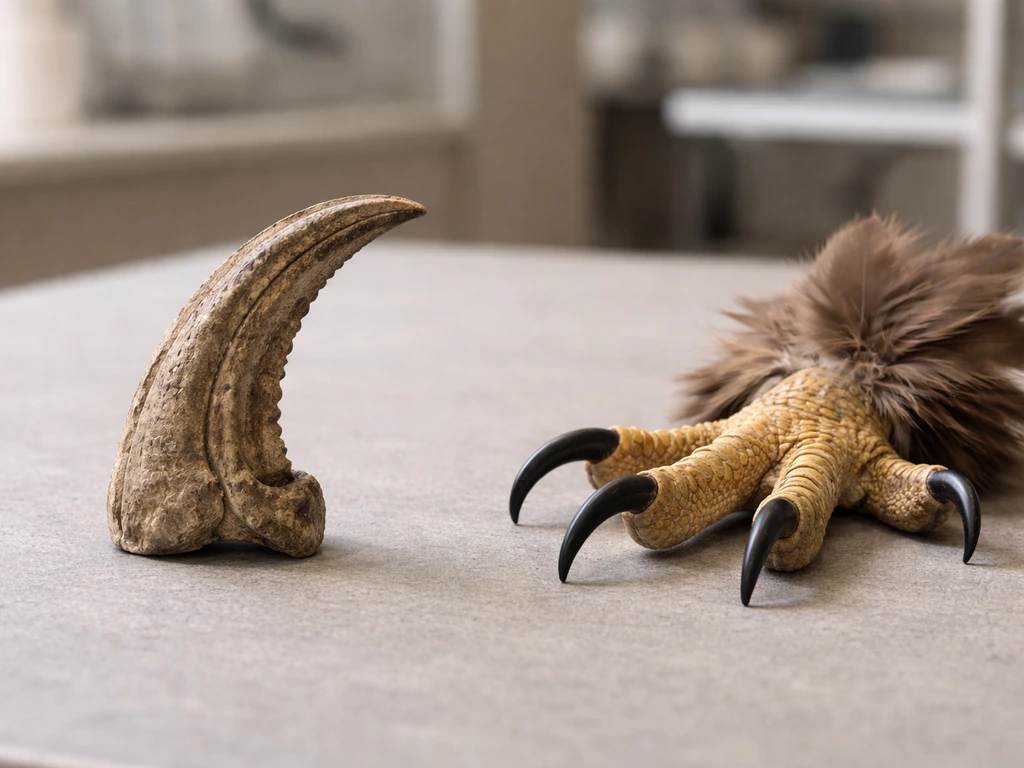
Here is where it gets genuinely interesting. Birds and dinosaur 'raptors' are not unrelated. The Natural History Museum describes the scientific consensus that dinosaurs are the direct ancestors of birds, and that bird-like characteristics evolved in dinosaur lineages long before the first birds appeared. The American Museum of Natural History explains that a specific group of theropod dinosaurs gave rise to birds over millions of years. The U.S. National Park Service phrases it this way: 'birds are the only members of the dinosaur lineage alive today.'
That means when you watch a red-tailed hawk circle overhead, you are technically looking at a descendant of the same broad lineage that includes Velociraptor. The traits appeared gradually: feathers showed up in many dinosaur groups before anything we would call a bird existed. Archaeopteryx is often cited as an early transitional form, but the Natural History Museum notes that dinosaurs had been developing bird-like characteristics well before Archaeopteryx appeared in the fossil record.
So the relationship between modern raptors (birds of prey) and dinosaur 'raptors' is real, but it is an evolutionary lineage relationship, not a classification equivalence. A hawk is not a Velociraptor. A Velociraptor was not a bird. But they share deep ancestry, and that is exactly why feathered dinosaur fossils like Microraptor and Velociraptor are so scientifically significant. Microraptor, for example, is often discussed as a feathered dinosaur rather than a modern bird. If you want to dig further into the microraptor side of that story, or into the broader question of where the bird line actually begins, both of those are worth their own look.
The bottom line: if someone says 'raptor' without any dinosaur context, they mean a bird. Specifically, a living predatory bird with talons, a hooked beak, and a place in Class Aves. So a secretary bird, when described as a raptor, fits that everyday meaning as a predatory bird of prey living predatory bird. The dinosaur usage is a pop-culture overlay on a word that has belonged to birds of prey for centuries, and once you know that, the confusion disappears pretty fast.
FAQ
If “raptor” is a bird, does that also apply to owls and secretary birds?
Yes. In everyday usage, raptor means a bird of prey, so owls and hawks, falcons, and eagles fit. A secretary bird is trickier because it hunts differently than many falcons or hawks, but it is still treated as a predatory bird of prey rather than a “raptor” in the dinosaur sense.
Can the word “raptor” mean two different things in the same conversation?
It can, and context matters. If you are discussing Jurassic Park, fossils, or dinosaur names ending in -raptor, it is being used for non-bird dinosaurs. If you are discussing wildlife, nest sites, talons, or field guides, it is being used for living birds in Class Aves.
Are all birds with sharp talons automatically called raptors?
Not always. Many birds have claws, but “raptor” usually signals specialized hunting adaptations like strong talons plus a hooked beak and predatory diet. Birders may avoid the term if the bird is scavenging or more opportunistic rather than specialized.
Does having feathers automatically make something a bird?
No. Feathers can appear in different evolutionary lineages, including some extinct dinosaur groups. To count as a bird in a taxonomic sense, the animal must fall within the bird lineage, not just have feather-like structures.
Where is the “line” that turns a feathered dinosaur into a bird?
There is not a single visible moment. Biologists use evolutionary relationships and diagnostic traits to define the bird lineage, and those traits accumulate gradually over time. So you may see transitional fossils described as “bird-like dinosaurs” rather than fully fledged birds.
If Velociraptor had quill knobs, does that mean it could fly like a bird?
Not necessarily. Quill knobs suggest feather attachment, but flying requires additional traits like an appropriate wing structure, muscle and bone proportions, and supportive mechanics. Many feathered dinosaurs likely used feathers for insulation, display, or limited gliding rather than powered flight.
Why do some people say “dinosaur raptors” as if it is the same category as birds of prey?
Because pop culture and naming overlap can blur categories. “Raptor” in dinosaur contexts describes behavior, labels, and genus naming patterns, not the modern bird taxonomy used for eagles, hawks, falcons, and owls.
When I see the word “raptor” on a sign or in a rehabilitation center, what should I assume it means?
Assume it means living birds of prey unless the material explicitly mentions dinosaurs, fossils, or specific -raptor genus names. Rehabilitation and conservation programs use the word to refer to current wildlife species.
Next Articles
Is a Dragonfly a Bird? How to Tell the Difference
Dragonflies are insects, not birds. Learn key bird traits vs dragonfly anatomy to tell them apart fast.

Is a Flyer a Bird? How to Tell Flyers From Real Birds
No. Flyers aren’t automatically birds; true birds have feathers, beaks, bird anatomy, and breeding traits, not just flig
Is a Dragon a Bird? Clear Science Verdict and Criteria
No: dragons are not birds. Learn bird criteria like feathers and reproduction and why real birds are theropod dinosaurs.