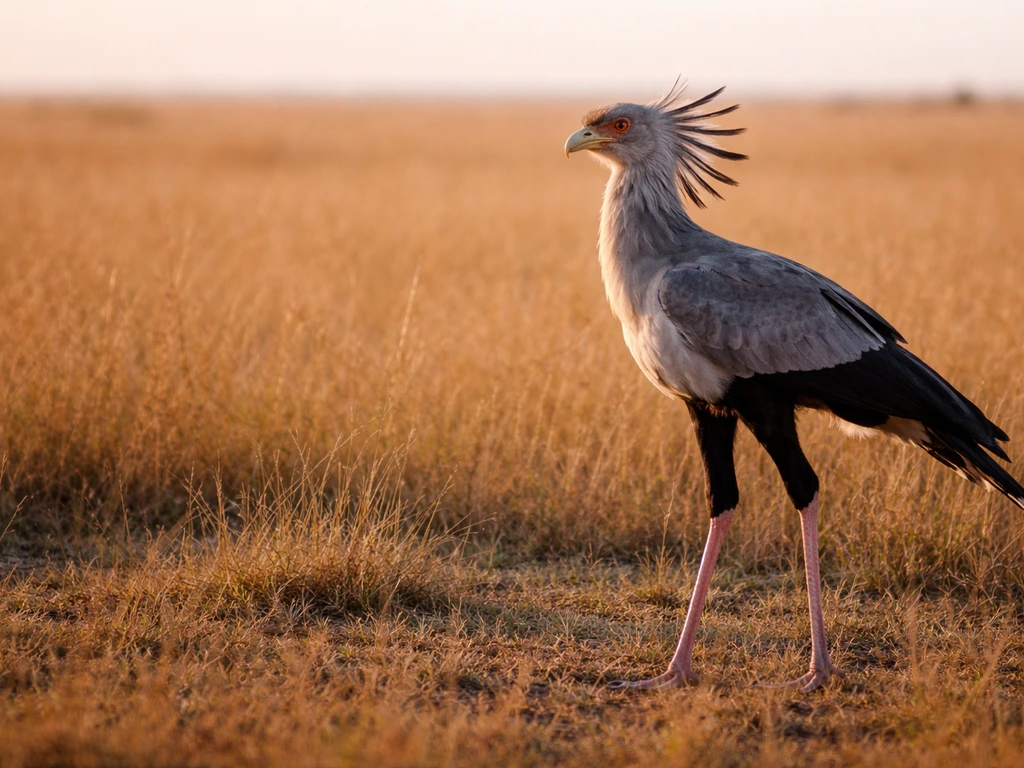
Yes, the secretary bird (Sagittarius serpentarius) is absolutely a raptor. It belongs to the order Accipitriformes, the same broad taxonomic group as hawks, eagles, and Old World vultures, and it ticks every biological box that defines a bird of prey: hooked beak, sharp talons, keen vision, and a carnivorous hunting lifestyle. The confusion mostly comes from how it looks, because with those absurdly long legs and that punk-rock head crest, it doesn't exactly look like a bald eagle. But looks can be deceiving, and the taxonomy and behavior here are both crystal clear.
Is a Secretary Bird a Raptor? Taxonomy and Field ID

Marcus Hendricks
10 Jun 2026
What 'raptor' actually means

This is where a lot of the online debate comes from, because 'raptor' gets used in at least two slightly different ways depending on who's talking. In everyday birdwatching language, raptor is essentially synonymous with 'bird of prey,' meaning any carnivorous bird that hunts using powerful feet and sharp talons. That's the definition you'll find from sources like the University of Minnesota Raptor Center and PBS: a raptor is a hunting bird adapted with a hooked beak, talons, and sharp eyesight. Under that broad definition, hawks, eagles, owls, falcons, vultures, and yes, secretary birds all qualify.
The narrower usage, which shows up in older scientific literature, restricts 'raptor' to the order Falconiformes as it was once defined, which historically bundled together hawks, eagles, falcons, and their relatives. Some older sources (like older Animal Diversity Web entries) still use Falconiformes and place the secretary bird there. Modern taxonomy has split that group up significantly, moving secretary birds into Accipitriformes alongside hawks and eagles while falcons got their own order (Falconiformes in the current sense). Either way, the secretary bird ends up grouped with raptors. So whether you're using the everyday definition or the taxonomic one, the answer doesn't change.
Secretary bird classification: family, genus, and where it sits
The secretary bird is the sole living member of the family Sagittariidae, genus Sagittarius. That makes it genuinely unique: there is no other bird alive that belongs to its family. The full classification under modern IOC taxonomy (and confirmed by sources including the U.S. Fish and Wildlife Service, NCBI's taxonomy browser, and BirdGuides) is Order Accipitriformes, Family Sagittariidae, Genus Sagittarius, Species Sagittarius serpentarius.
Accipitriformes is the raptor order that also contains Accipitridae, the family of hawks, eagles, kites, harriers, and Old World vultures. So the secretary bird is not just loosely associated with raptors, it's genuinely nested within the same order as some of the most iconic birds of prey on earth. Think of it like being the only child in a family full of eagles. Weird and distinctive, but still very much part of the family.
Why secretary birds are raptors: anatomy and how they hunt
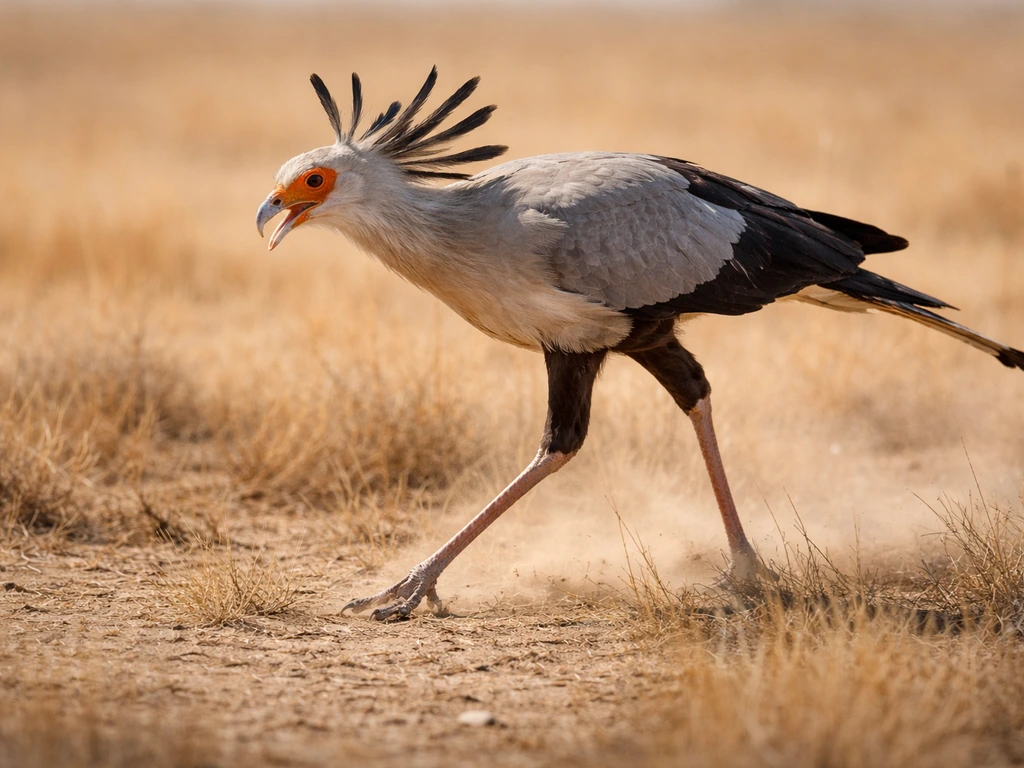
The physical traits line up exactly with what defines a raptor. Secretary birds have a strong, curved hooked beak (described as light grey and clearly raptorial in shape), sharp claws used to grasp and kill prey, and the acute vision characteristic of birds of prey. The Peregrine Fund notes they also have the longest legs of any bird of prey, which is where their hunting style gets genuinely wild.
Instead of swooping down from the sky like a hawk or eagle, secretary birds stalk prey on foot across African grasslands and then stomp it to death. This is not a metaphor. Research published in Current Biology, covered by Phys.org and the Royal Veterinary College, measured the kicking strikes of a trained secretary bird and found it generates force roughly five times its own body weight. That's enough to stun or kill prey, including snakes, in the blink of an eye. The large feet and sharp claws deliver the killing blow, the same tools other raptors use in aerial strikes but applied through a completely different delivery method.
This terrestrial hunting style is unusual among raptors but doesn't disqualify the bird from the category. Scientific American explicitly frames secretary birds as raptors adapted for ground-based predation rather than aerial hunting. The tools are the same; the technique is their own invention.
Common confusions and non-raptor comparisons
The long legs are almost entirely responsible for the confusion. If you’re also wondering whether other famous “raptors” like Microraptor are birds, that’s a different (and commonly confused) classification question. When people see a tall, long-legged bird striding through grassland, the brain reaches for familiar templates: crane, stork, heron. These wading birds share the long-leg silhouette but have straight, pointed bills designed for catching fish or probing mud, not the curved hooked beak of a raptor. A secretary bird's head is unmistakably raptorial once you see it up close, with that hooked beak and those piercing eyes.
The dramatic black crest of feathers on the back of the head adds to the exotic look, and it's actually how the bird got its common name: those quill-like feathers resemble the quill pens that 18th and 19th century secretaries tucked behind their ears. That's a naming quirk based on appearance, and it's pulled plenty of people into thinking the secretary bird is something unusual or unclassified. It is unusual, but it is still very much a raptor.
Britannica specifically highlights that the secretary bird is unique among birds of prey for being essentially terrestrial in its habits, which sets it apart visually from typical raptors without changing what it is biologically. Another source of confusion is that some older references list it under Accipitridae (the hawk/eagle family) rather than the now-accepted Sagittariidae, so you might find conflicting family names depending on when the source was written. Both placements still put it firmly in raptor territory.
How to identify a raptor in the field (practical checklist)
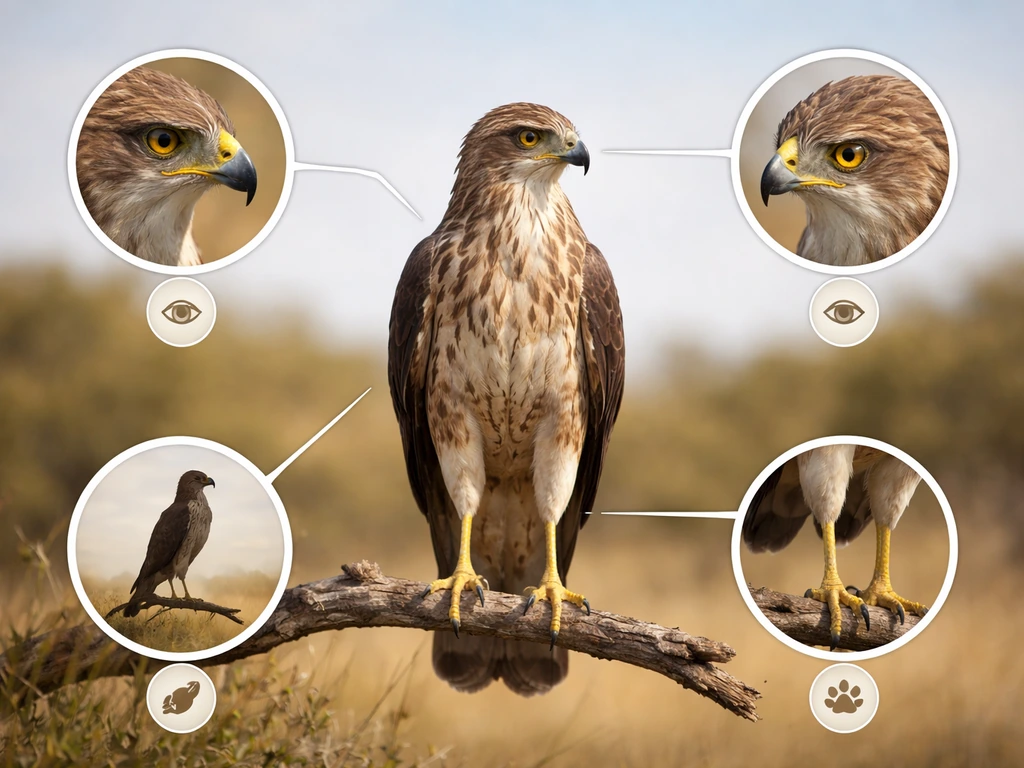
If you're trying to confirm whether a bird you're looking at is a raptor, here's what to check. These traits apply to secretary birds just as much as to more familiar raptors like red-tailed hawks or ospreys.
- Beak shape: Look for a hooked, curved bill designed for tearing meat. Wading birds like herons and storks have long, straight, pointed bills. A secretary bird's beak is clearly hooked at the tip.
- Feet and claws: Raptors have powerful feet with sharp, curved talons for gripping and killing. Secretary birds have large, strong feet with sharp claws they use to stomp prey with tremendous force.
- Eyes: Raptors have large, forward-facing eyes with exceptional visual acuity. Secretary birds share this feature, with eyes positioned for binocular depth perception.
- Diet and hunting behavior: Raptors are carnivorous hunters. Secretary birds prey on snakes, lizards, small mammals, and large insects, actively hunting and killing prey.
- Head features: Many raptors have a distinct raptorial head profile. On a secretary bird, look for the hooked beak combined with that unmistakable black feather crest, which is unique but still belongs to a bird-of-prey body plan.
- Body proportions: While secretary birds have unusually long legs for a raptor, the upper body, wings, and head are clearly raptor in structure. The overall silhouette in flight reveals broad wings typical of Accipitriformes.
- Behavior: Watch how it interacts with prey. If it's stomping, striking, or using its feet offensively to subdue animals, that's raptorial behavior even if the method looks different from aerial hunting.
Where the confusion actually comes from
A few things consistently push people toward the wrong conclusion. First, the name itself. 'Secretary bird' sounds like it belongs in an office, not in a raptor family. Nothing about that name signals 'bird of prey,' so people approach it without the right mental frame and then get thrown by the unusual appearance.
Second, taxonomic inconsistency across sources. Depending on whether you're reading a current source using IOC taxonomy, an older source using legacy Falconiformes classifications, or a zoology textbook from 20 years ago, you might see the secretary bird placed in different families or orders. That's not because scientists are confused about what it is, it's because taxonomy gets refined as we learn more. The consistent thread across all of them is that it's a bird of prey.
Third, the terrestrial lifestyle genuinely is unusual. People expect raptors to fly high and dive, because that's the classic hawk-and-eagle image. When a bird of prey walks through the grass on long legs and kills snakes by kicking them, it doesn't match the mental model. The Journal of Raptor Research has even published commentary noting that 'raptor' and 'bird of prey' definitions aren't always consistently applied across references, which contributes to the kind of mixed answers people find when searching online.
This site covers a lot of classification questions in the raptor space, and the secretary bird is one of the more interesting cases because the confusion is genuinely understandable, even if the answer is clear. Questions like what makes a bird a raptor in the first place, or whether prehistoric and fictional creatures deserve the raptor label, run into similar definitional debates. But what about other clawed hunters like velociraptors. Is a velociraptor a bird?
If you're wondering the same thing for a different term, the secretary bird is a raptor, so yes, it is a bird of prey Is a raider a bird. What makes a bird a raptor, in short, comes down to predatory adaptations like hooked beaks, strong talons, and hunting behavior. But for the secretary bird, the science is settled: it's a raptor, full stop.
Secretary bird vs other raptors: a quick comparison
| Trait | Secretary Bird | Typical Hawk/Eagle | Owl |
|---|---|---|---|
| Order | Accipitriformes | Accipitriformes | Strigiformes |
| Family | Sagittariidae (unique) | Accipitridae | Strigidae / Tytonidae |
| Beak | Hooked, curved | Hooked, curved | Hooked, curved |
| Talons | Sharp, large, used for stomping | Sharp, used for grasping/killing in flight | Sharp, used for grasping prey |
| Hunting method | Terrestrial, stomping prey | Aerial diving and grasping | Mostly aerial, nocturnal ambush |
| Leg length | Extremely long (longest of any raptor) | Short to moderate | Short to moderate |
| Distinctive feature | Black quill crest, long legs | Varies by species | Facial disc, ear tufts (many species) |
| Raptor classification | Yes | Yes | Yes (under broad definition) |
The takeaway from that table is that the secretary bird shares every core raptor trait, it just expresses them in an unusual package. Long legs and a ground-hunting style are adaptations to a specific ecological niche in African savannas, not signs that it's something other than a raptor. Evolution does this all the time: the tools stay the same, the strategy changes to fit the environment.
FAQ
If it hunts on the ground, does that mean a secretary bird is not a raptor?
Yes. Secretary birds are raptors even though they hunt on the ground, they still have the raptorial features used to define birds of prey, a hooked beak, grasping claws, and strong predatory vision. Their stalking and stomping method is simply an alternative hunting strategy to aerial pursuit.
Why do some sources place secretary birds in different families than hawks and eagles?
In most modern bird guides, you should not expect the secretary bird to be grouped with hawks and eagles under Accipitridae, because its family is Sagittariidae. Some older references list it differently, but the current consensus keeps it within the raptor order Accipitriformes.
How can I tell a secretary bird apart from herons, storks, or cranes when I’m far away?
The cleanest field mark is the combination of long, relatively straight legs with a curved, hooked beak, plus the head and eye feel of a “predator” rather than a wader. Wading birds may look similar in silhouette, but their bills are typically straight and suited to probing or catching fish.
Do secretary birds hunt like hawks, by diving from the air?
Not exactly. A secretary bird can fly and does so for movement and safety, but its defining hunting behavior is terrestrial stalking and striking. If you are watching grassland hunts, focus on walking, stalking, and the leg-kick killing technique rather than expecting sky-high dives.
Are secretary birds only snake hunters?
Sometimes, but not usually. Secretary birds target a range of prey, including reptiles like snakes, and they can also take small mammals and birds depending on availability. Their specialization is strong in open habitats where snakes are common, but it is not exclusively one prey type.
When people say “raptor,” do they always mean the same thing?
Yes, but only in a limited sense. The term raptor can be used broadly to mean birds of prey in everyday language, and that is why owls and vultures often get included in casual discussion. The more consistent approach for identification is to look for raptorial anatomy and predatory hunting behavior, not just one definition.
What practical signs should I check to confirm a bird is a raptor, not just “bird of prey” in general?
If you are trying to confirm whether a sighted bird is a raptor, prioritize visible traits: a hooked beak, strong grasping feet, and a hunting style that involves capturing prey rather than filter-feeding or scavenging. For secretary birds specifically, the long legs are a clue, but the hooked beak and predatory head profile are the decision makers.
Are secretary birds closer to eagles/hawks or to falcons?
They are related to raptors as a general category, but in a technical sense they are not the same as modern “raptors” you might see in the sky. Secretary birds belong to Accipitriformes, while falcons are in their own order, so if you want taxonomic accuracy, use order-level grouping rather than simply “all birds of prey.”
Does the feather crest on a secretary bird indicate it’s a raptor?
No. A secretary bird’s crest is distinctive, but it is not the main way to classify it as a raptor. The crest contributes to identification and the common name, but the raptor determination is based on predatory anatomy and behavior.
What’s a quick way to avoid mixing up secretary birds with long-legged wading birds during a single sighting?
If the bird you are looking at has long legs but straight, pointed bills and behavior focused on probing mud or picking at surface prey, it is more likely a wader than a secretary bird. When uncertain, compare hunting behavior first, raptors capture prey, waders typically forage by probing or pecking rather than stomping-killing.
Next Articles

Is a Velociraptor a Bird? The Science-Backed Answer
No. A velociraptor was a non-avian dromaeosaurid dinosaur, not a bird, even though it shared some bird traits.
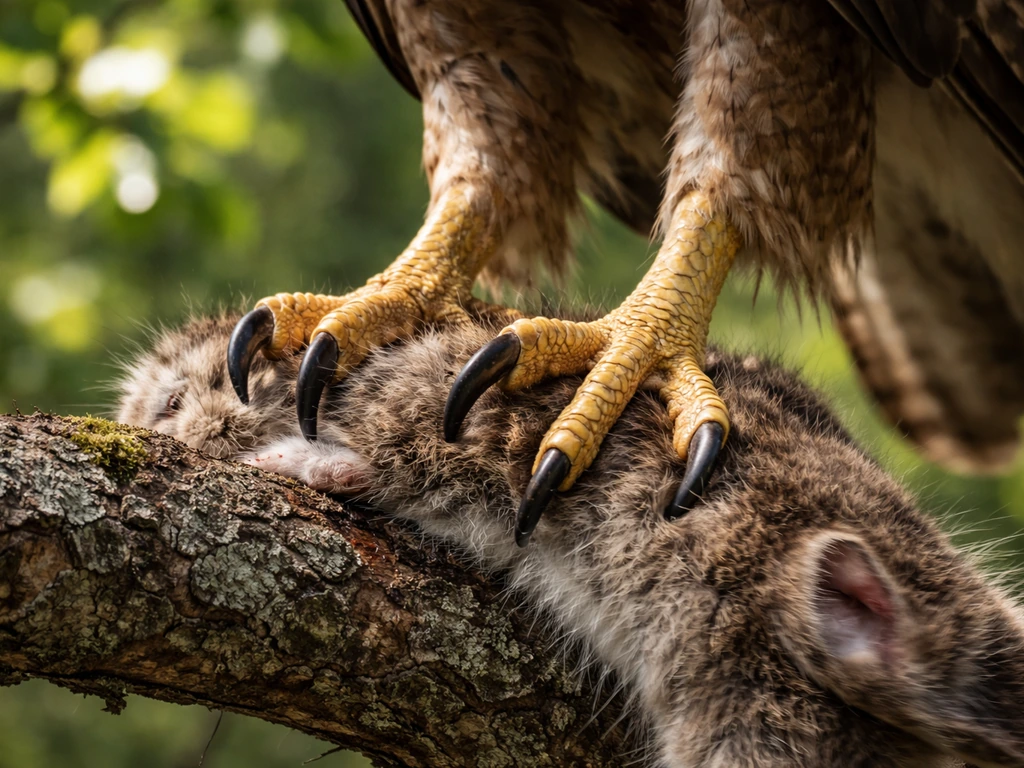
What Makes a Bird a Raptor: Traits and ID Checklist
Learn raptor defining traits and use a field checklist to ID birds of prey vs common look-alikes fast and accurately.
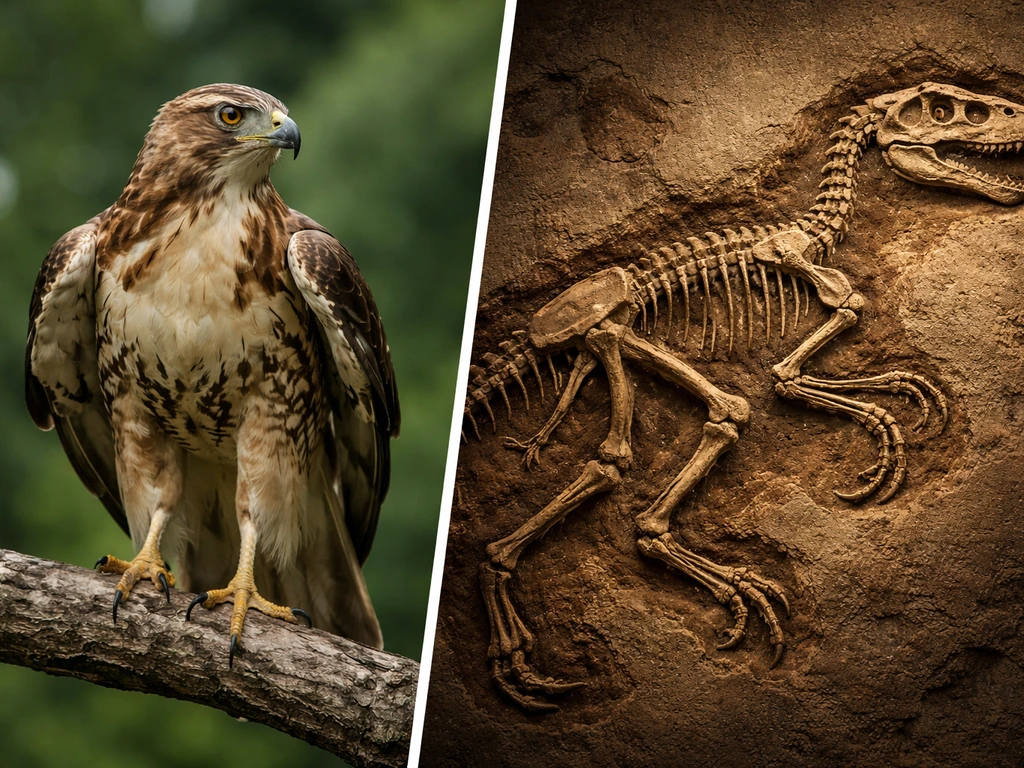
Is a Raptor a Bird? Birds of Prey vs Dinosaur Raptors
Clear verdict: raptors are birds of prey, not dinosaur names, and how real dinosaur raptor lineage connects to birds.