Title: Is a Condor a Bird? Taxonomy, Traits, and Bird of Prey Status Explained
Is Condor a Bird? Clear Answer, Taxonomy & ID Guide

Marcus Hendricks
7 Aug 2026

Meta description: Yes, condors are birds. Learn how condors fit into bird taxonomy, what makes them birds, and whether they qualify as birds of prey.
Yes, a condor is absolutely a bird. It has feathers, lays eggs, maintains a warm body temperature, and flies on wings shaped by millions of years of evolution. Condors belong to the family Cathartidae and the order Cathartiformes, placing them firmly within the class Aves. If you came here because someone online insisted condors are "not really birds" or are some kind of reptile, mammal, or mythical creature, you can put that debate to rest right now.
Two species, one massive bird
When people ask about condors, they are almost always talking about one of two living species. The California Condor (Gymnogyps californianus) is found in the western United States and Baja California, soaring over canyons, coastlines, and open country. It has a wingspan that commonly reaches around 9.5 feet (roughly 2.9 to 3.0 meters) and a body mass up to about 20 to 25 pounds (9 to 11 kg), making it the largest flying land bird in North America. The Andean Condor (Vultur gryphus) ranges along the Andes mountain chain of South America and is even bigger, with a wingspan up to approximately 3. Andean Condor, San Diego Zoo species account reports a wingspan commonly up to about 3.0–3.2 m (≈9.8–10.5 ft) with adult mass typically in the range of ≈7.7–15 kg Andean Condor — San Diego Zoo species account. 2 meters (about 10.5 feet) and adults sometimes exceeding 15 kg. Both species are unmistakable in the field: enormous, mostly black plumage, a bald or nearly bald head, and a ruff of white or pale feathers around the neck. That bare head, by the way, is not a design flaw. It is a hygiene adaptation for a bird that regularly buries its face inside a carcass.
Where condors sit in the bird family tree
Condors belong to the family Cathartidae, which contains all seven New World vulture species. Modern checklists, including the IOC World Bird List and the American Ornithological Society checklist, place Cathartidae in its own order: Cathartiformes. This is a clean, well-supported classification backed by molecular phylogenetic studies that have analyzed multiple gene loci and even whole-genome data. Those studies confirm that New World vultures form a distinct, monophyletic lineage, meaning they all share a common ancestor and that group contains only them.
There is a bit of interesting taxonomic history here worth knowing. In the 1980s and 1990s, DNA-DNA hybridization work by Sibley and Ahlquist proposed that New World vultures were more closely related to storks than to raptors. That idea generated a lot of debate and some checklists briefly placed Cathartidae near storks in the order Ciconiiformes. Subsequent sequence-based and genomic studies refuted that stork placement, and today the consensus is that cathartids sit in their own distinct order, Cathartiformes, with their precise evolutionary relationships to other bird orders still being refined but clearly separate from both storks and Old World vultures.
The avian checklist: why condors pass every test
If you want a concrete, biology-based answer to why condors are birds and not something else, run them through the standard avian trait checklist. Condors tick every box.
- Feathers: Condors are covered in feathers, the defining characteristic unique to the class Aves. No other living animal group has true feathers.
- Wings: A condor's forelimbs are fully modified into wings. With a wingspan that can exceed 10 feet, the Andean Condor has among the largest wing surface areas of any flying bird on Earth.
- Toothless beak: Like all modern birds, condors have a beak and no teeth. The bill is large, hooked, and built for tearing through tough hide and tissue.
- Egg laying (oviparity): Condors lay eggs and incubate them. California Condors typically lay a single egg per breeding attempt, and both parents share incubation duties.
- Endothermy: Condors are warm-blooded, regulating their internal body temperature independently of the environment, exactly as all birds do.
- Flight adaptations: Long, broad primary feathers, a lightweight but strong skeleton with hollow bones, and a deeply keeled sternum for powerful flight muscle attachment are all present in condors.
It is also worth noting the bald head directly. The featherless or sparsely feathered skin on a condor's head and neck is an adaptation, not a primitive or un-bird-like feature. It makes cleaning easier after feeding on carrion. Many other birds have bare facial skin for various functional reasons, from turkey vultures to cassowaries, so bare skin alone tells you nothing about whether an animal is a bird.
What actually makes a bird a 'bird of prey'
The term 'bird of prey' or 'raptor' gets used loosely, and that looseness is exactly why condors sit in a gray zone on this question. The classic working definition focuses on three things: a meat-based diet, a strongly hooked beak for tearing flesh, and powerful taloned feet used to seize and kill live prey. Under that strict functional definition, a true raptor hunts, captures, and kills its food. Think of an osprey, which has a reversible outer toe and spiked foot pads specifically engineered for gripping slippery fish, or a falcon that stoops at high speed to strike prey in midair.
The heron is a useful comparison here. A Great Blue Heron catches and eats live fish and frogs, but nobody calls it a raptor because its strategy is ambush with a spear-like bill, not grasping with powerful talons. Similarly, how a bird captures and subdues its prey matters as much as what it eats when applying the raptor label. For a direct comparison, see Is a heron a bird of prey to learn how herons match the raptor criteria and why they’re usually not classified as true birds of prey.
Are condors birds of prey? The honest answer is: it depends on who you ask
Condors are obligate scavengers. They feed almost entirely on carrion, meaning dead animals they locate by soaring high and scanning with sharp eyesight. They do not hunt or kill live prey. Their feet reflect this: the talons are relatively blunt compared to those of a hunting hawk or eagle, and the feet are better suited to walking on a carcass and holding it steady than to seizing and killing a live animal. Under the strict biological definition of 'raptor' (a bird that hunts and kills live prey with its feet), condors fall short.
That said, many raptor organizations, U.S. Fish and Wildlife Service educational materials, and avian rehabilitation programs include vultures, including condors, under the 'birds of prey' or 'raptor' umbrella for conservation and outreach purposes. The logic is practical: condors share a hooked beak, a meat-based diet, and a general body plan with hawks and eagles, and grouping them together is useful for public education and conservation policy. So you will find both answers in legitimate sources, depending on whether the definition being applied is strict ecological/morphological or broad educational. If precision matters, condors are scavenging birds closely related to other birds of prey but not raptors in the hunting sense. This is a topic worth exploring in more depth if you want to compare condors specifically against the raptor classification criteria.
Condors, ospreys, herons, and buzzards: a side-by-side look
One reason people get confused about condors is that several large, impressive birds get lumped together in casual conversation. Putting them in a table makes the distinctions much clearer.
| Bird | Order/Family | Diet | Hunting method | Foot type | Raptor status |
|---|---|---|---|---|---|
| California/Andean Condor | Cathartiformes / Cathartidae | Carrion (obligate scavenger) | Locates dead animals by sight; no live hunting | Relatively blunt talons; feet for walking and stabilizing | Broad: often included as 'bird of prey'; strict: no |
| Osprey | Accipitriformes / Pandionidae | Live fish (obligate piscivore) | Dives feet-first to catch fish at water surface | Reversible outer toe, spicule pads, sharply curved talons | Yes, classic raptor |
| Great Blue Heron | Pelecaniformes / Ardeidae | Fish, frogs, small mammals | Ambush; spears prey with long beak while wading | Long toes for standing in water; no raptorial talons | No |
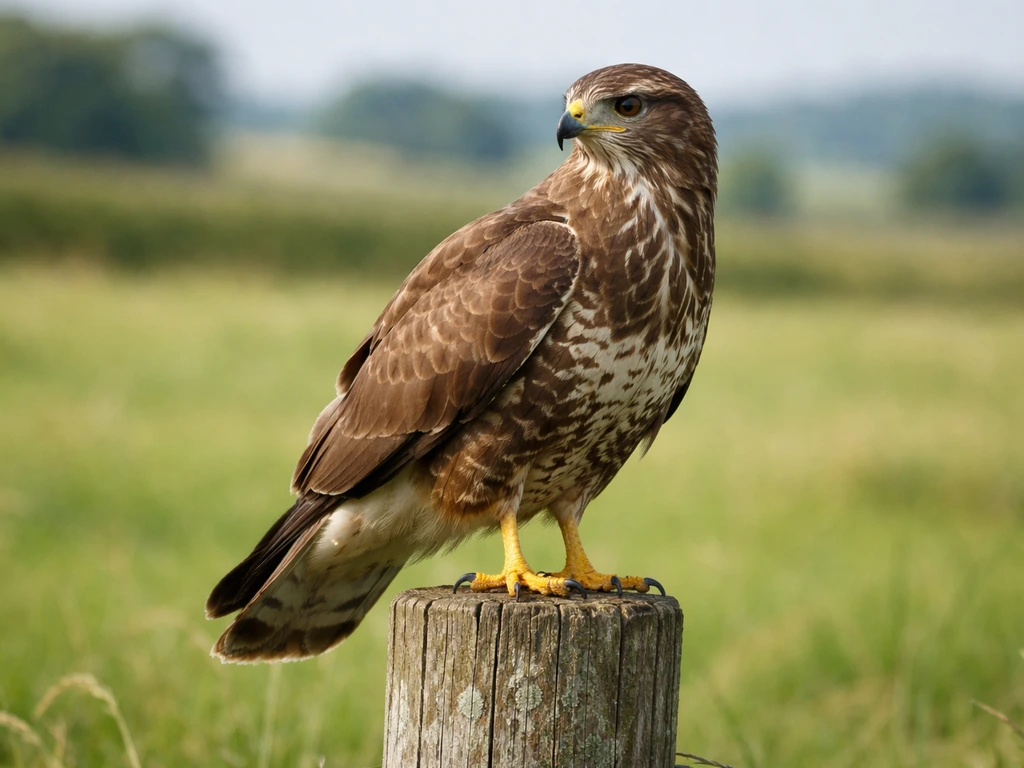
| Buzzard (Buteo, Europe) | Accipitriformes / Accipitridae | Small mammals, carrion, earthworms | Active hunting and opportunistic scavenging | Strong curved talons for grasping prey | Yes, true hawk |
| Buzzard (North American colloquial, i.e. turkey vulture) | Cathartiformes / Cathartidae | Carrion | Scavenging by sight and smell | Relatively blunt talons | Same gray zone as condors |
That last row is worth pausing on. In North America, 'buzzard' is commonly used as a colloquial name for the turkey vulture and sometimes for other vultures. If you’re wondering 'is a buzzard a bird of prey', the answer depends on region: European buzzards (Buteo) are true raptors, while North American use of 'buzzard' often means turkey vultures, which are scavengers. In Europe, 'buzzard' means a Buteo hawk, a genuine hunting raptor. The word alone tells you almost nothing until you know where the speaker is from. The Eurasian Common Buzzard (Buteo buteo) is a true raptor with the talons and hunting behavior to match. The 'buzzard' soaring over a Texas highway is almost certainly a turkey vulture with the same scavenging lifestyle as a condor.
How to identify a condor in the field
If you are in condor country and want to confirm what you are looking at, a few features are diagnostic.
- Size: Nothing in North America flying over land comes close in wingspan. If it looks implausibly large compared to other soaring birds sharing the same thermal, it is probably a condor.
- Wing shape: Condors hold their wings flat and horizontal when soaring, unlike Turkey Vultures, which hold wings in a shallow V (dihedral) and rock side to side.
- Plumage: Adults are mostly black with a broad white triangle or band on the underwing (the white inner secondary coverts). This white patch is visible from a great distance.
- Bald head: At closer range, the bare orange-red (California) or red-orange-yellow (Andean) head skin is distinctive.
- Wing tags: California Condors released as part of the recovery program are tagged with large numbered wing tags, usually visible in flight through binoculars.
- Flight style: Condors are expert thermal soarers and can remain airborne for hours with minimal flapping, covering enormous distances.
Conservation: two species in very different positions
Knowing that condors are birds is one thing. Knowing that two of the most impressive birds in the world are under serious threat adds urgency to that knowledge. The California Condor is listed as Critically Endangered on the IUCN Red List, and the long-running U.S. Fish and Wildlife Service California Condor Recovery Program has coordinated captive breeding, wild releases, and threat mitigation over several decades to pull the species back from the brink of extinction. The Andean Condor is listed as Vulnerable following a recent IUCN Red List reassessment (upgraded from Near Threatened), with population declines documented in parts of its South American range. Both species face threats from lead poisoning (ingesting fragments in carcasses from lead-based ammunition), habitat loss, and human disturbance.
Common confusions worth clearing up
A few misconceptions about condors come up regularly, and they are all easy to address. First, condors are not related to Old World vultures. Despite looking superficially similar and filling the same ecological role, African and Asian vultures belong to the family Accipitridae within Accipitriformes. New World vultures like condors evolved their scavenging lifestyle independently. Second, the bare head does not mean condors are 'primitive' or transitional animals. It is a specialized adaptation, not a lack of one. Third, condors being scavengers does not disqualify them from being birds or even birds of prey in the broad sense. Scavenging is a perfectly complete ecological strategy, and plenty of certified raptors (including Bald Eagles) will eat carrion when given the opportunity.
If you want to go deeper on how condors compare specifically against the raptor classification criteria, or how other large birds like the osprey measure up against those same standards, those are genuinely interesting questions that get into foot morphology, hunting behavior, and the sometimes arbitrary lines we draw in taxonomy and common naming.
FAQ
Title
Is a Condor a Bird — and Is It a Bird of Prey?
Meta description
Yes — condors are birds (family Cathartidae, order Cathartiformes). They’re scavenging vultures often included under 'birds of prey' in outreach.
Short definitive answer
Yes. Condors are birds: large New World vultures in family Cathartidae (order Cathartiformes). They are obligate scavengers, but many authorities and educators include vultures like condors under the broad term 'birds of prey' (raptors) for conservation and teaching; by a narrow, classical definition requiring powerful grasping talons used to kill prey, condors are not typical raptors.
Condor taxonomy summary
Condors belong to the New World vulture family Cathartidae and are treated by major checklists (e.g., IOC, AOS) in the order Cathartiformes. The two well‑known species are the California Condor (Gymnogyps californianus) and the Andean Condor (Vultur gryphus). Molecular and genomic studies support cathartids as a distinct, monophyletic lineage separate from Old World vultures and storks.
Key avian traits that confirm condors are birds
Condors show the core bird characteristics: feathers (unique to birds), forelimbs modified as wings for flight, a toothless, hooked beak, oviparity (egg laying), endothermy (warm‑blooded physiology), and skeletal/respiratory adaptations for soaring flight (large wings, lightweight bones, strong keel for flight muscles). These features place condors firmly within Aves.
What 'bird of prey' or 'raptor' means and whether condors qualify
'Bird of prey' or 'raptor' commonly refers to diurnal birds that kill and eat vertebrate prey using hooked beaks and strong, grasping talons (hawks, eagles, falcons, osprey). Vultures are primarily scavengers that feed on carrion and have feet adapted more for walking and holding carrion than for seizing live prey. Because of their scavenging ecology and less raptorial feet, condors don’t match the narrow functional definition of a raptor, but many educational and conservation programs include vultures as 'birds of prey' for outreach and management purposes.
Next Article
Is a Buzzard a Bird of Prey? Taxonomy and Identification
Yes, buzzards are raptors and birds of prey. Learn how to identify them and avoid hawk owl eagle lookalikes.