Herons are not birds of prey. They are predatory birds, yes, but that is not the same thing. 'Bird of prey' has a specific meaning in ornithology: it refers to raptors like hawks, eagles, falcons, owls, and vultures, birds built around powerful talons and hooked bills for seizing and tearing prey. Herons catch fish, frogs, and small mammals, but they belong to a completely different taxonomic group and hunt in a completely different way. The confusion is understandable, but the classification is clear.
Is a Heron a Bird of Prey? What Taxonomy Says

Marcus Hendricks
27 May 2026
What 'bird of prey' usually means
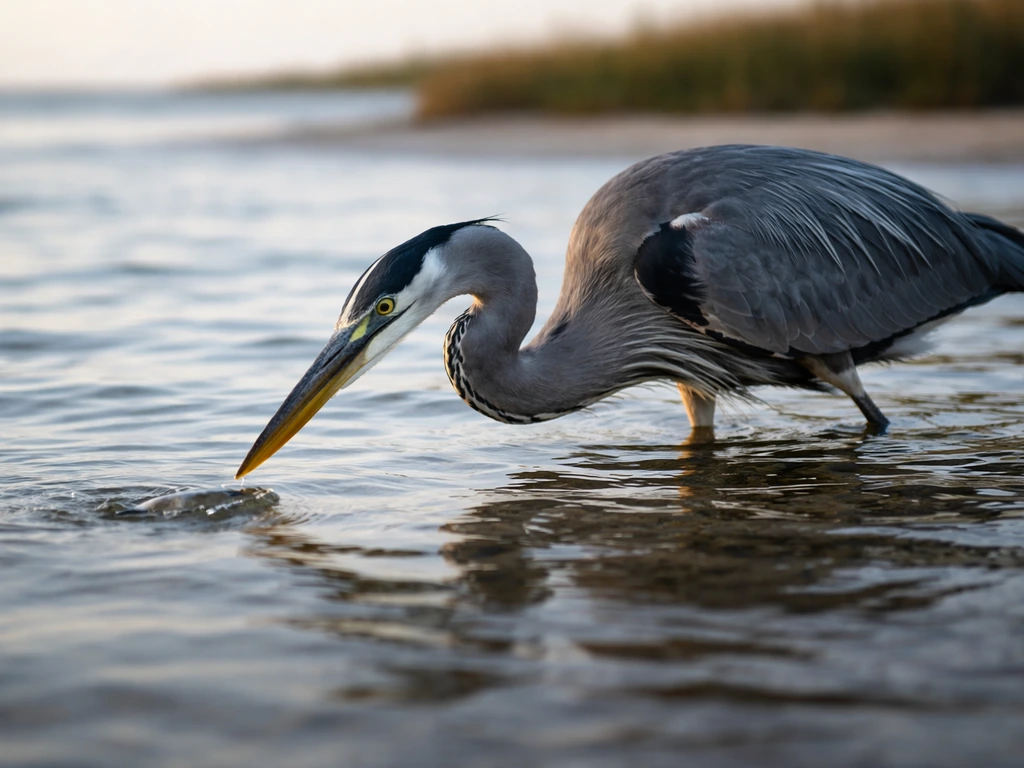
The term 'bird of prey' is used interchangeably with 'raptor,' and while it sounds like it should mean any bird that eats other animals, it actually describes a much more specific group. blank" rel="noopener noreferrer">According to PBS Nature, raptors are birds adapted for hunting or scavenging with a recognizable set of physical tools: powerful feet with sharp talons, hooked bills for tearing flesh, and exceptionally keen eyesight. The National Park Service describes raptors as an 'artificial grouping' covering two main orders: Falconiformes (diurnal raptors like hawks, eagles, and falcons) and Strigiformes (owls). Britannica adds vultures to the list and notes that the blank" rel="noopener noreferrer">hook-tipped beak and curved talons are the defining physical hallmarks.
U.S. federal law (16 USC §460iii-1) explicitly names eagles, falcons, owls, and hawks as the core members of this group. The key point is that being carnivorous does not automatically make a bird a raptor. Penguins eat fish. Storks eat frogs. Kingfishers snatch prey from water. None of them are raptors. The 'bird of prey' label is reserved for birds whose entire body plan is organized around aerial hunting with feet as the primary weapon.
Heron basics: where herons fit in bird taxonomy
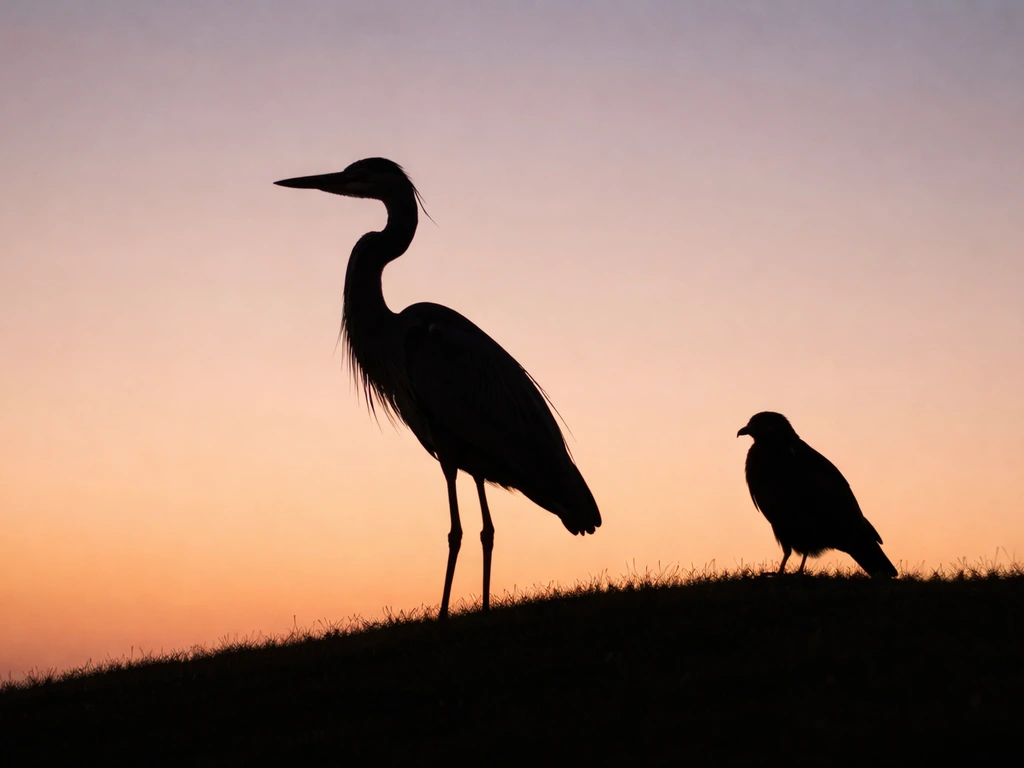
Herons belong to the family Ardeidae within the order Pelecaniformes (some older classifications place them in Ciconiiformes, but modern molecular taxonomy puts them with Pelecaniformes). This puts them closer to pelicans and ibises than to any hawk or eagle. There are around 64 recognized heron species worldwide, including the Great Blue Heron (Ardea herodias) in North America, the Grey Heron (Ardea cinerea) across Europe and Asia, and the compact Green Heron (Butorides virescens). They are wading birds, long-legged and long-necked, built for standing in shallow water rather than soaring and stooping from height.
Physically, herons look striking and large, which is part of why people sometimes assume they must be 'predatory birds' in the raptor sense. A Great Blue Heron can stand nearly 4.5 feet tall with a wingspan of around 6 feet. But size and a fierce-looking stare do not put a bird in the raptor category. Their feet are not built for gripping and killing prey the way a hawk's talons are, and their bills are long, straight, and dagger-like rather than hooked.
Do herons hunt like raptors? Compare hunting style and traits
The difference in hunting technique is really the clearest way to see why herons are not raptors. Raptors typically use speed, aerial pursuit, and powerful feet to grab prey. An osprey dives feet-first into water to snatch fish with specially adapted gripping pads on its toes. A peregrine falcon stoops at over 200 mph to strike birds mid-air. A red-tailed hawk perches high, spots prey with extraordinary vision, and drops talons-first onto small mammals. The feet do the killing.
Herons do the opposite. They stand motionless in or near water, sometimes for long stretches, waiting for prey to come within range. When the moment is right, they strike with a rapid thrust of their long neck, spearing or grabbing prey with their bill. The neck, not the feet, is the weapon. Herons are 'stand-and-wait' ambush predators, and their anatomy reflects that: the kinked S-shaped neck is a storage mechanism for a lightning-fast forward strike, not a feature you find in raptors.
| Trait | Herons (Ardeidae) | Raptors (Hawks, Eagles, Owls, etc.) |
|---|---|---|
| Taxonomic order | Pelecaniformes | Falconiformes / Strigiformes / Accipitriformes |
| Primary weapon | Dagger-like bill (stabbing/grabbing) | Curved talons (gripping/killing) |
| Bill shape | Long and straight | Short and hooked |
| Feet | Long toes for wading, not for gripping prey | Powerful feet with sharp, curved talons |
| Hunting method | Stand-and-wait ambush at water's edge | Aerial pursuit or perch-and-drop attack |
| Prey transport | Swallowed whole or carried in bill | Carried in feet/talons |
| Neck shape | S-curved for strike mechanism | Short and strong, not a strike mechanism |
| Typical habitat | Wetlands, shorelines, shallow water | Open country, forests, cliffs, varied |
So, are herons birds of prey? The verdict
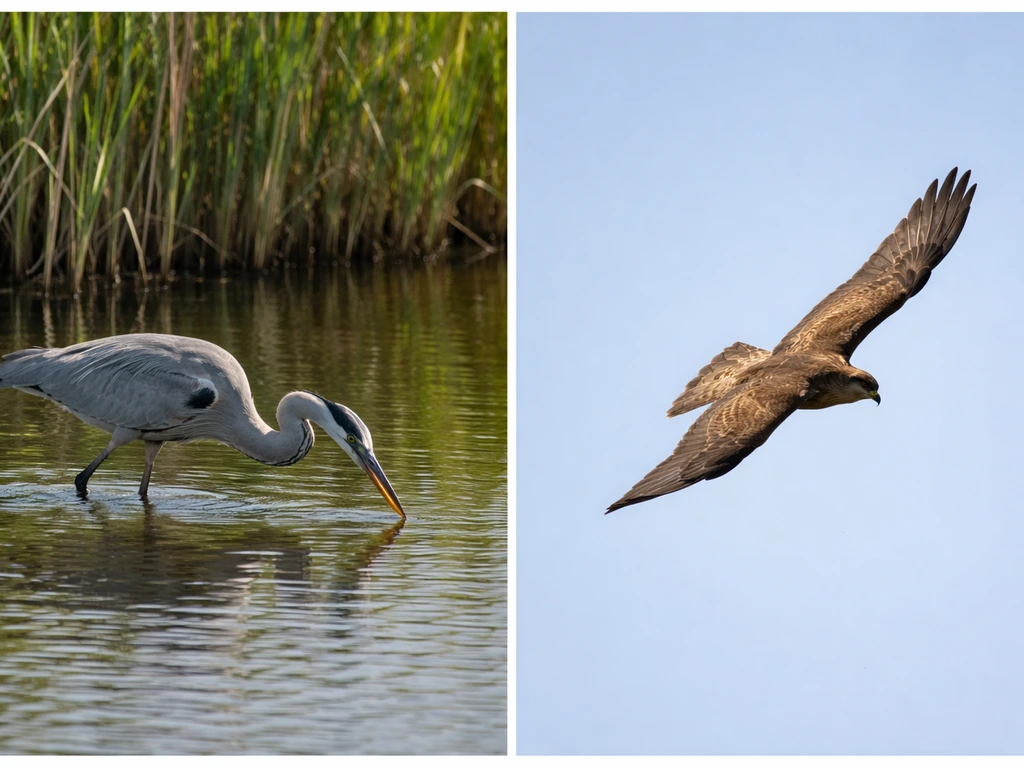
No. Herons are carnivorous birds, but they are not birds of prey in any recognized ornithological sense. As another comparison, you might also ask, is an osprey a bird of prey? They are wading birds in the family Ardeidae, and their hunting strategy, anatomy, and taxonomic placement all put them firmly outside the raptor group. If someone calls a heron a 'bird of prey' casually, they might just mean 'it hunts things,' which is true but not how the term is used by biologists, birders, or wildlife agencies. The formal definition, the one used by the NPS, PBS Nature, and U.S. federal law, requires the physical toolkit of a raptor: hooked bill, gripping talons, and hunting by foot-power. Herons have none of those.
Think of it this way: a lion is a predator, but you would not call it a cat of prey in the same breath as a cheetah and a leopard just because it hunts. The category exists because of shared physical adaptations, not just the fact of eating meat. The same logic applies here.
Why people confuse herons with raptors (and how to spot the difference)
It is easy to see why the confusion happens. Herons are large, serious-looking birds that eat live prey. When you watch a Great Blue Heron stab a fish out of a river with total precision, it feels like witnessing something raptor-level. Add in the fact that herons sometimes soar on broad wings at height, and a casual observer can convince themselves they are watching an eagle or a hawk. The sheer scale of a flying heron, with its wide wingspan and slow wingbeats, also reads as 'predatory bird' to a lot of people who are not birders.
Once you know what to look for, the difference is obvious in the field. When a heron flies, it folds its neck back into a tight S-curve, with its head pulled close to its body. Raptors (and most other large birds) fly with their necks extended. That tucked neck is the fastest way to separate a heron from a hawk or eagle at a distance. Also look at the bill: herons have a long, pointed, spear-like bill, while raptors have a short, curved, hooked bill. The leg length is another giveaway: herons trail long, stilt-like legs behind them in flight, while raptors tend to have shorter, more compact legs pulled close.
- Flying posture: herons fold the neck back into an S-shape; raptors extend the neck forward
- Bill shape: herons have a long, straight, pointed bill; raptors have a short, hooked bill
- Legs in flight: herons trail long legs behind the tail; raptors hold legs more compactly
- Wingbeat style: herons have a slow, deep, somewhat labored wingbeat; many raptors flap more quickly or soar with flat wings
- Habitat behavior: herons stand still in or near water; raptors perch on high points or hunt in the air
Quick takeaways and next steps for identifying similar birds
If you are building your bird identification skills, the main lesson here is to separate 'carnivorous bird' from 'bird of prey.' Lots of birds eat meat, but raptors are specifically defined by their physical adaptations, especially the taloned feet and hooked bill. Herons are wading birds that hunt by ambush with their bills. That puts them in a completely different category, no matter how fierce they look.
For practical next steps: when you see a large bird near water, look at the neck in flight first. That S-curve is the heron's calling card. If you are trying to identify raptors specifically, focus on the feet and bill when you get a good look, and check whether the bird is hunting from the air or from a perch rather than standing still at water level. If you want to explore which birds do and do not qualify as raptors, it is worth looking at some interesting edge cases: ospreys, for example, fish like herons but are genuine raptors with all the right physical credentials. Condors and buzzards are also worth understanding, since both get misclassified regularly in online discussions. Is condor a bird? It is, and it is often discussed alongside raptors and other large scavengers even though its classification details matter Condors and buzzards. Buzzards are classified as raptors, meaning they have the physical adaptations associated with birds of prey. Condors are sometimes mentioned alongside other raptors, but they should be identified based on the official definition of a bird of prey is a condor a bird of prey. Getting comfortable with these distinctions will make your field identification much sharper.
FAQ
If a heron hunts live prey, why do people call it a bird of prey anyway?
Many people use the phrase loosely to mean “carnivorous.” In ornithology and wildlife rules, “bird of prey” is tied to raptor adaptations, not just eating animals. That is why herons can be predatory but still not qualify.
Are all raptors the same as “birds of prey” for identification purposes?
In birding, “bird of prey” is essentially a practical label for raptors, but the core idea is the same: check for raptor traits (hooked bill and talon-gripping feet) and an aerial pursuit or perch-to-drop hunting style. If a bird lacks those anatomy cues, it is usually not a raptor.
Can a heron ever be mistaken for a hawk or eagle in flight?
Yes, especially if you only catch a brief distant view of a large, slow wingbeat. The best quick check is the neck position: herons often fly with the neck tucked into an S-curve, while hawks, eagles, and falcons typically hold their necks more extended.
Do herons have talons like hawks?
They have feet and claws, but their feet are not built as the main killing tool the way raptor feet are. Herons rely on a rapid neck thrust and bill strike at close range, so their overall body plan is centered on wading and ambush rather than seizing with gripping talons.
What should I look for if I cannot see the neck in flight?
Use the bill and hunting context. Herons usually have a long, spear-like bill and tend to hunt by standing still or slowly probing in shallow water. Rators are more likely to be scanning from height and striking with speed from above or from a perch.
Is an osprey a good example of what counts as a bird of prey?
Yes. Ospreys eat fish like herons, but they are raptors with the characteristic hunting toolkit and hunting behavior (including a feet-first plunge and specialized toe adaptations for gripping slippery prey). Diet overlap is not enough to decide the category.
Are all “wading fish eaters” excluded from being birds of prey?
Not automatically, but most wading fish-eaters that hunt by standing in water and striking with a bill are not raptors. If the bird is built for gripping with hooked talons and often hunts by aerial strike, that is when you should consider a raptor instead of a wader.
Why does taxonomy grouping matter here?
Taxonomy is a shortcut for shared ancestry and shared structural traits. Herons sit in the heron family (Ardeidae) and are closer to other water waders like ibises and pelicans than to hawks and eagles, so their anatomy and hunting strategy reflect that lineage rather than converging on raptor design.
Do legal definitions use the same “bird of prey” meaning as birders do?
They typically track raptors, but the exact list of covered species can be specific to regulations. If you are dealing with permits, recovery rules, or wildlife law questions, rely on the official species list in that rule rather than the casual meaning of “bird of prey.”
What are common field mistakes when identifying raptors versus herons?
Two big mistakes are (1) judging only by size and a “serious” stare, and (2) assuming all fish-eating birds are raptors. Another frequent issue is focusing on wing shape and missing the neck, bill, and hunting method, which are the fastest reliable identifiers.