Yes, a condor is technically a bird of prey under the broadest dictionary definition, but it is not a raptor in the way eagles, hawks, and falcons are. Condors are obligate scavengers that eat dead animals rather than hunting live prey, and they lack the sharp grasping talons that define classic raptors. The confusion comes from dictionaries like Merriam-Webster listing vultures under 'bird of prey,' while ornithologists and wildlife agencies draw a sharper line based on anatomy and behavior. The practical answer: condors are birds, they are carnivorous, but calling one a raptor in the same breath as a peregrine falcon or a red-tailed hawk is genuinely misleading.
Is a Condor a Bird of Prey? Answer and Key Differences

Marcus Hendricks
21 May 2026

What 'bird of prey' actually means
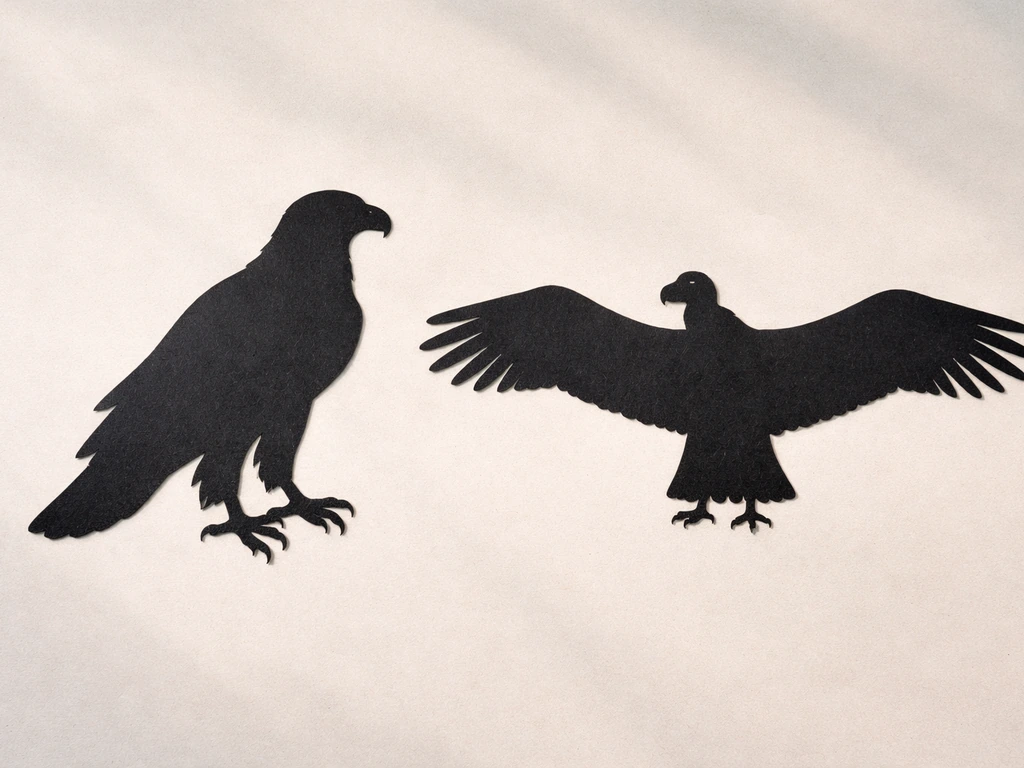
The phrase 'bird of prey' sounds precise but it is actually doing a lot of heavy lifting across two very different definitions. In everyday and dictionary use, Merriam-Webster defines it as a carnivorous bird that feeds chiefly on meat taken by hunting or on carrion, and explicitly treats it as a synonym for 'raptor.' Under that definition, vultures, condors, hawks, eagles, falcons, and owls all qualify. Britannica takes a similar wide-angle view.
In scientific and conservation circles, though, 'raptor' gets narrowed down meaningfully. The Raptor Center at the University of Minnesota, for example, describes raptors as carnivorous birds that capture and subdue prey using specialized morphology, particularly their feet and talons. That distinction matters a lot. If the hunting weapon is the foot, you are a raptor. If you are mostly circling above a carcass waiting to land and tear in, the label gets murkier. The U.S. Fish and Wildlife Service leans on this distinction explicitly when discussing condors, noting that condors do not have sharp talons capable of killing or grasping objects. That single anatomical fact does a lot of the sorting work.
What a condor actually is, taxonomically speaking
There are two living condor species. The California condor (Gymnogyps californianus) is one of the most endangered birds in North America. The Andean condor (Vultur gryphus) is the largest flying bird in the world by wingspan, stretching up to about 10.5 feet. Both belong to the family Cathartidae, which is the New World vultures group. This family also includes turkey vultures, black vultures, and king vultures.
Where exactly Cathartidae sits in the avian family tree has been debated for decades, and the answer actually changes depending on which classification system you check. GBIF and NCBI taxonomy browsers place Vultur gryphus within an Accipitriformes-adjacent lineage while keeping it in family Cathartidae. GBIF classifies blank" rel="noopener noreferrer">Vultur gryphus within family Cathartidae and places it in an order-level lineage adjacent to Accipitriformes. A 2025 Journal of Ornithology review, using modern phylogenetic methods, places New World vultures in their own order, Cathartiformes, separate from the classic raptor orders like Accipitriformes (hawks, eagles, Old World vultures) and Falconiformes (falcons). That phylogenetic placement is also used to reflect that New World vultures (Cathartidae) are classified in Cathartiformes rather than treated as Old World raptors in Accipitriformes blank" rel="noopener noreferrer">A 2025 Journal of Ornithology review, using modern phylogenetic methods, places New World vultures in their own order, Cathartiformes. The takeaway is that condors are not closely related to true raptors like eagles, even though all of them are large meat-eating birds. The sister topic of whether a condor is a bird at all is worth a separate look, but on the bird question the answer is unambiguously yes: condors are birds, full stop.
Condors: predators or scavengers?
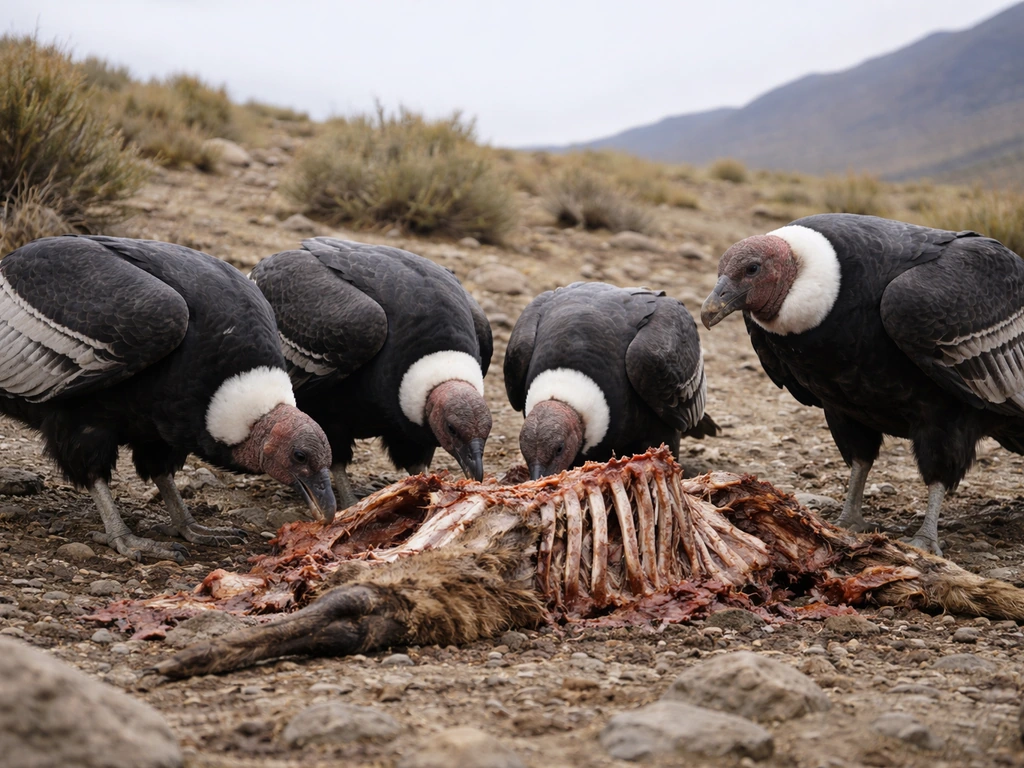
Condors are obligate scavengers. That means carrion, dead animals, is not a fallback meal when hunting fails. It is the primary feeding strategy. The San Diego Zoo puts it plainly: 'Like all vultures, Andean condors are scavengers and eat carrion.' The USFWS notes that a California condor can eat up to 3 to 4 pounds of carrion in a single feeding and then may not need to eat again for several days. A 2024 peer-reviewed study on the Andean condor as a scavenging model used data from 45 equine carcasses over seven years to analyze foraging behavior, treating the species as a textbook case of a 'top scavenger' rather than a predator.
That said, condors are not entirely passive. There are documented observations of Andean condors killing small live animals such as rodents, small birds, and rabbits, though these accounts emphasize how unusual this behavior is relative to their default scavenging. A 2022 paper described a condor stealing a hare that had been killed by a buzzard eagle, which is kleptoparasitism (food theft) rather than independent hunting. None of this changes the fundamental classification. Occasional opportunistic predation does not make a species a raptor any more than a bear occasionally eating a fish makes it a shark.
How condors compare to true raptors
Putting condors side by side with classic raptors makes the differences tangible fast. The most important distinctions are in body plan, feet, feeding behavior, and ecological role.
| Trait | Condors (Cathartidae) | True Raptors (Eagles, Hawks, Falcons, Owls) |
|---|---|---|
| Talons | Flat, blunt, not capable of grasping or killing | Sharp, curved, designed for gripping and killing live prey |
| Primary feeding mode | Obligate scavenging (carrion) | Active hunting of live prey |
| Taxonomic order | Cathartiformes (or near Accipitriformes, family Cathartidae) | Accipitriformes, Falconiformes, or Strigiformes |
| Ecological role | Nature's cleanup crew, nutrient recyclers | Apex predators controlling live prey populations |
| Hunting weapon | Beak for tearing into carcasses | Feet and talons for capturing and subduing prey |
| Live prey hunting frequency | Rare and opportunistic at best | Primary or sole feeding strategy |
| Wingspan (as a rough scale reference) | Up to ~10.5 ft (Andean condor) | Varies widely; bald eagle ~6–7.5 ft |
The talons point is worth lingering on because it is the most practical way to tell the groups apart in the field. When you watch a golden eagle or an osprey hunt, those feet come forward first. The kill happens with the feet. Condors land on something already dead and use their beak to tear in. The feet are used for walking and balance, not for subduing prey. That is a fundamental difference in how the animal interacts with food, and it is reflected in completely different foot anatomy.
If you are comparing condors to other large soaring birds, questions about species like ospreys, buzzards, and herons often come up in the same conversation, since all of them get lumped together loosely as 'big carnivorous birds.' An osprey, for instance, is a genuine raptor that dives feet-first into water to catch live fish. An osprey is a bird of prey (a raptor) because it hunts live fish using specialized talons and a feet-first dive. A condor catching a thermal on the same afternoon is doing something visually similar but ecologically and anatomically very different.
Why people keep calling condors birds of prey
This one is not hard to understand. Condors are enormous, dramatic, and carnivorous. They circle in the sky the way hawks and eagles do. They eat meat. Every dictionary that most people reach for, including Merriam-Webster, lists vultures under 'bird of prey' and treats the term as interchangeable with 'raptor.' So when someone reads a nature article that calls a condor a bird of prey, they are not wrong by dictionary standards. They are just using the looser definition.
The problem is that lumping condors into the same category as falcons or eagles papers over a genuinely important ecological distinction. It implies condors hunt the way raptors hunt, which they do not. It also implies similar anatomy, which is not there either. Wildlife educators and agencies like the USFWS have pushed back on this framing precisely because it misleads people about what condors actually do and why they matter. Condors are not apex hunters keeping prey populations in check. They are apex scavengers keeping ecosystems clean of carcasses and recycling nutrients. That is a completely different job, and it deserves accurate language.
The confusion also gets reinforced by how search engines surface content. Type in almost any large bird and the phrase 'bird of prey,' and you will find articles using the term loosely. The same pattern shows up with herons (not raptors) and buzzards (technically raptors in Europe, but the North American 'buzzard' often refers to turkey vultures, which are in the same family as condors). In North America, the word “buzzard” is often used for turkey vultures rather than true raptors buzzards. Herons are best understood as non-raptor birds that do not fit the strict anatomy and behavior definition of a bird of prey herons (not raptors). If you are trying to settle a debate about whether a specific bird qualifies, you need to go one level deeper than a dictionary definition.
Quick classification checklist for next time
When you are looking at any bird and wondering whether it belongs in the raptor/bird-of-prey category, run through these four checks. They will sort out most cases reliably.
- Check the talons. Are they sharp, curved, and strong enough to grip and kill live prey? True raptors use their feet as weapons. Condors and other vultures have flat, blunt feet built for walking on carcasses, not seizing prey.
- Check the primary feeding mode. Does the bird mainly hunt live animals, or does it primarily feed on carrion? If the species account from a wildlife agency or reputable zoo describes it as a scavenger, the 'raptor hunter' label does not apply cleanly.
- Check the taxonomy. Look up the bird's order and family in a taxonomy database like GBIF, NCBI, or the USFWS taxonomic tree. Condors are in family Cathartidae. True hunting raptors sit in Accipitriformes (hawks, eagles), Falconiformes (falcons), or Strigiformes (owls).
- Check whether live hunting is typical or rare. Some scavengers occasionally take live prey opportunistically. That alone does not make them raptors. Look at what the bird does most of the time, not what it does in rare edge cases.
For condors specifically: they fail checks one and two clearly, and their taxonomy in check three places them outside the classic raptor orders. They are magnificent, ecologically essential birds, but they are scavengers, not hunters. 'New World vulture' or 'obligate scavenger' is the accurate framing. If someone insists on calling a condor a bird of prey, point them to the USFWS species account, which states plainly that condors lack sharp talons capable of killing or grasping. That tends to settle it.
FAQ
If a condor is a “bird of prey” in dictionaries, why do some experts say that label is misleading?
Because many experts reserve the label “raptor” for birds that actively seize and subdue live prey using specialized talons and feet. Under that stricter anatomical and behavioral definition, condors do not fit, so calling them the same category as falcons or hawks blurs a real difference in how they get food and what role they play in ecosystems.
Do condors ever hunt, or are they completely dependent on carrion?
Condors are obligate scavengers, meaning carrion is their primary and expected food source. Still, there are documented rare cases of condors killing small live animals, and other cases where they take over prey killed by another animal (kleptoparasitism). Those exceptions do not change their overall classification as scavengers.
What is the easiest field cue to tell a condor from a true raptor?
Watch how the feet are used. True raptors typically bring feet forward to seize live prey, with the kill happening via grasping and subduing. Condors typically land and use their beak to tear into already-present food, with their feet functioning more for walking and balance than for hunting.
Are vultures and condors in the same group as eagles and hawks?
They are both meat-eating birds, but they are not the same type of raptor. Condors and other New World vultures are in Cathartidae, which modern classifications often place in a lineage separate from classic raptor orders like Accipitriformes (hawks and eagles) and Falconiformes (falcons).
Why do some people call turkey vultures “buzzards,” and does that affect whether they are considered birds of prey?
In North America, “buzzard” is commonly used for turkey vultures, which are scavengers and are not true raptors in the strict sense used for anatomy and hunting behavior. That naming confusion can make it seem like condors or vultures should be treated like hawks or eagles, even though they are not.
If I see a condor circling like a hawk, does that mean it is hunting?
Not necessarily. Soaring and circling can look similar across multiple birds. For condors, circling often relates to locating carcasses and planning a descent, rather than searching for and capturing live prey with talons.
How should I describe a condor accurately in a nature post or classroom setting?
Use framing like “New World vulture,” “obligate scavenger,” or “carrion feeder,” especially if you want to be precise about behavior. Avoid implying it kills prey the way a falcon or hawk does, since that is the core reason the stricter “raptor” label is rejected.
Is it ever correct to call a condor a raptor?
Usually it is better to avoid it. While some broad dictionary uses of “bird of prey” can include condors, “raptor” is commonly tied to a narrower definition involving specialized prey-grasping anatomy and hunting behavior. Many wildlife educators and agencies emphasize this distinction to reduce misinformation.
What if someone argues that condors are predators because they eat meat?
Eating meat does not automatically mean “predator” in the ecological sense. Predators typically actively capture and kill prey, while condors are primarily carrion consumers. Occasional opportunistic predation or food theft does not convert their overall role into that of classic apex predators.
Where does classification debates matter for the question “is a condor a bird of prey”?
The species level answer is stable, condors are birds. The classification debate matters more for how people should group condors relative to true raptors. Different taxonomy systems can shift where Cathartidae sits on the broader bird tree, but the functional difference, scavenging versus talon-based hunting, remains the key practical distinction.
Next Article
Is a Dragonfly a Bird? How to Tell the Difference
Dragonflies are insects, not birds. Learn key bird traits vs dragonfly anatomy to tell them apart fast.