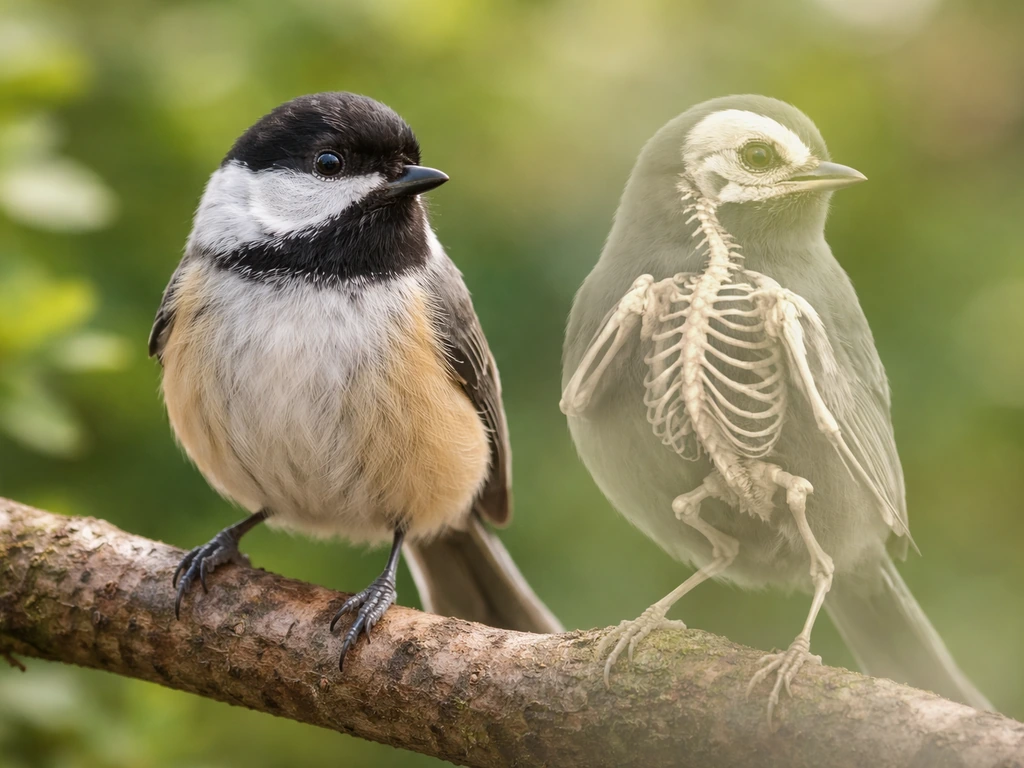
A bird is an animal, but it is not a mammal. A bird that is a mammal is not possible in real classification. Birds belong to their own separate class called Aves, while mammals belong to class Mammalia. These are two completely distinct branches of the vertebrate family tree, and no bird qualifies as a mammal. The short version: if it has feathers, it's a bird, not a mammal, full stop.
Is a Bird an Animal or a Mammal? Quick Yes or No

Marcus Hendricks
18 May 2026
Direct Answer: Bird vs. Mammal
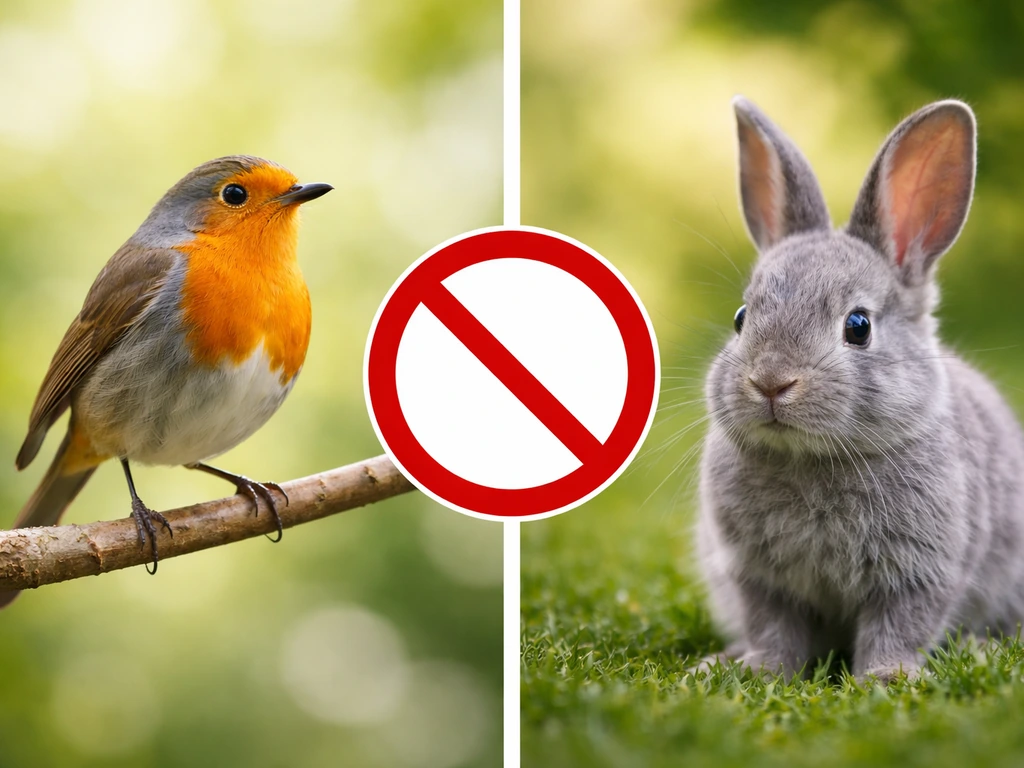
No, a bird is not a mammal. Yes or no, the answer is no. Birds and mammals are both warm-blooded vertebrates, and they do share a few traits (like four-chambered hearts), but they are classified into entirely separate groups. Birds and mammals are both warm-blooded vertebrates, and they do share a few traits (like four-chambered hearts), but they are classified into entirely separate groups, so if you are wondering is a bird a vertebrate, the answer is yes. The confusion is understandable because both groups are active, warm-blooded, and often fuzzy or colorful, but biologically they are as distinct as you can get while still being vertebrates. A robin, an eagle, and a penguin are all birds. A dog, a whale, and a bat are all mammals. None of those categories overlap.
What Makes Something a Mammal
Mammals are defined by a very specific set of biological traits. The core one, the one that actually gave the class its name, is the mammary gland: a milk-producing gland that females use to nurse their young. If an animal feeds its offspring with milk from mammary glands, it's a mammal. That's the non-negotiable criterion. Everything else supports it.
Beyond milk production, mammals share a bundle of other defining traits that make them easy to identify in practice. Hair or fur is the most visible one, it's one of the clearest physical signals you'll see on any mammal. Internally, all mammals have three tiny bones in the middle ear: the malleus (hammer), incus (anvil), and stapes (stirrup). They also have a diaphragm separating the heart and lungs from the abdomen, which is unique among vertebrates.
- Mammary glands that produce milk to feed young
- Hair or fur covering the body
- Three middle-ear bones: malleus, incus, and stapes
- A diaphragm separating chest and abdominal cavities
- Warm-blooded metabolism
- Most give birth to live young (though monotremes like the platypus and echidna lay eggs — more on that below)
That last point trips people up. The platypus lays eggs, so does that make it a non-mammal? No. It still has hair and mammary glands, so it's still a mammal, just an unusual one called a monotreme. This matters when we talk about birds, because 'lays eggs' is not by itself enough to kick an animal out of the mammal category, and it's not by itself enough to put something in the bird category either.
What Makes Something a Bird
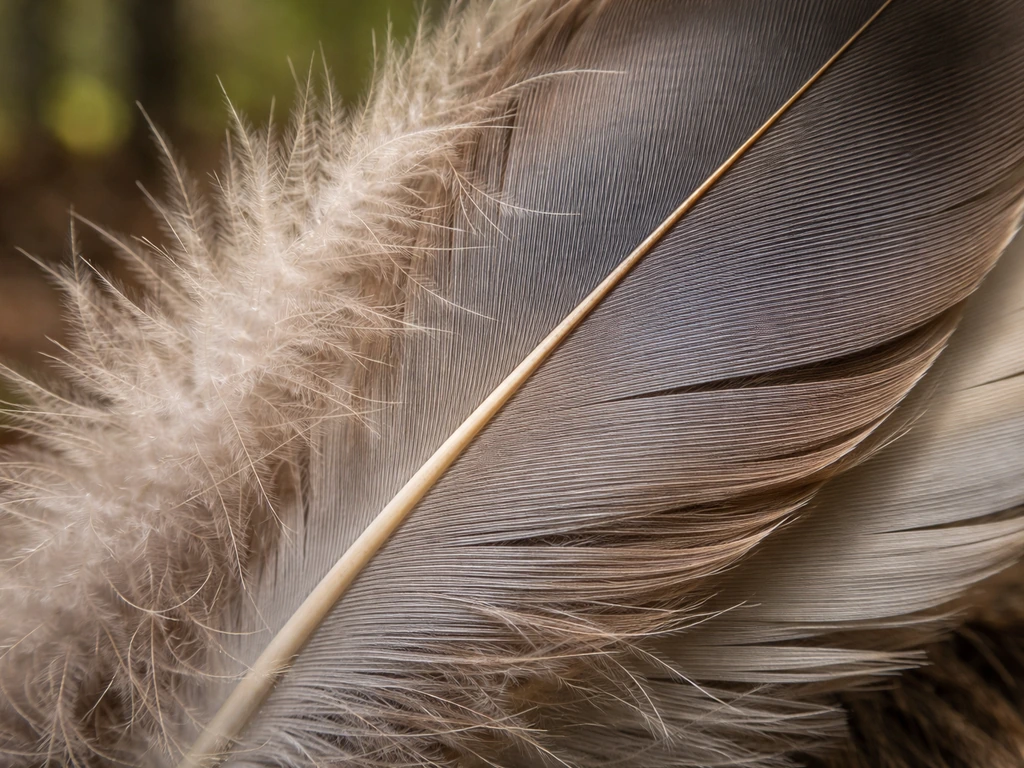
Birds belong to class Aves. There are roughly 11,200 living species, and they are unique in one completely non-negotiable way: feathers. No other living animal has feathers. If an animal has feathers, it is a bird. If it doesn't, it isn't. That's the cleanest single-trait diagnostic in all of vertebrate classification.
Feathers are the headline, but birds come with a whole package of other distinctive traits. They have hollow bones connected to a system of air sacs, which makes their skeletons remarkably light and strong at the same time, a key adaptation for flight. They lay hard-shelled eggs. Their forelimbs are modified into wings. They have beaks instead of teeth (in all modern species). And yes, birds are also warm-blooded and have a four-chambered heart, which they share with mammals, but that similarity doesn't make them mammals any more than having four limbs makes a frog a lizard.
- Feathers — the single most definitive bird trait, found in no other living animal
- Hollow bones connected to internal air sacs
- Hard-shelled eggs laid on land
- Forelimbs modified into wings
- Beak (no teeth in any living bird species)
- Four-chambered heart and warm-blooded metabolism
- Keen vision, often including UV range
Why Birds Aren't Mammals: The Biological and Evolutionary Case
Birds and mammals split off from a common ancestor a very long time ago, and they have been on completely different evolutionary tracks ever since. Mammals evolved from a group called therapsids, with the earliest mammal fossils dating back roughly 205 million years. Birds, on the other hand, evolved from theropod dinosaurs, the same broad group that includes Velociraptor and T. rex. Modern birds are literally living dinosaurs, not rogue mammals. The Natural History Museum puts it plainly: one group of dinosaurs continues to thrive today, and that group is birds.
Biologically, the separation is equally clear. Birds have no mammary glands whatsoever, they cannot produce milk. They have no hair or fur. Instead of three mammalian middle-ear bones, birds have a different ear structure entirely. Their skeletons are pneumatized (hollow and air-filled), while mammal bones are generally dense and marrow-filled. The respiratory systems are completely different: birds use a one-way airflow system with air sacs and pneumatic bones, while mammals use a bidirectional in-and-out lung system with a diaphragm. Britannica puts it well: birds are warm-blooded vertebrates, but they are more closely related to reptiles than to mammals.
Both groups are amniotes, meaning both birds and mammals (along with reptiles) evolved a shelled or protected egg that could survive on land, which is part of why both birds and mammals can live in dry terrestrial environments that would challenge amphibians. But being fellow amniotes doesn't make them the same class any more than being fellow vertebrates makes a shark the same as a salamander. Birds and mammals share a broad evolutionary neighborhood, not a classification.
| Trait | Birds (Class Aves) | Mammals (Class Mammalia) |
|---|---|---|
| Feathers | Yes — defining trait | No |
| Hair or fur | No | Yes — defining trait |
| Mammary glands / milk | No | Yes — defining trait |
| Egg type | Hard-shelled | Leathery (monotremes) or none |
| Bones | Hollow, pneumatized | Dense, marrow-filled |
| Middle-ear bones | Different structure | Three bones: malleus, incus, stapes |
| Respiratory system | Air sac + one-way airflow | Diaphragm + bidirectional lungs |
| Evolutionary ancestry | Theropod dinosaurs | Therapsids |
| Warm-blooded | Yes | Yes |
| Four-chambered heart | Yes | Yes |
How to Classify an Animal You're Not Sure About

If you're staring at an animal and trying to figure out what it is, you don't need a biology degree. You need to check a short list of observable features in the right order. Here's a practical mental checklist you can run through on the spot.
- Does it have feathers? If yes, it's a bird. Stop here. No other living animal has feathers.
- Does it have hair or fur? If yes, and no feathers, it's almost certainly a mammal. Confirm by asking whether females of the species nurse young with milk.
- Does it lay hard-shelled eggs AND have feathers? Still a bird. (Don't let egg-laying confuse you — platypuses lay eggs and are still mammals, but they have fur and mammary glands.)
- Is it warm-blooded with a beak but no feathers? That's not a real animal — check your source. All beaked animals that are warm-blooded and living are birds, and all birds have feathers.
- Still unsure? Look up the animal's scientific classification. If it's in class Aves, it's a bird. If it's in class Mammalia, it's a mammal.
The feather rule is genuinely that reliable. In the entire history of life on Earth, feathers have only ever evolved in the bird lineage. No mammal has ever had feathers. So if you can see feathers, you have your answer immediately. Questions about whether a bird is a vertebrate, a tetrapod, an amniote, or a land animal are interesting follow-ups, and birds qualify as all of those, but none of those broader categories make a bird a mammal. Birds qualify as tetrapods too, since they are vertebrate land-capable animals with four-limbed ancestry.
Why People Get Confused Between Birds and Mammals
The confusion comes from a few real similarities that make people wonder if birds and mammals might be more closely related than they are. Both groups are warm-blooded, which sets them apart from fish, amphibians, and most reptiles. Both have four-chambered hearts. Both are generally active, highly mobile animals with good sensory systems. When you're used to thinking of 'cold-blooded scaly things' as non-mammals, warm-blooded feathery things can feel like they might belong in the mammal club.
The egg question causes a lot of the confusion too. People often learn that mammals give birth to live young, and so assume that anything laying eggs must not be a mammal. That works most of the time, but it breaks down with monotremes (platypus and echidnas), which are egg-laying mammals. This creates a false shortcut: 'lays eggs = not a mammal = must be a bird or reptile.' That's not how it works. Egg-laying alone doesn't classify an animal. The full trait package does.
There's also a common myth that bats, being flying warm-blooded animals, might be birds. Bats are mammals, not birds. They have fur, no feathers, mammary glands, and nurse their young with milk. The fact that they fly doesn't matter for classification. Flight is a behavior and a structural adaptation; it isn't a taxonomic category. Similarly, penguins look almost cuddly and mammal-like to some people, but they have feathers, lay hard-shelled eggs, and are unambiguously birds.
Another source of confusion: some people hear that birds evolved from dinosaurs and assume that puts them in a weird middle ground between reptiles and mammals. It doesn't. Birds are their own class (Aves), sitting within the broader amniote tree alongside reptiles and mammals, but distinct from both. They're more closely related to crocodilians than to any mammal, which surprises most people. Whether a bird is better described as a reptile or a mammal is genuinely a common debate, and the answer is neither, though the evolutionary ties to reptiles are closer. They are birds (class Aves), so the right way to classify them is not as reptiles or as mammals.
FAQ
If bats fly and are warm-blooded, are bats birds or mammals?
No. Bats are mammals because they have fur and mammary glands and nurse their young with milk. They do not have feathers, and “flying” is a behavior, not a classification trait.
Does laying eggs automatically mean an animal is a bird?
No. Feathers are decisive for birds, while mammary glands and milk define mammals. Even if an egg-laying animal seems “bird-like,” an animal that lacks feathers is not a bird.
Are only flying animals birds, or can a bird be flightless?
No. A hummingbird is a bird even if it is small, and a penguin is a bird even if it cannot fly. Flight ability changes how an animal lives, but it does not change whether it has feathers and belongs to class Aves.
Can a bird be considered a mammal because both are warm-blooded and have four-chambered hearts?
No. Birds have no mammary glands, so they cannot produce milk. This is different from other shared traits like warm-bloodedness, four-chambered hearts, or being amniotes.
What is the fastest way to tell whether an animal is a bird when you have limited info?
Generally, yes. If you can clearly see feathers on the outer body, you can classify it as a bird. If the animal is in poor lighting, feathers may be shed or hidden, so look for other bird traits too, like a beak and hard-shelled eggs in context.
If birds hatch from eggs, does that mean they are reptiles instead of birds?
No, a “bird” that is born from an egg is still a bird. The egg rule is about what group the animal belongs to, not about whether birth happens via eggs or live birth.
Are birds and mammals more closely related than birds and reptiles because they both share being amniotes?
No. Shared ancestry does not mean shared class. Birds sit in class Aves, while mammals are in class Mammalia, with major differences in traits like ear structure, respiratory system, and absence of mammary glands in birds.
How should you classify an egg-laying mammal example compared with a bird?
No. A “duck-billed” or “platypus-like” lookalike would not be classified based on appearance alone. If it has feathers it is a bird, and if it has mammary glands that produce milk it is a mammal, even if it lays eggs.
Does “bird” mean the same thing as “mammal” because both are animals?
No. Being an animal versus being a mammal are different categories. Mammal is a specific class, while “animal” is a much broader grouping, so a bird still counts as an animal but not as a mammal.
Why do people debate whether birds are reptiles or mammals, and what is the correct label?
In modern classification, it is neither. Birds are class Aves, mammals are class Mammalia. If someone says “bird-reptile” or “bird-mammal,” the correct answer is usually to name the class (Aves for birds, Mammalia for mammals) rather than trying to place them in the other group’s label.
Next Article
Is a Bird a Vertebrate? Clear Classification Answer
Yes. Birds are vertebrates with backbone and internal endoskeleton, not invertebrates; simple traits to classify animals