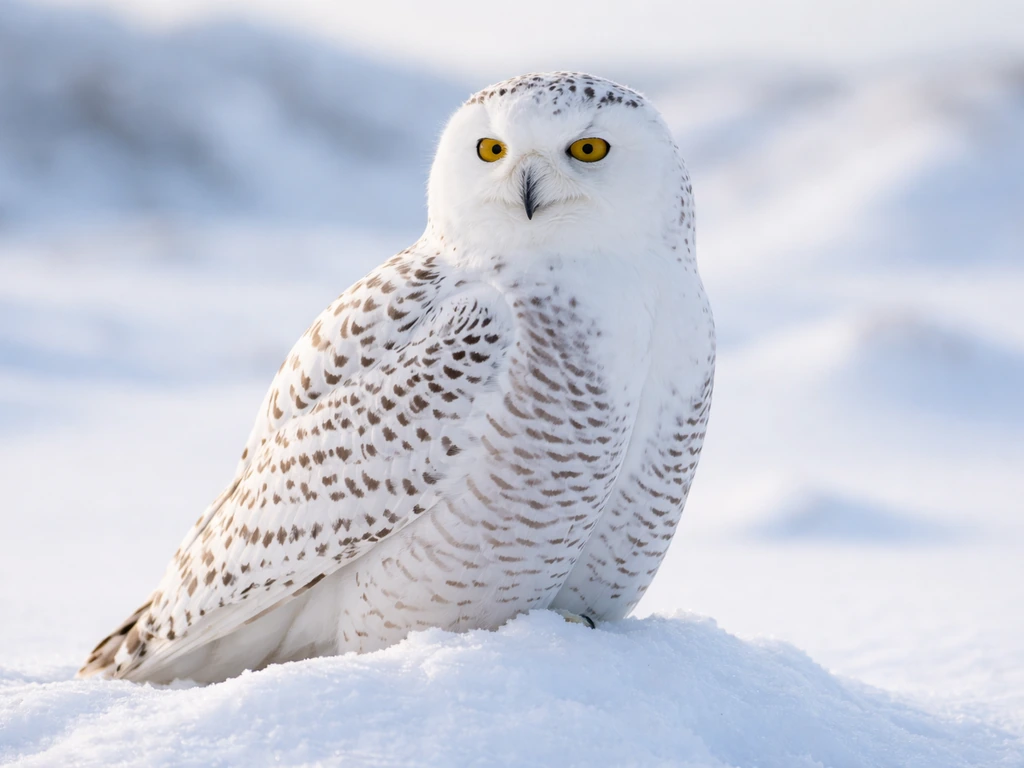
Yes, a snowy owl is absolutely a bird. It belongs to Class Aves, the scientific grouping that contains every bird on Earth, and it carries every defining trait that makes something a bird: feathers, wings, a beak, warm-blooded metabolism, and hard-shelled eggs. There is no ambiguity here in the scientific literature. The snowy owl (Bubo scandiacus) is listed as a bird by National Geographic, the Cornell Lab of Ornithology, the U.S. Fish and Wildlife Service, and every major taxonomic database on the planet.
Is a Snowy Owl a Bird? Key Traits and Simple ID Guide

Marcus Hendricks
29 Jun 2026
How snowy owls are classified (the taxonomy, kept simple)
Taxonomy is just a filing system for life, and the snowy owl has a very clear address in that system. Starting from the broadest category and narrowing down, here is where Bubo scandiacus sits:
| Taxonomic Rank | Snowy Owl's Classification |
|---|---|
| Kingdom | Animalia (animals) |
| Phylum | Chordata (vertebrates) |
| Class | Aves (birds) |
| Order | Strigiformes (owls) |
| Family | Strigidae (true owls) |
| Genus | Bubo |
| Species | Bubo scandiacus |
The critical row is Class: Aves. That is the definitive scientific label for birds, and the snowy owl sits squarely inside it. The order Strigiformes contains all owls and is itself nested within Aves, which means every single owl species, including the snowy owl, is a bird by definition. This classification is confirmed by GBIF (the Global Biodiversity Information Facility), the U.S. Fish and Wildlife Service, the Animal Diversity Web, and paleontological records going back to the early Eocene, where fossil owls are already labeled Aves, Strigiformes.
Checking the core bird traits: snowy owls tick every box
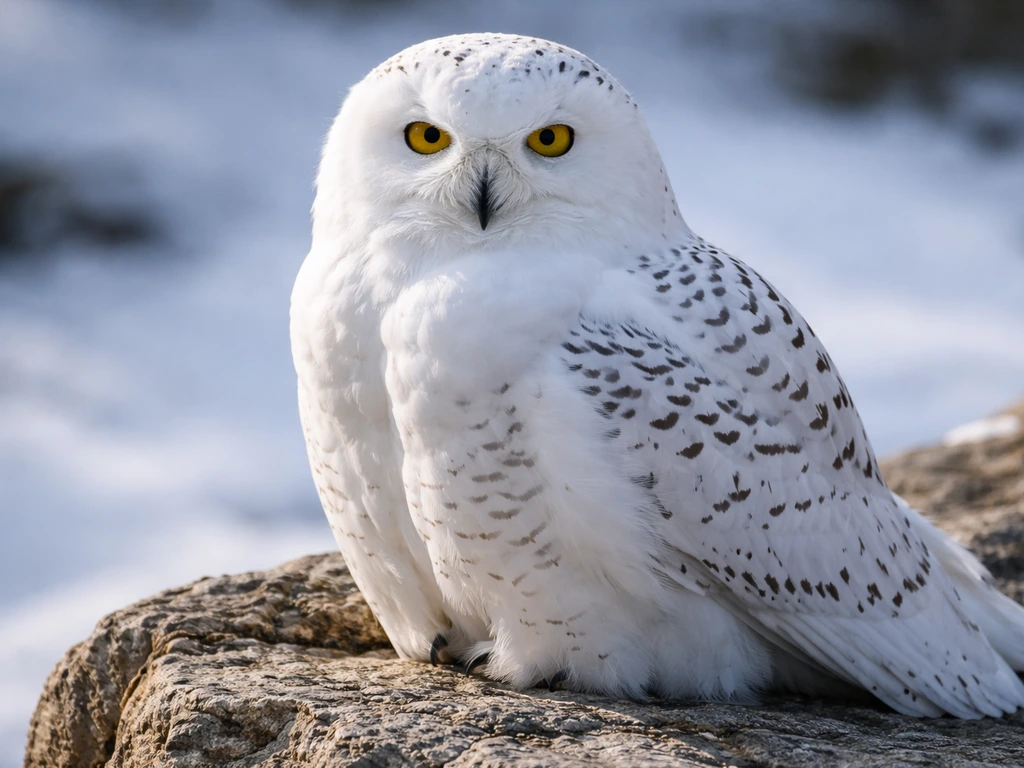
Classification labels are useful, but it helps to understand why the snowy owl earns that label. Birds share a set of defining biological traits, and snowy owls have all of them.
Feathers
Feathers are the single most diagnostic trait of birds. No other animal group has them. Snowy owls are famously covered in dense white plumage, which serves both as camouflage in their Arctic tundra habitat and as insulation against extreme cold. Females and immature birds have white feathers with dark brown or black barring across the body and wings, while their faces remain entirely white. That heavy feathering is not just decorative: it is a core avian adaptation. Like all birds, snowy owls also replace their feathers through a regular cycle called molt, shedding old feathers and growing new ones.
Wings and flight apparatus
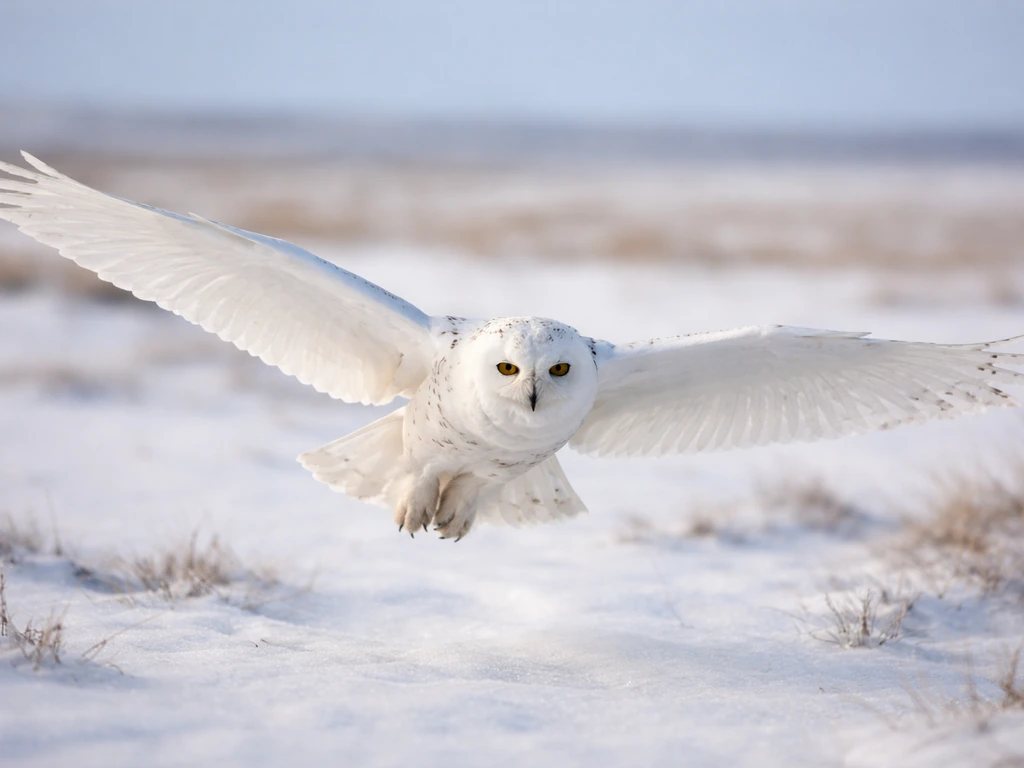
Snowy owls have fully developed wings and are capable fliers. Their wings are broad and long, adapted for silent, low-level flight over open tundra and grasslands. The wing structure, including the feather arrangement that muffles sound during flight, is a distinctly avian feature shared with all other birds.
Warm-blooded metabolism
Birds are endothermic, meaning they generate and regulate their own body heat internally rather than relying on the environment. This is often called being warm-blooded, and it separates birds (and mammals) from reptiles and amphibians, which are cold-blooded. Snowy owls live in one of the harshest cold environments on Earth, and their ability to maintain a stable internal temperature is a direct product of their avian metabolism.
Reproduction: eggs, incubation, and nesting
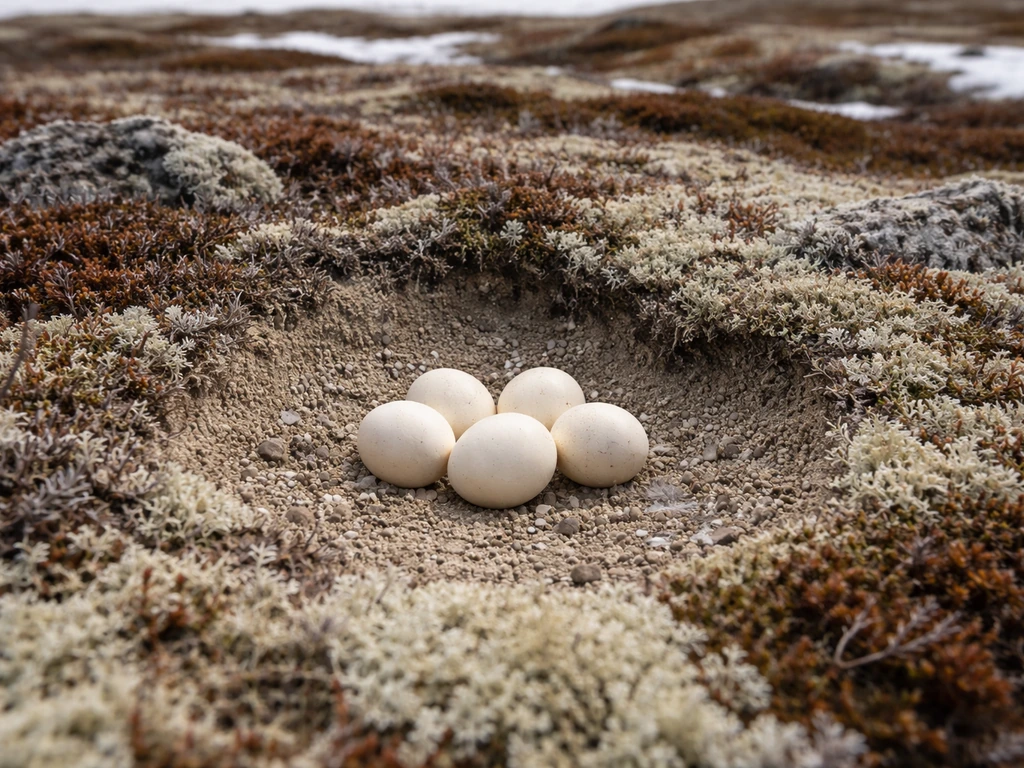
All birds lay eggs, and snowy owls are no exception. Females build a shallow nest hollow directly on the Arctic tundra ground and lay clutches of 3 to 11 hard-shelled eggs depending on prey availability. blank" rel="noopener noreferrer">The female incubates the eggs alone for about 31 to 33 days while the male brings food to her. Nestlings hatch wet and blind, which is a classic avian birth pattern. Maryland DNR reports that snowy owl egg incubation takes about 32 to 33 days, and nestlings hatch blank" rel="noopener noreferrer">wet and blind. This entire reproductive sequence, from hard-shelled egg-laying to incubation to parental feeding of chicks, is textbook bird biology.
Why "owl" trips people up
The confusion usually comes from a few sources. First, owls look quite different from the birds most people picture when they think "bird. And that includes the obvious question: is a ghost bird an owl? " A robin hopping on your lawn fits the mental image. An enormous white predator with forward-facing eyes, silent flight, and a rotating head does not feel like the same category of animal, even though it absolutely is. Second, forward-facing eyes are something humans associate with mammals, particularly predators like cats or dogs, not birds. Most birds have eyes on the sides of their heads. Owls evolved forward-facing eyes for depth perception while hunting, which makes them look more mammal-like at a glance.
Third, there is genuine everyday confusion between birds and mammals among people who are not focused on taxonomy. Questions like whether owls are mammals come up regularly, and it is worth being direct: they are not. Mammals have fur, give birth to live young (in most cases), and nurse offspring with milk. Owls have feathers, lay hard-shelled eggs, and do not produce milk. Those are not subtle differences. The related question of whether owls in general are birds or mammals is worth exploring on its own, but the short version is the same: owl equals bird, every time.
Where snowy owls fit in the bird family tree
Owls are part of the avian radiation, meaning they evolved from the same ancient lineage that produced all modern birds. Fossil evidence places owl ancestors in the Aves group as far back as the early Eocene (roughly 50 million years ago), and molecular DNA studies confirm that owls (Strigiformes) are deeply embedded within birds, not related to any mammal or reptile group. The two main owl families are Strigidae (true owls, which includes the snowy owl) and Tytonidae (barn owls), and both sit firmly inside Class Aves.
For comparison, here is how snowy owls relate to other vertebrate groups at a glance:
| Feature | Snowy Owl (Bird) | Mammal (e.g., cat) | Reptile (e.g., lizard) |
|---|---|---|---|
| Class | Aves | Mammalia | Reptilia |
| Body covering | Feathers | Fur/hair | Scales |
| Reproduction | Hard-shelled eggs | Live birth (mostly) | Leathery eggs or live birth |
| Temperature regulation | Warm-blooded (endothermic) | Warm-blooded (endothermic) | Cold-blooded (ectothermic) |
| Nursing young with milk | No | Yes | No |
| Wings | Yes | No (forelimbs) | No |
The snowy owl shares warm-blooded metabolism with mammals but shares feathers, wings, egg-laying, and taxonomic classification exclusively with birds. The evolutionary evidence from both fossils and DNA is consistent and unambiguous.
How to recognize a snowy owl in the field
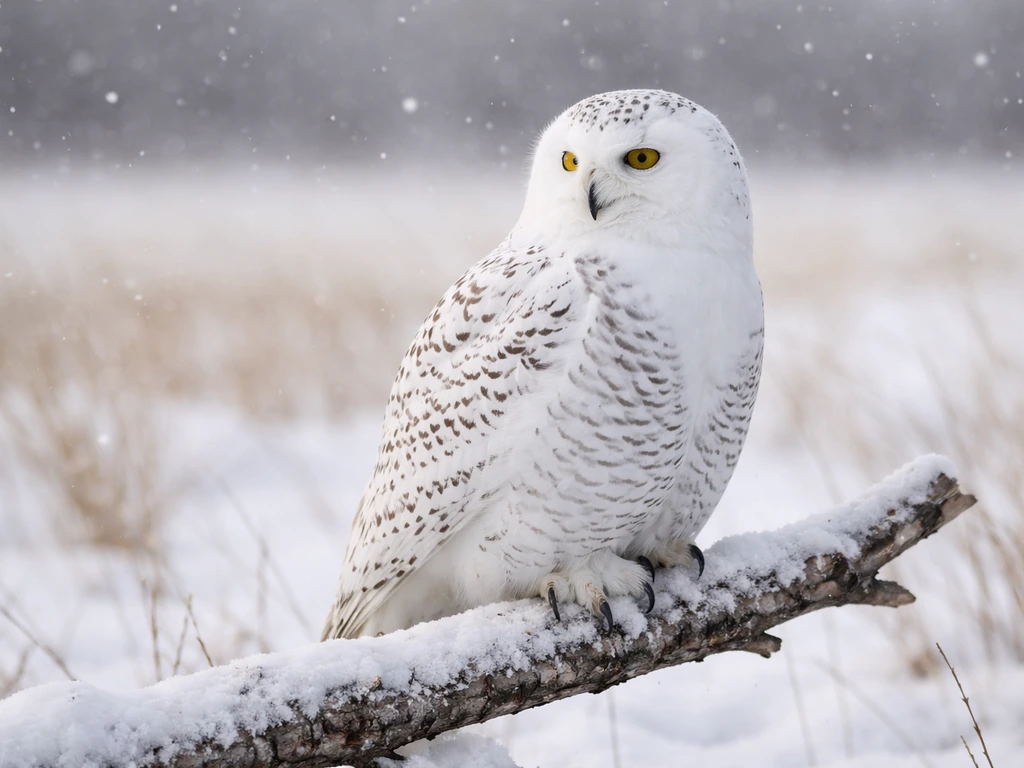
If you are trying to confirm that what you are seeing is actually a snowy owl (and therefore a bird), these are the key visual markers to check:
- Overall white plumage: snowy owls are predominantly white. Adult males can be nearly pure white, while females and younger birds show white feathers with brown or black barring on the body and wings.
- The face is always white, even in heavily barred individuals. This is a reliable field mark.
- They are very large. Snowy owls are among the biggest owls in North America, with a stocky, rounded silhouette and a large round head without ear tufts.
- Forward-facing bright yellow eyes set in a flat facial disc are distinctive.
- Habitat matters: snowy owls prefer wide open spaces, including Arctic tundra in summer and open fields, grasslands, airports, and frozen water bodies in winter. If you are in dense forest, it is probably a different owl species.
- During winter irruption years, some snowy owls found in places like Massachusetts may be primarily nocturnal, roosting on the ground or low structures during the day.
Common lookalikes to rule out include the barn owl (smaller, heart-shaped face, tan and white coloring), the great gray owl (gray overall, no white dominance), and the short-eared owl (much smaller, streaked brown). None of these are snowy owls, but all of them are also birds. Reddit birding communities frequently see posts asking whether a pale raptor spotted in an open field is a snowy owl, and the size and white-dominant plumage are usually the deciding factors.
Clearing up common myths about snowy owls and birds
Myth: owls are mammals because they look like cats
The forward-facing eyes and soft, rounded appearance are where this idea comes from, but it does not hold up to even basic scrutiny. Owls have feathers, not fur. They lay hard-shelled eggs instead of giving birth to live young. They do not nurse offspring with milk. Every one of those traits is non-mammalian. The visual resemblance to a cat is superficial and entirely coincidental, a product of convergent evolution toward similar hunting strategies rather than any shared ancestry.
Myth: snowy owls are not "real" birds because they do not sing
Birdsong is not a requirement for being a bird. Owls vocalize with hoots, barks, and hisses. Many other birds, including vultures and some storks, barely vocalize at all. Singing behavior is irrelevant to classification. What matters is the biological traits, and snowy owls have all of them.
Myth: snowy owls might be related to cats or other mammals
Molecular phylogenetic studies using DNA sequence data confirm that owls are solidly within the avian family tree. Their closest relatives are other birds, including diurnal raptors. There is no meaningful genetic relationship to any mammal group. The owl lineage has been part of Aves since the fossil record begins for the group, going back at least 50 million years.
Myth: if it does not fly south for winter, it is not a real bird
Migration patterns vary enormously across bird species. Snowy owls are not long-distance migrants in the traditional sense. Instead, they undergo irruptions, moving southward from the Arctic in some winters (often linked to prey population cycles) and staying relatively local in others. This is a normal variation in avian behavior and has no bearing whatsoever on whether they are birds.
Myth: Hedwig from Harry Potter is a snowy owl, so maybe they are fictional
Hedwig is a fictional character, but the snowy owls used to portray her in filming are very real birds. The species Bubo scandiacus exists in the wild across Arctic regions of North America, Europe, and Asia. Being the inspiration for a fictional owl does not affect your taxonomy. (The Duolingo bird debate, involving a cartoon mascot, is a somewhat different kind of question. If you are asking about the Duolingo owl itself, it is an owl by design rather than a scientifically different creature. )
The bottom line on snowy owls
A snowy owl is a bird. Full stop. It is classified in Class Aves, order Strigiformes, and it meets every biological criterion for being a bird: feathers, wings, warm-blooded metabolism, hard-shelled egg-laying, and incubation of young. The confusion around owls generally tends to come from their unusual appearance and hunting behavior, not from any genuine biological ambiguity. If you want to think about bird classification more broadly, the key test is always the same: look for feathers, confirm egg-laying, and check the taxonomic class. For snowy owls, all three answers point directly to bird. Oology is the study of bird biology and classification.
FAQ
If it is a snowy owl in photos, does it still count as a bird if I cannot see all the traits clearly?
Yes. A “white owl” or “pale raptor” you spot in winter is still a bird, even if it is not the snowy owl. For ID, check white-dominant plumage, size relative to the surrounding grass, and the typical tundra or open-field setting, since barn owls and great gray owls can both look unusually light.
What is the simplest field test to confirm an animal is a bird when it is far away?
If you are willing to verify only one biological feature, feathers are the fastest confirmation. Even at a distance, snowy owls show dense feather coverage over the body and face, unlike most mammals that would show fur, visible skin breaks, or non-feather texture around the head and wings.
Are there any nesting or parenting clues that confirm an owl is a bird?
Owls do not have the same egg types as reptiles, they lay hard-shelled eggs, and they build nests where chicks hatch and are fed by parents. If you see “owl-like” behavior (incubation on the ground in a hollow, chick feeding), it supports bird classification even when calls are absent.
Does being warm-blooded mean snowy owls can live anywhere, or only cold places?
No, “warm-blooded” does not mean the environment is irrelevant. Snowy owls still lose heat to cold air, so their feathers, body-shape, and energy use all help maintain temperature. That metabolic endothermy is the key avian trait, but insulation and behavior (like choosing sheltered roost sites) determine how well they cope.
How can I distinguish a snowy owl from a barn owl when both seem pale?
Many people mix up “hooded” or “heart-shaped” facial patterns. Snowy owls generally do not have the strong heart-shaped face outline typical of barn owls, and their face tends to look more uniformly pale. If the facial disc looks very heart-like, assume barn owl unless other features strongly match.
Which lookalike errors happen most often when identifying snowy owls?
Look at size and pattern scale. Short-eared owls are much smaller and usually show heavier brown streaking rather than a mostly white look. Great gray owls are more gray overall and lack the clean white dominance.
If an owl never calls, does that make it less likely to be a bird?
Owls are birds even if they are silent. However, if you do hear them, snowy owls typically use calls like barks, hisses, and hoots rather than constant song. Sound can help with detection, but classification should not rely on singing.
Can snowy owls look less white than expected, and would that change whether they are birds?
Not always. Snowy owls can show “morphs” with more barring on wings and body, especially in juveniles and some females. That can make them look less white, so judge the overall dominance and typical Arctic timing or habitat rather than only the purity of the white color.
If a snowy owl shows up far south in winter, does that change its classification?
Irruptions are a movement pattern, not a taxonomic trait. A snowy owl moving south during prey cycles is still classified the same way (Class Aves), regardless of location. What changes is where you are likely to spot them, not whether they are birds.
What should I do if I can’t see the feathers clearly but it seems owl-like from behavior?
Feathers can be worn or obscured by weather and distance, but you can still use multiple non-mammal signs: wing structure for flight, hard-shelled eggs if you are near nesting sites, and lack of fur or milk-based nursing. If you cannot confirm eggs, rely on feathered body plan and typical owl hunting posture instead.