Duo, the Duolingo mascot, is an owl. More specifically, Duolingo's own brand guidelines describe him as "an expressive owl" and "a day owl." Since owls are birds (they belong to the order Strigiformes within the class Aves), the answer to the owl-vs-bird debate is that both labels are technically correct. But if you want the most precise answer: Duo is an owl, which makes him a bird by default.
Is Duolingo a Bird or an Owl? Mascot Explained

Marcus Hendricks
11 Jul 2026
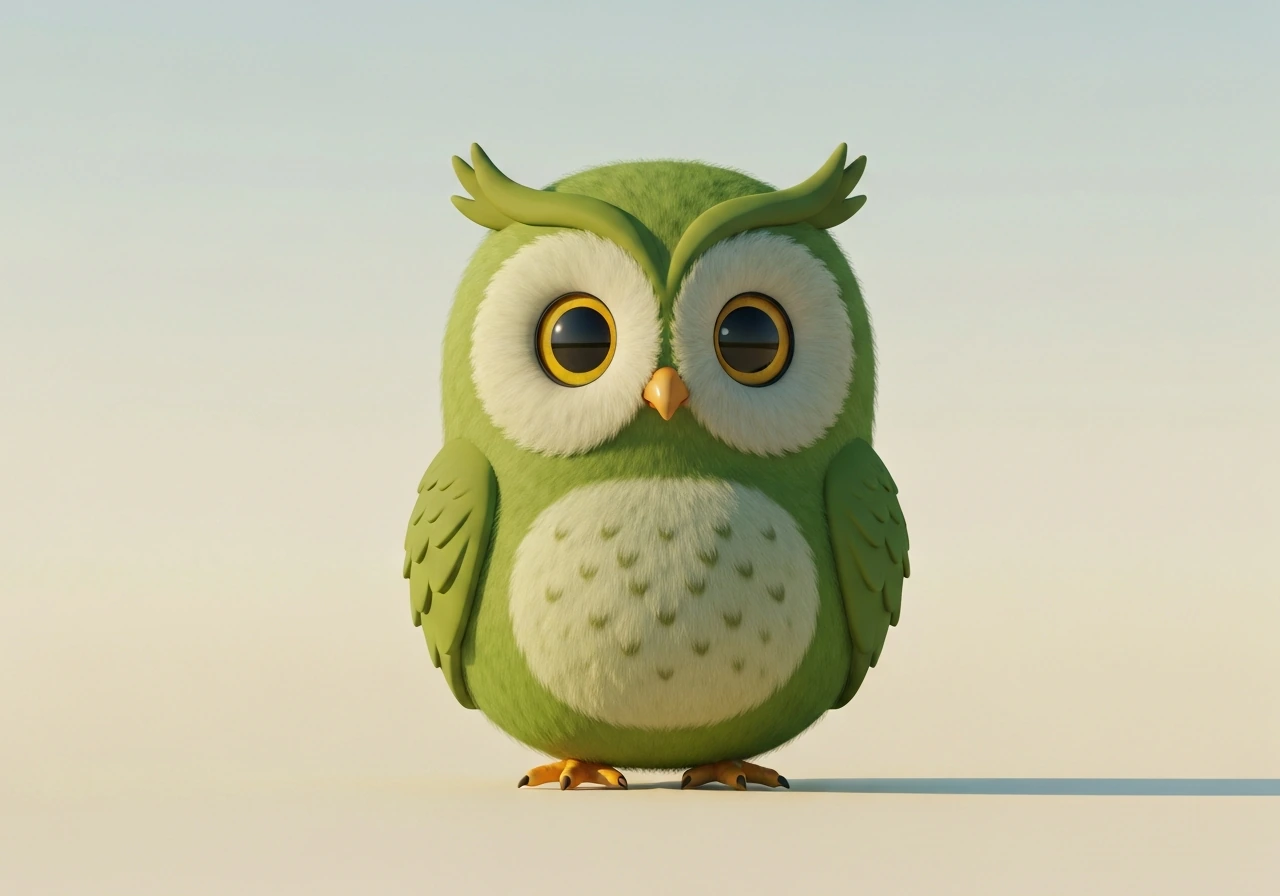
What Duolingo's mascot is (and why people keep arguing owl vs bird)
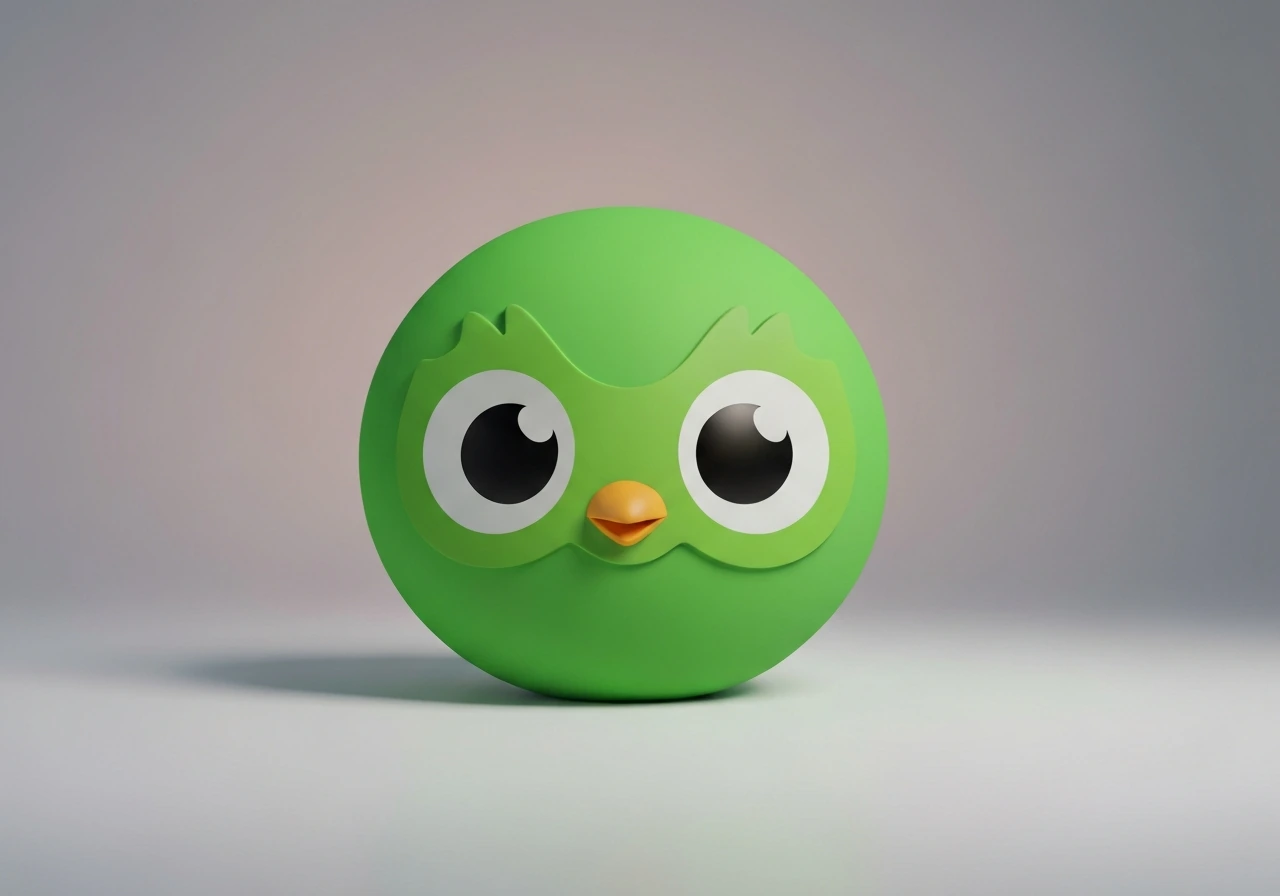
The Duolingo mascot is a round, bright green cartoon character named Duo. He shows up throughout the app, in advertising, and across Duolingo's social channels. Wikipedia describes him as "a green cartoon owl named Duo," Apple's App Store editorial called him "the app's avian mascot," and Fast Company referred to him as an owl mascot when covering the famous "Dead Duo" social media stunt. Even a Reddit post written in Duo's own voice introduces him as "the green owl that most of you know as the Duolingo mascot."
So where does the debate come from? Partly it's because Duo is heavily stylized. He's a cartoon with big round eyes, a simple beak, and a very simplified body. That makes some people ask whether he's really an owl or just a generic bird. There's also a fun Reddit theory that Duo is actually based on a kakapo (a large, flightless, green parrot from New Zealand) rather than a traditional owl. Duolingo's choice of an owl was almost certainly deliberate branding: owls have a long cultural association with wisdom and learning, making them a natural pick for a language-education app.
Owls are birds: a quick classification refresher
Here's the taxonomy basics so this all makes sense. Birds belong to the class Aves. Within that class, there are many orders, and owls sit in the order Strigiformes. The U.S. Fish and Wildlife Service, the ITIS taxonomic database, the IOC World Bird List, and NCBI's MeSH controlled vocabulary all list Strigiformes as an order within birds. There are around 255 known owl species worldwide. So "owl" is not a separate category from "bird." Saying Duo is an owl automatically means he's a bird, in the same way that saying something is a golden retriever automatically means it's a dog.
This is actually the source of a lot of internet confusion on mascot and animal questions. People treat "bird" and "owl" as competing answers when they're really nested categories. The question "is it a bird or an owl? " is a bit like asking "is it a fruit or an apple?
" The more specific answer (owl, apple) already contains the general one. If you're curious how this same logic applies to real species, the broader question of whether owls qualify as birds is worth exploring on its own, since owls share all the defining features of birds: feathers, a beak, warm-bloodedness, egg-laying, and a wishbone. Oology is the study of bird life and bird biology, so it helps explain what makes a bird a bird.
How to compare Duo's design to real owl traits
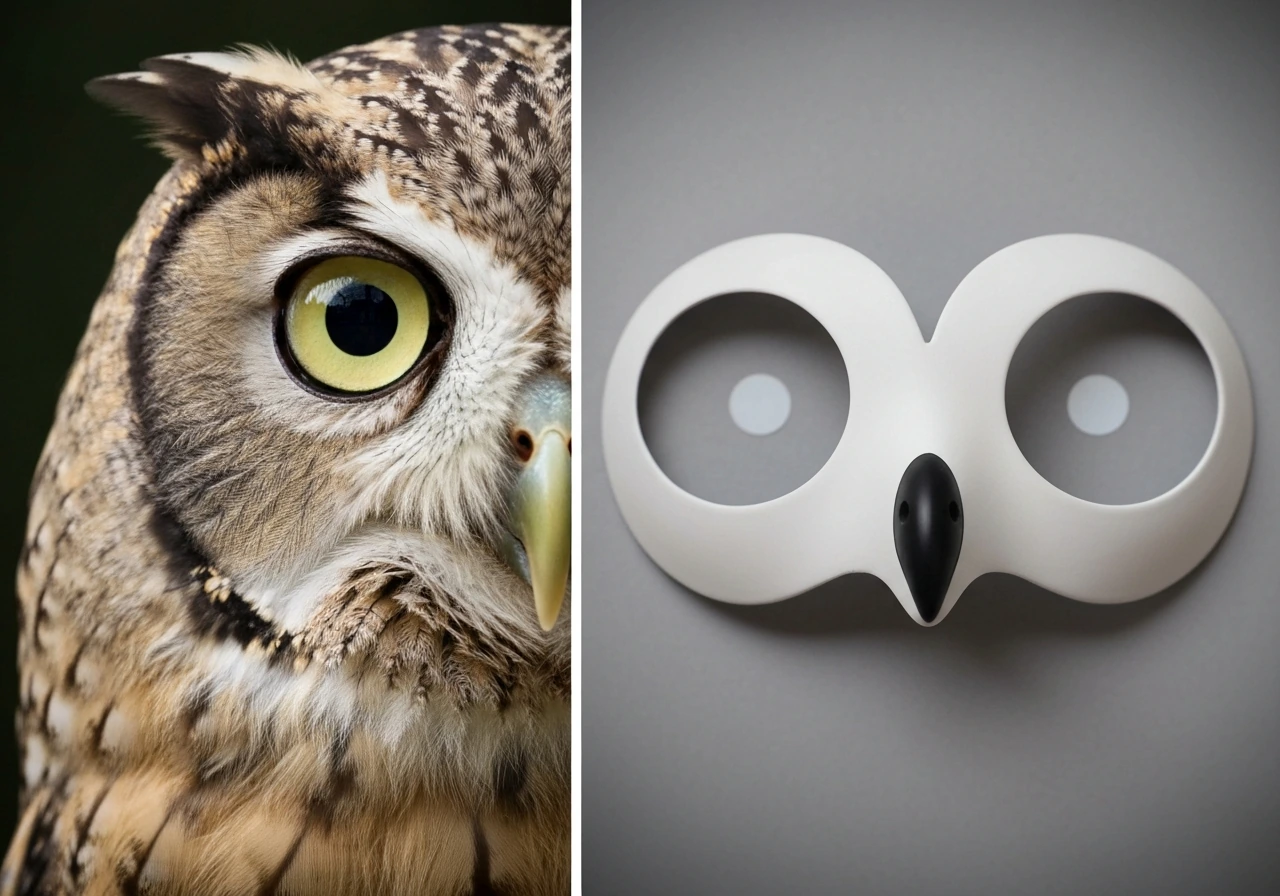
Even if you ignore the official branding documentation, Duo's visual design maps pretty cleanly onto owl anatomy. Real owls (order Strigiformes) are defined by a specific set of traits according to MeSH and the Animal Diversity Web: a facial disk (the flat, disc-shaped arrangement of feathers surrounding the eyes), large forward-facing eyes, a strongly hooked beak, and sharp talons. Some owls also have prominent ear tufts, the feather projections near the top of the head that look like ears or horns.
Duo has large forward-facing eyes, a short hooked beak, and a round flat face that echoes the facial disk structure. His simplified cartoon body downplays the talons, but the face is unmistakably owl-like rather than, say, songbird-like or raptor-like. A passerine (perching bird) would have smaller, laterally placed eyes and a different beak shape. A parrot would have a strongly downward-curved beak. Duo's features line up with owls, not those groups. Here's a quick side-by-side to make it concrete:
| Feature | Real Owl (Strigiformes) | Duo (Duolingo Mascot) |
|---|---|---|
| Eye placement | Forward-facing, large | Forward-facing, large |
| Face shape | Flat facial disk | Round, flat cartoon face |
| Beak | Short, strongly hooked | Short, simplified hook |
| Body shape | Compact, rounded | Compact, rounded |
| Ear tufts | Present in some species | Not depicted |
| Color | Browns, grays, whites (wild) | Bright green (brand stylization) |
The only major departure from real-owl anatomy is the color. No wild owl is bright green. That's pure branding choice, not a taxonomic clue. If you're trying to identify what kind of animal a mascot is meant to represent, color is often the least reliable feature because brands pick colors for recognition, not biology.
Is Duo a real species or just a fictional mascot?
Duo is a fictional mascot, not a representation of any specific owl species. Duolingo's illustration guidelines describe him as "an expressive owl" and give guidance on how to draw and pose him, but this is design documentation, not species documentation. He doesn't correspond to a great horned owl, a barn owl, a snowy owl, or any other identifiable Strigiformes species. He's a stylized cartoon character built to be recognizable, friendly, and brandable.
The Reddit kakapo theory is creative but doesn't hold up as the intended design basis. Kakapos are parrots, not owls. They're green and round, which is where the resemblance ends. Duo's forward-facing eyes and facial disk structure are owl traits, not parrot traits. The design team at Duolingo almost certainly started with a generic "friendly owl" concept and made it their own, rather than basing it on any single real species. Duolingo's blog post literally titled "How to draw Duo the owl" confirms the owl framing is intentional at every level of the company's communication.
So is Duo a bird or an owl? Here's the definitive answer
Duo is an owl. He is also, by extension, a bird. These aren't competing answers. Duolingo's own brand guidelines state it plainly: "He's an expressive owl" and "He's a day owl." Every major third-party reference, from Apple to Fast Company to Wikipedia, uses the same label. The owl classification is intentional, consistent, and sourced directly from the people who created him.
In biological terms, owls are birds in the order Strigiformes, so calling Duo a bird isn't wrong. The U.S. Fish & Wildlife Service describes owls as belonging to the blank" rel="noopener noreferrer">order Strigiformes. But it's incomplete, the same way it would be incomplete to call a snowy owl just "a bird" when you could be more specific. Also, since snowy owls are owls in the order Strigiformes, they are birds too a snowy owl. The most accurate and useful answer is: Duo is a fictional cartoon owl mascot, modeled on owl anatomy, whose design fits the Strigiformes category even though he doesn't represent a real species.
How to quickly verify other 'is it a bird?' internet debates
The Duolingo question is a good template for settling any similar debate. Here's the process that actually works:
- Check official sources first. If a mascot or character is involved, go straight to the brand's own guidelines or blog. Duolingo's brand documentation resolved the owl-vs-bird question immediately. For real animals, use the IOC World Bird List, ITIS, or the U.S. Fish and Wildlife Service to check which order and family a species belongs to.
- Separate 'bird vs not bird' from 'which kind of bird.' These are different questions with different lookup paths. 'Is it a bird?' asks whether it belongs to class Aves. 'Is it an owl?' asks whether it belongs to order Strigiformes within Aves. Confusing the two questions is what creates most of the internet debate.
- Look for the defining physical traits. For owls specifically, the checklist is: facial disk, forward-facing large eyes, hooked beak, and talons. For birds generally: feathers, beak, warm-blooded, lays eggs, has a wishbone. A cartoon or mascot will typically preserve the most recognizable traits even when stylized.
- Don't let color throw you off. Bright or unusual colors in mascots are branding decisions, not biological ones. Focus on anatomy: face shape, eye placement, beak type, body proportions.
- For fictional or mythical creatures, the question becomes 'what was it designed to resemble?' rather than 'what species is it?' Apply the same trait checklist to figure out which real animal family the design is drawing from.
This same framework works for settling debates about snowy owls (yes, a bird and an owl), fictional creatures like a ghost bird, or any other case where people are arguing about nested animal categories. You can apply the same owl-versus-bird logic even if you are comparing a ghost bird. The underlying logic is always the same: figure out whether the question is about class membership or order membership, then find the right authoritative source for that level of classification.
For Duo, all the evidence points the same direction. The brand says owl. The visual design says owl. The taxonomy says owls are birds. Case closed: Duo is an owl, and owls are birds, so both answers fit. But if someone asks you to pick one word, "owl" is the more precise and more accurate answer.
FAQ
If Duo is an owl, why do some people call him a generic “bird”?
Because “bird” is the broader category and Duo is stylized. In design discussions, people often default to the general label when the character lacks obvious species-level details, but owl is the intended, more specific description.
Does Duo match the anatomy of any specific owl species like a barn owl or snowy owl?
Not exactly. The article explains he is a fictional, generic “friendly owl” design, so you cannot reliably map him to a single real-world species based on color and other non-anatomical traits.
Is it accurate to use “owl” and “bird” interchangeably when talking about Duo?
Yes, but with nuance. “Bird” is technically correct because owls are birds, however “owl” is more informative because it specifies the correct order-level identity for what the mascot is meant to represent.
Why is Duo’s green color not considered evidence against him being an owl?
Mascots use colors for branding and recognizability, not for biological fidelity. The article notes that owl coloration varies in nature, and no wild owl is typically bright green, so color alone is a weak identification clue.
If someone wants the most “precise” wording, should they say “owl” or “Strigiformes”?
For everyday conversation, “owl” is the best level of precision. “Strigiformes” is more taxonomic and is usually unnecessary unless you are doing a classification-style discussion.
How can I apply the same logic to other mascot debates (bird vs category)?
Check whether the argument is about a broad class versus a nested subgroup. The article’s “owl inside bird” analogy is the key decision aid: pick the more specific label when it is clearly supported by the same framing.
What if the mascot is fictional, like Duo, and the question is still “bird or owl”?
Then you judge intent and design cues rather than real species matching. The article explains Duo aligns with owl anatomy traits and is labeled as an owl by the brand, even though he is not modeled after one identifiable species.
Next Article
Is a Ghost Bird an Owl? How to Tell Likely Yes or No
Checklist to confirm if a ghost bird is an owl: traits, habitat, timing, and how to verify likely yes/no.