Sometimes yes, sometimes no, and occasionally it's neither an owl nor a myth. 'Ghost bird' is one of those common names that gets applied to several completely different animals depending on where you heard it. In North America, especially in contexts like national parks or personal birding narratives, 'ghost bird' is almost always a poetic nickname for an owl, most often the Barn Owl or a large pale species like the Snowy Owl. But in South America, 'ghost bird' (urutaú) refers to the potoo, a completely different nocturnal bird that is not an owl at all. And in U.S. journalism and conservation writing, 'ghost bird' has become shorthand for the possibly-extinct ivory-billed woodpecker. So the honest answer is: which ghost bird are we talking about?
Is a Ghost Bird an Owl? How to Tell Likely Yes or No

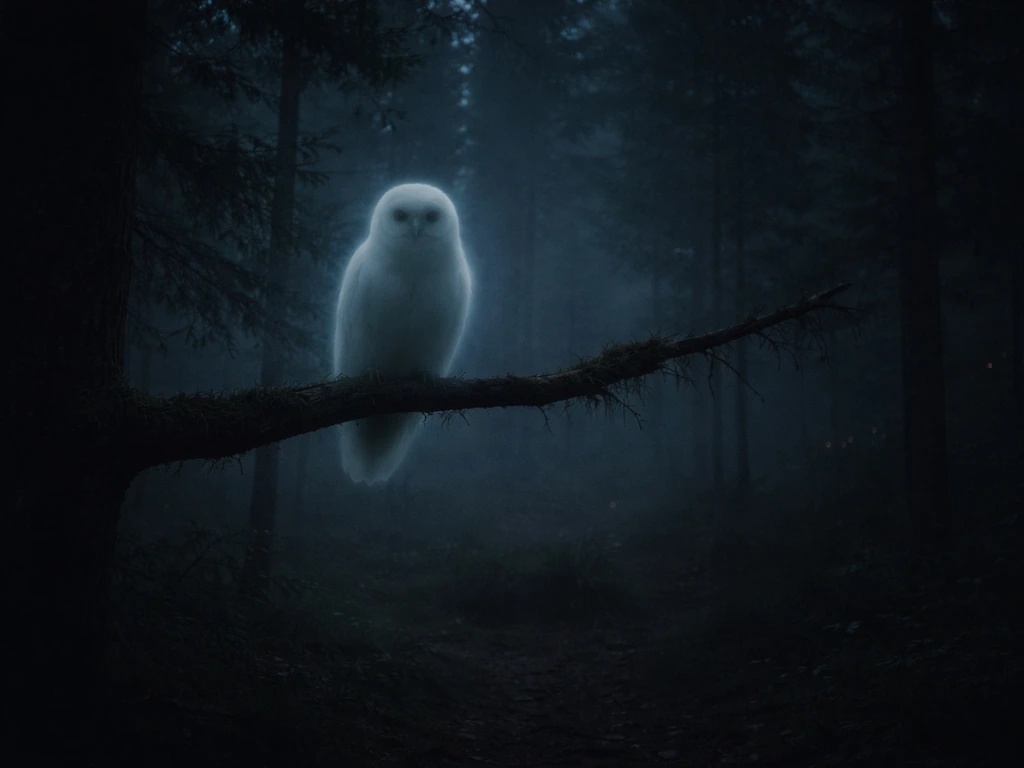
What people actually mean by 'ghost bird'
The term shows up in at least three very different contexts, and mixing them up is the root of most of the confusion online.
- Owl nickname in North America: The U.S. National Park Service uses 'ghost bird' to describe owls in Shenandoah National Park, leaning into the idea of a pale, silent, eerily appearing creature. Personal naturalist writers use the phrase the same way, usually to evoke the spooky quality of spotting a large owl at dusk or in fog.
- Potoo in South America: In Brazil, Uruguay, Paraguay, and surrounding regions, 'urutaú' (or ghost bird) is the Guarani-derived common name for Nyctibius griseus, the Common Potoo. It belongs to its own order, Nyctibiiformes, separate from owls entirely.
- Ivory-billed woodpecker in U.S. journalism: National Geographic, The New Yorker, and a 2009 documentary all use 'ghost bird' to describe the ivory-billed woodpecker, a species whose existence is disputed after what may have been a brief rediscovery in Arkansas. This use is about elusive or possibly extinct birds, not a literal taxonomic label.
If you're in the United States and someone tells you they saw a ghost bird, they almost certainly mean an owl. If you encountered the phrase while reading about South American wildlife or birdsong, they probably mean a potoo. If you saw it in a conservation article about a disputed sighting, they mean the ivory-billed woodpecker. Context does all the heavy lifting here.
How to identify a real owl
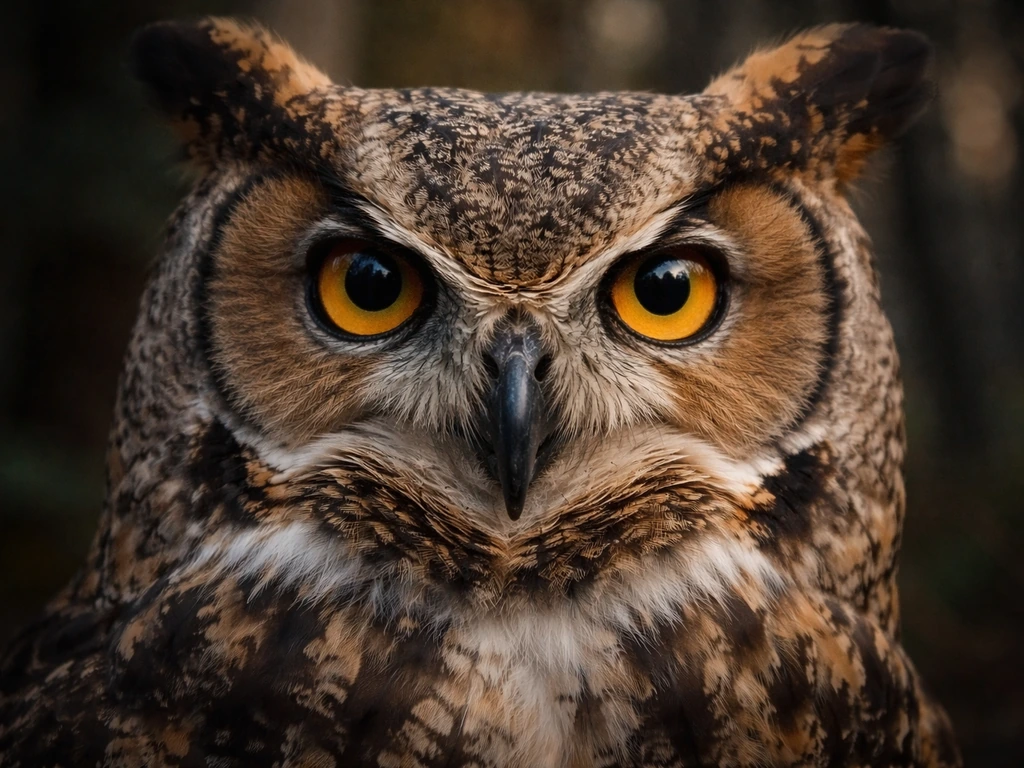
Owls are genuinely distinctive once you know what to look for. They belong to two families: Tytonidae (barn owls) and Strigidae (all other owls). Both share a cluster of traits you can confirm in the field or in a photo, even a blurry one.
Face and head
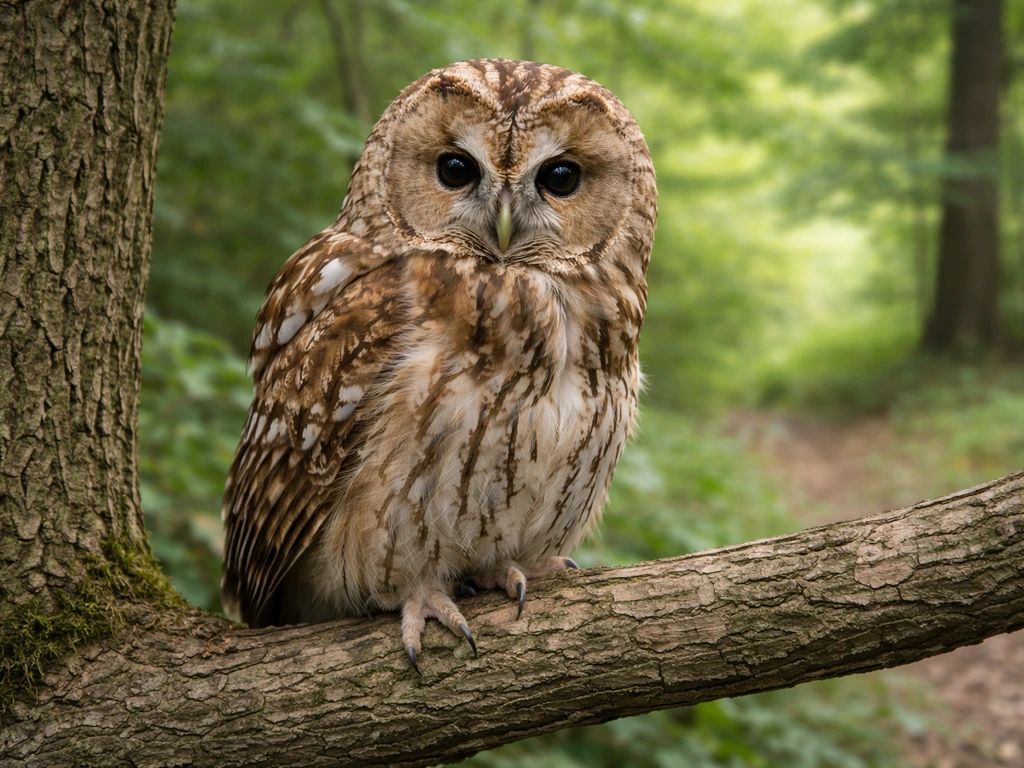
The most diagnostic owl feature is the facial disk, a stiff ring of feathers arranged to funnel sound toward the ears. It makes owl faces look flat and round, or in the Barn Owl's case, heart-shaped. The Cornell Lab describes the Barn Owl's face as a white, heart-shaped disk with dark eyes. Great Horned Owls have prominent 'ear tufts,' which are actually feather arrangements and not ears at all. Long-eared Owls have tall, closely spaced ear tufts placed near the center of the head. No other common bird has this combination of flat face, forward-facing eyes, and tufts.
Body and size
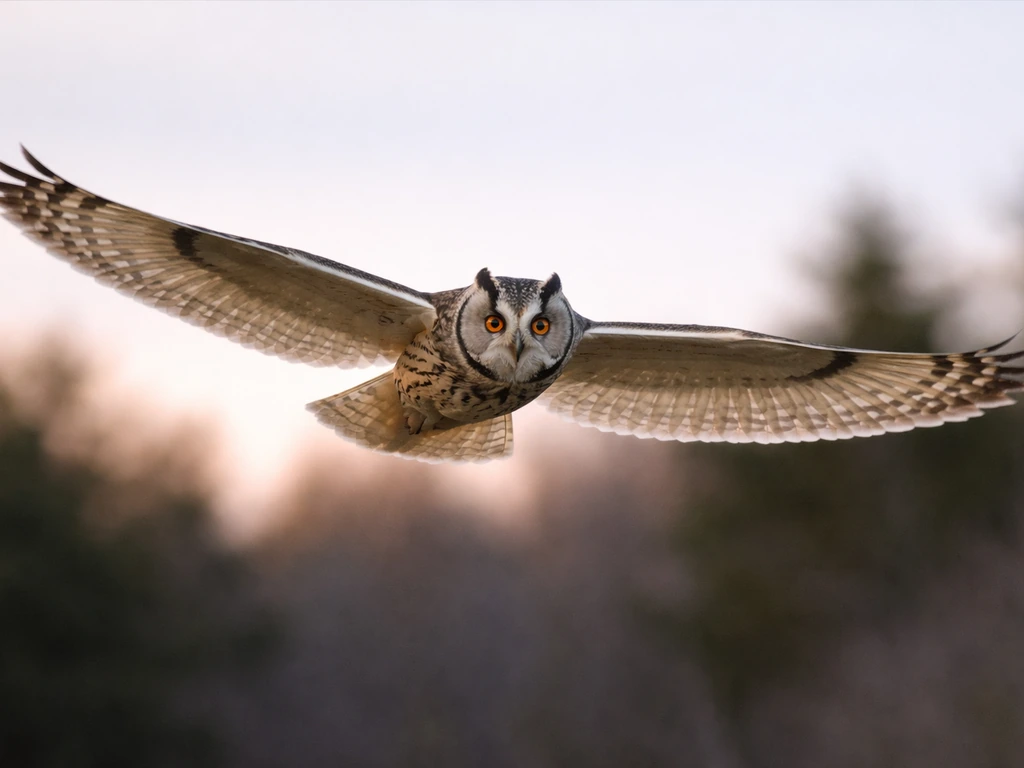
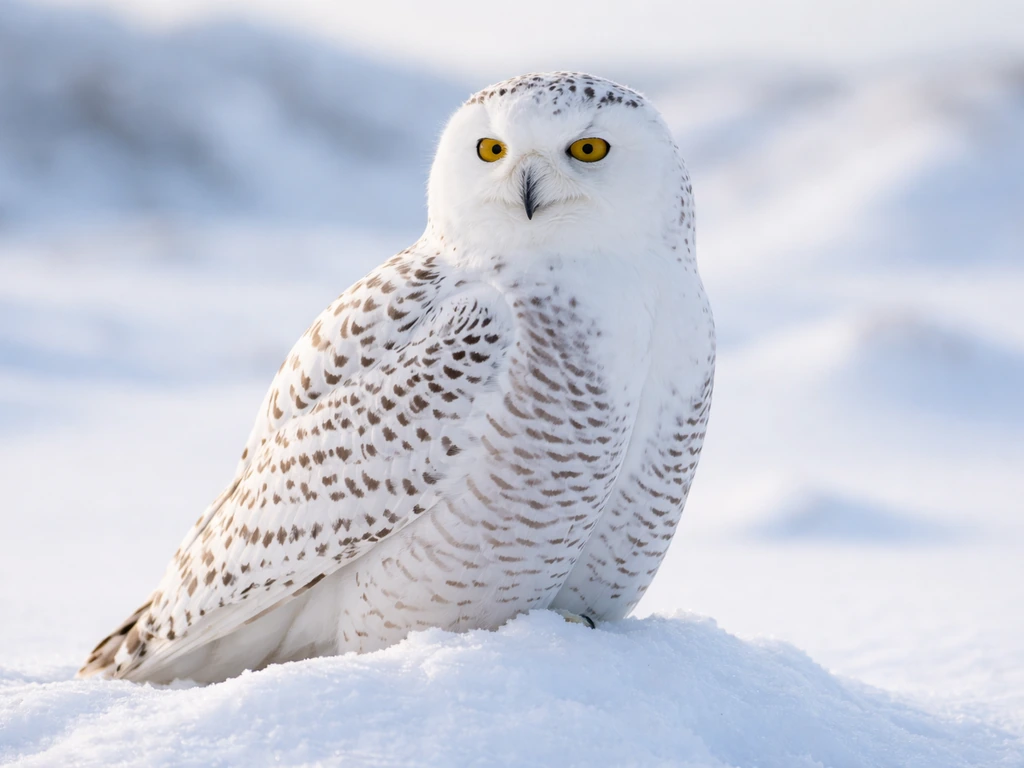
Owls are stocky and large-headed relative to body size, which makes them look almost neckless when perched. A Long-eared Owl is described by eBird as medium-sized and rather slender with a rounded head when the tufts are flattened, but bulky-looking when the tufts are raised. Great Horned Owls are large, around 18 to 25 inches tall with a wingspan up to 5 feet. Snowy Owls are even bulkier, white to pale yellow-white, with yellow eyes and heavy feathering on the feet.
Flight and wing pattern
In flight, owls have broad rounded wings and fly with slow, deep wingbeats. They are nearly silent in flight because of comb-like serrations on the leading edge of their feathers. The Cascades Raptor Center notes that wing patches and underwing markings can be visible in flight on species like the Long-eared Owl, which can help confirm an ID when perched views are not available.
Timing and habitat
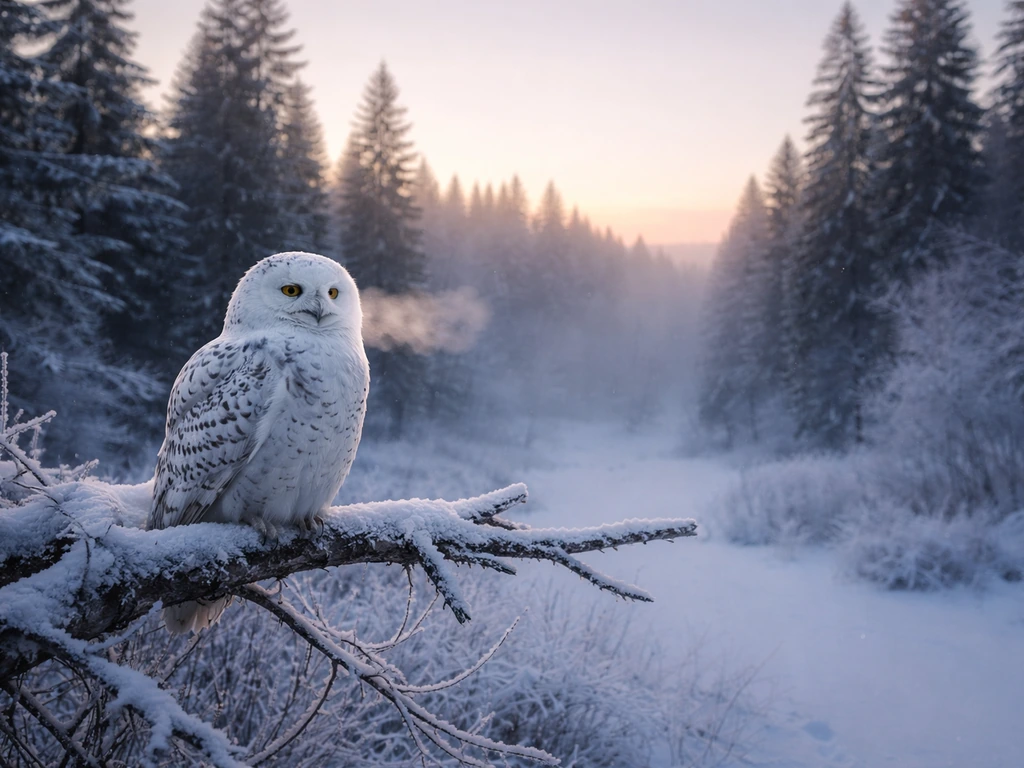
Most owls are nocturnal or crepuscular, most active between dusk and dawn. Snowy Owls are an exception and can be active during the day, especially in winter. Outside the high Arctic, Snowy Owls are mainly seen in winter in wide-open areas such as fields and shorelines. Their numbers vary year to year in what birders call irruptions. The winter of 2013 to 2014 was an extreme example, with Snowy Owls appearing as far south as Florida and Bermuda. In most years, though, even during irruption winters, the majority of Snowy Owls in North America stay near the Arctic Circle.
Ghost bird versus real owl: how the traits compare
Here is a direct comparison of the features people attribute to each 'ghost bird' meaning versus verified owl traits.
| Feature | North American 'Ghost Bird' (Owl nickname) | Potoo (South American ghost bird) | Ivory-billed Woodpecker (Journalistic ghost bird) |
|---|---|---|---|
| Is it an owl? | Yes, almost always Barn Owl or large pale owl | No, different order (Nyctibiiformes) | No, it is a woodpecker (Piciformes) |
| Facial disk? | Yes, prominent | No flat disk; large eyes, camouflaged plumage | No |
| Ear tufts? | Varies by species (Great Horned: yes; Barn Owl: no) | No | No |
| Nocturnal? | Yes for most species; Snowy Owl partly diurnal | Yes, strictly nocturnal | Primarily diurnal |
| Flight style? | Slow, silent, broad rounded wings | Slow, erratic; often perches motionless | Undulating woodpecker flight |
| Pale or ghostly appearance? | Yes, especially Barn and Snowy Owl | Yes, cryptic bark-like plumage | Black and white bold pattern |
| Range (North America)? | Widespread; species-dependent | Not found in North America | Southeastern U.S. (disputed/possibly extinct) |
If the ghost bird you are trying to identify was seen in North America, was pale and silent, appeared at night or dusk, and had a flat or round face, you are looking at an owl. The Barn Owl, with its heart-shaped face and ethereal white underparts, is the species that earns the nickname most often. The Snowy Owl earns it in winter, especially at latitude edges during irruption years.
Common lookalikes that get confused with owls
Not everything that flies at night and looks ghostly is an owl. Several other birds get caught in this confusion regularly.
- Common Nighthawk: A nightjar species that is crepuscular, hunting at dusk with erratic, bat-like flight. Mass Audubon classifies it as a nightjar, not an owl or raptor. The Guardian notes it is frequently mistaken for bats. It lacks a facial disk and has a very different body shape: long narrow wings and a small bill with a wide gape.
- Eastern Whip-poor-will: Another nightjar, heard far more often than seen, active at dusk and dawn. Both it and the nighthawk are sometimes called nocturnal or mysterious by casual observers, but neither is an owl.
- Potoo (in South America): As covered above, the Common Potoo, Nyctibius griseus, is often called the ghost bird or urutaú across South American countries. It sits motionless on stumps and branches, camouflaged as bark, with enormous eyes. It is NOT an owl, though it is nocturnal and can look eerily similar in a poor photo.
- Northern Harrier: A low-flying raptor with a pale underside and an owl-like facial ruff. Seen hunting over open fields in daylight, it can fool beginners. It flies with wings held in a V shape, which is a quick distinguishing cue.
- Short-eared Owl: Actually IS an owl, but sometimes mistaken for a harrier. It is crepuscular, hunts over open fields, and has a buoyant erratic flight that confuses people expecting a more typical owl silhouette.
Practical steps to verify what you actually saw
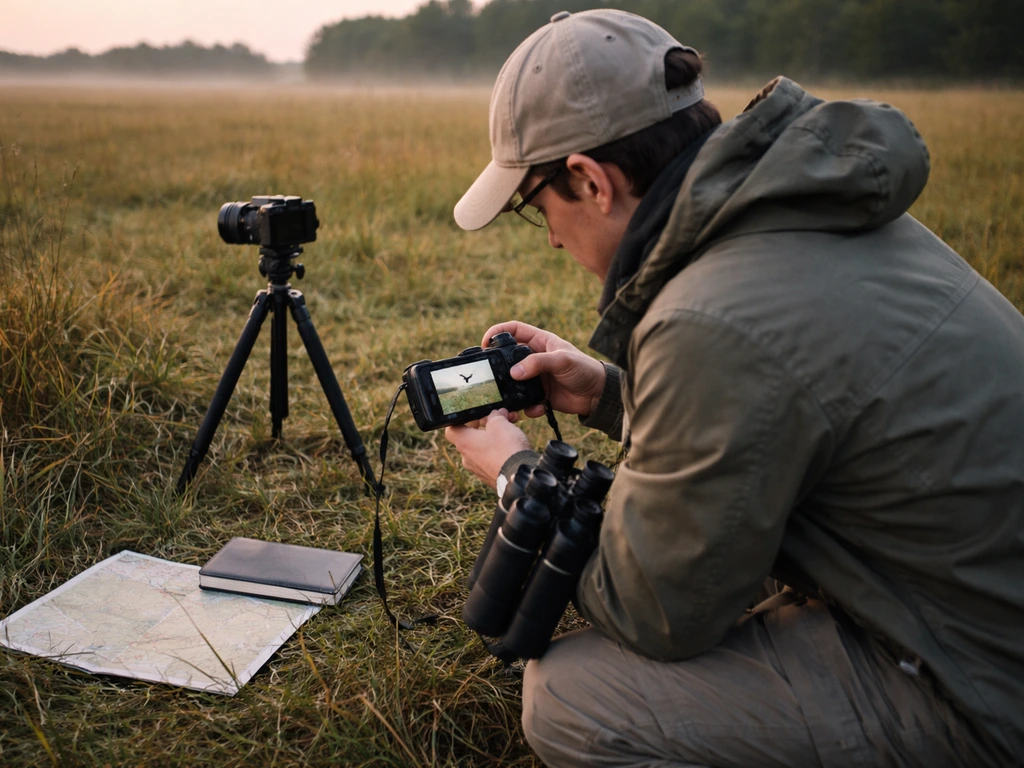
If you have a sighting, a photo, or an audio recording and want to confirm whether you found an owl (or which owl), here is what to do right now.
- Check your location and the date first. A pale large bird seen in January in an open field in the northern U.S. is almost certainly a Snowy Owl during an irruption year. A ghostly white bird flying silently over a farm field at night in summer is almost certainly a Barn Owl. Location and season rule out most alternatives before you even look at the photo.
- Look for the facial disk in any photo. Even a blurry shot will usually show a flat, round, or heart-shaped face. That is your fastest owl confirmation. If the face is narrow, rounded with large eyes but no disk, and the bird is perched like a piece of bark, you may have a potoo.
- Note the timing. Strictly daytime sightings of a pale bird in winter open habitat point to Snowy Owl. A bird seen only after full dark with a wide flat face points to Barn Owl or Great Horned Owl depending on size and color.
- Log the sighting in eBird. eBird accepts photos and audio even if quality is low. The Cornell Lab explicitly states that poor-quality media still has archival and identification value. If your sighting is unusual for the location, eBird's review system will flag it and a volunteer reviewer can help confirm or question the ID.
- Record any sound. Owl calls are distinctive and species-specific. eBird's tools and apps like Merlin can identify a call from a recording. A few seconds of audio is sometimes more diagnostic than a photo.
- Use Merlin Bird ID. The Cornell Lab's Merlin app lets you enter date, location, and size/color description and will return a ranked list of likely species. It is free and handles both owls and look-alikes well.
- Compare against verified range maps. All About Birds and eBird both have range maps updated with recent sighting data. If a species is not expected in your area at your time of year, that raises the bar for confirmation, but it does not make it impossible, especially for irruptive species like Snowy Owls.
Where bird classification debates usually go wrong
The confusion around 'ghost bird' is a perfect example of why common names cause problems that scientific names are designed to prevent. The International Code of Zoological Nomenclature exists specifically to maintain universal, stable names for animal taxa. Oology is the study of bird life, including how different species are identified in the field. 'Ghost bird' is a common name applied to at least three entirely different animals across different cultures and regions. The American Ornithological Society updates English bird names through a committee process, but informal or regional nicknames like 'ghost bird' are outside that process entirely and can mean whatever local culture or a single article author decides.
The practical classification mistake people make is assuming that because two animals look similar or share a nickname, they must be closely related. Owls and potoos are both nocturnal, both have large eyes, both perch in trees, and both look a bit uncanny. But they are not close relatives. Owls belong to the order Strigiformes. Potoos belong to Nyctibiiformes. The resemblance is a result of convergent evolution: similar lifestyles producing similar features, not shared ancestry.
The same logic applies when people debate whether a 'ghost bird' is real or mythical. A name being spooky or informal does not make the animal fictional. Barn Owls are real birds. Potoos are real birds. The confusion sits entirely in the label, not the animals. When you see a claim online that a 'ghost bird' was spotted and people are debating whether it exists, the first question to ask is: which animal is actually being described? Get the description and match it to known species. If the description matches a Barn Owl, you have your answer. If it matches nothing with feathers, fur, or scales in any verified taxonomy, then you have a different kind of problem.
It is also worth knowing that owls themselves sometimes sit at the center of these debates. Questions like whether an owl is a bird at all (versus a mammal, which it is not) or whether specific owl species like the Snowy Owl count as distinct species come up regularly on bird classification sites. Owls are fully, unambiguously birds: they have feathers, lay eggs, are warm-blooded, and evolved from theropod dinosaurs like all other birds. The fact that they are nocturnal, rotate their heads 270 degrees, and fly silently does not change their classification one bit.
So, is a ghost bird an owl? Here is the bottom line
In North America, yes, almost always. The term 'ghost bird' is most commonly a nickname for owls, especially the Barn Owl and the Snowy Owl, based on their pale coloring, silent flight, and tendency to appear suddenly out of the dark. The U.S. National Park Service uses the term this way officially. If someone in the United States or Canada tells you they saw a ghost bird, assume owl until proven otherwise, then use location, season, facial disk, and behavior to confirm the species.
In South America, no. If you meant Duolingo, the app name is unrelated to birds, and the question comes from the phrase “ghost bird” being used differently by different communities. The ghost bird there is the potoo, a real and fascinating nocturnal bird that is taxonomically distinct from owls. In conservation journalism, 'ghost bird' means the ivory-billed woodpecker, also not an owl. The term is context-dependent, but the identification process is the same in all cases: describe what you actually saw, match it to known species traits, check the range and timing, and log it somewhere like eBird if you want a second opinion. That is the cleanest way to settle a ghost bird debate today.
FAQ
If I’m in the U.S. and saw something “ghostly” at night, what’s the fastest way to check whether it’s an owl?
Start with the face and flight. A flat or round facial disk that funnels sound to the ears, plus slow, deep wingbeats with broad rounded wings, strongly points to an owl. If the bird had a clearly different head shape (no facial disk) or made non-owl flight patterns, don’t assume owl just because it was nocturnal.
Can barn owls and snowy owls look too similar for a clear ID?
Yes, especially in poor light. To separate them, use behavior and setting: barn owls are often pale with heart-shaped facial disks and are commonly associated with open country and low hunting flights, while snowy owls are bulkier with yellow eyes and heavy feathering on the feet, and are most expected in winter, often near wide open habitat at higher latitudes.
What if I heard it but did not see a bird, is there still a reliable “ghost bird” check?
You can narrow it, but you cannot confirm from sound alone in most cases. Focus on whether the calls match owl-type vocalizations (soft hoots, screeches, or hisses depending on species) and note timing (dusk-to-dawn) and location (fields, forests, coastal edges). If you can record audio, use a bird sound reference and compare note-by-note, not just “owl-like” impressions.
I have a blurry photo, which detail should I prioritize for owl confirmation?
Prioritize the facial disk and head proportions. Even blurry images sometimes show whether the face looks flat and circled by a feather ring, or whether ear tufts are present and where they sit on the head. If you only see body color with no readable head features, your confidence should stay low and you should look for a second cue like wing shape in flight.
Are potoos sometimes mistaken for owls, and what visual clue usually gives them away?
Yes, because both are nocturnal and can look uncanny. A key difference is the presence and pattern of facial features and posture, potoos often show different head and mouth shapes and typically do not match the classic owl facial disk look with flat, front-facing eyes. If the “face” does not resemble a proper owl disk, treat the sighting as likely not an owl.
Could the “ghost bird” label refer to something that is not even a real animal?
Usually the name is still attached to a real species, it’s the label that changes by region. The practical test is whether the described traits can be matched to any known species with recognized anatomy and taxonomy. If someone claims a “species” but provides details that do not match any feathered, egg-laying bird (or any verified animal group), ask for original description details rather than accepting the nickname.
How should I handle online debates where people argue “my ghost bird isn’t real” or “it’s mythical”?
Translate the debate into observation. Ask what animal was described, where it was seen, and what the bird looked like (face shape, wing shape, size, and behavior). Many “myth” claims collapse once the description is matched to Barn Owl, Snowy Owl, potoo, or the ivory-billed woodpecker depending on context and geography.
Is an owl always a bird in the biological sense, even if classification discussions get confusing online?
Yes. Owls are unambiguously birds: they have feathers, are warm-blooded, and lay eggs. If a discussion suggests otherwise, it’s mixing up classification vocabulary or confusing “unusual behavior” (nocturnality, silent flight, head rotation) with what defines a bird.
If I want a second opinion, where should I log or share my observation to resolve the “ghost bird” uncertainty?
Log it with the real traits you observed, not just the nickname. Include location (country, region), date and time, habitat type, and any measurable features like estimated size, face shape, and whether it was silent. Submitting those specifics to a bird observation platform makes it much easier for others to match your description to an actual species.