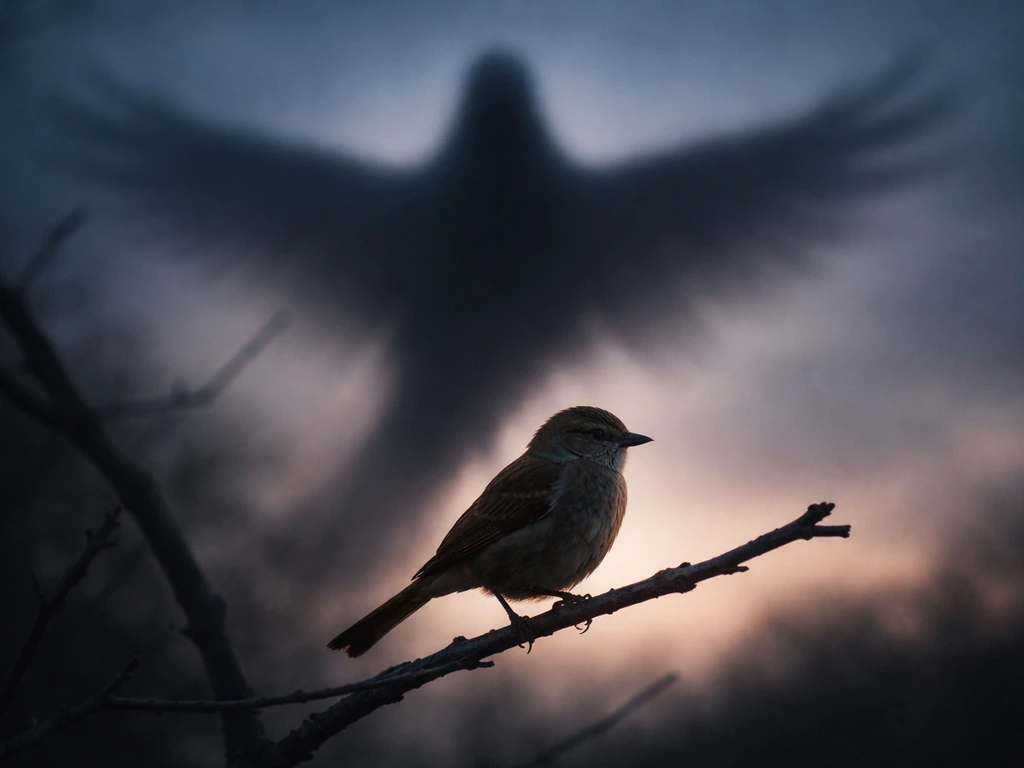
No, owls are absolutely not the only birds that can see blue. In fact, the vast majority of birds can perceive blue wavelengths, and most of them do it better than owls do. The claim that owls have some exclusive blue-vision superpower is simply not supported by science. If anything, owls are missing pieces of the color vision puzzle that most other birds have fully intact.
Are Owls the Only Bird That Can See Blue?

Marcus Hendricks
12 Jun 2026
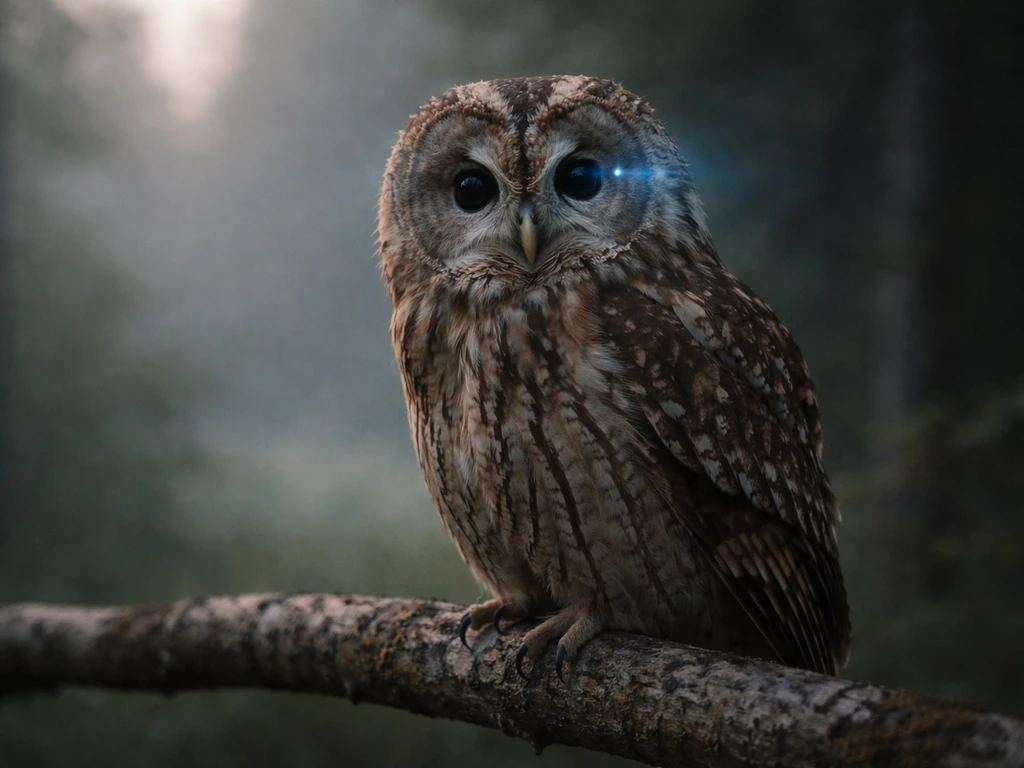
Do owls even see blue particularly well?
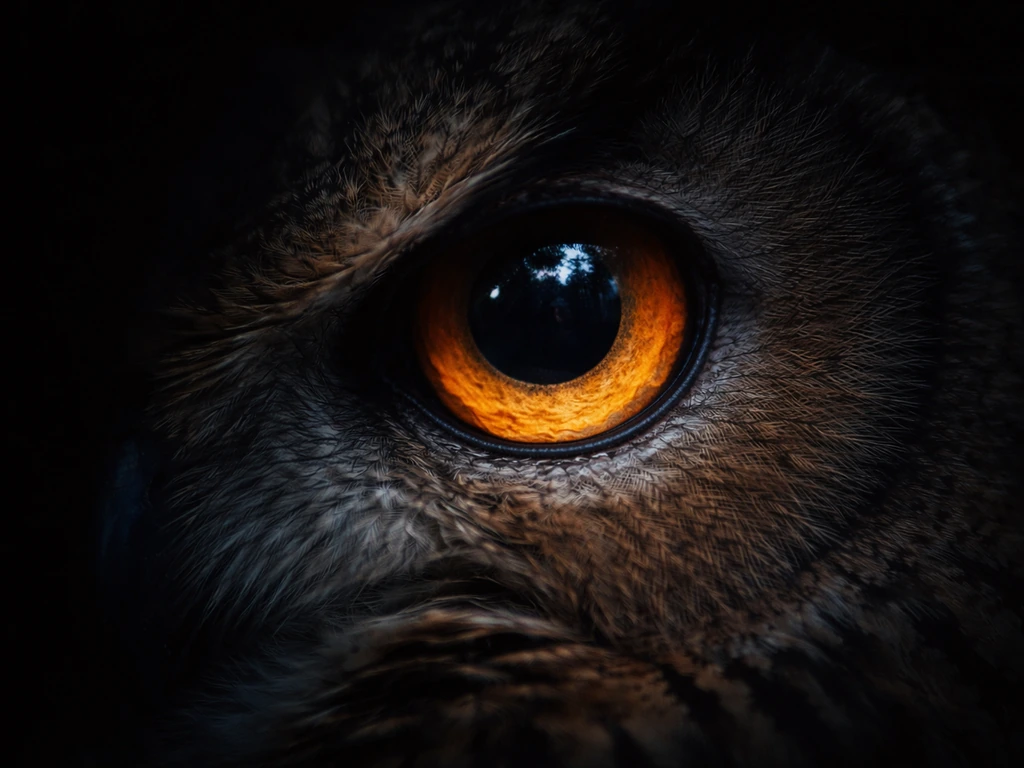
Owls do have functional vision across a range of wavelengths, including what we'd call the blue part of the spectrum. But here's the thing: they're actually missing a cone type that many other birds use to perceive short-wavelength light. Research on multiple owl species, including Asio otus (long-eared owl), Asio flammeus (short-eared owl), Strix aluco (tawny owl), and Aegolius funereus (Tengmalm's owl), found no SWS1 opsin transcripts in their retinas. That's the UV/violet-sensitive cone that gives most birds their extra edge in the short-wavelength part of the spectrum. So owls are, ironically, less equipped for blue-end color perception than the typical backyard songbird.
How birds see color (and why it's nothing like human vision)
Humans are trichromats. We have three types of cone photoreceptors tuned to roughly red, green, and blue wavelengths, and our brain blends those signals to produce the full range of colors we experience. Birds are tetrachromats. They have four cone types, not three, and that fourth channel pushes their vision into the ultraviolet range that we literally cannot see. On top of that, birds have colored oil droplets inside their cone cells that act like narrow-band filters, sharpening their ability to discriminate between similar hues. The result is that bird color vision is richer, broader, and finer-grained than ours in almost every measurable way.
The four cone types found in most birds are generally labeled by their peak sensitivity: LWS (long-wavelength sensitive, peaking around 560 to 570 nm, roughly the red-orange range), MWS (medium-wavelength, around 497 to 509 nm, in the green range), SWS2 (short-wavelength 2, around 427 to 458 nm, which is the true blue channel), and SWS1 (short-wavelength 1, around 355 to 426 nm, tuned to UV or violet depending on the specific opsin variant). So when someone asks whether a bird can "see blue," the relevant cone is SWS2, and nearly all birds have it.
Why the 'only owls see blue' idea is a myth
The confusion probably comes from a few different places. Owls are famously associated with exceptional vision (more on that below), and people tend to assume that a bird famous for seeing in the dark must have some other extraordinary visual ability to compensate. There's also genuine complexity in owl retinal anatomy that gets oversimplified in viral posts. Owls do have some unusual features: they lack the UV-sensitive SWS1 cone and red oil droplets found in many other birds. But lacking UV sensitivity is not the same as having exclusive blue vision. It's actually the opposite direction from what the myth claims.
The SWS2 cone, which handles the blue wavelength range around 427 to 458 nm, is present and functional in the vast majority of birds studied, including owls. So owls can perceive blue light, yes, but so can robins, sparrows, pigeons, starlings, and essentially every other bird you're likely to encounter. So when someone asks, “Is owl a good bird,” the evidence points to owls being a normal bird when it comes to blue perception, not a special case. There's nothing special about owls in this regard.
Other birds that see blue (spoiler: all of them, basically)
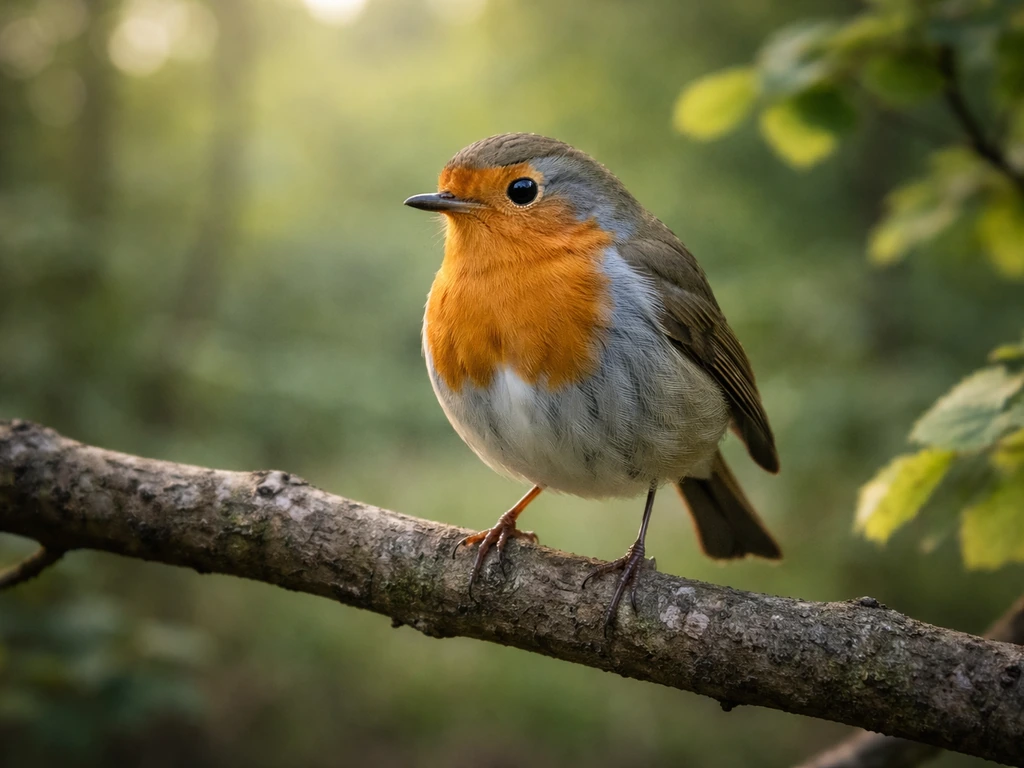
Passerines (the perching birds, which make up more than half of all bird species) have been studied extensively for color vision, and they consistently show functional SWS2 cones for blue perception and, in most cases, SWS1 cones for UV or violet perception as well. Yes, in fact many perching birds can perceive blue as well. Pigeons were among the first birds to have their color discrimination rigorously tested in behavioral experiments, and they can reliably distinguish blue from nearby wavelengths. Hummingbirds, budgerigars, and zebra finches have all been subjects of color vision studies that confirm broad spectral sensitivity including the blue range.
If you compare owls directly to passerines, owls are actually the less capable blue-spectrum perceivers in a specific sense: passerines typically retain the SWS1 UV/violet cone that owls appear to have lost. So the short-wavelength vision picture looks like this: most birds have both SWS2 (blue) and SWS1 (UV/violet), while owls have SWS2 (blue) but appear to lack SWS1 (UV/violet). Owls are a subset of normal avian color vision, not an enhancement of it.
| Bird group | SWS2 (blue ~427-458 nm) | SWS1 (UV/violet ~355-426 nm) | Blue perception? |
|---|---|---|---|
| Most passerines (songbirds) | Present | Present | Yes, strong |
| Pigeons (Columbiformes) | Present | Present (violet-shifted) | Yes, well-documented |
| Owls (Strigiformes) | Present | Absent or lost | Yes, but narrower short-wavelength range |
| Hummingbirds | Present | Present | Yes, among the broadest studied |
| Raptors (hawks, eagles) | Present | Present | Yes |
The photoreceptor mechanics behind blue vision
Each cone type in a bird's eye contains a visual pigment made of a protein called an opsin bound to a light-sensitive molecule called retinal. The specific opsin determines which wavelengths of light trigger a response in that cone. For blue light, the relevant opsin is encoded by the SWS2 gene, and it's been found in nearly every bird lineage tested. Evolutionary changes in the opsin protein sequence fine-tune the exact peak sensitivity, but the blue channel itself is ancestral and widespread across birds, not something that evolved uniquely in owls.
On top of the opsins, birds have those oil droplets inside their cone cells that filter incoming light before it hits the pigment. Different oil droplet types (classified by their color: transparent, pale yellow, yellow, orange, and red) are paired with different cone types. These droplets sharpen color discrimination by narrowing the range of wavelengths each cone responds to. Owls actually lack the red oil droplets found in many other birds, which is another way their visual system differs from the typical avian blueprint, not an enhancement, just a difference related to their low-light lifestyle.
How scientists actually test whether a bird sees blue

There are two main lines of evidence used to evaluate color vision in birds. The first is anatomical and molecular: researchers examine the retina for the presence of different cone types, identify which opsin genes are expressed, and characterize the oil droplets. This is how the absence of SWS1 in owls was established, through retinal transcriptomics. The second line of evidence is behavioral: birds are trained to discriminate between stimuli of different colors or wavelengths, and researchers measure how well they can tell the difference. Pigeon blue discrimination studies are a classic example of this approach.
When you read a claim that a bird "can see blue," it's worth asking which type of evidence is being cited. Anatomical evidence tells you the hardware is there. Behavioral evidence tells you the animal actually uses that hardware to make color distinctions in practice. For blue perception specifically, both lines of evidence exist for many bird species, and neither line points to owls as anything special. If you want to verify a specific claim, look for the terms "SWS2 opsin," "short-wavelength sensitive cone," or "color discrimination" in the source, and be skeptical of any article that doesn't cite actual studies.
Clearing up related mix-ups about owls and 'special' vision
Owls do have genuinely remarkable visual adaptations, just not the ones the myth claims. Their eyes are tubular rather than spherical, giving them a large lens-to-retina ratio that maximizes light gathering in low-light conditions. They have a very high density of rod photoreceptors for scotopic (low-light) vision. Their ability to see at night is legitimately extraordinary. But night vision and blue color vision are separate things, and the owl's specialization for darkness has actually come at a cost to some of the color vision features that daytime birds enjoy.
It's also worth flagging that owls are, unambiguously, birds. This might sound obvious, but this site regularly deals with questions about whether various creatures count as birds at all. Whether owls are dangerous, wise, good, or even evil (all questions worth exploring elsewhere on this site) doesn't change their classification as birds in the order Strigiformes. If you're wondering whether an owl is a wise bird in general, that's a separate question from whether it can see blue. If you’re wondering whether an owl is a dangerous bird, it helps to focus on behavior and context rather than myths about eyesight Whether owls are dangerous. Their visual biology is avian through and through, including a tetrachromatic system inherited from the same ancestral lineage shared with every other bird alive today.
One more category of confusion worth addressing: sometimes people encounter 'owls' in contexts that have nothing to do with real birds. Sports mascots, brand logos, fictional birds from films and novels, and mythological creatures sometimes get folded into discussions of bird traits in ways that muddy the waters. If someone cites an owl mascot or a fantasy creature as evidence for unusual owl abilities, that's a signal to redirect the conversation back to actual biology.
What to take away from all this
Owls can see blue. So can virtually every other bird. The premise of the question is based on a myth, and the reality is almost the reverse: if you want a bird with exceptional short-wavelength vision, you'd be better off looking at a songbird or a hummingbird than an owl. Owls are adapted for darkness, not for color richness. Their visual system is missing the UV-sensitive cone that most birds carry, which makes them less impressive on the blue-end of the spectrum, not more. The next time you see a claim that only owls can see blue, you now have everything you need to push back on it with confidence.
FAQ
If owls can see blue, why do people think they have “the only” blue vision?
The myth usually mixes two separate ideas, night performance and color discrimination. Owls are exceptional in low light due to rod-rich retinas and eye shape, but that specialization does not imply superior blue discrimination. In fact, retinal findings suggest owls lack the additional short-wavelength cone many other birds have.
Does “seeing blue” mean owls see the same blue colors as songbirds?
Not necessarily. Most birds have a blue-sensitive cone (SWS2), but differences in other cones and in oil droplet filtering can change how finely two close shades are separated. Owls appear to differ by lacking a UV/violet cone, which can alter overall short-wavelength color spacing.
Can a bird “see blue” if it lacks UV or violet sensitivity (SWS1)?
Yes. Blue perception mainly depends on the SWS2 channel, which is widely present across birds including owls. Missing SWS1 affects the UV/violet side of short-wavelength vision, but it does not remove the ability to detect blue-range wavelengths.
How can I tell whether a claim about blue vision is based on anatomy or real behavior?
Look for whether the evidence mentions retina tests such as opsin presence (for example, SWS2) and oil droplets (hardware evidence), versus controlled experiments where birds learn to discriminate wavelengths/colors (behavior evidence). Claims without any mention of either type of testing are more likely to be myth or speculation.
Do owls have better blue vision than other night birds?
There is no general “owls are best at blue” rule. Other nocturnal species can have different cone complements and oil droplet setups. What you can safely generalize is that owls have functional SWS2, but their missing SWS1 makes them not unusually strong for the short-wavelength end compared with many daytime species.
What’s the practical difference between SWS2 (blue) and SWS1 (UV/violet)?
SWS2 tunes to the blue range (roughly the 427 to 458 nm window), while SWS1 covers shorter UV or violet wavelengths (around the mid-350 to low-400s nm range depending on the specific opsin variant). Having both typically lets birds sort more distinct shades in the short-wavelength region than having only SWS2.
Could lighting conditions affect whether an owl appears to see “blue” to us?
Yes. Ambient light spectrum and intensity influence which wavelengths are available to detect, and night conditions generally favor rod-based vision over cone-based color vision. Even if an owl’s cones are capable of blue detection, color discrimination may be limited when light levels are very low.
Are there any “fake owl” sources I should watch out for when reading about blue vision?
Yes, claims that rely on mascots, brand logos, or fictional creatures are a common source of misinformation. They do not correspond to measured retinal opsins, oil droplets, or discrimination experiments, so they should not be treated as evidence about real owl vision.
If I want a bird that is especially good at short-wavelength discrimination, what should I look for?
Birds that retain both the blue channel (SWS2) and the UV/violet channel (SWS1) typically have more complete short-wavelength cone sets, which can support finer wavelength sorting. Passerines, hummingbirds, and many other studied species are good candidates to compare against owls for short-wavelength performance.
Next Article
Why Is Howl a Bird? Facts, Confusion, and How to Verify
Is Howl a bird? Learn bird traits, common naming confusion, past vs present meanings, and how to verify today.