Yes, a skylark is absolutely a real bird. Specifically, when people say 'skylark' they almost always mean the Eurasian skylark (Alauda arvensis), a genuine avian species recognized by major wildlife authorities including the U.S. Fish and Wildlife Service, Cornell Lab of Ornithology, and BirdLife International. It's not a mascot, not a myth, and not a case of an animal being called a bird when it technically isn't. It has feathers, wings, a beak, lays hard-shelled eggs, and is warm-blooded. It checks every single box.
Is Skylark a Bird? How to Identify Skylarks Confidently

Marcus Hendricks
28 Jun 2026
How to identify a skylark
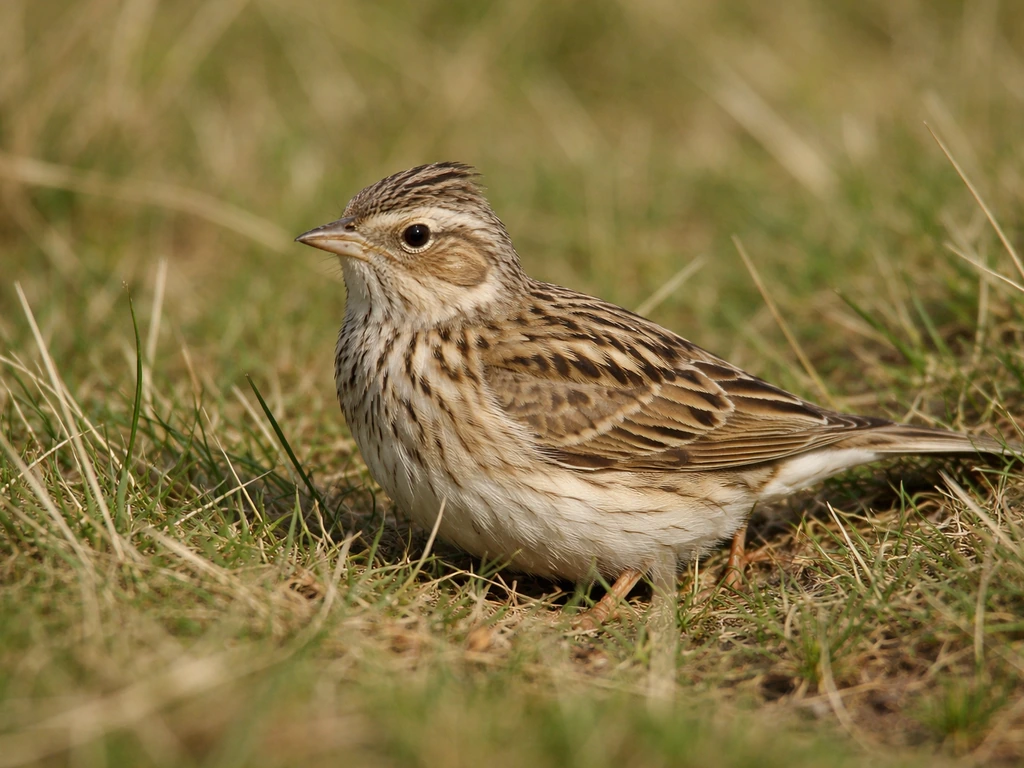
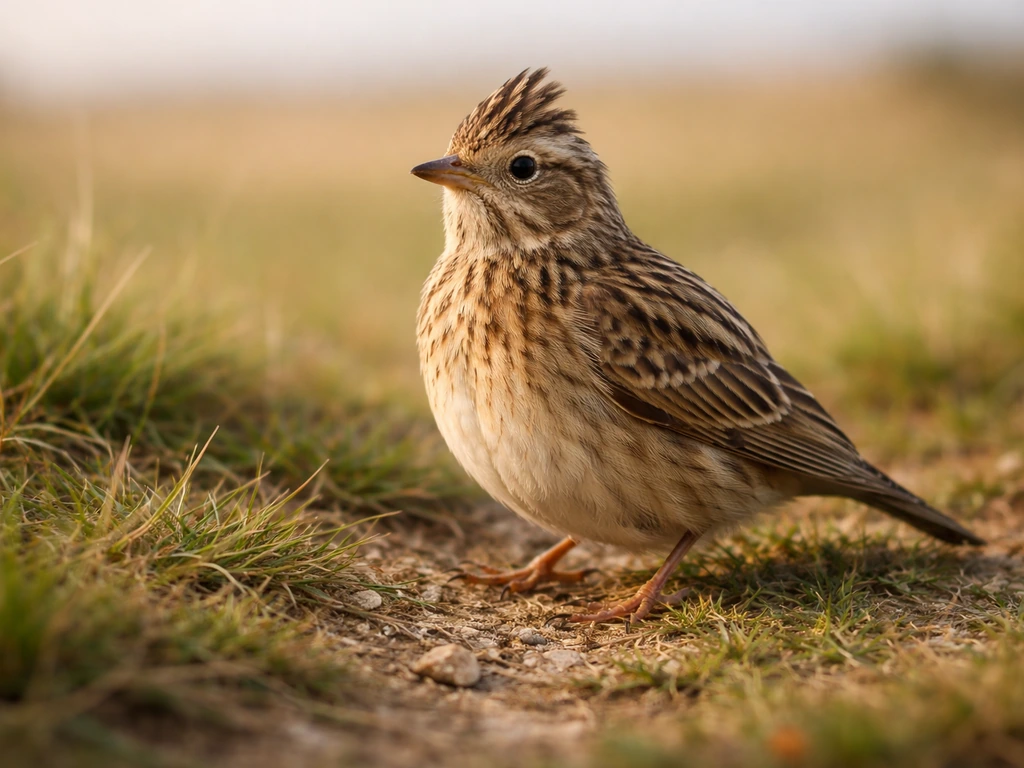
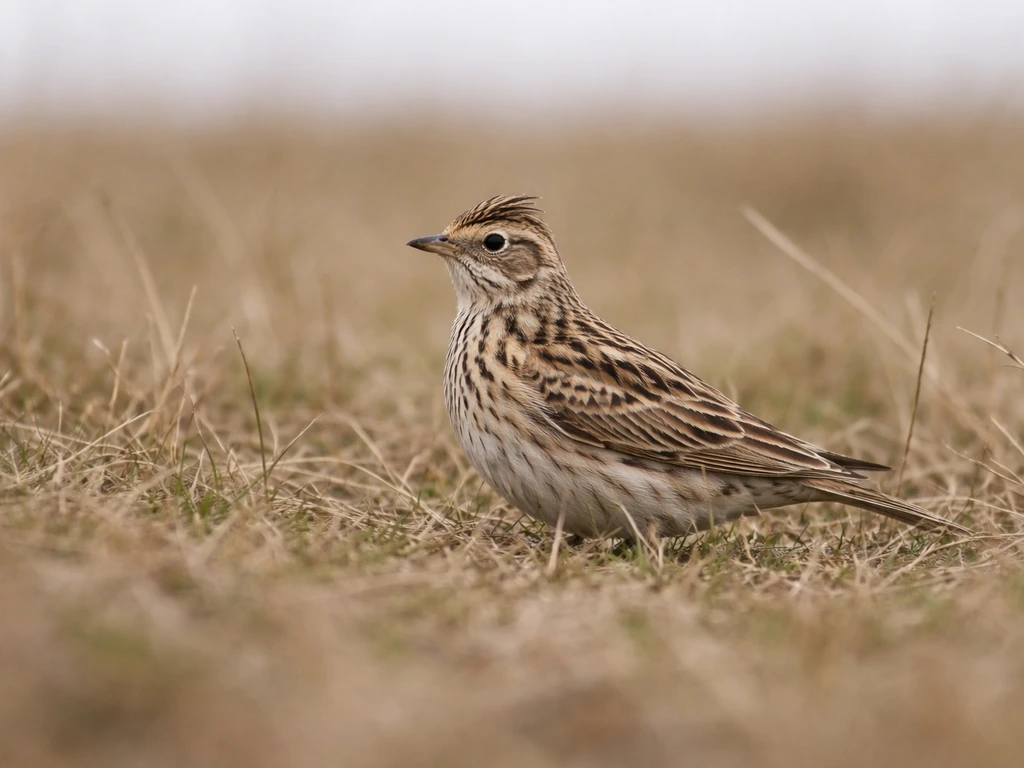
The skylark is a small, streaky brown bird that blends into the ground remarkably well when it's not flying. Adults have variegated brown upperparts, off-white underparts, and a streaked breast and throat. One of the clearest field marks is the short, streaked crest on top of the head, which the bird raises when alert. In flight, look for a white trailing edge along the inner wing and white outer tail feathers. These white flashes are genuinely useful ID cues when the bird is moving fast or backlit.
The song flight is the real showstopper and the thing most people remember. Males fly almost straight up on rapid wingbeats, hover somewhere between 50 and 100 meters above the ground, and pour out a continuous, complex warbling and trilling song the entire time. eBird notes that this prolonged warbling and trilling song is given in flight, often so far overhead the bird appears as a speck continuous, complex warbling and trilling song. Then they parachute back down, still singing. Sometimes the bird is so far up it's just a speck against the sky and you hear it long before you see it. That aerial song performance, according to the RSPB, is essentially unmistakable once you've heard it.
On the ground, skylarks forage by walking (not hopping) through open areas, picking food directly from the ground and pecking at plant stalks and seed heads. This ground-walking posture, combined with the crest and the streaky brown coloring, is enough to make a confident ID in the field. Outside breeding season, they often gather in flocks on plowed fields and stubble, so you might see several at once.
The call, separate from the full song, is a low-pitched, slightly burry chirrup made up of two similar descending notes in quick succession. If you're using an app like BirdNet in the field, that call will match up quickly. Cornell Lab describes it well and has audio available if you want to train your ear before you go looking.
What actually makes something a bird (and why skylarks qualify)
The Smithsonian defines birds by three core traits that separate them from all other vertebrates: feathers, hollow bones, and hard-shelled eggs. Beyond those, birds are endothermic (warm-blooded), have wings (even if some can't fly), and breathe through a beak rather than teeth. Skylarks have every single one of these features. They're fully feathered, they fly on hollow-boned wings, and they lay eggs in a ground nest lined with grass and rootlets. There's no ambiguity here. A skylark isn't like a bat (a flying mammal) or a flying fish. It's a textbook bird.
Skylark taxonomy: where it fits in the bird family tree
The Eurasian skylark sits in the family Alaudidae, which is the lark family. Its full taxonomic chain runs: Class Aves (birds), Order Passeriformes (perching birds), Family Alaudidae (larks), Genus Alauda, Species Alauda arvensis. That scientific binomial, Alauda arvensis, is the name you'll find in USFWS species profiles, BTO BirdFacts, the Cornell Lab's All About Birds, and essentially every serious ornithology reference.
If you've been looking at related questions like whether a lark is a bird, the answer is the same. The skylark is simply one specific lark species within the broader lark family. There are other birds called 'skylark' in casual regional usage, but Alauda arvensis is the one almost everyone means, and it's the species that all the major field guides reference by that common name.
| Taxonomic rank | Classification |
|---|---|
| Class | Aves |
| Order | Passeriformes |
| Family | Alaudidae (larks) |
| Genus | Alauda |
| Species | Alauda arvensis |
Birds (and non-birds) people mix up with skylarks
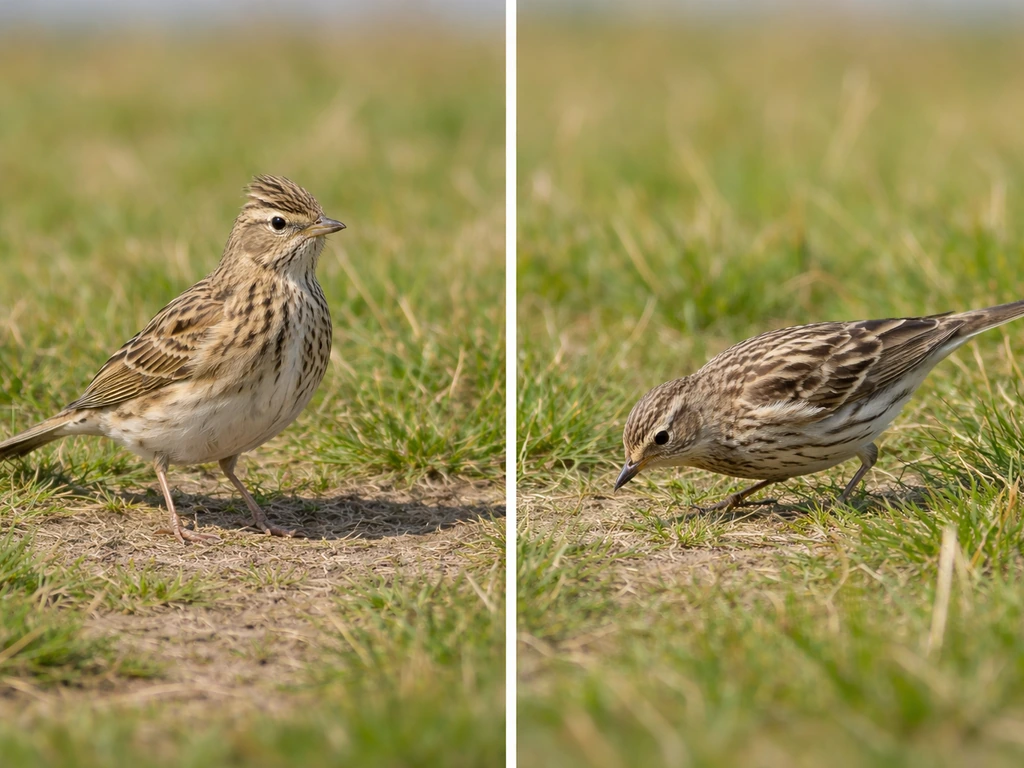
The bird most commonly confused with skylarks in the field is the meadow pipit. Both are small, streaky brown birds foraging in open grassland, and from a distance the resemblance is real. The practical difference: meadow pipits tend to look darker and more olive-tinged, with black streaking below, while skylarks are generally lighter with a whitish belly and have that visible crest. Skylarks are also slightly bulkier, and BTO field guides describe their tail as appearing longer with a bobbling motion in flight.
The woodlark is another comparison species worth knowing. It also has a crest and belongs to the lark family, but it's smaller, shorter-tailed, and its song flight is different. If you're in a habitat where woodlarks are possible, the crest alone won't separate them, so focus on tail length and song.
There's also a broader category of confusion that's relevant to this site: animals that get called birds but aren't. Skylarks don't have that problem. They're not like a bat or a flying squirrel, which are mammals that fly. Skylarks are real, unambiguous birds. If someone has pointed you to this page because they're asking whether a skylark 'counts' as a bird the way someone might ask that about a moonlark or a mythical creature, the answer is straightforwardly yes.
Where skylarks live and when to look
Skylarks breed across a huge range: western Europe and northwest Africa through to eastern Asia. In winter, they pull back to southern and western Europe and North Africa. In the UK, they're resident year-round and you can spot them in any month from January through December. Their preferred habitats are open and low-vegetation: farmland, grassland, saltmarshes, upland moorland, and stubble fields. They need ground cover for nesting but not much vertical structure, which is why intensively managed farmland with no tufted grass has hurt their populations significantly.
In North America, skylarks are not native, but there's one introduced population: on southern Vancouver Island in British Columbia. That population has declined sharply and by the mid-2010s fewer than 10 individuals were being counted annually. So if you're in North America, the chance of a wild skylark sighting is very slim outside that specific area.
Other things called 'Skylark' that are not birds
If you searched 'skylark' and landed here feeling confused, it might be because the name shows up in a lot of non-bird contexts. Buick used 'Skylark' as a car model name. There's a 1941 film called Skylark, a well-known song by the same name, and blank" rel="noopener noreferrer">a cloud-based GPS corrections product from Swift Navigation called Skylark. None of these are birds. They borrowed the name for its connotations of flight or freedom, but they're entirely separate from the species Alauda arvensis. If you're tracking down a bird ID, ignore those results.
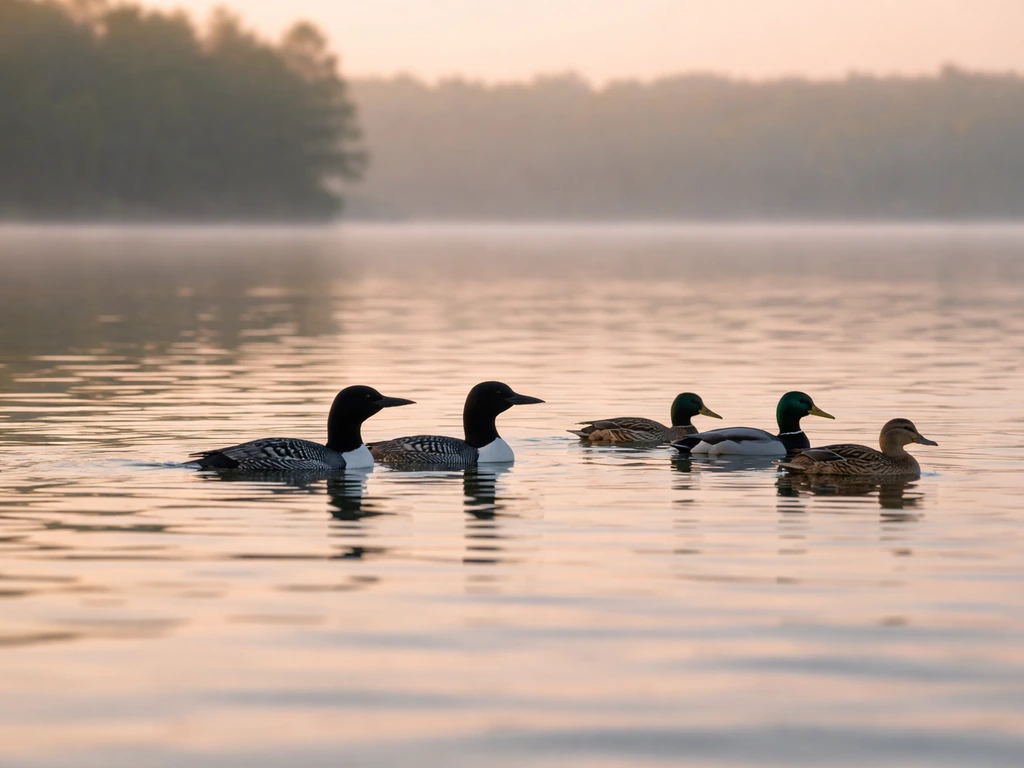
This kind of name confusion is actually common in bird searches. Similar questions come up around the loon, which is a real diving bird, or the moonlark, which gets some attention as a supposed species. Skylarks don't have that ambiguity on the biology side, but the brand and culture uses of the name can throw people off.
How to confirm a skylark ID today
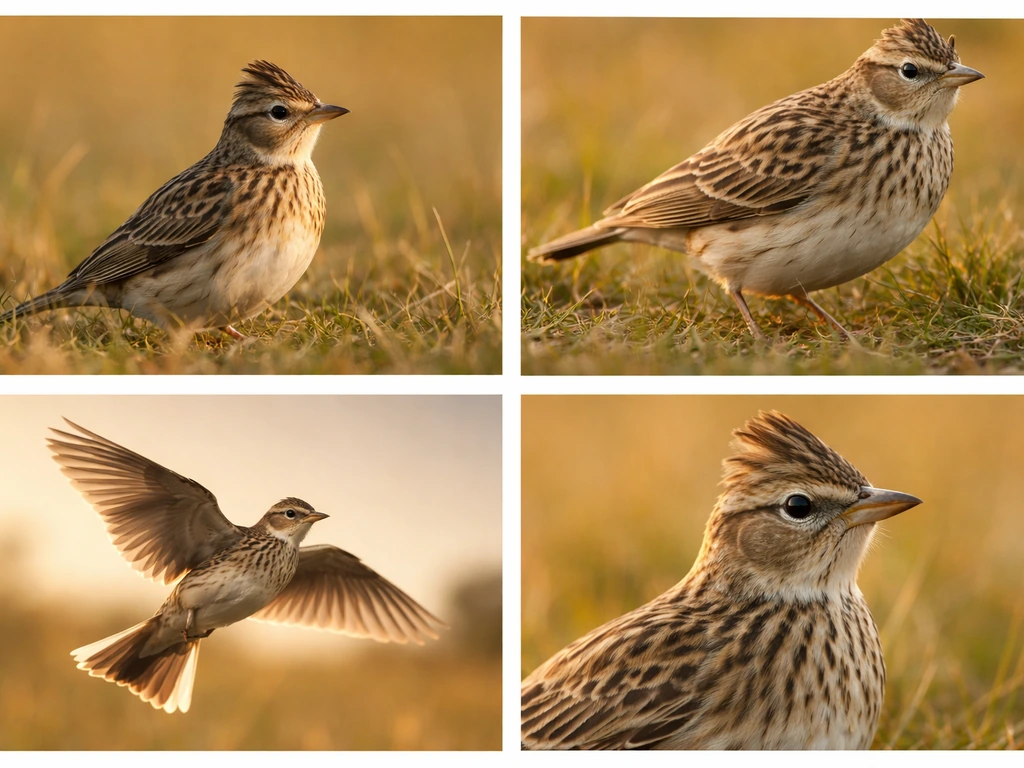
If you're trying to identify a bird you've seen or heard, start with these steps. Look for the crest, the streaky brown coloring, and the whitish belly. In flight, watch for white on the outer tail and trailing wing edge. If it's singing from the air in a long hovering display, that's your strongest single cue. For audio, pull up Cornell Lab's All About Birds page for the Eurasian skylark or run a recording through BirdNet. For photos, New Zealand Birds Online and eBird both have solid image galleries. If you're in the UK, the RSPB's species page has a clear description plus audio. Those three sources together are enough to make a confident call.
FAQ
When someone says “skylark,” do they always mean the same bird?
It depends on context. In birding, “skylark” almost always refers to the Eurasian skylark (Alauda arvensis). In other contexts it can mean a car model, a film title, a song, or a software product, so if you are trying to identify a bird, prioritize location, habitat, and the species ID cues (crest, streaking, flight song).
Can I confidently say it is a skylark if I only hear a quick call?
Yes, but only indirectly. The clearest “proof” in the field comes from behavior, plumage details, and especially the song flight. If you only find a single brief call or a glimpse of streaky brown coloring on the ground, there is still room for confusion with other open-country small birds, so use multiple cues together.
What should I do if I can’t see the bird well on the ground?
Not usually. Skylarks are notorious for being very hard to see while perched or walking because they blend into the ground. Use this reality to your advantage: slow your search, look for the crest when the bird is alert, then confirm with flight cues like the white trailing edge and the outer tail flashes (when it lifts).
Do the white wing and tail flashes still help for skylark ID at night or in poor lighting?
Backlighting and distance matter. The white on the inner wing trailing edge and the outer tail shows up best when the bird is in motion and the light catches the edges. If it is cloudy or you are far away, rely more heavily on the crest plus the overall light underparts, then verify with the song flight if possible.
What if the bird is singing overhead, but I’m not sure it’s the skylark song flight?
Many species can sing “from above,” so prioritize the skylark’s distinctive display pattern: the male flies upward in a near-vertical manner, hovers high (often sounding like a continuous warble), then parachutes back down still singing. If the bird is singing but the flight pattern does not match, check alternative candidates before concluding.
Which bird is most often confused with skylarks, and how do I separate them quickly?
The meadow pipit is the most common mix-up in similar open grassland. A practical way to decide is color and shape cues: skylarks typically look lighter with a more whitish belly, and they show a visible crest. Pipits also tend to look darker or more olive with heavier black streaking below, and in flight the apparent tail and bobbing behavior can differ.
If I miss the song flight, what is the best alternative confirmation?
If you cannot get the bird’s flight song display, use a “two-step” check: first confirm structural field marks (crest present, streaking pattern, whitish underparts) while it is on foot or perched. Then, when it takes off, confirm the outer tail and wing-edge flashes. If you only get one of these steps, treat the ID as tentative until you get the other.
Is a skylark likely if I live in the US or Canada?
In North America, wild skylark chances are extremely low outside the known introduced area on southern Vancouver Island. If you are elsewhere in the US or Canada, most “skylark” sightings you hear about will be misidentifications or name confusion, so re-check the habitat and compare against local lookalikes like meadow pipits.
I searched “Skylark” and got non-bird results, how do I avoid wasting time?
Name confusion is a real issue in searches. If you see results for a car, a movie, or a GPS product, those are not the bird and will not help with identification. Treat those as “false leads” and return to field guides or bird-specific listings for the Eurasian skylark.
How should I use a bird-identification app when it gives multiple possible matches?
For mobile app use, a common mistake is trusting the first match without checking context. Use the app as a prompt, then verify with field cues you can see: crest, streaking, pale underparts, and any visible white wing or tail edging in flight. If the app suggests multiple similar larks or pipits, prioritize your best visual cues rather than the audio alone.
Are juvenile skylarks harder to identify, and what should I look for instead?
Yes, juveniles can be trickier because streaking and overall tones can look less crisp. That is why the crest and the “whitish belly” impression matter, and why the song flight is so valuable for adults. If you are uncertain, record what you saw (crest yes or no, underparts pale or dark) and re-check later with reference images.