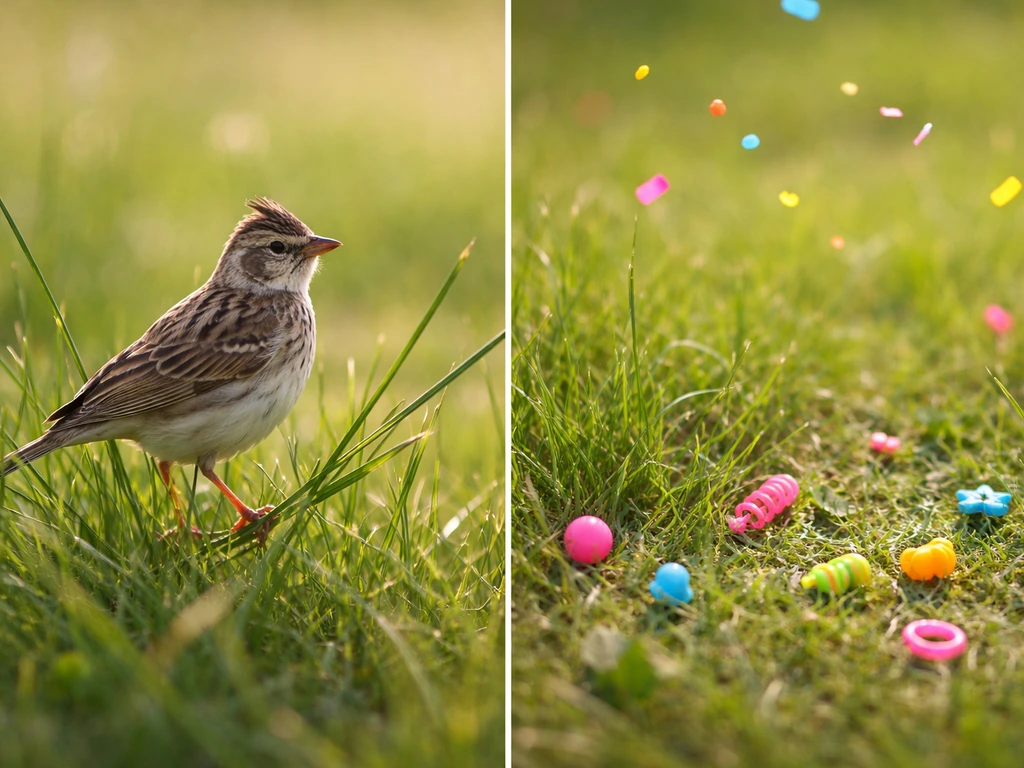
Yes, a lark is absolutely a bird. Larks belong to the family Alaudidae, which sits inside the order Passeriformes, the massive group of perching birds and songbirds. There are roughly 90 species in the family, and every single one of them is a genuine, feathered, egg-laying bird in the class Aves. No ambiguity, no edge cases.
Is a Lark a Bird? What Larks Are and How to Tell

Marcus Hendricks
4 May 2026
What exactly is a lark?
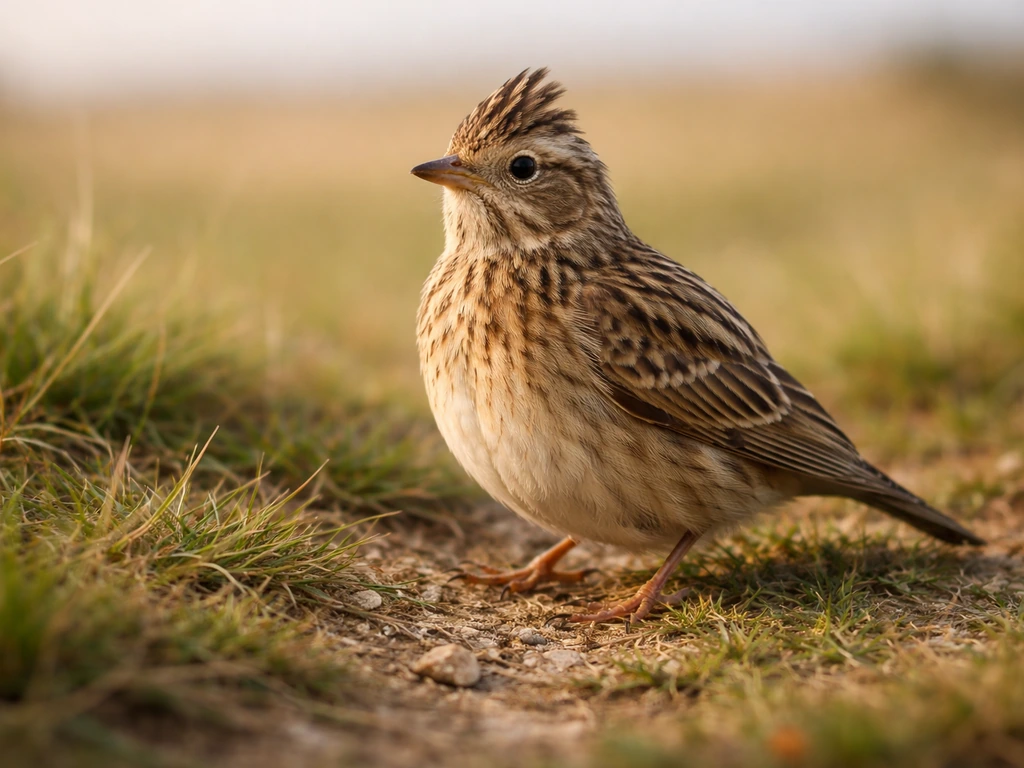
Merriam-Webster defines a lark as "any of a family (Alaudidae) of chiefly Old World ground-dwelling songbirds," and that definition does most of the heavy lifting. Larks are small to medium-sized birds that spend most of their time on the ground, walking and foraging rather than hopping like many other perching birds. They're found across Europe, Asia, Africa, and parts of North America, and they're best known for their rich, melodic songs, often delivered during dramatic, high-altitude display flights.
Here's where they sit in the taxonomy, from broad to specific:
| Level | Classification |
|---|---|
| Kingdom | Animalia |
| Phylum | Chordata |
| Class | Aves (birds) |
| Order | Passeriformes |
| Family | Alaudidae (larks) |
The Eurasian skylark is probably the most famous member of the family, immortalized in poetry and literature for its song. The horned lark is the most widespread lark species in North America. If you've heard of the skylark and wondered whether it counts as its own category, that's a fair question worth looking into separately, but for now just know it's a lark and a lark is a bird. The Eurasian skylark is indeed a member of the lark family (Alaudidae), so it is a bird.
One thing worth flagging: Britannica points out that the name "lark" gets loosely applied to birds outside the Alaudidae family too, usually because they share similar ground-dwelling habits or open-habitat behavior. The meadowlark, for example, is not actually a member of family Alaudidae at all. So while "lark" in a strict biological sense means Alaudidae, you'll sometimes see the name stretched informally. The core family, though, is clearly defined.
The traits that confirm larks are birds
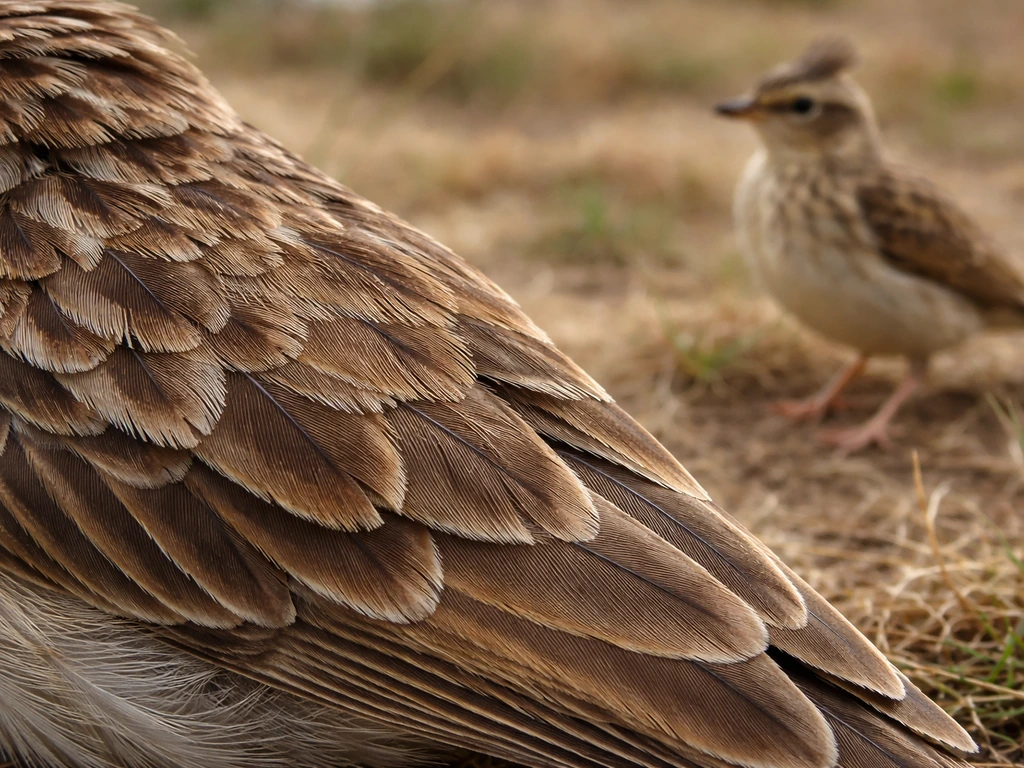
If you want to verify that any animal is truly a bird, there's a reliable checklist of traits. Larks tick every single box.
- Feathers: Larks are covered in feathers, which is the single most reliable indicator that you're looking at a bird. No other living animal group has feathers. The U.S. Fish and Wildlife Service's Feather Atlas even offers a tool to identify feathers found in the field, because feathers are that diagnostic.
- Beaks with no teeth: Like all birds, larks have toothless beaked jaws. This is a defining trait of class Aves.
- Hard-shelled eggs: Larks lay eggs with hard shells, a reproductive strategy called oviparity. Birds universally reproduce this way. No live birth.
- Warm-blooded (endothermic): Larks regulate their own body temperature internally, just like all birds and mammals. This sets them apart from reptiles, fish, and amphibians.
- Unique respiratory system: Birds have a one-way airflow breathing system supported by air sacs and parabronchi, which is more efficient than the in-and-out lung breathing of mammals. Larks breathe exactly this way.
- Four-chambered heart and high metabolic rate: Standard bird physiology, present in larks.
The feather point is really the simplest way to settle it in the field. A Feather Atlas image database from the U. Some bird-ID discussions on Reddit r/FeatherIdentification also reference the US Fish & Wildlife Feather Atlas as part of their identification workflow blank" rel="noopener noreferrer">Feather Atlas image database. S. Fish and Wildlife Service Forensics Laboratory is dedicated to the identification and study of flight feathers of North American birds, reflecting that feathers are diagnostic blank" rel="noopener noreferrer">Feather point. If you see an animal with feathers, you're looking at a bird. Larks have feathers. End of story.
How larks differ from non-bird animals people mix up
Larks themselves aren't usually the source of bird-vs-non-bird confusion, but the broader pattern of "is this animal actually a bird?" trips people up all the time. The classic example is the hummingbird moth, an insect that hovers and moves so much like a hummingbird that people genuinely mistake it for one. The practical trick for separating insects from birds: count the legs. Insects have six, birds have two. A lark has two legs, a beak, and feathers. A moth has six legs, antennae, and wings made of scales, not feathers.
Bats are another common mix-up. They fly, they're warm-blooded, but they're mammals. They don't have feathers, they give live birth, and their wings are made of a membrane stretched over elongated finger bones, not feathers. Larks, by contrast, have feathered wings built on a bird's fused and modified bone structure.
The short mental model: feathers plus beak plus hard-shelled eggs equals bird. Any animal missing one of those traits is not a bird, no matter how much it flies, sings, or resembles one. Larks have all three.
"Lark" the word vs. "lark" the bird
Here's where people sometimes get tripped up when searching online. "Lark" has a completely separate life as an everyday English word. You've probably heard phrases like "on a lark" (meaning on a whim or a spontaneous adventure) or "larking around" (meaning playing or goofing off). Cambridge Dictionary and Merriam-Webster both list this sense of the word alongside the bird definition. So if someone says "we did it on a lark," they're not talking about a bird at all.
There are also boats, ships, and brand names called Lark, plus various other non-bird uses of the name. The Wikipedia disambiguation page for "lark" lists several of these. None of them have anything to do with the bird family Alaudidae.
When the question is "is a lark a bird," the answer is yes, because the biological meaning of lark (family Alaudidae, order Passeriformes) is clearly and unambiguously a bird. The word's other meanings are just English idiom, not competing classification claims.
How to verify this yourself
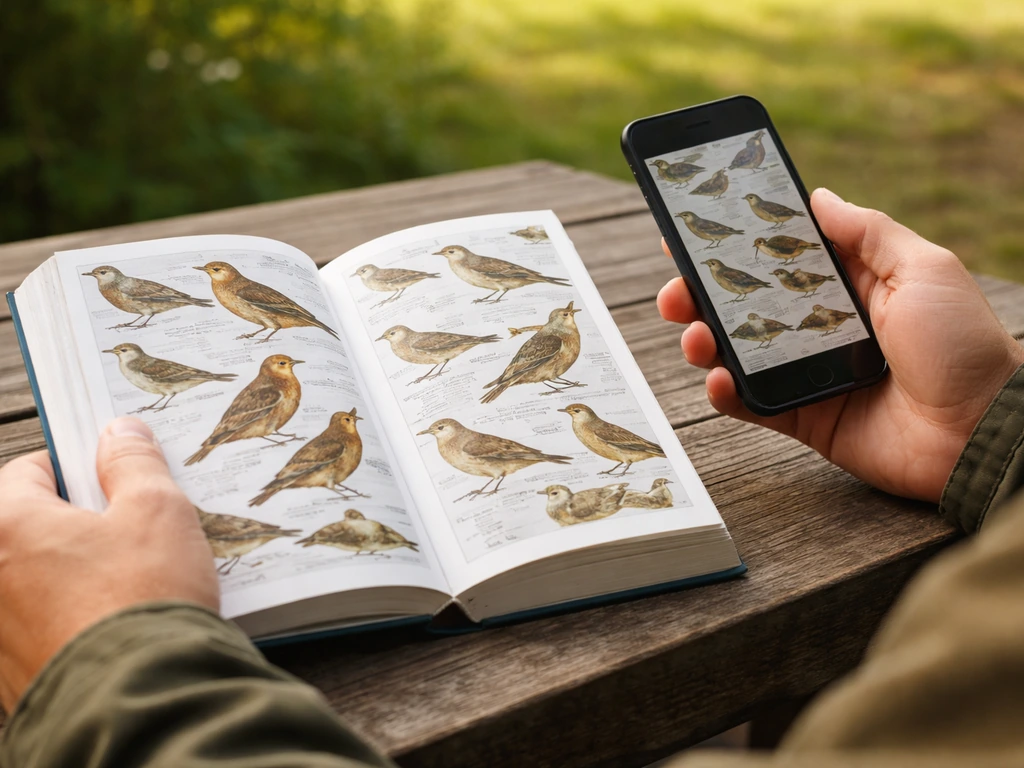
If you want to confirm lark's classification or check any other animal you're uncertain about, here are the most reliable places to look:
- Britannica's entry on larks: confirms family Alaudidae, order Passeriformes, and roughly 90 species in the family.
- Merriam-Webster: gives the biological definition clearly alongside the everyday English sense, so you can see both meanings at once.
- Cornell Lab of Ornithology: great for checking bird traits, feather types, and species-level identification for North American larks.
- Animal Diversity Web (University of Michigan): provides full taxonomy and trait breakdowns for animal families, including Alaudidae.
- A regional field guide: if you're trying to identify a lark you've actually seen, a field guide for your area will show you the relevant species and their distinguishing marks.
The same approach works for any animal name you're uncertain about. Look up the formal taxonomy. If it sits in class Aves, it's a bird. If you're curious how this plays out with other similarly confusing names, the loon is another bird that prompts the same kind of double-take question, and there's also the moonlark, which raises its own set of questions about whether it's real at all. A moonlark is a real bird, but the key is to verify which species name and taxonomy source you are looking at. The loon is indeed a bird, and its classification can be checked using the same taxonomy rules loon is another bird. Each of those names follows the same verification logic: check the taxonomy, check the traits, settle the question.
FAQ
If someone says “meadowlark,” is it the same kind of bird as a lark (Alaudidae)?
No. “Meadowlark” is often called a lark in everyday speech, but it is not in the Alaudidae family. If you need the strict answer, check the bird family name, not just the common name people use.
Are “skylark” and “lark” always interchangeable terms?
They are related, but not always interchangeable. “Skylark” is a specific species within the lark family (Alaudidae). If you see “lark” used broadly, it may refer to the whole family, while “skylark” points to one member.
How can I tell whether the “lark” in a sentence is a bird or just an idiom?
Look for context clues. If the sentence mentions flight, song, habitat, or wildlife, it is almost certainly the bird. If it uses phrasing like “on a lark” or “larking around,” it is the everyday English meaning (whim, goofing off), not a bird reference.
Could there be any animal that looks like a lark but is not a bird?
Yes, especially insects that mimic bird behavior. The safest field checks are the ones you can observe quickly: two legs plus feathers and a beak indicate a bird. If it has six legs and no feathers, it is an insect even if it “acts like” a bird.
What if I only see the silhouette of the bird, can I still confirm it’s a lark?
You can confirm it is a bird, but you cannot reliably confirm it is a lark from silhouette alone. Larks are defined by taxonomy (Alaudidae), and in real-world identification you typically need additional traits like ground-foraging behavior and song characteristics, or confirmation through a bird guide by location and season.
Do larks lay hard-shelled eggs like other birds, or is there anything different about them?
Larks follow the standard bird reproductive pattern, they are egg-laying birds with hard-shelled eggs. The “hard-shelled eggs plus beak plus feathers” checklist works as a quick decision rule, even though species-level details can vary.
Where should I check taxonomy if I want the most reliable classification for a questionable name like “moonlark”?
Verify the exact species name and the family it belongs to, not just whether the name sounds bird-like. “Moonlark” is a real bird in at least some classifications, but confirmation requires checking the formal taxonomy entry for the specific organism you mean.
If a website lists “Lark” as a brand or place name, is it still talking about the bird?
Usually not. “Lark” can be a company name, ship name, or place name, and those uses are unrelated to the bird family. To avoid confusion, confirm whether the source is discussing wildlife biology or just using the word as a label.
What’s the fastest “yes or no” test for “is a lark a bird” when I’m in a hurry?
Treat “lark” as a biological category first. If the context is Alaudidae, then yes, it is a bird. If the context is idioms, products, or unrelated animal common names, do not assume it refers to the bird family without checking the classification.
Next Article
Lark Definition Not Bird: Meaning, Bird Type, Check
Clear meanings of lark in English and as a small songbird Alaudidae, plus a quick bird-checklist.