A lark is two completely different things depending on context. In everyday English, a lark is something you do for fun or amusement, like entering a contest on a whim. In biology, a lark is a real bird: a small, ground-dwelling songbird belonging to the family Alaudidae, with about 90 species spread across the world. If you searched 'lark definition not bird,' you were probably trying to find the activity meaning and wanted to rule out the bird definition. Both are legitimate, and the word genuinely has two separate lives.
Lark Definition Not Bird: Meaning, Bird Type, Check

Marcus Hendricks
25 Apr 2026
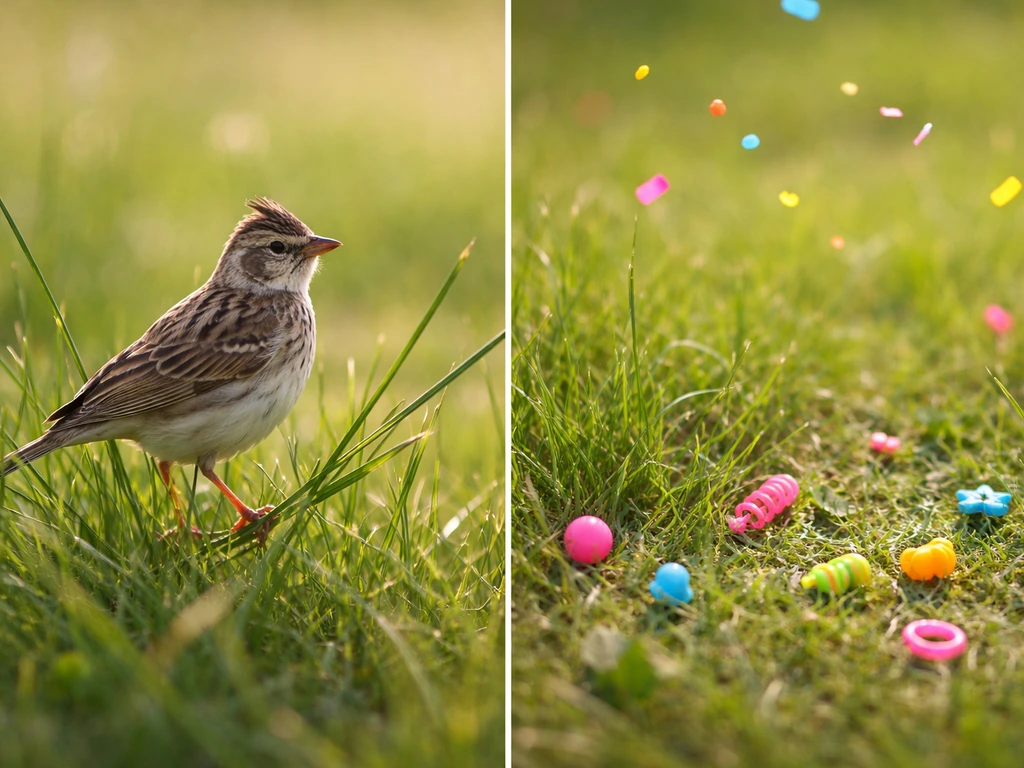
What 'lark' means in everyday English

The non-bird meaning of 'lark' is probably the one you were actually looking for. As a noun, a lark is an activity done for enjoyment or amusement. Merriam-Webster defines it as 'a source of or quest for amusement or adventure,' and gives the example 'entered the race on a lark.' Cambridge Dictionary frames it the same way: 'He started hang-gliding years ago as a lark.' It carries a sense of spontaneity and lightness, doing something not because you planned it but because it seemed like fun.
'Lark' also works as a verb. To lark, or to lark about, means to behave in a silly and enjoyable way. Cambridge Dictionary defines the phrasal verb “lark about/around” as “to play about in a rough and usually noisy manner.” behave in a silly and enjoyable way. Merriam-Webster describes it as 'to engage in harmless fun or mischief, often used with about.' Oxford's Learner's Dictionary gives the example 'The girls were larking about in the backyard.' You might also hear the phrase 'for a lark,' meaning for the sake of fun with no serious purpose, as in 'The boys didn't mean any harm, they just did it for a lark.'
There are a few fixed idioms worth knowing too. 'Up with the lark' (or 'up with the larks') means getting up very early in the morning, which actually loops back to the bird since larks are known for singing at dawn. 'Blow that for a lark' is a British expression refusing to do something because it's too much effort. So even in the non-bird sense, the word occasionally nods back to its feathered origins.
The playful, mischievous sense of 'lark' has been in English since at least 1813. One popular theory ties it to the nautical word 'skylarking,' which referred to sailors roughhousing and racing along ship rigging for sport. Whether or not that etymology is airtight, the connection between larks (birds famous for their aerial acrobatics and song) and the idea of carefree play seems fitting.
Lark as a bird: what it actually is
In zoology, a lark is a real bird, full stop. Larks belong to the family Alaudidae, which sits in the order Passeriformes (the songbirds, or passerines). Britannica counts roughly 90 species in the family. Merriam-Webster summarizes them as 'any of a family (Alaudidae) of chiefly Old World ground-dwelling songbirds,' and Cambridge simply calls a lark 'a small, brown bird with a pleasant song.' Those are both accurate as far as they go.
The British Trust for Ornithology describes larks as 'robust, sparrow-sized, brown birds characteristic of open country,' found in habitats ranging from semi-arid deserts to Arctic tundra. They are terrestrial birds, meaning they spend most of their time on the ground rather than in trees. They forage on the ground for insects and seeds, and many species can actually locate buried insects by listening for them. A distinctive feature in many species is a long hind claw that gives them extra stability when walking over uneven ground.
Larks are particularly famous for their song. Most species have a well-developed song delivered during flight displays, which is the behavior behind the idiom 'up with the lark.' The European skylark is probably the most celebrated example: it rises high into the sky while singing continuously, which earned it a starring role in poetry, literature, and music for centuries. The horned lark is the most common lark species in North America, gleaning most of its food from the ground and nesting in small cavities about 3 to 4 inches across dug into the earth.
One thing worth flagging: not every bird with 'lark' in its name is actually an Alaudidae. Meadowlarks, for example, belong to the family Icteridae (the blackbirds and orioles), not Alaudidae. Magpie-larks sit in yet another family entirely. True larks, the ones ornithologists mean when they say 'lark,' are strictly the Alaudidae.
Why people search 'lark definition not bird'
The short version: the word 'lark' has two completely legitimate, unrelated meanings, and when you type it into a search engine, you get both. That creates real friction if you wanted the 'fun activity' definition and your results are full of songbird taxonomy. Adding 'not bird' is a natural workaround to filter out the ornithology content.
Dictionaries reinforce the split rather than resolving it. Merriam-Webster separates its 'lark' entry into three distinct senses: the bird noun, the amusement noun, and the mischief verb. Cambridge divides the entry visually into 'BIRD' and 'ACTIVITY.' So the confusion isn't your fault. The word genuinely means two things, and every major reference source acknowledges that.
There's also a disambiguation layer beyond just word meanings. 'Lark' appears as a personal name, a place name, and the name of multiple ships (several vessels were named HMS Lark). Plays, songs, and other cultural works carry the title too. So a search for 'lark' can return bird guides, vocabulary pages, ship histories, and name-meaning sites all at once. The 'not bird' qualifier makes sense as a filtering strategy even if you already know the bird exists.
Is a lark actually a bird? Yes, clearly
In the zoological sense, larks pass every test for being birds. They have feathers, beaks, lay hard-shelled eggs, and are endothermic (warm-blooded). They evolved from theropod dinosaur ancestors along the same lineage as every other modern bird. The Smithsonian identifies feathers, hollow bones, and hard-shelled eggs as the three key traits that distinguish birds from other vertebrates, and larks have all three. There is no classification debate here the way there sometimes is with creatures like penguins or ostriches (which are birds despite not flying) or bats (which are mammals, not birds, despite flying).
The sibling question of whether a lark is a bird has a completely settled answer: yes. The same goes for the skylark specifically. The skylark is a particular species of true lark, so it is indeed a bird. These are not ambiguous cases the way a moonlark or a fictional creature might be. These are not ambiguous cases the way a moonlark or a fictional creature might be, but if you're curious whether is a moonlark a real bird, that is another name-related detail worth checking.
Quick checklist: what makes an animal a bird
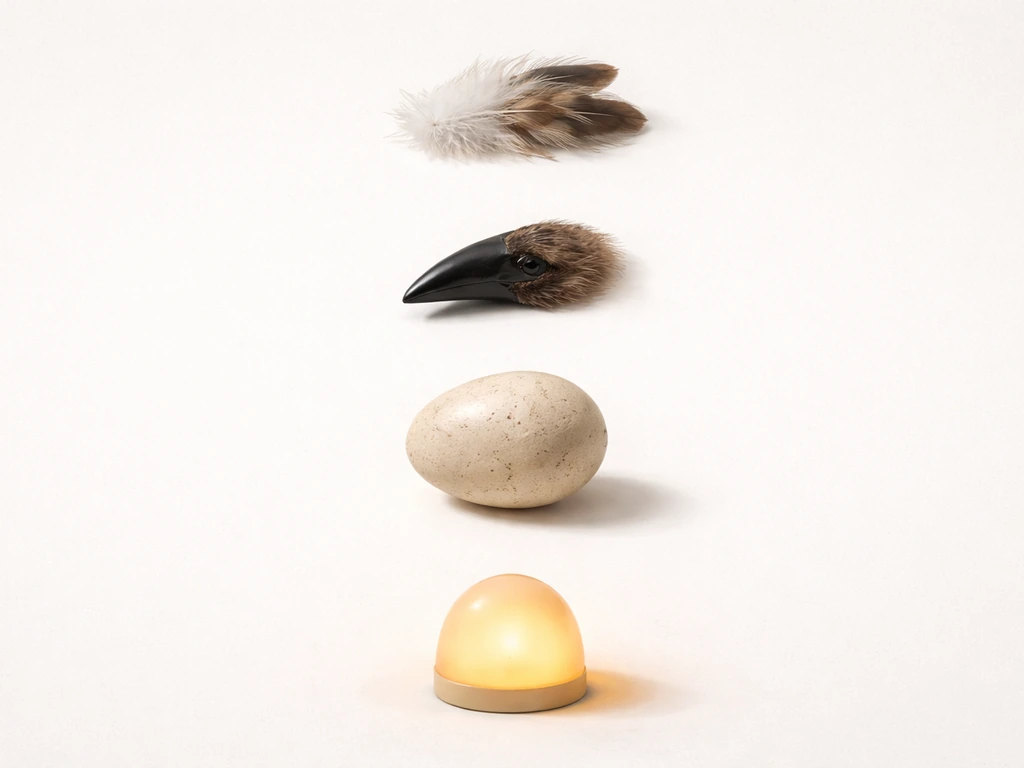
If you're ever unsure whether something qualifies as a bird, run through this checklist. Larks clear every item. As with other animals people sometimes mix up, a loon is also a bird, just in a different group is a loon a bird. Most animals that people get confused about (bats, butterflies, flying fish) fail on one or more of these.
- Feathers: the single most reliable marker. As Audubon puts it, 'of all the conspicuous traits that make a bird a bird, only feathers are theirs alone.' No other living animal has them.
- Beak or bill: birds have a beak instead of teeth. The shape varies enormously, but the structure is always there.
- Hard-shelled eggs: birds lay eggs with a calcified shell. This is different from the leathery eggs of most reptiles.
- Endothermy: birds are warm-blooded, maintaining a stable internal body temperature regardless of the environment.
- Evolutionary lineage: birds are avian dinosaurs, descended from theropod ancestors. Their lineage is distinct from mammals, reptiles, and every other vertebrate class.
Larks tick every box. Feathers: yes. Beak: yes. Hard-shelled eggs laid in ground nests: yes. Warm-blooded: yes. Passerine songbird lineage: yes. They are unambiguously birds in both the everyday sense and the scientific one.
How to tell which meaning of 'lark' is being used
Context is almost always enough. The two meanings of 'lark' appear in very different sentence environments, and once you know what to look for, you'll rarely need to guess.
| Context clue | Likely meaning | Example |
|---|---|---|
| Words like 'fun,' 'joke,' 'amusement,' 'mischief,' or 'for a' | Activity/fun (non-bird) | "We did it for a lark." |
| 'About' or 'around' following the verb | Activity/fun (non-bird) | "They were larking about all afternoon." |
| Open country, ground, song, nest, flight, foraging | The bird (Alaudidae) | "Larks forage for seeds on the ground." |
| Specific species names like skylark or horned lark | The bird (Alaudidae) | "The skylark is a lark known for its song flight." |
| Prepositional phrases: 'on a lark,' 'as a lark' | Activity/fun (non-bird) | "She entered the contest on a lark." |
| Early morning idiom | The bird (indirect reference) | "He was up with the larks at 5 a.m." |
The activity sense always pairs with human behavior. Someone does something on a lark, as a lark, or larks about. The bird sense pairs with habitat, behavior, or species-level description. If the sentence is about what a person did and why, it's almost certainly the activity meaning. If the sentence is describing an animal doing something in the wild, it's the bird. When the sentence is describing an animal doing something in the wild, resources like the Audubon Field Guide note lark-type birds favor open-country habitats with bare-ground characteristics Lark Sparrow.
When you're reading a dictionary entry and both senses appear, the bird sense is usually listed first because it's the older meaning in English. The activity sense developed later, possibly from the bird's association with carefree aerial song. Knowing that can help you scan a dictionary entry faster: skip the first definition if you're looking for the 'doing something for fun' meaning.
FAQ
If I see “lark” in a sentence, how can I tell whether it means the activity or the bird quickly?
Look for the subject and verb type. If the subject is a person, group of people, or something clearly human (decided, started, did, went), it is almost always the amusement or mischief sense. If the sentence includes habitat clues (open country, nesting, ground-dwelling, singing) or names a species, it is the bird meaning.
What does “lark about” or “larking about” usually imply in tone?
It usually suggests harmless, slightly noisy play (sometimes mild mischief), not serious planning or wrongdoing. If the sentence mentions pranks with consequences or deliberate harm, “lark” is often the wrong fit and you may need a different word or sense.
Does “for a lark” ever carry a negative meaning?
Generally it stays lighthearted. It signals “just for fun” or “for no serious reason.” However, it can sound dismissive if used by someone critical, so pay attention to who is speaking and the surrounding context.
Why do dictionaries list the bird sense before the activity sense, and does that mean the bird meaning is primary?
Listing order is usually about historical development, not about what people use most today. Even if the bird definition appears first, you can prioritize the activity sense by scanning for examples involving people, contests, or spontaneous activities.
Are all birds with “lark” in their common name actually true larks?
No. “Meadowlark” and some similarly named birds are different families, not Alaudidae. True larks, the ones the bird definition refers to, are specifically the family Alaudidae.
What if I’m searching for the word meaning, but my results keep showing bird species and habitats?
Use “lark” plus a context word that signals the human sense, like “for a lark,” “on a lark,” “larking about,” or “definition meaning amusement.” If you are filtering queries, “lark definition” plus “not bird” is effective, but adding an example phrase can narrow results faster.
Is “up with the lark” always about getting up early, or can it mean something else?
In standard usage it means getting up very early, with the bird link coming from dawn singing. If a text uses it in a different way, it is usually a playful twist, but the baseline meaning remains “early rising.”
Does the verb “to lark” work the same way as “to prank” or “to mess around”?
It’s closer to “mess around” or “play around” because it implies harmless fun. “To prank” often implies targeting someone with a joke, and “to mess around” can be more general, including unproductive time-wasting. “Lark” is more specifically about light, carefree amusement.
If the article mentions “moonlark,” does that mean it’s not a real lark family bird?
Often, “moonlark” is a name people encounter in less literal contexts or as a separate common-name usage that does not map cleanly to Alaudidae. If you need to know whether a “moonlark” is real and what family it belongs to, you should verify that specific term rather than assuming it is a true lark.