A shrike is a bird, and it is genuinely predatory, but it is not a bird of prey in the strict scientific sense. Shrikes belong to the family Laniidae within the order Passeriformes, which makes them songbirds, not raptors. Hawks, eagles, falcons, and owls sit in entirely different orders. So while a shrike hunts, kills, and even impales its prey on thorns like something out of a nature horror film, it shares more ancestry with crows and sparrows than with a Red-tailed Hawk.
Is a Shrike a Bird of Prey? Yes, But Not a Raptor

Marcus Hendricks
14 Jun 2026
Where shrikes actually fit in bird taxonomy
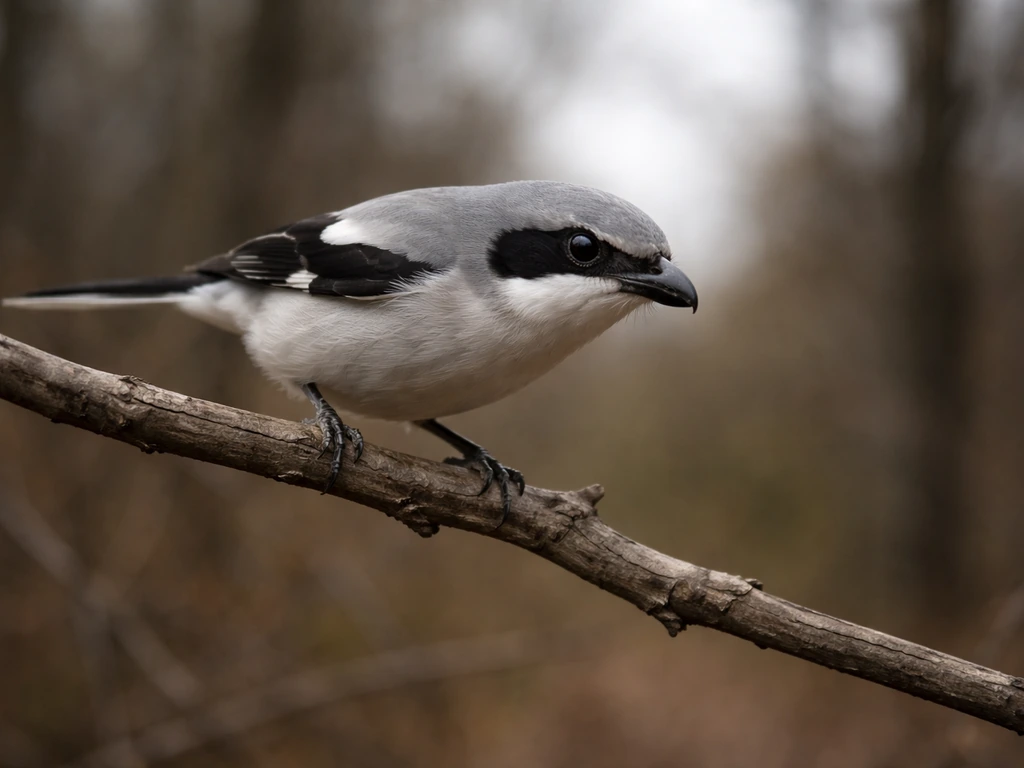
Shrikes are classified in the family Laniidae, which sits inside the order Passeriformes. Passeriformes is the largest order of birds and includes everything from robins to warblers to jays. The "true shrikes" in the genus Lanius make up about 30 species, all grouped under the subfamily Laniinae. Major taxonomy databases, including NCBI and Britannica, consistently place Laniidae within Passeriformes, not within any raptor lineage. eBird's species account for the Loggerhead Shrike, one of the most well-known North American shrikes, also lists it firmly in Laniidae.
That matters because bird taxonomy is not just a naming exercise. It reflects evolutionary history. Shrikes did not evolve from hawk-like ancestors and then lose their talons. They are passerines that independently developed predatory habits, which is a completely different story. Cornell Lab of Ornithology puts it well by calling the Loggerhead Shrike "a songbird with a raptor's habits," which is the clearest single-line summary of the situation you will find.
What "bird of prey" actually means (it depends on who you ask)
The phrase "bird of prey" is used two ways, and the confusion between them is basically the whole reason this question exists. In strict scientific and field-guide usage, birds of prey means raptors: hawks, eagles, falcons, kites, harriers, ospreys, and owls. These birds share a specific body plan, strong grasping talons, and belong to dedicated raptor orders like Accipitriformes, Falconiformes, and Strigiformes. A USFWS educational resource on birds of prey frames the category around those raptor-specific traits, and field biologists use it the same way.
In everyday speech, though, people sometimes use "bird of prey" to mean any bird that hunts and eats other animals. Kites are sometimes lumped into the looser “bird of prey” sense, but their raptor status depends on the stricter definition too. That same “hunts and eats other animals” wording is also why kookaburras sometimes get grouped into the broader bird of prey category, even though they are not raptors in the strict sense.
Under that looser definition, a shrike could technically qualify, since it does hunt vertebrates including other birds. The problem is that using it that way muddies the water badly enough that it stops being useful. If "bird of prey" means any predatory bird, you would also have to include herons, kingfishers, and roadrunners, which most people would find weird. Because kingfishers are often labeled as predatory birds too, it helps to know the exact meaning of “bird of prey” before comparing different species.
It is worth knowing about this same distinction when you look at related birds like kestrels, kites, and kookaburras, all of which get the "bird of prey? Kestrels are raptors, so they do fit the stricter definition of birds of prey. " question asked about them regularly.
How shrikes hunt compared to classic raptors
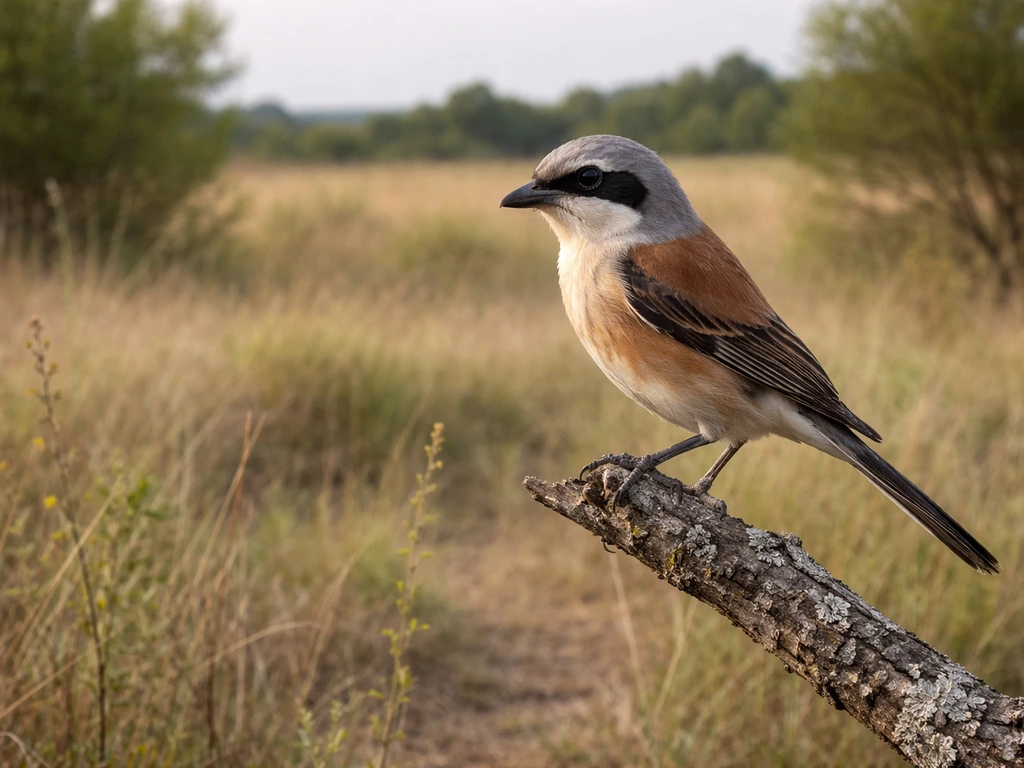
Shrikes hunt in a very raptor-like style behaviorally. They perch at a high vantage point, survey open habitat, spot prey, and then dive down to attack it. NH Audubon describes them as ambush hunters that target other birds, which does sound exactly like something a hawk would do. The Loggerhead Shrike's prey list includes insects, lizards, small mammals, and other birds, a range of targets that matches raptor diets well. Northern Shrikes have been recorded taking prey as large as robins, Blue Jays, and Mourning Doves.
The killing technique also has raptor-like elements. Shrikes target the nape of the neck in a precise attack, and they have a tomial "tooth," a notch in the bill that works like a cutting edge to help immobilize or kill prey. Cornell and the Smithsonian both compare this to the way a falcon dispatches prey.
But here is where the shrike goes its own direction: without strong raptor talons to hold the kill, a shrike impales the prey on something sharp instead. Thorns, barbed wire, and tight branch forks all serve as the shrike's larder. The USFWS calls this larder behavior food storage. Smithsonian's National Zoo links the bird's famous nickname, "butcherbird," directly to this habit.
Peer-reviewed research confirms that impaling prey on sharp objects is a behavior restricted to the true shrikes in Laniidae and does not appear in other passerine families.
Beak, talons, and body plan: where shrikes look like raptors and where they do not
The shrike's bill is the trait most likely to make someone think they are looking at a small raptor. It is thick and hooked, and Cornell's identification guidance for both the Loggerhead Shrike and the Northern Shrike lists that hooked bill as the defining field mark. A hooked bill is also what most people picture when they think of hawks and eagles, so the visual similarity is real and understandable.
The talons are a completely different story. Raptors have powerful, heavy-duty feet built for gripping and crushing prey, and that grip strength is central to how they hunt. Shrikes have ordinary passerine feet. Cornell, the American Bird Conservancy, and the Loggerhead Shrike Working Group all note explicitly that shrikes [lack the strong, raptor-like feet and talons needed to hold prey](https://abcbirds.
org/bird/loggerhead-shrike/), which is precisely why the impaling behavior evolved as a workaround. Cornell describes the Loggerhead Shrike as a chunky, big-headed songbird overall, not a slim, broad-winged raptor silhouette. If you are standing in a field trying to ID one, the hooked bill will catch your eye, but the small body size, songbird-style feet, and the presence of a black face mask are the details that separate it from any actual raptor.
| Trait | True Raptors (hawks, eagles, falcons) | Shrikes (Laniidae) |
|---|---|---|
| Taxonomic order | Accipitriformes, Falconiformes, Strigiformes | Passeriformes (songbirds) |
| Bill shape | Hooked, heavy | Hooked, heavy (similar appearance) |
| Talons/feet | Powerful, grasping, built for gripping prey | Ordinary passerine feet, weak grip |
| Prey handling | Gripped in talons and torn apart | Impaled on thorns or barbed wire |
| Body plan | Broad wings, large build, raptor silhouette | Compact, big-headed, songbird proportions |
| Hunting style | Aerial pursuit or dive, grip-and-kill | Perch-and-ambush, nape attack with tomial tooth |
| Diet | Vertebrates, sometimes insects | Insects, lizards, small mammals, other birds |
Which birds actually count as shrikes
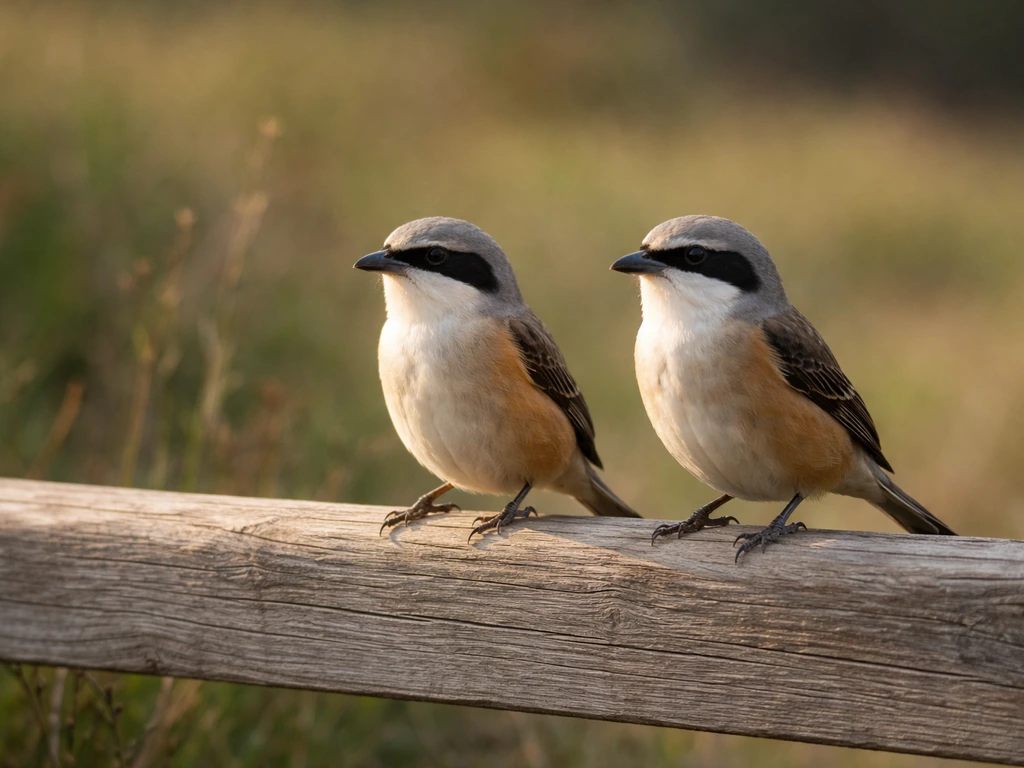
The family Laniidae contains around 30 species of true shrikes, almost all in the genus Lanius. The two species most North American readers will encounter are the Loggerhead Shrike (Lanius ludovicianus), which is year-round across much of the southern and central United States, and the Northern Shrike (Lanius borealis), which breeds in Canada and Alaska and moves south in winter. USFWS provides a range map for the Loggerhead Shrike showing its broad distribution across open country habitats in the US.
Globally, true shrikes span Africa, Europe, and Asia, with the greatest diversity in Africa. It is worth noting that some birds with "shrike" in their common name are not members of Laniidae. Boubous, bush-shrikes, and helmet-shrikes belong to different families and are only loosely related. When scientists or serious birders talk about shrikes in the taxonomic sense, they mean Laniidae specifically, and the impaling behavior is one of the traits that marks the true shrikes as distinct even from their look-alike relatives.
How to label a shrike correctly and avoid the common mix-up
The cleanest way to describe a shrike accurately is to call it a predatory songbird or a predatory passerine. If you want to capture the hunting angle in everyday speech, "predatory bird" works fine. What you want to avoid is calling it a raptor or placing it in the same category as hawks, eagles, falcons, or owls, because that implies a shared evolutionary lineage and a shared body plan that simply does not exist.
The confusion is completely understandable. A shrike has a hooked bill, hunts vertebrates, and sits on a high perch scanning for prey, all classic raptor behaviors. But taxonomy is about ancestry, not lifestyle. A bat and a swallow both catch insects in midair, but nobody classifies them together. The shrike is the bat in that analogy: it does raptor things without being a raptor. The impaling behavior is actually the clearest signal that something different is going on, because no true raptor needs to pin its prey to a thorn to eat it.
If you are fact-checking a claim online that calls shrikes birds of prey, the right response is: predatory, yes; raptor, no. Shrikes are songbirds that evolved a predatory lifestyle independently, which makes them genuinely fascinating rather than just a mislabeled hawk. The next time you see a small bird with a hooked bill and a black face mask sitting bolt-upright on a fence wire, scanning the grass below, you are looking at one of the most interesting classification edge cases in all of ornithology.
FAQ
If shrikes hunt other animals, can I still call them “birds of prey”?
Yes, but only if “bird of prey” is being used in the loose everyday sense of any bird that hunts animals. In strict taxonomy and field-guide context, that phrase refers to raptors, and shrikes are passerines (family Laniidae). A careful phrasing is “predatory songbird” or “predatory passerine.”
What’s the quickest way to tell a shrike from a small raptor in the field?
Look for the combination of traits: a hooked bill plus a songbird-shaped body and ordinary feet, then the likely presence of a caching setup (thorns, barbed wire, forked branches). Raptors have heavy grasping feet as a core ID feature, shrikes do not, so the “talons” check is usually the deciding factor.
Is impaling prey the main reason shrikes are not considered raptors?
The impaling behavior is the most reliable differentiator, especially when you actually see prey being pinned and stored for later. Raptors may kill and eat prey directly, while shrikes use sharp vegetation as a larder because they do not have raptor talons to hold the prey for the same purpose.
Are all birds with “shrike” in the name true shrikes?
Commonly confused cases include butcherbirds and “shrike-like” birds in other families. In the taxonomic sense, “true shrikes” are specifically family Laniidae. So “bird looks like a shrike” does not automatically mean it is a true shrike with the same classification and behaviors.
Do shrikes’ hawk-like hunting tactics make them raptors?
No. A shrike can have a raptor-like hunting pattern (perch, scan, dive), but classification is based on evolutionary lineage and body-plan traits, not hunting style. If an article or post groups shrikes with hawks and eagles, it is usually mixing up behavior with ancestry.
Does eating birds or mammals automatically make a shrike a raptor?
Yes, shrikes can take vertebrate prey, including other birds, but you should still avoid using that as proof of “raptor-ness.” Many passerines eat insects, and some also eat small vertebrates, yet they remain passerines. For shrikes, the key is they are passerines that developed predatory habits independently.
I see a hooked bill, so how do I avoid misidentifying a shrike as a raptor?
If you see a bird with a hooked bill, consider whether it could be another hooked-bill passerine or a small raptor. The strongest practical rule is to verify feet and overall build: shrikes have passerine feet and a stockier songbird silhouette, while raptors typically look slimmer for their size and have conspicuously powerful talons.
How do range and season help when identifying Loggerhead vs Northern Shrike?
For the two most familiar North American species, Loggerhead Shrike often stays through much of the year in parts of the southern and central US, Northern Shrike breeds farther north (Canada and Alaska) and generally shifts south in winter. If your location and season do not match a given species’ typical range, that should trigger a re-check of ID.
If a “shrike” behaves similarly, how can I confirm it is actually in Laniidae?
A “shrike” that does not belong to Laniidae could still hunt, sometimes in a way that seems similar, but it would not be the same evolutionary group. If the behavior you saw was impaling and larder-like caching, that supports true shrikes, yet the safest classification answer depends on the bird’s family, not just the hunting drama.
What’s the best way to respond to someone who calls shrikes “birds of prey”?
When correcting a claim, say “predatory yes, raptor no,” because that addresses the exact confusion: raptors are a specific group defined by ancestry and morphology, while “predatory” describes what the bird does. If someone wants a taxonomy-level label, “predatory songbird (passerine)” is the clean alternative.