
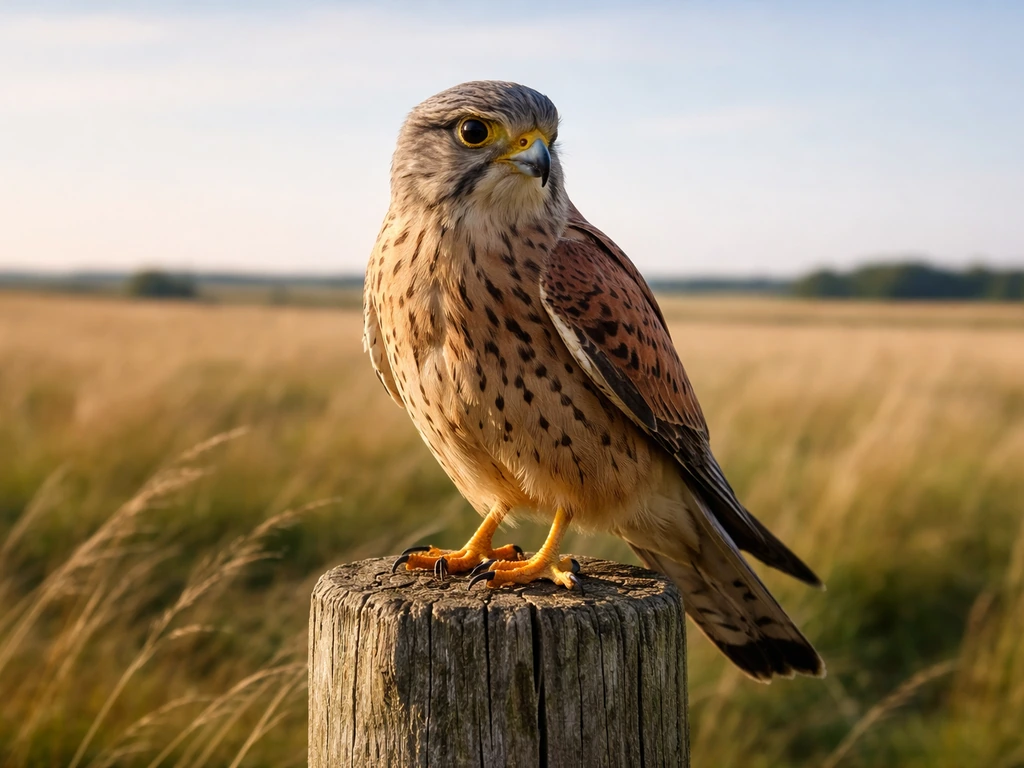
Yes, a kestrel is absolutely a bird of prey. It belongs to the family Falconidae, sits within the order Falconiformes, and ticks every box in the standard raptor checklist: hooked beak, sharp talons, keen eyesight, and a carnivorous diet. Whether you're looking at the common kestrel (Falco tinnunculus) hovering over a European roadside or the American kestrel (Falco sparverius) perched on a power line in the Midwest, you're looking at a genuine, card-carrying raptor.
Is a Kestrel a Bird of Prey? Traits and Classification

Marcus Hendricks
3 Jul 2026
What 'bird of prey' actually means
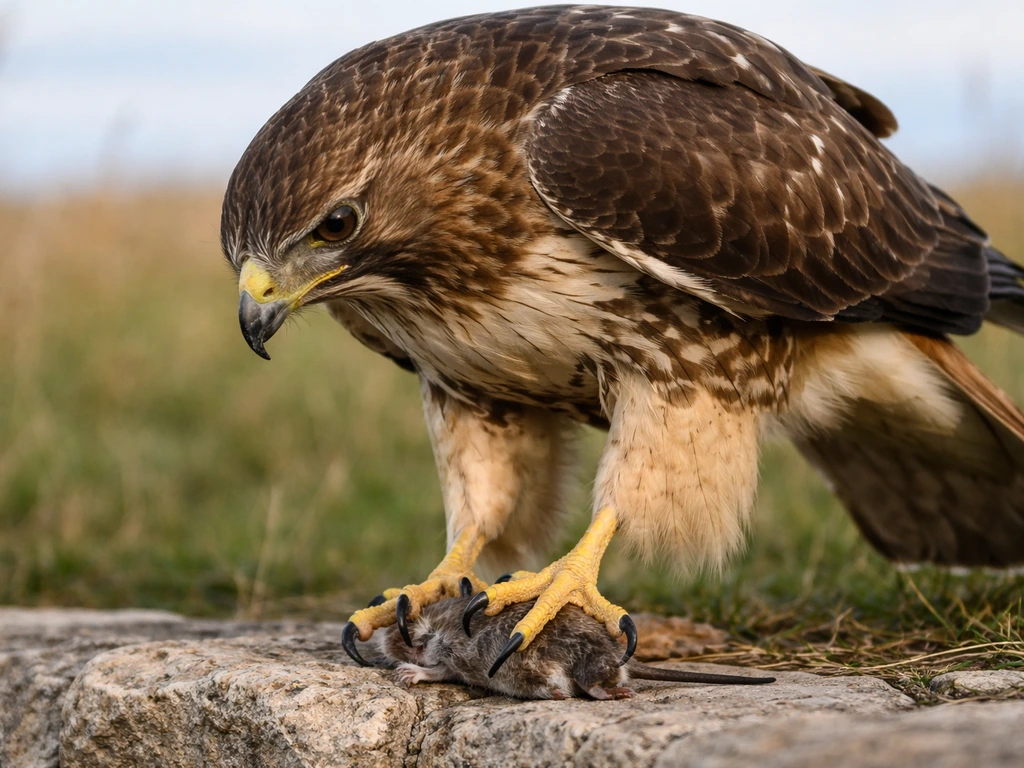
The terms 'raptor' and 'bird of prey' are used interchangeably in most practical contexts, and both refer to carnivorous birds that hunt using their feet. The Raptor Center at the University of Minnesota explains that a raptor is a carnivorous bird and that raptors are also called birds of prey raptor and 'bird of prey' are used interchangeably. The National Park Service boils it down to four shared traits: a hooked beak, sharp talons, strong eyesight, and a meat-based diet. That's the working definition most field guides, wildlife agencies, and researchers use.
In the broadest sense, birds of prey include the diurnal hunters (active by day) like hawks, eagles, kites, harriers, falcons, and most vultures, as well as the largely nocturnal owls. A kite can qualify as a bird of prey when it fits the usual raptor traits, like a hooked beak, sharp talons, strong sight, and a hunting diet kites. The US federal legal definition under 16 USC § 460iii-1(3) even spells it out by name: eagles, falcons, owls, hawks, and 'other birds of prey.' So the category is wide on purpose.
Worth noting: there is no single universally standardized scientific definition. The Journal of Raptor Research has published commentary specifically calling for more precision in how researchers use 'raptor' and 'bird of prey,' because the criteria can shift depending on context. For everyday identification purposes, though, the four-trait checklist above does the job reliably well.
Where kestrels sit in bird taxonomy
Kestrels are falcons, not hawks. That distinction matters more than people realize. The Smithsonian's specimen classification places Falco tinnunculus within Class Aves, Family Falconidae, Order Falconiformes. The British Trust for Ornithology lists the same family and scientific name for the common kestrel. The Australian Museum similarly calls the nankeen kestrel (Falco cenchroides) 'a small raptor (bird of prey)' and assigns it to Falconidae.
Falconidae is the family that contains all the falcons, kestrels, hobbies, and related forms. Kestrels are essentially the smaller, hovering branch of that family. Being in Falconidae rather than Accipitridae (the hawk and eagle family) doesn't change their raptor status one bit. It just tells you which lineage they evolved from.
Why kestrels qualify: hunting style, diet, and physical traits
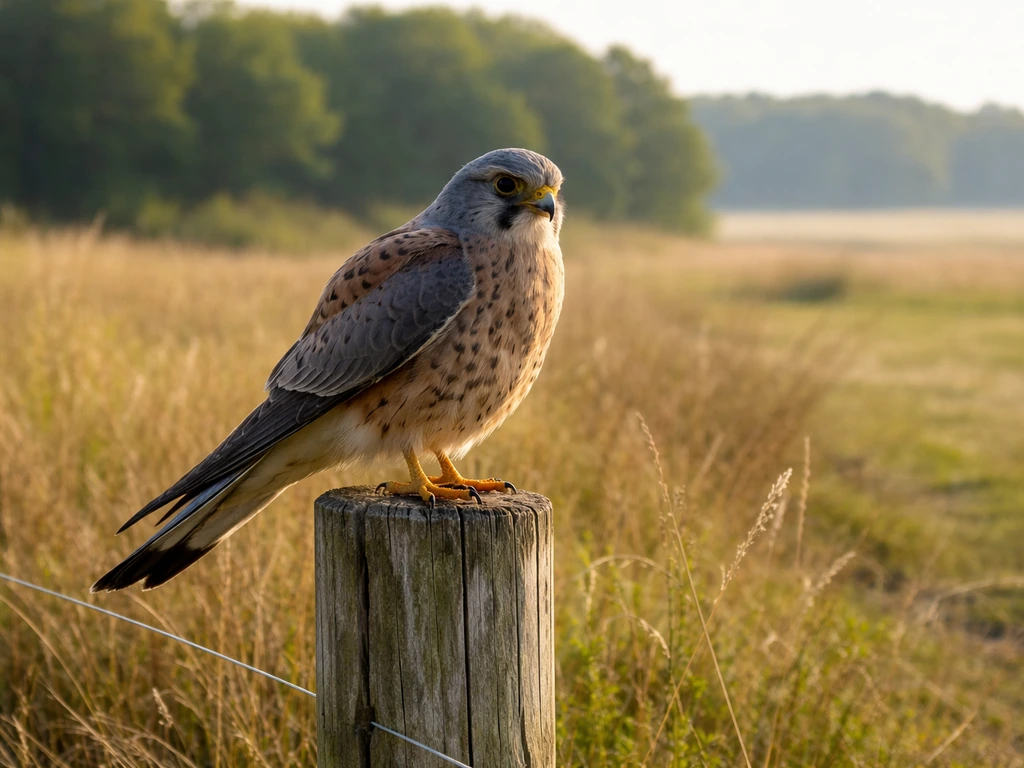
Kestrels hunt in open country, and their method is one of the most recognizable behaviors in the bird world. Cornell's All About Birds describes it clearly: kestrels either perch on a wire or post and watch the ground below, or they hover facing into the wind, flapping rapidly and adjusting their long tail to hold a fixed position while scanning for prey. That hovering technique is their signature move, and it's what makes HawkWatch International call them 'famous for hover-hunting.'
Once a kestrel spots something, it drops toward the target and uses its talons to make the catch, exactly the way larger raptors do. The prey list is broader than most people expect. According to the US Forest Service and the Missouri Department of Conservation, American kestrels eat grasshoppers, cicadas, dragonflies, spiders, voles, mice, lizards, toads, frogs, small snakes, and occasionally small songbirds. Insects dominate the summer diet, but small vertebrates fill in the rest of the year.
Physically, kestrels carry all the standard raptor hardware: a hooked beak for tearing meat, sharp curved talons for gripping prey, and eyesight sharp enough to spot a grasshopper from a utility pole. Everything about their anatomy is built around finding, catching, and eating animals. That's the raptor blueprint, and kestrels fit it perfectly.
Kestrel vs lookalikes: owls and other small raptors
People occasionally confuse kestrels with owls because both are predatory birds and owls often get lumped into the raptor category in casual conversation. In practice, they're easy to separate. Owls are mostly active at dawn, twilight, or night. If you're watching a small predatory bird hovering in broad daylight over a field, it is not an owl. If you're wondering whether a shrew is a bird, the answer is no, because shrews are small mammals, not birds. Kestrels are diurnal hunters through and through.
The more common field confusion is between a kestrel and a merlin, which is also a small falcon. The NPS notes that merlins have darker streaking on the breast, a solid dark back, and a thinly banded tail. USGS Patuxent's identification tips point out that merlins are slightly larger with broader-based wings and a different underwing pattern. Crucially, merlins typically lack the bold facial stripes that kestrels carry so distinctively. Merlins also hunt differently: they tend to launch from a perch into short, fast pursuit flights rather than hovering.
| Feature | Common Kestrel / American Kestrel | Merlin | Small Owl (e.g., Screech Owl) |
|---|---|---|---|
| Family | Falconidae | Falconidae | Strigidae |
| Active time | Daytime | Daytime | Mostly nocturnal/crepuscular |
| Hunting method | Hovering + perch hunting | Fast pursuit from perch | Surprise ambush, silent flight |
| Facial markings | Two bold dark moustache stripes | Faint or no malar stripe | Facial disc, ear tufts (some species) |
| Tail pattern | Rusty with black tip band (male) | Thinly banded | Short, banded |
| Body size | Small (sparrow to robin-sized) | Slightly larger than kestrel | Variable, compact |
| Raptor status | Yes | Yes | Yes (broadly defined) |
If you're curious about similar classification questions, the same raptor framework applies to other birds people find confusing: kites, red kites, shrikes, kingfishers, and kookaburras all sit in different spots on the raptor spectrum (or outside it entirely), and working through the same four-trait checklist quickly resolves the question for each one. A common question is whether a kingfisher is a bird of prey, but it generally doesn't fit the same raptor checklist used for kestrels kingfishers.
Common classification confusions worth clearing up
A lot of the online debate around raptors comes from mixing up common names with scientific groupings. 'Bird of prey' and 'raptor' are common-language labels, not formal scientific taxa the way 'Falconidae' or 'Accipitridae' are. That means the boundaries shift slightly depending on who's using the term. Some sources exclude vultures (because they scavenge rather than hunt), some exclude owls (because they're nocturnal and in a separate order), and some include everything with talons and a hooked beak.
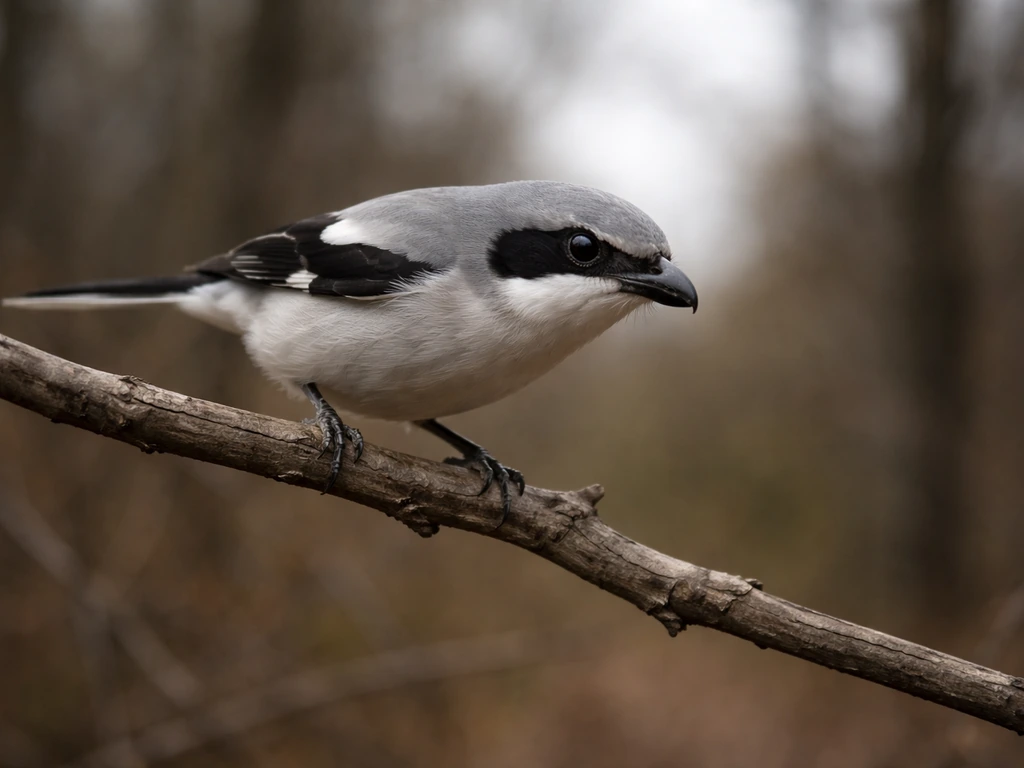
For kestrels, none of this matters much: they qualify under every version of the definition. They hunt actively, they have the physical tools, and their taxonomy places them squarely in Falconidae. The confusion tends to bite harder with birds like shrikes (which hunt but lack the full raptor toolkit) or vultures (which have the body plan but largely scavenge). Shrikes are sometimes described in casual conversation as birds of prey, but they do not fit the classic raptor checklist as reliably as kestrels do. Kestrels have no such ambiguity.
It's also worth knowing that falcons and hawks were historically grouped together in older classification systems, but modern genetics has shown that falcons (Falconidae) are actually more closely related to parrots and songbirds than to hawks (Accipitridae). They arrived at the 'raptor' body plan through convergent evolution. So when someone says 'a kestrel is basically a small hawk,' they're close enough for casual conversation, but technically a kestrel is a falcon, and falcons have their own distinct lineage.
How to identify a kestrel confidently and verify its status
If you've spotted a bird and you want to confirm it's a kestrel (and not a merlin, a small hawk, or something else), here's a practical step-by-step approach using observable traits and reliable references.
- Check the face first. Kestrels have two bold, dark moustache stripes framing white cheeks. This is their most distinctive field mark and one of the clearest ways to rule out a merlin, which has a faint or absent malar stripe.
- Look at the tail and wings on a male. Adult male common and American kestrels have rusty-brown upperparts, slate-blue wings, and a rusty tail with a black band near the tip. Females are more uniformly barred brown but still carry the facial stripes.
- Watch the hunting behavior. If the bird is hovering with rapid wingbeats and an adjusting tail, you're almost certainly looking at a kestrel. Merlins don't hover like this.
- Note the habitat. Kestrels work open country: grasslands, roadsides, farmland edges. If the bird is hunting over dense woodland canopy, reconsider your ID.
- Listen for the call. Kestrels give a rapid, high-pitched 'killy-killy-killy' or 'klee-klee-klee-klee' call that's distinctive once you've heard it a couple of times.
- Cross-check with a reliable reference. Cornell Lab's All About Birds, Audubon's field guide, and eBird's species pages all carry photos, range maps, and behavioral notes that let you confirm the ID and check whether a kestrel is even expected in your location and season.
Once you've confirmed the bird is a kestrel, verifying its raptor status is almost automatic. Look up Falco tinnunculus or Falco sparverius on the Smithsonian's taxonomy database, the BTO species list, or any major natural history reference. U.S. Fish & Wildlife Service species materials for Falco tinnunculus (Eurasian kestrel) treat it within a kestrel falcon context and use the scientific name as a distinct species in that framework. You'll see Family: Falconidae every time. Combine that with the hooked beak, talons, and active hunting you observed in the field, and there's no classification debate left to have. It's a bird of prey. Full stop.
FAQ
If someone says “bird of prey” can include scavengers, does that affect whether a kestrel counts?
No. A kestrel is still a “bird of prey” because it hunts live prey (it doesn’t rely on carrion), and it matches the raptor traits like hooked beak, gripping talons, and strong daytime vision.
Are kestrels considered raptors in the same way as eagles and hawks, or are they a different category?
They are the same broad category in practice. Kestrels are falcons within the raptor framework, so they qualify as birds of prey alongside larger diurnal hunters, even though their family and size differ.
Can a kestrel be classified as a bird of prey if it’s not hovering or actively hunting at that moment?
Yes. Classification is based on traits and taxonomy, not a single behavior moment. That said, if you did not see hunting, use identification features (for example, typical falcon shape and, in many regions, the distinctive facial pattern) plus location and habitat.
What’s the fastest way to distinguish a kestrel from a merlin without knowing scientific names?
Look for bold facial stripes on many kestrels, then compare the body and tail appearance (merlins tend to look more heavily streaked with a darker back). Also note hunting style, merlins usually launch into short pursuits rather than doing sustained hover-hunting.
Do kestrels hunt only insects, or do they qualify as true raptors when eating vertebrates?
They do both, insects dominate in warm seasons but small vertebrates like voles, mice, small snakes, and occasional small birds are part of the diet. Using live prey is the key point for “bird of prey” status.
Are kestrels ever confused with owls in daylight, and how should you correct the mistake?
If it’s hovering or hunting over open ground in broad daylight, it is very unlikely to be an owl. Owls are typically active around dawn, twilight, or at night, so time of day plus behavior usually resolves it.
Is it possible for someone to find a “kestrel” and be wrong because the species is different within the genus Falco?
Yes, common names vary by region, for example American kestrel versus common kestrel versus nankeen kestrel. They still all fall under Falconidae and remain birds of prey, but you can improve accuracy by checking the local species list and size and plumage details.
Do the labels “raptor” and “bird of prey” always mean the exact same thing?
In everyday use they usually overlap, but the boundaries can vary by source, especially around owls and vultures. For kestrels, this doesn’t create confusion because they meet the core raptor traits in any practical definition.
What evidence should you use to confirm a kestrel if you only saw it briefly?
Use a combination, falcon-like body shape, hooked beak and sharp grasping talons (when visible), typical hover behavior if you caught it, and location or habitat (open country is common). Then confirm with a reputable taxonomy or field guide entry for the local region.
Next Articles

Is a Kingfisher a Bird of Prey? Clear Yes Answer
Yes, kingfishers are not birds of prey; explains raptors vs kingfisher hunting, family traits, and how to verify by taxo
Is a Shrike a Bird of Prey? Yes, But Not a Raptor
Shrikes are predatory birds that hunt and impale prey, but they are not raptors like hawks, eagles, or owls.
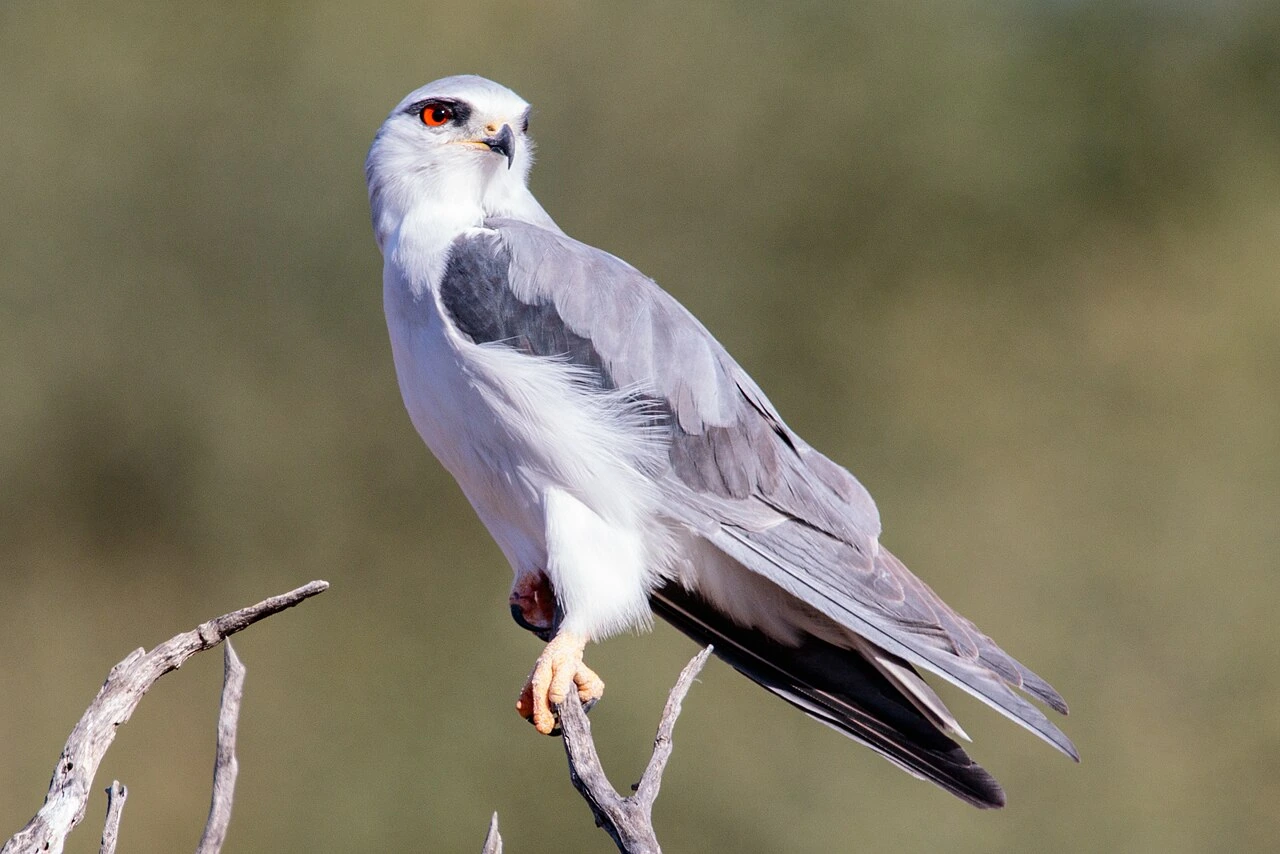
Is a Kite a Bird of Prey? Definitive Raptor Classification
Learn whether a kite species is a bird of prey, with raptor traits, taxonomy, and how to identify it correctly.