No, a kingfisher is not a bird of prey. In the Wikipedia overview, ornithologists are described as often using blank" rel="noopener noreferrer">a narrower “bird of prey/raptor” definition that excludes many piscivorous predators, such as kingfishers. It is a genuinely fascinating predator that catches fish with impressive skill, but it blank" rel="noopener noreferrer">belongs to the order Coraciiformes and family Alcedinidae, which puts it in a completely different taxonomic group from hawks, eagles, falcons, and owls. The confusion is understandable because kingfishers do hunt and kill other animals, but predatory behavior alone does not make a bird a raptor. The classification goes much deeper than that.
Is a Kingfisher a Bird of Prey? Clear Yes Answer

Marcus Hendricks
22 Jun 2026

What "bird of prey" actually means
The term "bird of prey" (or raptor) has a specific meaning in ornithology, and it centers on two things: taxonomy and physical adaptations. Britannica places birds of prey in two orders: Falconiformes (the diurnal hunters like hawks, eagles, and falcons) and Strigiformes (owls). Some classification systems fold the hawks and eagles into Accipitriformes, but the core idea stays the same. These are birds that share a specific set of adaptations shaped by millions of years of hunting and killing prey.
The three physical traits that consistently define raptors, according to sources like the Raptor Center at the University of Minnesota and the National Park Service, are a hooked beak, sharp talons, and exceptionally keen eyesight. The California Raptor Center is even more specific: the most important distinguishing characteristic is long, sharp, powerful talons used to seize and kill prey. That last part matters. Raptors kill with their feet. A kingfisher does not do that.
It is worth noting that there is no single universally agreed definition of "raptor" in academic literature, and a few researchers have debated where the edges of the category fall. But in practical, everyday ornithology, if a bird lacks talons used for killing and does not belong to the raptor orders, it is not a bird of prey. A kestrel is a bird of prey because it has talons built for seizing and killing prey and it falls under the recognized raptor groups bird lacks talons used for killing. That is the working definition most birders, naturalists, and institutions use, and it is the one that excludes kingfishers clearly.
What kind of bird a kingfisher actually is
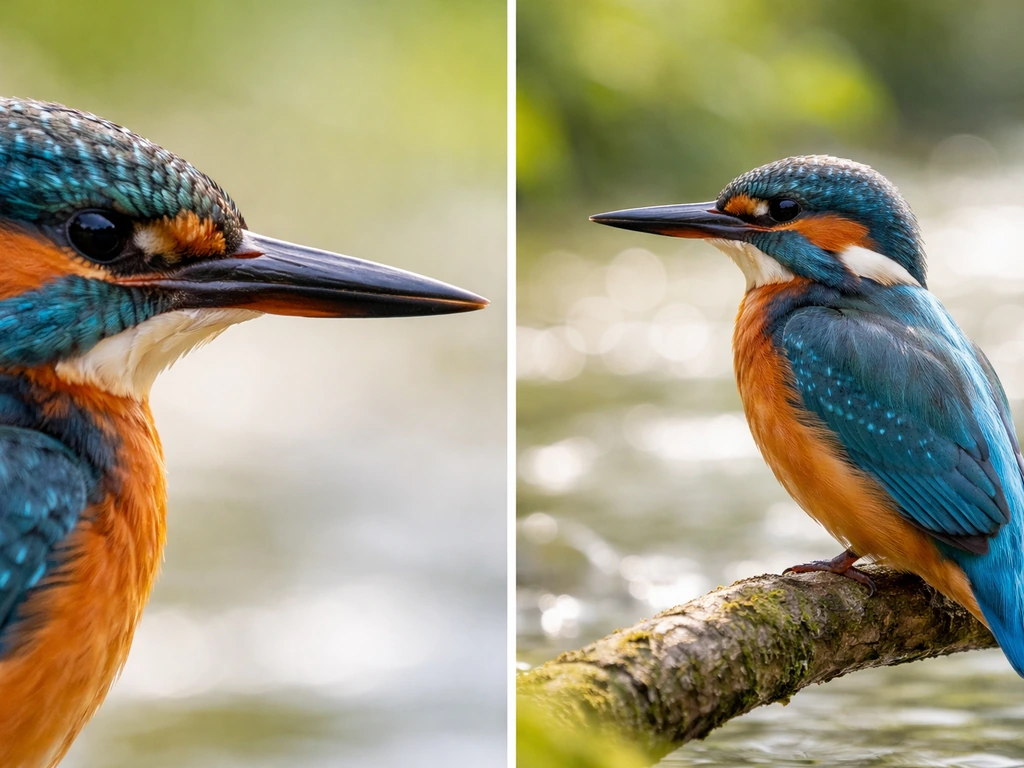
There are roughly 90 species of kingfishers spread across three families: Alcedinidae, Halcyonidae, and Cerylidae. They all sit within the order Coraciiformes, which also includes rollers, bee-eaters, and motmots. These are colorful, often tropical birds with a very different evolutionary history from raptors. A shrew, unlike a kingfisher, is a small mammal and not a bird at all is a shrew a bird. The British Trust for Ornithology and Animal Diversity Web both confirm this placement, and it is consistent across all major classification systems.
Kingfishers are built around their bill. Rather than the hooked, tearing beak of a hawk or falcon, they have a long, dagger-shaped bill designed for one specific job: spearing or grabbing fish underwater at speed. The Ringed Kingfisher even has fine jagged edges along the bill called tomial serrations, which help grip slippery fish. That is a fish-catching tool, not a flesh-tearing tool. Everything about kingfisher anatomy is optimized for the dive, not the grapple.
How kingfishers hunt (and why it looks raptor-like but isn't)
The kingfisher hunting sequence is genuinely impressive, and this is probably where a lot of the confusion starts. They perch and watch the water below, then plunge-dive at high speed to catch fish near the surface. After the catch, they return to the perch, stun the fish by beating it against the branch, and swallow it headfirst. Some species also take insects, small reptiles, or crustaceans depending on availability.
That whole sequence sounds predatory because it is. Kingfishers are predators. But here is what is different from a raptor: they catch prey with their bill, not their feet. Is a red kite a bird of prey? Use the same hooked-beak, talon, and raptor-order checklist to figure it out. A hawk or eagle hits prey with its talons, pierces and grips with those talons, and uses the hooked beak afterward to tear the animal apart. A kingfisher grabs with its beak and then beats the prey to stun it. These are fundamentally different predatory strategies, and they reflect completely different anatomical toolkits developed along separate evolutionary paths.
Kingfishers vs hawks, eagles, and falcons side by side
| Trait | Kingfisher | Typical Raptor (hawk/eagle/falcon) |
|---|---|---|
| Taxonomic order | Coraciiformes | Falconiformes / Accipitriformes / Strigiformes |
| Family | Alcedinidae (and related) | Accipitridae, Falconidae, etc. |
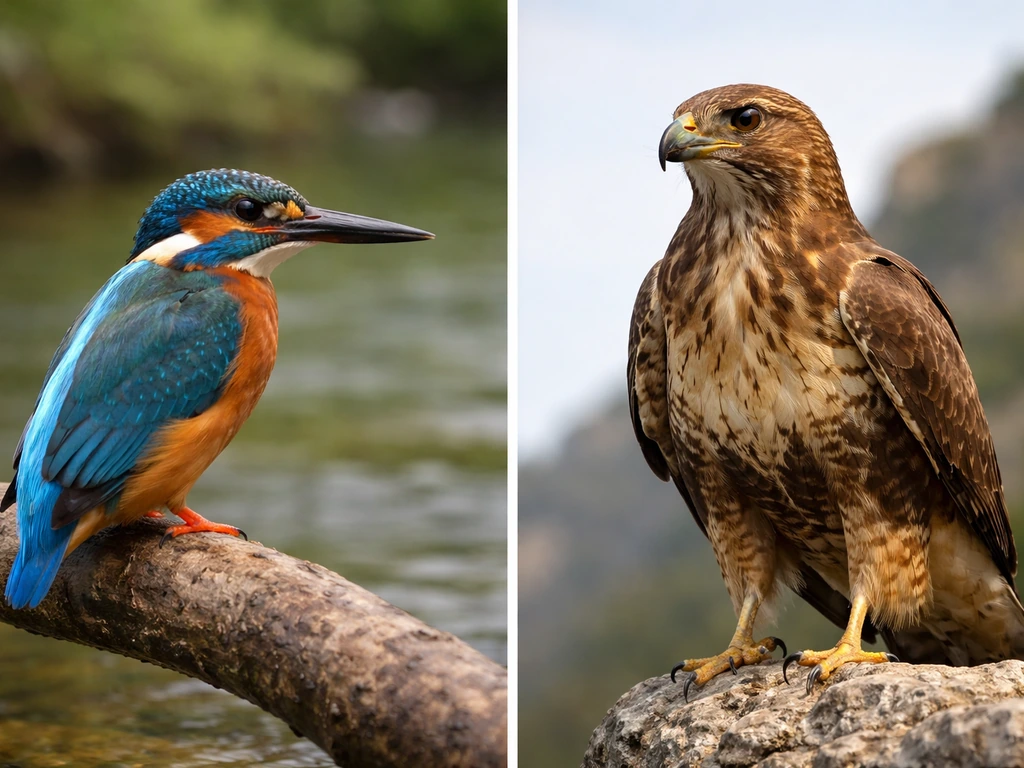
| Bill shape | Long, straight, dagger-shaped | Short, hooked, curved for tearing |
| Feet/talons | Small feet, no killing talons | Large, powerful talons for seizing/killing prey |
| How prey is caught | Grabbed with beak during dive | Seized and killed with talons |
| Primary prey processing | Beaten against perch, swallowed whole | Torn apart with hooked beak after talon kill |
| Primary hunting method | Perch-and-plunge into water | Aerial pursuit, stooping, or ground strike |
| Classified as bird of prey? | No | Yes |
The contrast is stark once you lay it out like this. The kingfisher and a peregrine falcon are both skilled hunters, but they got there through entirely different evolutionary routes and use different weapons. If you are curious about similar edge cases, the shrike is another interesting comparison: it kills prey and even impales it on thorns, yet like the kingfisher it is not classified as a bird of prey. The kite and the kestrel, on the other hand, do belong to the raptor group because they have the talons, the hooked beak, and the correct taxonomic placement.
Why people get this wrong and how to check for yourself
The confusion usually comes from one of two places. First, the name itself: "kingfisher" has "fisher" right in it, which implies active hunting. Second, and more importantly, people see a bird catching animals and eating them and assume that makes it a bird of prey. That logic is understandable but incorrect. Plenty of birds eat other animals without being raptors: herons spear fish, shrikes kill prey and skewer it, and kingfishers dive-bomb into rivers. Hunting behavior does not equal raptor status.
The reliable checklist for settling these debates is straightforward. Ask three questions about the bird in question: Does it have a hooked, curved beak built for tearing flesh? Does it have large, powerful talons it uses to seize and kill prey? And does it belong to one of the recognized raptor orders (Falconiformes, Accipitriformes, or Strigiformes)? If the answer to those three is yes, you have a bird of prey. If even one is no, and especially if the taxonomy does not line up, you do not.
- Check the bird's order and family using a reliable source like Cornell Lab's All About Birds, BTO, or the IOC World Bird List. Raptor orders are Falconiformes, Accipitriformes, and Strigiformes.
- Look at the beak. Raptors have a distinctly hooked, downward-curving tip built for tearing. A straight or dagger-shaped bill points away from raptor status.
- Look at the feet. Large, curved, powerful talons used to grip and kill prey are the single clearest indicator of a true bird of prey. Weak feet or small claws rule it out.
- Separate hunting behavior from classification. A bird eating fish or other animals does not automatically become a raptor. Focus on anatomy and taxonomy, not diet alone.
- Use the same process for similar questions about kookaburras (also Coraciiformes, also not raptors despite their aggressive feeding habits), red kites (genuine raptors in Accipitriformes), and anything else that looks predatory but might not fit the technical definition.
Kingfishers are spectacular birds and elite hunters in their own right. If you are wondering, for example, is a kookaburra a bird of prey, you can apply the same raptor checklist and check its taxonomic order. They just hunt like kingfishers, not like raptors, and that difference is exactly what taxonomy is built to capture. Once you understand the three-trait checklist and know where to look up a bird's order and family, you can settle questions like this in about two minutes for any species you come across.
FAQ
If a kingfisher hunts and kills, why is it not considered a bird of prey?
Not usually. In most birding contexts, a “bird of prey” means a raptor with talons built to seize and kill, plus raptor-style anatomy and placement. Kingfishers lack those killing talons and instead have a specialized, dagger-like bill for catching fish underwater.
How can I tell quickly whether a bird’s “predator look” is raptor-style or kingfisher-style?
If the bird has strong, curved hooks on the beak and uses sizable talons as the main killing tool, that’s the raptor pattern. Kingfishers have tomial serrations and a long spear-like bill for gripping fish, but they do not rely on foot-based killing.
Can a bird that kills prey with its beak still be a bird of prey?
Yes, but not based on behavior alone. Birds that grab prey with bills or mouths can still be predators, yet raptor status is determined by the combination of taxonomy and tool adaptations, especially talons used to kill. So “kills prey” is necessary for predation, but not sufficient for raptor classification.
Do kingfishers ever eat things other than fish, and does that change their classification?
Many kingfishers do include small crustaceans, insects, or even small reptiles in their diet depending on what is locally available. That can make them seem even more “generalist predators,” but their anatomy and hunting method still center on bill-first fish grabbing rather than raptor foot attacks.
What’s a common mistake people make when identifying whether a predator is a raptor?
Some birds are closely approached in everyday descriptions, like “falcon-like” or “hawk-like,” but the checklist helps avoid that trap. Focus on whether there are raptor orders plus hooked tearing beak and killing talons, not on how similar the bird seems while hunting.
What should I check first, anatomy or taxonomy, when I’m unsure?
If you can identify the species, check its taxonomic order first, because kingfisher and raptor lineages are in different bird groups. Without that, you can still use the anatomy rule of thumb, but taxonomy is the tiebreaker when appearances are misleading.
How do kingfishers actually dispatch prey differently from hawks or falcons?
Look for the primary tool used during capture and dispatch. Raptors typically seize and kill with the feet, then tear with the hooked beak, while kingfishers typically capture with the bill, then stun and swallow, often headfirst.
Why does the term “bird of prey” feel inconsistent across books or people in the field?
The “bird of prey” label often gets used loosely for any animal-eating bird, but that usage can clash with ornithology. For practical birding, treat “raptor” as a specific group with talon-based killing and recognized raptor orders, not just any predator.