No, a tawny frogmouth is not a bird of prey. It is a nocturnal insectivore placed in the family Podargidae (order Podargiformes), completely separate from the hawks, eagles, falcons, owls, and vultures that make up the raptors. It hunts at night, eats mostly insects, and looks uncannily owl-like, which is exactly why this question comes up so often. But once you look at what actually defines a raptor, the tawny frogmouth falls well outside that group.
Is a Tawny Frogmouth a Bird of Prey? Clear Answer & ID Tips

Marcus Hendricks
11 Aug 2026
What actually makes a bird a bird of prey
The word 'raptor' comes from the Latin rapere, meaning to seize or snatch, and that etymology points directly at the one non-negotiable feature: powerful feet built to grab and kill. According to the Cornell Lab's All About Birds and the UC Davis California Raptor Center, ornithologists and wildlife rehabilitators agree on a consistent set of criteria when classifying a bird as a raptor.
- Strong, curved talons used to seize and kill prey: this is the single most diagnostic feature. Raptors kill with their feet, not just their beaks.
- A sharply hooked upper mandible: used for tearing flesh once prey is secured.
- Acute binocular vision: forward-facing eyes that give precise depth perception for targeting prey in flight or on the ground.
- Carnivorous diet: the bird actively hunts and kills vertebrate animals (mammals, birds, reptiles, fish) as its primary food source.
- Specialised osteological foot morphology: measurably curved unguals (claw bones) that distinguish raptors from perching birds even in skeletal analysis.
- Taxonomic placement in recognised raptor orders: Accipitriformes (hawks, eagles, osprey), Falconiformes (falcons), Strigiformes (owls), and, by most modern authorities, Cathartiformes (New World vultures).
Every criterion matters, but criteria one and five are the hardest to fake. You can have a hooked beak and eat meat and still not be a raptor, as we will see with the tawny frogmouth. And it is worth noting that even within the raptor group, classification questions get genuinely tricky. Whether a vulture qualifies, or whether a raven counts, are questions that trip up a lot of readers, so those categories deserve their own treatment elsewhere on this site.
Meet the tawny frogmouth
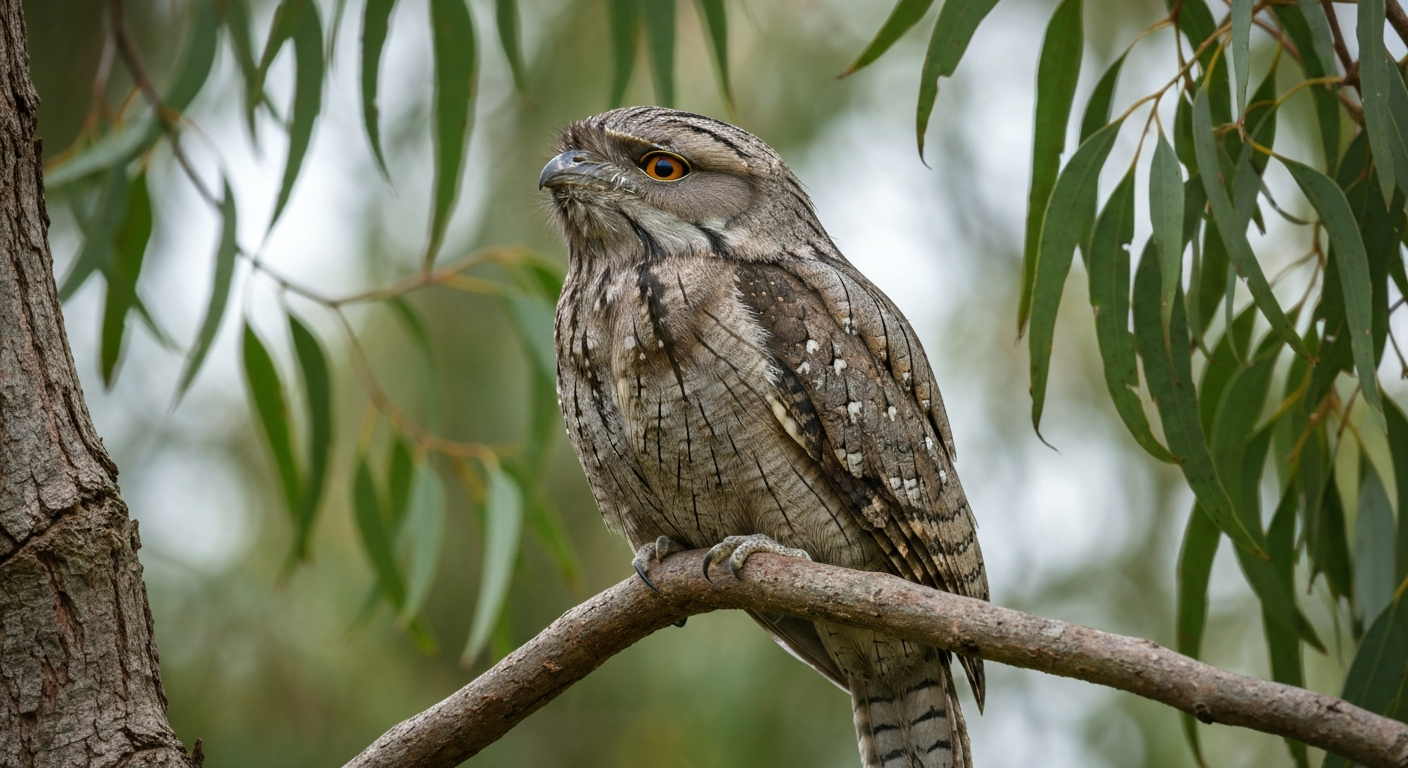
Podargus strigoides is native to mainland Australia and Tasmania, where it occupies a huge range of habitats: eucalyptus forests, woodlands, scrubland, and even suburban parks and gardens. Adults measure roughly 35 to 53 centimetres in length and weigh between 160 and 680 grams, with males typically larger than females. The plumage is a masterclass in bark mimicry: streaked grey-brown tones that blend so perfectly into tree branches that most people walk right past a roosting bird without noticing it.
By day, a tawny frogmouth sits motionless on a branch with its bill tilted upward, compressing its body to look exactly like a broken-off stub. This is not laziness; it is an active camouflage posture. At dusk and through the night, the bird becomes active, sitting quietly on a low perch and waiting for prey to move within range. It is monogamous and pairs often roost together on the same branch for years. The IUCN lists Podargus strigoides as Least Concern, and it is not listed on CITES appendices or under Australia's EPBC Act as a threatened species.
The anatomy tells the whole story
Here is where the raptor question gets settled at the bone level. The Australian Museum's species account explicitly notes that tawny frogmouths have short, weak legs and small feet that lack the curved talons of owls. Comparative pedal morphometric studies back this up: ungual curvature measurements for Podargus strigoides cluster firmly with non-raptorial perching birds, not with talon-bearing raptors. In plain terms, the claw bones are blunt and shallow, built for gripping a branch, not crushing a mouse.
The bill is wide and frog-like (which is exactly where the name comes from), with stiff rictal bristles around the gape that help funnel flying insects into the mouth. A raptor's hooked bill is narrow and pointed, designed to tear muscle from bone after the feet have done the killing. The frogmouth's bill does something different: it opens wide and engulfs prey whole. These are fundamentally different tools solving fundamentally different problems.
How it hunts, and why that matters for classification
Rose and Eldridge's 1997 stomach-content study of 40 tawny frogmouths in eastern New South Wales found that beetles, orthopterans (crickets and grasshoppers), moths, and caterpillars dominated the diet. Small vertebrates such as frogs and mice showed up, but as a minor fraction. Koertner and Geiser's field work confirms the method: the bird is a sit-and-wait perch hunter. It spots prey from a low branch, drops or swoops onto it, and scoops it up with its wide bill.
Compare that to how a true raptor operates. A peregrine falcon stoops at over 200 km/h and binds to prey with its feet. A barn owl triangulates a mouse by sound alone, then drives its talons through the skull on contact. An eagle pins a rabbit to the ground with foot pressure that can exceed 400 pounds per square inch. The killing instrument in every raptor case is the foot. The tawny frogmouth's feet are barely involved in prey capture at all. That is not a minor anatomical footnote; it is the whole classification argument.
Taxonomy: where the tawny frogmouth officially sits
The blank" rel="noopener noreferrer">Clements Checklist (Cornell Lab, 2023 edition) and the HBW/BirdLife International Digital Checklist both place Podargus strigoides in the family Podargidae within the order Podargiformes (sometimes nested under Caprimulgiformes in treatments that lump nightjars and allies). Either way, frogmouths are nowhere near Accipitriformes, Falconiformes, or Strigiformes. For a similar question about another unusual raptor, see is the secretary bird a bird of prey. The IOC World Bird Names list treats it consistently as Tawny Frogmouth, a distinct species in Podargidae. Handbook of the Birds of the World and BirdLife International (HBW/BirdLife) treatments list Tawny Frogmouth (Podargus strigoides) in Podargidae and summarize its status and natural history blank" rel="noopener noreferrer">Handbook of the Birds of the World and BirdLife International (HBW/BirdLife) treatments list Tawny Frogmouth (Podargus strigoides) in Podargidae and summarize its status and natural history.. This is not a contested classification. Every major modern checklist agrees.
The family Podargidae contains only 16 species, all frogmouths, split across two genera: Podargus (the Australian frogmouths) and Batrachostomus (the Asian frogmouths). They share common ancestry with nightjars (Caprimulgidae) and oilbirds, not with any raptor lineage. The evolutionary split between frogmouths and raptors is ancient and deep.
Tawny frogmouth vs true raptors: a direct comparison
| Feature | Tawny Frogmouth | Owl (e.g. Barn Owl) | Hawk / Eagle | Falcon |
|---|---|---|---|---|
| Order | Podargiformes | Strigiformes | Accipitriformes | Falconiformes |
| Family | Podargidae | Tytonidae / Strigidae | Accipitridae | Falconidae |
| Feet / Talons | Small, weak, blunt unguals | Strong, sharply curved talons | Large, powerful talons | Long, pointed talons |
| Primary killing tool | Wide bill (engulfs prey) | Feet (talons pierce/crush) | Feet (grip and crush) | Feet (bind to prey) |
| Primary prey | Insects, invertebrates | Small mammals, birds | Mammals, birds, reptiles | Birds, small mammals |
| Hunting method | Sit-and-wait, pounce/swoop | Silent flight, talon strike | Soaring, aerial pursuit | High-speed stoop or aerial pursuit |
| Activity pattern | Nocturnal / crepuscular | Mostly nocturnal | Mostly diurnal | Diurnal |
| Classified as raptor? | No | Yes | Yes | Yes |
Owls are the trickiest comparison because, like tawny frogmouths, they are nocturnal, camouflaged, and have forward-facing eyes. But owls are unambiguously raptors. Their feet are extraordinary: zygodactyl (two toes forward, two back when hunting), with talons sharp enough to puncture a skull on impact. The tawny frogmouth simply does not have those weapons. It is the feet, every time.
Why people keep mistaking tawny frogmouths for owls (and raptors generally)
The confusion is understandable, and I hear it all the time from people who spot one in the garden. Tawny frogmouths have large, orange-yellow eyes that glow in torchlight, they are active at night, and they have a slightly rounded head that reads as 'owlish' in a quick glance. If you're also wondering whether swifts are birds of prey, see is a swift a bird of prey for a direct comparison. Early Australian colonists apparently called them 'mopoke owls' and 'frogmouth owls.' Neither name is taxonomically correct, but both stuck in casual speech for a long time.
There are also behavioural overlaps that add to the confusion. Both owls and tawny frogmouths roost in trees by day, both can be found in the same woodland habitats, and both will stare you down from a branch without immediately flying off. The key visual giveaway in the field is the bill: an owl has a small, downward-curved hooked beak, while a tawny frogmouth has a broad, flat, toad-like gape that looks nothing like a raptor's bill up close. The feet are a giveaway too if you can see them, small and weak compared to the thick, heavily taloned feet of any owl.
Quick field ID tips to separate frogmouth from raptor
- Bill shape: tawny frogmouth has a wide, flat, frog-like gape; owls and other raptors have a narrow hooked bill.
- Posture: frogmouths tilt their bill upward to mimic a branch stub; owls sit upright and round.
- Feet: if you can see them, frogmouth feet are small and unremarkable; raptor feet are thick with obvious curved talons.
- Facial disc: owls have a defined feathered facial disc that channels sound to the ears; tawny frogmouths do not.
- Flight silhouette: frogmouths have a fluttery, moth-like flight; raptors have purposeful, strong wingbeats or glides.
- Ear tufts: some owls have ear tufts; no frogmouth species does.
A note on rehabilitation and legal status
Even though tawny frogmouths are not classified as raptors, some wildlife rehabilitation guidelines recommend applying raptor-style husbandry standards when caring for injured individuals. The reasoning is practical rather than taxonomic: nocturnal habits, a biting bill, and the handling risks involved are similar enough that raptor-tier biosecurity and enclosure standards make sense in a rehabilitation context. This is worth knowing if you ever find an injured bird, but it does not change the classification one bit. The bird is still a Podargidae, not a raptor.
Under Australian law, tawny frogmouths are native wildlife protected under state and territory wildlife legislation. They are not listed under the EPBC Act as threatened, and they do not appear on any CITES appendix. If you are curious about the legal side of keeping or handling birds of prey, that is a separate question with its own rules and permit requirements that apply to true raptors. If you are asking "can you own a bird of prey", the answer depends on strict permit requirements that vary by state and species, so consult your local wildlife authority for details.
The bottom line
A tawny frogmouth is a bird, absolutely and unambiguously, but it is not a bird of prey. If you have a similar question about scavengers, see is a vulture a bird for how vultures are classified. It is a specialised nocturnal insectivore in the family Podargidae, evolutionarily distant from hawks, eagles, falcons, and owls. People often ask 'is secretary bird an eagle', see the separate note on secretary birds for a full explanation. It lacks the one feature that every raptor definition insists on: powerful, talon-bearing feet built to seize and kill prey. Its feet are perching tools. Its bill is a bug scoop. It is superbly adapted for what it actually does, which is sitting invisibly on a branch until something crawls or flutters too close, and then swallowing it whole. That is a perfectly valid ecological niche. It is just not the raptor niche.
FAQ
Bottom line: Is a tawny frogmouth a bird of prey (raptor)?
No — the tawny frogmouth (Podargus strigoides) is not classified as a bird of prey/raptor. It is a nocturnal insectivore in the frogmouth family (Podargidae). Although it captures live prey and sometimes eats small vertebrates, it lacks the specialised raptorial feet (powerful, recurved talons) and osteological traits that define true raptors such as hawks, eagles, falcons and owls.
What definition/criteria determine whether a bird is a raptor?
Standard criteria used by ornithologists and rehabilitation centres: 1) diet mainly carnivorous on vertebrate prey, 2) capture and kill using strong, grasping feet with recurved talons, and 3) a hooked beak adapted to tear flesh. Foot and claw morphology (talons) are the single most diagnostic trait used in field and clinical definitions.
How does the tawny frogmouth measure up against those raptor criteria?
Tawny frogmouths are nocturnal predators but: 1) diet is dominated by insects and other invertebrates (only occasional small vertebrates), 2) feet are relatively small and weak for perching (no powerful recurved talons), and 3) they capture prey with a wide, frog‑like gape rather than by seizing with talons. Morphometric and museum accounts explicitly note blunt unguals and non‑raptorial feet.
Why are tawny frogmouths often mistaken for owls or other raptors?
Similarities that cause confusion: nocturnal habits, large head and broad, flattened face, camouflage posture, and a sit‑and‑wait hunting style. Key differences: owls have strong raptorial feet and curved talons for seizing/killing vertebrate prey; frogmouths lack those talons and have a different bill/feeding technique.
Quick field ID tips to tell a tawny frogmouth from an owl or hawk
- Posture: frogmouths often sit along a branch, compressed and cryptic (branch‑mimic). - Bill: wide, frog‑like bill (not strongly hooked for tearing). - Feet: normally hidden but toes are small and not taloned. - Eyes/face: frogmouth face is broad but lacks owl’s forward‑facing disc and ear‑tufts; eyes are often more horizontal. - Behaviour: sits motionless by day; flies in a fluttery, moth‑like way at night. Use photos/audio (e.g., Macaulay Library/eBird) for practice.
What does taxonomy say about the tawny frogmouth’s classification?
Tawny frogmouth = Podargus strigoides, family Podargidae, placed in the frogmouth clade (order Podargiformes or included in broader Caprimulgiformes in some lists). Major checklists (Clements, HBW/BirdLife, IOC/World Bird Names) treat it as a non‑raptorial nightbird, not part of the raptor orders (Accipitriformes, Falconiformes, Strigiformes). See standard checklist treatments for details.
Next Articles
Is a Swift a Bird of Prey? Clear Answer, Traits & ID Tips
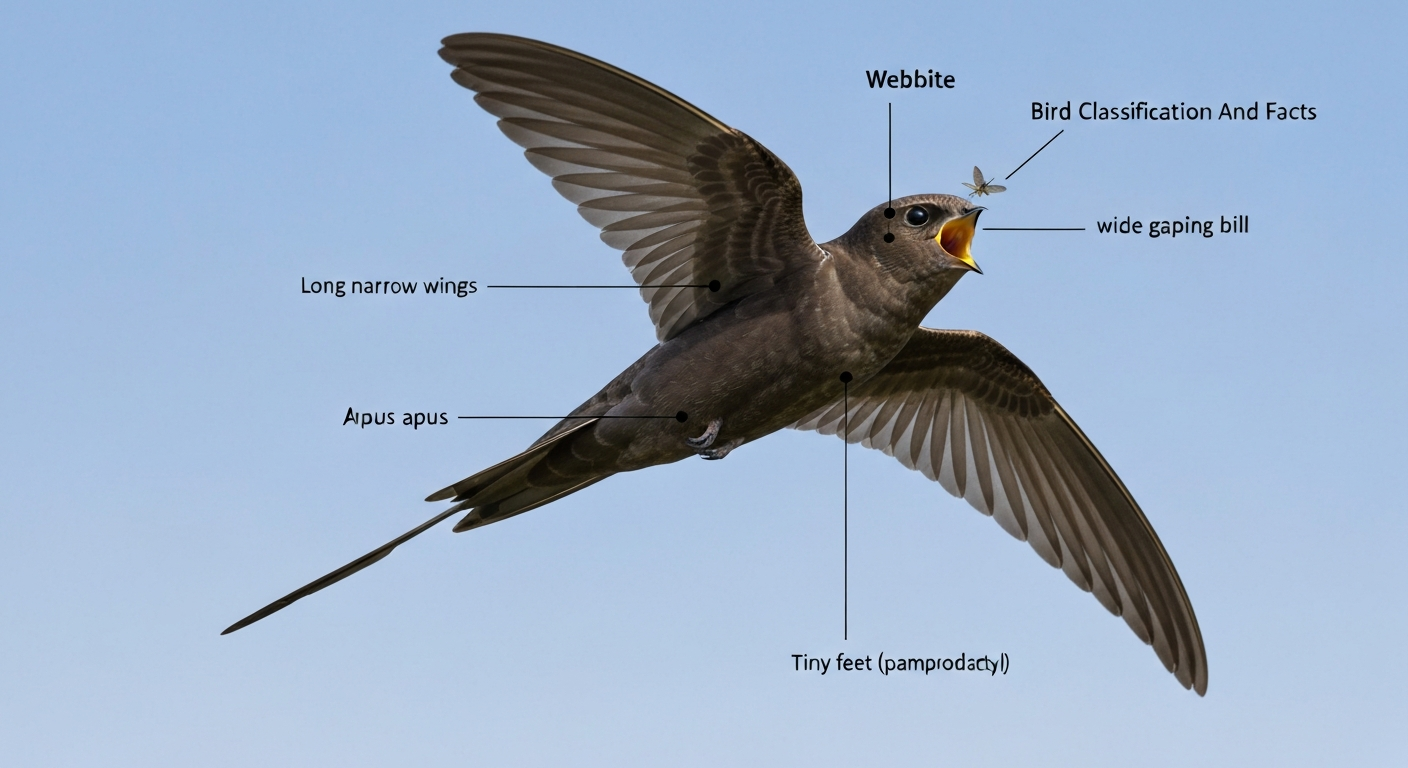
Is a swift a bird of prey? Clear yes/no, traits that define raptors, why swifts aren't, ID tips & legal notes.
Is Secretary Bird an Eagle? Clear Taxonomy & Differences
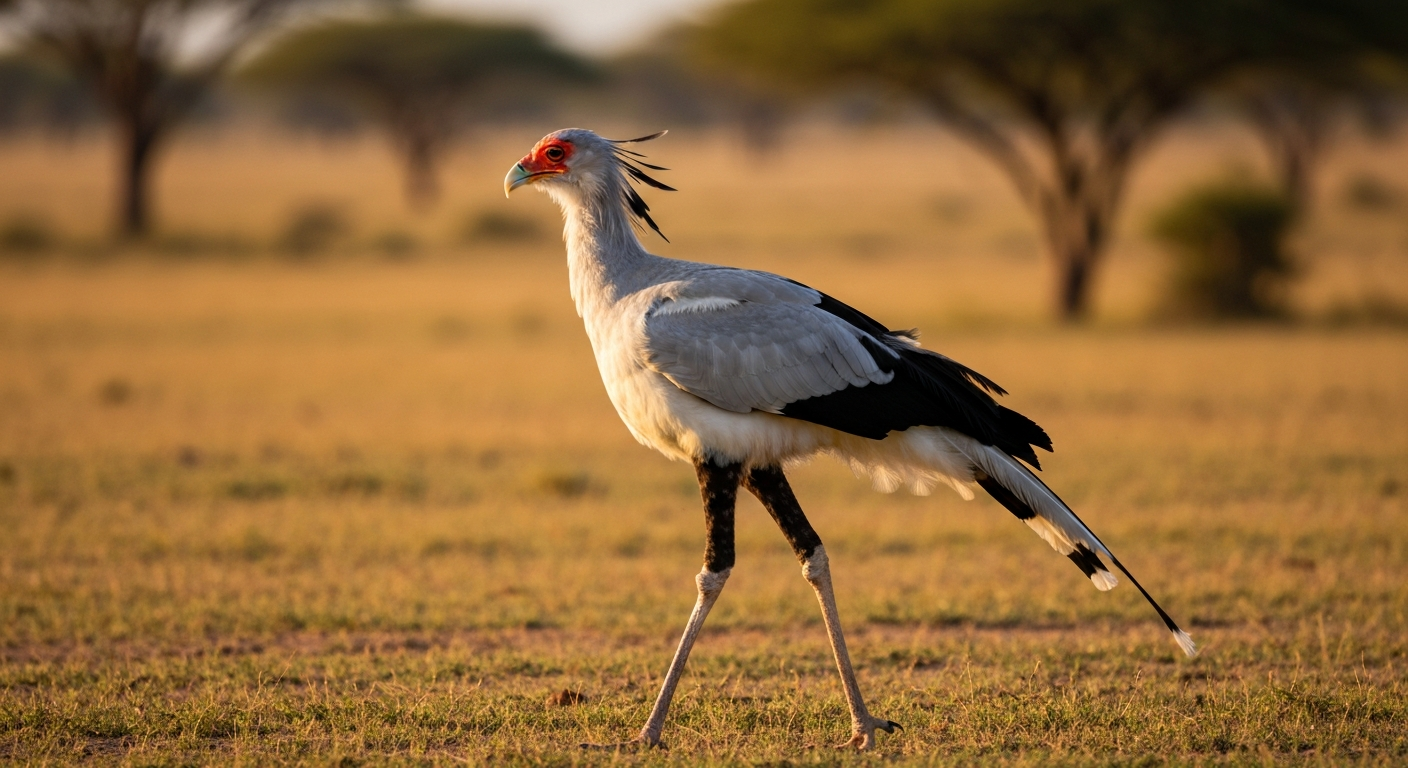
No - the secretary bird is not an eagle. Taxonomy, hunting style, ID tips, and conservation explained.
Can You Own a Bird of Prey in the UK? Legal Steps
Find out if you can own a raptor in the UK, what permits you need, and the practical compliance steps today.