
The secretary bird is not an eagle. It belongs to its own family, Sagittariidae, within the order Accipitriformes, making it a very distant relative of eagles rather than a member of the same group. Eagles sit in the family Accipitridae, and no matter how eagle-like the secretary bird's face looks, its taxonomy places it firmly elsewhere. That said, it absolutely qualifies as a bird of prey, just one that hunts by stomping snakes to death on the African savanna rather than snatching prey from the sky.
Is Secretary Bird an Eagle? Clear Taxonomy & Differences

Marcus Hendricks
14 Jul 2026
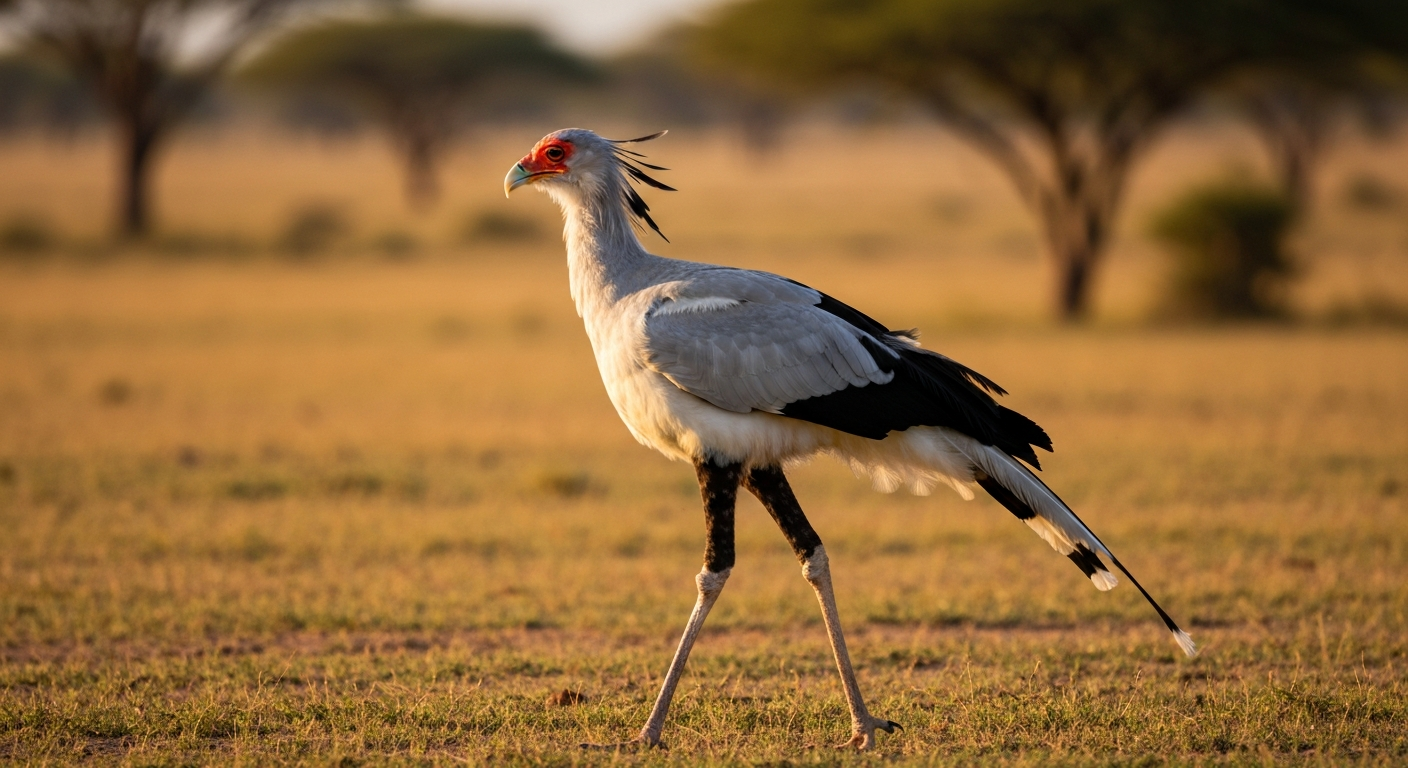
Secretary Bird Classification: Order, Family, Genus, and Species
The secretary bird's formal scientific name is Sagittarius serpentarius, and it is the only living member of the family Sagittariidae. The genus name Sagittarius is Latin for 'archer' and likely refers to the bird's arrow-straight striding gait across open grassland. The species name serpentarius means 'snake handler,' which tells you something about its reputation. Every major checklist used by ornithologists today, including the IOC World Bird List, the Clements/eBird checklist (v2024), and BirdLife International's taxonomy, lists Sagittariidae as its own distinct family within the order Accipitriformes. The IOC World Bird List, Family index confirms Sagittariidae as the secretary bird's distinct family within the Accipitriformes raptor sequence IOC World Bird List — Family index.
Why isn't it an eagle? Because eagles belong to the family Accipitridae, and the secretary bird doesn't. Molecular phylogenetic work, including landmark studies by Lerner and Mindell (2005) and large-scale genomic analyses such as Hackett et al. (2008), consistently shows the secretarybird as a deep, early-branching lineage within Accipitriformes. Think of it as a very distant cousin rather than a sibling. It shares a broad evolutionary neighbourhood with eagles, ospreys, and Old World vultures, but it split from the line that produced Accipitridae a very long time ago. Modern classification reflects that split by keeping Sagittariidae completely separate.
- Kingdom: Animalia
- Class: Aves (birds)
- Order: Accipitriformes
- Family: Sagittariidae (contains only one living species)
- Genus: Sagittarius
- Species: Sagittarius serpentarius
What Actually Makes a Bird an Eagle?
Here's where it gets a little tricky, because 'eagle' is not a strict taxonomic rank. It's a common-name category that generally refers to large, diurnal birds of prey within the family Accipitridae, including well-known genera like Aquila (booted eagles), Haliaeetus (sea eagles), and Spizaetus (hawk-eagles). The Cambridge Dictionary defines eagle simply as a large, strong bird with a hooked beak that eats meat, which is vague enough to cause confusion. From a scientific standpoint, though, ornithologists use family membership to determine whether something is 'an eagle,' not just size or shape.
Accipitridae eagles share a cluster of traits: powerful, curved talons designed to grip and pierce prey, a strongly hooked bill for tearing flesh, relatively compact and muscular legs, broad wings built for soaring, and typically aerial hunting behaviour. The secretary bird has a hooked bill and broad wings, but it diverges sharply from eagles in leg structure, claw morphology, and hunting method. Those differences are not incidental; they reflect a genuinely separate evolutionary lineage.
Is the Secretary Bird a Bird of Prey?
Yes, without question. A bird of prey (also called a raptor) is defined ecologically as a predatory bird that actively hunts and kills animal prey, typically equipped with a hooked bill and strong feet for catching and dispatching that prey. The secretary bird checks every box: it hunts live animals, it has a hooked raptor bill, and it uses powerful feet to kill. The fact that it does this on foot rather than from the air doesn't disqualify it. The definition is about diet and predatory function, not flight style.
This is a question that comes up often in the context of birds of prey classification, and the answer is a clean yes. The secretary bird is formally included in the raptor sequence across all major checklists, placed in the same order as hawks, eagles, and ospreys. So if you're wondering whether the secretary bird is a bird of prey while also wondering whether it's an eagle, the answer is: yes to the first, no to the second.
Secretary Bird vs. Eagles: How They Actually Compare
Stand a secretary bird next to a martial eagle or a bateleur and the differences are immediately obvious, even to a casual observer. The secretary bird's legs are extraordinary: they're long, crane-like, and heavily scaled on the lower section (tarsus) as protection against snake bites and repeated stomping impacts. A typical eagle has relatively short, thick legs built for grip and power. The secretary bird's legs are built for walking kilometres of savanna daily and delivering forceful downward stomps, not for seizing struggling prey mid-air.
The claws tell a similar story. Eagle talons are long, sharply curved, and designed to pierce and grip prey with tremendous force. Secretarybird claws are comparatively short and blunt, adapted for stamping rather than seizing. National Geographic, Secretary bird (hunting and morphology notes) reports that secretary birds have heavily scaled lower tarsi and relatively blunt toes and claws, consistent with repeated stomping as a killing technique rather than talon‑seizing National Geographic — Secretary bird (hunting and morphology notes) reports that secretary birds have heavily scaled lower tarsi and relatively blunt toes and claws, consistent with repeated stomping as a killing technique rather than talon‑seizing.. The bird's crest of long, black-tipped quill feathers projecting from the nape is unique among raptors and gives it the appearance of a 19th-century clerk with quill pens tucked behind the ear (a popular but unverified folk etymology for its common name). In terms of sheer size, secretary birds are large: total length ranges from approximately 112 to 150 cm with a wingspan of around 200 to 225 cm and body mass in the range of roughly 2.3 to 4.3 kg. That puts them in eagle size territory dimensionally, but body structure is completely different.
How the Secretary Bird Hunts (It's Nothing Like an Eagle)
The secretary bird is almost entirely terrestrial in its hunting. It walks, often covering 20 or more kilometres a day across open grassland and savanna, flushing and chasing prey on foot. When it locates a target, it uses a characteristic stomping technique, delivering rapid, powerful downward strikes with its feet to stun or kill prey. This works effectively on snakes, lizards, small rodents, large insects, and other small animals it encounters. Snakes, including venomous species, feature in its diet, but research including work published in PLOS ONE (Hofmeyr et al., 2014) suggests snakes are actually a minority of what the bird eats overall, with arthropods and small mammals making up much of the diet.
Compare that with a typical eagle: soaring on thermals, spotting prey from height, diving at speed, and seizing the target with extended talons. The two hunting approaches are about as different as two birds of prey can get. The secretary bird will fly to roost in trees and will occasionally soar, but its primary ecological niche is as a ground-hunting predator of open habitats. This is one of the reasons it evolved such dramatically different legs and feet compared to its Accipitridae relatives.
Secretary Bird vs. Eagle: Key Features at a Glance
| Feature | Secretary Bird | Typical Eagle (e.g., Aquila sp.) |
|---|---|---|
| Family | Sagittariidae | Accipitridae |
| Order | Accipitriformes | Accipitriformes |
| Total length | ~112–150 cm | ~60–100 cm (varies by species) |
| Wingspan | ~200–225 cm | ~150–220 cm (varies by species) |
| Body mass | ~2.3–4.3 kg | ~1.5–7 kg (varies widely) |
| Legs | Very long, crane-like, scaled | Short to medium, powerful, feathered |
| Talons/claws | Short, blunt, adapted for stomping | Long, sharply curved, for gripping prey |
| Head crest | Prominent long quill feathers | Absent or minimal |
| Primary hunting style | Terrestrial stomping on foot | Aerial dive, talon strike |
| Typical habitat | Open savanna and grassland | Varied (forest, open country, coasts) |
| Bird of prey? | Yes | Yes |
Common Lookalikes and How to Tell Them Apart
The secretary bird is visually distinctive enough that confusion with other species is unlikely in the field, but a few birds do come up in the same broad conversations, especially online. Here's a quick rundown of common mix-ups.
Vultures
Vultures are also large, and some share the secretary bird's savanna habitat in Africa. But vultures are scavengers with bare or lightly feathered heads, short hooked bills, and broad soaring wings built for hours of thermal riding. They do not walk around hunting live prey. The secretary bird's long legs, upright walking posture, and crest make it immediately different in the field. Whether a vulture is a bird of prey is its own interesting classification question, one worth exploring separately.
Ravens
Ravens are corvids (family Corvidae), not raptors at all, despite their large size and all-black plumage giving them an imposing, predatory look. They lack hooked raptor bills and raptorial feet. A raven walking across open ground would superficially share very little with a secretary bird beyond being a large dark bird. Whether a raven qualifies as a bird of prey is a genuinely interesting question, but the answer is no: they're not in the raptor order. For a deeper look at that specific issue, see the related question "is a raven a bird of prey.".
Swifts
Swifts sometimes get lumped into raptor conversations because of their speed and aerial agility, but they are insectivores that catch insects in flight and belong to an entirely different order (Apodiformes). A swift is about as far from a secretary bird as a bird can get, and it is not a bird of prey.
Tawny Frogmouths
The tawny frogmouth is another bird that gets misidentified as a raptor due to its large size, mottled plumage, and nocturnal habits. It belongs to the order Caprimulgiformes (nightjars and allies) and is not a true bird of prey despite hunting insects and small vertebrates. Whether it counts as a bird of prey is worth examining on its own terms. Is a tawny frogmouth a bird of prey? For a focused discussion on the tawny frogmouth's status as a raptor and how it compares to true birds of prey, see the related article 'Is a tawny frogmouth a bird of prey?'.
Conservation Status and Keeping Secretary Birds
The secretary bird is currently classified as Endangered on the IUCN Red List (2020 assessment: e.T22696221A173647556). Its global population is estimated somewhere in the wide bracket of 6,700 to 67,000 individuals, reflecting significant uncertainty, and the trend is declining. A 2024 study published in Bird Conservation International using citizen-science data put the South African population at approximately 8,000 birds and documented ongoing contraction in range. Primary threats include grassland degradation, agricultural intensification, deliberate persecution, electrocution on powerlines, and poisoning, all of which have combined to push the species into a concerning decline across sub-Saharan Africa.
As for keeping secretary birds in captivity: this is a heavily restricted area. The species is listed on CITES Appendix II, meaning international trade is regulated and requires permits. In most countries, keeping a secretary bird as a private pet is effectively impossible without specialised permits, zoological licences, or falconry accreditation of a kind rarely granted to private individuals. Zoos and accredited bird-of-prey centres do keep them successfully, but private ownership is not a realistic option in most jurisdictions. If you are exploring what birds of prey you can legally keep, that question deserves its own careful treatment because the rules vary substantially by country and species. For detail on legalities, permits, and welfare considerations for private possession, see our guide on can you own a bird of prey.
Spotting a Secretary Bird in the Field
If you're visiting sub-Saharan Africa and want to find a secretary bird, the habitat is your first clue. Look for open grassland, lightly wooded savanna, and bushveld at lower elevations. These birds avoid dense forest and very arid desert. They are most active in the early morning and late afternoon, often seen walking in pairs or small family groups across open ground with that distinctive upright, long-legged stride.
- Look for an upright, very long-legged bird walking steadily through open grass — no other African raptor walks like this
- The black crest feathers projecting from the back of the head are unique and visible at distance
- Black thighs contrasting with pale grey-white upperparts and red-orange facial skin help confirm the ID
- In flight, look for the two elongated central tail feathers projecting well beyond the tail and the distinctive black wing-tip and thigh patches
- The call is a hoarse, croaking sound, rarely heard but occasionally given near the nest or when disturbed
- Nests are large flat platform structures of sticks built in flat-topped acacia trees, often reused across years
- Seasonal note: pairs are often more visible during the dry season when tall grass is shorter and burned areas expose ground prey
Quick Answers to Common Birdwatcher Questions
Is the secretary bird a bird of prey? Yes, it is a confirmed raptor and sits in the order Accipitriformes alongside eagles, hawks, and ospreys. Its hunting behaviour, hooked bill, and predatory diet all qualify it. Is it related to eagles? Distantly, yes. Both sit in Accipitriformes, but they are separated at the family level: the secretary bird is Sagittariidae, while eagles are Accipitridae. Molecular studies place Sagittariidae as a deep, early-branching lineage in that order, not a close eagle relative. Is it related to storks or cranes because of its long legs? No. The long legs are a convergent adaptation for walking and stomping, not evidence of a stork or crane relationship. Birds can evolve similar physical solutions to similar ecological problems without being related. Can you own one? In practice, almost certainly not as a private individual. CITES Appendix II listing and national wildlife protection laws in range states and most importing countries make private possession essentially off the table.
Recommended Images to Illustrate This Article
Image 1: A full-body shot of a secretary bird walking across open savanna grassland in South Africa, showing the long legs, upright posture, and quill crest in profile. Caption suggestion: 'The secretary bird's long legs and upright walking posture immediately distinguish it from any eagle or vulture. Photo taken in the Kruger ecosystem, South Africa.' Image 2: A close-up of a secretary bird's foot and lower leg, highlighting the scaled, blunt-clawed toes adapted for stomping. Caption suggestion: 'Short, blunt claws and heavily scaled legs set the secretary bird's feet apart from the long, curved talons of an eagle.' Image 3: A comparison flight silhouette showing a secretary bird in flight (long tail projections visible) alongside a typical Aquila eagle silhouette. Caption suggestion: 'In flight, the secretary bird's elongated central tail feathers and long trailing legs make it unmistakable among African raptors.'
The Bottom Line
The secretary bird is one of those animals that looks like it should be an eagle, walks like it invented a new category of bird, and hunts like nothing else on the African continent. It is not an eagle, because eagles are Accipitridae and the secretary bird is Sagittariidae, a separate family that molecular evidence places as an early-diverging branch within Accipitriformes. It is, however, unambiguously a bird of prey, and an endangered one at that. If this article has you thinking more carefully about raptor classification, that's exactly the right direction. Questions about whether vultures, ravens, swifts, and tawny frogmouths count as birds of prey each have their own nuanced answers worth exploring, and they all illuminate the same core idea: common names and taxonomic categories don't always line up the way we expect.
FAQ
Short answer — Is the secretary bird an eagle?
No. The secretary bird (Sagittarius serpentarius) is a raptor but not an eagle. Modern avian taxonomy places it in its own family, Sagittariidae, within the Accipitriformes group; eagles are generally members of the family Accipitridae (for example, genus Aquila and close relatives). (Sources: IOC World Bird List; Clements Checklist; molecular phylogenetic studies.)
Natural, search‑oriented title and meta description
Title: Is the secretary bird an eagle? Clear answer, classification, and ID tips Meta description: No — the secretary bird is a raptor in its own family, Sagittariidae. Learn how it differs from eagles, ID tips, conservation status, and more.
Formal classification of the secretary bird
Kingdom: Animalia; Phylum: Chordata; Class: Aves; Order: Accipitriformes (raptor group); Family: Sagittariidae (monotypic family); Genus: Sagittarius; Species: Sagittarius serpentarius. Major checklists (IOC, Clements) and treatments (HBW/BirdLife) treat Sagittariidae as a distinct family rather than as part of Accipitridae (the typical eagle family).
Why the secretary bird is not classified as an eagle (taxonomy and evolution)
Taxonomy is based on evolutionary relationships. Molecular phylogenetic and phylogenomic studies show the secretary bird is an early‑diverging, distinct lineage within Accipitriformes and is sister to the clade containing Pandionidae (osprey) + Accipitridae (hawks, eagles, Old World vultures) in many analyses. Because it forms its own family (Sagittariidae) and is evolutionarily distinct, ornithologists do not place it in the Accipitridae 'eagle' family. (Sources: Lerner & Mindell 2005; Gibb et al. 2014; Hackett et al. 2008; IOC/Clements checklists.)
What qualifies as a bird of prey (raptor) — does the secretary bird fit?
A 'bird of prey' or raptor is a functional/ecological grouping: diurnal predatory birds with hooked bills, strong vision, and adaptations for catching and killing prey (e.g., falcons, hawks, eagles, osprey). The secretary bird is a raptor — it has a hooked bill, raptorial behaviour, and is a diurnal predator — but its hunting adaptations (long terrestrial legs and stomping) differ markedly from typical eagles. (Sources: general raptor definitions; species accounts.)
Morphology and hunting strategy — how secretary birds compare with typical eagles
Key morphological and behavioural differences: - Legs and stance: Secretary birds have very long, crane‑like legs adapted to walking and stomping prey on the ground; eagles are generally more compact with powerful, shorter legs built for seizing prey in flight or from perches. - Feet/talons: Secretary birds have heavily scaled tarsi and relatively blunt toes/claws adapted to repeated stomping; eagles have powerful, recurved talons for gripping and killing prey. - Flight: Secretary birds are strong fliers with large wings and long tails but spend much time walking; eagles often rely on perching, soaring and aerial strikes. - Hunting style and diet: Secretary birds are largely terrestrial hunters eating insects, small mammals, lizards and snakes and are famous for stomping to subdue prey. Eagles typically take larger vertebrate prey using talons, aerial attacks, and kleptoparasitism in some species. (Sources: National Geographic; species accounts; raptor field guides.)
Next Articles
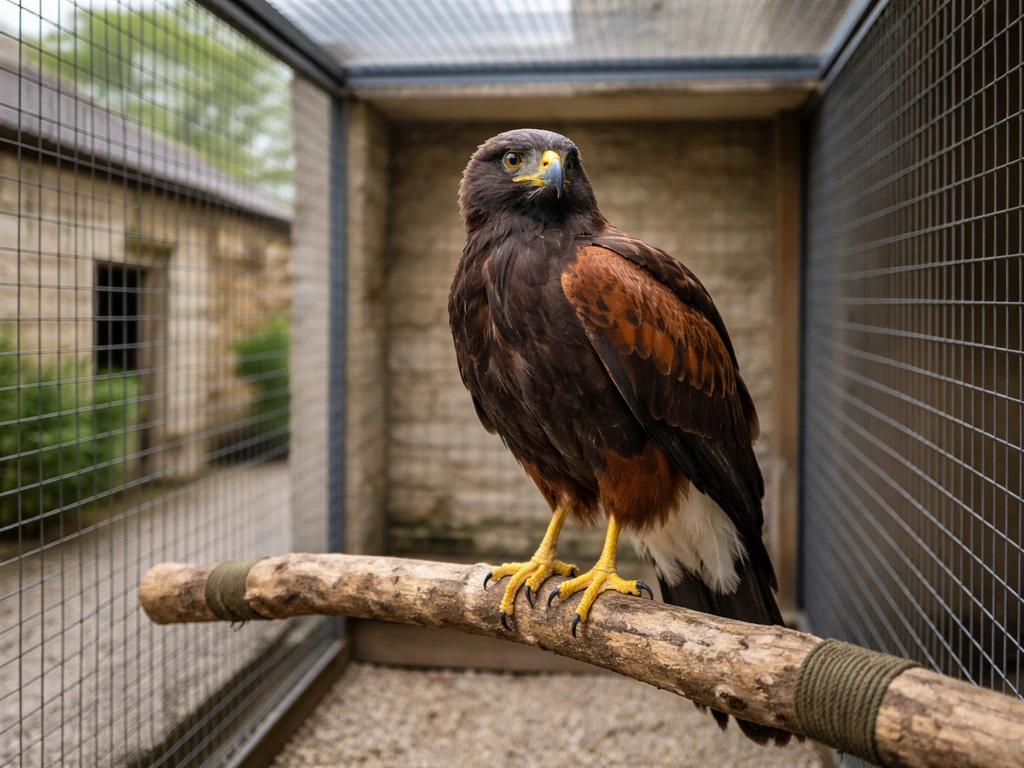
Can You Own a Bird of Prey in the UK? Legal Steps
Find out if you can own a raptor in the UK, what permits you need, and the practical compliance steps today.
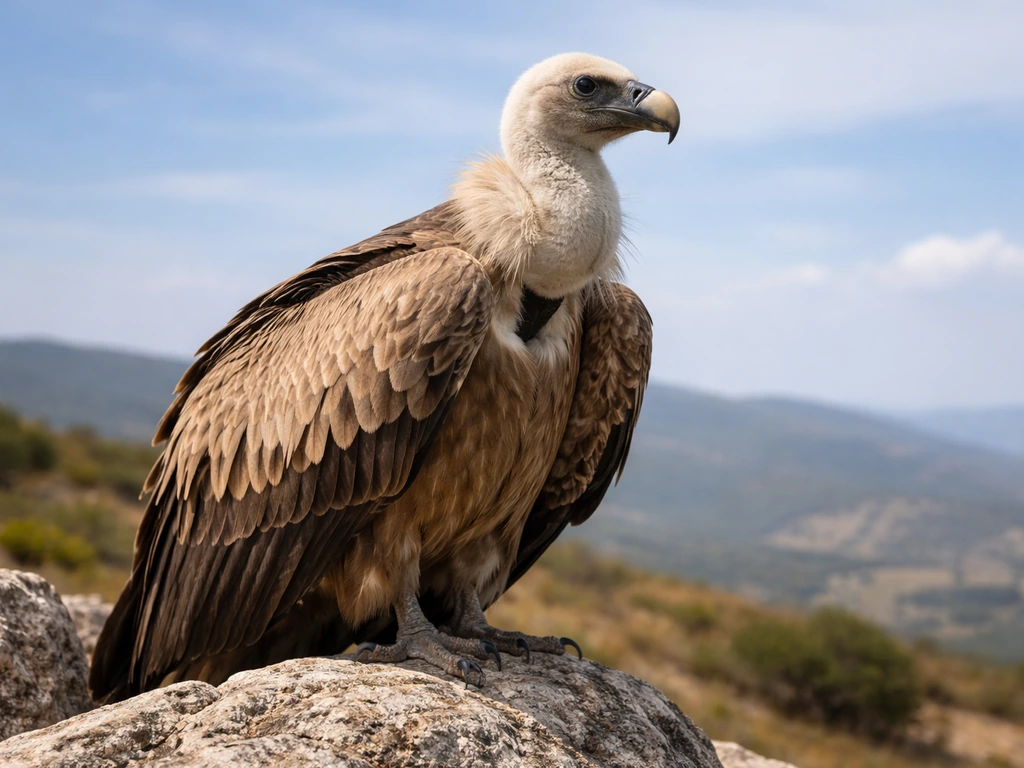
Is a Vulture a Bird? Clear Criteria and Checklist
Yes, vultures are birds. Learn the avian traits checklist and where vultures fit in classification.
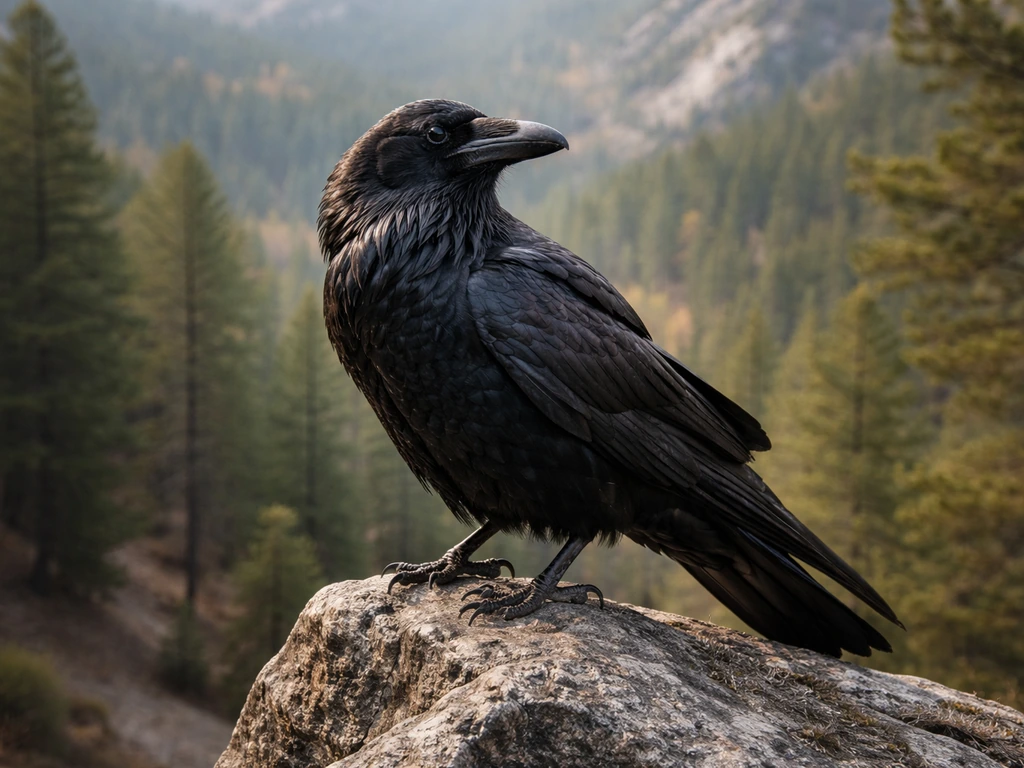
Is a Raven a Bird of Prey? Facts, Diet, and Classification
Yes, but ravens are corvid passerines. They are scavenging omnivores, not raptors or typical bird of prey.