A raven is absolutely a bird, but it is not a bird of prey. Ravens belong to the order Passeriformes and family Corvidae, which puts them in the same scientific neighborhood as crows, jays, and magpies. They are smart, opportunistic omnivores that eat everything from carrion to berries to garbage. True birds of prey, on the other hand, are raptors: hawks, eagles, falcons, owls, and vultures built around a specific hunting toolkit. Ravens lack that toolkit, so no matter how intimidating they look, the 'bird of prey' label does not apply.
Is a Raven a Bird of Prey? Facts, Diet, and Classification

Marcus Hendricks
1 May 2026
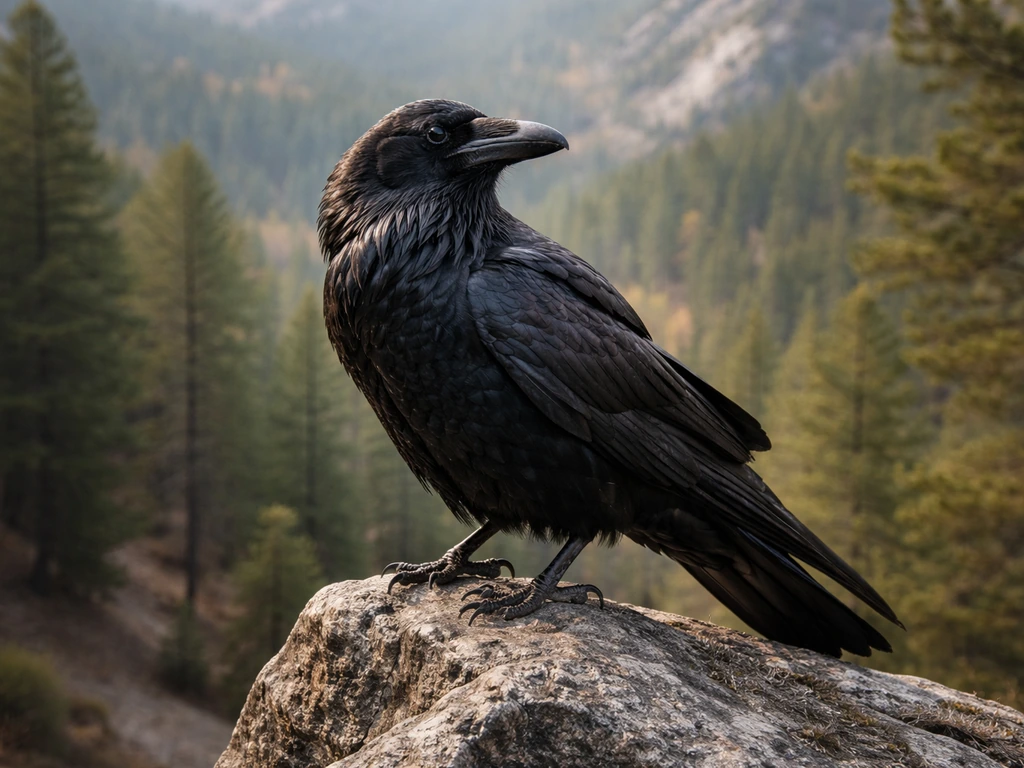
Yes, a raven is definitely a bird
If you came here wondering whether a raven even counts as a bird at all, the answer is a firm yes. The common raven, Corvus corax, is a fully feathered, warm-blooded, egg-laying vertebrate that ticks every box on the bird checklist. Cornell Lab of Ornithology and ITIS both classify it under Order Passeriformes, the largest order of birds on the planet, covering more than half of all known bird species. Ravens are not mythical creatures, they are not raptors, and they are not some ambiguous category of flying animal. They are birds, full stop.
The confusion often comes from how large and striking ravens are. A common raven can reach about 26 inches in length with a wingspan over four feet, which makes it the largest passerine in the world. That size alone makes people assume it must be some kind of predatory bird. But size is not the deciding factor in taxonomy.
What 'bird of prey' actually means
The phrase 'bird of prey' gets used loosely in casual conversation, which is a big part of why this question comes up at all. In everyday speech, Merriam-Webster defines a bird of prey as a carnivorous bird, like a hawk, eagle, vulture, or owl, that feeds wholly or chiefly on meat taken by hunting or on carrion. That broad definition could technically sweep in any bird that eats meat. But in ornithology, the definition is considerably tighter.
Ornithologists use 'bird of prey' as essentially synonymous with 'raptor,' a group defined not just by diet but by a specific set of physical adaptations. Britannica, PBS Nature, and the Raptor Center at the University of Minnesota all point to the same three core traits:
- A strongly hooked beak for tearing flesh
- Sharp, curved talons (especially the hallux talon) for seizing and immobilizing prey
- Exceptionally keen eyesight for locating prey from a distance
These traits are not just cosmetic. The hallux talon in particular is a functional weapon, and peer-reviewed research on raptor morphology confirms it plays a direct role in restraining and killing prey. Classic raptors include hawks, eagles, falcons, ospreys, and owls. Vultures are sometimes grouped in here too, though their reduced talons set them apart from the strict definition. In some guides, the question is vulture a bird of prey comes up because vultures are scavengers but not a perfect match for the strict raptor definition. (Whether a vulture qualifies as a bird of prey is its own interesting debate.) The key takeaway is that being predatory is not enough on its own. Raptors have a distinctive anatomical package that ravens simply do not have.
Raven basics: taxonomy and what kind of bird this actually is
Corvus corax was formally described by Linnaeus in 1758 and blank" rel="noopener noreferrer">sits firmly in the Passeriformes, the 'perching birds' or 'songbirds' order. Family Corvidae includes crows, rooks, jackdaws, jays, magpies, choughs, and nutcrackers. These birds are characterized by their intelligence, behavioral flexibility, and generalist lifestyles rather than the specialized hunting morphology you see in raptors.
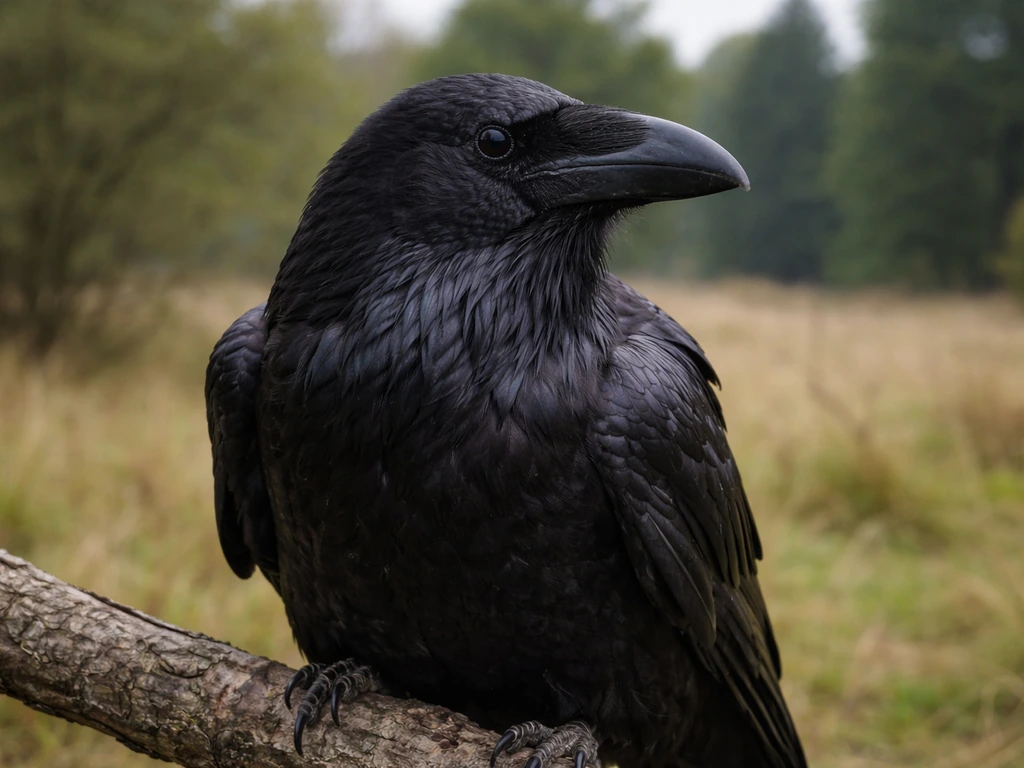
Physically, ravens have a large, slightly curved bill, but it is not hooked in the raptor sense. Their feet are strong and useful for walking and manipulating objects, but they do not have the powerful, curved talons raptors use to kill. In flight, ravens are identified by their wedge-shaped tail, thick neck, and deep, resonant croaking call. They look imposing, but the anatomy tells a different story than a hawk or eagle.
Do ravens actually hunt? A real look at what they eat
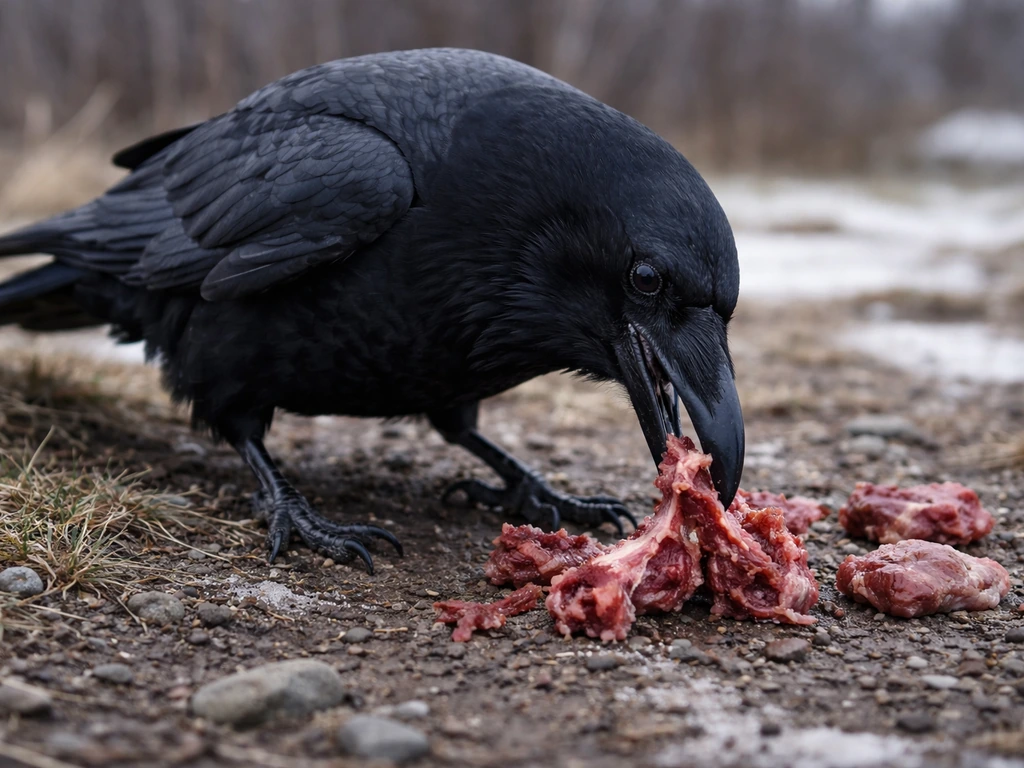
Ravens do kill things, which is another reason people reach for the 'bird of prey' label. But the way they eat is fundamentally different from how a raptor hunts. Ravens are omnivores and opportunists. The National Park Service describes their diet as ranging from scavenged carrion to live prey, but also arthropods, grains, and fruit. Cornell Lab's dietary list for the common raven reads almost like a buffet menu:
- Carrion (a major staple, especially in winter)
- Small mammals like mice and voles
- Birds up to the size of adult rock pigeons
- Nestlings, including great blue heron chicks
- Eggs
- Fish
- Insects and other arthropods
- Grains, buds, and berries
- Garbage and human food scraps
- Wolf and sled-dog dung
That last item is not a joke. Ravens are genuinely non-selective. A peer-reviewed study of raven diet in Orkney found their pellets dominated by lagomorph (rabbit/hare) carrion, supplemented by shore feeding, egg predation, invertebrates, and plant material. Another study on juvenile raven behavior documented 'gang foraging,' where groups of young ravens converge on large carcasses, sometimes buried by snow, over wide areas. This is scavenging strategy, not raptor hunting.
Ravens also cache food, storing it in the ground for later. The National Park Service specifically notes scatter-hoarding in the soil. Raptors do not scatter-hoard. They catch prey and eat it or carry it to a nest. The caching behavior alone signals a completely different ecological strategy.
Where ravens do act predatory, it can look impressive. Cornell Lab notes that pairs of ravens sometimes work together to raid seabird colonies. That is coordinated predation. But it is achieved through intelligence and teamwork, not through the specialized killing anatomy of a raptor. There is no talon strike, no aerial stoop, no prey immobilization via grip strength. The Northern Ireland Raptor Study Group puts it well: 'The raven is a passerine, not a bird of prey, but due to its ecological similarity it has been adopted as an honorary raptor.' That informal 'honorary' status is the closest a raven gets to the raptor club.
Bird of prey vs. predator: which label actually fits a raven
This is the distinction that resolves the whole debate. 'Predator' and 'bird of prey' are not the same thing, and conflating them is where the confusion starts.
| Trait | True Raptor (e.g., Red-tailed Hawk) | Common Raven |
|---|---|---|
| Taxonomic order | Accipitriformes or Falconiformes | Passeriformes |
| Family | Accipitridae, Falconidae, etc. | Corvidae |
| Hooked beak (raptor-type) | Yes | No (curved but not hooked) |
| Sharp killing talons | Yes, highly developed | No |
| Primary diet strategy | Live prey capture | Omnivorous scavenging + opportunistic predation |
| Food caching | Rarely | Yes, scatter-hoards in ground |
| Qualifies as 'bird of prey'? | Yes | No |
A raven is a predator in the broad ecological sense: it kills and eats other animals. But so do shrikes, herons, and kingfishers, and none of those are called birds of prey either. The 'bird of prey' or 'raptor' category is reserved for a specific anatomical and taxonomic group. Ravens fall outside it. If you want to be precise, call a raven an omnivorous passerine with predatory and scavenging tendencies. If you want to be casual, calling it a predator is fine. Just avoid 'bird of prey,' because that implies a biological toolkit ravens do not possess.
This same distinction comes up with other birds that live in gray zones. Vultures are sometimes discussed alongside raptors, so it helps to clarify whether a vulture is actually a bird of prey is a vulture a bird of prey. Vultures, for instance, scavenge heavily and are sometimes grouped with raptors despite having reduced talons. Tawny frogmouths look owlish and eat prey but are not raptors. Secretary birds walk around eating snakes, which sounds raptor-ish until you dig into the taxonomy. If you are wondering whether the secretary bird is an eagle, it is not, because it is classified separately from true eagles and raptors Secretary birds. The pattern is consistent: behavior alone does not make a raptor. Anatomy and taxonomy do.
How to spot the difference yourself (and keep learning)
If you want to confirm in the field whether a bird qualifies as a raptor, the Raptor Center's three-trait checklist is genuinely useful: hooked beak, sharp talons, keen eyesight adapted for hunting. Apply that to a raven and it fails on the first two criteria immediately. Ravens have a large, slightly curved bill, but it does not have the sharp hook you see on a hawk or eagle. Their feet are strong but flat-clawed, built for gripping branches and the ground, not for seizing prey.
For going deeper on raven biology, Cornell Lab's All About Birds page for the common raven is the best free starting point. It covers life history, diet, habitat, and identification with photos and audio. The National Park Service's raven page is also worth reading if you want a concise, accurate summary of their ecology. Both are publicly available and written for general audiences.
If you find yourself curious about where other unusual birds fall on the raptor spectrum, it is worth exploring how classification works for birds like vultures (are they really raptors?), secretary birds (which hunt but are classified separately from true eagles), and even fast-flying species like swifts that people sometimes mistake for falcons. Swifts are not birds of prey either, even though they can look similarly fast in flight. Secretary birds are fascinating because they hunt on the ground, but they are classified separately from true eagles and other raptors secretary birds (which hunt but are classified separately from true eagles). Taxonomy consistently rewards a second look, and ravens are a perfect example of why a dramatic appearance does not always match the scientific category.
FAQ
If a raven kills animals, why isn’t it a raptor or bird of prey?
No. Even though ravens will kill and eat animals, they are classified as passerines (songbird relatives) in the order Passeriformes, not as raptors. If you see “bird of prey” used in a hobby context, it usually means raptor, which is an anatomy-based category, not just “a bird that eats meat.”
How can I tell in the field whether a bird is a raptor, like a hawk, versus something passerine like a raven?
Use the “field checklist” approach: look for a hooked beak and grasping, curved talons used to seize and immobilize prey, plus hunting adaptations for carrying and killing. Ravens can have a strong bill and capable feet, but their talons are not shaped and used like raptor weapons.
Are all ravens (or all corvids) birds of prey?
Yes, but be careful with the species. The common raven is the one most people discuss, and it is a passerine omnivore. Other corvids (like crows and jays) are also not raptors, even though some species may prey on eggs or small animals.
What’s the most common misunderstanding behind calling ravens birds of prey?
People often mix up “predatory behavior” with “raptor anatomy.” A bird can be fierce, coordinated, or opportunistic and still not be a raptor if it lacks the specialized killing toolkit (especially the talons and beak shape). Ravens are “predators” in the ecological sense, but not in the taxonomic raptor sense.
Do ravens hunt like hawks do?
Ravens can raid nests and can prey on eggs, but that doesn’t make them raptors. Their hunting style is typically opportunistic and flexible, including scavenging, cache retrieval, and group feeding, rather than single-species aerial pursuit with immobilizing grips.
Do ravens cache food the way raptors do?
Not in the strict raptor sense. Raptors generally eat what they catch (or tear carrion opportunistically) and do not rely on scatter-hoarding as a defining behavior. Ravens commonly store food in the ground (scatter-hoarding), which supports a different survival strategy.
Are ravens dangerous enough to count as predators in the same way as birds of prey?
They can be aggressive and may attack livestock under certain circumstances, but that is not the same as being a raptor. In most cases it is driven by resource opportunity, defense, or scavenging rather than the specialized prey-grasping mechanics raptors use.
What’s a precise way to describe a raven’s diet and classification without using the wrong label?
If you are trying to label birds for wildlife watching or a report, write “corvid (passerine), omnivore” rather than “raptor.” If you need a simpler phrase, “predatory and scavenging omnivore” is accurate and avoids implying hooked-beak, talon-based raptor traits.
Next Articles
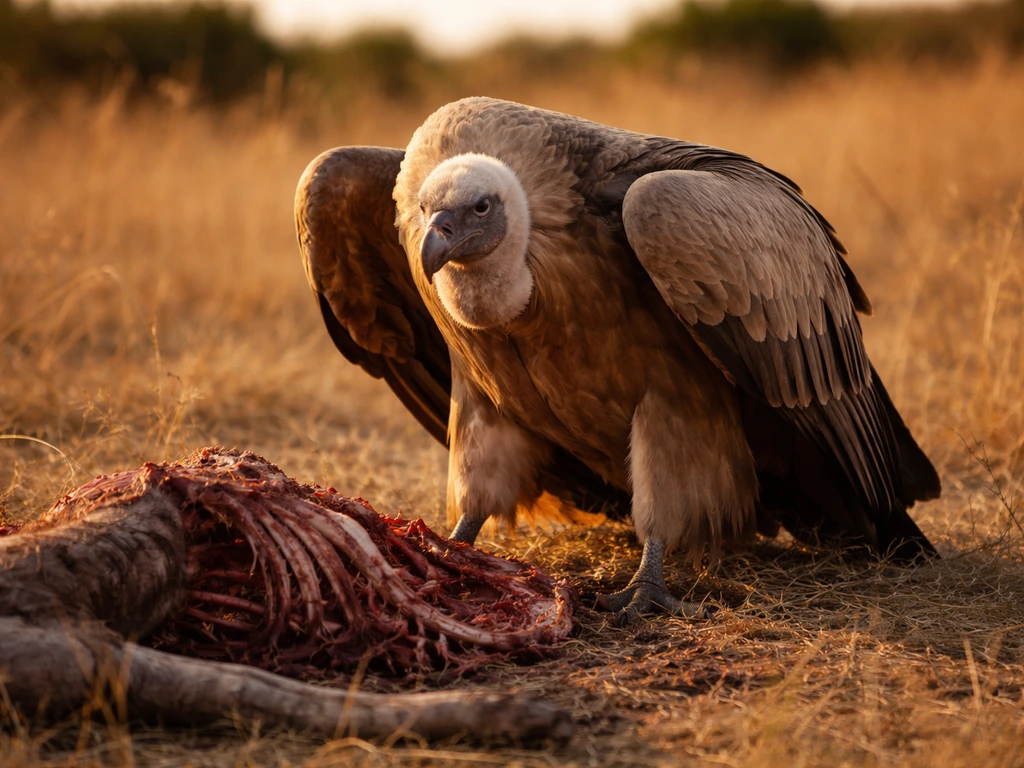
Is Vulture a Bird of Prey? Taxonomy and Key Traits Explained
Yes, vultures are raptor-like bird of prey, but mostly scavengers, not hunters; key traits and quick ID guide.
Is a Dragonfly a Bird? How to Tell the Difference
Dragonflies are insects, not birds. Learn key bird traits vs dragonfly anatomy to tell them apart fast.
Is a Flyer a Bird? How to Tell Flyers From Real Birds
No. Flyers aren’t automatically birds; true birds have feathers, beaks, bird anatomy, and breeding traits, not just flig