A crow is a bird, full stop. It is also an animal, because birds are animals. If that sounds like a trick answer, it is not: the confusion usually comes from treating 'bird' and 'animal' as two separate categories, when really 'bird' is just a specific type of animal. Every crow you have ever seen belongs to Class Aves, the scientific grouping that contains all birds, which itself sits inside Kingdom Animalia. So a crow is simultaneously a bird and an animal, in the same way that a golden retriever is both a dog and an animal.
Crow: Is It a Bird or an Animal? Clear Scientific Answer

Marcus Hendricks
12 Aug 2026
What scientists actually mean by 'bird' vs. 'animal'
In everyday language, people often use 'animal' to mean something wild and furry, and 'bird' as a separate bucket entirely. Biology does not work that way. 'Animal' is the broadest category here: Kingdom Animalia contains mammals, reptiles, fish, insects, worms, and yes, birds. 'Bird' is a far more specific label. A bird is a warm-blooded vertebrate in Class Aves, and it must tick several biological boxes to earn that classification.
- Feathers: the one trait found exclusively in birds and in no other living group of animals. Feathers handle insulation, flight, waterproofing, and display.
- Toothless beak: birds have hard, keratinous beaks rather than teeth. Their jaws are highly varied in shape across species but never toothed in living birds.
- Hard-shelled amniotic eggs: birds lay eggs with a rigid calcium carbonate shell, enclosing the embryo in a protected, self-sufficient package.
- Wings: forelimbs are modified into wings. Flight capability varies (penguins do not fly; crows do), but the underlying wing anatomy is present across all birds.
- Lightweight skeleton: avian bones are pneumatized (hollow and air-filled in many places), reducing weight without sacrificing structural strength.
- High metabolic rate: birds are endothermic, generating their own body heat and maintaining a consistently high body temperature.
Feathers are the clincher. No other living animal has feathers. Bats fly but have no feathers. Butterflies have scales that can look feathery from a distance but are entirely different structures. If you see feathers, you are looking at a bird, and crows have feathers from beak to tail tip. That alone settles the classification question.
Crow taxonomy at a glance
Here is where crows sit in the formal taxonomy of life, using the American Crow (Corvus brachyrhynchos) as the example. Every level in this hierarchy is nested inside the one above it, which is exactly why a crow is both a bird (Class Aves) and an animal (Kingdom Animalia) at the same time.
| Taxonomic Rank | Name | What it means |
|---|---|---|
| Kingdom | Animalia | All multicellular animals |
| Phylum | Chordata | Animals with a backbone (vertebrates, among others) |
| Class | Aves | All birds — the definitive 'bird' category |
| Order | Passeriformes | Perching birds, the largest bird order |
| Family | Corvidae | Crows, ravens, jays, magpies and allies |
| Genus | Corvus | The 'true crows' and ravens (~50 species) |
| Species | Corvus brachyrhynchos | American Crow specifically |
The genus Corvus is enormous and spans nearly every continent. It includes familiar species like the American Crow, the Carrion Crow of Europe, the Hooded Crow, the Large-billed Crow of Asia, and the Common Raven. The IOC World Bird List and the Clements Checklist (used by eBird at Cornell Lab) are the standard authorities for crow taxonomy, and both list dozens of recognized Corvus species. One relatively recent taxonomic change worth noting: the Northwestern Crow (formerly Corvus caurinus) was merged into the American Crow following genetic analysis, so what used to be counted as two species in the Pacific Northwest is now treated as one.
What being in Aves and Corvidae actually means for a crow
Belonging to Class Aves means crows share the full suite of bird traits described above: feathers, a beak, egg-laying, warm blood, and a skeleton built for flight. But placement within Corvidae adds a second layer of biological implications that are frankly more interesting. Corvidae is the family that produced some of the most cognitively complex birds on earth. Membership in this family correlates consistently with large brain-to-body ratios, omnivorous and opportunistic diets, sophisticated social systems, and a striking capacity for problem-solving. The review 'Brains, tools, innovation and biogeography in crows and ravens', review (BMC / open access) summarizes evidence that membership in Corvidae correlates with omnivorous/scavenging diets, complex social systems, and advanced problem‑solving and behavioral flexibility 'Brains, tools, innovation and biogeography in crows and ravens' — review (BMC / open access).
A 2022 study in Nature Communications documented the adaptive radiation of the Corvus genus in detail, showing how crows and ravens diversified their beak shapes and ecological niches as they spread across the globe. The short version: Corvus is a genus of generalists that evolved the cognitive tools to exploit almost any food source in almost any environment. That is why you see crows thriving equally well in remote forests and dense cities.
Physical traits: what a crow looks like up close
If you want to confirm you are looking at a crow and not something else, these are the features to focus on. The American Crow is a useful benchmark since it is the species most North American readers will encounter.
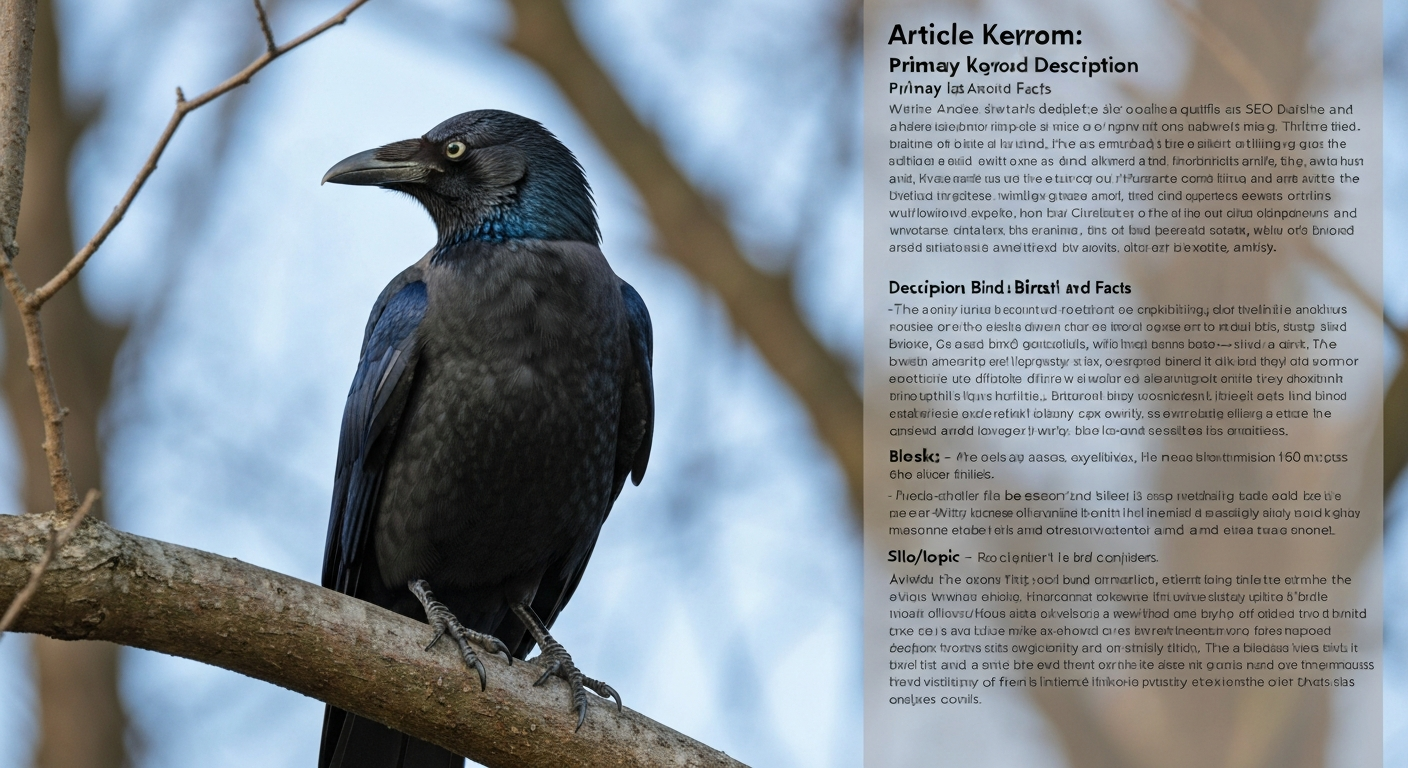
- Size: medium-large for a passerine, roughly 40 to 50 cm (about 16 to 21 inches) from bill tip to tail tip. Bigger than a robin, noticeably smaller than a Common Raven.
- Plumage: uniformly glossy black across the entire body, including bill, legs, and feet. In good light the feathers show an iridescent sheen.
- Bill: relatively straight, robust, and slightly curved at the tip. Not as heavy or arched as a raven's bill.
- Tail: fan-shaped or slightly squared off when spread in flight. This is one of the fastest ways to separate a crow from a raven in the field.
- Wings: broad and rounded. Wingbeat pattern is steadier and more rowing than a raven's more buoyant, soaring style.
- Legs and feet: black, strong, adapted for walking on the ground as well as perching in trees.
The all-black appearance is the first thing people notice, and it is also the thing that causes confusion with ravens, Brewer's Blackbirds, grackles, and other dark birds. Size and tail shape in flight are your fastest disambiguation tools, and the crow's characteristic 'caw' call cuts through any distance ambiguity.
Crow life history: breeding, lifespan, and development
Crows are seasonal breeders. In North America, American Crows typically begin nesting in early spring, though timing varies by latitude: southern populations start earlier, northern ones later. Both members of a breeding pair cooperate to build a large cup nest, usually placed in the fork of a tree well off the ground. The female lays a clutch of 3 to 9 eggs (typically 4 to 5), and incubation lasts roughly 18 days. Chicks are altricial, meaning they hatch helpless and require intensive parental care before fledging at around 4 to 5 weeks.
One of the most striking things about crow family life is cooperative breeding. Young crows from previous years frequently stay with their parents and act as helpers at the nest, assisting with feeding and guarding the new chicks. This kind of extended family system is well-documented in long-term field studies at Cornell. American Crows are reasonably long-lived for a bird of their size: banding records show wild individuals routinely reaching 10 or more years, with some exceptional birds surviving considerably longer. Outside the breeding season, crows often join large communal roosts that can number in the thousands, sometimes tens of thousands of birds, particularly in winter.
What crows eat and how they behave
Diet and scavenging
Crows are omnivores and opportunistic scavengers, and that combination makes them enormously successful. Their diet includes invertebrates (earthworms, beetles, grasshoppers), small vertebrates, bird eggs, grain, berries and other fruits, carrion, and a wide range of anthropogenic foods: roadkill, discarded fast food, scraps from dumpsters. See American Crow, Food & Foraging (All About Birds, Cornell Lab of Ornithology) for species‑level details on omnivory and frequent foraging in human‑modified habitats American Crow — Food & Foraging (All About Birds, Cornell Lab of Ornithology). They are not primarily scavengers the way vultures are, but they will take carrion whenever it is available and compete effectively at carcasses. In urban environments this dietary flexibility is a major competitive advantage.
Intelligence and problem-solving
Corvid intelligence is genuinely remarkable, and it is not just anecdote. Nicolas Emery and Nicola Clayton's landmark 2004 paper in Science described convergent evolution of intelligence between corvids and great apes, documenting that several Corvus species demonstrate tool use, causal reasoning, and complex social cognition. The New Caledonian Crow (Corvus moneduloides) is the standout: wild populations manufacture hooked and non-hooked stick tools to extract insect larvae from wood, a behavior requiring planning and learned technique. The Hawaiian Crow (Alala, Corvus hawaiiensis) independently evolved tool use as well. These are not isolated laboratory tricks. They are behaviors documented at wild foraging sites.
American Crows show their own suite of impressive behaviors: vocal learning that produces regional dialects, the ability to recognize and remember individual human faces (demonstrated experimentally), mobbing of potential predators to warn the wider community, and rapid cultural transmission of new food-finding techniques through family groups and roosts. The social learning aspect means crow populations can adapt behaviorally to new challenges far faster than genetic evolution would allow.
Crows vs. ravens: related but definitely not the same
This question comes up constantly: are crows and ravens the same bird? The short answer is no, but they are closely related. For a focused explanation of whether a raven is a crow, see Is a raven a crow. Both crows and Common Ravens belong to the genus Corvus, which means they share a fairly recent common ancestor and a family (Corvidae). But they are distinct species with real, observable differences. Calling a raven a crow is like calling a wolf a coyote: same family, clearly related, but not interchangeable.
| Feature | American Crow | Common Raven |
|---|---|---|
| Size | 40–50 cm, roughly 450 g | 56–69 cm, roughly 700–1600 g |
| Bill | Moderate, slightly curved tip | Very large, heavy, strongly arched |
| Tail shape in flight | Fan-shaped / squared | Wedge-shaped / tapered (diamond) |
| Throat feathers | Smooth | Shaggy hackles visible |
| Voice | Clear 'caw' caw' | Deep, resonant 'croak' or 'gronk' |
| Habitat tendency | Highly urban-tolerant, suburban, farmland, forest edge | More wilderness-associated: mountains, cliffs, remote forests, tundra |
| Flight style | Steady, rowing wingbeats | More soaring, buoyant; will glide and tumble |
Ravens are not simply 'big crows,' though size is a useful starting field mark. The wedge-shaped tail visible during flight is the single most reliable visual cue at a distance. Up close, the raven's enormous bill and shaggy throat hackles are unmistakable once you have seen them. Voice seals it: if you hear a low, hollow croak rolling across a canyon, that is a raven. A sharp, clean 'caw' is a crow. The two species occasionally overlap in range, and in those areas the comparison table above will save you a lot of second-guessing.
Are crows a protected bird?
In the United States, most migratory bird species are protected under the Migratory Bird Treaty Act (MBTA), and American Crows fall within its scope. This means it is federally illegal to kill, capture, or possess crows (or their eggs and nests) without a federal permit. However, the MBTA does include a specific exception that allows state fish and wildlife agencies to permit crow hunting under regulated seasons, and many states do hold crow hunting seasons. The legal picture is not uniform across North America or globally, and the details matter depending on where you are. The same general framework applies to ravens, which are fully protected under the MBTA without the hunting-season exception that crows have. If you are looking for the detailed legal breakdown on each species, the protection status of crows and ravens deserves its own close read. For specific legal details, see the section answering the question "are ravens a protected bird". For a focused explanation of legal protections, see the article titled "are crows a protected bird.".
Common confusions and misnamed questions
Search engines route a lot of oddly phrased queries toward crow identification content, and a few are worth addressing directly. 'Is a scraper a bird' is one that appears regularly: a 'scraper' is not a recognized bird species name. It may refer to a tool, a type of road equipment, or a colloquial nickname used locally for a particular bird, but there is no bird formally called a scraper in standard ornithological use. If you are trying to identify a specific bird someone called a 'scraper,' context and location matter a great deal.
Brand mascots and fictional birds also generate confusion. The Twitter (now X) bird logo, the Baltimore Ravens NFL mascot, and fictional corvids from literature and film are not species and have no taxonomy. The crow in Edgar Allan Poe is a raven, technically. The Mockingjay from The Hunger Games is fictional. The ravens at the Tower of London are real Common Ravens (Corvus corax) and are very much birds, but their mythological status sometimes makes people ask genuinely whether they are 'just birds.' They are.
Quick identification checklist for field use
If you are standing outside trying to confirm whether what you are looking at is a crow, run through these in order. They will get you to a confident identification in most cases.
- Is it entirely black, including bill and legs? If yes, proceed. If there is white, brown, or any other color, it is likely a different species (grackle, blackbird, jackdaw in Europe).
- How big is it? American Crow is roughly the size of a small pigeon to a large pigeon. Noticeably larger than a starling, clearly smaller than a raven.
- Watch the tail in flight. Crow tails fan out broadly and look squared or slightly rounded. Raven tails come to a distinct wedge or diamond point.
- Listen. A crow's call is a clear, repeated 'caw.' Ravens produce a deeper, more hollow croak. Jays are louder and shriller.
- Look at the bill. A crow's bill is moderate and slightly hooked. A raven's bill is very large and heavily arched, noticeably thicker at the base.
- Check the throat in good light. Smooth throat feathers suggest crow. Shaggy, lance-shaped hackles on the throat indicate raven.
Running through those six checks will resolve the crow-vs-raven question in almost every real-world situation. The tail shape during flight is the one I rely on first because it is visible at the kind of distances where bill detail is hard to read.
FAQ
Is a crow a bird or an animal?
Yes — a crow is a bird. Birds are a class (Aves) inside the animal kingdom (Animalia), so all birds (including crows) are animals, but calling a crow a bird is the precise biological answer.
What makes an organism a bird in plain language?
Birds (class Aves) are warm‑blooded vertebrates with feathers (the single unique trait to the group), a beak with no teeth, hard‑shelled eggs, a skeleton adapted for a lightweight body (including fused bones and a modified forelimb/wings), and high metabolic rates. Feathers, egg‑laying, and the specialized skeleton are the key features that define birds.
Where do crows sit in taxonomy (simple table format)?
Kingdom: Animalia → Phylum: Chordata → Class: Aves → Order: Passeriformes → Family: Corvidae → Genus: Corvus → Example species: Corvus brachyrhynchos (American Crow). This placement shows crows are passerine birds in the crow family (Corvidae).
Why are crows placed in Corvidae/Corvus and what does that imply?
Crows belong to the family Corvidae and genus Corvus based on morphology and genetic studies. Membership in Corvidae is associated with omnivorous/scavenging diets, complex social structures, behavioral flexibility, and high cognitive abilities (tool use and problem solving reported in several Corvus species).
What are typical physical traits of a crow? (quick bullet list)
- Medium‑large passerine, ~40–50 cm total length (American Crow) - Glossy all‑black plumage - Straight, robust black bill (less heavy than a raven’s) - Relatively shorter, squared tail in flight - Strong feet and legs for perching and ground foraging - Vocal 'caw' calls (variable regionally)
How do crows behave and what do they eat?
Crows are omnivores and opportunistic foragers: they eat invertebrates, small vertebrates, eggs, fruits, grains, carrion and human food scraps. They forage alone or in groups, form long‑term pair bonds and family groups, show cooperative behaviors (helpers at nests), communal roosting, vocal learning, and notable intelligence and problem‑solving abilities.
Next Articles
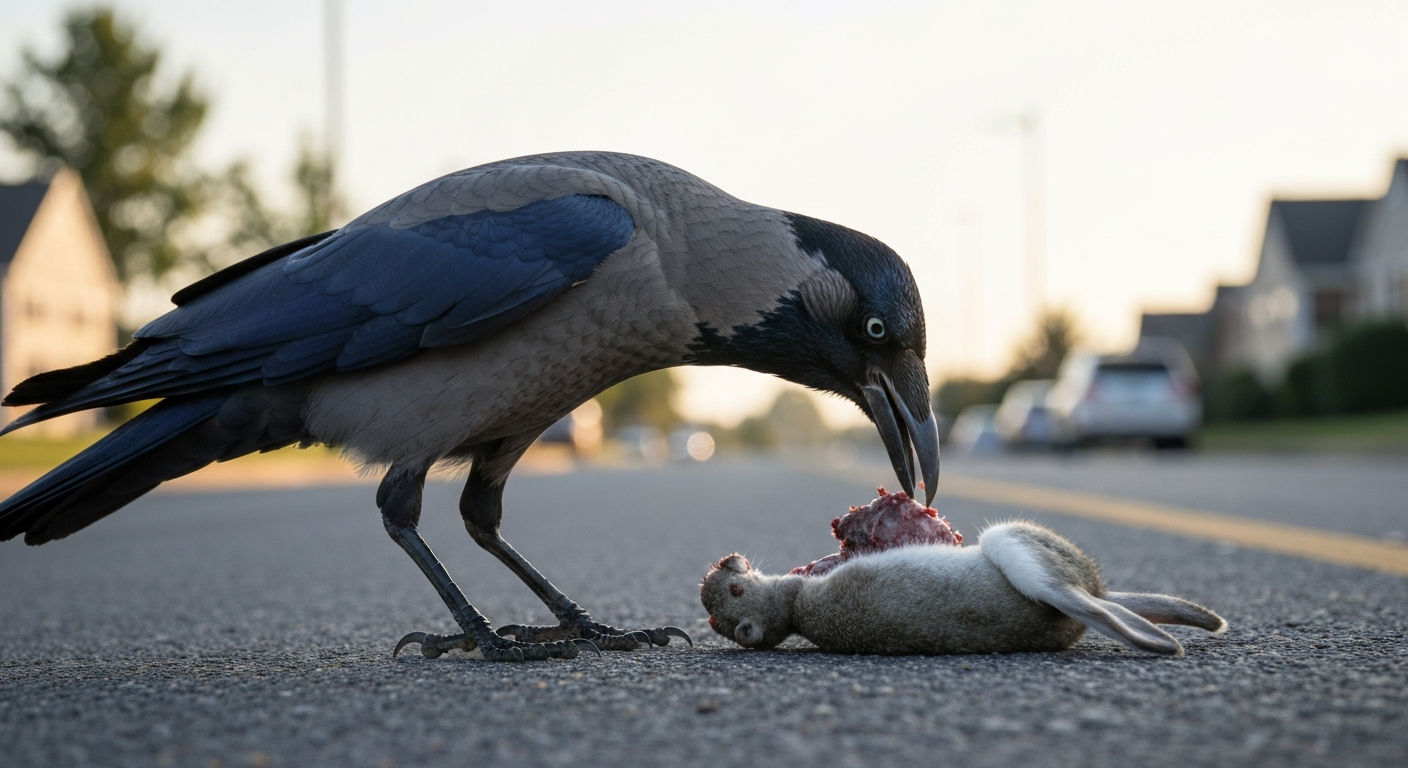
Is Crow a Scavenger Bird? Clear Facts, ID & Legal Notes
Yes, crows scavenge. Science-backed facts on feeding, ID, legal status, and humane nuisance solutions.
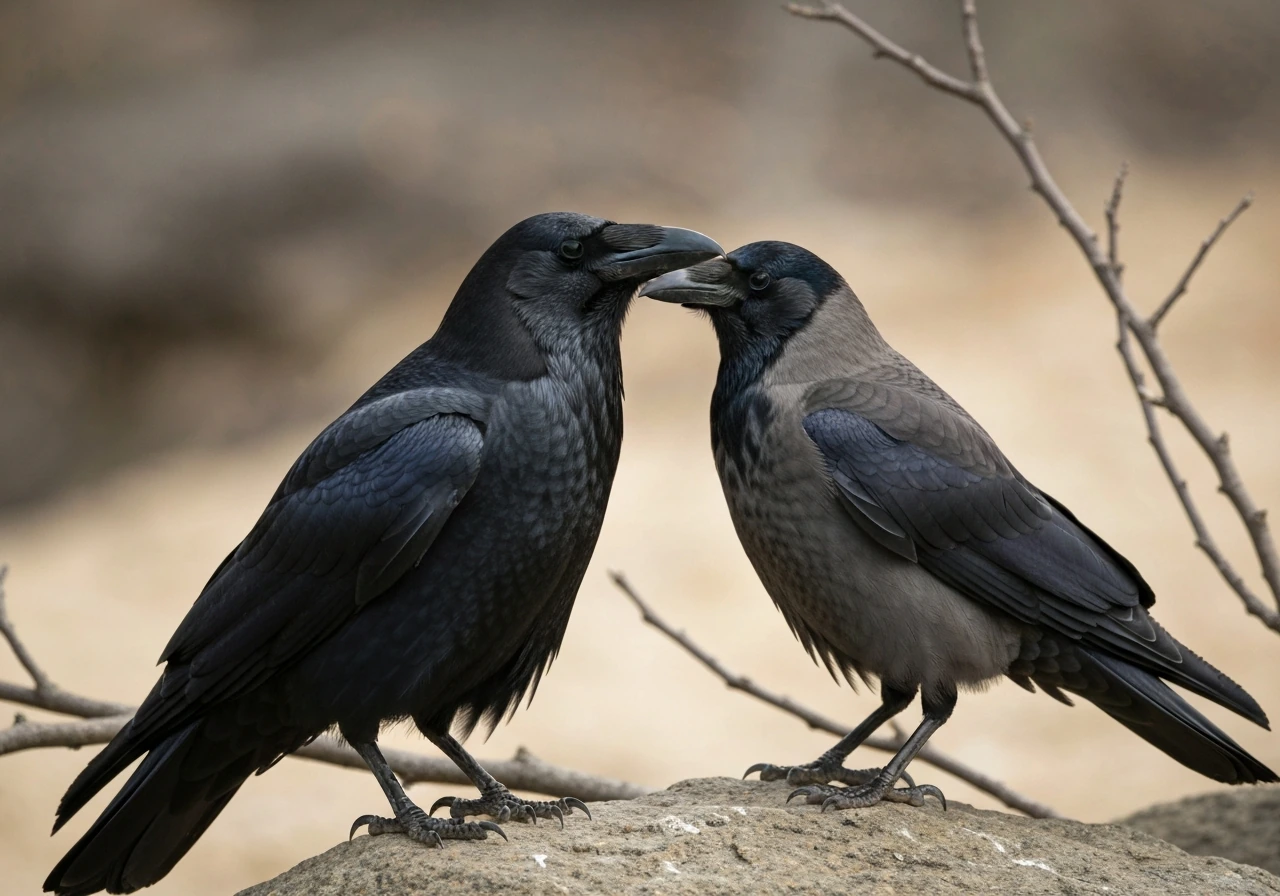
Is a Raven Bird a Crow? Key Differences and Taxonomy
No, a raven is not a crow. Learn raven vs crow differences, calls, and their true taxonomy.
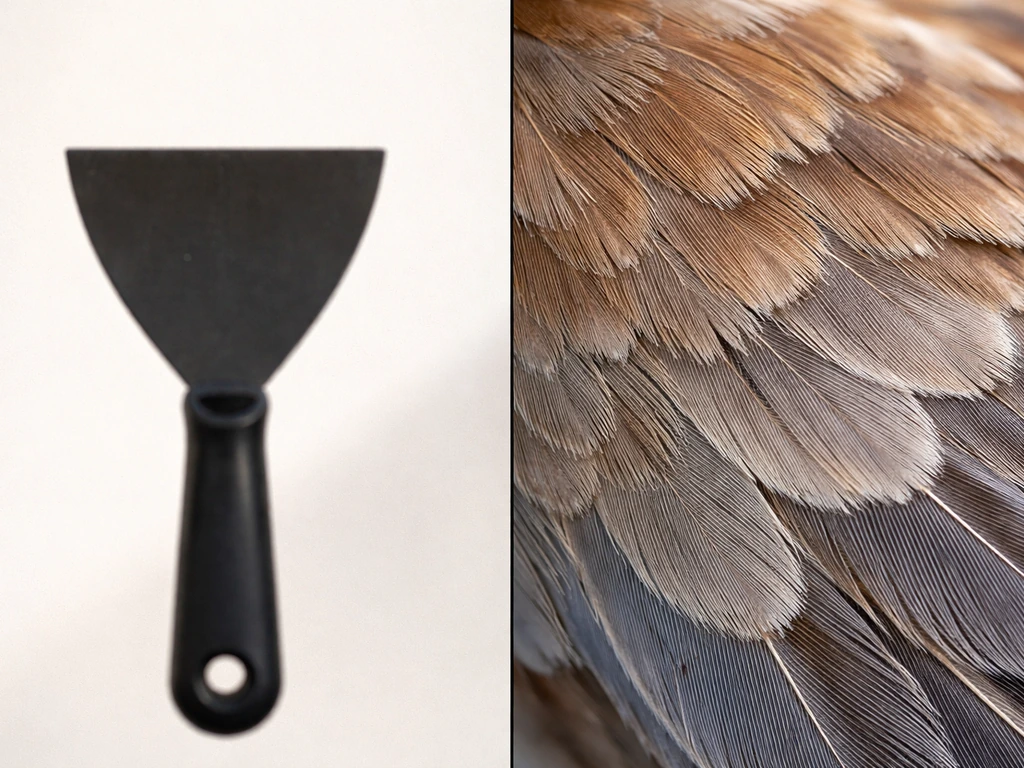
Is a Scraper a Bird? How to Verify the Real Animal
Find out if a so-called scraper bird is a real bird by verifying the name and matching key bird traits.