A raven is not a crow, but they are close relatives. Both are real birds in the family Corvidae and both sit in the same genus, Corvus, but they are different species. In everyday speech, people often lump crows and ravens together, so a question like “is a crow a bird?” usually means whether crows belong to the broader bird group. The common raven is Corvus corax, while the American crow is Corvus brachyrhynchos. Think of them the way you'd think of lions and tigers: same genus, very different animals once you look closely.
Is a Raven Bird a Crow? Key Differences and Taxonomy

Marcus Hendricks
8 Jul 2026
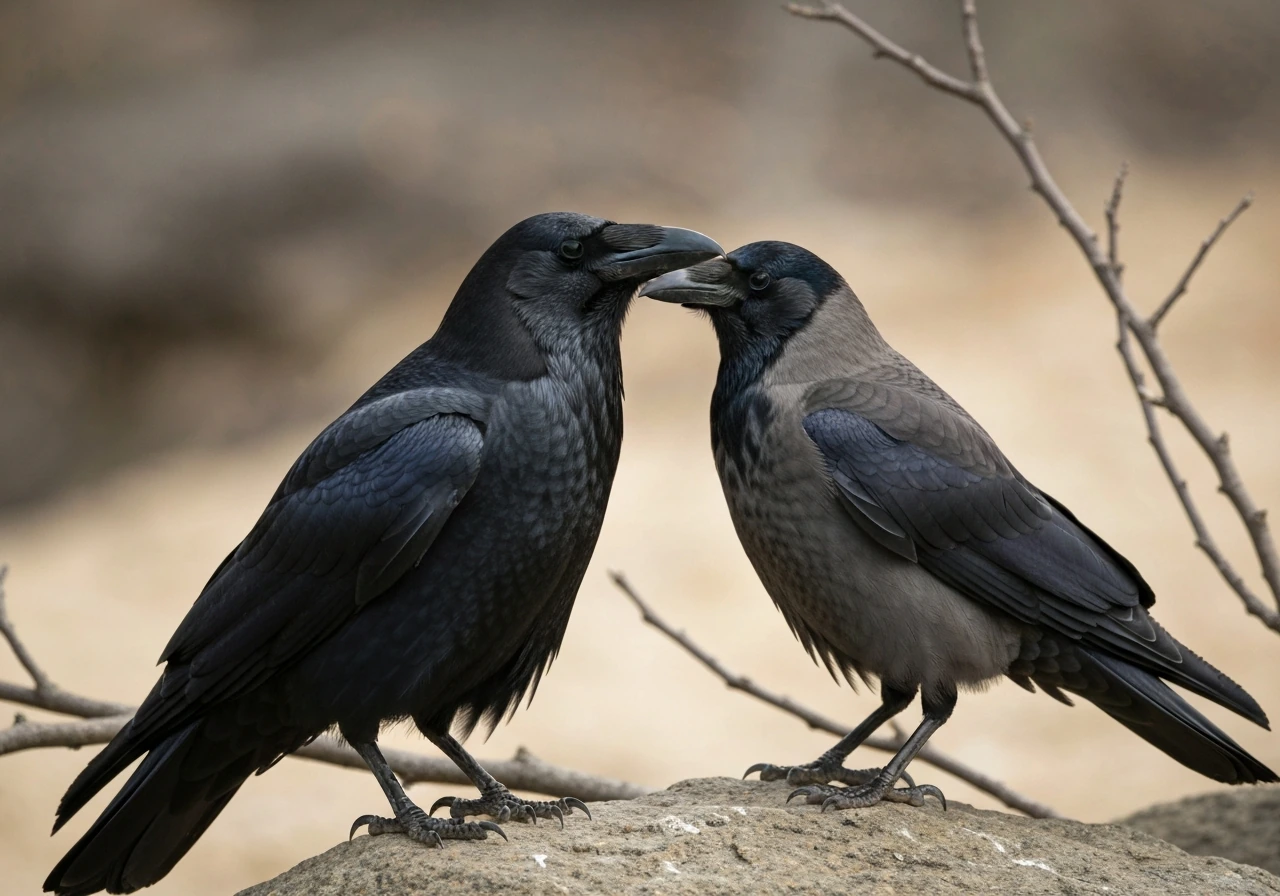
The bottom line on ravens vs. crows
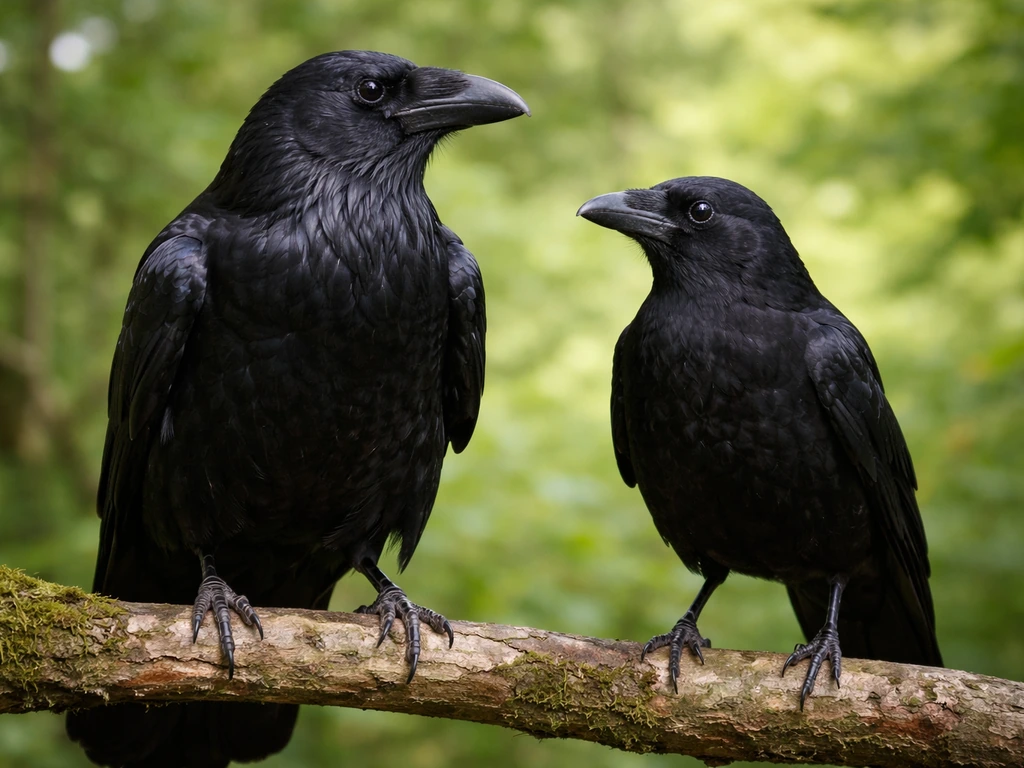
Ravens and crows are not the same bird. They share a family and a genus, which is why they look similar and why people conflate them constantly, but they are distinct species with different sizes, calls, behaviors, and ranges. Calling a raven a crow is a bit like calling a wolf a dog. Technically they belong to the same broader family tree, but any naturalist or birder standing next to one would laugh at the mix-up. If you saw a bird and you're wondering which one it was, the size alone will usually settle it: ravens are substantially larger, closer to a hawk than the crows you probably see raiding parking lots.
Taxonomy basics: the family, the genus, and what 'crow' even means
Both ravens and crows belong to the family Corvidae, a large group of highly intelligent passerine (perching) birds that also includes jays, magpies, jackdaws, and nutcrackers. Within that family, the genus Corvus is where things get specific. Corvus holds about 45 species worldwide, and the word 'crow' does not map neatly onto a single species. If you are trying to identify one in the wild, remember that crows are indeed birds crows are birds. It gets used as a catch-all for many black or dark Corvus birds. The American crow (Corvus brachyrhynchos) is the species most North Americans picture when they say 'crow,' but there are also fish crows, Northwestern crows, and dozens of crow species on other continents.
Ravens sit inside that same genus. The common raven (Corvus corax, described by Linnaeus in 1758) is a Corvus species just like crows are. So taxonomically, you could say ravens are a type of Corvus bird, the same way American crows are. But 'crow' as a common name typically refers to smaller Corvus species, while 'raven' refers to the larger ones. There is no separate genus for ravens. That is the nuance that trips people up: raven and crow are common-name categories, not strict taxonomic divisions. Underneath, they are all Corvus.
What to look for: key visual differences in the field
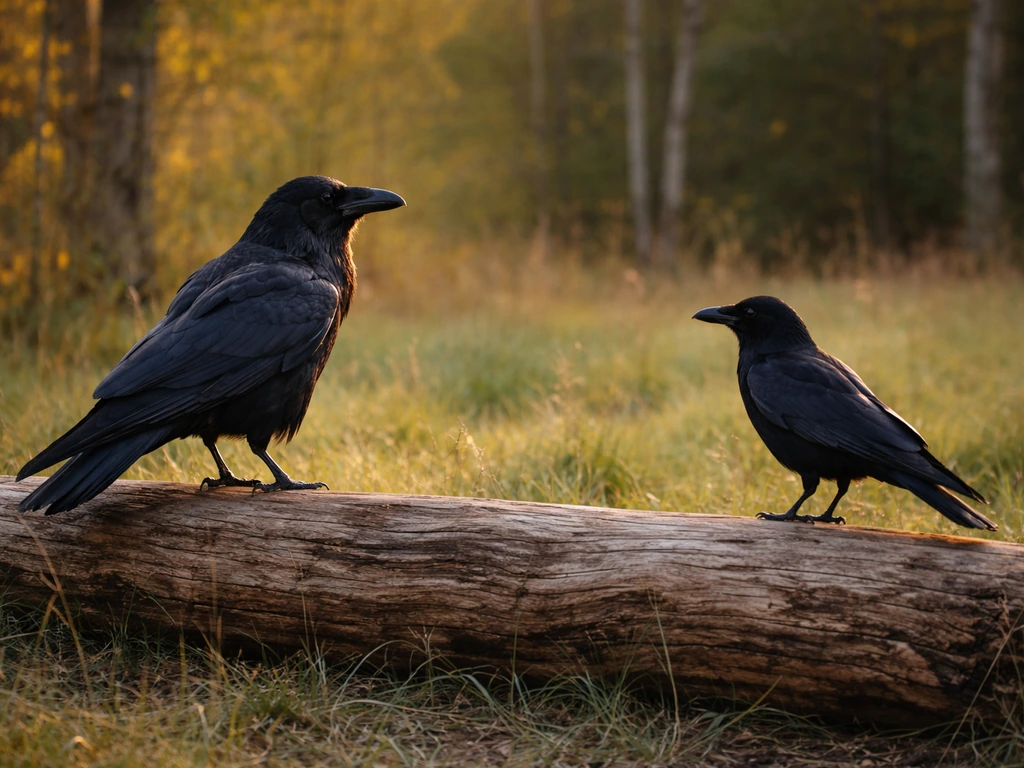
Size is your first and most reliable clue. A common raven is roughly the size of a Red-tailed Hawk, with a wingspan that can reach 4 feet. An American crow is noticeably smaller, closer to a pigeon in body size. If the bird looks imposing and you keep thinking 'that is a big crow,' you are almost certainly looking at a raven.
| Feature | Common Raven (Corvus corax) | American Crow (Corvus brachyrhynchos) |
|---|---|---|
| Body length | 22–27 inches | 17–21 inches |
| Wingspan | 45–51 inches | 33–39 inches |
| Tail shape | Wedge-shaped (diamond point) | Fan-shaped (rounded) |
| Bill | Large, heavy, curved | Smaller, straighter |
| Throat feathers | Shaggy, hackled | Smooth |
| Flight style | Soaring, like a hawk | Flapping, rarely soars |
| Overall impression | Hawk-sized, heavy | Pigeon-to-crow sized, slimmer |
The tail shape is one of the most useful features when a bird is flying overhead. Ravens have a distinctly wedge-shaped or diamond-pointed tail. Crows have a rounded, fan-shaped tail. Once you know that, a quick look at a bird in flight will often clinch the ID. The shaggy throat feathers on a raven are also distinctive up close: they look almost ruffled or mane-like compared to the smooth throat of a crow.
How they sound and act: calls and behavior
If you can hear the bird, you have another strong clue. American crows make the classic 'caw caw' call that most people associate with the word crow. It is sharp, nasal, and relatively high-pitched. Ravens produce a much deeper, throatier croak, often described as 'kronk' or a hollow gurgling sound. Hearing a raven for the first time, many people genuinely do not recognize it as a bird call at all. It sounds almost like something out of a fantasy film, which is probably why ravens ended up so embedded in folklore.
Behaviorally, crows are famously social and gregarious. You'll often see them in large, noisy groups, especially near human settlements, farmland, and urban areas. Ravens tend to be more solitary or seen in pairs, and they spend more time in wild, rugged terrain. Ravens are also well-known for aerial acrobatics: rolling, tumbling, and playing in updrafts in ways that crows do not commonly do. Both birds are exceptionally intelligent, which is part of why they get grouped together in popular culture, but their day-to-day behavior patterns differ noticeably. In many places, whether crows are protected birds depends on local wildlife laws and regulations are crows a protected bird.
Where you'll find them: range and habitat
American crows are widespread across most of North America and are very comfortable around people. Ravens and crows are also known for scavenging, including eating carrion and opportunistically hunting for food. They thrive in suburbs, cities, agricultural fields, and open woodlands. If you're in a typical North American town or city and you see a large black bird, statistically it is almost certainly a crow.
Common ravens have a huge global range spanning North America, Europe, Asia, and North Africa, but within North America they are concentrated in the West, the North (Alaska and Canada), and mountainous or forested regions. In the eastern United States, ravens are much less common except in parts of the Appalachians and New England. So geography matters: if you're in suburban Ohio or suburban Georgia and you see a big black bird, it's almost surely a crow. If you're hiking in the Rockies or the Pacific Northwest and a massive black bird soars over you, there's a very real chance it's a raven. Ravens are generally protected under wildlife conservation laws, but the exact rules can vary by country, state, and circumstance.
How to confirm what you're seeing
The single best move is to open the Merlin Bird ID app from Cornell Lab. It is free, works on both iOS and Android, and has a sound ID feature that can identify a bird from its call in real time. Point your phone at the bird or let it listen, and Merlin will often give you a confident ID within seconds. For raven-versus-crow specifically, it handles the call difference very well.
For a more traditional approach, the Cornell Lab's All About Birds website covers both American crow (Corvus brachyrhynchos) and common raven (Corvus corax) with photos, range maps, and audio clips. The Audubon Society also has a practical guide specifically comparing the two species, with field marks laid out side by side. If you took a photo, apps like iNaturalist will let you upload it and get suggestions from both an AI and the community of real naturalists who review submissions.
If you genuinely cannot figure it out and you care about the answer, your local Audubon chapter or a community science platform like eBird are great places to post a photo and ask. Birders love exactly this kind of question and will give you a fast, confident answer with an explanation. You do not need to be an expert to get expert-level help with a bird ID in 2026. If you are wondering whether a scraper is a bird, that is not how birds are defined, so the term is usually about collecting data rather than an actual animal is a scraper a bird.
A quick field checklist before you walk away
- How big is it really? Compare it mentally to a pigeon (crow-sized) vs. a Red-tailed Hawk (raven-sized).
- Watch it fly: does the tail come to a wedge point (raven) or a rounded fan (crow)?
- Listen: is the call a sharp 'caw' (crow) or a deep, hollow croak (raven)?
- Look at the throat: shaggy and ruffled feathers suggest raven, smooth suggests crow.
- Check your location: are you in a city or suburb, or in wild, mountainous, or northern terrain?
- When in doubt, open Merlin and let it listen.
Ravens and crows are genuinely easy to mix up from a distance or without practice, so do not feel bad if you've been calling ravens crows your whole life. The confusion is completely understandable given that both are large, all-black, intelligent Corvus birds. But now that you know what to look for, the size and tail shape alone will get you to the right answer most of the time. And if you want to dig deeper into either bird, both species have fascinating stories around their classification, their legal protections, and their roles as scavengers worth exploring further.
FAQ
If ravens and crows are in the same genus, does that mean a raven is a type of crow?
Not in the way taxonomy is usually taught. “Crow” and “raven” are common-name labels for different species within the same genus, Corvus. So a raven is a Corvus bird, but it is not a crow species.
Is it acceptable to call any black Corvus bird a crow, even if it might be a raven?
Yes, using the word “crow” as a general description can still be wrong for identification. Many people use “crow” to mean any dark Corvus bird, but for field ID you should treat raven and crow as separate species because the calls, tail shape, and typical locations differ.
What’s the best way to tell a raven from a crow when they look similar from a distance?
Ravens can overlap with crows in appearance, especially when the bird is far away or partially silhouetted. In those cases, do not rely on color alone, use a combination of wedge or diamond tail shape in flight, throat feather “ruffle” near the head, and the deeper croak versus the higher caw.
If I can’t see the tail clearly, what should I check next?
Tail shape in flight is a strong clue, but it requires the bird to be moving overhead. If you cannot see the tail well, switch to sound (deep croak versus nasal caw) and size relative to nearby birds. Also note group behavior, crows are more likely to be in noisy groups near towns.
Can lighting or wind make the tail-shape ID unreliable?
Yes, weather and lighting can trick you. Bright sun can make a crow’s tail edge look sharper than it is, and shadows can hide a raven’s wedge shape. Wait for a clean overhead angle, or confirm with call and throat-feather texture.
How does my location change the odds of whether I’m seeing a raven or a crow?
Your region matters. In many North American cities the American crow is far more likely, while common ravens are more concentrated in western areas, northern areas, and mountainous or rugged habitats. If you are in an area where ravens are uncommon, treat “big black bird” sightings as crows unless other clues fit a raven.
Can I use a video or phone audio to confirm whether it was a raven or a crow?
Yes, recording the audio can help even if you are not sure you identified the bird at the moment. If your phone captures the call, match the sound later using a bird ID app, and compare with what you saw for tail shape and throat feathers to reduce false IDs.
Are there legal protections that differ between ravens and crows where I live?
Legally, the practical impact is different by species and where you are. Even if both are Corvids, protections and regulations depend on your country, state, and local wildlife rules. If you are collecting feathers, relocating a bird, or dealing with a nest, check local regulations for the specific species involved.