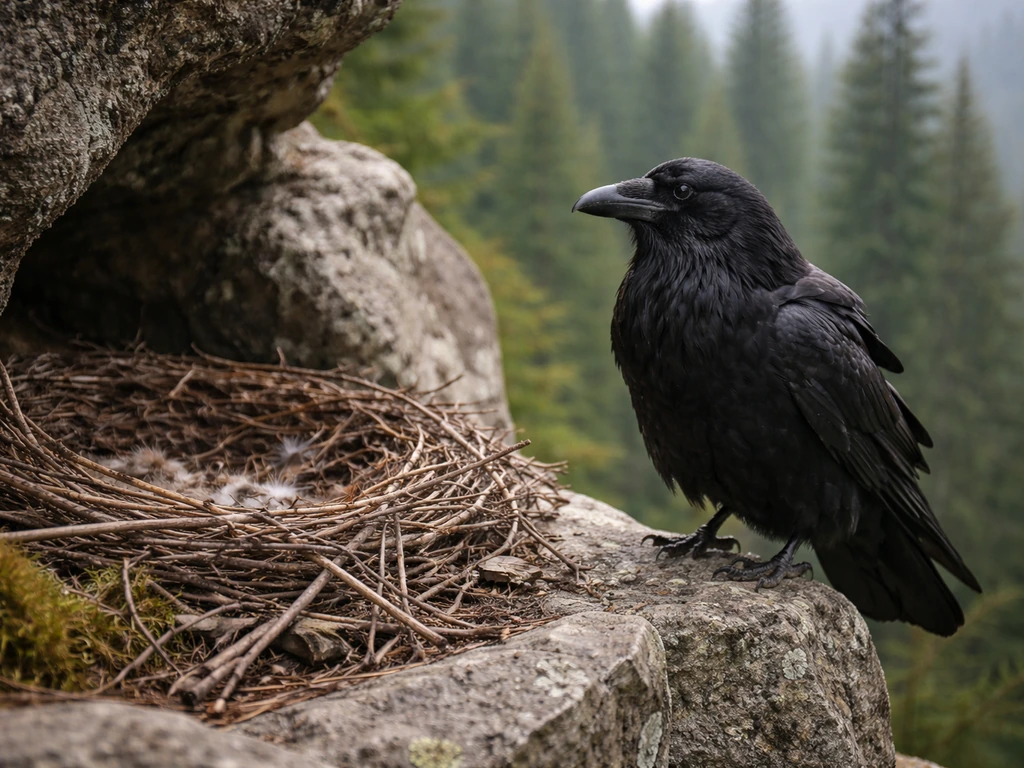
Yes, a crow is absolutely a bird. It belongs to class Aves, the same scientific grouping as every other bird on the planet, from penguins to hummingbirds. There is no real debate here in biology. What does come up fairly often, though, is whether crows count as birds of prey, and that answer is a clear no. Crows are corvids, a family of highly intelligent passerine birds, not raptors. Understanding why that distinction matters is actually pretty useful if you want to get confident at classifying birds in general.
Is a Crow a Bird? Are Crows Birds of Prey?

Marcus Hendricks
2 May 2026
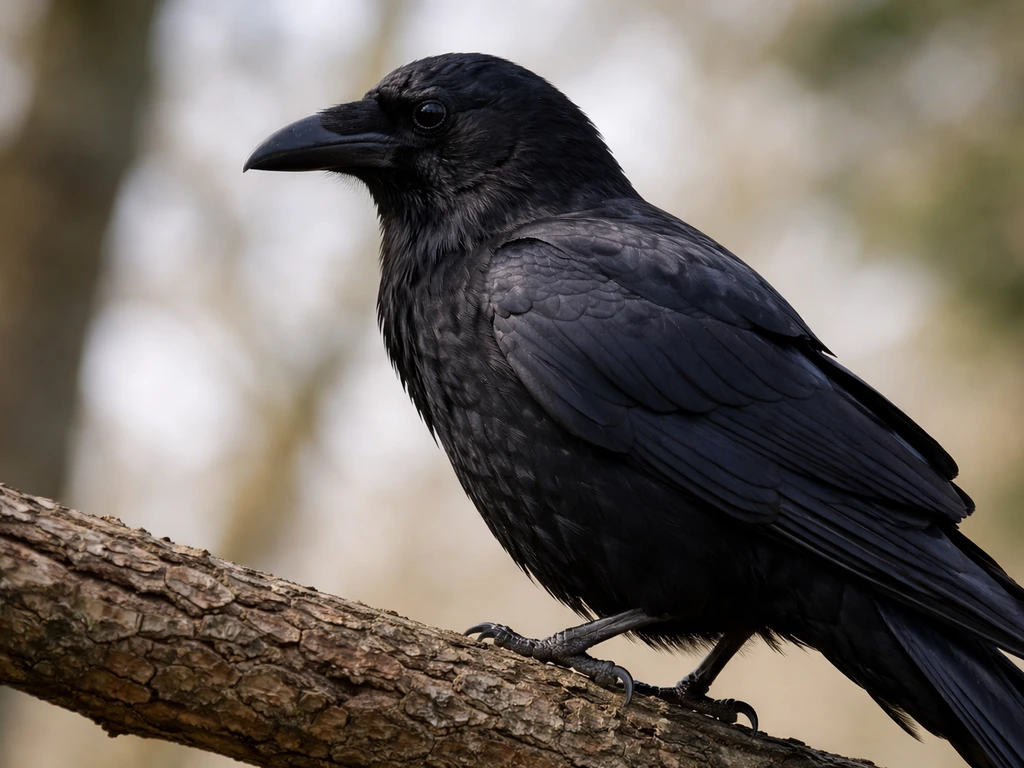
Does a crow count as a bird? The direct answer
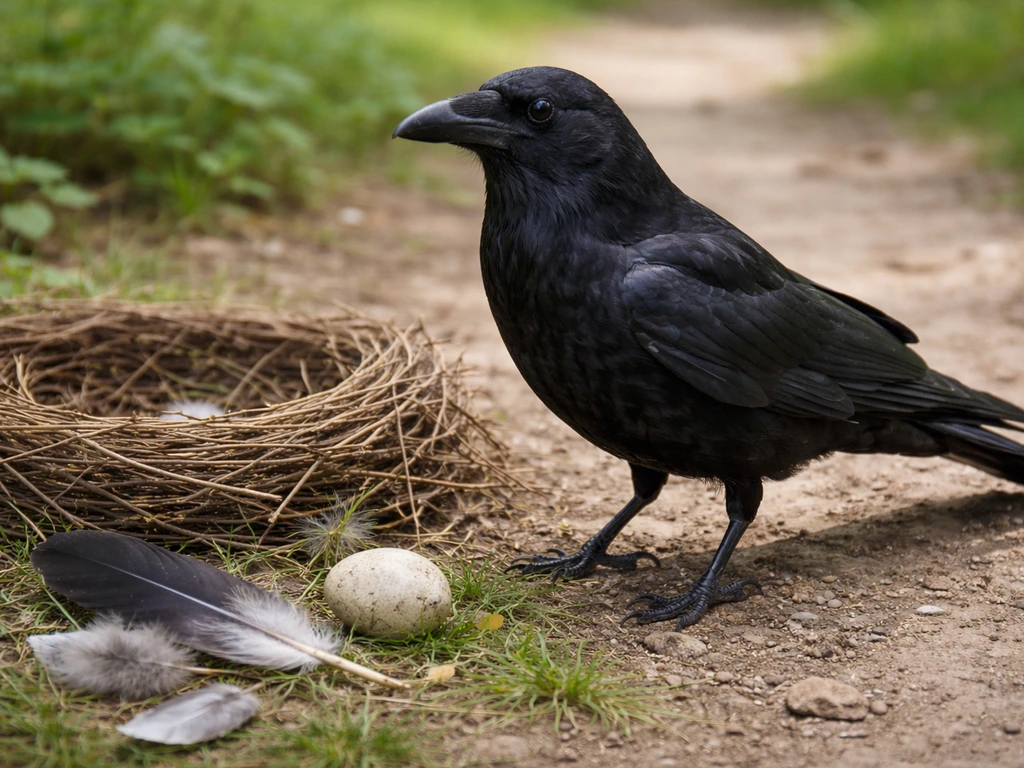
Crows check every single box on the scientific checklist for birds. They have feathers, hollow bones, beaks, wings, and they reproduce by laying hard-shelled eggs. They are warm-blooded (endothermic), meaning they regulate their own body temperature internally, just like you do, but unlike a lizard. All of these traits together define class Aves, and crows are squarely in it. Specifically, the American Crow is classified as Corvus brachyrhynchos, and the Common Raven, which people often confuse with crows, is Corvus corax. People often mix up crows with a different corvid, since a raven bird is a crow, too Common Raven. Both sit in the family Corvidae, order Passeriformes.
So if someone asks you whether a crow is a bird or an animal, the honest answer is: both. Birds are a type of animal. A crow is an animal that belongs to the bird class. That framing trips people up more than it should.
What actually makes a crow a bird
The scientific community pins bird identity on a specific cluster of traits. Britannica and the Smithsonian's National Museum of Natural History both emphasize the same core list: feathers, hollow bones, and hard-shelled eggs. Cornell Lab's ornithology materials add warm-bloodedness to that. Cornell Lab’s All About Birds provides accessible bird species information, including identification help and species pages for birds of North America Cornell Lab's ornithology materials add warm-bloodedness to that.. Crows have all four, and here is what each one looks like on a real crow.
- Feathers: Crows are covered in them, and those glossy black feathers are not just for show. Feathers are the single most unique feature of birds as a class. No other living animal group has them.
- Hollow bones: A crow's skeleton is lightweight because many of its bones are air-filled. This is a key adaptation for flight and one of the clearest structural markers separating birds from mammals and reptiles.
- Hard-shelled eggs: Crows lay eggs with a rigid calcified shell, typically 4 to 6 per clutch. This is very different from the leathery eggs of reptiles and the live birth of most mammals.
- Warm-bloodedness: Crows maintain a stable internal body temperature regardless of the weather around them. This makes them endotherms, a trait shared with all birds and mammals, but not reptiles or fish.
- Beak and wings: Crows have a beak instead of teeth and forelimbs modified into wings, even though they also use those wings for flight rather than for grabbing prey the way raptors do.
Put all of that together and you have a textbook bird. The crow does not just barely qualify; it is a strong, unambiguous example of class Aves.
Bird of prey or not? Where crows actually fit
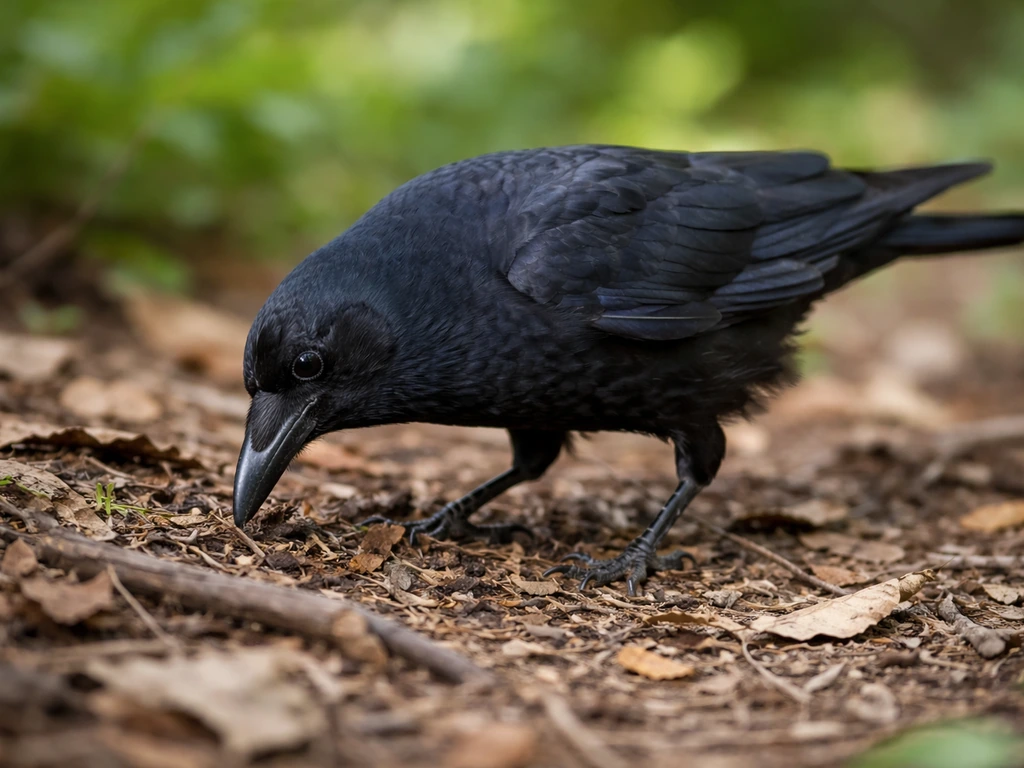
This is where people get genuinely confused, and it is a fair confusion. Crows are predators. They eat insects, small mammals, carrion, other birds' eggs, and pretty much anything else they can get into. They are aggressive, intelligent, and capable hunters. So calling them a bird of prey seems reasonable at first glance, but it does not hold up taxonomically.
Birds of prey, also called raptors, are a specific functional and taxonomic grouping. Classic raptors include hawks, eagles, falcons, and owls. What separates them from crows is a combination of physical tools: sharp, hooked talons designed for seizing live prey, a strongly hooked beak for tearing flesh, and exceptional eyesight calibrated for hunting. Crows have a straight, general-purpose beak and regular feet with no specialized talons. Their hunting style is opportunistic and omnivorous, not the precision ambush of a falcon or the aerial strike of a hawk.
In taxonomy, crows belong to order Passeriformes (perching birds, sometimes called songbirds) and family Corvidae. Raptors belong to entirely different orders: Accipitriformes for hawks and eagles, Falconiformes for falcons, and Strigiformes for owls. So crows and hawks are not close relatives in the bird family tree. They just both happen to eat meat sometimes.
How crow taxonomy actually works
Taxonomy is just a filing system for life. Every living thing gets sorted into a hierarchy from broad to specific. Here is where crows land across those levels.
| Taxonomic Level | Classification for Crows | What It Means |
|---|---|---|
| Kingdom | Animalia | They are animals, not plants or fungi |
| Phylum | Chordata | They have a backbone (vertebrates) |
| Class | Aves | They are birds, defined by feathers, hollow bones, hard-shelled eggs, and endothermy |
| Order | Passeriformes | Perching birds, the largest bird order by species count |
| Family | Corvidae | The corvid family: crows, ravens, jays, magpies |
| Genus | Corvus | The genus covering crows and ravens specifically |
| Species (example) | Corvus brachyrhynchos | The American Crow |
Compare that to a Bald Eagle, which sits in order Accipitriformes and family Accipitridae. Same kingdom, phylum, and class (both are birds), but they diverge sharply at the order level. That is the point where corvids and raptors go in completely different directions. People sometimes wonder whether crows and ravens are the same bird, and while they are closely related within Corvidae, they are different species with distinct size, vocalizations, and behavior.
Common mix-ups: things people call birds that are not birds (and vice versa)
The confusion around crows is actually mild compared to some of the classification questions that come up regularly. Here are the most common mix-ups worth clearing up. People also sometimes ask whether a “scraper” counts as a bird, and the answer depends on whether it meets the biological traits used to define birds is a scraper a bird.
- Bats: They fly, they have wings, people sometimes call them birds. They are not. Bats are mammals. They have fur, no feathers, no beak, no hard-shelled eggs, and give birth to live young. The flight is superficially similar, but the biology is completely different.
- Flying squirrels: Same reasoning applies. Gliding or flying does not make something a bird.
- Butterflies and dragonflies: These are insects. Wings do not equal bird.
- Pterodactyls (pterosaurs): Not birds. They were flying reptiles that lived alongside dinosaurs but are not classified in class Aves. Interestingly, modern birds are technically theropod dinosaurs, but that is a different story.
- Penguins: People sometimes question whether penguins are birds because they cannot fly. They absolutely are. They have feathers, hollow bones, lay hard-shelled eggs, and are warm-blooded. Flight is not a requirement for birdhood.
The flip side also happens: some things called 'birds' colloquially are not biological birds at all. Brand mascots, cartoon characters, or mythological creatures like phoenixes do not count in taxonomy. When the question is scientific, you go back to the four traits: feathers, hollow bones, hard-shelled eggs, and warm-bloodedness.
How to confirm a crow is a bird yourself
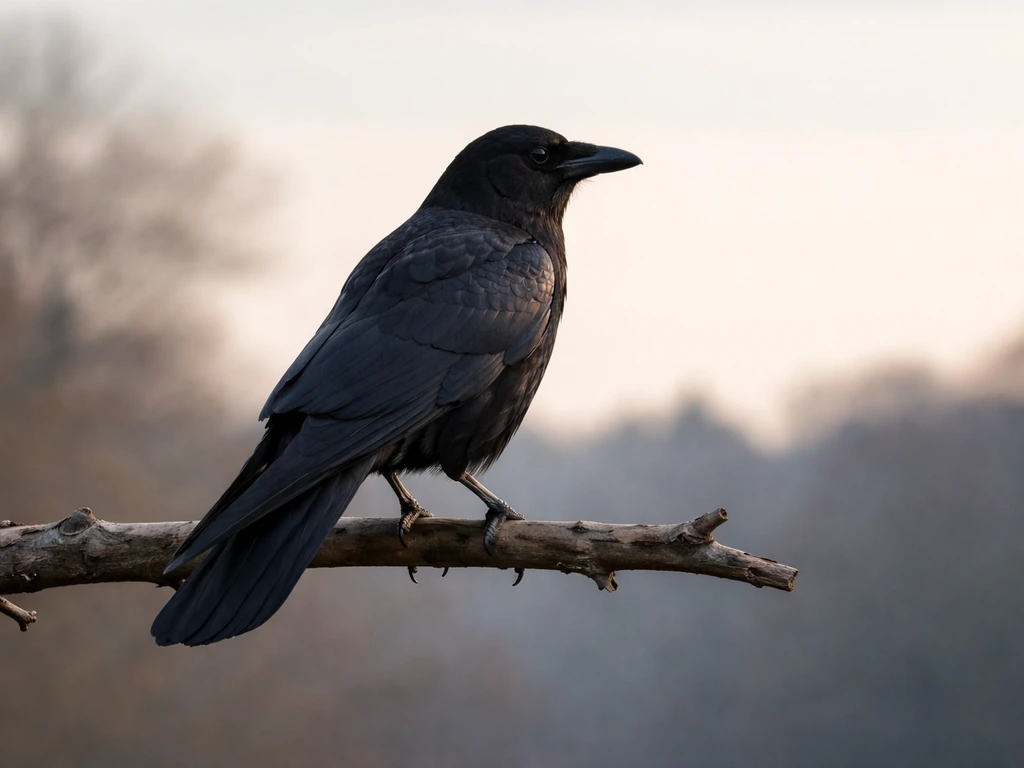
If you want to verify this in the real world rather than just taking it on faith, here is how to actually do it. When you see a crow, run through the observable checklist. You can see the feathers clearly: that iridescent black plumage covering the whole body. You can see the beak, which is straight and sturdy, nothing like the hooked beak of a raptor. You can observe the feet, which are typical perching feet with no specialized talons. If you find an old crow nest or eggshell fragment, the hard calcified shell tells you immediately this animal lays bird-style eggs.
For confirmation from reliable sources, your best options today are:
- Cornell Lab of Ornithology's All About Birds website (allaboutbirds.org): It has detailed species pages for every North American crow and raven species, with photos, range maps, and behavior notes. This is the gold standard for accessible ornithology.
- Audubon Society's field guide database: Another highly reliable resource with clear identification photos and species classification details.
- Smithsonian's National Museum of Natural History bird pages: For taxonomy and evolutionary context, NMNH is authoritative and science-backed.
- A printed field guide: The Sibley Guide to Birds or the Peterson Field Guide to Birds of North America are both excellent physical references if you want something you can carry outdoors.
- iNaturalist: If you photograph a crow and upload it, the app's community of naturalists and AI identification tool will confirm the species and its classification in seconds.
One practical thing to remember: crows are also protected under the Migratory Bird Treaty Act in the United States, which is another confirmation of their legal and biological status as birds. That kind of legal protection applies specifically to birds, not to mammals or reptiles, so the classification matters in practical terms too, not just in textbooks. The U.S. Fish & Wildlife Service describes the Migratory Bird Treaty Act (MBTA) as prohibiting take, including killing, capturing, selling, trading, and transport, of protected migratory bird species without authorization blank" rel="noopener noreferrer">legal protection applies specifically to birds.
The bottom line on crows
A crow is a bird, full stop. Ravens are also a protected bird in many places, so check your local regulations if you find one or are dealing with nest sites are ravens a protected bird. It has every biological trait that defines class Aves: feathers, hollow bones, hard-shelled eggs, and warm-bloodedness. It is not a bird of prey in any taxonomic sense, even though it is an opportunistic predator. Because it is also an opportunistic predator, many people notice its scavenging behavior and ask whether a crow is a scavenger bird is crow a scavenger bird. It is a corvid, a passerine, and one of the most cognitively sophisticated birds alive. If you can spot the straight beak, the perching feet, and the classic feathered body, you are looking at a textbook bird doing exactly what birds do.
FAQ
If crows eat meat, why are they not considered birds of prey?
Because a crow is both a bird (Aves) and a predator, some people use “bird of prey” to mean any meat-eater. In taxonomy, crows are not raptors, so for a scientific answer the right label is “corvid” (family Corvidae), not “bird of prey.”
Are crows protected legally, even if they are not actively nesting?
Yes. Crows can be protected under wildlife laws even when they are not currently nesting, such as if you are handling feathers, relocating them, or cleaning areas that may contain eggs or active nests. If you are in the US, check your situation under the Migratory Bird Treaty Act before moving anything.
How can I tell the difference between a crow and another animal that hunts, in the moment?
If the animal has true bird feathers and lays hard-shelled eggs, it is a biological bird, even if you never see it hunt. Conversely, a fast-moving predator that does not show those traits is not automatically a bird. For quick field checks, prioritize feathers, beak shape, and whether there is evidence of bird-style nesting.
Is a crow considered a scavenger bird, and does that affect whether it is a bird of prey?
No. Crows often scavenge carrion, but “scavenger bird” is a behavior description, not a classification category. A scavenging diet pattern does not make a crow a raptor, since raptor status depends on anatomy and taxonomic grouping.
Are crows and ravens the same kind of bird?
In the strict taxonomic sense, crows and ravens are both corvids but they are different species within the same family. The difference shows up in size, body proportions (ravens are generally larger), and vocalizations, even though both have similar intelligence and opportunistic diets.
What visual cues help me distinguish a crow from a hawk or eagle from far away?
Usually you can narrow it down with beak and feet. Raptors typically show a hooked beak and specialized talons for grabbing live prey. Crows have a more straight, general-purpose beak and feet suited to perching rather than seizing with talons.
What should I do if I find a crow nest near my home?
If you are asking about a specific crow nest, the key point is that nests and eggs can be protected where you live, and crows are intelligent enough to defend nests. From a safety and legal standpoint, give the area space, avoid disturbing eggs or nestlings, and check local wildlife rules before any removal or relocation.
Next Article
Are Ravens a Protected Bird? Laws and What to Do Now
Learn if ravens are protected where you live, what laws apply, and what to do about nests, injury, or conflicts.