SEO Title: Is a Crow a Scavenger Bird? Classification, Diet Facts & Raven Comparison Meta Description: Yes, crows are scavenger birds, but they're also omnivores. Learn how crows scavenge, how they compare to ravens, and their scientific classification.
Is Crow a Scavenger Bird? Clear Facts, ID & Legal Notes

Marcus Hendricks
9 Aug 2026
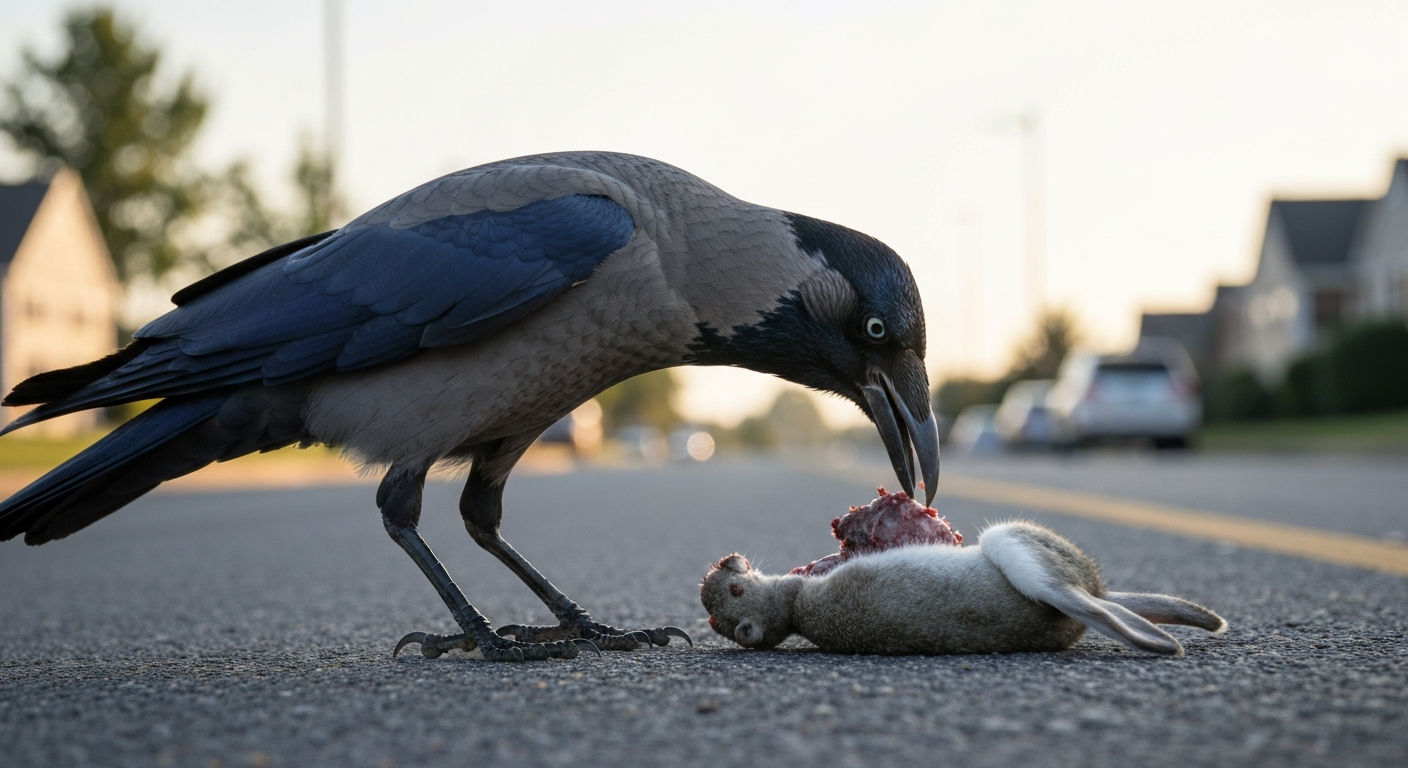
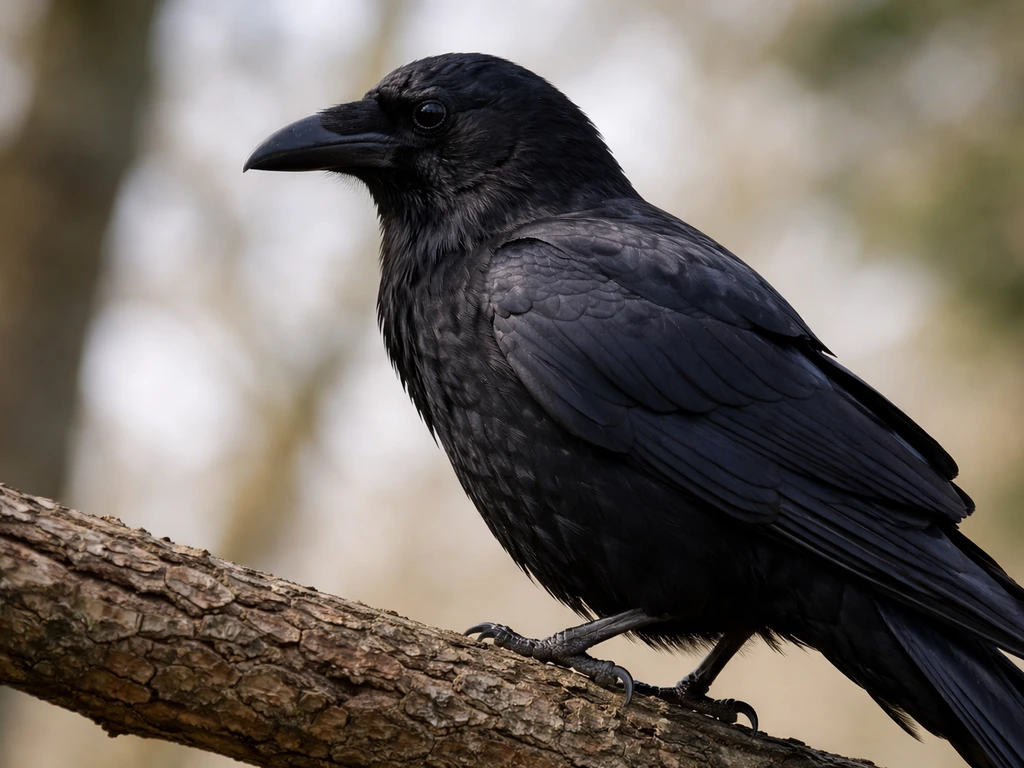
Yes, crows are scavenger birds, but that label only tells part of the story. Crows are facultative scavengers, meaning they eat carrion and refuse when it's available but don't depend on it the way a vulture does. They're also predators, seed eaters, fruit pickers, and trash-bin raiders. The American Crow (Corvus brachyrhynchos) will absolutely work over a roadkill deer or a pile of fast-food scraps, but Cornell Lab notes that carrion makes up only a small fraction of its overall diet. The Carrion Crow (Corvus corone), true to its name, leans a bit harder into that role. So the honest answer is: crows are scavengers, omnivores, and opportunists all at once.
What actually counts as a scavenger bird?
Merriam-Webster defines a scavenger as an organism that feeds on dead or decaying organic matter, and Cambridge's definition is even more pointed for birds: a bird or animal that feeds on dead animals it has not killed itself. By either definition, a bird doesn't have to specialize in carrion to earn the label. Ecologists split scavengers into obligate and facultative categories. Obligate scavengers, like Old World vultures, survive almost exclusively on carcasses. Facultative scavengers take carrion opportunistically alongside other foods. A landmark 2003 ecology review by DeVault, Rhodes, and Shivik in Oikos confirmed that facultative scavenging is widespread across vertebrates and ecologically important in most ecosystems. Crows fall squarely in the facultative camp.
It helps to distinguish scavenger from two terms people often mix it up with. An omnivore simply eats both plant and animal matter, that's about diet breadth, not whether the food is living or dead. A predator actively hunts and kills prey. A scavenger consumes something that's already dead. Crows check all three boxes depending on the situation: they'll kill a small mouse (predator), eat berries from a bush (omnivore), and pick apart a carcass they found on the road (scavenger). The categories overlap, and that flexibility is exactly what makes corvids so ecologically successful.
Evidence that crows really do scavenge
Field research backs up what anyone who's driven a rural highway has probably noticed. A study published in the Journal of Urban Ecology tracked carcass removal in an urban setting and found that corvids, specifically Carrion Crows and Eurasian Magpies, were responsible for roughly 42% of removals, making them the most frequent carcass removers in that environment. That's a striking number for birds not typically thought of as dedicated scavengers. A separate U.S. study using experimental carrion placements (published in PMC) recorded American Crows interacting with carcasses in forest, roadside, and powerline habitats, confirming the behavior even where larger scavengers were present.
Research from Central Australia (Austral Ecology, Bragato et al., 2022) documented corvid species including the Australian Raven and Torresian Crow working carcasses across multiple decomposition stages and habitats. A systematic global review of corvids in urban environments (PMC, open access) also found consistent diet shifts toward anthropogenic food sources in cities, with scavenging from human-associated waste and roadkill among the most commonly documented behaviors. Stomach content and gizzard analyses of Carrion Crows show variable proportions of animal tissue and plant matter depending on region and season, but animal-origin food, including carrion, appears reliably across samples. An investigation into the quality of carrion crow Corvus corone feathers (Hawthorn PhD thesis; includes gizzard data summaries).
When and how crows scavenge: what they eat and where
Crows are not sitting around waiting for something to die. They're active, intelligent foragers who notice what's around them and exploit it efficiently. Scavenging tends to spike in winter and early spring in temperate regions when insects and plant food are scarce. Roadkill is the most commonly observed carrion source in urban and suburban areas. Crows will also work through garbage, dumpsters, and uncovered compost, and they're well documented raiding the nests of other birds for eggs and chicks, which sits at the predator-scavenger boundary depending on how you define it.
- Roadkill: probably the single most visible scavenging behavior; crows locate carcasses quickly and often arrive before larger scavengers
- Garbage and landfills: crows exploit urban waste sites heavily, especially in winter when natural food is limited
- Animal carcasses in fields or forests: crows work these from early to late decomposition stages, often alongside ravens and raptors
- Fish kills and shorelines: coastal and riparian crow populations regularly scavenge dead fish washed up after storms or spawning events
- Social foraging: crows often feed in groups, with some individuals acting as sentinels while others feed, which increases efficiency and reduces predation risk
- Caching: crows store excess food including carrion pieces for later retrieval, a behavior well documented in American Crows and Carrion Crows
The social dimension of crow scavenging is worth emphasizing. Crows are not solitary scavengers picking at carcasses alone in the dark. They often forage communally, and younger birds will follow experienced adults to food sources. This social learning accelerates the spread of information about food locations across a local crow population, making them unusually efficient at exploiting patchily distributed resources like roadkill.
Do all crow species scavenge the same way?
Not quite. The genus Corvus contains around 45 species depending on which taxonomy you follow (the IOC World Bird List is the standard reference used by ornithologists globally), and feeding behavior varies meaningfully across them. The Carrion Crow of Europe and Asia leans more heavily into scavenging than its name alone implies, and it's especially comfortable in urban environments where food scraps and roadkill are abundant. The American Crow is more of a generalist: insects, grain, fruit, small vertebrates, eggs, and some carrion all feature in its diet, with carrion rarely dominating in most studies.
In Australia, the Torresian Crow and Australian Raven both scavenge carcasses in arid and semi-arid landscapes where large predators like dingoes create carrion. The Northwestern Crow of the Pacific coast is strongly associated with intertidal zones and scavenges marine invertebrates, fish, and other coastal refuse more than inland species do. Island corvids like the Hawaiian Crow (now extinct in the wild) show still different adaptations shaped by local ecology. Geographic context, habitat type, and season all drive real differences in how much any given crow population relies on scavenging versus other food sources.
Crow vs. raven: are they the same bird?
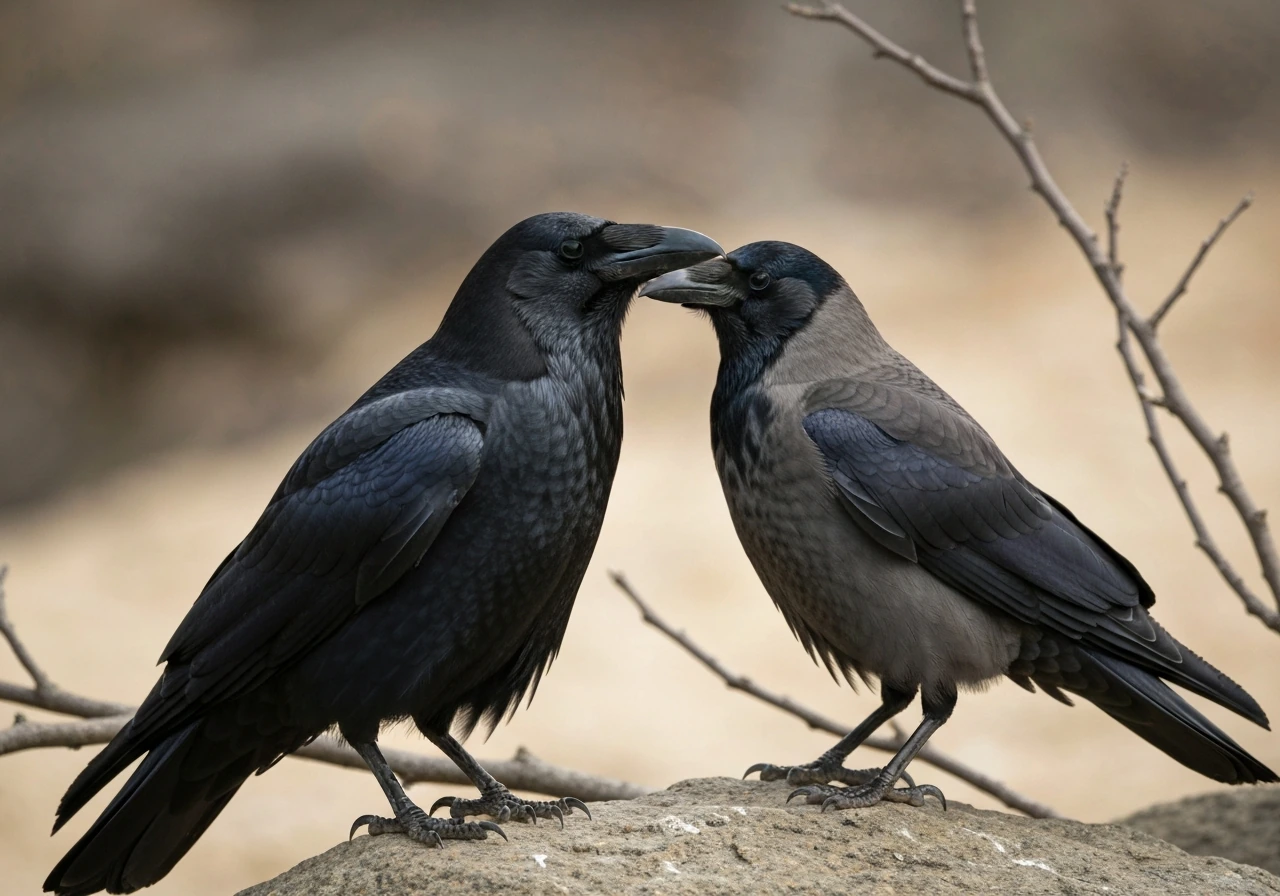
This comes up constantly, and the short answer is no: crows and ravens are distinct species, though they belong to the same genus, Corvus, and are closely related. For a focused explanation on whether a raven is a crow, see Is a raven bird a crow. Ravens are significantly larger, have different calls, and show notably different behavioral tendencies, including a stronger reliance on carrion in many populations. The Common Raven (Corvus corax) is described by Cornell Lab as both a scavenger and a predator, with animal matter including carrion forming a larger proportion of its diet than in most crow species. For information on legal protections for ravens, see our article 'are ravens a protected bird'. Ravens also follow wolves and other large predators to exploit the kills those animals leave behind, a behavior less commonly documented in crows.
| Feature | American Crow | Common Raven |
|---|---|---|
| Scientific name | Corvus brachyrhynchos | Corvus corax |
| Length | 40–53 cm | 56–69 cm |
| Weight | 316–620 g | 689–1625 g |
| Wingspan | 85–100 cm | 116–118 cm |
| Tail shape | Fan-shaped (rounded) | Wedge-shaped (diamond-tipped) |
| Bill | Moderate, slightly curved | Large, heavy, strongly arched |
| Call | Familiar caw-caw | Deep, hollow croak or gurgling 'pruk' |
| Throat feathers | Smooth | Shaggy/ruffled hackles |
| Social behavior | Highly social, large communal roosts | Often in pairs or small groups |
| Scavenging tendency | Facultative, opportunistic | Facultative but with higher carrion reliance in many populations |
| Typical habitat | Suburbs, farmland, edges | Wilderness, mountains, tundra, coasts |
If you're standing in a parking lot and a large black bird lands nearby, it's almost certainly a crow. If you're hiking a remote mountain trail and a massive black bird soars overhead with a wedge-shaped tail and makes a sound like someone gargling gravel, that's a raven. Size, tail shape, and call are the three fastest ID tools. The confusion between the two is understandable since they're closely related and share overlapping ranges in many parts of North America and Europe, but once you've seen them side by side the size difference alone is unmistakable.
Taxonomy: is a crow a bird or an animal?
A crow is absolutely a bird, and a bird is absolutely an animal, so the answer is both. For a concise taxonomy summary, see the section on whether a crow is bird or animal. If you searched "is a crow a bird", the answer is yes: crows are birds (class Aves). This question trips people up because everyday language sometimes treats 'animal' as a synonym for mammal or four-legged creature, but in biology every bird is an animal in the kingdom Animalia. Crows are classified in the class Aves (birds), order Passeriformes (the perching birds, which is the largest order of birds), family Corvidae (the crows, ravens, jays, and magpies), and genus Corvus. The Cornell Lab's Clements Checklist and the IOC World Bird List both include American Crow under this taxonomy. It's one of the most thoroughly studied and clearly classified birds in North America.
Another common confusion worth clearing up: a raven is not a crow in the specific sense, though ravens and crows are both members of the genus Corvus. They're more like cousins in the same genus than the same bird with two names. Similarly, 'Carrion Crow' is not just a nickname for any crow that eats carrion; it's the common name for a distinct species, Corvus corone, native to Europe and parts of Asia. These naming overlaps cause real confusion, especially for beginners, and they come up repeatedly in search queries around corvid identification and classification.
What about 'is a scraper a bird'?
Just to head this one off: 'scraper' is not a recognized bird name or ornithological term. If you were searching for “is a scraper a bird,” see our short explainer clarifying that 'scraper' is not a recognized bird name and suggesting likely intended terms. If you've seen it used in a birding context, the most likely intended terms are 'scrape' (a shallow ground nest depression made by shorebirds, terns, or gulls) or perhaps a misspelling of 'scraper jay' or another corvid nickname. No bird in any standard checklist goes by the name scraper.
Legal protection: are crows protected birds?
In the United States, the American Crow is listed under 50 CFR §10.13 as a species protected by the Migratory Bird Treaty Act (MBTA). That means killing, capturing, possessing, or harming crows without a federal permit is illegal under U.S. federal law, even if the birds are causing problems. For more on legal status, permits, and how protection varies by country, see our guide titled "Are crows a protected bird.". There is a specific exception that allows crow hunting in many states during designated seasons under state regulations, but outside of those regulated seasons, lethal control requires a depredation permit from the U.S. Fish and Wildlife Service. Rules on hazing, dispersal, and non-lethal deterrents differ by state.
In the UK, the Carrion Crow was historically on the General Licence list (allowing control by authorized persons without individual permits under certain conditions), but the legal landscape has shifted and the current General Licence status should always be verified with Natural England, NatureScot, or Natural Resources Wales before any control action is taken. In many countries outside North America and Europe, corvid protection status varies widely. If you're dealing with crow-related property issues, checking with your regional wildlife agency before taking any action is always the right first step.
Living with scavenging crows: practical options
Because crows are intelligent and adaptable, deterrence has to be smarter than a simple scarecrow. The most effective non-lethal strategies focus on removing the food sources that attract scavenging behavior in the first place. Crows are drawn to accessible garbage, exposed compost, uncovered pet food, and roadkill that hasn't been reported and removed.
- Secure garbage and compost in bins with latching lids; crows are strong enough to flip standard bin lids
- Report roadkill on your street to your local transportation or animal services department for prompt removal
- Avoid leaving pet food outside, especially in open dishes
- Use bird-proof netting over garden areas if crows are raiding vegetable beds or fruit trees
- Install visual deterrents (reflective tape, predator decoys) and rotate them regularly since crows habituate quickly to static objects
- Contact your state or regional wildlife agency before pursuing any lethal control to confirm legal requirements and permit availability
So, is a crow a scavenger bird? Putting it all together
Yes, crows are scavenger birds by any reasonable definition of the term. They eat carrion, roadkill, garbage, and dead fish alongside live prey, seeds, and fruit. They're classified as facultative scavengers, which means they exploit dead organic matter opportunistically rather than depending on it exclusively. Multiple field studies confirm that corvids, including several crow species, are among the most active and ecologically significant scavengers in both urban and rural environments. Taxonomically, crows are birds in the family Corvidae and genus Corvus, sitting within the order Passeriformes. They are definitively birds and definitively animals in the biological sense. Ravens, their close genus-mates, are not the same species as crows but share many traits including a tendency toward scavenging, often with a stronger reliance on carrion. For a detailed comparison, see the guide Are crows and ravens the same bird Are crows and ravens the same bird?. And across the roughly 45 Corvus species worldwide, feeding behavior varies enough that the scavenger label applies more strongly to some species and populations than others, but none of them are strangers to a free meal they didn't have to hunt.
FAQ
Title and meta description for the article
Title: Is a Crow a Scavenger Bird? A Clear, Science-Backed Answer Meta description (≤160 chars): Are crows scavengers? Learn when and why crows eat carrion, how they differ from predators, ID tips, legal status, and humane control.
Short direct answer: is a crow a scavenger bird?
Yes — many crow species are facultative scavengers. That means they opportunistically eat carrion and refuse but are not obligate scavengers (they also take insects, seeds, fruit, eggs, nestlings, and human food).
What exactly qualifies as a scavenger bird and how is that different from omnivore or predator?
Definition: A scavenger feeds on dead or decaying organic matter (carrion or refuse). Sources: Merriam‑Webster and Cambridge dictionaries define scavengers as organisms that eat dead animals or refuse. Differences: - Scavenger: eats carrion/refuse; may not kill prey. - Predator: hunts and kills live prey. - Omnivore: eats both plant and animal matter (may include carrion and live prey). Many birds (including corvids) can be all three in different contexts; crows are best described as omnivorous, opportunistic, and facultative scavengers.
What evidence shows crows scavenge? When and where do they do it?
Key evidence and patterns: - Field studies and experiments show corvids frequently remove and consume carcasses in urban, rural and wild habitats (see DeVault et al. 2003, Journal of Urban Ecology carcass studies, and a global systematic review of corvids in cities). - Natural history sources (Cornell Lab’s All About Birds; RSPB) describe American Crow and Carrion Crow eating carrion, roadkill and scraps. - Gizzard/stomach analyses and nest‑provisioning studies record animal tissue and carrion in diets alongside insects and plant matter. Typical situations: roadkill, dead fish/birds on shorelines, refuse in urban areas, carcasses during winter or food shortages. Intensity varies by species, local food availability, season and habitat.
Do all crow species scavenge equally? What about ravens?
Variation exists: - Many Corvus species (American Crow, Carrion Crow, Torresian Crow, Australian Raven, etc.) are opportunistic scavengers but vary in how much carrion they use. - Ravens (e.g., Common Raven) often take a higher proportion of animal matter and are commonly described as both predators and scavengers; ravens are generally larger and may dominate carcasses where both occur. - Local ecology, species' size, and social behaviour influence scavenging frequency.
Are crows and ravens the same bird?
No. Both are in the genus Corvus (family Corvidae) but are different species with distinct sizes, calls and behaviours. 'Crow' commonly refers to species like American Crow (Corvus brachyrhynchos) or Carrion Crow (Corvus corone); 'raven' typically refers to larger species such as Common Raven (Corvus corax).