An aarakocra can reasonably be styled after many real bird types, but not literally any bird. The creature's published baseline locks in certain anatomical features: a beak, feathers, talons, and a humanoid-scale body with functional wings. That rules out birds so small or so anatomically different that the core traits stop making sense. Think of it this way: a hawk-like or parrot-like aarakocra works beautifully, an owl-like one is a stretch but defensible, and a hummingbird-like one starts falling apart the moment you look at scale and wing structure.
Can Aarakocra Be Any Bird? Real Bird Criteria Explained

Marcus Hendricks
27 May 2026
What an aarakocra actually is
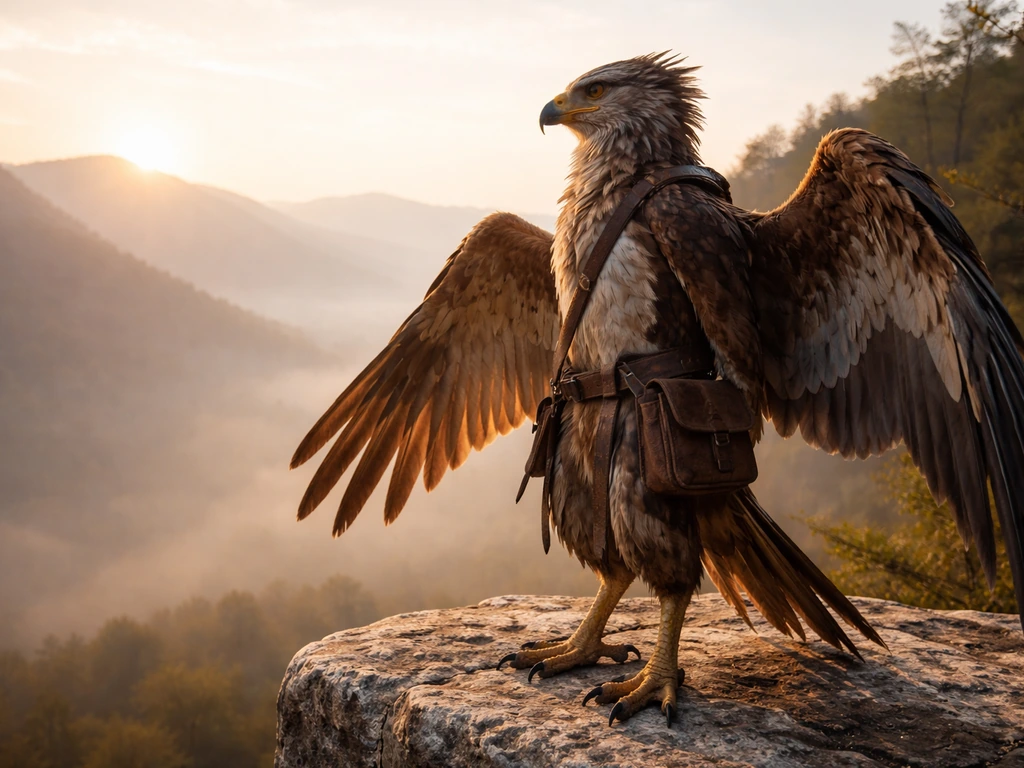
Aarakocra are a fictional humanoid species from published fantasy roleplaying game lore, most prominently the Elemental Evil Player's Companion for 5th edition Dungeons and Dragons. They are not real animals and have no place in biological taxonomy. In the lore, they are described as bird-people who originate from the Elemental Plane of Air, live in colonies, and hunt across territories that can span up to 100 miles on a side. They stand around 5 feet tall, have long narrow legs ending in sharp talons, and their heads are explicitly described as resembling those of a parrot or eagle, with tribal variations implied.
Older AD&D editions added even more anatomical specificity: aarakocra were described with roughly a 20-foot wingspan, hands positioned along the wing edges, and talons that could fold back to reveal a second pair of functional hands. That detail matters because it anchors the creature as a humanoid with bird features layered on top, not a bird that gained sentience. They are a fantasy construction, not a reclassified real-world animal. Keeping that distinction in mind is the key to answering the core question sensibly.
Do aarakocra count as birds? The traits that make the case
In real-world biology, birds (class Aves) are warm-blooded vertebrates defined by a specific cluster of traits: feathers, a toothless beak, hollow or fused bones, a high-efficiency respiratory system using air sacs, and hard-shelled egg-laying. Phylogenetically, birds sit within theropod dinosaurs, which is why scientists treat them as living dinosaurs rather than a separate group that just happens to fly. Flight itself is not a defining feature. Penguins are birds. Ostriches are birds. The respiratory and skeletal architecture, the feathers, the beak: those are what matter.
Map those criteria onto an aarakocra and several boxes check immediately. Feathers? Yes, explicitly described. Beak? Yes, used offensively in older editions as a bite attack and present in every major write-up. Talons? Present and mechanically relevant. Flight? Yes, with a flying speed that matches walking speed in 5e. The aarakocra's design clearly draws on real avian anatomy. It does not have the full physiology of a real bird because it is also humanoid-bodied with functional arms and hands, but the avian surface traits are genuinely there, not just cosmetic.
How taxonomy actually works, and why it matters here

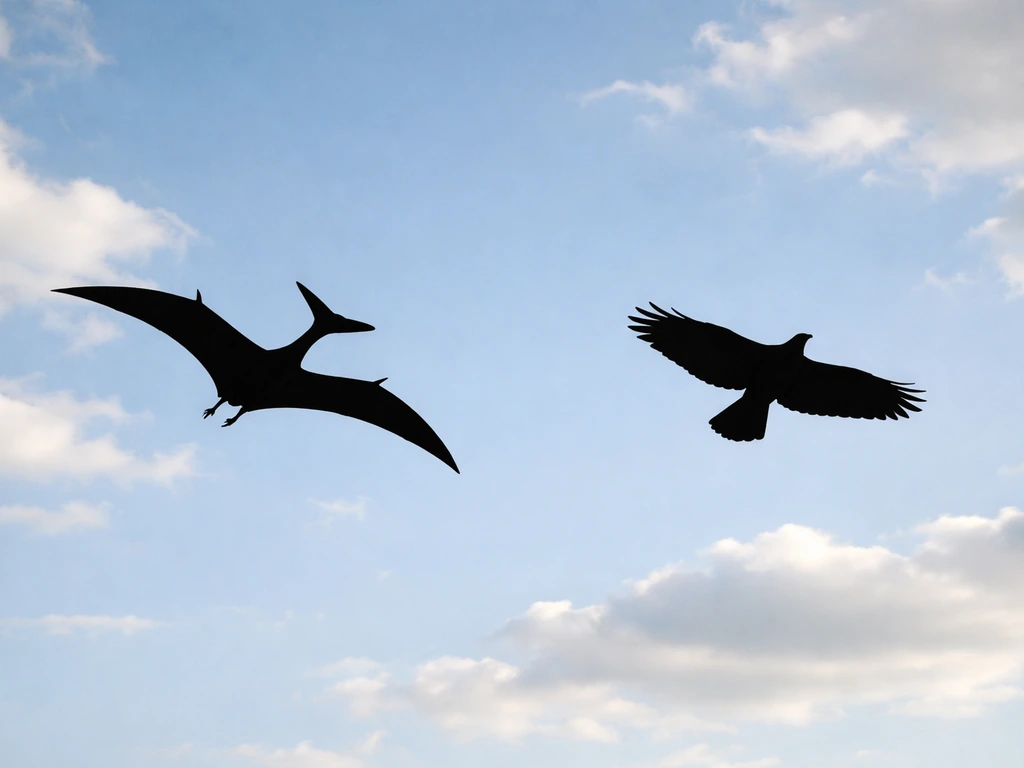
Real taxonomy does not classify animals by appearance or by whether they fly. It uses evolutionary relationships, which means two things can look almost identical and be completely unrelated, or look very different and be close relatives. Phylogenetic classification places birds within theropod dinosaurs based on skeletal features, respiratory system traits, and evolutionary lineage, not because they have wings. This is why pterosaurs are not birds: they evolved powered flight entirely independently, belong to a separate reptile lineage, and lack the anatomical markers that define Aves. The same logic applies to bats, which are mammals, and to any creature that flies but lacks the defining avian skeletal and feather architecture.
For aarakocra specifically, this is relevant because people sometimes ask whether the creature is "a bird" in the same breath as asking about pterodactyls or other flying creatures. The answer requires looking past the wings. Aarakocra share cosmetic and functional avian traits, but they are not biologically classifiable because they are not real organisms. What you can do is ask: which real bird's anatomy and behavior most closely matches the aarakocra's described features? That is a different and much more tractable question.
Can an aarakocra be any bird? The real constraints
The short version: no, not any bird, but a fairly wide range. The published description in the Elemental Evil Player's Companion gives DMs and players latitude by naming both parrot and eagle as possible head-type analogs, and by noting tribal variations. That is intentional design flexibility. However, the baseline anatomy places real limits on how far you can stretch the concept before it stops being consistent with the source material.
The core constraints come down to three things: body scale, wing and limb structure, and behavioral archetype. An aarakocra is Medium-sized, humanoid in overall proportions, and built for active flight and hunting. That profile fits raptors, large corvids, and parrots reasonably well. It becomes awkward with birds that are either tiny (hummingbirds, sparrows), completely flightless (ostriches, penguins), or defined by swimming and diving rather than soaring (penguins again, or gannets). The talons are also a hard constraint: birds with weak or vestigial feet, like swifts, do not map onto a creature whose talons are explicitly a natural weapon.
Anatomy-first thinking
When you are trying to decide whether a given bird fits, work from anatomy outward. The beak shape is the most visible anchor: hooked beaks (raptors, parrots) suggest predatory or foraging behavior and match the published art. Flat or spoon-shaped beaks (ducks, spoonbills) do not fit the established profile at all. Long, talon-heavy legs work for hawks and owls. Short stubby legs designed for perching rather than grasping prey create a conflict with the established weapon trait. Wing shape matters too: aarakocra are described as active fliers with speed, which points toward high-aspect-ratio wings like raptors, not the round, short wings of forest-dwelling birds.
Common misconceptions worth clearing up
The biggest one is treating flight as the defining feature of birds, or of bird-like creatures. It is not. Pterosaurs flew and are not birds. Bats fly and are mammals. Flying squirrels glide and are rodents. The aarakocra's wings and flight speed do not make it a bird any more than a bat's wings make it one. What makes something bird-like, in a meaningful sense, is the combination of feathers, beak, and the structural features that go with them.
A related misconception is that any creature with feathers is a bird. Early theropod dinosaurs had feathers, and they were not birds in the modern taxonomic sense. Conversely, Archaeopteryx had feathers and is considered a transitional form: the boundary between birds and non-birds is genuinely blurry in the fossil record, even if it is sharper among living animals. If you are wondering whether Archaeopteryx counts as a bird, it is often used to illustrate how the fossil record blurs the boundary between birds and non-birds is archaeopteryx a bird. For practical classification purposes with something like an aarakocra, "has feathers and a beak" is a reasonable working shorthand, but it is worth knowing that the real definition runs deeper.
Another common confusion comes from comparing aarakocra to other fantasy avian humanoids like kenku, which are flightless avian humanoids often depicted with corvid-like features. Kenku illustrate how a creature can look very bird-like, have beaks and feathers, and still not fly. That separation of "bird look" from "bird flight" is actually consistent with real biology, where penguins and ostriches are fully valid birds despite not flying.
How to decide which bird fits in your setting
Start with the published baseline and work outward from there. The Elemental Evil Player's Companion names parrot and eagle as the two anchor examples for head type. That gives you a spectrum: predatory raptors on one end, intelligent and vocally expressive parrots on the other. Most plausible bird analogs sit somewhere between or along that axis.
- Check the beak: does the bird you have in mind have a curved, strong beak suited for tearing or cracking? If yes, it maps naturally. If the beak is long, flat, or specialized for filter-feeding, it does not fit.
- Check the talons: the aarakocra's talons are a weapon. The bird analog should have strong grasping feet. Raptors, owls, and parrots all qualify. Waterfowl do not.
- Check the size and proportions: Medium humanoid scale rules out very small birds entirely. The analog bird should be one you can plausibly scale up to human size without the proportions becoming absurd.
- Check the behavioral archetype: aarakocra are described as hunters and aerial travelers with large ranges. A bird associated with soaring, hunting, or territorial behavior fits the lore. A bird associated with ground-foraging or aquatic feeding does not.
- Check your setting's internal consistency: if your campaign already has established aarakocra visuals or culture, the bird analog should feel continuous with that, not like a reboot.
For rules-as-written play, the mechanical stats do not change based on which bird type you choose. The flavor is what you are deciding. That means this is a narrative and visual decision, not a mechanical one, and you have real latitude as long as the anatomy makes sense.
Likely interpretations and where it gets complicated
The parrot-like aarakocra
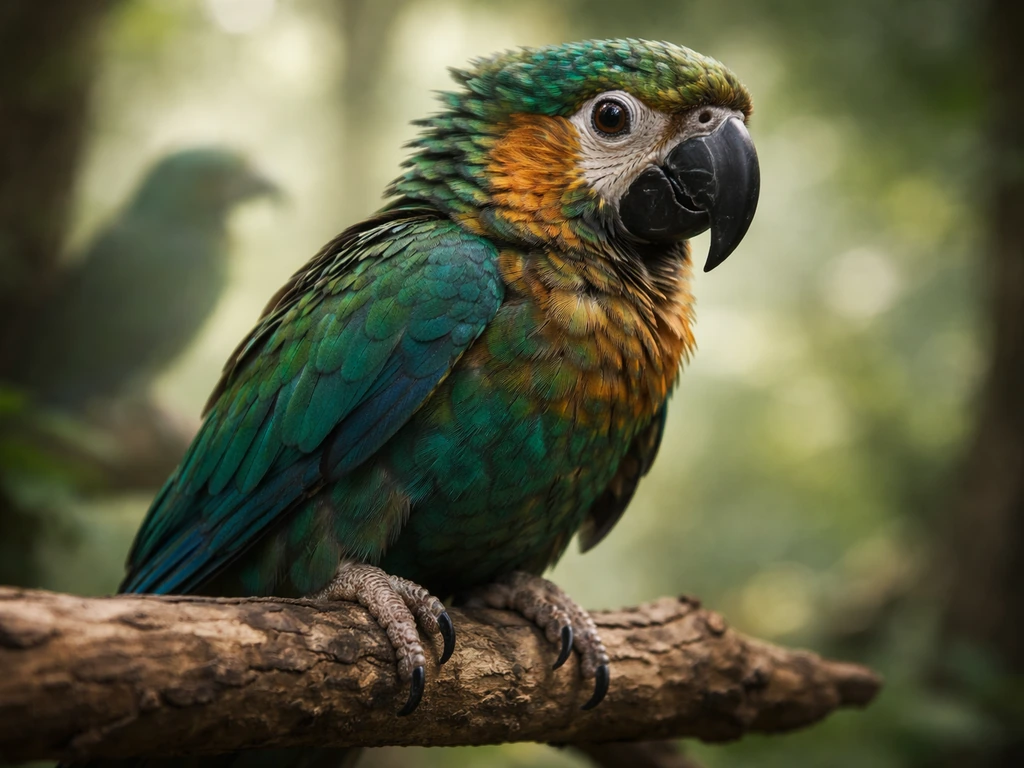
This is one of the two explicitly supported options in the published text, and it works very well. Parrots have strong curved beaks, strong zygodactyl feet with good gripping ability, and are associated with intelligence and social behavior. A parrot-based aarakocra tribe fits a colony-living, communicative culture. The coloring options are also extremely flexible, which helps with tribal differentiation.
The raptor-like aarakocra
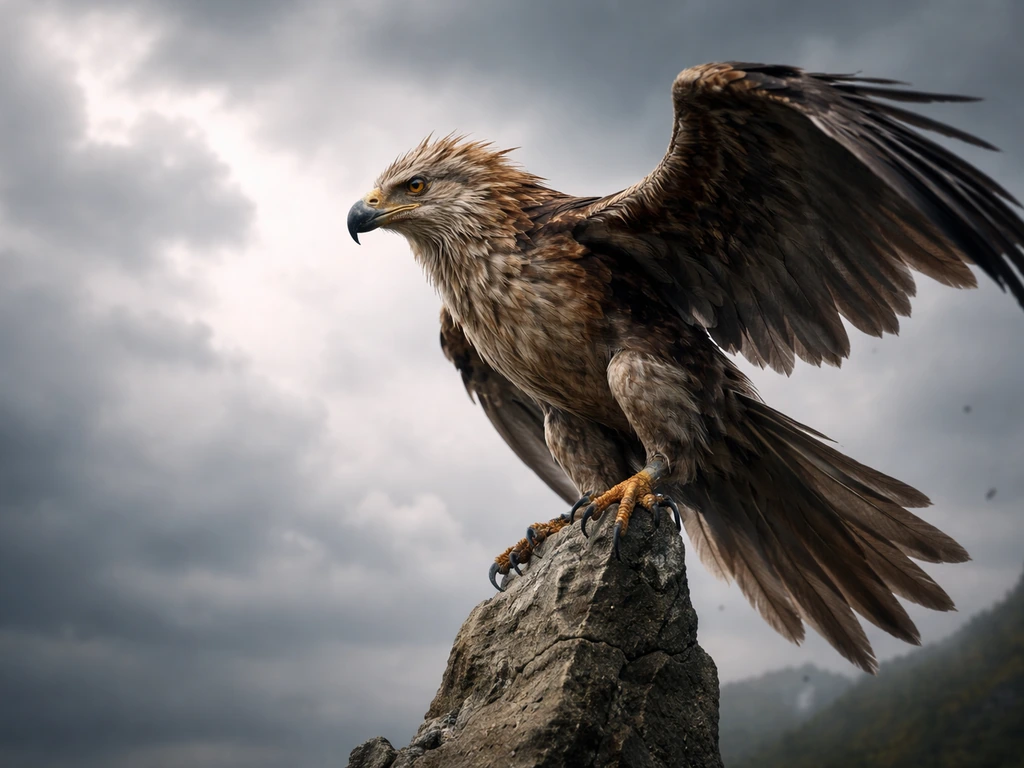
Eagle and hawk analogs are the most common interpretation and arguably the most intuitive. The hunting range described in the lore, the talons as weapons, and the soaring flight all map directly onto raptor biology and behavior. Most official art leans hawk or eagle, and this is the safest choice if you want maximum consistency with published material.
The owl-like aarakocra
Owls are a popular homebrew choice because of the visual appeal and the thematic associations with wisdom or stealth. Anatomically, owls have strong talons and curved beaks, so the core traits hold. The main tension is behavioral: owls are nocturnal, quiet, and generally solitary hunters, which does not match the colony-living, territorial daytime-hunter profile in the lore. An owl-like aarakocra works aesthetically but requires some lore adjustment to feel internally consistent.
Edge cases that break down
Flamingo-like, pelican-like, or heron-like aarakocra fail at the beak and behavioral level. These birds have highly specialized beaks for filter-feeding or fish-scooping, which conflict with the tearing/biting offensive anatomy the creature is described as having. Penguin-based aarakocra simply cannot exist within the rules because the creature requires flight. Hummingbird variants fail on scale and wing structure: hummingbirds have extremely specialized hovering anatomy and are tiny, neither of which translates to a Medium humanoid hunter. Peacock-based variants are visually interesting but peacocks are ground-dwelling birds with weak feet and vestigial flight, making the anatomy a poor match for the baseline.
| Bird Analog | Beak Fit | Talon Fit | Behavioral Fit | Overall |
|---|---|---|---|---|
| Eagle / Hawk | Strong curved beak: excellent | Large hunting talons: excellent | Soaring territorial hunter: excellent | Best match |
| Parrot | Strong hooked beak: excellent | Zygodactyl grip: good | Social, intelligent colony bird: good | Excellent match |
| Owl | Curved hooked beak: good | Strong hunting talons: good | Nocturnal solitary: requires adjustment | Good with caveats |
| Crow / Raven | Strong all-purpose beak: decent | Moderate grip: acceptable | Highly intelligent, social: decent | Workable |
| Heron / Egret | Long spear beak: poor | Moderate wading feet: poor | Aquatic hunter, not aerial: poor | Weak match |
| Penguin | Short stiff beak: poor | Flippers, not talons: fails | Flightless aquatic: impossible | Does not work |
| Hummingbird | Long nectar beak: fails | Tiny weak feet: fails | Tiny hoverer: impossible at scale | Does not work |
The honest takeaway is that aarakocra can be a meaningful range of bird types as long as you stay within the anatomical and behavioral constraints built into the baseline description. The creature was designed with raptors and parrots as the explicit reference points, and most plausible variations stay in that neighborhood. Trying to push the concept toward birds with radically different body plans or ecological niches creates inconsistencies that require active lore work to paper over. That is not necessarily a dealbreaker in a homebrew context, but it is worth knowing where the seams are before you commit.
FAQ
How do I decide if a specific bird type is “close enough” for an aarakocra concept?
Treat it as a spectrum of “analog fitness,” not a binary bird or not-bird. If the bird you pick can be described using the aarakocra’s baseline traits (beak shape that supports tearing or biting, talons that function as weapons, and wings that match an active flyer), it will read as consistent even if the ecology differs. If the bird’s beak and feet are specialized for a different feeding or locomotion mode, you are likely forcing the concept.
If I want an owl-like aarakocra, what lore tweaks make it internally consistent?
Yes, but you should adjust story details rather than anatomy. The baseline says the creature hunts across large territories, lives in colonies, and has speed-matched flight for the setting. So you can make an owl-like tribe nocturnal or use daytime hunting through raids, but avoid changing the species’ core weapon trait (sharp talons as an offensive tool) or the presence of functional wings.
Do I need different mechanics when I choose a different bird analog (hawk, parrot, etc.)?
You generally should not change the rules. The article explains that the mechanical stats do not vary based on which bird analog you choose, so your decision is about flavor, appearance, and tribe identity. A practical approach is to keep a single anatomical loadout consistent (beak and talons type, wing silhouette) and only vary coloration, head-feather style, and cultural habits.
What are the most common mistakes when people try to use tiny birds like hummingbirds?
Watch for scale mismatches that break visual logic. The baseline is Medium-sized and humanoid-proportioned, so tiny hover-feeders or birds built for a very different body size (like hummingbirds) tend to require you to invent non-source physiology. A good shortcut is to compare leg length and wing span in your mental “human body” frame, then ask whether the bird’s wing style could plausibly support that same flight role.
Is an aarakocra automatically a “bird” because it has feathers?
Don’t let “feathers” be your only checklist item. Several real animals have feathers but are not birds in the modern taxonomic sense, and likewise the aarakocra are fantasy beings not biological organisms. For design consistency, use a layered test: feathers plus a beak, plus talon-like grasping or striking feet, plus wings that imply a flight role like the baseline hunter.
Can I use birds that don’t match the aarakocra’s hunting or social behavior, like solitary species?
Often, no. The article emphasizes the creature’s colony-living, territorial hunting profile, which conflicts with many birds that are naturally solitary, highly nocturnal, or specialized for swimming and diving. If you want a creature inspired by those niches, it is usually easier to shift the behavior (for example, occasional cooperative hunting by “normally solitary” birds) than to retcon anatomy into something that would contradict the baseline weapon and flight assumptions.
What part of the bird’s anatomy matters most for a consistent aarakocra beak design?
Beak shape is the best “fast filter.” The baseline repeatedly anchors on predatory or tearing/biting offensive use, so hooked or strongly curved beaks are the smoothest fit. If the bird has a beak specialized for filter feeding, fish scooping, or mostly non-biting feeding, you will likely create a mismatch that you have to correct through custom lore every time you describe an attack.
What if I want an aarakocra that looks like a flightless bird, but still needs to fly in my campaign?
Even if the bird analog is flightless in real life, it can still work for appearance if you keep the aarakocra’s wings as functional. However, birds whose feet are vestigial or not grasping weapons are harder, because talons are part of the baseline offense. If you want the “look” of a flightless bird, expect to redesign the cultural role and feeding habits so the talon-and-beak package still makes sense.
How can I create multiple aarakocra tribes without mixing traits that clash?
Use a two-layer approach for tribes. Layer 1 is anatomy consistency (choose a head type reference like parrot-like or eagle-like, and keep the talons and flight style aligned). Layer 2 is cultural variation (territory habits, voice style, colony structure). This prevents you from accidentally mixing incompatible traits, like a filter-feeding beak with an aggressive talon-based hunting identity.
Next Article
Is a Pterodactyl a Bird? The Science Behind the Confusion
Learn why pterodactyls are pterosaurs, not birds or dinosaurs, and how feathers and bones prove it.