Yes, an ern is a bird. Specifically, "ern" (also spelled "erne") is an old English word for eagle, and today it refers most precisely to the white-tailed eagle (Haliaeetus albicilla), a massive sea eagle found near coastlines, lakes, and rivers across Europe and Asia. If you've run across this word in a crossword, a nature documentary, or a field guide and wondered whether it's a real bird or some archaic mistake, the answer is clear: it's a real bird, it's a raptor, and it's one of the largest eagles on the planet.
Is an Ern a Bird? What the Term Means and How to Check

Marcus Hendricks
3 Jun 2026
What "ern" actually means (and why the spelling trips everyone up)
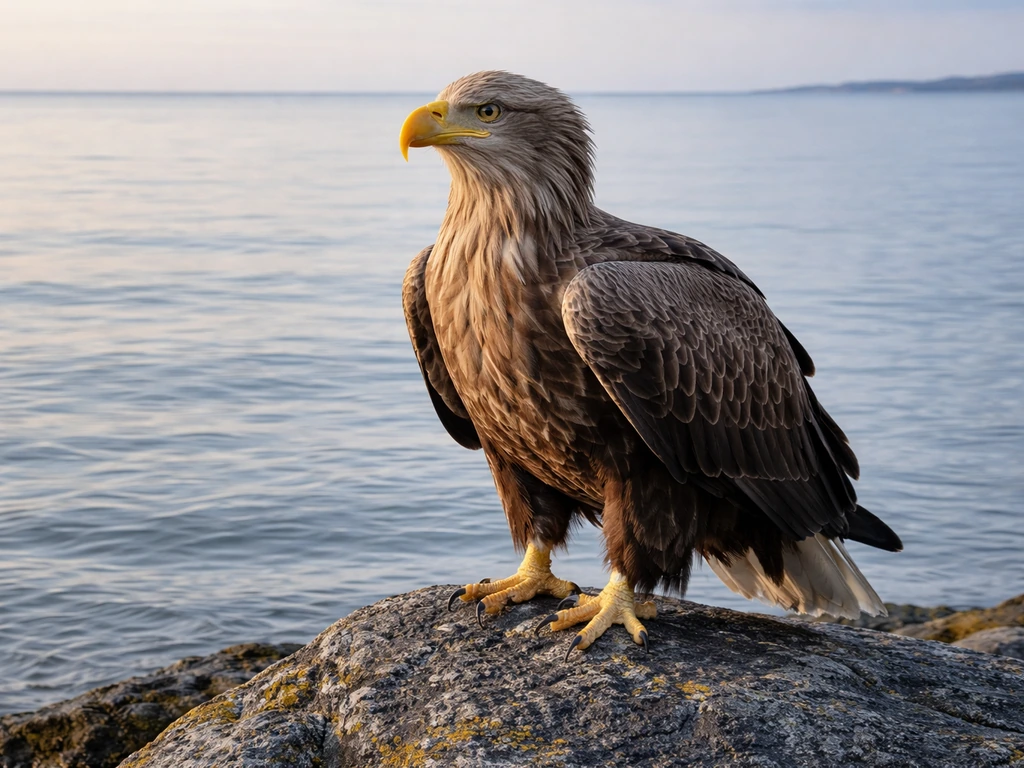
"Ern" is simply an older or variant English name for eagle, with roots in Old English and Germanic languages. You'll see it spelled two ways: "ern" and "erne," and both are correct. Neither is a typo. In modern usage, the word has narrowed in meaning and is used almost exclusively to refer to the white-tailed eagle or other large fish eagles (sometimes called sea eagles). Collins English Dictionary defines "ern" directly as "a sea eagle," specifically the European white-tailed eagle. Wiktionary lists it plainly as a synonym for "eagle (bird of prey)." Wikipedia confirms it: sea eagles are also called "erne or ern," mostly in reference to Haliaeetus albicilla.
The confusion usually comes from one of a few places. People see "ern" and assume it's a misspelling of "heron" (a completely different water bird), or they think it might be a brand name, a fictional creature, or even a person's name. It's also easy to conflate "ern" with "Eren" (a character from the anime Attack on Titan, who has a complicated relationship with bird imagery but is very much not a bird himself). The word "ern" is genuinely obscure in everyday modern English, which is why it tends to show up mainly in crossword puzzles and older natural history texts, making people second-guess whether it refers to anything real at all.
Is an ern actually a bird? The classification answer
Absolutely. The ern (white-tailed eagle, Haliaeetus albicilla) is a fully classified bird in every sense of the word. It belongs to the order Accipitriformes, the family Accipitridae (the same family as hawks, kites, harriers, and most eagles), and the genus Haliaeetus, which groups together the sea eagles and fish eagles worldwide. Cornell Lab's taxonomy data recognizes it under its scientific name, and it's on eBird's species list with full range maps, identification tips, and observation records. There is zero ambiguity here from a scientific standpoint.
The broader term "ern" or "erne" can also refer loosely to other large fish eagles in the Haliaeetus genus, since older English usage applied it to eagles generally. But in contemporary birding and reference contexts, if someone says "ern," they almost certainly mean the white-tailed eagle. It is not mythical, not a mascot, not a misidentified mammal. It is a living, documented, legally protected raptor.
What actually makes something a bird
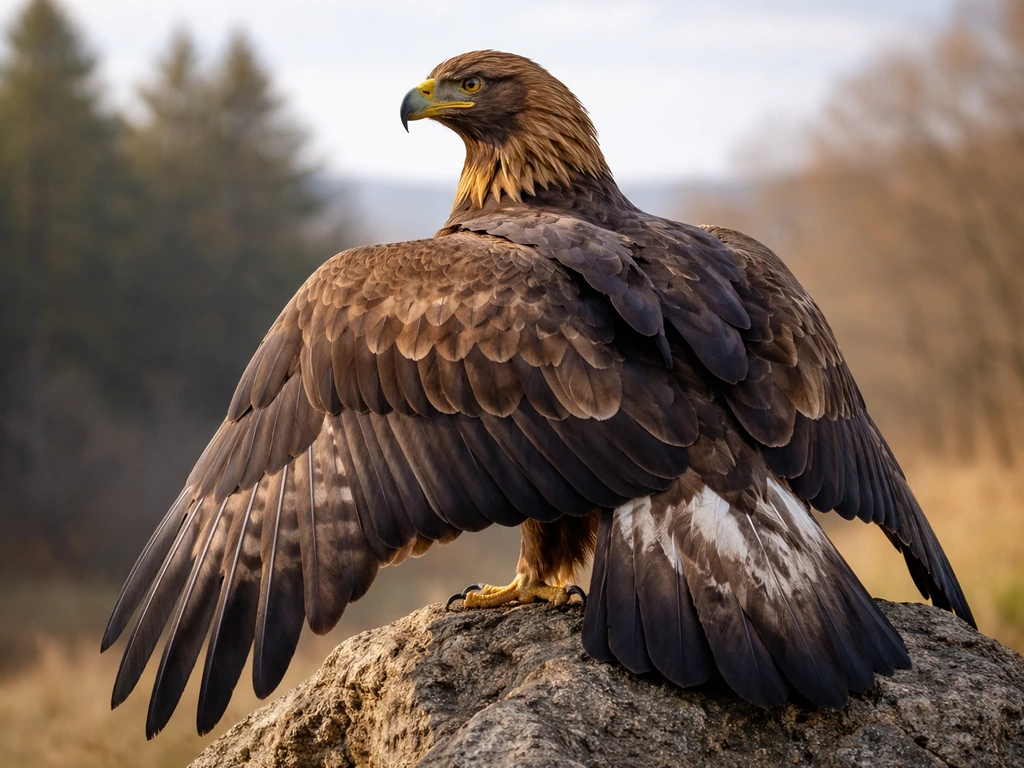
Since a lot of questions like this come with genuine uncertainty about what separates birds from other animals, it's worth nailing down the basics. Birds (class Aves) share a specific set of traits that no other group of living animals has in exactly the same combination.
- Feathers: The single most definitive trait. Only birds have feathers. No mammal, reptile, or fish has them.
- Warm-blooded (endothermic): Birds regulate their own body temperature internally, unlike reptiles.
- Egg-laying (oviparous): Birds reproduce by laying eggs with hard or leathery shells.
- Wings: All birds have wings, even if some (like penguins or ostriches) don't use them for flight. Wings are modified forelimbs.
- Beak without teeth: Modern birds have a bony beak and no teeth at all.
- Hollow bones: Bird skeletons are lightweight because many bones are hollow, an adaptation for flight.
- Backbone: Birds are vertebrates, meaning they have a spine.
The white-tailed eagle checks every single one of these boxes. It has feathers, a beak, hollow bones, lays eggs, and is warm-blooded. It is, by every definition, a bird. Cornell Lab's Bird Academy puts it simply: feathers are the key physical characteristic that sets birds apart from all other living creatures. If it has feathers, it's a bird. The ern has feathers. You can apply the same basic definition to other winged fantasy or puzzle terms too, including whether an aarakocra can be any bird can aarakocra be any bird.
What people often confuse with the ern (and why)
The most common mix-up is with the heron. The word "ern" sounds like it could be a shortened "heron," and both birds are associated with water. But they are not closely related at all. Herons (family Ardeidae) are long-legged wading birds that stand patiently in shallow water hunting fish. The ern is a massive eagle that soars and dives. Different body plan, different behavior, very different family.
Some people also stumble on the term because they've seen it in fictional or brand contexts. There are logos, place names, and character references that use "ern" or "erne" in ways that have nothing to do with the bird. If you've been trying to figure out whether an "ern" from a book, game, or show is supposed to be a real bird, check the context, but know that the real-world referent is always the eagle.
It's also worth noting that people sometimes confuse large raptors with non-bird animals. Pterosaurs (like the pterodactyl) are the classic example: they were flying reptiles, not birds, and they had no feathers. If you're wondering, Archaeopteryx. This is also the reason people ask things like “is a pterodactyl a bird,” and the answer is no Pterosaurs (like the pterodactyl) are the classic example. The ern is nothing like a pterosaur. The ern is a modern bird with a clear evolutionary lineage within Aves. Questions about whether prehistoric creatures like Archaeopteryx qualify as birds get more complicated, but for the ern, there's no such debate.
How to identify the specific ern you're thinking of
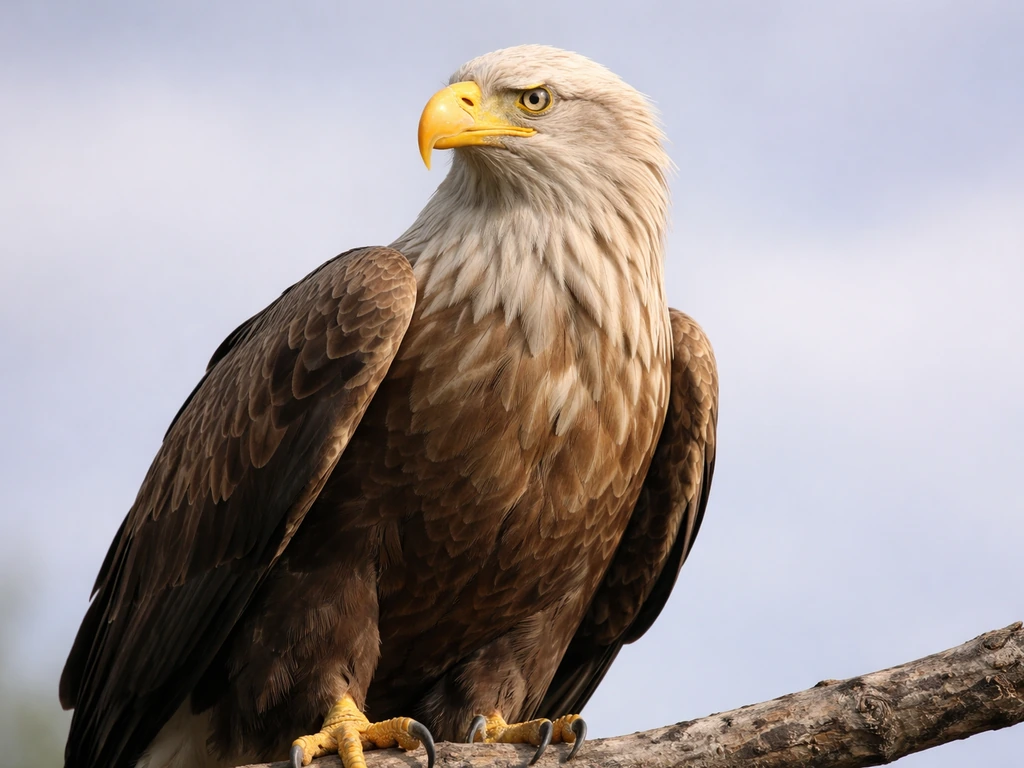
The white-tailed eagle (Haliaeetus albicilla) is the bird most reliably called an ern. Here's what you need to know to identify it or confirm you're looking at the right species. When you report an unusual bird, eBird says your description should include detailed physical characteristics, such as plumage traits and calls, and that habitat considerations can be important eBird’s guidance for documenting unusual sightings includes detailed physical characteristics like plumage and calls, and notes that habitat can matter..
| Trait | White-tailed Eagle (Ern) |
|---|---|
| Scientific name | Haliaeetus albicilla |
| Size | Wingspan 6 to 8 feet (1.8 to 2.4 m); one of Europe's largest birds of prey |
| Tail | Short, wedge-shaped, white in adults |
| Head/Bill | Large pale yellow bill; pale head in adults |
| Body plumage | Brown overall, with paler head and contrasting white tail |
| Habitat | Coastal areas, large lakes, rivers, wetlands |
| Range | Europe and northern Asia; reintroduced in parts of the UK |
| Behavior | Soaring flight; hunts fish, waterfowl, carrion |
If you're trying to distinguish a white-tailed eagle from a similar species like Steller's Sea-Eagle, eBird's identification guidance points to key differences: the white-tailed eagle has a proportionally smaller bill, a less dramatically patterned body, and a different wing shape compared to Steller's. Juvenile white-tailed eagles are browner and lack the white tail, which is the most common source of confusion when identifying younger birds in the field.
How to verify this yourself today
If you want to confirm everything above or dig into more detail, here are the most practical steps you can take right now.
- Search the scientific name: Look up "Haliaeetus albicilla" on eBird or Cornell Lab's All About Birds. You'll get the full species account, range map, photos, and audio. This confirms the ern is a real, documented bird with abundant observation records.
- Check the IOC World Bird List: The IOC (International Ornithological Congress) maintains an authoritative, regularly updated list of English bird names at WorldBirdNames.org. Search for "white-tailed eagle" or "ern/erne" to see all accepted common names and confirm the spelling variants.
- Use GBIF for name matching: If you've seen the term in an old text or regional source and aren't sure which species it maps to, GBIF's species lookup tool lets you enter a common or scientific name and matches it against their backbone taxonomy. This is particularly useful for resolving older or regional name variants.
- Use Merlin Bird ID if you have an image: Cornell Lab's Merlin app can identify birds from a photo. If you've photographed a large eagle near water and want to confirm whether it's a white-tailed eagle (ern), upload the image to Merlin's Photo ID feature. Set your location and date filters for best results.
- Apply field marks if you have a description: Focus on the tail shape (short and wedge-shaped in adults, with a white tip), the large pale bill, and the overall brown body with a paler head. Audubon's approach to field ID emphasizes that the bill shape alone can narrow identification significantly, and the ern's bill is distinctively large and hooked.
- Cross-check with a regional field guide: For European birders, any major field guide (Collins Bird Guide, for example) will include the white-tailed eagle under that name. For North American readers, the ern is not a native species, so if you're in North America and saw a large eagle near water, you're more likely looking at a Bald Eagle (Haliaeetus leucocephalus), which is the American equivalent in the same genus.
The bottom line is that "ern" is a real bird name with a long history, it refers to an eagle, and the white-tailed eagle is the species it most reliably points to today. IOC’s World Bird List project, hosted at WorldBirdNames, provides regularly updated English name information that helps resolve spelling and variant common-name confusion. If you came here because you saw the word in a crossword or a nature book and weren't sure what it meant, now you know: it's a sea eagle, it's enormous, and it is absolutely a bird.
FAQ
Is “ern” or “erne” a different species than the white-tailed eagle, or just an alternate spelling?
In today’s most common references, “ern” and “erne” are not two different birds, they are the same older/variant English name. If you need a single answer for identification, modern usage most often means the white-tailed eagle.
How do I answer a crossword clue that says “ern” without guessing?
Crossword clues often use “ERN” simply to mean “EAGLE.” The safest approach is to check the number of letters in the grid, and then confirm whether the clue specifically says “sea eagle” or gives any hint about “white-tailed.”
What should I do if the bird I’m seeing might be a juvenile, and the tail is not white yet?
If you’re looking at a bird in the field, rely on visible traits and location rather than the word in a book. Juvenile white-tailed eagles are browner and lack the obvious white tail, so you may need to compare wing shape, overall patterning, and the typical habitat (coasts, large lakes, and big rivers).
How can I verify “ern” using scientific names instead of common names?
“Ern” is an English word, not a universal scientific label. The scientifically safe way to verify is to match the bird’s features and then use its species name, such as Haliaeetus albicilla for the white-tailed eagle.
Could “ern” ever refer to a different Haliaeetus species than the white-tailed eagle?
Because “ern” is used for large fish or sea eagles in older contexts, you could run into it when reading about other Haliaeetus species. In modern birding, if someone just says “ern,” assume white-tailed eagle unless the surrounding text clearly points to another sea eagle.
What quick checks can I use to tell an ern (white-tailed eagle) apart from a heron when they’re both near water?
Herons are long-legged wading birds, they rarely match the look of a soaring eagle. If you find yourself uncertain, look for the behavioral pattern, soaring vs standing and stalking, and the body build, eagle strength and broad wings vs heron’s slender frame.
If I see “ern” in a book, game, or logo, how do I know whether it refers to a real bird?
Watch for word traps in fiction and branding. If “ern” appears as a team name, logo, or character nickname, it may not be intended as a real bird at all, so the context usually tells you whether you should interpret it literally.
Is there an easy way to avoid confusing an “ern” with prehistoric flying creatures like pterosaurs?
To avoid mixing up flying reptiles with birds, confirm feather evidence in the description or images. Pterosaurs are not birds, they lacked feathers, and they were a separate lineage from the start.
Next Article
Is Eren a Bird? Yes or No and Why Eren Yeager Is Fictional
Is Eren a bird? No. Eren Yeager is a fictional human, and real birds are defined by feathers and beaks.