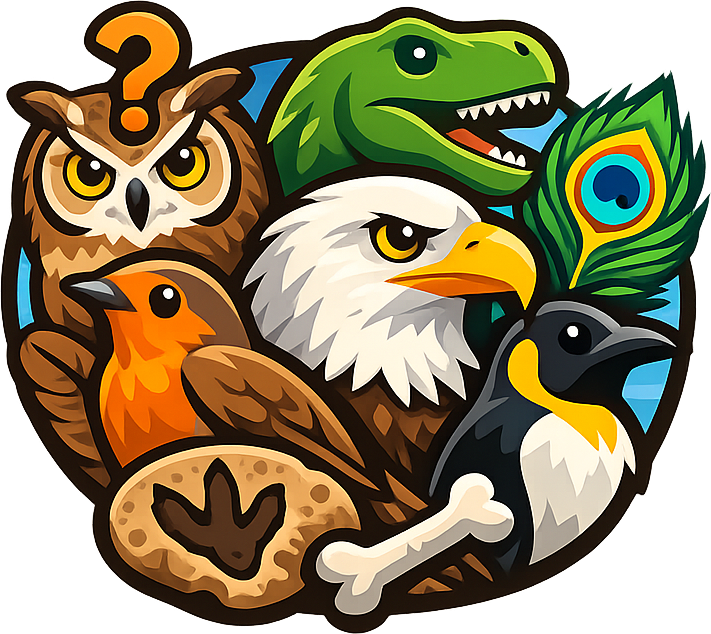
Eren is not a bird. Eren Yeager is a fictional human character from the manga and anime series Attack on Titan, created by Hajime Isayama. He has no feathers, no beak, no wings, and no biological classification at all, because he doesn't exist outside of a story. There is no bird species named Eren, and the name itself is a Turkish given name, not a taxonomic label.
Is Eren a Bird? Yes or No and Why Eren Yeager Is Fictional

Marcus Hendricks
1 Jun 2026

Who is Eren Yeager and why does this question keep coming up?

Eren Yeager is the protagonist of Attack on Titan, a massively popular manga series by Hajime Isayama that ran from 2009 to 2021 and spawned a long-running anime adaptation. The official publisher, Kodansha, describes Eren as an adolescent boy whose home is destroyed in a Titan attack. Over the course of the story, he discovers he can transform into a Titan himself, which is a fictional superpower mechanic, not a species reclassification. At no point in the canon does he become a bird.
The confusion explodes specifically around the final chapter of the manga. A bird appears in the closing pages, and fans began debating whether Eren had literally reincarnated as that bird or whether it was purely symbolic. Reddit threads with titles like 'So did Eren actually turn into a bird? ' and 'Why did so many people believe Eren was a bird in the final chapter?
' show exactly how this question took on a life of its own. The short version: the bird is almost universally read as a symbolic or poetic image, not a literal transformation into a new species. Even within the fictional world, Eren never undergoes avian metamorphosis. His 'non-human' forms are Titan forms, which are enormous humanoid giants, not birds.
There's also a small spelling overlap worth clearing up. The word 'ern' (sometimes spelled 'erne') is a real, old English term for a sea eagle, particularly the white-tailed eagle. Merriam-Webster defines 'erne' specifically as a type of eagle. So if you arrived here wondering whether 'Eren' refers to a bird because it sounds like 'ern,' that's a reasonable instinct, but 'Eren' is a personal name with Turkish origins, and the disambiguation page for Eren on Wikipedia confirms it maps to people, not to any avian taxon.
Why Eren doesn't qualify as a bird (even in theory)
Even if we wanted to entertain the idea charitably, Eren fails every single biological criterion for bird classification. Birds are warm-blooded vertebrates with a very specific combination of traits that no other living animal group shares. Eren, as depicted in canon, is a teenage human boy who can shift into a massive humanoid Titan. None of those forms have anything in common with avian biology.
Bird classification isn't about names or symbolic associations. It's about observable, measurable biological features. If you lined up the canonical description of Eren Yeager against the standard checklist for birds, he comes up empty on every single item.
What actually makes something a bird

Birds belong to the class Aves, and they share a very specific cluster of traits that sets them apart from every other animal group. Encyclopaedia Britannica lists the core ones: feathers (unique to birds among living animals), wings modified from forelimbs, a beak or bill with no teeth in modern species, warm-blooded (endothermic) metabolism, and reproduction via hard-shelled eggs. They also have hollow bones and a system of air sacs connected to their lungs, which are traits they share with their theropod dinosaur ancestors. Yes, birds are technically dinosaurs, specifically a lineage of feathered theropods, which is why institutions like the Smithsonian Institution include anatomical notes about air sacs and hollow bones when discussing dinosaur-to-bird evolution.
| Trait | Birds (Class Aves) | Eren Yeager (fictional human/Titan Shifter) |
|---|---|---|
| Feathers | Yes, defining trait | No |
| Wings from forelimbs | Yes | No |
| Beak/bill | Yes | No |
| Hard-shelled eggs | Yes | No |
| Hollow bones + air sacs | Yes | No |
| Warm-blooded | Yes | Yes (but so are all mammals) |
| Scientific species name | Yes (e.g., Mimus polyglottos) | None — fictional character |
| Evolutionary lineage | Theropod dinosaurs | Fictional human in manga |
The warm-blooded check is the only box Eren shares with birds, and that's because humans are also warm-blooded. It's a shared trait among mammals and birds, but it doesn't make a human a bird any more than it makes a dog one. What truly separates birds from everything else is feathers combined with the full suite of anatomical features above. Without feathers, you're simply not working with a bird.
How names and nicknames create this kind of confusion
The 'is X a bird?' pattern shows up constantly, and it almost always traces back to one of three sources: a name that sounds like a bird, a mascot or logo that looks like a bird, or a symbolic association between a character and an animal. None of those things constitute scientific classification, and the gap between a name and a taxon is something ornithologists and biologists are very deliberate about.
The U.S. National Park Service has actually noted that eponymous bird names, meaning birds named after people, don't describe the bird itself at all. The name tells you nothing about the species. The reverse is equally true: a person's name that sounds like a bird word doesn't make them avian. The University of Michigan's BioKIDS resource goes further, pointing out that common names are not unique identifiers and can actively mislead when it comes to evolutionary relationships. The only reliable identifier is a scientific name, like Mimus polyglottos for the Northern Mockingbird, which places a species precisely within its taxonomic family.
Audubon reinforces this from a practical bird-identification angle: real bird identification relies on field marks like bill structure, plumage pattern, and behavior, not on what something is called. If you can't observe feathers, a beak, and bird-specific anatomy, you're not looking at a bird. A fictional character in a manga panel is obviously nowhere near this standard.
This same pattern plays out with other figures that generate 'is X a bird?' searches. Pterodactyls are flying reptiles, not birds, despite having wings. Archaeopteryx is an interesting edge case, being a feathered transitional fossil that genuinely blurs the line between non-avian dinosaurs and birds. Archaeopteryx is a feathered transitional fossil, and it is widely discussed as evidence for how birds evolved. Fantastical creatures like aarakocra from Dungeons and Dragons are fictional bird-people that obviously have no place in biological taxonomy, but people still ask. Eren fits into this same category of 'bird-adjacent confusion': a culturally prominent figure whose name, visual imagery, or symbolic associations trigger the question without there being any actual avian biology behind it.
How to sort out similar bird misunderstandings going forward
If you're ever unsure whether something qualifies as a bird, here's a practical checklist to run through before diving into the internet rabbit hole. Can aarakocra be any bird? Generally, they are a specific kind of humanoid birdlike race rather than “any bird.” is a bird.
- Check whether it's a real, living (or fossil) organism. Fictional characters, mascots, and brand logos don't have biological classifications.
- Look for feathers. Feathers are the single most reliable indicator of avian identity. No feathers, no bird.
- Check for a scientific binomial name (genus + species). If something is classified as a bird, it will have one, like Aquila chrysaetos for the golden eagle.
- Separate the name from the organism. 'Ern' or 'erne' is an old word for a sea eagle. 'Eren' is a Turkish personal name. Similar sounds, completely different categories.
- Distinguish symbol from species. In storytelling, a bird can appear as a symbol of freedom, rebirth, or transformation without the character 'becoming' a bird in any biological sense.
- If you're dealing with a mascot or brand, look up the company directly. Many brands use bird imagery without the mascot being classifiable as a specific species.
The bottom line is straightforward: Eren Yeager is a human character in a fictional series. The bird at the end of Attack on Titan is a narrative image, and whether it's symbolic or literal within the story's internal logic is a fun fan debate, but it has absolutely nothing to do with ornithology or animal taxonomy. In GamesRadar’s reporting on [Isayama’s comments](https://www. gamesradar.
com/entertainment/anime-shows/attack-on-titan-creator-says-he-was-immature-and-foolish-when-writing-the-ending-for-one-particular-character/), the creator discusses how Eren was written with his worst parts driving the story’s narrative impact. If you were searching because you genuinely wanted to know about a bird called 'eren' or 'ern,' the closest real-world match is 'erne,' the old English term for a sea eagle, which is a completely real and genuinely fascinating bird.
“Ern” (or ERN) is a term that can refer to multiple things, including a sea eagle and also as a given name or abbreviation, showing how similar spellings can point to different meanings depending on context Ern (or ERN) can refer to multiple things, including a sea eagle and also as a given name or abbreviation.
FAQ
Did Eren actually transform into the bird in the final chapter, or was it only symbolic?
No. The bird shown in Attack on Titan’s ending does not come with canon confirmation that Eren’s identity, biology, or lineage becomes avian. In other words, it is not presented like a biological transformation sequence, it is presented as an image within the story’s closing events.
What specific evidence would be required for Eren to count as a bird, and does he have any of it?
If you want to answer this like a taxonomist, focus on observable traits tied to the character’s forms in canon. Eren’s transformation is explicitly into Titan versions, which are humanoid giants, not an intermediate set of bird anatomy like feathers, a beak, or air-sac based breathing.
Could Eren be a bird name if it sounds like “ern” or “erne”?
Look for the difference between a scientific name and a common name. “Eren” is a personal name, while “ern” or “erne” are name sounds that refer to birds like sea eagles. Name similarity can cause confusion, but it is not evidence of classification.
How can I tell whether a character’s “animal form” is biology or just storytelling?
Check whether the series ever reassigns Eren to an animal class or gives new physiology consistent with birds, like feathers and bird-specific skeletal structures. Since the story does not reframe him as avian and keeps his non-human forms tied to Titans, the “bird” interpretation stays narrative rather than biological.
Why doesn’t “warm-blooded” mean Eren is a bird?
A common mistake is treating warm-bloodedness as the deciding factor. Humans are warm-blooded too, but that does not put humans inside Aves. Bird classification depends on a bundled set of traits, especially feathers plus additional anatomical features.
Why do people keep asking “is Eren a bird,” even though it seems unrelated to biology?
The “is X a bird?” search pattern usually comes from one of three things: name sound-alikes, logos or mascots, or symbolic associations. This is why myth, branding, and pop culture can trigger the question even when taxonomy has no connection.
Is Archaeopteryx an exception that would support “Eren is a bird”?
Edge cases exist in real evolution discussions, like Archaeopteryx, because it is a real transitional fossil that helps explain the evolution of bird traits. That is different from a fictional character and a symbolic closing image, because fossils come with measurable, physical anatomy.
If the bird is symbolic, what’s the best way to think about it without mixing it with taxonomy?
Even if you interpret the ending bird as symbolic, that interpretation is about theme, imagery, or character arc, not about taxonomy. Symbolic readings do not require the character to satisfy bird diagnostic criteria.
What should I do if I’m actually trying to identify a real bird with a similar name?
If you are trying to identify a real bird named “ern/erne,” use field marks like bill shape, plumage, and behavior rather than name sound alone. That practical approach helps avoid assumptions from spelling or similarity to a person’s name.
How should I evaluate claims from fans when they say it is canon that Eren became a bird?
If you are reading a discussion online, treat confidently stated answers about literal transformation as speculation unless the manga or anime explicitly states it in-text. Fans often disagree on symbolism, so “proof” claims should be checked against what the story actually shows and labels.
Next Articles
Can Aarakocra Be Any Bird? Real Bird Criteria Explained
Can aarakocra be any bird? Learn real bird taxonomy, what counts as a bird, and limits for fantasy re-skins

Is a Pterodactyl a Bird? The Science Behind the Confusion
Learn why pterodactyls are pterosaurs, not birds or dinosaurs, and how feathers and bones prove it.

Is Archaeopteryx a Bird? The Clear Classification Answer
Yes, Archaeopteryx is technically a bird, but it sits on the stem lineage boundary before crown birds.