Quick answer: pterodactyl, bird, or dinosaur?
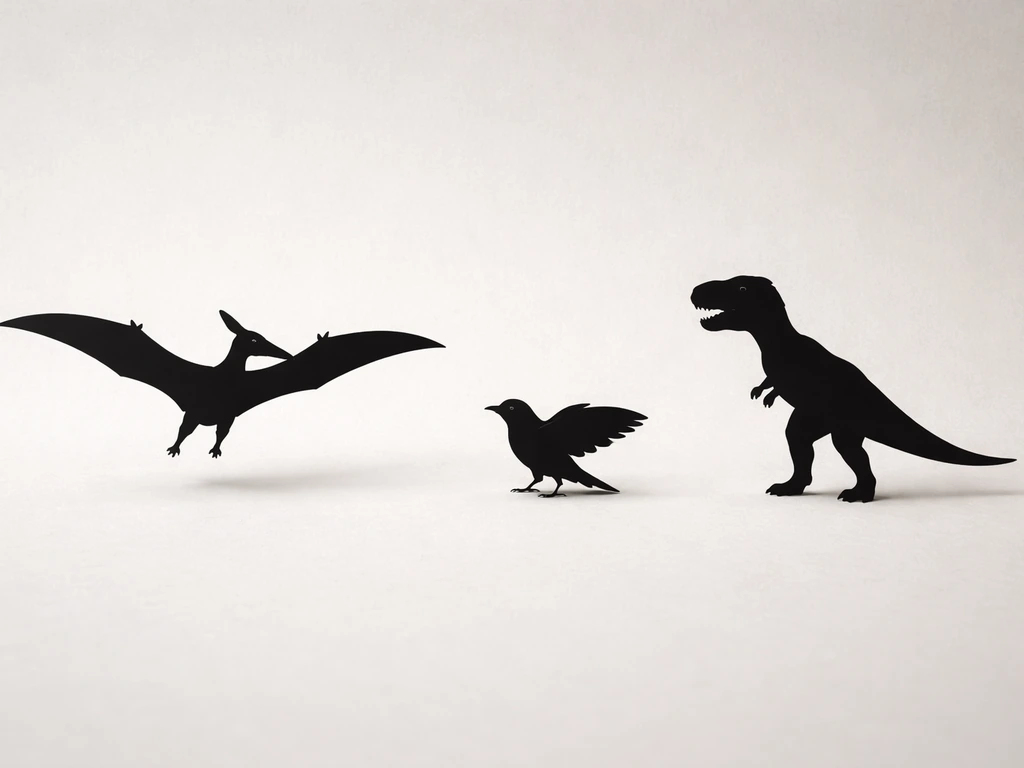
A pterodactyl is neither a bird nor a dinosaur. Encyclopaedia Britannica also describes pterosaurs as an extinct fossil order of flying reptiles (Pterosauria) pterosaurs are an extinct fossil order of flying reptiles. It is a pterosaur, a completely separate group of flying reptiles that lived during the Mesozoic Era alongside the dinosaurs but branched off on their own evolutionary path long before birds even existed. The American Museum of Natural History puts it plainly: "Not a bird, not a dinosaur." That is the clearest, most science-backed answer available, and every major natural history institution from the Smithsonian to the Natural History Museum in London agrees on it.
What "pterodactyl" actually means (pterosaurs vs dinosaurs)
The word "pterodactyl" comes from the French "Ptéro-dactyle," meaning "wing finger," which was the name given to the first pterosaur fossil ever formally described. That original fossil animal was Pterodactylus, and because it was the first one on record, its nickname became the popular label for the entire group. The trouble is that Pterodactylus is just one genus within a much larger order called Pterosauria, which contained hundreds of species over roughly 160 million years. By as early as 1834, scientists had already recognized "pterodactyl" as an informal, outdated shorthand. National Geographic has noted the same problem: the everyday term "pterodactyl" technically applies only to that one original critter, making it genuinely misleading when used for the broader group.
So where do pterosaurs sit on the family tree? They belong to a larger group called Archosauria, which is a major reptile clade that also includes dinosaurs, birds, and crocodiles. Within Archosauria, there is a subdivision called Ornithodira, and this is where pterosaurs and the dinosaur lineage share a common ancestor. Analyses published in peer-reviewed journals have recovered Pterosauria as a sister group to Lagerpetidae, placing pterosaurs right at the edge of dinosaur origins but firmly outside the group called Dinosauria. Think of it this way: pterosaurs and dinosaurs are evolutionary cousins, not parent and child. The Smithsonian puts the same idea clearly: calling a pterosaur a dinosaur ignores the major evolutionary split that separates the two lines.
True Dinosauria consists of two terrestrial dinosaur clades plus Aves (birds). Pterosaurs do not fit into any of those three branches. They are their own order, Pterosauria, full stop.
What makes a bird a bird (core traits and classification)
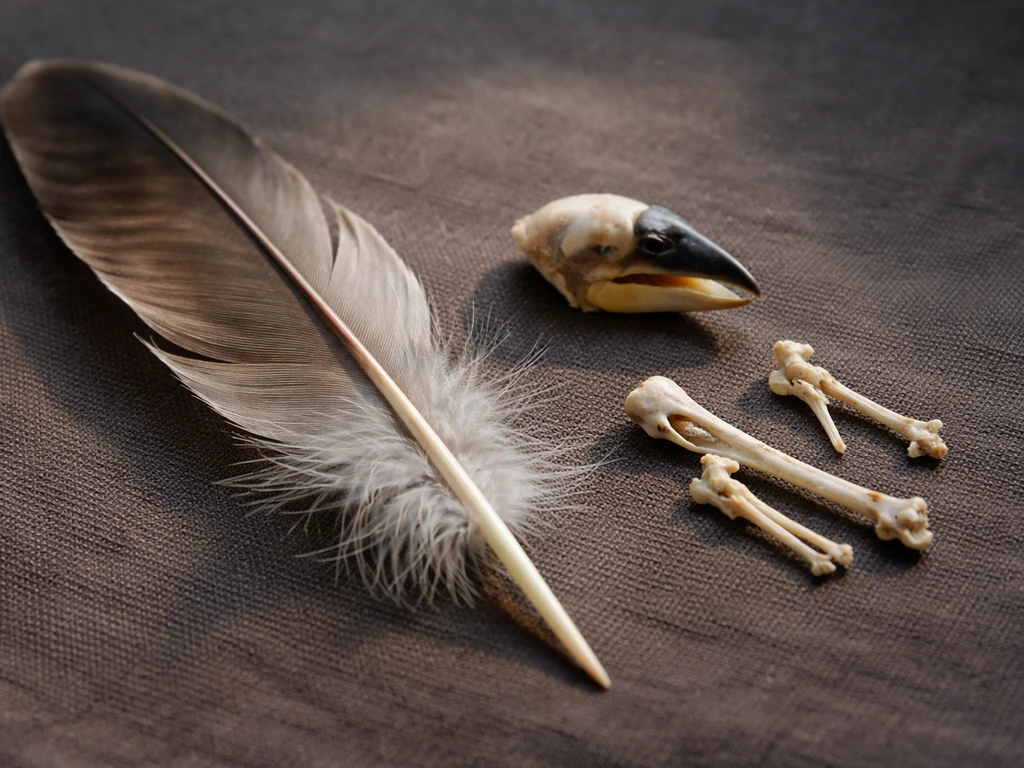
Before comparing pterosaurs to birds, it helps to nail down what a bird actually is, because the definition is more specific than most people realize. Birds belong to the class Aves, and they share a set of physical features that distinguish them from every other animal group. These traits are not optional extras. Every living bird has all of them.
- Feathers: true feathers made of keratin, used for flight, insulation, and display
- A beak (also called a bill): a toothless, keratinous structure that replaces the toothed jaws found in their reptilian ancestors
- Warm blood (endothermy): birds regulate their own internal body temperature
- A furcula (wishbone): formed by two fused clavicles, this is a skeletal feature unique to birds and their closest relatives
- Pneumatic bones: the skeleton is lightweight because many bones are hollow and connected to internal air sacs
- Two wings formed from modified forelimbs, with feathers attached to the bones
- Classification in class Aves within the broader clade Dinosauria (yes, birds are technically dinosaurs, just the living ones)
That last point is worth emphasizing: birds are actually avian dinosaurs. They evolved from theropod dinosaurs and are the only dinosaur lineage still alive today. So when someone asks whether a pterodactyl is a bird, the answer is no on two separate counts. This also explains why people sometimes write that an ern a bird, but the scientific classification does not treat it that way whether a pterodactyl is a bird. It is not a bird, and it is not even in the same major group that birds belong to.
How pterosaurs compared: wings, feathers, and body plan
This is where the comparison gets really interesting, because pterosaurs did fly, and some fossil evidence suggests a few species may have had hair-like or filament-like structures on their skin. But the details matter enormously, and the differences from birds are fundamental, not superficial.
| Feature | Birds (Aves) | Pterosaurs (Pterosauria) |
|---|
| Wing structure | Feathered forelimbs; flight feathers attached to arm and hand bones | Membrane stretched from an elongated fourth finger to the body, sometimes to the ankle |
| Feathers | True keratinous feathers, always present | No confirmed true feathers; some fossils show pycnofibres (tough fibres), but multiple studies dispute these as feather homologs |
| Warm blood | Yes, fully endothermic | Likely warm-blooded but debated; different physiology from birds |
| Beak | Present in all living birds | Absent; most pterosaurs had toothed jaws |
| Wishbone (furcula) | Present; a defining avian trait | Absent |
| Pneumatic bones | Yes, connected to air sacs | Some pneumatization present, but differently structured |
| Taxonomic group | Class Aves, within Dinosauria | Order Pterosauria, outside Dinosauria |
| Living descendants | Yes: all modern birds | None; entirely extinct |
The wing alone is enough to settle the classification debate. A bird's wing is a modified arm covered in true feathers that are anchored to the bone. A pterosaur's wing was a skin membrane supported primarily by an extremely elongated fourth finger, stretching from the wrist all the way back to the ankle and sometimes connecting between the hind limbs as well. PBS NOVA describes pterosaur wing anatomy as supported by an extremely elongated fourth finger, with a skin membrane stretched from wrist to ankle (and sometimes even between the hind limbs in reconstructions) an extremely elongated fourth finger, stretching from the wrist all the way back to the ankle. PBS NOVA describes it well: the fourth finger essentially became a living wing strut. That is about as different from a bird wing as you can get while still producing flight.
On the feather question: a few pterosaur fossils have been interpreted as showing "proto-feathers" or branched structures, and this gets cited online as evidence that pterosaurs were bird-like. But the University of Leicester and a 2022 paper in Nature Ecology and Evolution both push back on this interpretation, suggesting the structures may be tough fibres related to the wing membrane, or even artifacts of how the fossils were preserved. The scientific consensus right now is that pterosaurs did not have true feathers in the way birds do. Even if some filamentous structures existed, they would not move pterosaurs into the class Aves.
Why people mix them up (flight and popular culture)
The confusion is completely understandable and has a few clear sources. First, pterosaurs flew, and in the popular imagination, flying animals are either birds or bats. A large, flying, prehistoric creature gets mentally sorted into the "bird" category because there is no obvious alternative slot for it. Second, pop culture has spent decades lumping pterosaurs in with dinosaurs. Jurassic Park, museum toy kits, and children's books routinely throw pterodactyls into the "dinosaur section" even though the taxonomy does not support it. The Smithsonian points out directly that this casual grouping has become so common it feels like established fact when it is not.
There is also the naming issue. "Pterodactyl" sounds ancient and exotic, and it stuck in popular culture the way very few scientific terms do. Once a word is embedded in everyday language, the science behind it rarely catches up. Compare this to how Archaeopteryx sits in a genuinely gray area (it had feathers and bird-like traits but predates what we now call modern birds), or how people debate whether various fictional or mythological flying creatures count as birds. The pterosaur case is actually simpler than those: the taxonomy is clear-cut once you look at it directly.
How to check any animal's classification fast (practical verification tips)
If you want to verify a classification quickly and confidently, here is a practical routine that works for pterosaurs and pretty much any other animal you are curious about.
- Look up the animal on GBIF (Global Biodiversity Information Facility) at gbif.org. Search for the name and check the "Backbone Taxonomy" entry. Pterosauria resolves as its own order, completely separate from Dinosauria or Aves. If an animal is a bird, it will sit under class Aves.
- Cross-check on Encyclopedia of Life (eol.org). EOL lists Pterosauria at the order level, which immediately tells you it is not nested inside Dinosauria or Aves.
- Check Britannica or the Smithsonian's natural history pages for the animal in question. Both have clear, readable taxonomy sections and both explicitly separate pterosaurs from dinosaurs and birds.
- Apply the bird checklist: does the animal have true feathers, a beak, a wishbone, and pneumatic bones? If any of those are missing, it is not a bird. Pterosaurs fail on feathers, beak, and wishbone.
- Look at the wing structure. Bird wings are feathered forelimbs. If the wing is a skin membrane (like a bat or a pterosaur), the animal is definitely not a bird.
- When in doubt, search for the animal's name plus "taxonomy" or "classification" on Google Scholar or a museum site. The taxon label (order, class, clade) will appear in the first paragraph of any credible result.
A quick rule of thumb: if it has feathers and a beak, it is a bird. If it is not a bird-like creature, then pterosaurs like pterodactyls are the key comparison instead. An aarakocra is a fictional birdlike creature in Dungeons and Dragons, so it is not a real animal you can classify the same way as pterosaurs can aarakocra be any bird. If it flies with a skin membrane, it is not. Pterosaurs flew with a membrane. Bats fly with a membrane. Neither is a bird. It really is that simple once you know what to look for.
The bottom line is this: pterodactyls (pterosaurs) are fascinating flying reptiles that lived alongside the dinosaurs, but they are not birds and they are not dinosaurs. They are their own group, Pterosauria, within the broader archosaur family. The next time you see a Jurassic Park poster with a pterosaur screaming over the treetops, you can now correctly identify it as a flying archosaur reptile and not a dinosaur, and definitely not a bird.