No, a chicken is not a bird of prey. Chickens are birds (class Aves, order Galliformes), but they sit nowhere near the raptor family tree. They are omnivorous ground foragers that scratch through soil looking for seeds, insects, and scraps. That puts them firmly in a different category from hawks, eagles, owls, and falcons, which are the birds actually classified as raptors or birds of prey.
Is a Chicken a Bird of Prey? What Science Says

Marcus Hendricks
4 Jul 2026
What "bird of prey" actually means
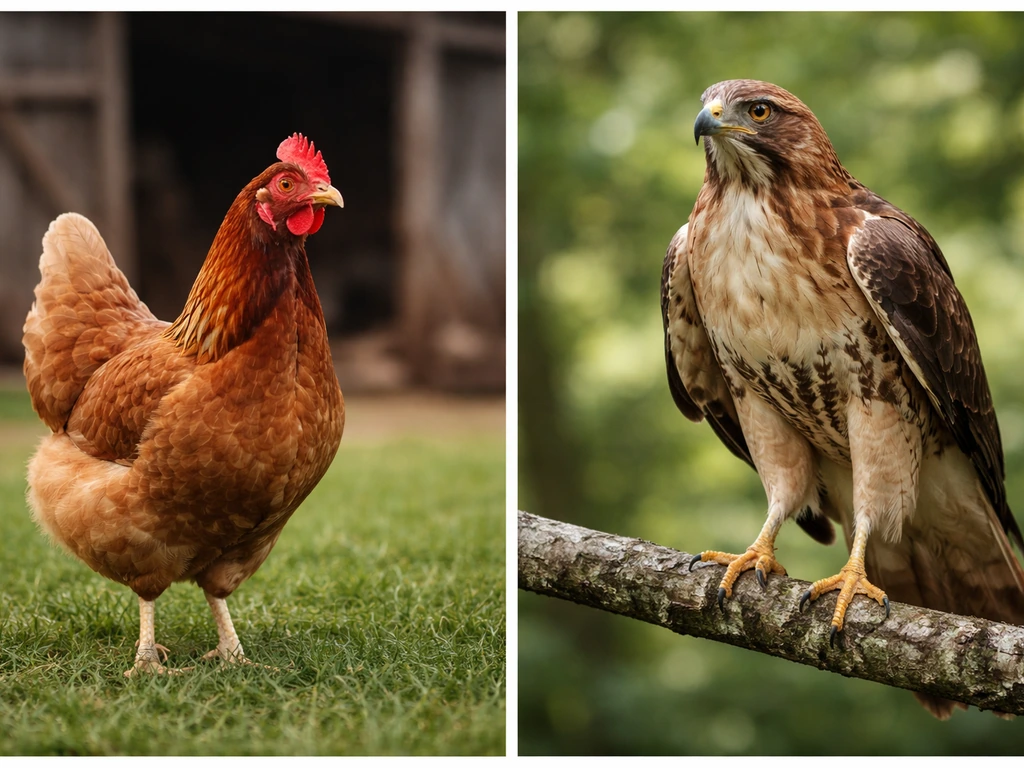
People use "bird of prey" casually to mean any bird that eats animals, but scientifically it means something more specific. The Journal of Raptor Research defines raptors using taxonomy and evolutionary history: they are species within orders that evolved from a raptorial landbird lineage where most species maintained a hunting lifestyle. That includes Accipitriformes (hawks and eagles), Cathartiformes (New World vultures), Strigiformes (owls), Falconiformes (falcons), and Cariamiformes (seriemas). Chickens belong to none of these orders.
Beyond taxonomy, raptor education organizations like the University of Minnesota Raptor Center and PBS Nature use a behavioral and morphological definition: raptors have powerful feet with sharp talons adapted for seizing and killing prey, hooked beaks for tearing flesh, and forward-facing eyes with acute binocular vision for judging distances during a hunt. These traits evolved together as a package for active predation. A bird has to check all three boxes, not just one, to qualify as a raptor in any meaningful sense.
The key takeaway is this: "bird of prey" is not a loose label for any bird that occasionally eats another animal. In contrast, a pigeon is a bird that does not fit the raptor definition, so it is not considered a bird of prey. It refers to a specific set of birds with a shared evolutionary background and a whole suite of physical adaptations for hunting. Without those, a bird is just a bird that sometimes snacks on protein.
Where chickens actually fit in the bird world
Chickens are undeniably birds. So if you ever wonder whether a parrot counts as a bird of prey, it helps to compare its hunting adaptations and taxonomy to the raptors defined in this article. They have feathers, beaks, wings, warm blood, and they lay eggs. Taxonomically, the domestic chicken is Gallus gallus domesticus, a subspecies of the red junglefowl, and it sits in order Galliformes, family Phasianidae. That family also includes turkeys, pheasants, quail, and peacocks. Galliformes as a group are characterized as heavy-bodied, terrestrial, ground-feeding birds, which is about as far from a soaring hawk as you can get while still being a bird.
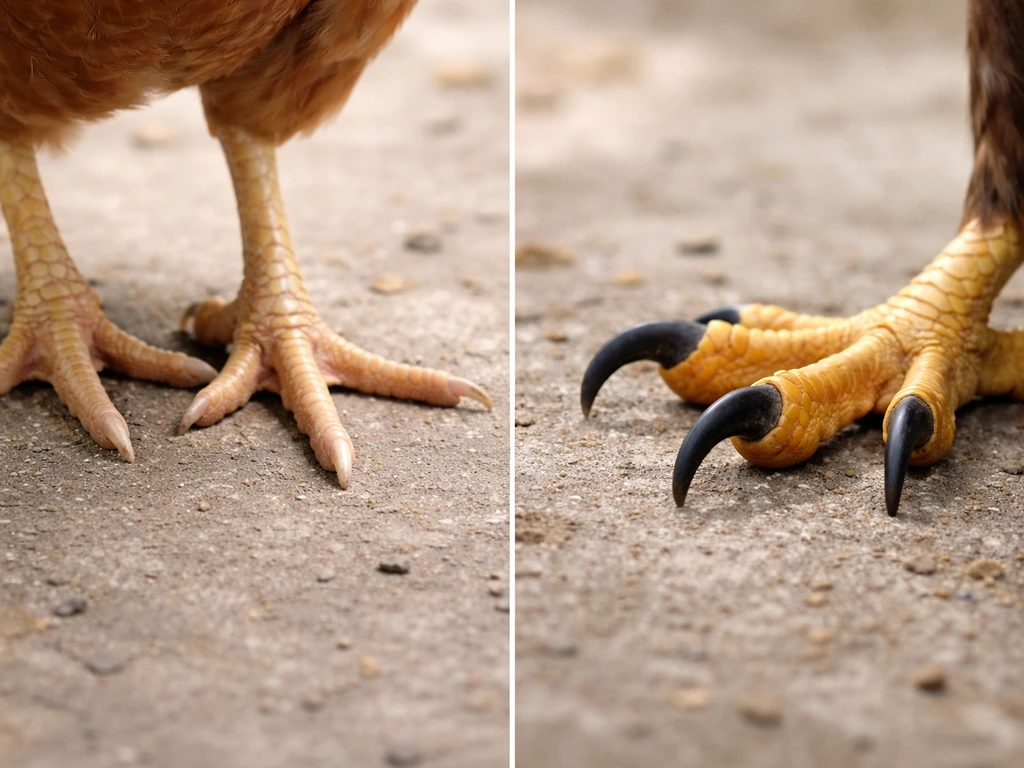
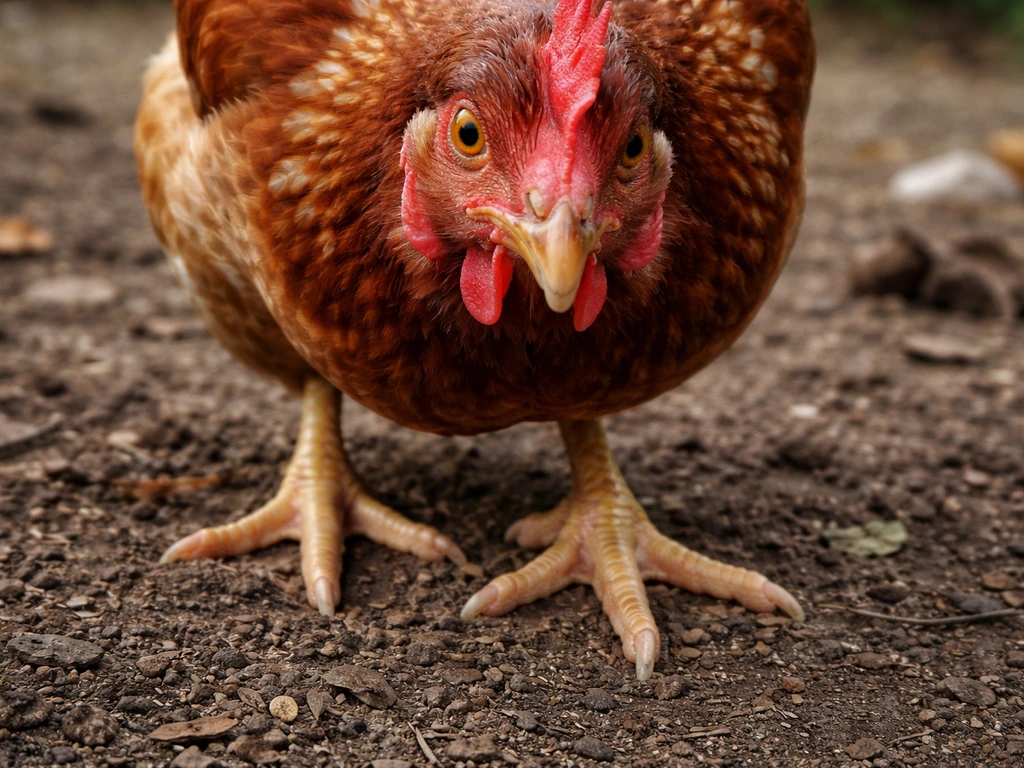
Their physical traits match that lifestyle. Chicken feet are built for scratching and walking, not for seizing prey. Their beak is relatively straight and slightly curved at the tip, suited for pecking at small items on the ground, not for tearing into vertebrates. Their eyes are positioned on the sides of their head, giving them a wide field of view to watch for predators, rather than the forward-facing binocular vision raptors use to lock onto prey. A canary is not typically considered a bird of prey, since it does not have raptor-style adaptations for seizing and killing animals is a canary a bird of prey.
How chickens actually eat and forage
Watch a chicken for five minutes and you will understand its relationship with food. It scratches the ground, drops its head, pecks at whatever it finds, then moves on. Cornell Lab of Ornithology describes the wild red junglefowl doing exactly this: foraging by scratching through leaf litter and open soil to find seeds, fruits, and insects, mostly early in the morning and in the evening. Domestic chickens kept with enrichment behave the same way.
Chickens are omnivores. They eat seeds, grains, vegetables, worms, bugs, and the occasional small lizard if one crosses their path. They will absolutely eat an insect that wanders in front of them. Research on chick behavior confirms they respond to live insects as food items. Peer-reviewed research on chick behavior has experimentally tested domestic chicks’ preferences with live insect prey as stimuli, supporting that they treat insects as prey-like items blank" rel="noopener noreferrer">respond to live insects as food items. But there is a world of difference between opportunistic omnivory and the raptor model of actively hunting, chasing, seizing, and killing prey with specialized weapons. A chicken eating a cricket is not the avian equivalent of a peregrine falcon stooping at 200 mph to take a duck in midair. So if you are asking, “is a bird a predator or prey?”, chickens are a clear example of prey that also do their own opportunistic foraging raptor model of actively hunting.
Chickens are also, notably, prey themselves. Poultry husbandry literature frames the relationship clearly: raptors are listed among the main predators of chickens. Chickens even have alarm calls that specifically distinguish aerial threats (hawks overhead) from ground threats, a behavioral adaptation that only makes sense if you are the one being hunted, not the hunter.
Where the confusion comes from
There are a few reasons this question gets asked, and they are all understandable.
- Claws and beaks look "sharp": Chickens have claws (technically called claws, not talons) and a pointed beak. People assume that anything with sharp-looking feet and a curved beak must be a raptor. But raptor talons are highly specialized, deeply curved, and biomechanically engineered for gripping and killing prey. Chicken claws are shorter, flatter, and built for digging in soil.
- Roosters have spurs: Male chickens have spurs on their legs that look intimidating. These are used in defense and competition with other males, not for hunting prey.
- Aggressive pecking behavior: Chickens peck, sometimes hard enough to draw blood. Poultry extension sources explain this is mostly social dominance, stress response, or exploratory behavior, not predatory hunting behavior in the raptor sense.
- The word "predator" gets applied loosely: Technically, any animal that eats another animal is a predator. But when ornithologists say "bird of prey," they mean a specific ecological and taxonomic category, not just "any bird that ever ate something alive."
- Raptor-sounding common names: Some birds with "hawk" or "falcon" in a casual nickname cause confusion, but the reverse can happen too: people hear that chickens eat bugs and mentally file them as predatory.
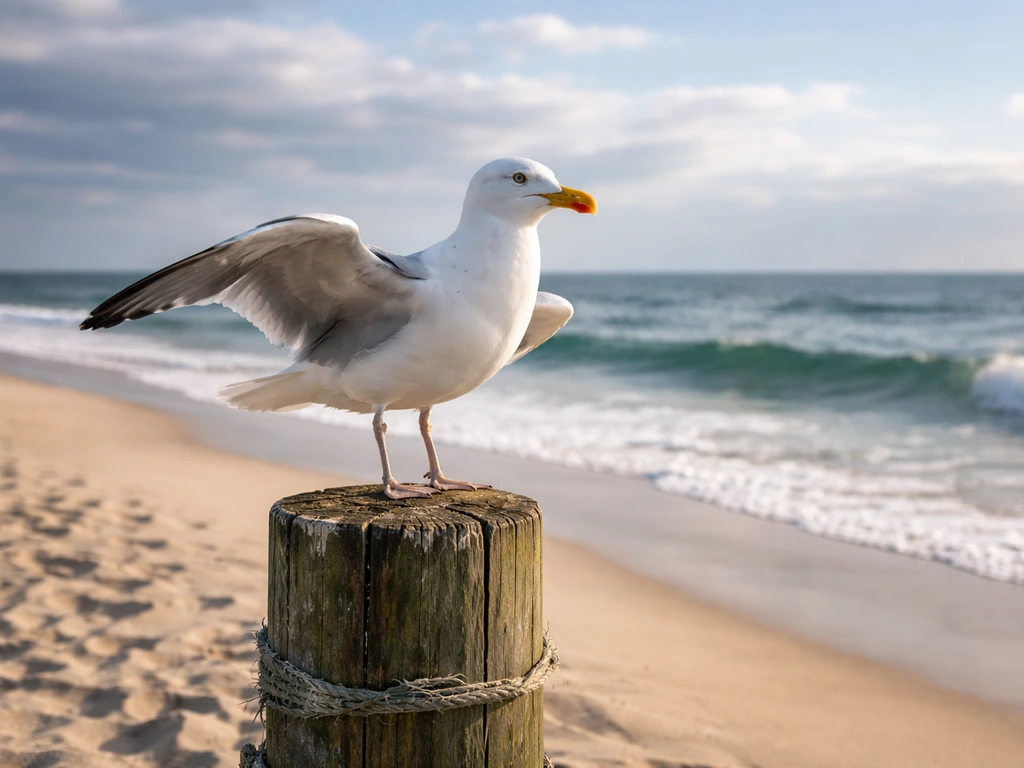
Similar confusion comes up with other birds too. Pigeons, geese, seagulls, parrots, and puffins are all real birds that sometimes get lumped into vague predatory-sounding categories, especially when they act aggressively or eat meat incidentally. None of them are birds of prey either, for the same structural reasons that apply to chickens.
How to tell a bird of prey from other birds in the field
If you are ever looking at a bird and wondering whether it qualifies as a raptor, here is a practical checklist you can run through on the spot. You do not need a field guide to nail the basics.
| Feature | Bird of Prey (Raptor) | Chicken (Non-Raptor) |
|---|---|---|
| Feet/Talons | Long, deeply curved, powerful talons for seizing and killing prey | Short, flattish claws for scratching ground; spurs for defense |
| Beak shape | Strongly hooked, sharp-edged for tearing flesh | Slightly curved tip, suited for pecking seeds and small items |
| Eye placement | Forward-facing for binocular depth perception during hunting | Side-facing for wide field of view and predator detection |
| Primary diet | Vertebrates and/or large invertebrates hunted actively | Seeds, grains, insects, worms (opportunistic omnivore) |
| Hunting method | Active pursuit, stooping, aerial or terrestrial attack | Scratching and pecking at ground; no pursuit hunting |
| Taxonomic order | Accipitriformes, Falconiformes, Strigiformes, Cathartiformes, Cariamiformes | Galliformes (same order as turkeys, pheasants, quail) |
| Flight behavior | Soaring, gliding, stooping; built for aerial efficiency | Short, low bursts of flight; mostly terrestrial |
| Role vs. predators | Is the predator | Is commonly preyed upon by raptors |
The single most reliable field shortcut is to look at the feet. Raptor talons are built for one purpose: grabbing and killing. They are long, curved, and powerful in a way that chicken claws simply are not. Pair that with a strongly hooked bill and forward-facing eyes and you have a raptor. If any of those three elements is missing, you are almost certainly not looking at a bird of prey.
How to verify a bird's classification yourself
If you want to go beyond the field check and confirm a bird's classification properly, the fastest method is to look up its taxonomic order. You can do this in a couple of ways. The NCBI Taxonomy Browser is free, and searching "Gallus gallus" will immediately show you its full classification: kingdom Animalia, class Aves, order Galliformes, family Phasianidae. None of those match any raptor order. The IOC World Bird List and the BirdLife DataZone both do the same thing and are the references professional ornithologists use.
If you are out in the field or just reading about an unfamiliar bird, Audubon's bird identification guidance recommends noting size, overall shape, bill structure, and behavior together rather than relying on one feature in isolation. That multi-feature approach works well for the raptor question too: check the feet, check the bill, check how it actually hunts (or does not), and check its order if you can. When all four agree, you have a solid answer.
For chickens, every check points the same direction: totally normal bird, not remotely a raptor. A common related question is whether a canary is a bird, and it is indeed classified as a bird species. Galliformes, ground-scratching omnivore, side-facing eyes, flat claws, and frequently on the menu for actual raptors. Case closed.
FAQ
If chickens eat small animals sometimes, are they predators at all?
They can be opportunistic predators of very small items, but their feeding behavior is not organized around active pursuit and killing. Their core strategy is ground foraging and pecking, so they do not fit the raptor model where specialized anatomy supports high-speed capture.
What about roosters or aggressive chickens, does behavior make them birds of prey?
Aggression does not change classification. Raptors are defined by evolutionary lineage plus hunting adaptations (talons, hooked bill, forward-facing binocular vision). A rooster can fight for territory, but its feet and bill are still built for scratching and pecking.
Can a backyard chicken ever hunt like a hawk if it catches a rabbit or mouse?
It might occasionally catch and kill small prey, but that is still opportunistic foraging, not raptor-style predation. Raptors are structurally equipped for seizing and tearing flesh, while chicken anatomy is suited to walking, pecking, and digging through the ground.
Are “birds of prey” and “raptors” the same thing?
In most scientific and education contexts, they are used interchangeably to mean raptors specifically. Casual usage is looser and can include any bird that eats animals, but that is not how raptor orders are defined.
Do chickens ever have talons that look sharp enough to count as raptor feet?
Chicken claws are sharp, but they are not the long, strongly curved killing talons raptors have. Raptors’ feet are shaped and built for gripping and holding prey during a strike, while chicken feet are optimized for traction on the ground and scratching.
If a bird’s eyes are on the sides, does that automatically rule it out as a raptor?
Side-facing eyes are a strong clue against raptors because raptors typically rely on forward-facing binocular vision to judge distance during a hunt. However, the most reliable confirmation uses the combined set (feet, bill shape, eye placement, and hunting behavior).
How can I tell in seconds whether a “prey-like” bird is a raptor or just an omnivore?
Look at four things together: feet shape (gripping talons vs scratching claws), bill shape (hooked and tearing vs straighter pecking), typical behavior (active capture vs ground foraging), and where possible, the bird’s order. If it mostly searches the ground and pecks, it is very unlikely to be a raptor.
What if I see a chicken chasing an insect, is that the same as “hunting”?
Chasing an insect is still part of foraging and opportunistic feeding. Raptors chase and seize prey as an integrated predation sequence, with anatomy that supports a kill (not just catching something briefly).
Is it true that chickens are prey for birds of prey?
Often, yes. Many raptors prey on poultry, and chickens respond with alarm behaviors that differ for aerial versus ground threats. That prey relationship is part of why chickens are not classified as raptors.
Next Article
Is a Seagull a Bird of Prey? Science-Backed Answer
Science backed guide: whether seagulls are raptors, plus how to spot them vs hawks, eagles, owls, and falcons.